Kimchi making is a good way to get past the jar and understand what goes into one of Korea’s best-known foods. In a traditional hanok in Seoul’s Jongno district, you prepare cabbage kimchi yourself while an instructor explains the method and its place in Korean food culture.
I like two things here: you leave with your own batch, and the lesson pairs practical cooking with cultural context. Tea and a kimchi pancake tasting round out the regular course. One caveat: the address can be hard to find, and some participants have raised concerns about the cleanliness of the preparation space.
- What makes this class worth your time
- From tea time to your own batch of kimchi
- A hanok setting with a lesson attached
- Instructors, languages, and the learning style
- Tea, kimchi pancake, and taking your work home
- Choosing between the regular and special courses
- When to book and how to arrive
- Who should book this kimchi class?
- FAQ
- How long does the kimchi-making activity take?
- What is included in the regular course?
- Which languages are available?
- Can children take part?
- Is the class available every day?
- How long does the kimchi keep?
- The Best Of Seoul!
- More Tours in Seoul
- More Tour Reviews in Seoul
- Not for you? Here's more nearby things to do in Seoul we have reviewed
What makes this class worth your time
 1 / 3
 2 / 3
 3 / 3
- You make the kimchi yourself: The regular course includes hands-on preparation of 700 to 900 grams of cabbage kimchi.
- The lesson is brief but practical: The listed making session lasts about 30 to 40 minutes, so it can fit into a full Seoul day.
- Tea and a pancake tasting are included: The regular course combines a welcome tea time with kimchi pancake after the cooking.
- You get cultural context as you work: Instructors explain kimchi’s history and its place in modern Korean life, alongside the steps.
- The hanok is part of the experience: The class takes place in a traditional Korean house, not just a standard cooking classroom.
- Plan your route carefully: The address is in a residential area, and the walk from Gwanghwamun Station has been reported as about 15 to 20 minutes.
👉 See our pick of the 25 Best Guided Tours In Seoul
From tea time to your own batch of kimchi
The regular class begins with tea, a gentle start before you put on an apron and get to work. Some participants have described being welcomed in a garden area, but the central point is the same: you have a moment to settle in before the instructor introduces the ingredients and the process.
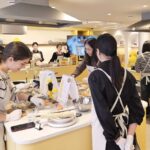
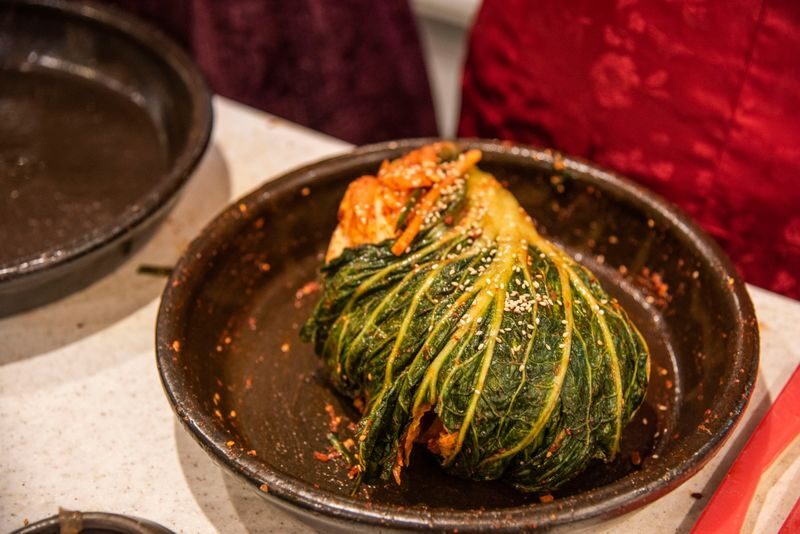
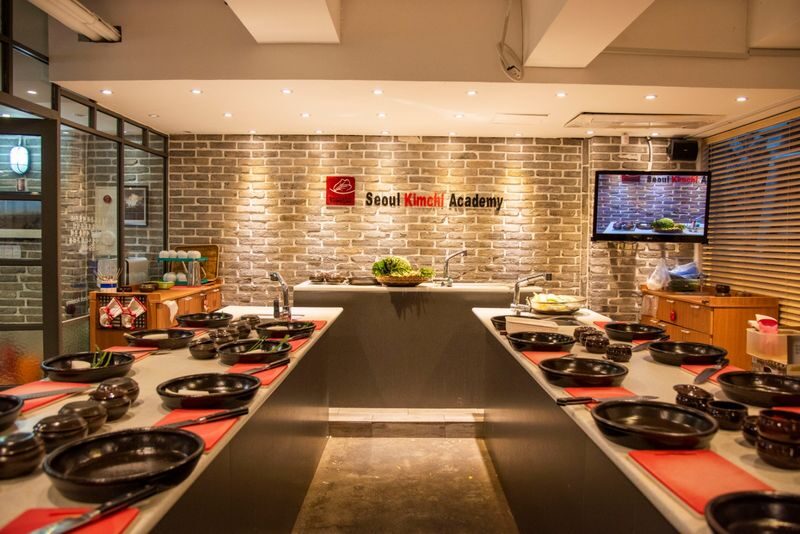
The class is designed for beginners. Ingredients are set out at workstations, and you follow the instructor through the preparation step by step. The hands-on work includes handling cabbage and seasoning, then applying the mixture between the leaves. It is not a demonstration where you sit back and watch. You take part, and your hands may get messy.
That matters if your goal is to learn something you can repeat at home. The class gives you a practical sequence to remember, rather than only a list of ingredients or a taste of the finished dish. The instructor also explains details about kimchi’s history, storage, and variations, so the cooking has context.
The main making session is listed as 30 to 40 minutes. Allow extra time for tea, explanations, photos, packaging, and the pancake tasting. One participant described finishing the whole experience in less than an hour, which makes it a manageable activity between other plans. The exact pace may depend on the group and how much time is spent on questions.
When you finish, your cabbage kimchi is packed for you to take away. The regular course provides roughly 700 to 900 grams, a useful amount to eat at home or share. Some participants have said their kimchi was vacuum sealed, which helped prevent leaks in their luggage. The stated shelf life is about one week, and the kimchi should be refrigerated.
You can also read our reviews of more tours and experiences in Seoul.


A hanok setting with a lesson attached
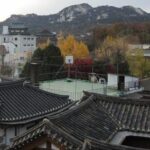
A cooking class in a hanok offers a different feel from a lesson in a commercial kitchen. The traditional house helps set the scene for a conversation about Korean food culture, and tea gives the visit an unhurried opening. If you are already exploring central Seoul, this can be a welcome change of pace from palace courtyards and busy streets.
The setting is not a reason to skip practical checks, though. The address is 24 Gyeonghuigung 3 Na-gil, Jongno-gu, and the meeting point is also shown simply as 24. Some people have found the location difficult to locate in a residential area. One account describes difficulty with map directions and house numbers, while another notes a 15 to 20 minute walk from Gwanghwamun Station.
Confirm the current pin and address before setting out, and give yourself time to find the entrance. One participant also reported that the location appeared to have changed from an address in a guidebook. That does not establish that the venue has moved, but it is a good reason to use the current booking details rather than an older printed reference.
The preparation space deserves a clear-eyed note. Many participants describe a welcoming class and tidy, well-organized stations, but a small number raised concerns about insects, dirty surfaces, and stained aprons. Food preparation should feel clean and comfortable. If you arrive and have concerns about hygiene, speak up before you begin.
Instructors, languages, and the learning style
The instructors are a big part of the class. The format is step by step, with the teacher demonstrating and helping participants as they prepare the cabbage. You can expect more than a recipe: instructors share historical and cultural details, and the lesson may touch on how kimchi is viewed today.
Classes are offered in Korean, Chinese, English, and Japanese. The exact mix of languages in a session can vary, but the experience is intended for international participants as well as local language learners. One instructor identified in a class account was Seongsu Kim, also called Sean. The host or instructor may differ by session, so do not assume a particular person will lead yours.
The small-group feel described by some participants can make it easier to ask questions and get a hand with the process. Instructors have also helped take photos and videos, a practical touch if you want pictures of the cooking without asking a companion to document every step. Still, this is a hands-on food class, not a private photo session, so keep your attention on the work.
Families can take part too. The activity has no age limit, and children may participate if they have a ticket for the kimchi course. The venue also offers a Hanbok experience, and children who are doing that activity only may observe the kimchi preparation from the side of the kitchen. They do not take part in the cooking unless they purchase a kimchi class ticket at the adult admission price.
Tea, kimchi pancake, and taking your work home
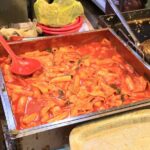
The regular course includes tea time, the kimchi-making session, and a kimchi pancake tasting. The pancake is a modest but welcome finish: it gives you a chance to taste another familiar way kimchi appears in Korean cooking, rather than leaving with only a sealed container.
The amount you make, 700 to 900 grams, is enough to try in several meals. Kimchi can be served as a side dish, and participants have also planned to use their batch in dishes such as stew and fried rice. The class does not include other personal expenses, so do not assume that additional food or purchases are part of the price.
The kimchi is best treated as a short-term food souvenir. Its stated shelf life is around one week, and it should be kept refrigerated. Vacuum sealing has helped some people carry their batch home without leaks, but packaging is not the same as permission to bring food across a border. Check the rules for your destination before you travel with it.
Choosing between the regular and special courses
The regular course is the straightforward choice for most visitors. It includes tea, cabbage kimchi making, and a kimchi pancake tasting. If you want a first introduction to the dish and a batch to take home, this is the option that matches that aim.
A second option is described as a Three kimchi course, with a listed starting price of $112.39. The special course is also described as professional training, but the available details do not clearly explain the differences in instruction, recipe, or final quantity. Before paying more, check exactly what that package includes and how it differs from the regular class.
Prices vary by package and booking details. The experience summary gives a starting price of $37.09, while the package information lists the regular course from $33.75. Treat these as indicative figures, not a guaranteed total, and check the final price for your date before booking.
For the regular price, the value is strongest if you want a hands-on activity, cultural explanation, tea, a tasting, and food to take away. It is less compelling if you are looking for a long cooking workshop or a full meal. The main activity is short, so think of it as a focused cultural stop rather than a half-day class.




When to book and how to arrive
The activity is available on most days, but not on Tuesdays. Listed class times are Monday at 9:30 a.m.; Wednesday through Friday at 9:30 a.m. and 2 p.m.; Saturday at 9:30 a.m., 2 p.m., and 4 p.m.; and Sunday at 2 p.m. The opening hours are listed as 9:30 a.m. to 6 p.m. Since the schedule is specific and does not show a Tuesday class, check your selected date and time carefully.
Arrive at the time on your voucher. The voucher is valid only for its specified date and, where relevant, time. You must present the mobile voucher at the activity. Confirmation is expected within 24 hours; if it does not arrive, contact customer support.
The cancellation terms are strict: cancellations and refunds are not available. That makes checking the date, time, package, and current address especially important before you book. The class is not available to holders of Korean passports.
Who should book this kimchi class?
I would put this class high on the list if you are curious about Korean food and want to learn by doing. It suits first-time kimchi makers, kimchi fans who want to understand the process, and families looking for a short activity with a clear takeaway. The multilingual instruction and lack of an age limit make it practical for mixed-age groups, provided every participant who wants to cook has a ticket.
It also works well for a busy itinerary. The cooking session is short, and tea and tasting make it feel more complete than a quick demonstration. But allow time for the journey, and do not plan around a venue entrance you have not verified. If a spotless, modern teaching kitchen is your top priority, the mixed reports about facility cleanliness may give you pause.
Book it if you want a brief, hands-on introduction to kimchi in a traditional setting and like the idea of taking your own batch home. Skip it if you need a long lesson, guaranteed ease of finding the venue, or a refund-friendly booking.
Seoul Kimchi & Culture Experience
“Very good experience. The locals are very friendly and they welcome you with a delicious drink.”
FAQ
How long does the kimchi-making activity take?
The kimchi-making session is listed as 30 to 40 minutes. Tea, explanations, packaging, and the pancake tasting add time, and one participant reported completing the experience in less than an hour.
What is included in the regular course?
The regular course includes tea time, making 700 to 900 grams of cabbage kimchi, and eating a kimchi pancake.
Which languages are available?
The listed languages are Korean, Chinese, English, and Japanese.
Can children take part?
There is no age limit. Children need a kimchi course ticket to participate in making kimchi. Children attending only the Hanbok experience may observe the cooking from the side of the kitchen.
Is the class available every day?
It is not available on Tuesdays. Listed times are Monday at 9:30 a.m.; Wednesday through Friday at 9:30 a.m. and 2 p.m.; Saturday at 9:30 a.m., 2 p.m., and 4 p.m.; and Sunday at 2 p.m.
How long does the kimchi keep?
The stated shelf life is around one week. Keep it refrigerated.