A wedding pot becomes a pottery lesson at this Singapore workshop. The Kam Cheng is a Peranakan vessel associated with prosperity and unity, and you get to shape your own version on the wheel, then paint it with traditional motifs and bold colors.
I like two things here: the craft has a clear cultural context, so you are making more than a souvenir, and the session gives you hands-on time with the clay rather than keeping you at a distance. The instructors, including Jia Yin, Jia Ying, Les, and Ayu in different sessions, are praised for patient, individual guidance.
One consideration: pottery takes practice, and the finished work is not ready to take home that day. Your pot needs firing and gloss glazing, with collection available after about four weeks. If you are visiting Singapore briefly, ask about delivery before booking.
- The useful details at a glance
- Why the Kam Cheng makes a good pottery project
- From cultural introduction to wheel work
- Painting your own Peranakan design
- Four weeks between making and collecting
- The studio location and getting there
- What the price covers
- Who should book this workshop
- FAQ
- How long is the Kam Cheng pottery workshop?
- What will I make?
- Is the workshop suitable for beginners?
- What is included in the price?
- When can I collect my finished pot?
- Can the finished pot be delivered?
- Where is Goodman Ceramic Studio & Atelier.GDMC?
- How can I get to the studio?
- What is the minimum age, and what happens if the session does not run?
- The Best Of Singapore!
- More Workshops & Classes in Singapore
- More Tours in Singapore
- More Tour Reviews in Singapore
- Not for you? Here's more nearby things to do in Singapore we have reviewed
The useful details at a glance
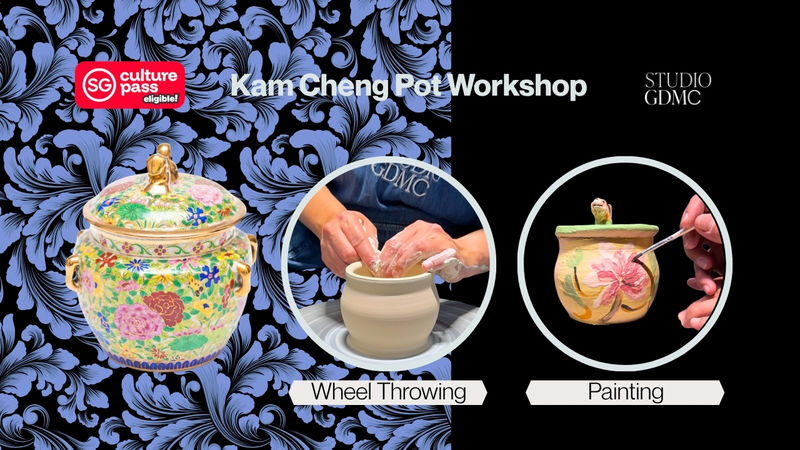
- A traditional form: Make a Kam Cheng pot linked with Nyonya weddings, celebrations, prosperity, and unity.
- A three-hour session: Start with cultural context, then work at the wheel and paint your piece.
- A full pot project: The process includes shaping the pot and its lid, not just decorating a ready-made object.
- Materials and finishing are included: Tools, clay, firing, and gloss glazing are part of the experience.
- Plan for later collection: Your finished pot is available after about four weeks. Local and overseas delivery costs extra.

👉 See our pick of the 25 Best Guided Tours In Singapore
Why the Kam Cheng makes a good pottery project
The Kam Cheng is not an arbitrary shape chosen for a craft class. It is a Nyonya pot associated with weddings and celebrations, and with ideas of prosperity and unity. That context gives the workshop a useful connection to Peranakan culture before you ever touch the clay.
The class introduces traditional motifs such as the phoenix and peony. These are practical starting points for your design, not rules you must follow. You can use them as inspiration, then choose personal details and colors for a pot that feels like yours.
I like the way the workshop links cultural learning with making. A brief introduction can help you see why the pot matters, while working through its form gives you a more direct sense of the skill involved. It is a small-scale activity, but it offers a different angle on Singapore than a museum visit or a standard city tour.
The finished piece also has a job beyond decoration. The Kam Cheng form includes a pot and lid, so you will be working toward an object with recognizable parts and a cultural purpose. That makes the project more engaging than painting a generic ceramic blank.
You can also read our reviews of more tours and experiences in Singapore


From cultural introduction to wheel work
The three-hour experience begins with a short introduction to the Kam Cheng pot and Peranakan design. Expect the instructors to discuss the vessel’s place in Nyonya celebrations and show motifs such as the phoenix and peony. This opening gives you visual ideas before you start choosing how to decorate your own pot.
Then comes the wheel-throwing session. You shape the clay with instructor guidance, working on the pot’s sides and lid. The activity is described as suitable for beginners, and the class is built around step-by-step help rather than expecting you to arrive with pottery skills.
That distinction matters. Wheel throwing can look simple from across a studio, but getting clay to hold a shape takes coordination. One participant found the process harder than expected, while still enjoying the effort and the satisfaction of making a piece from scratch. Go in ready to learn, not expecting a flawless first pot.
Instructors are a key part of the experience. Jia Yin, Jia Ying, Les, and Ayu are among the names associated with sessions, and the teaching is repeatedly described as patient and helpful. Some participants have received individual attention, including one person who arrived late and still got guidance. That is reassuring, though it is not a reason to plan on arriving late yourself.
The pace appears to leave room for hands-on work. You are not simply watching an instructor demonstrate every stage. You get to build and shape the clay, with help when the sides or lid need attention. The goal is to help each participant complete a piece, but keep in mind that handmade pottery can vary in size and finish.
Painting your own Peranakan design
Once the pot is shaped, you paint it. The class draws on classic Peranakan colors and motifs, while leaving room for personal designs. You might base your decoration on a phoenix or peony, or take those visual cues in your own direction.
This is where the project becomes especially personal. The wheel work gives you the basic form; the painting lets you add the marks and color choices that make it distinct. If you enjoy creative activities but are nervous about drawing, you can keep your design simple. The supplied information does not set out a required pattern or skill level for painting.
The full sequence also makes the class feel like a proper workshop rather than a short sampler. You make the base form, shape the lid, and paint the result in one session. A participant described completing those parts during the three-hour class, which gives you a useful sense of the scope.
Your pot will still be unfinished when you leave. It needs firing and gloss glazing, both included, before it is ready for collection. The wait is part of the process, but it means the piece is not an immediate take-home souvenir.
Four weeks between making and collecting
The finished pot can be collected after about four weeks. That is a fairly long pause if you are on a short visit to Singapore, so check your travel dates before booking. If you cannot return to the studio, local and overseas delivery are available at additional cost.
The four-week timeline also changes how to think about the activity. You leave with the memory of making the pot, but the completed ceramic object comes later. If the keepsake is the main reason you are booking, make sure the collection or delivery plan works for you before you pay.
Firing and glazing are included in the price, which is useful because they are essential to turning a shaped and painted piece into a finished ceramic pot. You are not being asked to arrange those steps yourself. Just remember that the color and final appearance can only be seen once the work has gone through the finishing process.
The studio location and getting there
The workshop meets at Goodman Ceramic Studio & Atelier.GDMC, at 71 Ubi Crescent, #01-01/02, Excalibur Centre, Singapore 408571. Ubi MRT Station is the listed metro option. Buses 63, 63M, and 157 also serve the area, and basement parking is available if you are driving.
This is a studio activity rather than a class in a central sightseeing district, so leave time to reach Ubi. The location is worth checking against your other plans, especially if you are fitting the class into a packed day. The workshop itself lasts three hours, before you account for travel time.
Opening hours vary by day. The studio is open Monday from 1 pm to 9 pm; Tuesday, Wednesday, Thursday, and Sunday from 9 am to 6 pm; and Friday and Saturday from 9 am to 9 pm. Your voucher is valid only for the date and time specified, so check the booked session carefully.
Confirmation is expected within 48 hours. For bookings of five or more people, contact the studio by WhatsApp at +65 9726 5210 to check availability before booking. The activity requires at least three participants. If that minimum is not met, the session is cancelled and rescheduled, and cancellations or refunds are not offered.






What the price covers
The experience is listed from $106.75, while the package option is also shown from US$97.05. Those figures appear in different currencies, so check the final amount at checkout rather than comparing them as if they were the same price.
For the fee, you get a three-hour workshop, clay pot project, tools and materials, firing, and gloss glazing. The price therefore covers more than a short instructor-led demonstration: you spend time making and painting an object, then have it finished for you. Delivery, if needed, costs extra.
I see the value in the combination of a cultural introduction and a complete craft project. You are paying for the guided session as well as materials and finishing, and the cultural focus gives the object a story beyond being a first attempt at pottery. On the other hand, this is not the best choice if you need a finished souvenir in hand that same day or want a low-cost activity with no follow-up.
Participants aged 12 and older can take part. The class is described as manageable for a broad range of ages, but pottery still asks for patience and a willingness to try, adjust, and try again. Families with older children or adults looking for a shared creative activity may find the format a good fit.
Who should book this workshop
Book it if you enjoy making things, want a hands-on activity in Singapore, or are curious about Peranakan culture and design. It suits beginners who are happy to follow guidance and accept that their first wheel-thrown piece may have its own character.
It is also a good fit for people who value the process as much as the finished object. The three-hour session gives you time to shape and paint, and the delayed collection can make the pot feel like a small project that continues after your visit.
Think twice if your schedule will not allow for collection or delivery, if you dislike hands-on work, or if you expect to produce a polished pot without practice. The most useful mindset is to treat the class as a creative experience with a keepsake on the way, not as a quick souvenir stop.
Kam Cheng Pot Wheel Throwing Pottery Workshop
“had a great time learning about the history of kam cheng and trying out making the pots. the instructors guided us and were very helpful. 10/10 wou…”
FAQ
How long is the Kam Cheng pottery workshop?
The workshop lasts three hours. It includes a cultural introduction, wheel throwing, and painting.
What will I make?
You will make a Kam Cheng pot, including its pot form and lid, then paint it with your own design.
Is the workshop suitable for beginners?
Yes. The techniques are described as beginner-friendly, and instructors guide participants through the process.
What is included in the price?
The package includes admission to the three-hour workshop, one Kam Cheng clay pot, tools and materials, firing, and gloss glazing.
When can I collect my finished pot?
Your finished work is available for collection after about four weeks.
Can the finished pot be delivered?
Yes. Local and overseas delivery are available for an additional cost.
Where is Goodman Ceramic Studio & Atelier.GDMC?
It is at 71 Ubi Crescent, #01-01/02, Excalibur Centre, Singapore 408571.
How can I get to the studio?
Ubi MRT Station is the listed metro option. Buses 63, 63M, and 157 serve the area, and basement parking is available.
What is the minimum age, and what happens if the session does not run?
Participants must be at least 12 years old. The activity requires at least three participants; if that minimum is not met, the session is cancelled and rescheduled.