Communist-era Czechoslovakia comes into focus here through ordinary rooms as much as political history. You can move from a reconstructed classroom and child’s bedroom to an interrogation room, then consider how propaganda, surveillance and state control shaped daily life between 1948 and the Velvet Revolution in 1989.
I like two things about this visit: the reconstructed spaces and original artifacts put everyday life at the center, and the broad range of subjects links politics to school, sport, work and culture. One consideration: admission is self-guided, so you will need to read the panels and set your own pace rather than rely on a guide to explain the context.
- What to know before you go
- Entering a story that spans 1948 to 1989
- From the classroom to the interrogation room
- Photographs, posters and original objects
- The 15-minute documentary and a cafe break
- How much time to set aside
- A central stop near Náměstí Republiky
- Is admission worth the price?
- Who should book this visit?
- FAQ
- How long does a visit take?
- What does the ticket include?
- What are the museum’s opening hours?
- How do I get to the museum by tram?
- Can children visit, and do they need a ticket?
- Is the museum wheelchair-accessible?
- The Best Of Prague!
- More Tickets in Prague
- More Tours in Prague
- More Tour Reviews in Prague
- Not for you? Here's more nearby things to do in Prague we have reviewed
What to know before you go
 1 / 7
 2 / 7
 3 / 7
 4 / 7
 5 / 7
 6 / 7
 7 / 7
- A 1,500-square-metre exhibition: The displays span 62 panels and cover Czechoslovakia from the February putsch in 1948 to the Velvet Revolution in 1989.
- Rooms that make history tangible: Look for mock-ups of a classroom, a child’s bedroom, a shock worker’s workshop and an interrogation room.
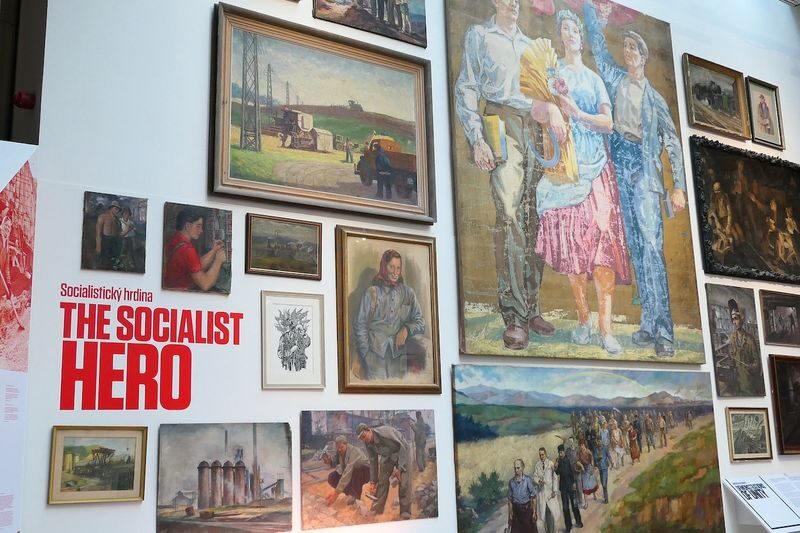
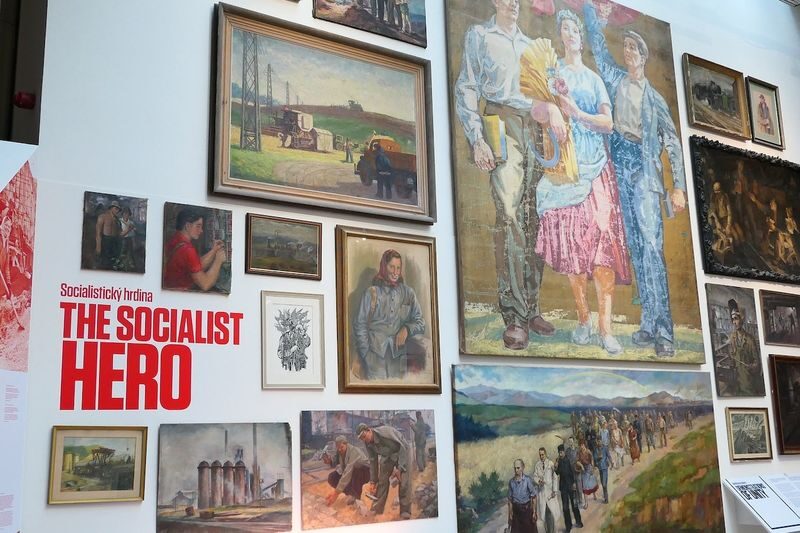
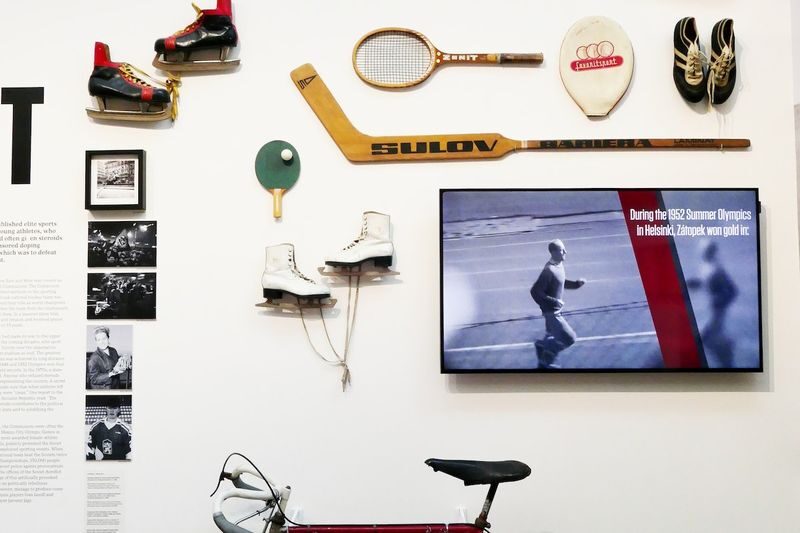
- More than politics: Sections cover education, sport, economics, propaganda, socialist realist art, censorship, courts and the police, including the secret police known as the StB.
- A short film is included: Your admission covers a 15-minute documentary about communism in Czechoslovakia.
- Allow one to two hours: You can move at your own pace, with a museum cafe available for a break.
- A central Prague location: The museum is near Náměstí Republiky, a two-minute walk from the tram stop of the same name.
👉 See our pick of the 25 Best Guided Tours In Prague
Entering a story that spans 1948 to 1989
The museum focuses on a specific period: the communist regime in Czechoslovakia, from the February putsch of 1948 through the Velvet Revolution of 1989. That clear timeline helps you follow the subject even if you arrive with only a basic grasp of Czech history.
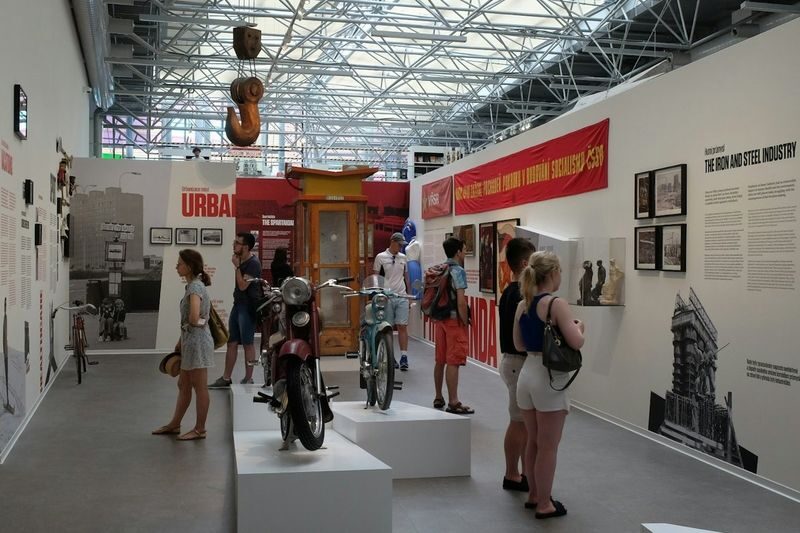
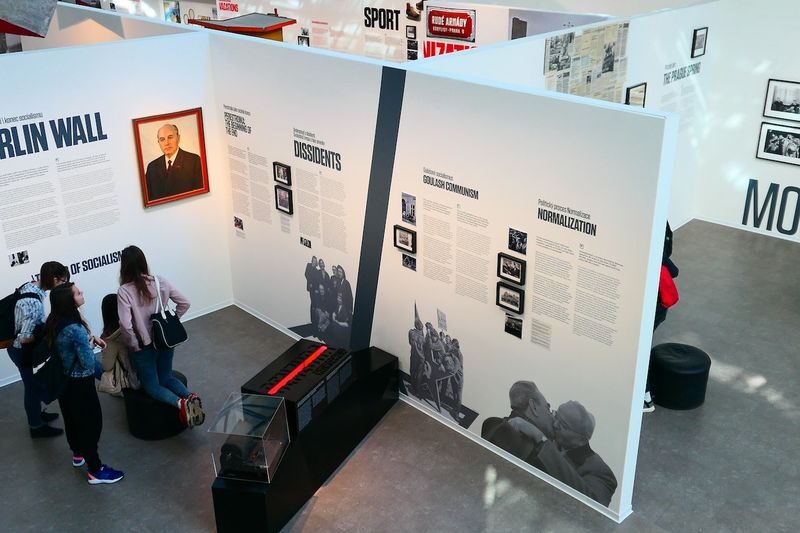
Rather than treating the era as a list of leaders and dates, the exhibition connects political power to daily routines. Its 62 panels cover the machinery of the state, but also the experiences that touched ordinary people: schooling, work, sports, art and access to information.
That mix is useful if you are trying to understand more than the broad outline of the period. You can consider how censorship and propaganda operated alongside economic policy and education, and how the police, courts and political labor camps fitted into the system. Topics include show trials and the StB, the secret police. These are serious subjects, and the displays are designed to give you a historical overview rather than make light of them.
The exhibition’s scale, 1,500 square metres, gives you room to explore several strands of the story. The trade-off is that a large exhibition can feel like a lot to take in, especially if you try to read every panel. For a first visit, I would follow the timeline and pause at the sections that interest you most.
You can also read our reviews of more tours and experiences in Prague

From the classroom to the interrogation room
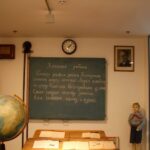
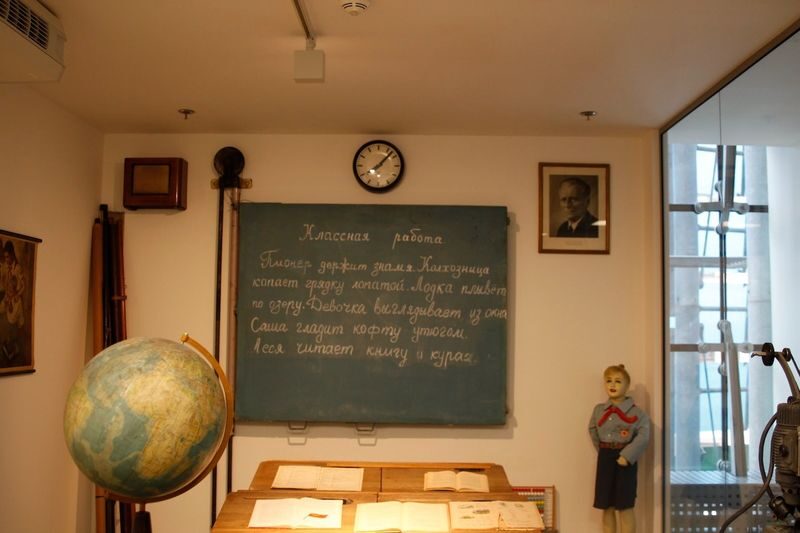
The reconstructed spaces are among the most practical features of the visit. A classroom and a child’s bedroom give you a sense of how the era was presented to younger generations and woven into home life. The shock worker’s workshop points to the culture of labor and productivity promoted by the state.
The mock-ups do not replace historical context, but they give the panels a physical setting. You can look at an object or room and then connect it to the wider themes of education, propaganda, work and control. That can make an unfamiliar period easier to picture than a wall of dates alone.
The interrogation room shifts the mood. Alongside sections on the army, police and StB, it brings the state’s coercive side into view. The museum also addresses courts, show trials and political labor camps during the Stalinist era. If you are visiting with children, you may want to use your judgment about how much time to spend in these sections. The ticket information does not set an age limit, but it does require children under 18 to attend with a paying adult.
Photographs, posters and original objects
Personal collections from notable Czech photographers are part of the exhibition, alongside a broad photographic collection drawn from various archives. These images offer another way into the period: they can show details of people, places and daily routines that a political summary might leave out.
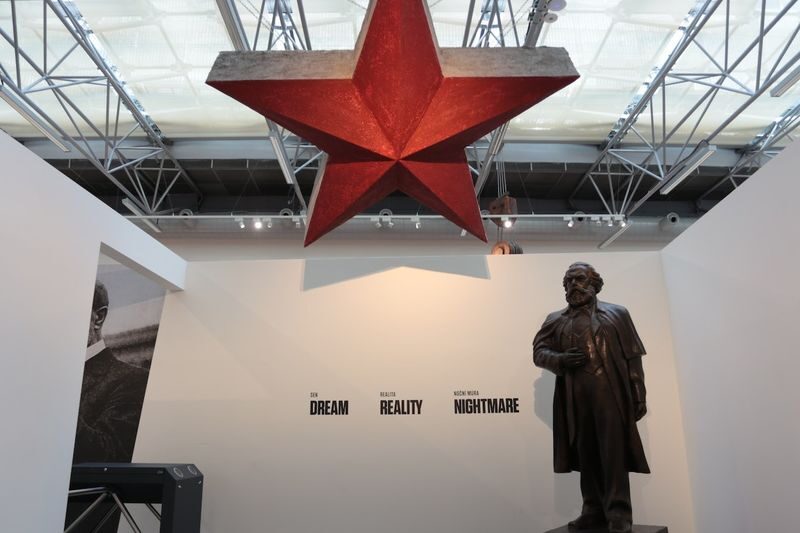
Posters and other visual material help explain how public messages were shaped. Paired with artifacts, they let you consider not only what the regime said, but how those messages reached people. The collection also covers socialist realist art, a useful reminder that state influence extended into culture as well as government and public institutions.
The value of these materials depends partly on how much time you give them. If you move quickly, the room reconstructions and major themes may be what you remember. If you like looking closely at images and objects, set aside time to read the captions and compare the personal material with the official messages around it.
The 15-minute documentary and a cafe break
Your admission includes a 15-minute documentary about communism in Czechoslovakia, shown in the museum cinema. It is a compact way to add a moving-image account to the panels and objects. Since it is short, it can fit into a one-hour visit without taking over the day.
I would watch it as part of the visit rather than treat it as a substitute for the exhibition. The film gives you another format for the subject, while the displays let you stop and study specific themes at your own pace. Check the timing when you arrive if you want to fit the film into a tight schedule.
There is also a museum cafe, which gives you a place to pause before continuing or to gather your thoughts afterwards. The cafe is a practical extra, not a reason on its own to visit. Still, it is handy when you want a break between the more ordinary details of daily life and the heavier sections on surveillance and political repression.
How much time to set aside
Plan on one to two hours. An hour can work if you focus on the main timeline, a few reconstructed rooms and the documentary. Give yourself closer to two hours if you want to read more of the 62 panels and take time with the photographic collections and artifacts.
The museum is open daily from 9:00 a.m. to 8:00 p.m., with last admission 30 minutes before closing. It is closed on 24 December. The long daily opening window makes it easy to fit into a Prague itinerary, but avoid arriving near closing if you want a relaxed visit.
Because the ticket is self-guided, you control the pace. That suits independent visitors who prefer to choose what to read and when to pause. If you want a guide to explain the period or answer questions as you go, note that a tour guide is not included.
You can also read our reviews of more museum experiences in Prague


A central stop near Náměstí Republiky
The museum is at V Celnici 1031/4 in New Town, Prague 1. Trams 1, 2, 6 and 8 stop at Náměstí Republiky, about a two-minute walk away. The location is straightforward to reach by public transport, and the entrance is easy to find.
This central setting makes the museum convenient to pair with other plans in Prague. You do not need to commit a full day: a one- to two-hour visit can fit between other city activities. The experience itself is indoors, so it can also be a useful choice when you want a break from walking around the city.
The museum is wheelchair-accessible. If you are booking for a family, children aged 0 to 10 enter free, but infants and children still need to be included in the passenger headcount. Anyone aged 0 to 17 must be accompanied by a paying adult. School and university students with valid identification may be eligible for a reduced ticket.
Is admission worth the price?
Tickets start at $18.49, with the actual price depending on the option available when you book. For that cost, you get access to a substantial 1,500-square-metre exhibition, reconstructed spaces, photographs, artifacts and the 15-minute documentary. The value is strongest if you are interested in modern Czech history or want a grounded account of how political systems affect ordinary life.
It is less compelling if you only want a quick photo stop or expect a guided tour. You will need to supply your own context and choose how deeply to read. The museum’s format rewards curiosity, not speed: the more you connect the rooms, images and themes, the more useful the visit becomes.
A single 4-out-of-5 assessment noted that the museum was easy to find, that the staff were friendly and that the visit offered a chance to learn about communism and its fall. That is encouraging, though one assessment is too little to establish a general pattern. I would treat the staff and location as practical pluses, while making your decision chiefly on whether the subject interests you.
The booking is for a selected date, and the voucher is valid only on that date, including a specified time if one applies. The ticket is non-refundable, so check your plans before purchasing. At the entrance, present your mobile voucher to enter directly.
Who should book this visit?
I would recommend the museum to anyone who wants more than a quick overview of Prague’s past. It suits history-minded visitors, people curious about the Cold War period, and those who prefer exhibits that connect state policy with home, school and work. The reconstructed rooms and photographs make it approachable even if you are not familiar with every political term.
Families can visit, but the subjects include interrogation, political trials and labor camps. An adult should decide how much is right for each child. The free admission for children aged 0 to 10 can make the price easier for families, but it does not make the content light.
If you have little interest in modern history, or strongly prefer a live guide, this may not be the best use of your time. But if you want to understand how communism shaped life in Czechoslovakia and can spare an hour or two, the museum offers a focused, convenient visit. I would book it for the subject and the everyday-life exhibits, not simply to fill time between Prague landmarks.
Museum of Communism Ticket in Prague
“I had fun going to this museum and it's easy to find, staff is very friendly and you will find out and explore a lot of history about communism and…”
FAQ
How long does a visit take?
Plan on one to two hours. The time depends on how many panels and displays you choose to read, and whether you watch the included 15-minute documentary.
What does the ticket include?
The general ticket includes admission to the Museum of Communism and a 15-minute documentary about communism in Czechoslovakia. A tour guide, hotel pickup and drop-off, and personal expenses are not included.
What are the museum’s opening hours?
The museum is open Monday through Sunday from 9:00 a.m. to 8:00 p.m. Last admission is 30 minutes before closing. It is closed on 24 December.
How do I get to the museum by tram?
Take tram 1, 2, 6 or 8 to Náměstí Republiky. The museum is about a two-minute walk from the stop.
Can children visit, and do they need a ticket?
Children aged 0 to 10 enter free, but infants and children must still be included in the passenger headcount. Children aged 0 to 17 must be accompanied by a paying adult.
Is the museum wheelchair-accessible?
Yes. The museum is wheelchair-accessible.