Gyeongju makes a rewarding day trip from Busan: Buddhist temple courtyards, a Joseon-era village, Silla royal tombs and a palace pond lit after dark all fit into one long outing. This tour links those far-flung sights by bus, so you can cover a lot without piecing together separate transfers.
Two things I like are the range of stops, which moves from quiet temple grounds to a striking night view, and the transport and admission bundle, which takes some planning and ticket buying off your hands. Guides such as Sunny and Robin have been praised for history explanations, safe driving and helping with photos, though you cannot count on a particular guide.
The trade-off is the pace: with several stops and a return to Busan at night, you will have limited time at each place. Lunch is extra, and the tour needs at least eight participants, so check your messages and email before departure for confirmation or changes.
- At a glance
- One day, many sides of Gyeongju
- Bulguksa’s stonework and temple courtyards
- Yangdong Village and the lunch question
- Daereungwon and the Silla royal tombs
- Cheomseongdae and the old city
- Woljeonggyo Bridge at dusk
- Wolji Pond after dark
- What the price covers, and what it does not
- Seasonal color and a few sensible precautions
- Who should book this Gyeongju day trip?
- FAQ
- Is lunch included?
- Which attractions have admission included?
- What languages does the guide speak?
- Where are the Busan pickup points?
- How long does the tour last?
- Does the tour run in rain or snow?
- Are cherry blossoms or autumn leaves guaranteed?
- Is there a minimum group size?
- Can children aged zero to two join for free?
- Can I cancel for a full refund?
- The Best Of Gyeongju!
- More Historical Tours in Gyeongju
- More Tours in Gyeongju
- More Tour Reviews in Gyeongju
- Not for you? Here's more nearby things to do in Gyeongju we have reviewed
At a glance
 1 / 10
 2 / 10
 3 / 10
 4 / 10
 5 / 10
 6 / 10
 7 / 10
 8 / 10
 9 / 10
 10 / 10
- A full day out: Departures begin in Busan from 9:30, with the return scheduled for around 20:30 to 21:30 depending on your drop-off.
- History with a night finish: The route combines temples, a folk village, tombs and observatory with the evening lights at Donggung Palace and Wolji Pond.
- Admissions are included: Bulguksa, Yangdong Village, Daereungwon, Cheomseongdae, Woljeonggyo Bridge and Donggung Palace and Wolji Pond are covered.
- Lunch is on you: There is a break, and the guide can recommend a restaurant. Bring food if you have dietary needs or prefer not to spend time finding a table.
- Seasonal color is not guaranteed: Spring blossoms and autumn leaves depend on the weather and timing.
- Not a private tour: Vehicle size varies with group numbers, and the minimum is eight participants.

👉 See our pick of the 5 Best Historical Tours In Gyeongju
One day, many sides of Gyeongju
The itinerary is ambitious for good reason. Gyeongju’s major sights are spread across different areas, and a bus makes it possible to connect them in one day from Busan. You trade the freedom of a private visit for a straightforward route, shared timing and a guide who can help you make sense of the stops.
That makes this a practical choice if your Busan stay is short or you would rather not work out the connections yourself. It is less suited to anyone hoping to linger over every temple detail, browse at leisure or spend a long time in one neighborhood. The schedule runs from morning until evening, and traffic or weather can alter the order or timing.
The tour is offered in different forms, including an autumn maple option and a UNESCO heritage and nightscape option. Prices vary by package: the supplied options begin at $56.75 for the heritage and nightscape tour and $72.79 for the autumn maple tour, while the overall experience is advertised from $71.29. Check the exact package, route and price when booking rather than assuming every seasonal stop is included in every version.
You can also read our reviews of more historical tours in Gyeongju


Bulguksa’s stonework and temple courtyards
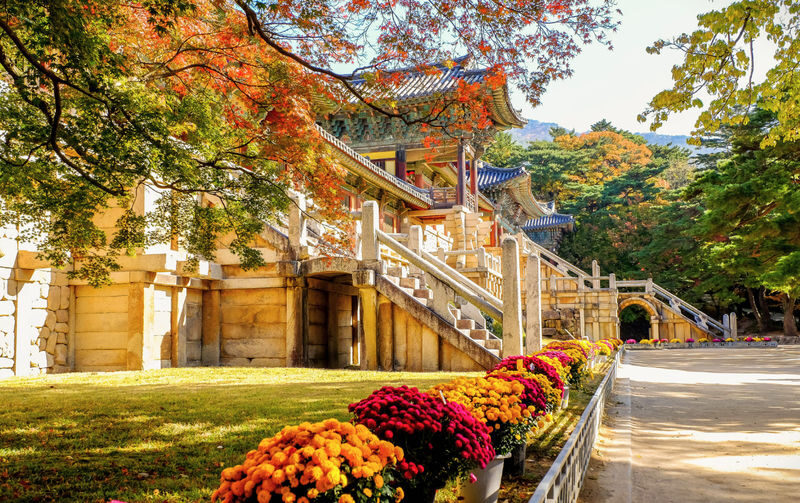
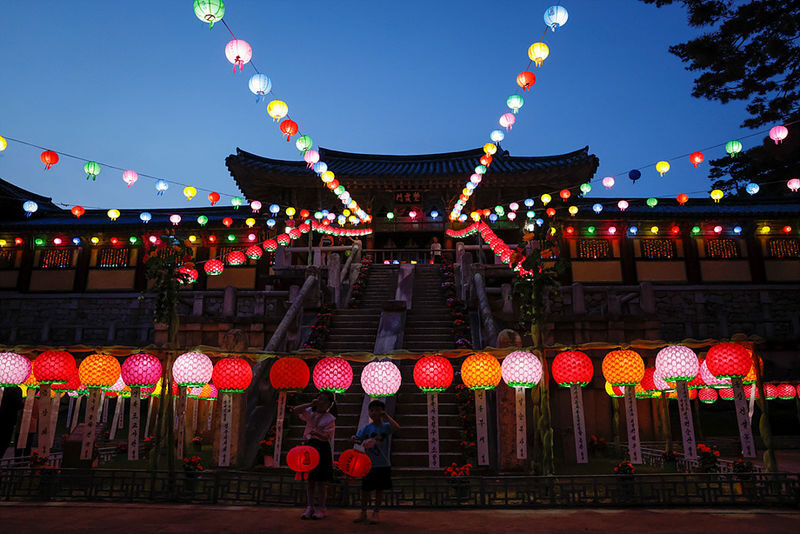
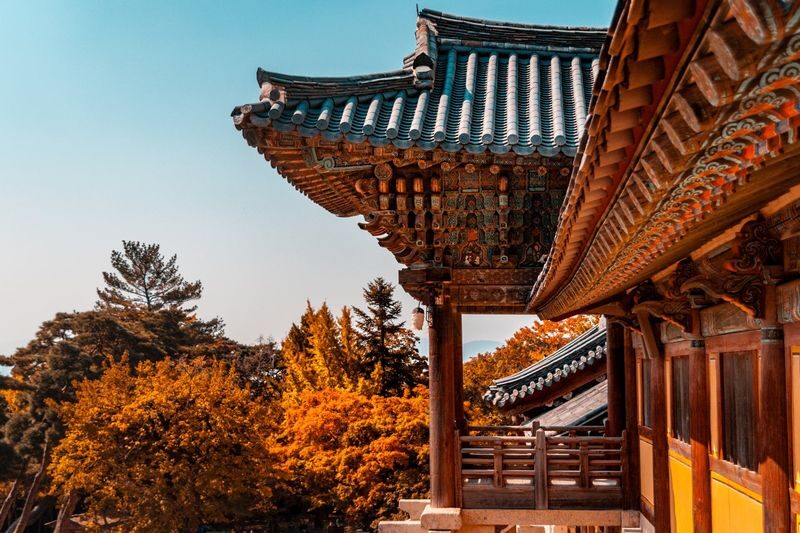
Bulguksa is the day’s first major stop, scheduled for noon. This UNESCO-listed Buddhist temple is known for its pagodas and carved stonework. The setting gives you a change of pace from Busan’s urban streets: you can walk through temple grounds, look closely at the details, and take in the calm of the complex.
A short visit can show you the main visual highlights, but it cannot replace a slow, reflective visit. One tour participant wished for more time to experience the temple’s spiritual character. That is useful advice: if Bulguksa is a personal priority, treat the stop as an introduction, not a complete visit. The group has other places to reach, so you will need to keep an eye on the meeting time.
Admissions are included, which is convenient here and at the other ticketed stops. The guide speaks English or Chinese, but the amount of historical explanation may vary. Guides Sunny and Robin have been singled out for helpful history, photography assistance and thoughtful arrangements. They are examples of the care a guide can add, not a guarantee of who will lead your departure.
Yangdong Village and the lunch question
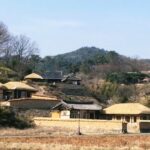
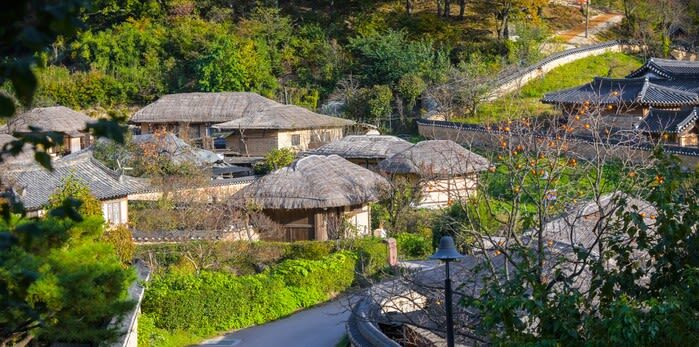
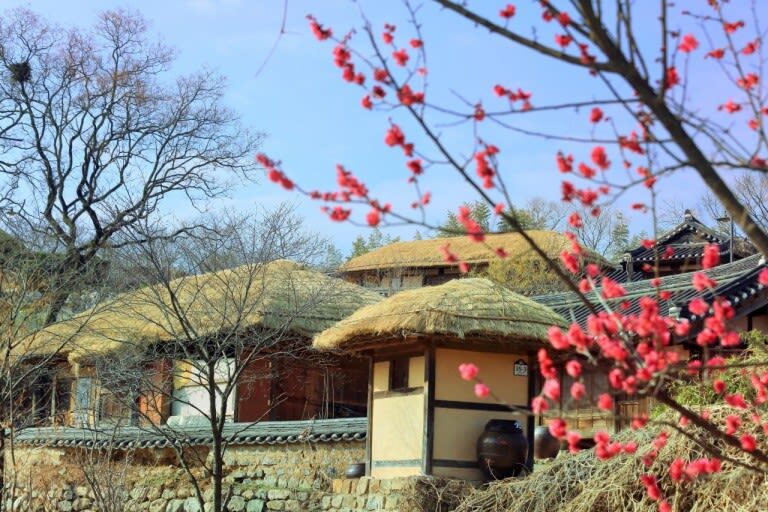
Yangdong Folk Village is a UNESCO-listed Joseon Dynasty village, with traditional Korean homes and architecture at its heart. The visit is self-guided, so you can take your time within the allotted window, look at the houses and lanes, and absorb a different period of Korean history from the Silla sites elsewhere on the route.
The schedule pairs the village with lunch, but the exact lunch location and timing deserve attention. The tour information says lunch is at your own expense and the guide will recommend nearby restaurants. One account of a related autumn tour described lunch around Hwangnidan-gil, with restaurant hours making the break feel rushed. Because the precise lunch arrangement may differ by package or day, ask the guide where you will eat and how long the break is before setting off to find a table.
If you have dietary restrictions, bringing your own lunch is the safest plan. Don’t count on a long meal; the bus has several more stops to make. Korean seaweed snacks may be sampled and can be purchased afterward, but they are optional and not part of the included meal.
Daereungwon and the Silla royal tombs
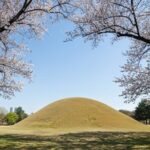
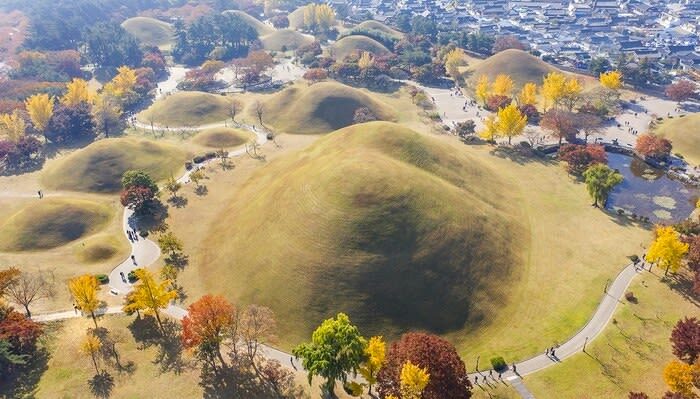
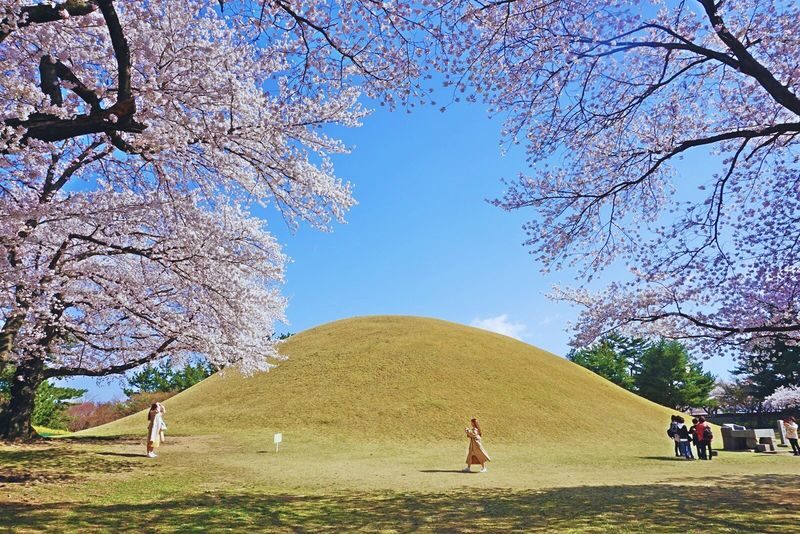
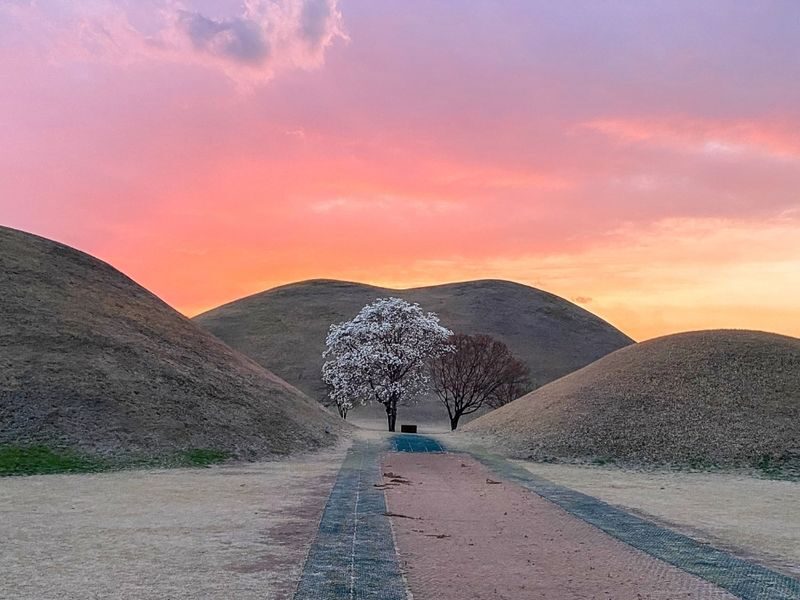
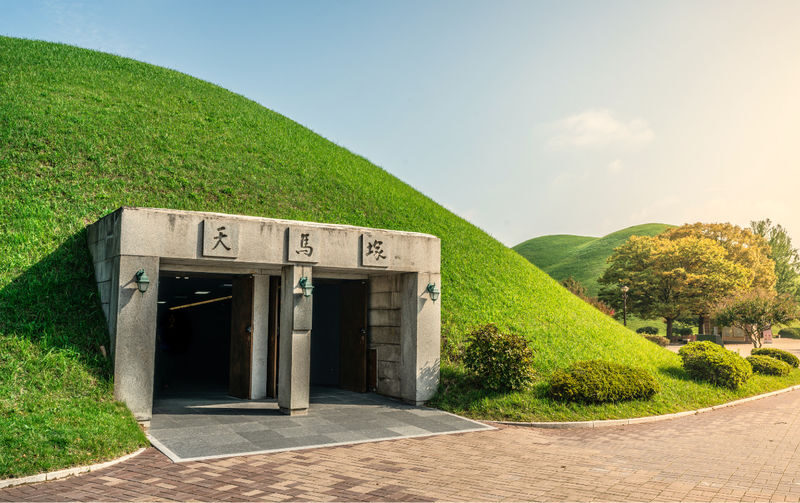
The route reaches Daereungwon Tomb Complex at about 16:30. The grassy mounds are the resting places of Silla kings and other members of the royal court, and their broad, rounded forms make this stop feel very different from the carved stone and wooden architecture at Bulguksa.
This is a good place to connect the day’s separate sights. The temple points to Buddhist practice, while the tombs bring the Silla kingdom’s rulers into view. The visit is also likely to be more about walking and looking than a long guided lesson, so make the most of any explanation your guide offers before wandering.
The schedule gives the group a relatively short window, especially if you want photographs or a slower walk. Wear comfortable shoes and keep the next departure time in mind. That practical habit matters throughout the day: missing the bus can mean missing a later stop, and late arrivals are not refundable.
Cheomseongdae and the old city
Around 17:20, the tour stops at Cheomseongdae, a seventh-century stone observatory described as the oldest in Asia. It is a compact landmark, and its unusual shape makes it easy to appreciate even during a brief visit. A guide’s explanation can add context to what might otherwise be a quick photo stop.
From here, the day starts to shift toward Gyeongju’s evening sights. The route is designed to give you a broad sampler, not a specialist’s tour of every archaeological detail. One account of a less satisfying departure reported very little explanation at the historic sites, so if history matters to you, ask questions when your guide is available rather than assuming every stop will come with a long talk.


Woljeonggyo Bridge at dusk
At about 17:50, you reach Woljeonggyo Bridge, a large wooden historical bridge and one of the day’s architectural highlights. Its scale and traditional style make it a natural place to pause for photographs. The light can change quickly at this hour, which adds a pleasant transition between daylight sightseeing and the night visit.
The stop is short and the schedule is weather-dependent, so you may not have time for an extended walk or repeated photo attempts. If you want pictures, have your camera ready when you arrive. Guides have been praised for helping with photos, but group size and timing will affect how much individual help is possible.
Wolji Pond after dark
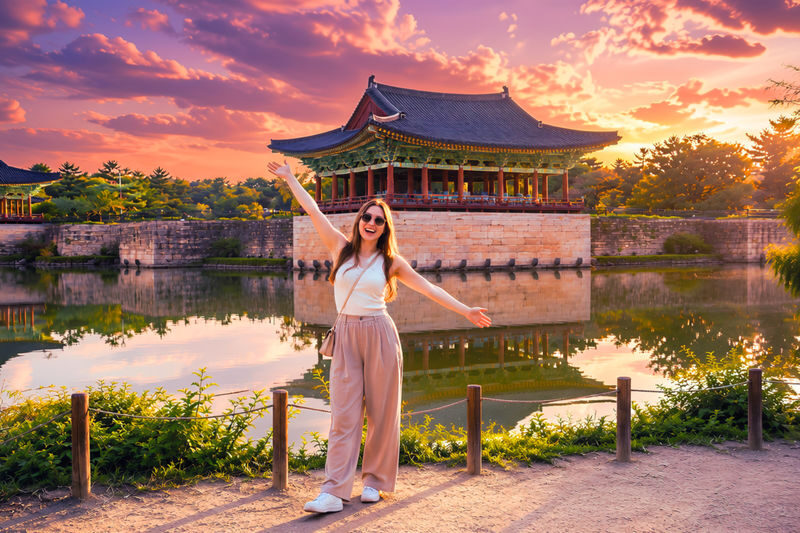
The final major stop is Donggung Palace and Wolji Pond, scheduled for 18:30. The palace grounds were part of the Silla royal complex, and after dark the illuminated structures reflect across the water. This is the visual payoff of the late finish: after a day of stone, earth and traditional buildings, the pond’s lights offer a different kind of view.
The nightscape is a strong reason to choose this route over a daytime-only visit. Still, weather, opening conditions and the day’s timing matter. The operator may adjust the plan for traffic or weather, and severe conditions can lead to cancellations or changes. If the pond is the stop you most want to see, check for updates before departure and avoid arranging a tight onward connection that evening.
The bus is scheduled to leave around 19:30, with return drop-offs beginning around 20:30. The listed return points include Haeundae Station, Seomyeon Station and Busan Station, at different times. Confirm your chosen pickup and return details before travel; the meeting information includes more than one Busan pickup point, and being at the wrong station is an avoidable way to lose the day.
What the price covers, and what it does not
The cost includes round-trip transfers, an English- or Chinese-speaking guide, and admission to the six named attractions. That package can be good value if you plan to visit all of them: you avoid arranging transport between distant sites and paying separate entrance fees along the way.
Meals, drinks, personal expenses and insurance are not included. The apparent bargain becomes less simple if you add restaurant costs, snacks or souvenirs, so budget for those separately. There is no child seat, and children aged zero to two travel free only if they do not occupy a separate seat; bring valid ID for them.
The day may use a Solati or Starex for groups under 13, or a minibus or travel bus for groups above 20. The information does not specify the vehicle arrangement for every group size, so ask the operator if the vehicle type or space is important to you. Tell them in advance if you will bring a stroller, wheelchair or large bag.
Seasonal color and a few sensible precautions
The tour’s seasonal appeal is real, but blossoms and maple leaves follow the weather, not the calendar. The flowering period can shift, and the operator does not guarantee bloom conditions. Book for the sights and the overall route first; treat peak color as a bonus.
Light rain or snow does not automatically stop the tour. Cancellation is reserved for extreme weather, such as typhoons, blizzards or official severe weather warnings that close attractions or suspend public transport. Bring clothing suited to the forecast, and check email the day before departure. The operator may also contact you through WhatsApp or Line, where messages can be filtered as spam.
The minimum group size is eight. If it is not met, you may be offered another date or a refund. The published cancellation terms allow a full refund when you cancel at least 24 hours before the activity date, but late personal cancellations generally do not qualify. If illness or a transport suspension disrupts your plans, contact customer service before departure and be ready to provide supporting documents.
Who should book this Gyeongju day trip?
I would choose this tour if you are based in Busan, want to see several of Gyeongju’s major sights in one day, and are comfortable following a shared schedule. The combination of Bulguksa, Yangdong, royal tombs, historic landmarks and the illuminated pond gives you a useful introduction to different parts of the city’s past.
It is especially appealing if you value transport and admission being arranged, or if you want a guide to help with practical questions and photos. The praise for guides Sunny and Robin suggests that a good guide can make the day more engaging, but guide assignments vary and you should not book on the assumption either will be present.
I would look at a slower or private option if your main goal is an unhurried temple visit, detailed history at every site, or a long lunch and shopping break. This is a full itinerary with a late return, not a leisurely wander. Before booking, confirm which package you are selecting, where it picks up, how lunch is handled and whether the long day fits your plans.
Gyeongju UNESCO World Heritage Sites Day Tour From Busan
“Robin is the best guide/driver/photographer for this tour. Aside from the beautiful places, a bit of history was shared too. The good reco for lunc…”
FAQ
Is lunch included?
No. Lunch and drinks are not included. The guide can recommend a restaurant during the break, and you may bring your own food if you have dietary restrictions.
Which attractions have admission included?
Admission is included for Bulguksa Temple, Yangdong Village, Daereungwon Tomb Complex, Cheomseongdae Observatory, Woljeonggyo Bridge, and Donggung Palace and Wolji Pond.
What languages does the guide speak?
The tour includes an English- or Chinese-speaking guide.
Where are the Busan pickup points?
Listed pickup points include Busan Station Exit 1 and Haeundae Station Exit 5. Check your booking confirmation for the selected point and time, and arrive 10 minutes early.
How long does the tour last?
It is a full-day outing. Departures begin at 9:30, and the listed return times run from about 20:30 to 21:30, depending on the drop-off point.
Does the tour run in rain or snow?
It operates in light rain or snow. Extreme weather, including typhoons, blizzards or official severe weather warnings that close attractions or suspend public transport, may lead to cancellation.
Are cherry blossoms or autumn leaves guaranteed?
No. Blooming and leaf color depend on weather and seasonal conditions, so the tour does not guarantee either.
Is there a minimum group size?
Yes. At least eight participants are required. If the minimum is not met, you may be offered another date or a refund.
Can children aged zero to two join for free?
Yes, provided they do not occupy a separate seat. You must show valid identification for children in this age group. Child seats are not available.
Can I cancel for a full refund?
The stated policy offers a full refund if you cancel at least 24 hours before the activity date, based on local time. Late cancellations for personal reasons generally are not refundable.