Intramuros is more than a cluster of old buildings: its walls hold stories of Spanish rule, Filipino resistance, war and the making of modern Manila. This guided walk links those chapters to places you can still enter, including Fort Santiago, San Agustin Church and Casa Manila.
I like two things in particular: the guide-led storytelling, which gives the sites a human scale, and the route’s mix of landmarks, from a fortress and cathedral to a preserved colonial home. Guides have included Andre, Anne and Denji, though your guide will depend on the day.
One consideration: three hours on cobblestones in Manila’s heat can feel long, and the kalesa or tranvia ride is conditional, not a sure thing. Bring water, a hat and walking shoes, and arrive ready to spend most of the morning outdoors.
- Key points before you book
- Why a guided walk makes sense in Intramuros
- Fort Santiago: 90 minutes at the heart of the story
- Plaza Roma and Manila Cathedral: a change of pace
- San Agustin Church and Casa Manila: stone, faith and home life
- The kalesa, ice cream and other small extras
- Price, tour options and who gets the most from it
- Practical details for a comfortable morning
- Should you book this Intramuros walk?
- FAQ
- Where does the tour start?
- How long does the tour last?
- Which places are included?
- Is the tour offered in English?
- Is a kalesa or tranvia ride guaranteed?
- Are refreshments included?
- Can children join?
- Does the tour operate in rain?
- What is the cancellation policy?
- The Best Of Manila!
- More Walking Tours in Manila
- More Tours in Manila
- More Tour Reviews in Manila
- Not for you? Here's more nearby things to do in Manila we have reviewed
Key points before you book
 1 / 9
 2 / 9
 3 / 9
 4 / 9
 5 / 9
 6 / 9
 7 / 9
 8 / 9
 9 / 9
- Fort Santiago gets the longest visit: Allow about 90 minutes for its gate, dungeons, riverside views and connection to national hero José Rizal.
- The walk makes history easier to follow: Your guide connects Spanish, American and Japanese occupation periods to the landmarks around you.
- The final stops bring home life into the story: San Agustin Church and Casa Manila show two sides of colonial-era Intramuros, religious and domestic.
- A ride may add variety: A kalesa or tranvia is offered for groups of more than six, depending on availability.
- The morning timing helps, but weather matters: The tour runs rain or shine unless severe weather warnings or other unforeseen conditions force a cancellation.
- The guide is a big part of the value: Guides such as Andre and Anne have been praised for clear explanations, humor and visual aids, but the person leading your tour can vary.

👉 See our pick of the 8 Best Historical Tours In Manila
Why a guided walk makes sense in Intramuros
Intramuros was founded in 1571 as Manila’s Spanish walled city. Its compact streets make it a natural place to explore on foot, but the buildings do not explain themselves. A guide helps you connect the stonework and courtyards to the people and events that shaped the Philippines.
The tour’s historical thread extends beyond Spanish rule. Expect discussion of American annexation, Japanese occupation and World War II, with José Rizal’s life and legacy a central part of the Fort Santiago visit. The subject can be sobering, especially when the account turns to imprisonment, occupation and violence. That seriousness is part of the value: the walk is not only a scenic outing but a useful introduction to difficult parts of Filipino history.
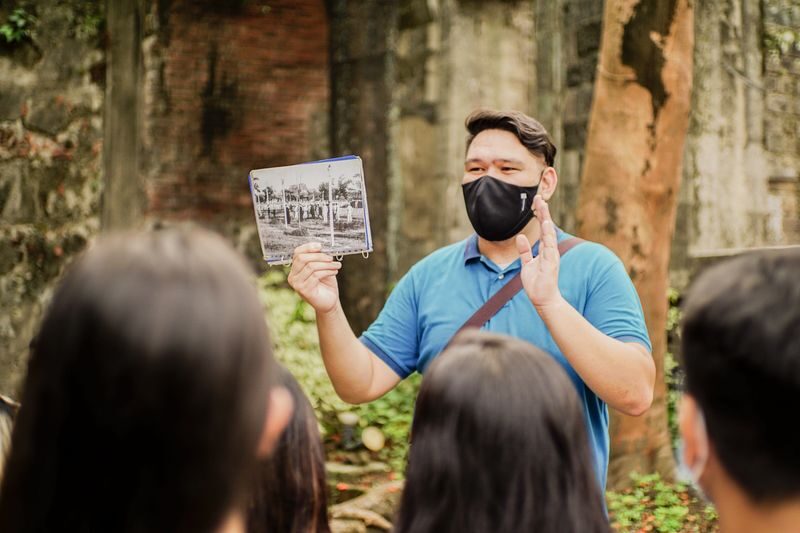
Guides named in past tours include Andre, Anne, Andrei, Gin, Denji and Tessie. You cannot book a particular guide based on the details here, but the best version of this walk depends on someone who can make complex events clear without turning the route into a dry lecture. Some guides use pictures, music or humor to help hold the group’s attention. The tone can vary, but the aim is to make the history understandable as you move through the sites.
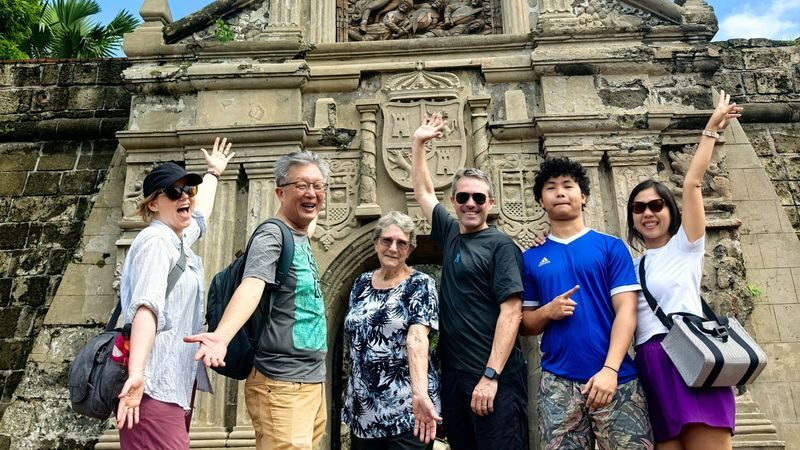
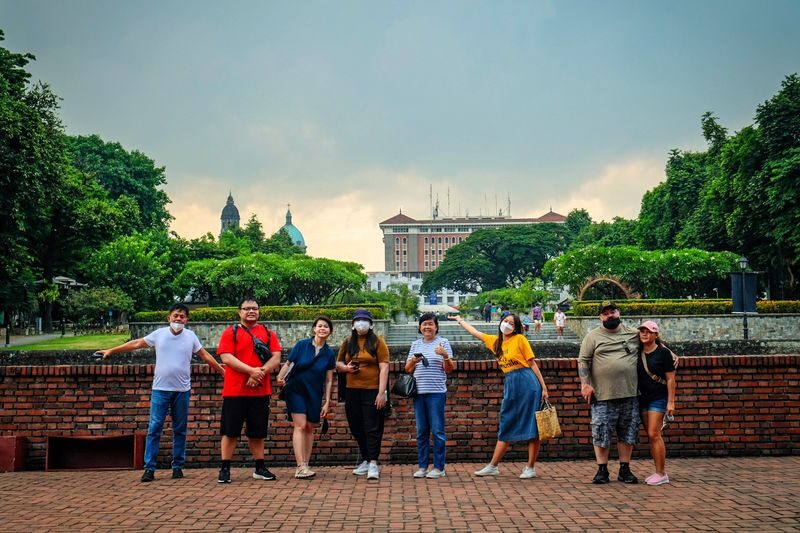
The group format can also make the outing sociable. Past groups have included families, local residents and people visiting Manila with relatives from overseas. If you prefer to ask questions at your own pace or linger for photos, the private option may suit you better. The join-in tour is the more budget-friendly choice.
You can also read our reviews of more walking tours in Manila


Fort Santiago: 90 minutes at the heart of the story
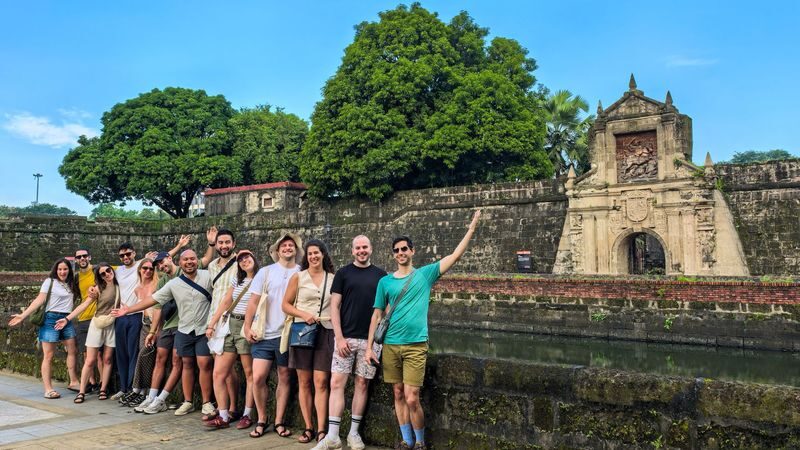
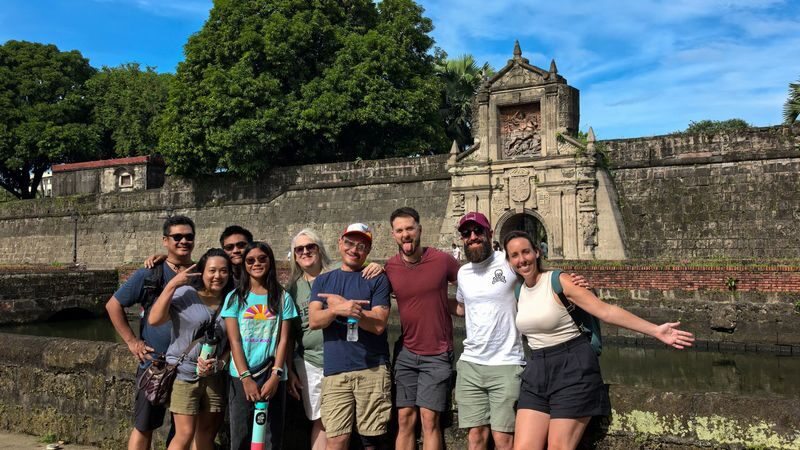
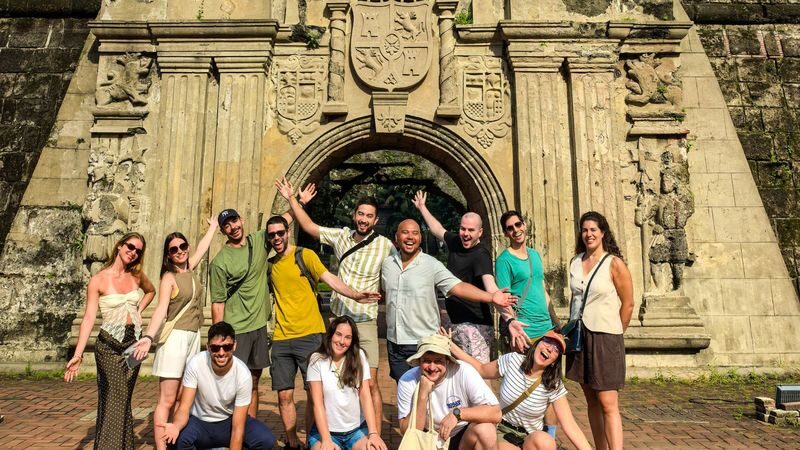
The tour begins at Fort Santiago’s ticket booth area at 9:00 a.m. Arrive at least 10 minutes early. This is the longest stop, with about an hour and a half set aside to explore the fort’s entrance, dungeons, riverside views and links to Rizal.
Fort Santiago works well as the opening chapter because it gives you a place to anchor the broader story. The fort’s role in Manila’s Spanish-era defenses is visible in its gates and walls, while the dungeons and Rizal-related sites bring individual lives into view. Guides use the location to explain how political power, confinement and resistance intersected here.
This is a stop where good narration matters. One part of the visit may feel solemn; another may surprise you with a small detail or a joke that helps the group reset. If you have children or teens with you, the mix of physical spaces and stories may make history easier to follow than a string of dates. A visitor as young as 15 was described as coming away with a stronger interest in the past, though the darker material may not suit every child.
There is time for photos, but this is not just a quick walk through the gate. Wear shoes that can handle uneven surfaces and plan for sun exposure. The route is relaxed in pace, but the length of this stop means you will be on your feet for a while.
Plaza Roma and Manila Cathedral: a change of pace
From Fort Santiago, the group walks to Plaza Roma, Intramuros’s historic main square. The guided stop lasts about 30 minutes and includes a look at Manila Cathedral, a major religious landmark and a symbol of faith and resilience.
The square provides a useful pause after the fort. Instead of focusing on military defenses and imprisonment, your guide can shift attention to the civic and religious life of the walled city. The cathedral’s place in the city’s story helps explain how faith and public life shaped Manila over time.
This is also a good stretch for looking around and taking photographs. The walk between sites passes through colonial streets and architecture, but remember that the ground is not a smooth indoor museum floor. Cobblestones and outdoor conditions call for sensible footwear.
Manila Cathedral is an active place of worship, so dress with care. The tour information notes that places of worship and selected museums may enforce a dress code, and entry can be refused if you do not meet it. Modest, weather-appropriate clothing is the safest choice.
San Agustin Church and Casa Manila: stone, faith and home life
The final main section takes about 50 minutes and pairs San Agustin Church with Casa Manila. San Agustin is a UNESCO World Heritage Site, while Casa Manila offers a look at colonial-era domestic life inside a grand ancestral home.
The pairing gives the walk a useful contrast. At the church, the focus is on religious architecture and the endurance of a historic place of worship. At Casa Manila, attention shifts to how an affluent household might have lived, with the house itself helping explain older construction methods and the social order of the period.
Casa Manila is particularly helpful if you want more than exterior views. You can see a historic home from the inside and get a sense of how domestic life differed from the public world of plazas and churches. The time is limited, however, so expect an introduction rather than a leisurely museum visit.
The published schedule puts the return between noon and 12:30 p.m. The actual order or timing may shift with weather and traffic. This is a compact way to see several important sites in one morning, though anyone wanting long visits at each museum or church may prefer to explore independently afterward.
The kalesa, ice cream and other small extras
Bottled water and local ice cream are included. A horse-drawn kalesa or tranvia ride may also be provided for groups of more than six, depending on availability. These touches add a local flavor to an itinerary built around historical sites, and the carriage ride can offer a different view of the walls and streets.
Treat the ride as a possible extra, not the main reason to book. The tour details make it conditional, and some participants have found that transport or refreshments were not provided when groups were merged or arrangements changed. If either item is essential to your decision, check with the operator before the day rather than assuming it is guaranteed.
The ice cream, sometimes served as sorbetes, is a welcome break in the heat. It is a small inclusion, but a practical one on a warm morning. Carry your own water bottle as well, since you will be outdoors for much of the tour.
You can also read our reviews of more guided tours in Manila


Price, tour options and who gets the most from it
The join-in tour is listed from US$23.80 in the package details, while the experience summary gives a starting price of US$27.39. The private option is listed from US$119.05. Prices can vary, so check the current rate and package before booking.
At either join-in price, the value comes from more than the number of places visited. Fort Santiago and Casa Manila admissions are included, along with a professional, Department of Tourism-accredited guide, bottled water and ice cream. The guide’s context is the key benefit: without it, you can see the same walls and rooms, but may miss how they connect to the country’s past.
Choose the join-in option if you want a lower-cost introduction and do not mind sharing the pace with a group. Choose private if you want more control over stops, questions and photos, or if you are travelling with an older relative who may need a gentler rhythm. A guide was praised for being patient with an elderly aunt, but the tour does not provide detailed accessibility information, so ask about mobility needs before you book.
This suits history-minded visitors, Filipino families sharing the past with relatives from abroad, and anyone with a short stay who wants a well-organized introduction to Old Manila. It is less suited to someone hoping for a quiet, self-paced visit or a ride-focused outing. The main experience is walking and listening.
Practical details for a comfortable morning
Meet at the Fort Santiago Ticket Booth at 9:00 a.m., and arrive 10 minutes early. Late arrivals and no-shows are not refundable. Manila traffic can be unpredictable, especially if you are coming from elsewhere in the city, so leave a generous travel margin.
Wear casual clothes and comfortable walking shoes. Bring a hat or cap, a water bottle and an umbrella for strong sun or rain. Mosquito repellent may also be useful. The tour operates rain or shine, but it is cancelled if the Philippine weather bureau issues an Orange or Red rainfall warning. Severe weather, road closures or other unforeseen events can also disrupt the schedule.
Children aged four and under can join free when accompanied by a paying adult. The tour requires at least two participants; if that minimum is not met, you may be offered a new time or a refund. Booking changes are generally allowed until 24 hours before the activity, with some booking types excluded. Cancellation at least 24 hours before the activity date qualifies for a full refund.
Should you book this Intramuros walk?
I would book this tour if you want a compact, story-led introduction to Manila’s walled city, especially if it is your first visit or you want to make sense of the landmarks rather than simply photograph them. The route is varied, the admissions to Fort Santiago and Casa Manila are included, and the guide’s storytelling can make three hours feel full without feeling rushed.
Book the private option if your group needs flexibility or you want to move at your own pace. For the join-in version, go in expecting a walking tour first, with the kalesa or tranvia as a possible bonus. Bring a hat, dress respectfully for the church and give yourself time to reach the meeting point. If those basics suit you, this is a worthwhile way to understand why Manila’s past still matters in its streets today.
Intramuros Manila Walking Tour: Guided Tour of Old Manila
“The guide, Gon, was incredible. I cannot praise him enough. He was so polite and knowledgable about the history of the area and I left feeling like…”
FAQ
Where does the tour start?
Meet your guide at the Fort Santiago Ticket Booth area. The departure time is 9:00 a.m., and you should arrive 10 minutes early.
How long does the tour last?
The tour is scheduled to return between 12:00 and 12:30 p.m. The timing may change due to traffic or weather.
Which places are included?
The route includes Fort Santiago, Plaza Roma, Manila Cathedral, San Agustin Church and Casa Manila. Admission to Fort Santiago and Casa Manila is included.
Is the tour offered in English?
Yes. An English-speaking guide is included. A Filipino-speaking guide is also listed among the inclusions.
Is a kalesa or tranvia ride guaranteed?
No. A kalesa or tranvia ride is offered for groups with more than six participants, depending on availability.
Are refreshments included?
Yes. Bottled water and local ice cream are included.
Can children join?
Children aged zero to four can join free when accompanied by a paying adult.
Does the tour operate in rain?
The tour operates rain or shine, but it is automatically cancelled if the Philippine weather bureau issues an Orange or Red rainfall warning. Other severe conditions or unforeseen events may also lead to cancellation.
What is the cancellation policy?
A full refund is available if you cancel at least 24 hours before the activity date, in destination local time. Late arrivals and no-shows are not refundable.