Nine Balinese dishes make for a lively lesson, but the appeal here is the route into the kitchen: a morning market visit, a glimpse of rice paddies, then hands-on cooking in a local home. You finish by eating the food you helped prepare, with recipes to take home.
I like the chance to learn how local ingredients fit together, not just follow a recipe, and the generous spread at the end gives you a proper taste of what you made. I also like that you can choose a morning market visit or an afternoon session that includes making a canang offering.
The main consideration is transport and pace. The cooking site is outside central Ubud, the class is shared, and the nine-dish format is designed to keep everyone involved rather than provide a long, individual lesson on every technique.
- The details worth knowing
- From market baskets to the cooking table
- A local kitchen, with a view beyond the stove
- Nine dishes, from spice paste to dessert
- The meal is part of the lesson
- Choosing morning or afternoon
- What the price covers, and what it does not
- How to decide if it fits your Bali plans
- FAQ
- How many dishes will I cook?
- Is there a vegetarian menu?
- Is the market visit included in both sessions?
- What does the afternoon class include instead?
- Is hotel pickup included?
- Is this a private cooking class?
- What is the minimum age?
- Can I bring luggage on the shuttle?
- The Best Of Bali!
- More Cooking Classes in Bali
- More Tours in Bali
- More Tour Reviews in Bali
- Not for you? Here's more nearby things to do in Bali we have reviewed
The details worth knowing
 1 / 5
 2 / 5
 3 / 5
 4 / 5
 5 / 5
- Nine recipes, one shared meal: Cook Balinese favorites with an English-speaking instructor, then sit down to eat the dishes together.
- Morning and afternoon have different extras: The morning option includes a market visit and paddy-field stop. The afternoon option includes making a canang offering.
- A local home is the setting: The class takes place at a Balinese house in Tampaksiring, not in central Ubud.
- Transport is included only in central Ubud: Pickups elsewhere can cost IDR 500,000 to IDR 550,000 per car, for up to four people.
- Come ready to cook as a group: It is not a private class, and the minimum-two-person package is cheaper than the single booking.
- Tell the operator about food needs in advance: Choose a regular or vegetarian menu and list allergies during checkout.

👉 See our pick of the Best Shopping Tours In Bali
From market baskets to the cooking table
The morning class starts with a visit to a local market, where you can see the ingredients that show up in Balinese cooking and hear how they are used. This is more useful than a quick photo stop: knowing the names and roles of spices, vegetables, and fruit makes the recipes easier to understand later.
The market visit is available only for the morning class because the market is closed in the afternoon. If seeing local produce is a priority, choose the 08:00 departure. The pickup time listed for central Ubud is 07:30, so be in the hotel lobby five minutes early. The operator confirms your exact pickup time in advance, and the shared transfer may arrive early or late.
The market can be busy and a little disorderly, and the experience may include a stop at a spice shop. If you are not interested in buying anything, decide that before you arrive and keep purchases optional. One account described feeling pressured to buy spices at inflated prices, so it is sensible to ask prices clearly and avoid buying on the spot unless you genuinely want the items.
After the market, the morning itinerary includes a stop by rice paddies and a look at a Balinese compound. The point is not an extended cultural tour, but a brief introduction to the setting and food traditions before you reach the kitchen. Those wanting a long visit inside a family residence may find this part shorter than expected.
You can also read our reviews of more cooking classes in Bali


A local kitchen, with a view beyond the stove
The class takes place in a Balinese home at Jl. Werkudara, Banjar Penaka, Tampaksiring, Gianyar. That address is well beyond the central Ubud pickup zone, which explains why the drive and transport arrangements deserve attention. Some people find the location hard to locate on their own, so use the pickup service if it is included for your hotel, or confirm directions with the operator if you are arranging your own taxi.
At the house, you are welcomed with cold ginger tea before cooking begins. The setting is a pleasant change from a restaurant kitchen: you are working in a local home, with the surrounding countryside part of the experience. Some participants have described views of a volcano from the cooking area, though clouds can obscure it.
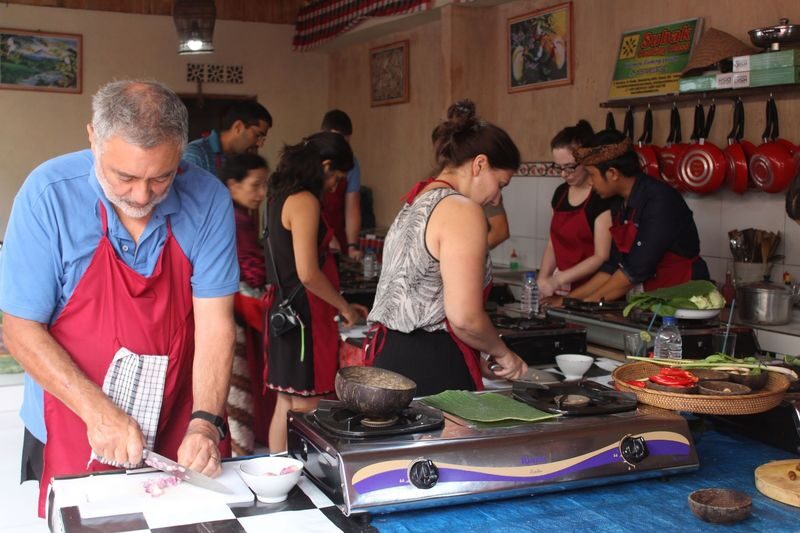
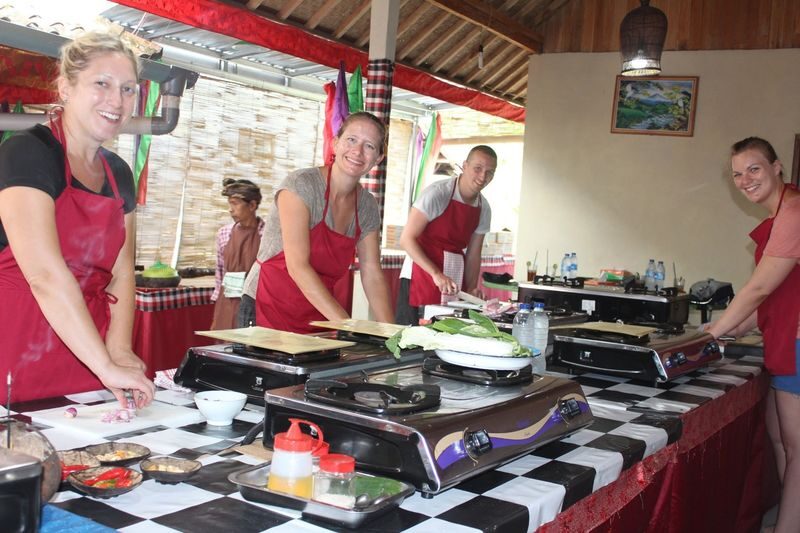
The class is shared with other participants, not private. That has a social upside: you can cook alongside people from different places, and solo participants may be paired with others. The trade-off is that the pace and level of detail need to suit the group. If you want a personal, technique-heavy lesson with lots of time to practice one dish, this format may feel brisk.
Nine dishes, from spice paste to dessert
An English-speaking Indonesian instructor guides the class through nine Balinese recipes. Putu is one instructor name associated with the experience, and participants have praised her patience and clear explanations. The class is structured so you can take part in chopping, mixing, and cooking while assistants help keep the work moving.
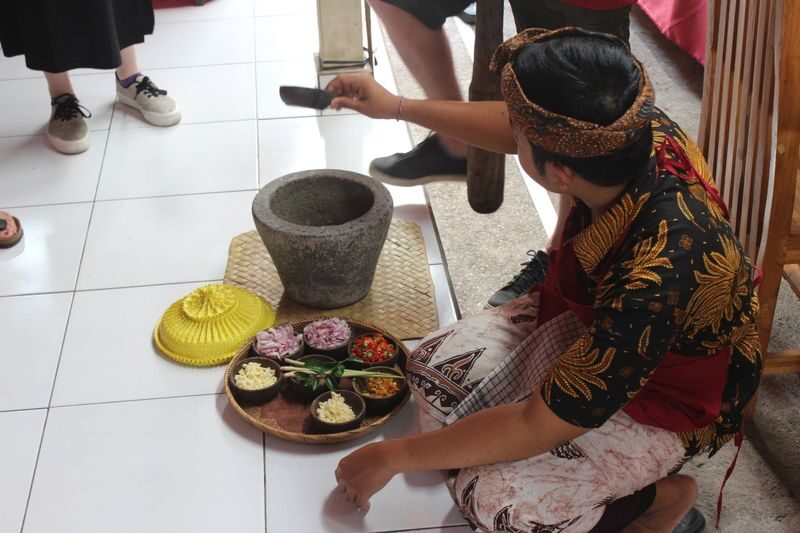
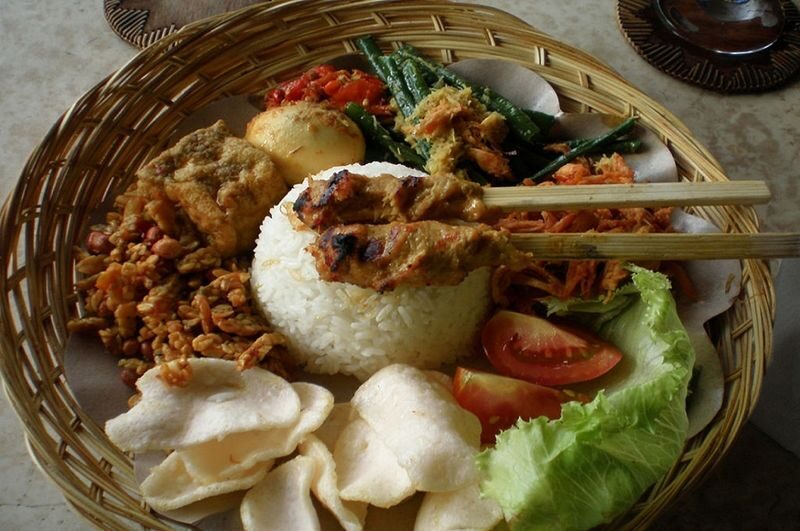
The regular menu can include Mie Goreng Bali, Ayam Santan Bumbu Bali, Tempe Manis, Sate Lilit Bali, Pepes Ayam, Lawar Bali, peanut sauce, tomato sambal, and klepon. Base Gede, the basic spice paste, is also part of the sample menu. Main dishes are served with white rice. The vegetarian menu swaps in tofu and tempeh dishes, including Tofu Bumbu Bali, Sate Tempeh, and Pepes Tofu.
The listed sample menus contain more than nine named items when sauces and spice paste are counted. Think of the class as a broad introduction to a meal’s components, rather than a promise of nine elaborate main courses. Recipes can change with the season and the availability of ingredients.
This is a practical way to learn the building blocks of Balinese flavor. The spice paste and sambals are especially useful because they help explain why several dishes can taste distinct even when they share familiar ingredients. You receive a copy of the recipes, and the instructor may offer substitutions for ingredients that are harder to find at home.
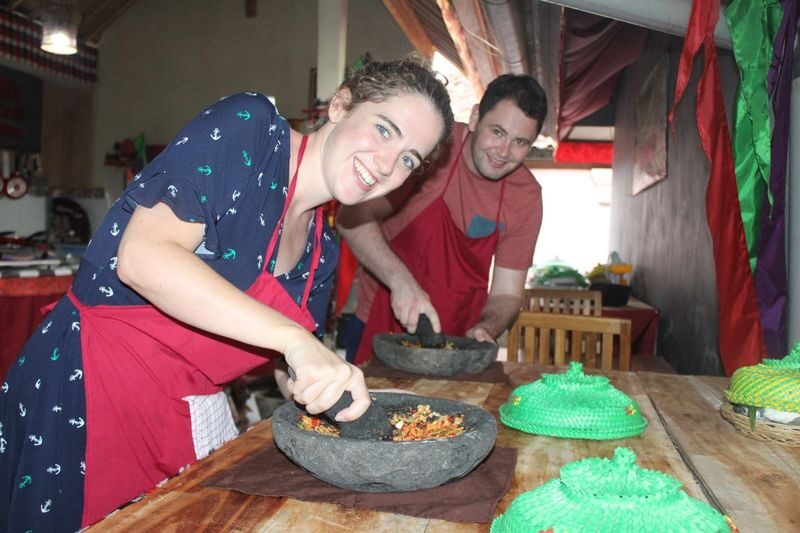
The class is hands-on, but not every participant needs to complete every step from scratch. Some preparation is organized in advance, which helps the group get through the menu without turning the session into a marathon. If you want to adjust chili levels, ask early; the menu can accommodate preferences, but it is worth checking how much control you will have over the seasoning.
The meal is part of the lesson
After the cooking, you sit down to a buffet-style meal inside the Balinese house. This is not a token tasting. With several dishes on the table, you can compare the flavors and see how the components work together. You can also take some of the remaining food home after the class.
Expect a substantial meal, and do not plan a big lunch immediately afterward. The activity is listed as running from 08:00 to 13:00 or 14:30 to 19:00, depending on the option, so it occupies much of the day. The exact schedule may shift with traffic and weather.
The food itself is a matter of taste. Balinese dishes may be rich, spicy, or unfamiliar, and not every palate will love every recipe. The vegetarian menu gives you a clear alternative, but it is still based on the same local flavors. If you prefer mild food or have allergies, state that at checkout and confirm with the instructor when you arrive.
Choosing morning or afternoon
Choose the morning class if the market and rice-paddy visit matter most. It departs at 08:00, with central Ubud pickups generally around 07:30. You get the added context of seeing the ingredients before using them, which makes this the stronger choice for anyone keen on food culture as well as cooking.
Choose the afternoon class if the offering craft appeals more than the market. The listed departure is 14:00, with pickup around 13:30, and the afternoon option includes making a canang offering. The market and paddy-field visits are not part of this session. Both classes include the cooking lesson and meal.
The experience is suitable for participants aged seven and up. Families with children have found the guided format manageable, and children can take part with help. Still, the class involves several dishes and a shared schedule, so younger children should be comfortable spending a few hours cooking and eating with a group.
You can also read our reviews of more tours and experiences in Bali


What the price covers, and what it does not
Prices vary by package and can change. The supplied starting prices are US$24.45 for a single booking and US$17.45 per person for the minimum-two-person package; the overall advertised price begins at US$19.19. Check the date and package before paying, since the lowest starting figure may not apply to a solo booking.
For the price, the package includes the instructor, ingredients, cooking equipment, welcome drink, recipes, and meal. Central Ubud hotel pickup and drop-off are included, which can be valuable given the site’s location. The morning market tour and paddy-field stop, or the afternoon offering craft, depend on which session you choose.
Transport beyond central Ubud costs extra. The listed areas include places such as Sanur, Canggu, Seminyak, Denpasar, and Tegalalang, with an additional IDR 500,000 to IDR 550,000 per car, up to four people. Arrange this with the operator in advance; if you arrive late for pickup, you may need to make your own way to the class.
The shuttle is shared and has limited space, so suitcases are not allowed. For a day trip, bring only what you need. Also remember that alcoholic drinks are not provided, which is hardly a surprise in a cooking class, but worth knowing if you were imagining a wine-paired lunch.
How to decide if it fits your Bali plans
I would choose this class if you want more than a restaurant meal and like the idea of learning several dishes in one sitting. It suits couples, families with school-age children, solo participants open to sharing a kitchen, and anyone curious about Balinese ingredients. The market visit is a real advantage for food-minded visitors, while the afternoon offering craft provides a cultural activity without the early start.
I would look elsewhere if you want a private lesson, a slow course focused on mastering a small number of techniques, or a market tour without any chance of encountering a sales stop. Transport also deserves a careful check if your accommodation is outside central Ubud. The extra car charge can change the value of a low advertised price.
Overall, this is a good-value, practical introduction to Balinese cooking, with the home setting and shared meal doing as much work as the recipes. Pick the morning for ingredients and market life, or the afternoon for the offering craft. Then arrive hungry, curious, and prepared to cook with a group.
Cooking Class in Ubud
“Thank you, Putu, for such a wonderful cooking experience! We were pleasantly surprised that we could make such delicious Balinese food ourselves. P…”
FAQ
How many dishes will I cook?
The class is described as teaching nine Balinese dishes. The sample menus also name sauces, a spice paste, and dessert, so the total number of components may be higher.
Is there a vegetarian menu?
Yes. A vegetarian option is listed, with dishes such as Balinese fried noodles, tofu, tempeh, lawar, peanut sauce, tomato sambal, and klepon. Choose your menu and state any allergies during checkout.
Is the market visit included in both sessions?
No. The market visit and paddy-field stop are for the morning class only. The market is closed in the afternoon.
What does the afternoon class include instead?
The afternoon option includes making a canang offering. It does not include the morning market and paddy-field visits.
Is hotel pickup included?
Pickup and drop-off are included for hotels in central Ubud. Transport outside that area costs an additional IDR 500,000 to IDR 550,000 per car, for up to four people, and should be arranged in advance.
Is this a private cooking class?
No. You will join other participants in a shared class.
What is the minimum age?
Participants must be at least seven years old.
Can I bring luggage on the shuttle?
No. Suitcases and luggage are not allowed on the shuttle because space is limited.