Incense making is a hands-on way to explore a side of Ubud you won’t find in a temple guidebook: how scents are blended, shaped, and used in Balinese Hindu culture. At this beginner-friendly class, you choose natural powders, make sticks and cones, and learn the palm-rolling technique.
I like that you leave with more than a souvenir: the formula and instructions give you a way to keep making incense at home. I also like the chance to handle resins such as frankincense and myrrh, then build a blend around your own scent preferences.
One thing to weigh is that this is a focused indoor workshop, not a broad cultural tour. The advertised price starts around US$19.95 for the join-in class, while the experience is also shown from US$21.95, and the optional ceramic burner costs extra.
- Choose your blend: Pick sandalwood or agarwood as a base, then select a heart scent and resin, subject to availability.
- Make sticks and cones: Learn the formula, palm-roll the mixture, and coat sticks with aromatic powder.
- Try a smoke test: Use this step to assess the incense you make, rather than choosing a scent by name alone.
- Learn local context: The class connects incense-making techniques with the role of incense in Balinese Hindu culture.
- Take home tools for another batch: Your DIY kit and instruction card let you continue at home.
- Add a handmade burner: Paint a ceramic incense burner for an additional 45,000 IDR.
- Start with the scent, not the stick
- Learn the formula before you roll
- Get a cultural story along with the craft
- Take home sticks, cones, and a DIY kit
- What the price includes, and what it doesn’t
- Find the studio on Jl. Bisma
- Who will enjoy this workshop most
- Should you book this Ubud incense class?
- FAQ
- What ingredients can I choose for my incense?
- What will I make during the class?
- Is the workshop suitable for beginners and children?
- What is included in the class price?
- Can I paint an incense burner?
- Where is the meeting point, and how do I get there?
- The Best Of Ubud!
- More Workshops & Classes in Ubud
- More Tours in Ubud
- More Tour Reviews in Ubud
- Not for you? Here's more nearby things to do in Ubud we have reviewed
Start with the scent, not the stick
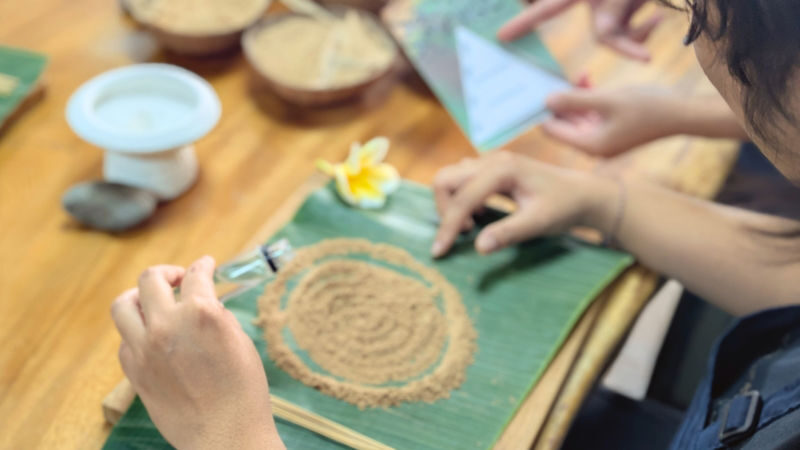
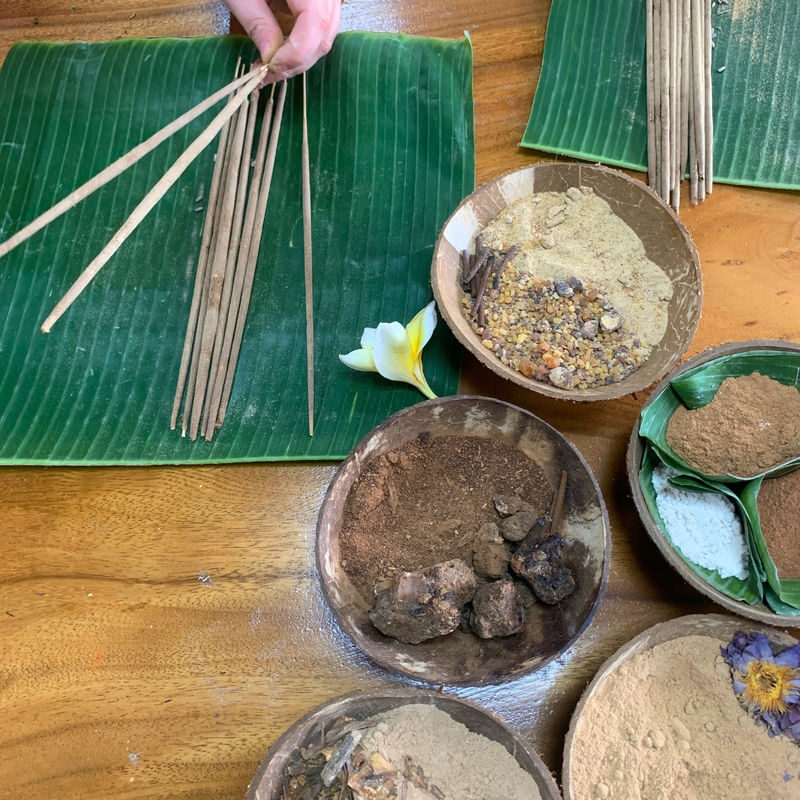
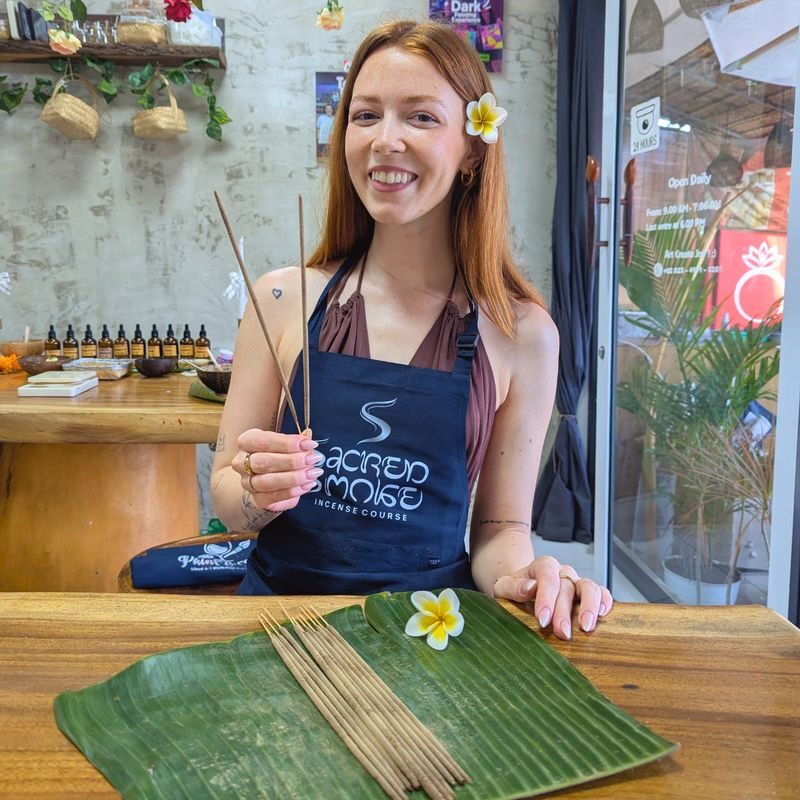
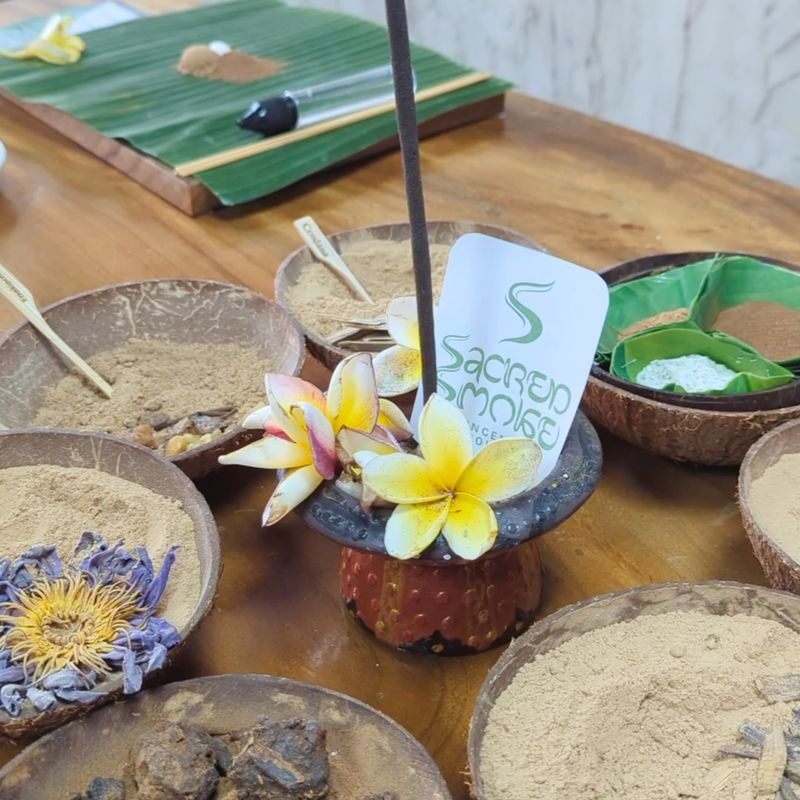
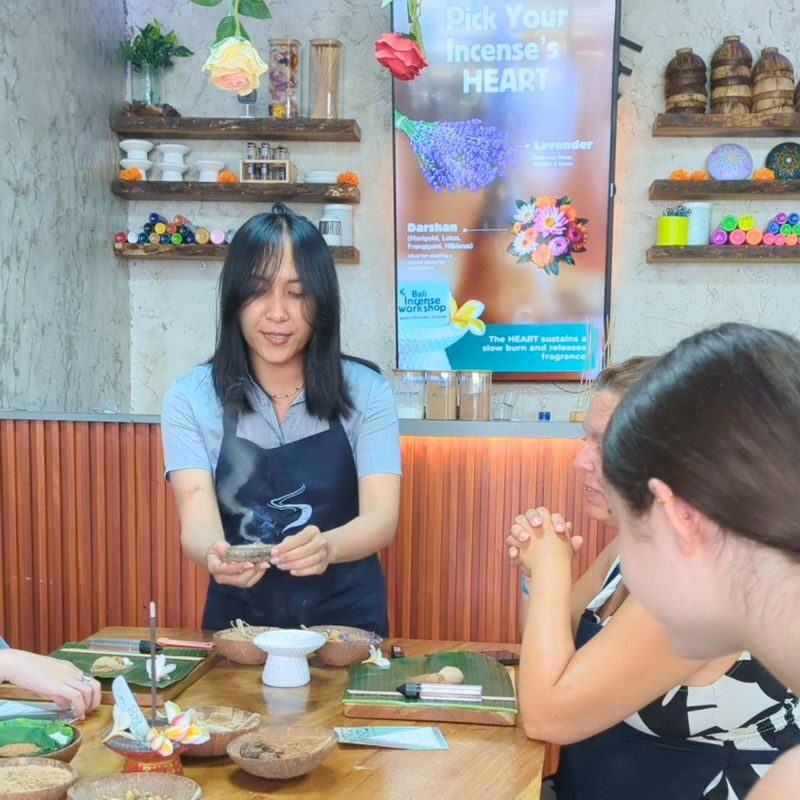
The class begins with the ingredients. You choose a base of sandalwood or agarwood, then add a heart note from Darshan, lavender, rose, or jasmine, depending on what is available. A resin choice completes the blend: frankincense, myrrh, or Royal Hojari.
That structure gives you a simple way to think about fragrance. Instead of being handed a finished stick and told what it smells like, you make decisions at each stage. If you already know you like floral scents, you can lean toward rose or jasmine. If you are new to incense, the instructor can help you compare the powders and make a choice.
The ingredient selection is one of the most personal parts of the activity, but keep availability in mind. The listed heart options are subject to change, so don’t build your whole plan around one particular scent. The workshop describes its powders as natural and free of factory ingredients. That’s useful if you prefer to know what goes into the incense you burn, though it is not a promise that everyone will react to smoke in the same way.
👉 See our pick of the 25 Best Guided Tours In Ubud
Learn the formula before you roll
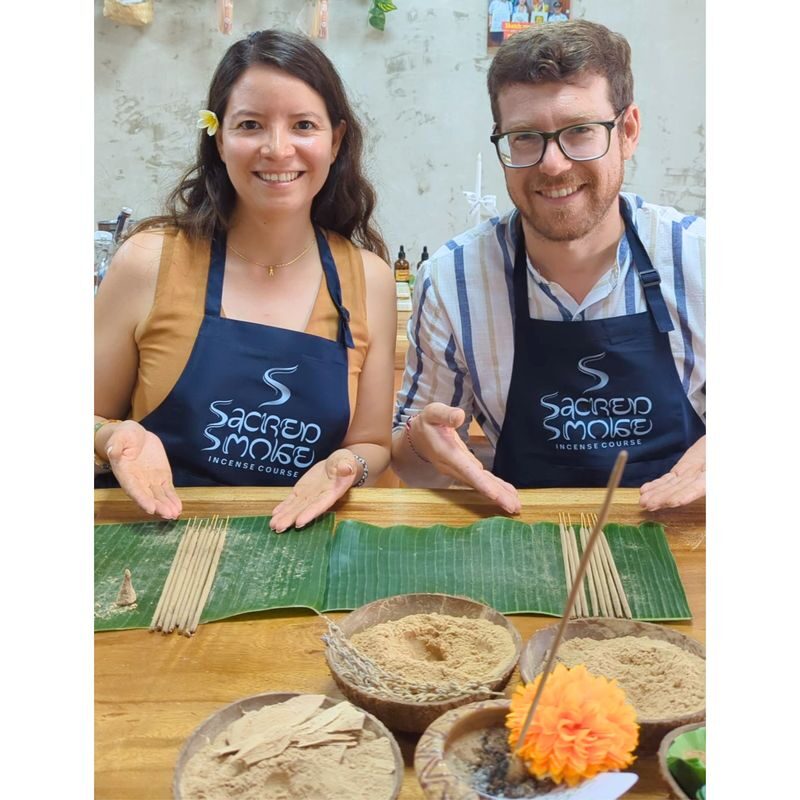
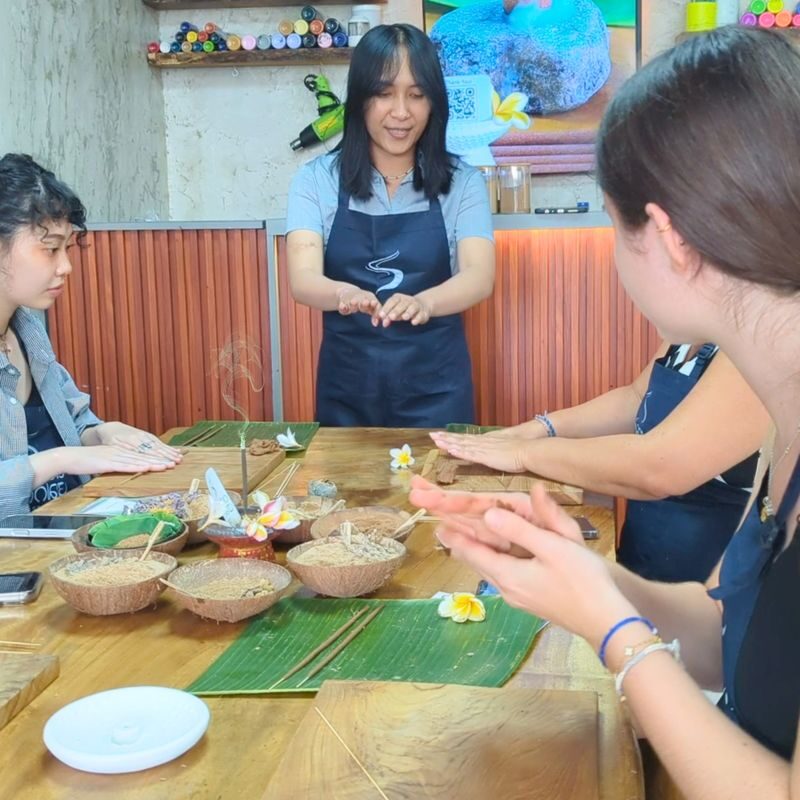
Once you have selected your ingredients, the instructor explains the formula and how to work the powders into a form that can be shaped. This is the practical heart of the class. You are not simply decorating a ready-made stick; you learn a process you can repeat with the kit at home.
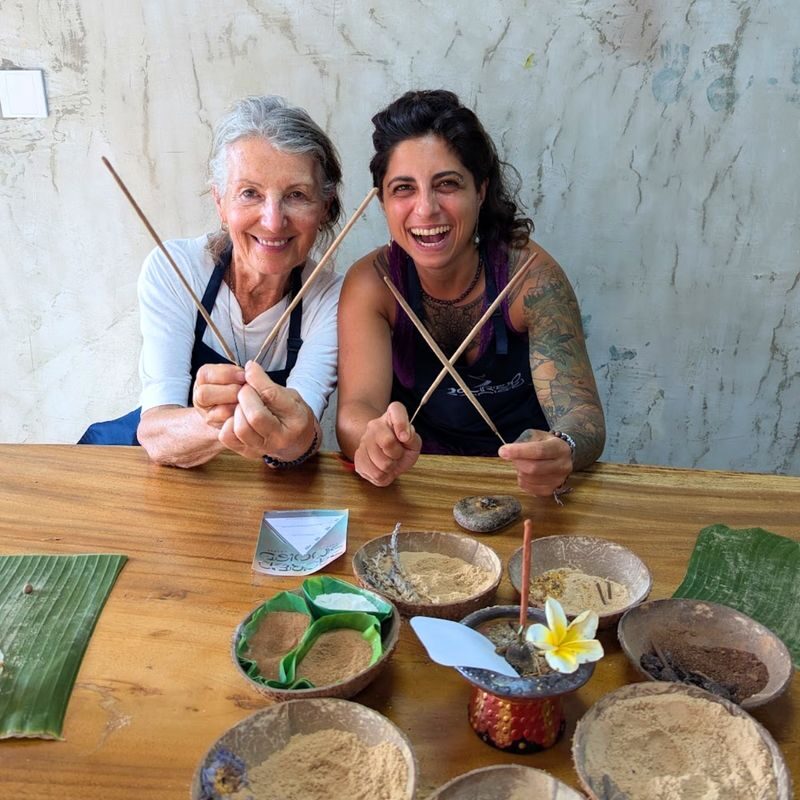
The palm-rolling technique turns the mixture into incense sticks. It takes a little attention and coordination, which makes it a good activity for beginners who like to work with their hands. The class also includes making incense cones, so you get to try a second shape rather than spending the whole session on one task.
A smoke test is part of the instruction. It gives you a chance to assess how the incense burns and smells, and to connect the finished product with the choices you made earlier. Your handmade sticks are described as having a burn time of more than an hour each. That makes them a useful keepsake, not just a quick craft project to tuck into your bag.
You can also read our reviews of more tours and experiences in Ubud


Get a cultural story along with the craft
The workshop includes an introduction to the history of incense and its place in Balinese Hindu culture. That context helps explain why incense is more than a pleasant scent in Bali. You learn about its cultural role while working through the practical steps of making it.
The class also covers how to buy incense sticks. That advice is especially useful if you plan to shop for incense during your stay or want to find ingredients after returning home. You leave with a better sense of what you are looking at, instead of relying only on packaging or fragrance names.
English-speaking instructors guide the process, and the class is designed for people without prior experience. Instructors named by participants include Kivya and Gi. The specific instructor can vary, but the teaching approach described for the activity is step by step, with guidance through ingredient choices and the making process.
Take home sticks, cones, and a DIY kit
Your finished incense is the most immediate souvenir. If you make sticks, they can be packaged in banana leaves, a practical and distinctly charming touch. You also take home an incense-making kit and an instruction card, so you can make more at home rather than treating the workshop as a one-time craft.
The kit adds real value to the class. A standard souvenir captures a memory; this one gives you the basic materials and method to continue the activity. If you expect to travel with the kit, remember that you are taking home powders and handmade incense, so pack them securely.
You can also paint a ceramic incense burner for an extra 45,000 IDR. It is optional, not part of the standard package. Choose it if you want a more complete set for home, but skip it if you are mainly interested in learning the formula and making the incense itself.
What the price includes, and what it doesn’t
The join-in class is listed from US$19.95, while the experience is also described as starting from US$21.95. Treat those figures as starting prices rather than a guaranteed final amount, and check the price shown for your chosen date and package before booking.
The listed package includes admission, an English-speaking guide, all incense-making materials, the take-home kit, and the instruction card. The optional painted burner costs extra. Transport and other personal expenses are not included, so you will need to arrange your own ride to the workshop.
For the price, the strongest value is the combination of instruction and take-home materials. You learn a repeatable skill, make incense during the class, and get supplies for another attempt. If you only want to buy incense, this is a more involved and time-consuming way to do it. If you enjoy crafts or want a cultural activity with a practical takeaway, the price makes more sense.
Find the studio on Jl. Bisma
The meeting point is Sacred Smoke Incense Workshop at Paint & Sip Bali Art Workshop Studio, Jl. Bisma No. 85, Ubud, Kecamatan Ubud, Kabupaten Gianyar, Bali 80571. The directions state that you can reach it by motorbike, car, or online taxi. Transport is not included.
Arrive 10 minutes before your scheduled start. The activity asks you to present a mobile voucher, and late arrivals or no-shows are not eligible for a refund. The voucher is valid only on the date and time specified, so check those details before setting out.
The class is open to participants aged seven and older, and no previous experience is needed. It is not wheelchair-accessible. Outside food and drinks are not allowed, and anyone who appears intoxicated may be refused service without a refund.
Who will enjoy this workshop most
This class suits you if you like making things, want a low-key activity between Ubud’s bigger outings, or are curious about the ingredients behind incense. It can also work for families with children aged seven and up, provided the child is interested in following instructions and handling craft materials.
It is less suited to anyone seeking a full day of sightseeing or a highly active outing. The focus is on scent, technique, and cultural context in one studio. The precise class duration is not specified, so don’t build a tight schedule around an assumed finish time.
If you are sensitive to smoke or fragrance, consider that incense-making includes a smoke test and that the finished product is intended to be burned. The workshop describes its ingredients as natural, but natural ingredients can still affect people differently. You can enjoy the making process without treating the smoke as a health benefit.
Should you book this Ubud incense class?
Book it if you want a practical craft with a cultural thread and something useful to take home. The combination of ingredient choices, stick and cone making, Balinese context, and a DIY kit makes it more than a quick souvenir stop.
Skip it if your priority is a packed sightseeing itinerary, if you need wheelchair access, or if you would rather avoid incense and smoke altogether. For a relaxed Ubud activity that teaches a skill you can repeat, this is a thoughtful choice. Confirm the current price and ingredient availability before booking, and allow enough time to reach the studio early.
Ubud: Incense Making Workshop with Free DIY Incense Kit
“Ms Kivya did a marvelous job in explaining and guiding us throughout the workshop. super highly recommended. we learnt a lot. will definitely come…”
FAQ
What ingredients can I choose for my incense?
You can choose sandalwood or agarwood as the base, and frankincense, myrrh, or Royal Hojari as the resin. Heart options include Darshan, lavender, rose, and jasmine, subject to availability.
What will I make during the class?
You will make incense sticks and cones. The class also covers the formula, palm-rolling, and a smoke test.
Is the workshop suitable for beginners and children?
Yes. No prior experience is needed, and participants must be at least seven years old.
What is included in the class price?
The package includes admission, an English-speaking guide, incense-making materials, a take-home DIY kit, and an instruction card. Transport and personal expenses are not included.
Can I paint an incense burner?
Yes. Painting a ceramic incense burner is optional and costs an additional 45,000 IDR.
Where is the meeting point, and how do I get there?
Meet at Sacred Smoke Incense Workshop at Paint & Sip Bali Art Workshop Studio, Jl. Bisma No. 85, Ubud. The listed ways to get there are by motorbike, car, or online taxi.