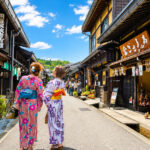
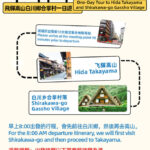
Shirakawa-go’s steep thatched roofs are the picture-postcard draw, but this 11-hour trip also gives you time to wander Takayama’s old merchant streets. From Nagoya, the coach handles a long mountain-region journey that would take more planning by public transport, while you get roughly two hours at each main stop.
I like the contrast between Takayama’s wooden townhouses and food stalls and Shirakawa-go’s working village of gassho-style farmhouses. The set schedule is useful if you want a taste of both without sorting out connections, though two hours at each can feel short, especially if you want a sit-down meal or a slow visit to the village viewpoint.
One detail to check before booking: Gujo Hachiman Castle and its water-town streets appear in the tour description, but they are not listed as stops in the day’s schedule. The stated route visits Takayama and Shirakawa-go, with a short service-area break.
- Key points before you book
- What this Nagoya day trip actually covers
- The 08:00 Nagoya start and long ride north
- Takayama’s Sanmachi streets: two hours on foot
- Shirakawa-go’s gassho farmhouses and village paths
- What the guide and group format mean
- Price, pace, and the trade-off
- Should you book this tour?
- FAQ
- Where does the tour depart from?
- What time does the tour return to Nagoya?
- How long do you get in Takayama and Shirakawa-go?
- Does the tour visit Gujo Hachiman Castle?
- Is a guide included?
- Are meals included?
- Is the plateau milk included?
- Can children join the tour?
- Can I cancel for a refund?
- The Best Of Shirakawa!
- More Tours in Shirakawa
- More Tour Reviews in Shirakawa
- Not for you? Here's more nearby things to do in Shirakawa we have reviewed
Key points before you book

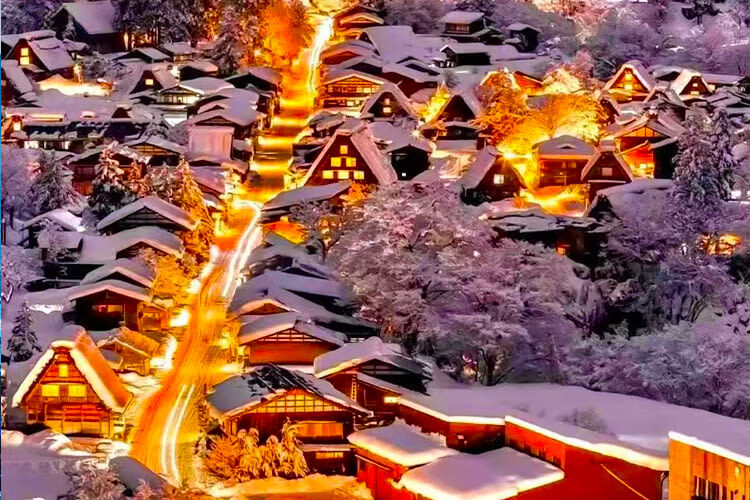
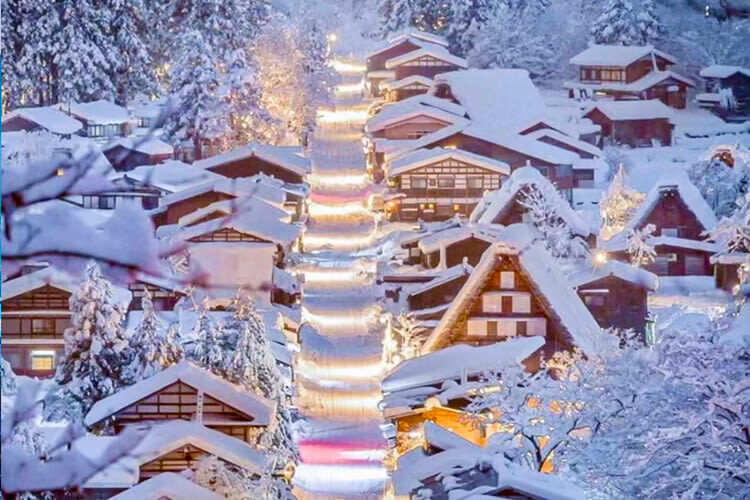
- Two main stops, about two hours apiece: Explore Takayama’s Sanmachi area and Shirakawa-go’s Ogimachi village independently within the set time.
- A long day from Nagoya: The tour runs from 08:00 to about 19:00, with much of the day spent on the road.
- Useful for a first visit: Round-trip transport, tolls, fuel, and parking are included, so you avoid arranging separate regional connections.
- Guide service can vary: With fewer than 12 people, the operator may send a vehicle with a driver only. Larger groups are scheduled to have a driver and guide.
- No meal is included: Takayama is a good place to try Hida beef or Takayama ramen, but plan to use your free time wisely.
- Winter brings beauty and risk: Snow can transform the village, but paths may be slippery, and road delays can cut into stop time.

👉 See our pick of the 3 Best Historical Tours In Shirakawa
What this Nagoya day trip actually covers
The advertised appeal is a quick sampler of Gifu Prefecture: old-town architecture, mountain scenery, and a UNESCO-listed village. In practice, the scheduled visit is to Hida Takayama and Shirakawa-go, with a short stop at Hirugano Kogen Service Area. The service-area break is useful, but it is not a third sightseeing town.
Gujo Hachiman Castle is described in the promotional material, alongside its old streets and traditional dance culture. Yet the day’s timed schedule does not allocate a stop there. If the castle or Gujo’s water-town lanes are a priority, confirm the exact route for your date before paying, and do not assume the coach will visit.
The tour is sold from about $49.29, though the price can vary by date and package. At the lower end, it can be good value for covering two distant destinations in one day: round-trip transport, road fees, and parking are included. You are paying for the transfer and a time-efficient overview, not admission tickets, meals, or an in-depth guided tour at every site.
You can also read our reviews of more tours and experiences in Shirakawa.


The 08:00 Nagoya start and long ride north
Meet at 08:00 in front of the clock by the West Police Station at Nagoya Station’s Taiko-dori Exit. Arrive ten minutes early. This is a shared coach trip, and late arrivals or no-shows are not refunded. The return drop-off is listed near the Nagoya West Exit, by the MINI STOP behind BIC CAMERA.
The day runs about 11 hours, with a listed return around 19:00. The drive makes the trip practical, but it also defines the experience: you spend several hours in a vehicle to reach the mountain towns and villages. The return leg alone is scheduled for about three hours, and traffic, weather, weekends, and holidays can shift the plan. Keep your evening flexible rather than booking a tight dinner reservation or onward connection.
At Hirugano Kogen Service Area, the group has a 15-minute stop amid highland scenery. Each person is offered a bottle of plateau milk. Treat this as a leg-stretch and refreshment break, not a full meal stop.
Takayama’s Sanmachi streets: two hours on foot
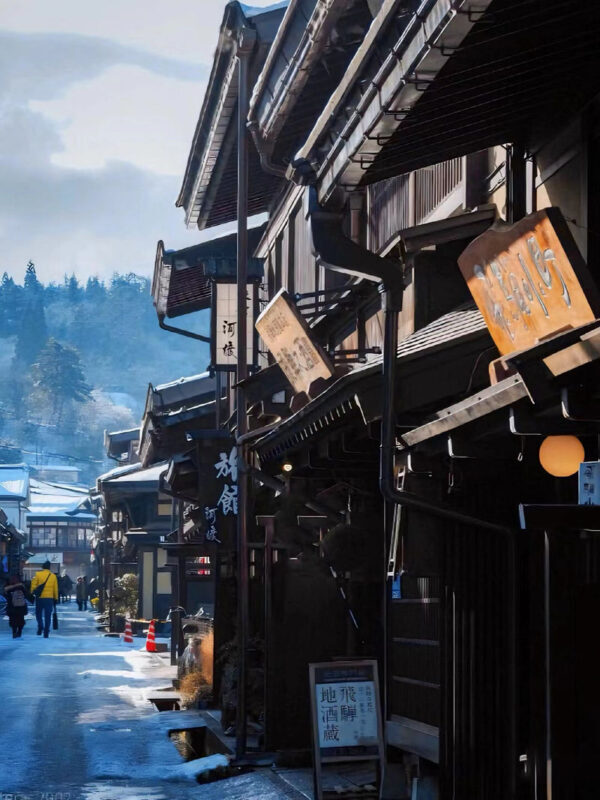
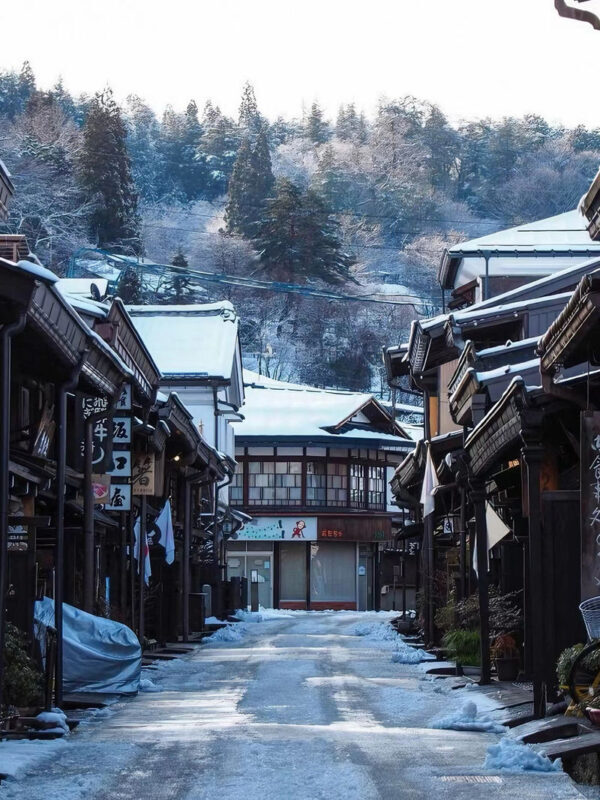
The first main visit is Hida Takayama, often called the Little Kyoto of Hida. Its Sanmachi area preserves merchant-town streets, with timber-fronted machiya, latticework, and traditional shop buildings. The setting gives you a feel for the region’s craft and trading past without needing to enter a museum.
Two hours is enough for a purposeful stroll, a snack, and a few photographs. It is not generous if you want to browse every shop, sit down for lunch, and explore side streets at leisure. Pick your priorities before stepping off the bus. If local food is high on your list, Hida beef sushi, beef dishes, and Takayama ramen are among the specialties named for the area. Meals and drinks are at your own expense.
The free-time format suits people who like to set their own pace. Guides may give route tips, restaurant suggestions, or information on the bus ride, but don’t count on a guided walk through every lane. Accounts of the trip describe guides such as Wang, Li, and Vicky, with language skills and commentary varying by departure. The operator states that groups under 12 may have a driver without a separate guide, so this is not the best choice if you need continuous interpretation.
Shirakawa-go’s gassho farmhouses and village paths
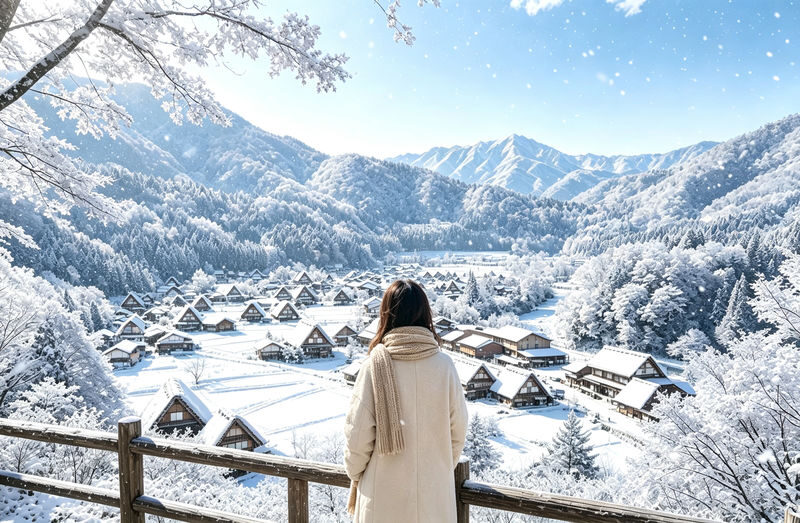
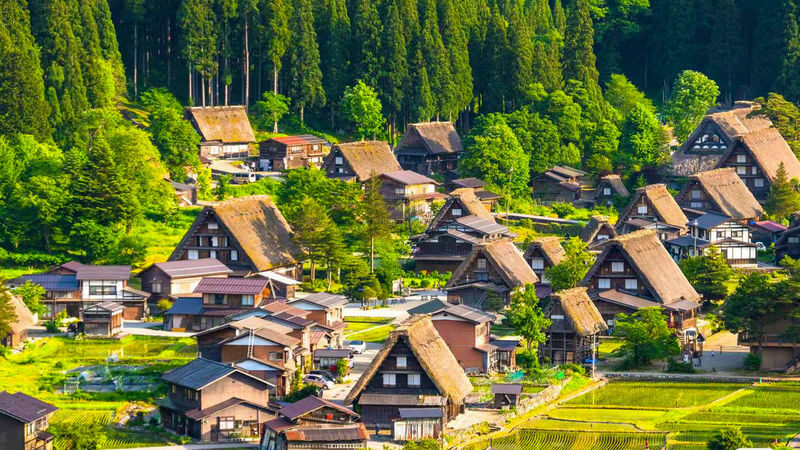
The second major stop is Ogimachi, the largest of Shirakawa-go’s three World Heritage villages. Its traditional gassho-zukuri farmhouses have steep thatched roofs designed to cope with heavy snowfall. The village sits among mountains, rice fields, and waterways, making the setting as much a part of the visit as the buildings themselves.
You have about two hours to explore. That gives you time to walk among the houses and take in the village atmosphere, but the Shiroyama Observatory adds a decision. It is northeast of Ogimachi and offers a broad view over the village and Mount Haku. Getting there takes effort and time, so you may need to choose between the viewpoint and a slower walk through the village. The uphill walk can feel like a workout, and winter conditions can make paths slippery.
Please treat this as a lived-in place, not a theme park. The appeal lies in seeing homes and village life in their setting, so be considerate around private property and residents. The trip description notes 152 households in Ogimachi, a reminder that this is a community as well as a famous sight.
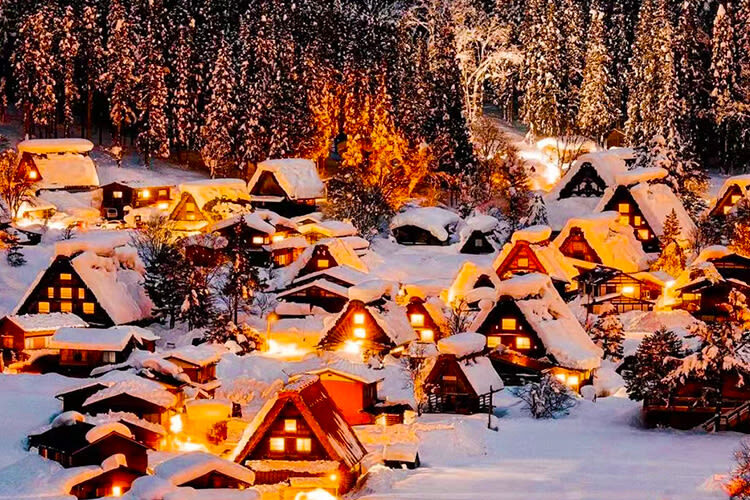
The season changes the mood. Winter snow can make the roofs look especially striking, but snowfall is not guaranteed, even in winter. In spring, cherry blossoms may appear; summer brings green mountain surroundings; and autumn can bring golden fields and red foliage. The tour description also notes a January-to-February illumination season that requires reservations. Do not assume the daytime coach visit includes the evening event.
What the guide and group format mean
The tour is a shared ride, and the vehicle is assigned according to group size. With fewer than 12 participants, the operator says it may use a vehicle with fewer than 14 seats and provide a driver only. For groups above 12, it plans one driver and one guide. The advertised package describes Chinese and English guidance, but guide availability and language delivery can differ by departure.
Some guides have been praised for clear multilingual explanations, practical reminders, photo tips, and restaurant suggestions. Others have offered only brief introductions before leaving people to explore on their own. That range makes the tour a better fit for an independent visitor who wants transport and a little orientation than for someone expecting a full-day lecture or a personal escort.
The operator sends departure details by email between 16:00 and 21:00 on the day before travel. Check your inbox and spam folder, keep your phone accessible, and follow the instructions for joining any contact group. The vehicle number and guide details are provided there. If you have large luggage, notify the operator when booking; vehicle capacity is limited, and the operator may refuse a reservation if the group or luggage exceeds it.




Price, pace, and the trade-off
At a starting price of $49.29, this can be a practical way to see both Takayama and Shirakawa-go from Nagoya without organizing separate transport. The price includes the coach transfer, tolls, parking, and fuel. It does not include meals, drinks beyond the stated plateau milk, personal costs, gratuities, or travel insurance.
The main trade-off is time. Two hours in each place is longer than a quick photo stop, and the freedom to wander is a plus. Still, you will need to choose between food, shopping, viewpoints, and unhurried exploring. If roads are slow, stop time may be shortened or the order of visits changed. Holiday traffic can cause delays of several hours, so avoid making this your only plan for a fixed evening event.
The tour can be a sensible choice for solo visitors, couples, or families who want to see the headline sights with a straightforward transport plan. Children aged 2 and older pay the adult rate. Children aged 0 to 2 can ride free only if they do not need a separate seat, and the operator says child seats are not available. Families should weigh the long coach day and limited free time against the convenience.
Should you book this tour?
Book it if your priority is to see Takayama and Shirakawa-go in one day, you are comfortable exploring on your own, and you can accept a long ride and a firm timetable. The strongest value is the transport: these places are far enough from Nagoya that arranging both independently takes more effort.
Skip it if you want a slow village visit, a long lunch, extensive guided touring, or a guaranteed stop at Gujo Hachiman Castle. Check the package’s guide language and exact route, pack for the weather, and leave your evening open. For a first look at Gifu’s best-known old town and mountain village, it offers a lot in one day, provided you know how much of that day belongs to the road.
Shirakawa-go Gassho Village & Hida Takayama Old Town One-Day Tour (Departing from Nagoya) – Guaranteed Departure for 1 Person
“A 100-point experience, with a well-planned trip. Our tour guide, Wang, was responsible and professional – a rare find among young, excellent guide…”
FAQ
Where does the tour depart from?
Meet at 08:00 in front of the clock by the West Police Station at Nagoya Station’s Taiko-dori Exit. The instructions ask you to arrive ten minutes early.
What time does the tour return to Nagoya?
The scheduled return is around 19:00, with drop-off near the Nagoya West Exit by the MINI STOP behind BIC CAMERA. Traffic or weather can change the timing.
How long do you get in Takayama and Shirakawa-go?
The schedule allows about two hours at each main stop. Traffic delays may reduce the time.
Does the tour visit Gujo Hachiman Castle?
Gujo Hachiman Castle is described in the tour information, but it is not listed as a stop in the stated daily schedule. Confirm the route for your date if you are considering booking for the castle.
Is a guide included?
The package describes Chinese and English guidance, but the operator says groups under 12 may travel with a driver only. Larger groups are scheduled to have a driver and a guide.
Are meals included?
No. Meals and beverages are not included. You can use your Takayama stop to buy local food, such as Hida beef dishes or Takayama ramen.
Is the plateau milk included?
The Hirugano Kogen Service Area stop is listed as a 15-minute break, and each person can receive a bottle of plateau milk.
Can children join the tour?
Children aged 2 and older pay the adult rate. Children aged 0 to 2 may ride free if they do not occupy a separate seat; if they need a seat, they must buy an adult-price ticket. Child seats are not available.
Can I cancel for a refund?
A full refund is available if you cancel at least 24 hours before the activity date, based on local time. Late arrivals and no-shows are not refunded. If extreme weather or an unforeseen event leads the operator to cancel, you can reschedule or request a full refund.