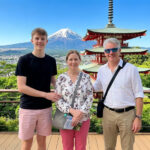
A day that pairs Mount Fuji with a carpet of pink moss phlox can be a fine change of pace from Tokyo. This roughly 9.5-hour coach trip links seasonal flower viewing with two of the Fuji Five Lakes, giving you a broad sampler of the area without the work of arranging several rural connections yourself.
I like two things in particular: the route changes with the season, so you may get the Fuji 5th Station in warmer months or Arakurayama Sengen Park in cooler ones; and Lake Yamanaka adds a gentler finish, with swans, a sightseeing boat and an optional hot spring. Guides such as Anna, Yong and Mizki have been praised for clear explanations and an upbeat manner.
The trade-off is time. You’ll spend a good part of the day on the road, and traffic or weather can cut stops short or change them. The Shibazakura Festival is seasonal, its admission is extra, and seeing Mount Fuji clearly is never guaranteed.
- Two different Fuji viewpoints: The first stop is the 5th Station from April 26 to September 30, or Arakurayama Sengen Park from October 1 to April 25.
- Flowers depend on the calendar: The route may include the Shibazakura Festival, cherry blossoms, autumn leaves or Oishi Park, according to the season.
- Lake time comes with choices: At Lake Yamanaka, you can walk by the water, pay for a swan-shaped boat or visit Benifuji no Yu hot spring.
- Lunch is not included by default: A Japanese meal may be offered as an extra, but you can make your own food plans.
- The value is transport and variety: From $70.39, the tour bundles round-trip transport, parking and tolls, but optional admission fees add to the total.
- Keep your schedule flexible: The drive, weather and vehicle time limit can affect the order of stops and how long you stay.
- From Tokyo to Fuji country
- Choose your first Fuji view by season
- Flowers at Kawaguchi or Motosu
- Lake Yamanaka: swans, a boat or a hot spring
- What the guide and lunch add
- Is .39 good value?
- Who should book this day trip?
- FAQ
- How long is the tour?
- Does every departure visit the Shibazakura Festival?
- Is Mount Fuji 5th Station included all year?
- Are festival admission and the lake boat included?
- How much does Benifuji no Yu cost?
- Is lunch included?
- What languages does the guide speak?
- The Best Of Fujiyoshida!
- More Tours in Fujiyoshida
- More Tour Reviews in Fujiyoshida
- Not for you? Here's more nearby things to do in Fujiyoshida we have reviewed
From Tokyo to Fuji country
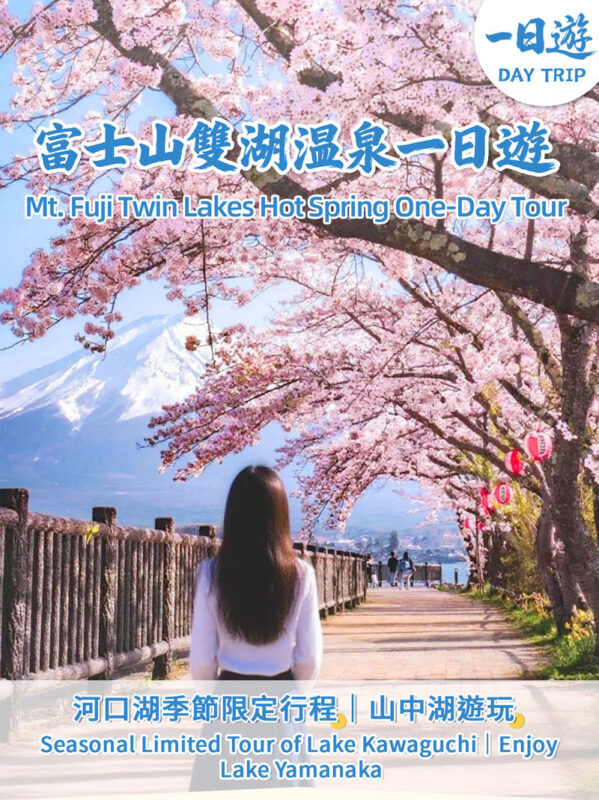
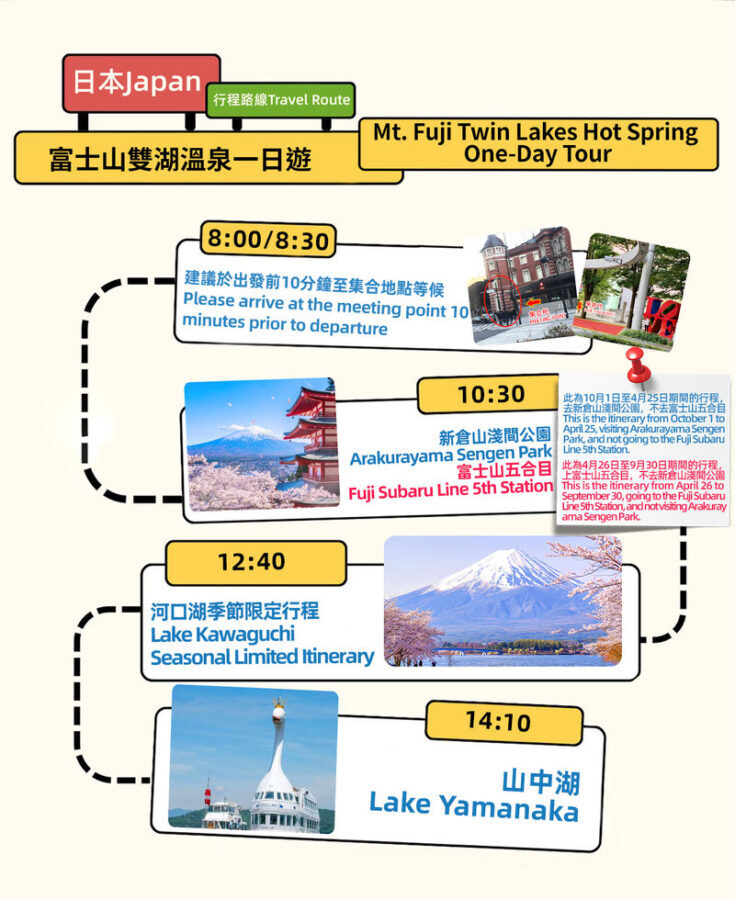
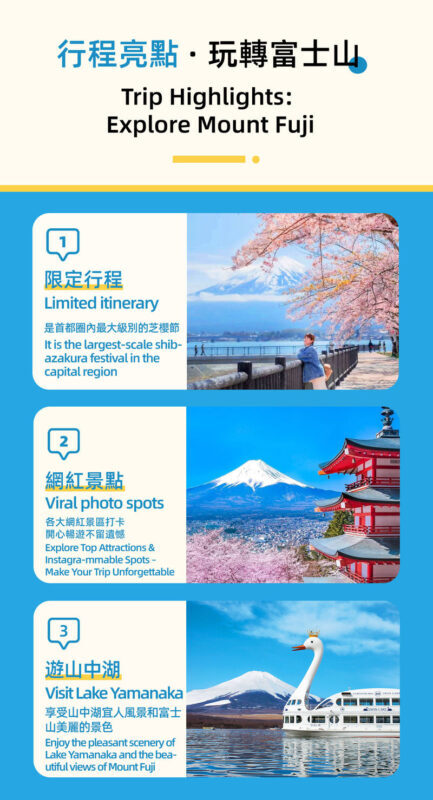
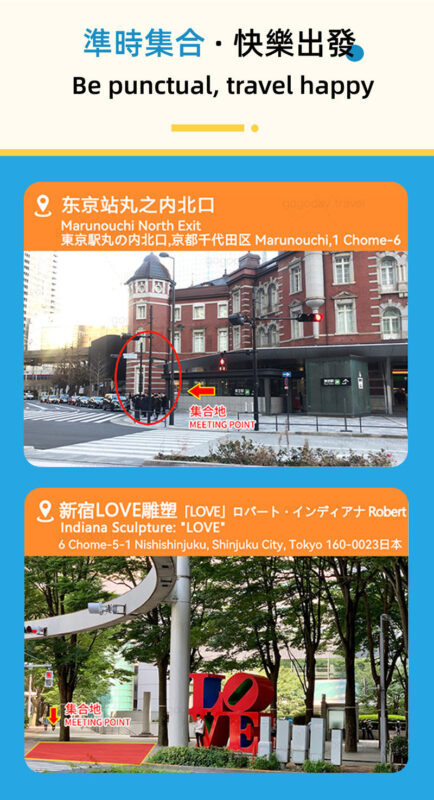
The day starts at a Tokyo meeting point, with the listed options showing departures around 8:00 or 8:30. The exact time and vehicle details arrive by email the evening before, so check your inbox and spam folder. The meeting point information names the Tokyo Station Marunouchi North Exit Tourist Information Center, near Robert Indiana’s LOVE sculpture. Be there at least 10 minutes early: the group departs together, and late arrivals or no-shows are not refunded.
The drive is part of the bargain, but also the day’s main strain. You cover a lot of ground between Tokyo, the Fuji area and the lakes, and traffic can turn a planned journey into a long stretch in the vehicle. On a clear, quiet day, that can feel like a fair price for seeing several places without arranging trains, buses and local transfers. On a holiday or busy spring weekend, it can mean arriving late and losing time at the sights.
The group may have anywhere from one to 49 people, and the vehicle type depends on the number travelling. Some departures have been small and flexible; others have drawn complaints about cramped or uncomfortable buses. You can’t choose a particular vehicle, so consider this a practical group outing rather than a private, roomy ride.

👉 See our pick of the 3 Best Tours In Fujiyoshida
Choose your first Fuji view by season
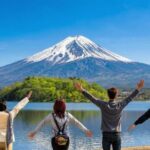
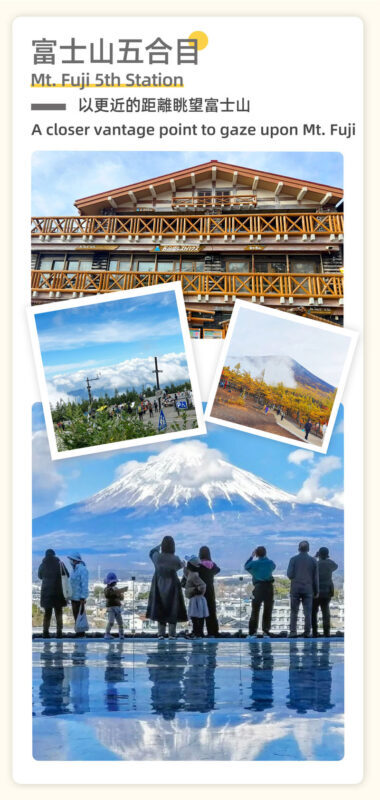
From April 26 to September 30, the first stop is Mount Fuji 5th Station, about halfway up the mountain. The stop is scheduled for roughly 40 minutes. It offers a close look toward the summit and views down over the surrounding area, including Lake Kawaguchi when conditions allow. It is a convenient way to get higher on Fuji without planning a hike, though this is a brief visit, not a climb.
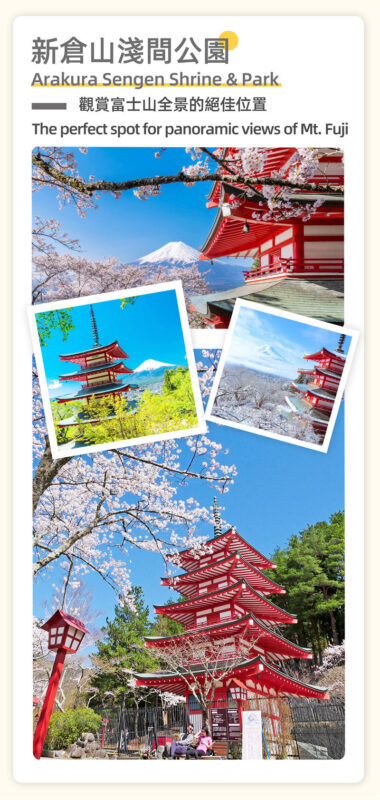
From October 1 to April 25, the first stop switches to Arakurayama Sengen Park. The park is a well-known photo spot, with a broad view toward Mount Fuji. The route description notes stairs, so allow for an uphill walk and a little effort. A guide may help with photos or point out the best way up, as Yong has done, but your time is still limited.
The choice between these stops is not yours to make on the day. It follows the seasonal schedule, and the view depends on the weather. Guests have had both clear Fuji days and days when cloud or rain hid the mountain. Bring the right attitude: the lakes and flowers can still make a worthwhile outing, but no tour can promise a cloud-free summit.
You can also read our reviews of more tours and experiences in Fujiyoshida


Flowers at Kawaguchi or Motosu
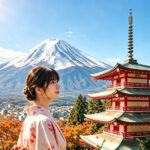
The next stop changes with the season, which is why it pays to check the route dates carefully before booking. Kawaguchiko Oishi Park is a recurring option, with flowers and views across the lake toward Fuji. In spring, the park is associated with cherry blossom scenery; in summer, lavender gives it a different look. The schedule also names the Kawaguchiko Cherry Blossom Festival and the autumn Maple Corridor as seasonal alternatives.
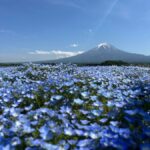
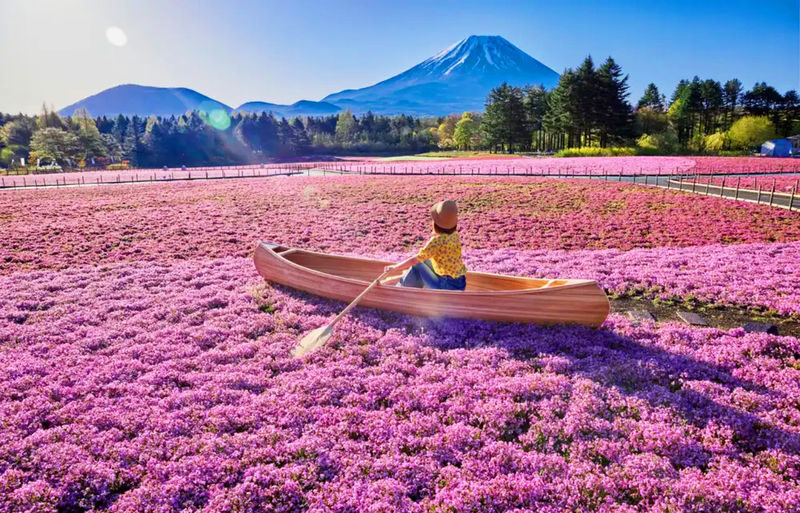
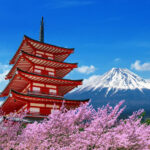
At the heart of the spring flower trip is the Motosuko Fuji Shibazakura Festival. Shibazakura is moss phlox, a low-growing flower that can spread in vivid pink and other shades across the ground, with Mount Fuji as a dramatic backdrop when the sky cooperates. It’s a striking pairing, but the festival has a set operating season and requires a separate admission ticket.
There are differing date ranges in the tour information for the flower festival and other seasonal stops. One schedule lists the festival from April 15 to May 22, while another gives a broader range of April 12 to May 25. Treat the season as approximate and confirm the actual stop for your chosen date before paying. Flowering also shifts with weather. If the blooms are early, late or past their best, the tour still runs on its normal schedule.
The timing at this stop can be a pinch point. The bus has several places to cover, and heavy traffic or festival crowds may shorten your visit or lead to a change. One spring departure had the 5th Station dropped after delays, while other visitors have had only about an hour at the flower park. If Shibazakura is your main reason for going, a tour built around that single festival may give you more breathing room.
Lake Yamanaka: swans, a boat or a hot spring
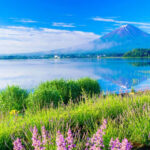
The final major stop is Lake Yamanaka, the largest of the Fuji Five Lakes and the shallowest. It’s known as a place where swans gather, particularly from February through April. If you’d rather keep your feet on shore, you can walk by the lake and watch for swans and fish. Some visitors have bought feed for the birds and koi, with small portions available for about ¥100.
A swan-shaped sightseeing boat is another option, but the fare is not included. It gives you a different angle on the lake and the surrounding Fuji area, though the tour allows about 1 hour and 10 minutes for this stop, including whatever else you choose to do. Check the boat’s operating conditions on the day, especially if weather is poor.
The other option is Benifuji no Yu, a hot spring where you can soak while looking toward Mount Fuji. The listed fee is ¥1,120 for adults, including a towel, ¥920 for junior and senior high school students, and ¥570 for elementary school children. Japanese hot springs require bathing nude, and people with tattoos are not permitted to use this onsen. If either point rules it out for you, spend your time by the lake instead.
This final stop sounds leisurely, but the day’s road delays can squeeze it. A severe traffic day has left some groups reaching the lake after dark, when the view and boat lose much of their appeal. Think of the stop as a pleasant bonus, not a guaranteed long lakeside afternoon.
What the guide and lunch add
Guides are a real part of the experience. Anna has been described as cheerful, helpful and an engaging storyteller; Yong has been praised for keeping the group organized and helping with photos; Mizki has been noted for clear explanations and sharing stories about Fuji. The assigned guide varies, and a bilingual Chinese and English service is advertised, with Japanese also listed. Communication quality can vary, so listen carefully to meeting instructions and confirm where and when to rejoin the group.
Lunch is optional, not built into the base price. A classic Japanese meal is presented as an add-on, and some people have enjoyed meals such as Kobe Wagyu. Others have found the food overpriced, mass-produced or served in cramped conditions. If food matters to you, ask what the extra meal includes and how much time is set aside before agreeing. You can also bring food, especially since there is no fixed lunch break clearly built into the schedule.
A small practical tip: carry tissues or hand sanitizer, and consider bringing a small bottle of liquid soap. One visitor found that some toilets lacked soap. It’s a modest bit of preparation that can make a long day more comfortable.
Is $70.39 good value?
At a starting price of $70.39, this is a reasonable way to link several sights that would take more planning to reach independently. Round-trip transport, tolls, parking and guide service are included. For a first visit, or for anyone who prefers not to puzzle out rural connections, that convenience has genuine value.
But the headline price is not the whole cost. Shibazakura Festival admission, the swan boat, the hot spring and personal expenses are extra. Lunch may cost extra too. Add those options before comparing the tour with other ways of visiting the area.
The bigger question is what you value. If you want a quick sampler of Fuji views, flowers and two lakes, and you’re comfortable with a full day of shared transport, the price can make sense. If you want a long visit at the flower festival, unhurried time at each lake or a guaranteed look at Mount Fuji, this route may feel rushed. A self-planned visit can give you more control, but means taking on the transport and timing yourself.



Who should book this day trip?
I’d choose this tour if I had limited time in Tokyo, wanted to see several Fuji-area highlights, and valued having transport and a guide arranged for me. It suits people who can stay flexible when weather or traffic changes the plan. The best version of the day combines a visible Fuji, flowers at their peak and a guide who keeps the group informed.
I’d think twice if the Shibazakura Festival is the one essential goal of your Japan trip. The seasonal stop is not guaranteed to have peak blooms, and the drive can take time away from the park. Consider a festival-focused tour instead, or plan an independent visit if you want to control how long you stay.
Book with a realistic idea of the day: an efficient sampler, not a slow country escape. Check the exact seasonal stop and departure time, budget for admission and any extras, and pack for changing weather. If those terms suit you, this is a practical way to see more of Fuji country in one day.
Mount Fuji and Shibazakura Festival Full-Day Flower Viewing Tour
“Our tour guide, Anna Lam Tin, was very enthusiastic, friendly, and kind. She speaks Cantonese, which was a pleasant surprise. It was a great day tr…”
FAQ
How long is the tour?
The full day is listed as about 9.5 hours, with a morning departure from Tokyo and a planned return around 17:30. Traffic and weather can change the schedule and return time.
Does every departure visit the Shibazakura Festival?
No. The festival is a seasonal stop, generally scheduled in spring. On other dates, the route may visit Oishi Park, the Cherry Blossom Festival or the Maple Corridor.
Is Mount Fuji 5th Station included all year?
No. The 5th Station is scheduled from April 26 to September 30. From October 1 to April 25, the first stop is Arakurayama Sengen Park instead.
Are festival admission and the lake boat included?
No. The Shibazakura Festival entrance ticket and Lake Yamanaka swan boat ticket are listed as extra expenses.
How much does Benifuji no Yu cost?
The listed fee is ¥1,120 for adults, including a towel, ¥920 for junior and senior high school students, and ¥570 for elementary school students. The hot spring ticket is not included in the tour price.
Is lunch included?
No, lunch is not included by default. A Japanese meal may be offered as an option, but you can make your own food plans.
What languages does the guide speak?
Chinese, English and Japanese are listed. The specific guide and vehicle information is sent by email the evening before the tour.