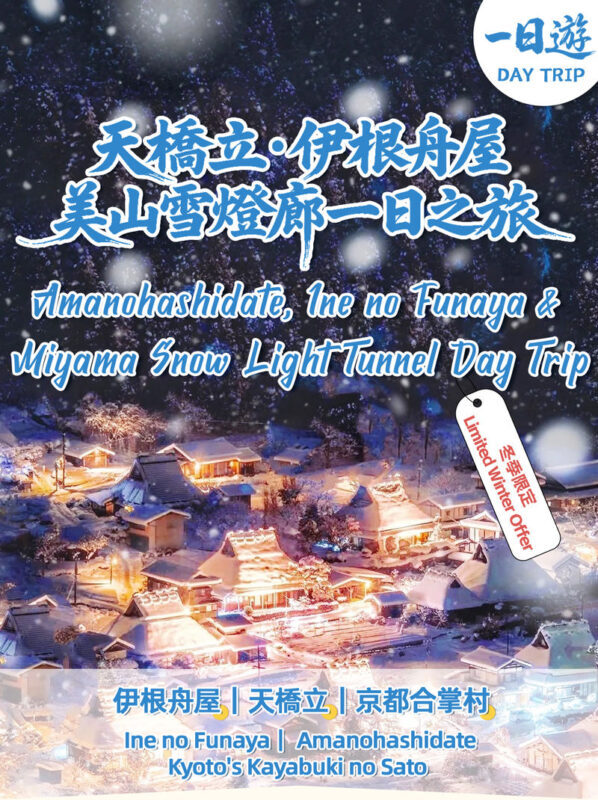
Miyama’s thatched houses take on a different character after dark, when snow lanterns, flower lanterns and hundreds of small lights glow against the winter night. This day trip pairs that limited winter event with Ine’s boathouses and the pine-covered sandbar of Amanohashidate.
I like that you get three very different places in one outing, and that the mochi-pounding and red bean soup experience adds a taste of Japanese winter tradition to the evening. The bilingual guide also helps make a packed day easier to manage, especially when weather or traffic calls for a change of plan.
The trade-off is the long day: you leave Osaka at 9:30 a.m. and return around 9 to 9:30 p.m., with limited time at each stop. Boat and cable car tickets are not included in the lower-priced package, so check the option carefully before booking.
- Miyama after dark: See a thatched-roof village lit by snow lanterns, flower lanterns and about 200 LED lanterns.
- Three distinct stops: Visit Ine’s waterfront boathouses, Amanohashidate’s pine-covered sandbar and Miyama’s mountain village in one day.
- A seasonal food activity: The tour includes mochi pounding and red bean soup, a welcome winter interlude.
- Tickets vary by package: The boat tour and Amanohashidate cable car are optional extras in the lower-priced option.
- A long ride from Osaka: Expect roughly 11.5 hours away, including about two hours on the return drive.
- A guide helps manage the pace: Guides named Hu, Vivian, Willow, Liu and Chen Wenqing have led trips, though the guide for your date may differ.
- Three northern Kyoto stops in one long day
- Ine’s boathouses meet the water
- Amanohashidate from the viewpoint
- Miyama’s lantern corridor after sunset
- What the schedule means for your day
- Guides, group size and the practical details
- Is the price worth it?
- Should you book this Miyama winter tour?
- FAQ
- When does the Miyama Winter Lantern Corridor event run?
- Where does the tour depart from?
- What time does the tour leave and return?
- What is included in the tour price?
- Are the Ine boat tour and Amanohashidate cable car included?
- Are meals and drinks included?
- How large is the tour group?
- Can I bring luggage?
- Can children join the tour?
- What happens if I arrive late or need to cancel?
- More Tours in Nantan
- More Tour Reviews in Nantan
- Not for you? Here's more nearby things to do in Nantan we have reviewed
Three northern Kyoto stops in one long day
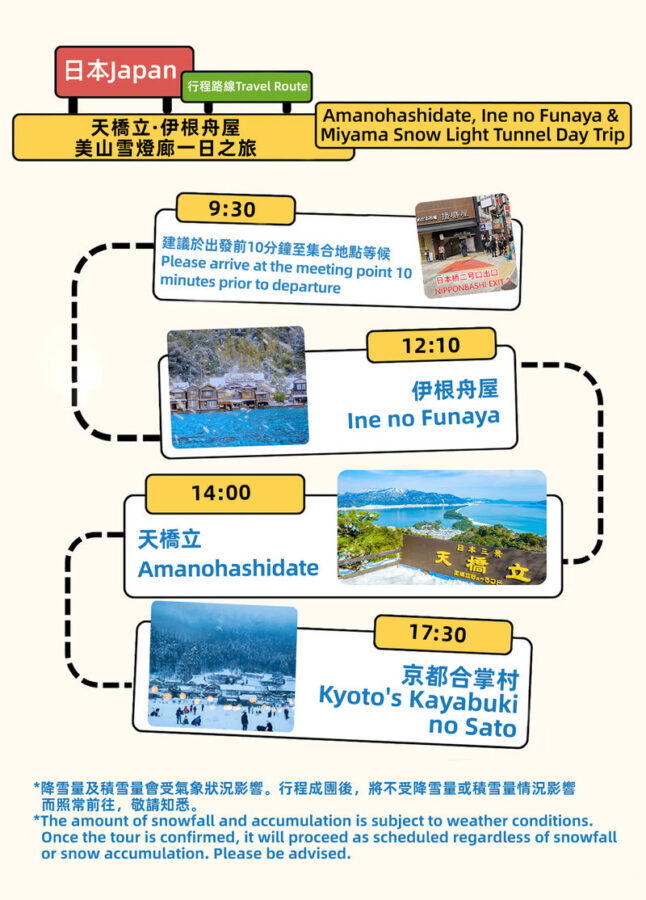
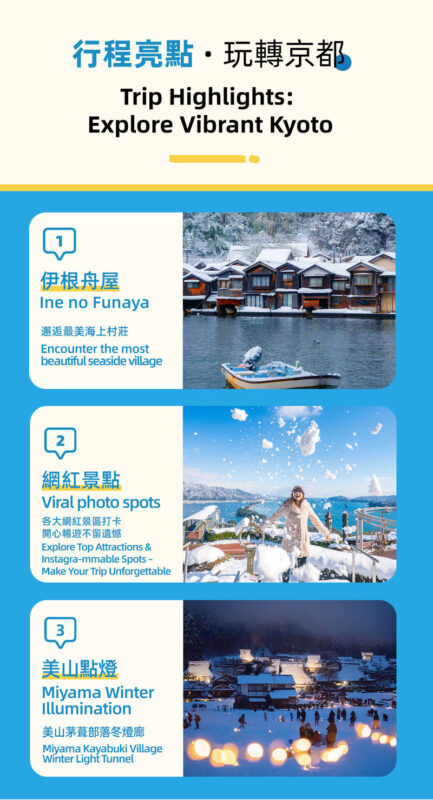
This trip works best if you want to see parts of northern Kyoto Prefecture without arranging buses, train connections and local transfers on your own. You’ll cover a lot of ground, from Ine on the Sea of Japan coast to Amanohashidate and then inland to Miyama.
The sequence gives the day a satisfying change of mood. Ine is about waterfront life and unusual architecture; Amanohashidate is a celebrated natural view; Miyama is the evening’s main event, with its small thatched village lit for the winter festival.
The price begins at $85.19, though the listed package choices show $106.45 without the boat and cable car tickets, or $124.55 with both. Prices can depend on the date and available option, so check the final total and inclusions before paying. The lower-cost package includes transport, tolls, parking, fuel, a guide and the Miyama illumination admission ticket.
Ine’s boathouses meet the water
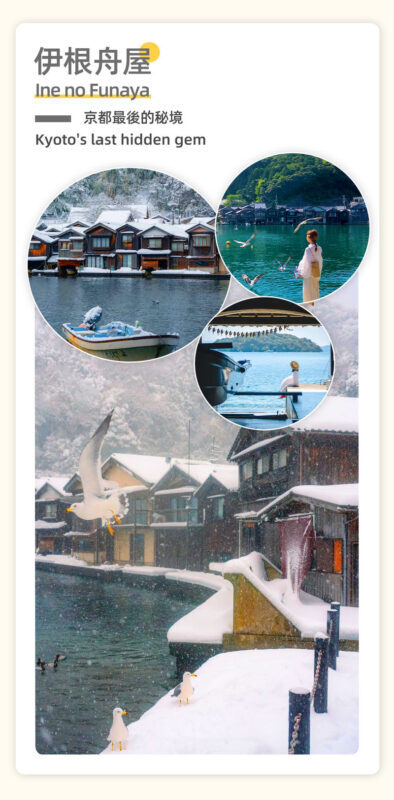
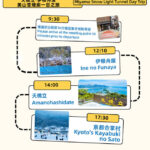
The first stop is Ine, a coastal town often called the Venice of Japan. Its distinctive funaya are boathouses built along the shore, with boat storage at water level and living space above. You’ll have about an hour here, with a guided visit.
The setting is the point: the houses line the water in a way you won’t see in a typical inland village. The tour describes Ine as one of Japan’s most beautiful villages, but you don’t need a ranking to appreciate the close connection between the town and the bay. It feels unlike the larger, better-known sights on the route.
A sightseeing boat around Ine Bay is an optional add-on. If you choose the package that includes it, the boat ticket is covered; otherwise, you’ll need to pay separately if you decide to ride. Some people enjoy the chance to feed seagulls and see eagles nearby, but the boat is not part of every booking.
One hour is a short visit, so expect an overview rather than an unhurried exploration of the whole town. Keep an eye on the guide’s return time, and don’t assume you’ll have a long meal break here. Meals and drinks are not included.
You can also read our reviews of more tours and experiences in Nantan.

Amanohashidate from the viewpoint
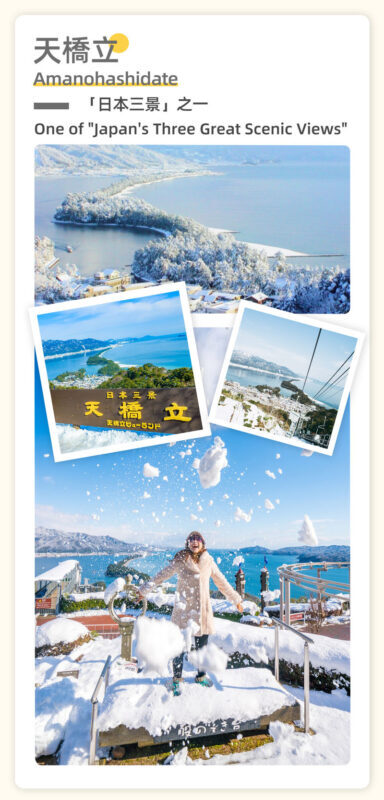
Around 2 p.m., the group reaches Amanohashidate for a stop of about an hour and a half. This sandbar, set in Miyazu Bay on the Sea of Japan, is one of Japan’s Three Views. Its name means Bridge to Heaven, an apt description of the narrow strip of land that seems to stretch toward the sky.
About 8,000 pine trees grow along the sandbar, with white sand beaches on both sides. The view changes with the season and weather. Winter can bring snow, which turns the pines and nearby sights into a striking scene, but it can also mean cold conditions and slippery paths. Dress for the forecast, not just the Osaka weather when you leave.
A cable car at the viewpoint offers a way to see the sandbar from above. It is not included in the lower-priced package, but is included in the higher-priced option that also covers the Ine boat tour. If you want just the cable car, ask the guide whether a separate ticket can be arranged. One family did so when a child did not want to take the boat, but this should not be treated as guaranteed.
The time here is enough for a focused visit, not every possible viewpoint and side trip. If you’re drawn to the cable car, confirm what your package includes and follow the guide’s timing closely. The day’s route depends on traffic and weather, so a well-planned stop may still need to be shortened.
Miyama’s lantern corridor after sunset
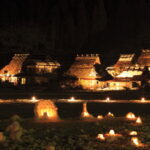
Miyama’s Kayabuki no Sato, or thatched-roof village, is the final stop and the reason to choose this winter outing. The illumination event is listed for January 30 through February 6, with daily departures during that period and a minimum of one person required to form a group. Confirm the event dates for your travel year before booking.
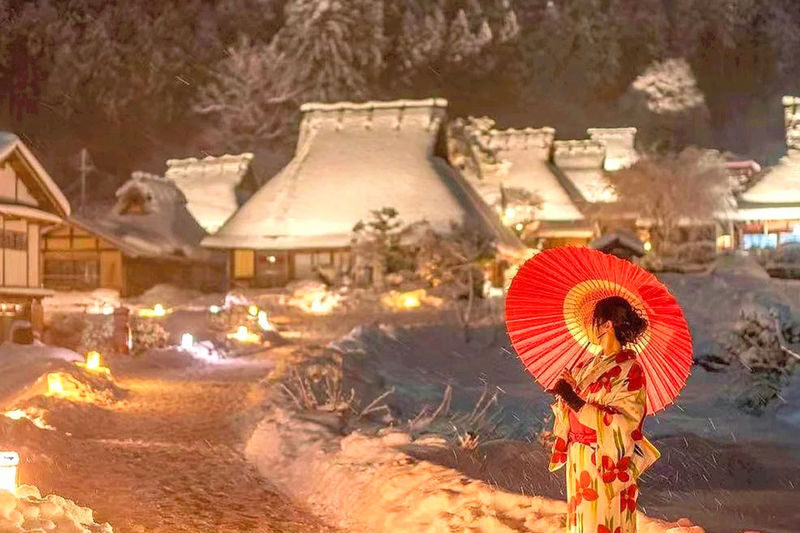
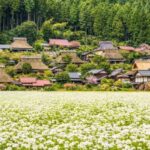
The village is lit with about 78 snow and flower lanterns, roughly 200 LED lanterns and around 50 handheld lanterns, along with other lights. The numbers give a sense of the scale, but the appeal is the contrast: warm points of light against traditional thatched roofs and a dark winter evening. It’s a rare chance to see a small rural village in a festive setting rather than simply passing through in daylight.
You have about an hour and a half here, from roughly 5:30 to 7 p.m. The tour includes admission to the lantern event. It also includes a mochi-pounding and red bean soup experience, making the stop more than a photo break. The supplied details don’t specify exactly how the activity is run, so think of it as a seasonal cultural component rather than a long cooking class.
A lantern event is weather-sensitive in the practical sense: snow and cold can make the visit memorable, but they also call for warm layers, gloves and shoes suited to winter conditions. The tour advises dressing for the day’s weather. If the event or roads are affected by conditions, the guide can adjust or reduce the schedule.
What the schedule means for your day
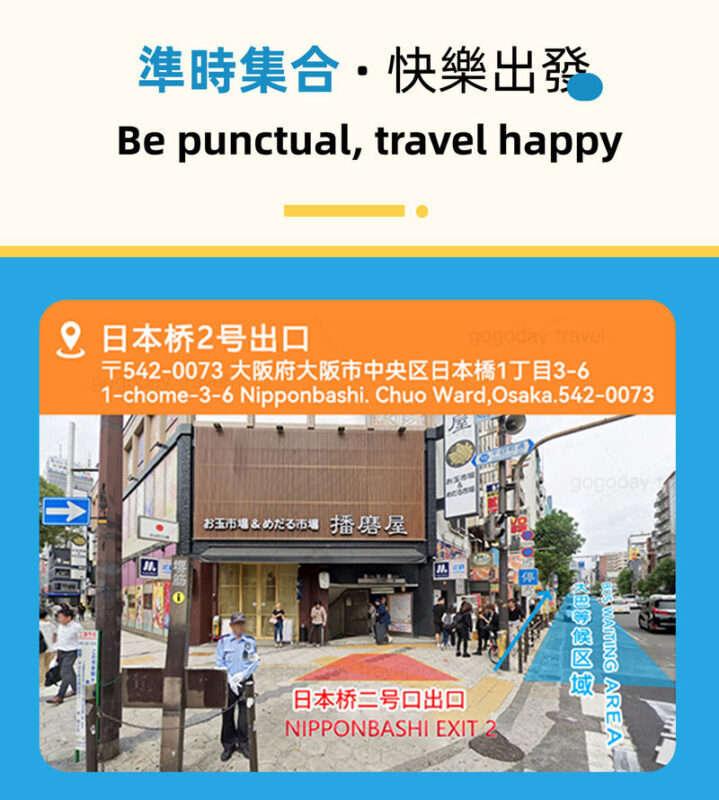
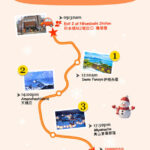
The bus leaves Osaka at 9:30 a.m. from the meeting point, identified as Osaka Kintetsu Nipponbashi. Be there at least 10 minutes early. The operator does not wait for late arrivals, and a missed departure is not refundable.
After the three stops, the bus leaves Miyama at about 7 p.m. The return drive is listed at around two hours, with arrival in Osaka expected between 9 and 9:30 p.m. That timing is only an estimate. Traffic, weather, holidays and crowds can affect the return, so don’t book a tight onward plan or an evening reservation that depends on arriving at a precise time.
The route is efficient, but it is not leisurely. You’ll spend much of the day on the road and get about an hour to an hour and a half at each destination. The guide handles the transport and coordination, letting you see places that would take more work to connect independently, but you’ll need to accept a fixed pace.
Guides, group size and the practical details
The tour is offered with an English- or Chinese-speaking guide. Depending on group size, the service may be a driver-guide for a small group of 4 to 13, or a separate driver and guide for a bus group of 14 to 45. In the larger format, the guide’s attention is shared across more people, so listen closely to meeting times and instructions.
Guides on recent departures have included Hu, Vivian, Willow, Liu, Liu Hua and Chen Wenqing, also known as Black. Their reported strengths include clear explanations, attentive group communication and sound decisions when snow changed the schedule. Those names are examples, not a promise of who will lead your trip.
The vehicle can range from a Toyota Alphard or similar van to a minibus or full-size bus, depending on the number of people booked. Each person may bring one piece of luggage free. Extra pieces cost 2,000 yen each, and you need to note them when booking. If you don’t declare extra luggage in advance, the driver or guide may refuse it, with no tour refund.
The operator sends the meeting details, guide information and vehicle license plate by email before 9 p.m. Japan time on the day before departure. Check your spam folder if it hasn’t arrived, and contact the supplier if you still can’t find it. If you receive more than one message, use the latest one.
The tour is not recommended for people with impaired mobility, certain serious medical conditions or pregnancy. Children aged 0 to 2 can join free if they do not need their own seat; children aged 3 and older pay the adult rate, and anyone aged 0 to 17 must be with a paying adult. Participants who appear intoxicated may be refused service.

Is the price worth it?
The value lies in bundling transport between three far-flung stops, a bilingual guide, the Miyama event ticket and the seasonal mochi and soup activity. If you’re starting in Osaka and want to see Ine, Amanohashidate and Miyama in one day, arranging the same route on your own would require more planning and careful timing.
But the price is not all-inclusive in every package. The lower-priced option excludes the Ine sightseeing boat and Amanohashidate cable car, while the higher-priced choice includes both. Meals, drinks and personal expenses are also extra. Compare the actual package total with the tickets you want, rather than choosing by the lowest advertised starting figure alone.
This outing is strongest for a winter visit, especially if the lantern event is your priority. It is less suited to anyone who wants a slow day, substantial time at each stop or flexibility to linger. The 13 reviews listed for the experience all give it five stars, with particularly strong praise for guides’ service, snow scenery and Miyama’s nighttime atmosphere. That is encouraging, though the compact schedule remains a real consideration.
Should you book this Miyama winter tour?
Book it if you want a practical way to connect three distinct northern Kyoto sights from Osaka and are happy to spend a full day on the road. The lantern-lit village is the special draw, while Ine and Amanohashidate make the journey more varied than a single-stop excursion.
Before booking, verify that your date falls within the festival period, choose the right ticket package and plan for cold weather. If you need a relaxed pace, have mobility concerns or must be back in Osaka at a firm time, this is probably not the right day trip. For everyone else, it offers a memorable winter route, provided you treat the schedule as ambitious rather than leisurely.
Miyama village illumination & Amanohashidate bus tour (with Japanese dessert making experience)
“Hu is a really great guide! He uses his experience to analyze how long to spend at each spot! His advice is very sincere, and his explanations of t…”
FAQ
When does the Miyama Winter Lantern Corridor event run?
The listed event period is January 30 through February 6, with tours departing daily during that period. Confirm the dates for your travel year before booking.
Where does the tour depart from?
The departure point is Osaka Kintetsu Nipponbashi. The supplier sends the confirmed meeting details before 9 p.m. Japan time on the day before departure.
What time does the tour leave and return?
Departure is scheduled for 9:30 a.m. The return to the Osaka city area is expected between 9 and 9:30 p.m., but traffic and weather may change the timing.
What is included in the tour price?
The tour includes round-trip transport, tolls, parking, fuel, an English- or Chinese-speaking guide and admission to Miyama’s winter illumination event. The experience is also described as including mochi pounding and red bean soup.
Are the Ine boat tour and Amanohashidate cable car included?
Only in the package that includes both tickets. The lower-priced package excludes the boat and cable car, and you can pay separately for optional activities.
Are meals and drinks included?
No. Meals and beverages are not included, and you should budget for your own food and drinks.
How large is the tour group?
Groups of 4 to 13 may use a driver-guide. Groups of 14 to 45 may have a separate driver and guide. The vehicle type depends on the number of people booked.
Can I bring luggage?
Each person may bring one piece of luggage free. Extra pieces cost 2,000 yen each and should be noted when you book.
Can children join the tour?
Children aged 0 to 2 can join free if they do not occupy a separate seat. Children aged 3 and older pay the adult rate, and children aged 0 to 17 must be accompanied by a paying adult.
What happens if I arrive late or need to cancel?
The bus will not wait for late arrivals, and late arrival or a no-show is not refundable. A full refund is available if you cancel at least 24 hours before the activity date; for extreme weather or other unforeseen events, the operator may cancel and offer a reschedule or full refund.