
Schönbrunn has 1,441 rooms. You can tour exactly 24 of them. The Habsburgs built it as a “modest summer residence” and it pulled in 3.95 million visitors last year, which makes it Vienna’s most-booked palace by a comfortable margin.
The booking question really comes down to one decision: timed-entry ticket on your own, or guided tour with skip-the-line. Below I lay out both, plus the combo if you want the city bus thrown in.
- In a Hurry? Top Schönbrunn Picks
- Why Booking in Advance Actually Matters Here
- Choosing Between the Tickets
- How to Visit
- 1. Skip-the-Line Palace and Gardens Entry:
- 2. Skip-the-Line Guided Tour with 5-Star Guide:
- 3. City Bus Tour and Schönbrunn Skip-the-Line:
- Getting There
- What’s Inside the 24 Rooms You Actually Tour
- Don’t Skip the Gardens
- The Gloriette and the View
- The Roman Ruins (That Aren’t Roman)
- The Maze and the Privy Garden
- The Zoo You Probably Didn’t Plan For
- The Palm House and the Glasshouse
- Best Time to Visit
- How Much Time to Allow
- Pairing Schönbrunn with Other Vienna Sights
- Three Mistakes I Made on My First Visit
- Where to Eat On Site and Nearby
- Worth the Ticket?
In a Hurry? Top Schönbrunn Picks
- Skip-the-line palace + gardens entry, around $63. The volume winner. Timed slot, audio guide, you set the pace. Check availability.
- Skip-the-line guided tour, around $76. Live guide walking you through the 24 rooms. Best if you actually want to retain the Habsburg backstory. Check availability.
- City bus + Schönbrunn skip-the-line, around $81. 3.5 hours, you see Vienna’s main sights from an air-conditioned bus, then walk straight into the palace. Check availability.
Why Booking in Advance Actually Matters Here
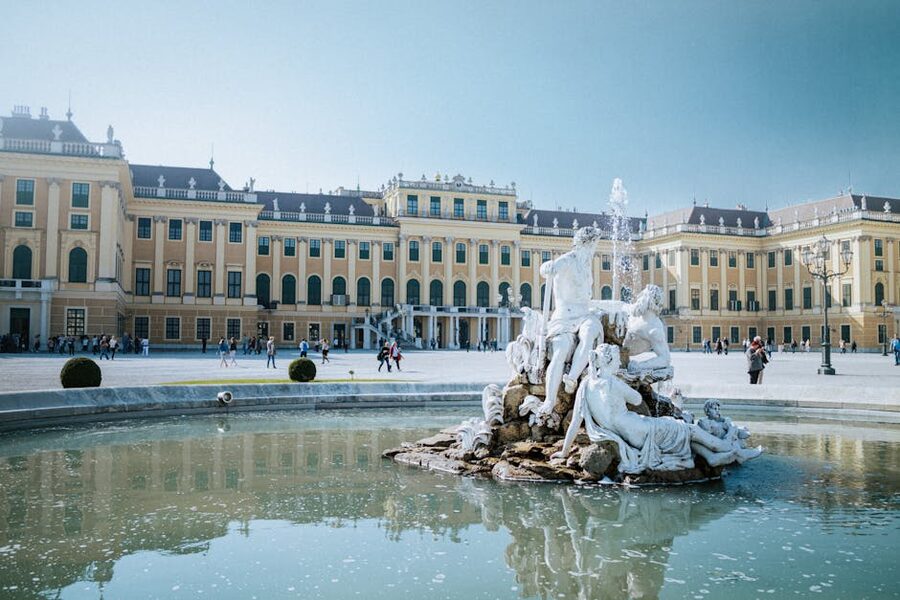
I went on a Tuesday in May and the on-site queue at the arrival centre was already 40 minutes deep by 11am. People were standing in full sun with no shade. I walked past them, scanned my phone, and was inside the first stateroom within four minutes. That gap is the whole reason this article exists.
The palace runs on timed entry. You book a slot, you arrive 5-10 minutes before, you go in. If you turn up without one in summer, expect to either wait 60-90 minutes or get a slot for late afternoon. In peak season some days sell out by lunchtime.
The palace and gardens belong to two different access systems. The park, the Gloriette grounds, the Roman ruins, the lawns: all free to walk around. The staterooms, zoo, maze, palm house, Gloriette rooftop, carriage museum, privy garden: each has its own ticket.
Choosing Between the Tickets
Schönbrunn sells multiple ticket types but in practice almost everyone is choosing between three things: the basic Imperial Tour (22 rooms, audio guide), the longer Grand Tour (40 rooms when they say 40, more like 24 of the most-furnished, with extras), or a full guided tour with someone explaining what you’re looking at.
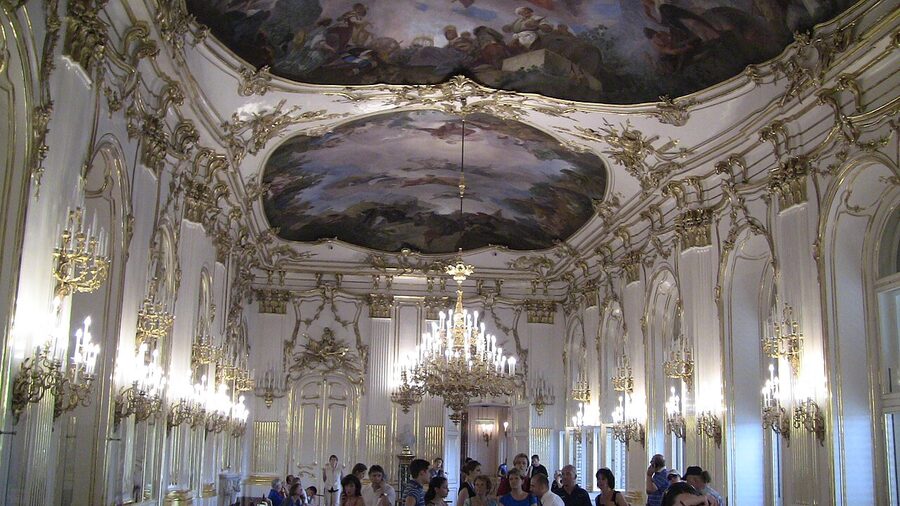
The Imperial Tour skips a few of the more decorated rooms. The Grand Tour adds them in. The price gap is small, maybe 5 euros, and if you’ve travelled this far the extra rooms are worth it. I did the longer version and the rooms that surprised me most were the ones in the second half: the porcelain room, the Million Room (so named for the original cost of fitting it out), and the Ceremonial Hall.
The big trap: people buy tickets directly from the official site (schoenbrunn.at), get a slot two hours away, and then sit at the cafe stewing because they could have prepped. The third-party operators (GetYourGuide, Viator, Tiqets) have the same time slots and often the same prices. The advantage of booking through them is the option to add a guide who actually explains what you’re seeing.
How to Visit
I’ve ranked these by what I’d actually book first if I were planning a single Vienna day around Schönbrunn. The volume winner goes first. The guided alternative goes second for travellers who want context. The city-bus combo goes third for short-stay visitors who haven’t seen central Vienna yet.
1. Skip-the-Line Palace and Gardens Entry: $63

This is the booking the bulk of visitors make and for good reason. You get a fixed time slot, the audio guide, and freedom to linger. Our full review of this skip-the-line ticket goes deeper on what’s covered. Two hours is enough; book the morning slot if you can.
2. Skip-the-Line Guided Tour with 5-Star Guide: $76

The audio guide is fine. A good guide is better. This option pairs the same skip-the-line access with a person who can answer “why is that monkey eating Marie Antoinette’s hair?” in real time. Our review of this guided variant covers what the guide adds beyond the audio script. Pick this if you’ve got two hours and care about the stories.
3. City Bus Tour and Schönbrunn Skip-the-Line: $81
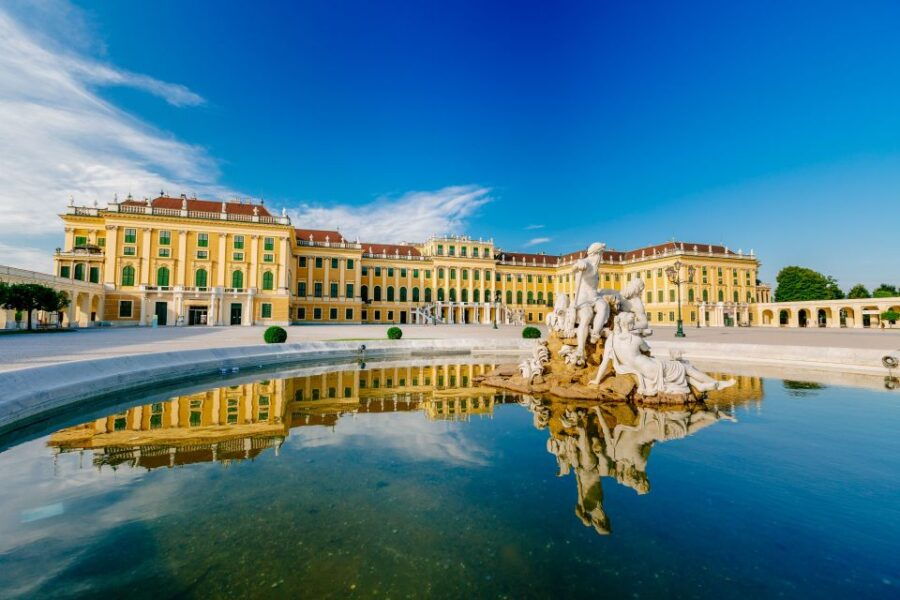
This one suits travellers who land in Vienna at noon, have a single afternoon, and want to see Stephansplatz and the Ringstrasse before getting to the palace. 3.5 hours, one ticket, no metro fumbling. Our review of the bus combo explains what’s actually covered between the two stops.
Getting There
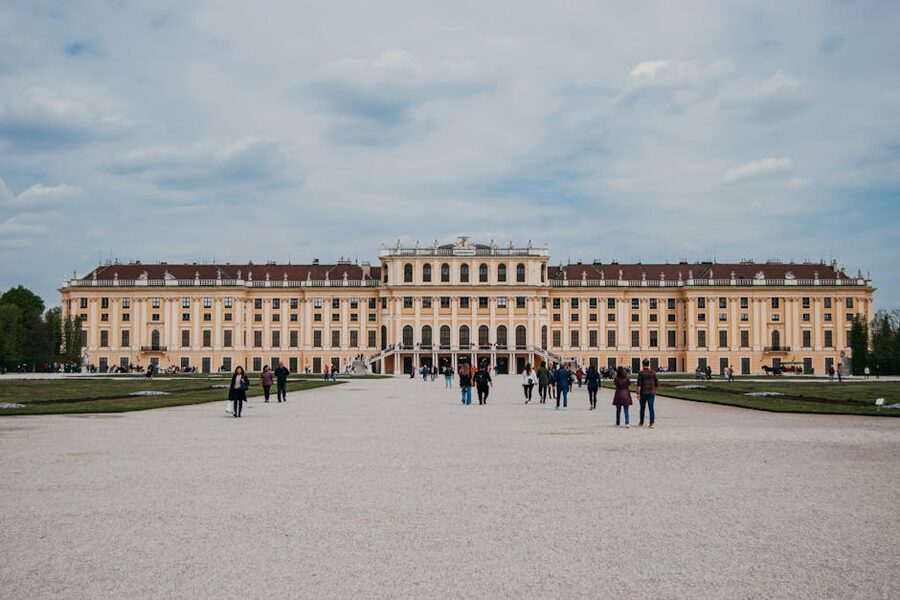
Schönbrunn sits 5km southwest of central Vienna. The fastest way is the U4 metro to Schönbrunn station, which dumps you 200 metres from the gates. From Stephansplatz it’s about 15 minutes door to gate, including the walk.
The hop-on-hop-off buses also stop here. If you’re already on a Vienna pass that includes one, you might as well use it. If you’re not, the U4 is faster and a quarter of the price.
If you’re driving (most visitors aren’t): there’s paid underground parking on Grünbergstraße. The lot fills by 11am in summer.
What’s Inside the 24 Rooms You Actually Tour
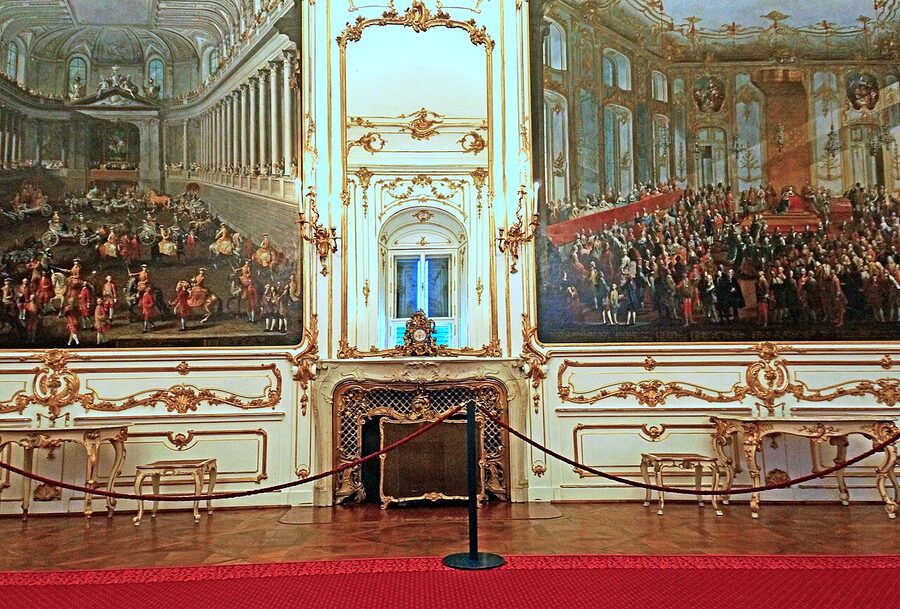
The Imperial Tour covers 22 rooms. The Grand Tour covers 24 to 40, depending on which sources you read; in practice it adds the western wing rooms with the most ornate decoration. Highlights to slow down for:
- The Great Gallery. 43 metres long, ceiling frescoes, where Mozart played for Maria Theresa at age six. State dinners still happen here.
- The Million Room. Named for the cost of the rosewood panelling and the 260 Persian and Indian miniatures inset into them. Worth the audio guide pause.
- The Mirror Room. Where Mozart performed the recital that ended with him jumping into Maria Theresa’s lap. He was six. She was 47.
- The Round Chinese Cabinet. Maria Theresa’s private conference space. Look for the secret door used for confidential meetings.
- Empress Elisabeth’s apartments. Sisi’s bedroom, dressing room, and the gym she used to maintain her famous 19-inch waist.
Photography is not allowed inside. People will try anyway. The staff are polite but firm. Save your battery for the gardens.
Don’t Skip the Gardens
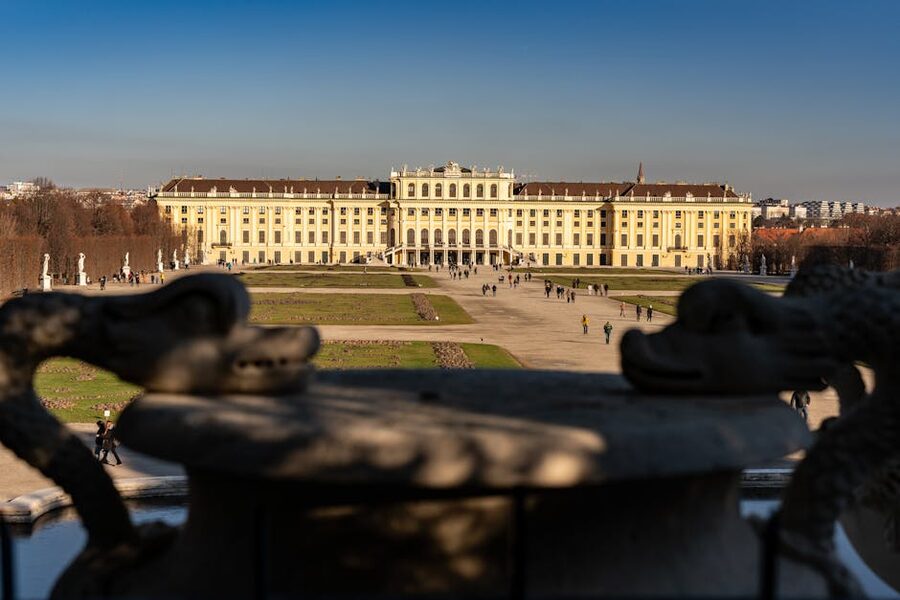
The gardens are bigger than the palace. They’re free. They’re open from sunrise to dusk. People burn through the staterooms in 90 minutes and then drive straight back to central Vienna, missing the better half of what they paid to see.
Allow at least 90 minutes for the gardens after the palace. Two hours is better. The walk up to the Gloriette is the obvious one, but plenty of corners reward a wander.
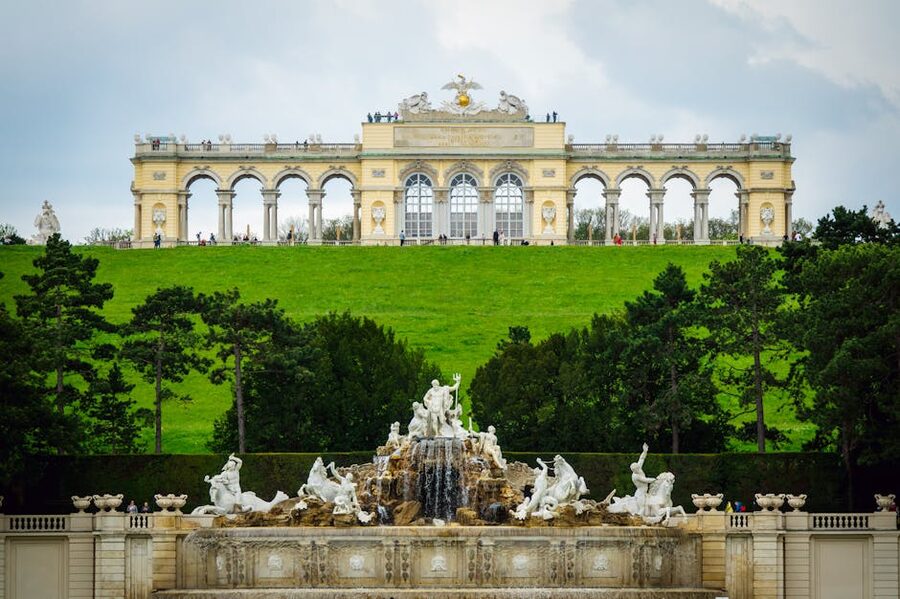
The Gloriette and the View
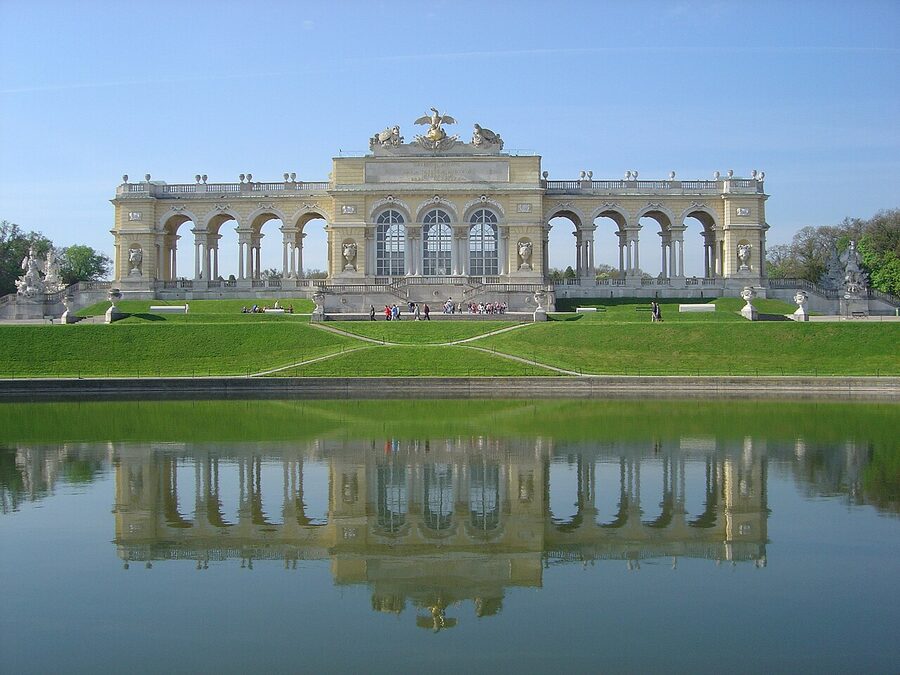
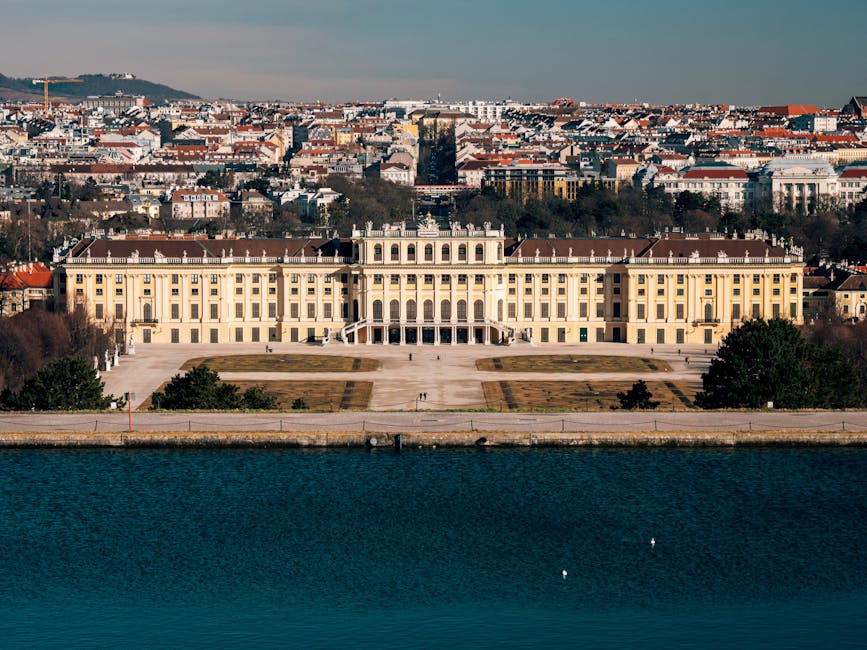
The Gloriette is the colonnaded building on the hill behind the palace. Maria Theresa built it in 1775 as a giant view-frame for the palace below. Climbing up takes 15-20 minutes from the parterre. The rooftop platform costs a few euros and gives you the postcard shot of the palace, the gardens, and Vienna’s skyline behind.
If your knees aren’t up to the climb, the panorama train circles the gardens for 9 euros and stops at the Gloriette. Useful in summer when the avenue is hot.
The Roman Ruins (That Aren’t Roman)
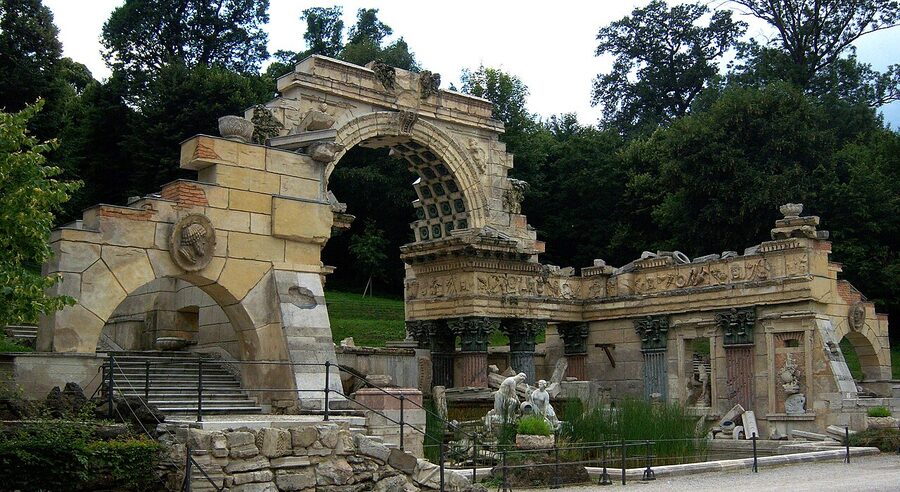
Halfway between the palace and the Gloriette, the Roman Ruins are an 18th-century folly. They were built in 1778 to mimic the Temple of Vespasian and Titus in Rome. The Latin inscriptions are mostly nonsense; the point was always to look impressive rather than be authentic.
The Maze and the Privy Garden
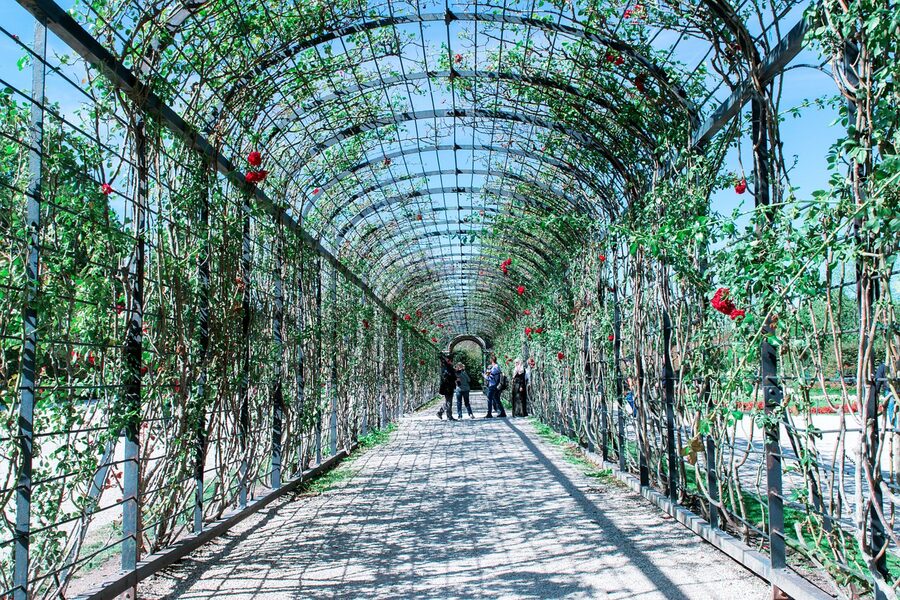
The original Schönbrunn maze appeared in 1720. It was destroyed and rebuilt in the 1990s. There are now four small mazes plus a labyrinth, all clustered near the centre of the gardens. Kids burn off energy here. Adults can take 20 minutes for the labyrinth before continuing on to the Gloriette climb.
The Privy Garden, the Crown Prince Garden, and the Orangery garden each charge a small entry fee. Pretty but skippable if your day is short.
The Zoo You Probably Didn’t Plan For

Here’s the surprising fact most visitors don’t know until they’re inside the gates: the Schönbrunn zoo is the oldest continuously-operating zoo on Earth. Maria Theresa’s husband Franz Stephan founded it in 1752 as the imperial menagerie. The current pandas, polar bears, and snow leopards are walking around enclosures laid out partly on the original 18th-century footprint.
It is also one of the world’s best-rated zoos. If you’ve got kids, allow a full afternoon. If you don’t, the Pavilion in the centre (now a cafe) is the only original Habsburg structure still standing inside an active zoo anywhere on the planet, and it’s worth a quick stop.
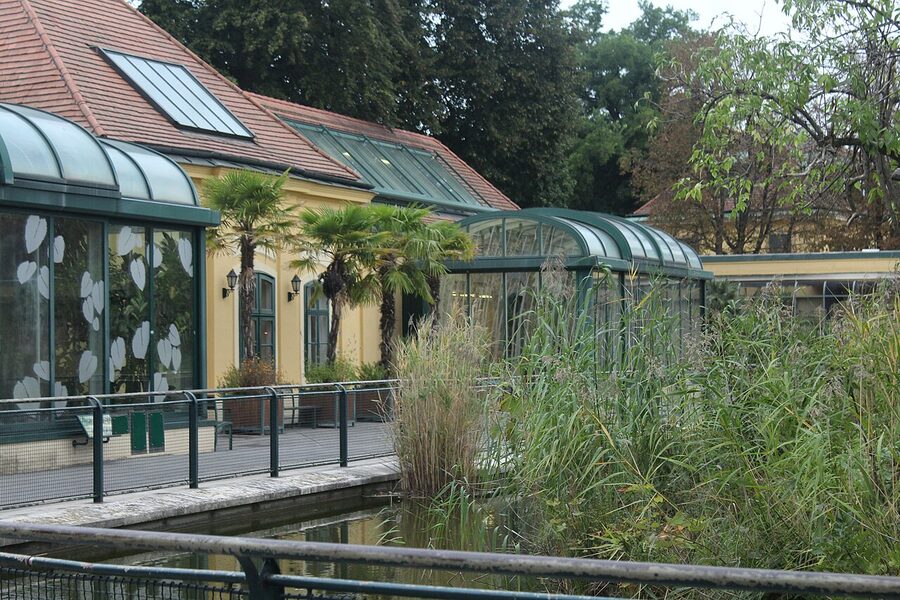
The zoo costs about 28 euros for adults and is a separate ticket from the palace. The Vienna Pass covers it; the Sisi Ticket and Classic Pass do not.
The Palm House and the Glasshouse
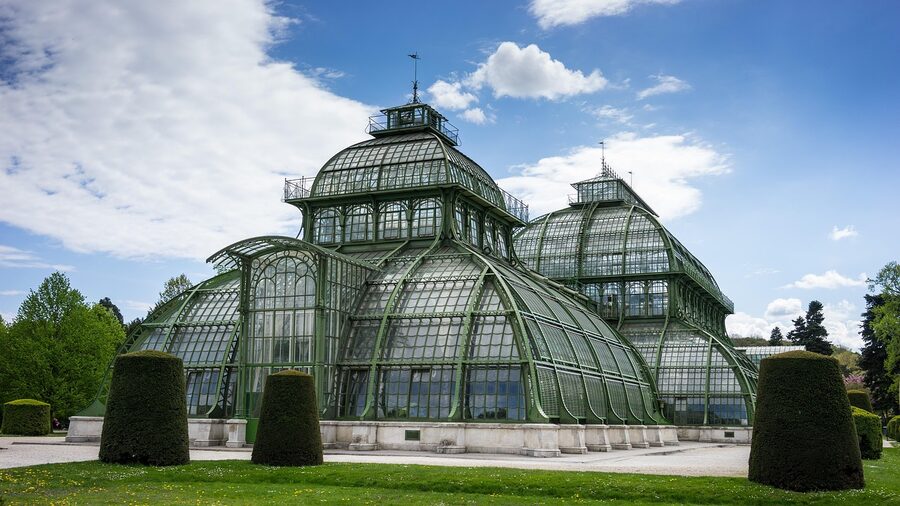
The Palmenhaus opened in 1882 and is still the biggest free-standing glass-and-steel construction on continental Europe. Three connected pavilions, three climate zones: cold, temperate, tropical. The temperature swing from one end to the other is genuinely dramatic on a winter visit.
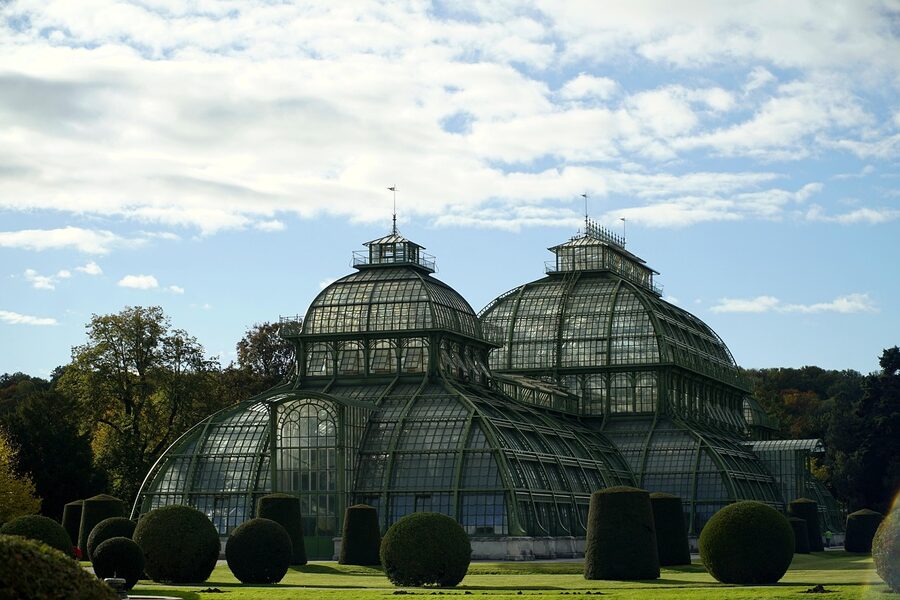
Tickets for the Palm House are 8 euros separately, or rolled into a few of the combination passes. If you’re doing the Vienna Pass, both buildings are included.
Best Time to Visit
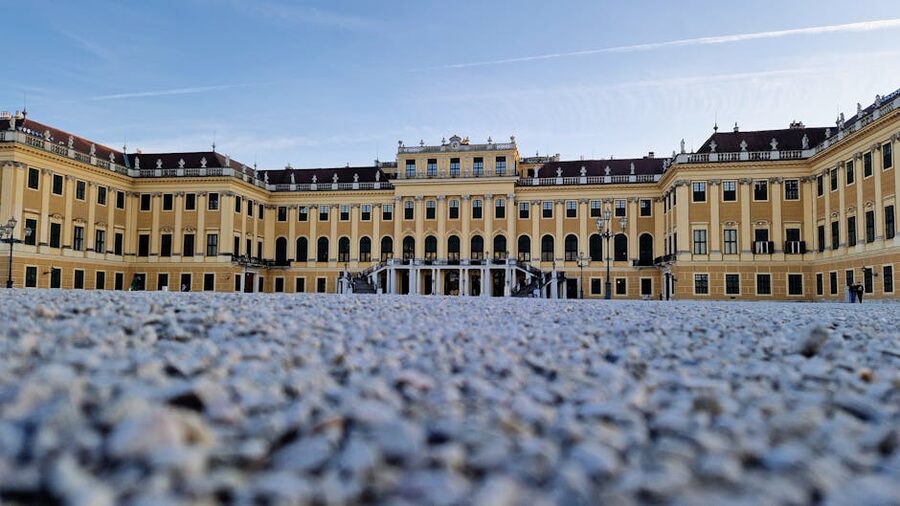
The palace is open 365 days. Crowds peak in July and August and during the Christmas market period (mid-November to late December). The quietest months are January and February, but the gardens look bare and grey.
April-May and September-October are the sweet spots. Long enough days, gardens in bloom or autumn colour, weekday crowds manageable. Book the first slot of the day (08:30 in summer, 09:00 in winter) and you can be out before the tour buses arrive.
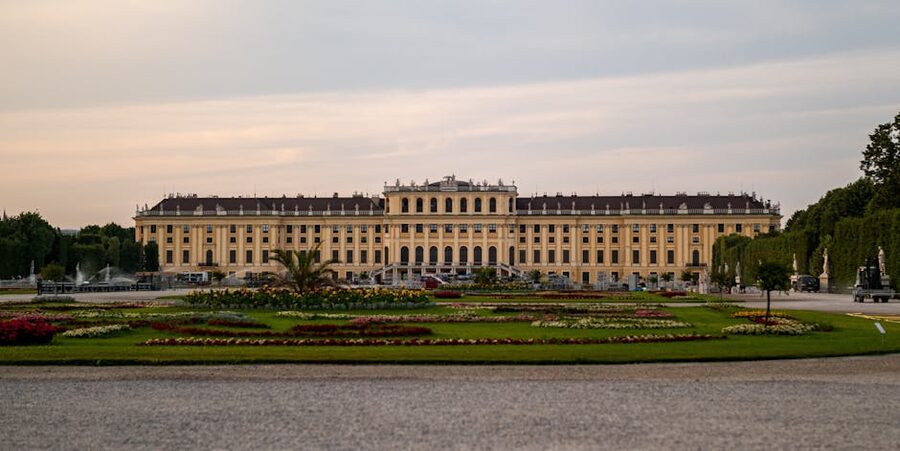
The Christmas Market runs from mid-November through late December in the courtyard. Worth the detour even if the palace itself isn’t on your list that day. Free entry to the courtyard market, paid entry to the palace and Easter market.
How Much Time to Allow
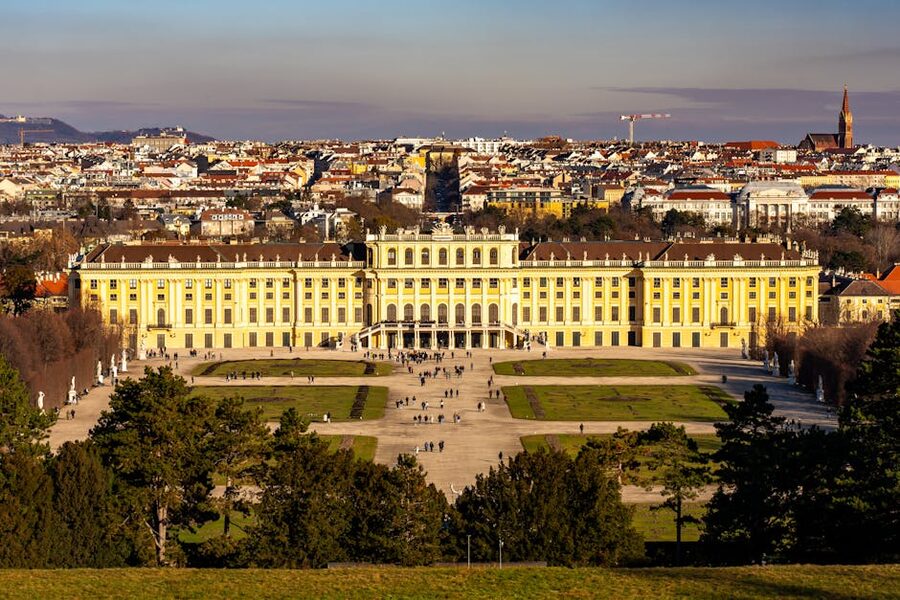
Bare minimum: 2.5 hours. That’s the staterooms (90 minutes) plus a quick loop of the parterre and the Neptune Fountain (60 minutes).
Comfortable visit: 4-5 hours. Staterooms, gardens up to the Gloriette, plus one of the Palmenhaus or the Roman Ruins.
Full day: 7-8 hours. Add the zoo and either the maze or the Crown Prince Garden. This is the version where you eat lunch on site at one of the cafes.
The mistake first-time visitors make is allotting 2 hours and spending it all queuing. Book your slot, arrive 15 minutes early, and protect the afternoon for the gardens.
Pairing Schönbrunn with Other Vienna Sights
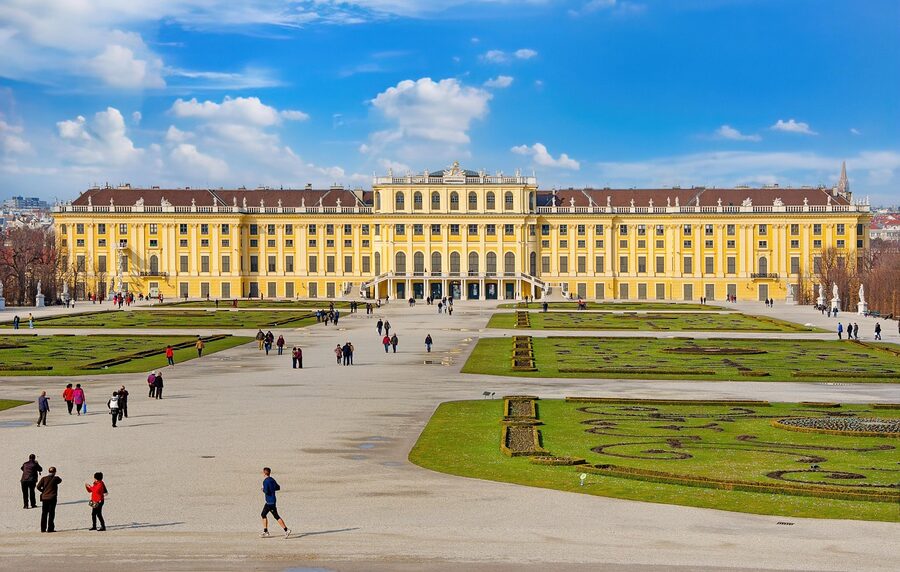
Schönbrunn is the imperial summer residence. The imperial winter residence is the Hofburg in central Vienna, and most travellers benefit from doing them on different days, in that order. Our guide to booking the Hofburg and Sisi Museum covers the apartments where Sisi actually lived, the Imperial Treasury, and the Silver Collection.
For Habsburg art, the better pairing is the Belvedere Palace, which houses Klimt’s Kiss and a serious chunk of Austrian fin-de-siecle painting. Belvedere is a 25-minute U-Bahn ride from Schönbrunn, easy to do as a same-day combo if you start early. The Prussian counterpart, for context, is Sanssouci in Potsdam: same idea of a Baroque summer palace built to escape the capital, but on the Hohenzollern side rather than the Habsburg one.
The third Habsburg booking that travellers often pair with Schönbrunn is the Spanish Riding School Lipizzaner training session, which runs in the morning at the Hofburg. Schönbrunn in the afternoon, riding school in the morning: full Habsburg day.
If you’re stitching Vienna together with Prague and Budapest into a Central European triangle, the same booking-in-advance logic applies to Prague Castle and the Budapest Parliament. All three want a timed slot, all three sell out in summer. The other Habsburg-era residence on the Budapest side is the hill at Buda Castle, which is a walking tour rather than a room-by-room palace ticket but covers the same imperial story from the Hungarian angle.
Three Mistakes I Made on My First Visit
I bought the cheapest ticket. The 24 extra rooms in the Grand Tour are the ones with the most decoration. The price difference is pocket change. Do the longer one.
I didn’t budget for the Gloriette climb. 20 minutes uphill, plus another 20 down. If you’ve got the staterooms scheduled at 09:00 and you’re meeting friends at 12:30 in town, you cannot do the Gloriette. Plan accordingly.
I tried to do the zoo in 90 minutes. The zoo is huge. If you’re going at all, allow 2.5 hours minimum and skip the maze that day.
Where to Eat On Site and Nearby
Inside the palace grounds, Cafe Gloriette is the best-positioned option (the views) and the most expensive. Cafe Residenz at the front is decent, fast, and overpriced for what it is. Both are fine. Both are tourist traps.
If you can wait 15 minutes, walk out the gate and one street back into the Hietzing neighbourhood. The local cafes there charge half the palace prices for better strudel.
Worth the Ticket?
If you’re in Vienna for more than 48 hours, yes. The combination of the staterooms, the gardens, the zoo, and the Gloriette adds up to something genuinely big, and the imperial scale of Habsburg life is hard to grasp from photos. The trick is just not spending half your visit in queues.
Book the morning slot, do the gardens after, eat at the Gloriette cafe, and you’ve used Schönbrunn the way Maria Theresa used it. Minus the entourage.