
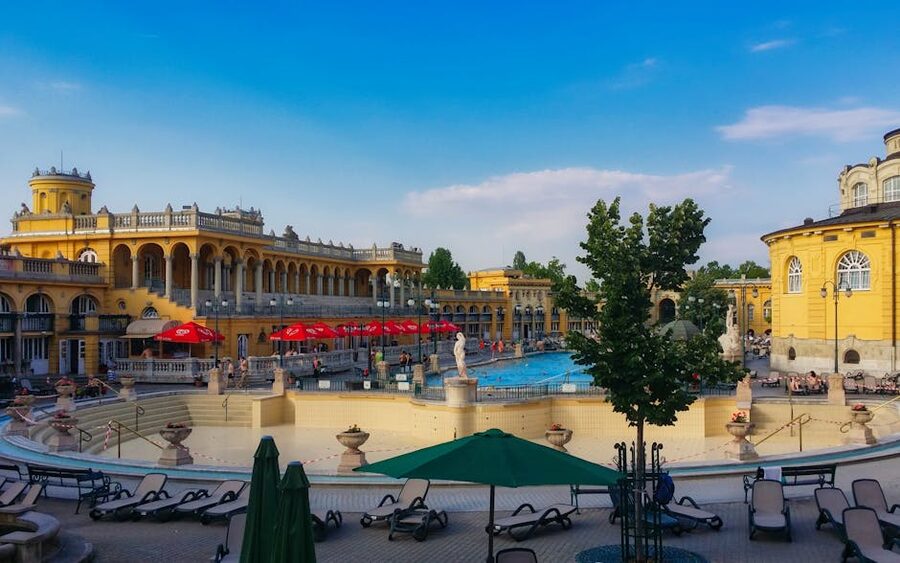
The first thing that hits you at Széchenyi is the smell. A sulphur tang you taste on the back of your tongue before you’ve even crossed the courtyard, mixed with chlorine, wet stone, and steam coming off pools so warm the cold Budapest air turns it into actual fog. That smell is the reason most people booked the ticket. The architecture is the reason they remember it.
Budapest sits on roughly 120 thermal springs, and the city has been bathing in them for two thousand years. You only need to pick the one that fits your day.
- In a Hurry?
- The Three Budapest Baths You’re Actually Choosing Between
- Széchenyi: the famous yellow Neo-Baroque giant
- Gellért: the Art Nouveau classic, on the Buda side
- Mandala: the small spiritual-luxury option
- The Quick Picks, Read Properly
- 1. Széchenyi Spa Full Day With Optional Pálinka Tour:
- 2. Széchenyi Thermal Spa Full-Day Tickets (Viator):
- 3. Gellért Spa Full-Day Ticket:
- How to Match the Bath to Your Day
- Booking the Right Ticket Type
- Cabin vs locker
- What’s included, what isn’t
- Winter vs Summer
- Sparty: the Late-Night Spa Party
- Getting There
- What to Bring
- Quick History (Read While Soaking)
- Where the Baths Fit in Your Budapest Trip
- Common Mistakes
- If You’ve Already Done All Three
- The Soak You Should Actually Book
In a Hurry?
- Széchenyi full-day ticket with optional pálinka add-on ($51): the classic outdoor experience plus a Hungarian fruit-brandy tasting if you want a story to take home. Check availability.
- Széchenyi full-day ticket only ($59): same baths, no pálinka, slightly different operator. Pick this if you’ve already done a brandy tour. Check availability.
- Gellért full-day ticket ($48): the Art Nouveau alternative on the Buda side. Smaller, calmer, prettier indoors, fewer outdoor pools. Check availability.
The Three Budapest Baths You’re Actually Choosing Between
Tripadvisor will list ten of them. Locals will name twenty. Most visitors realistically pick from three: Széchenyi, Gellért, or Mandala. Each one is a different kind of afternoon.
Széchenyi: the famous yellow Neo-Baroque giant
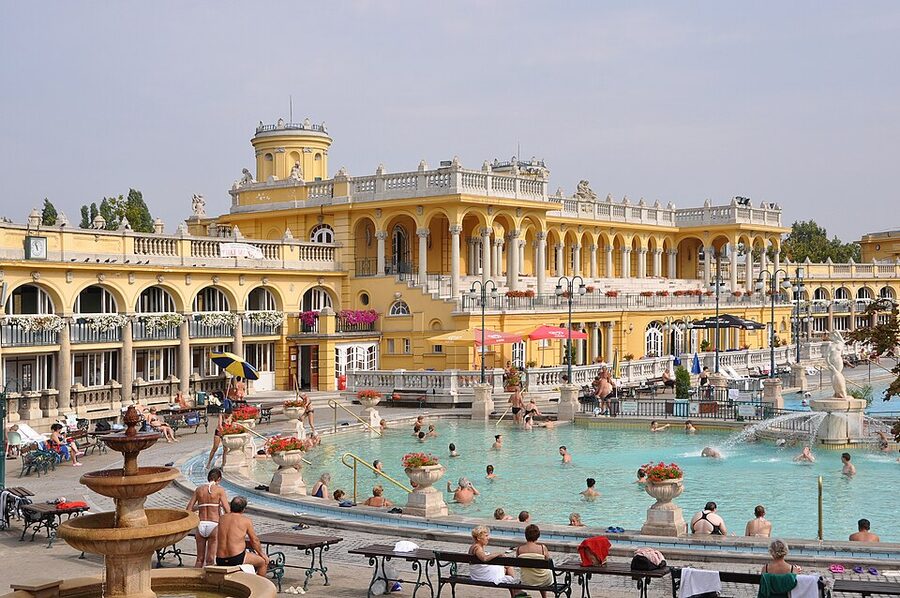
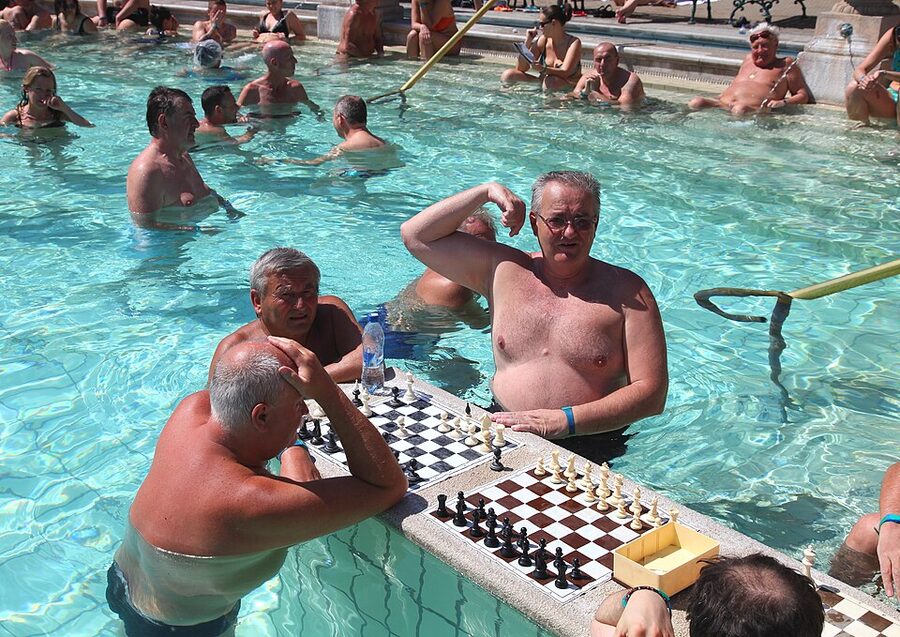
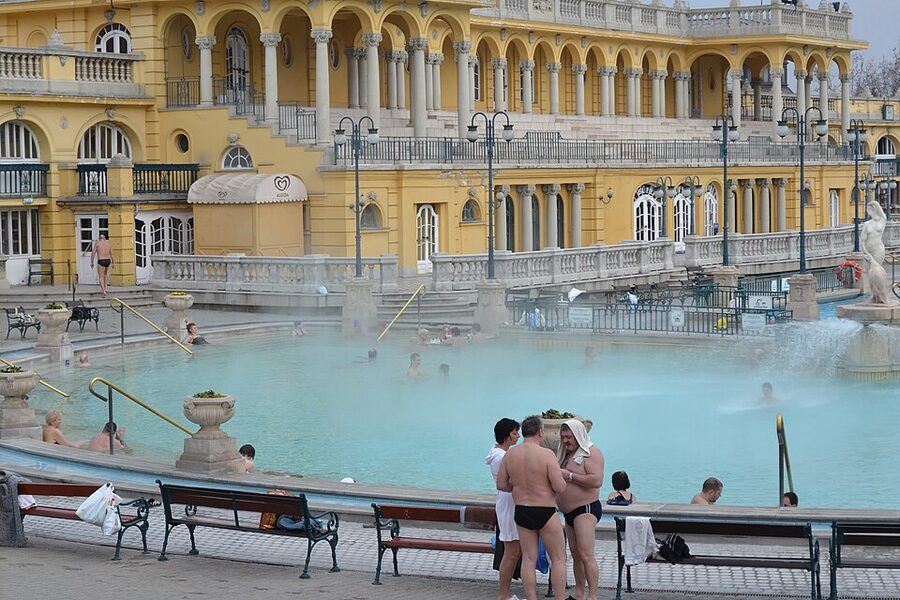
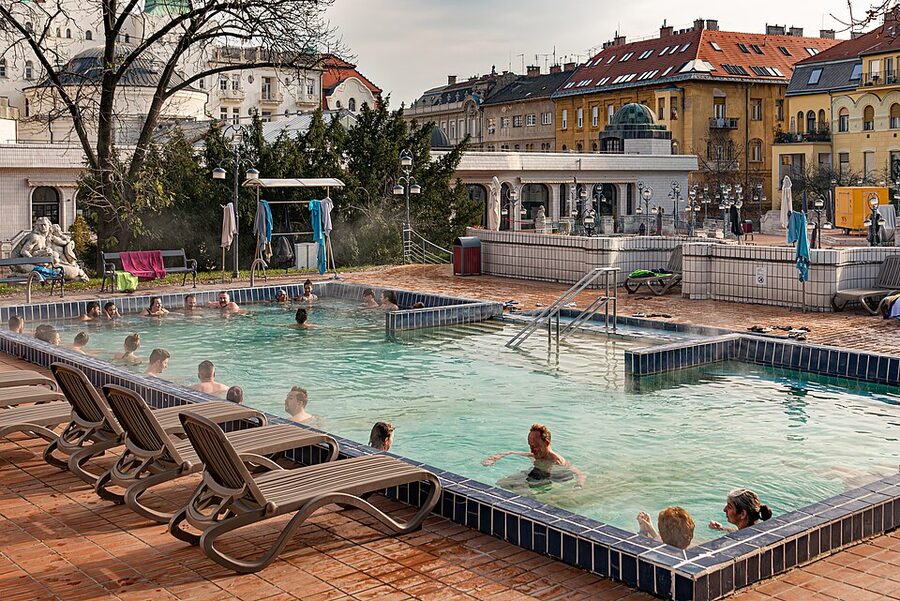
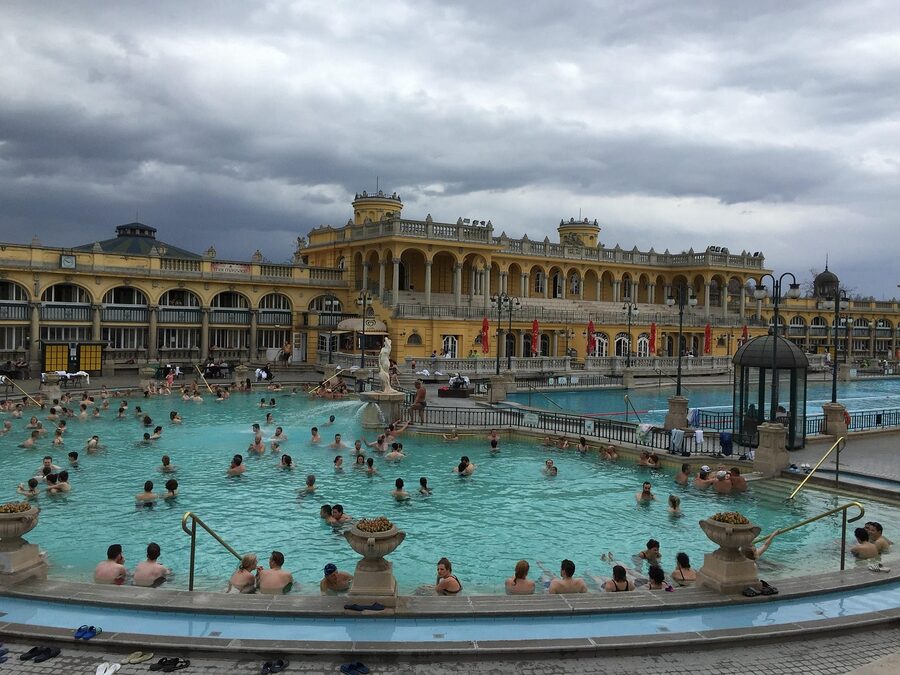
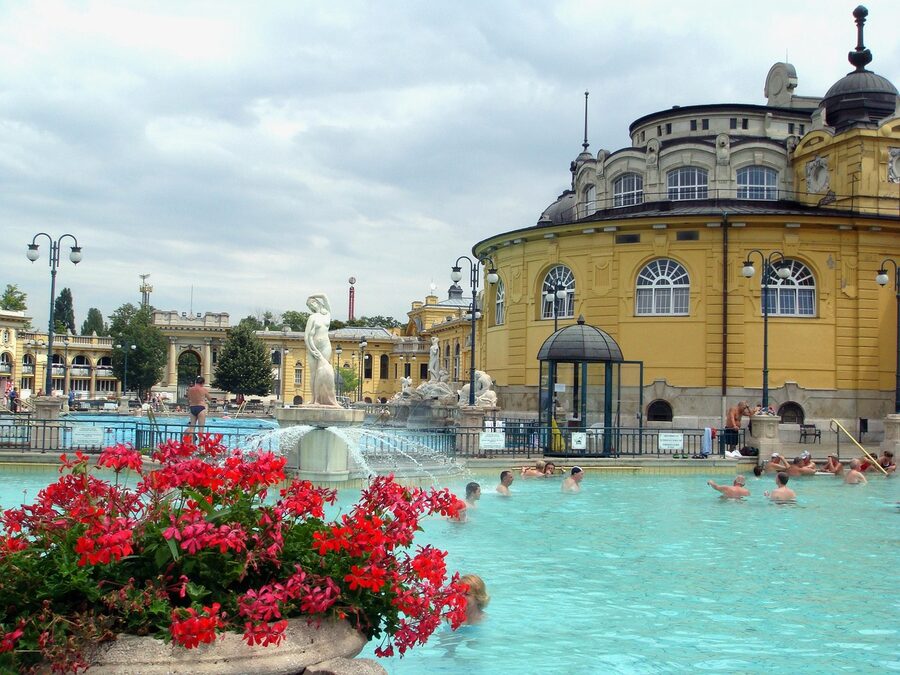
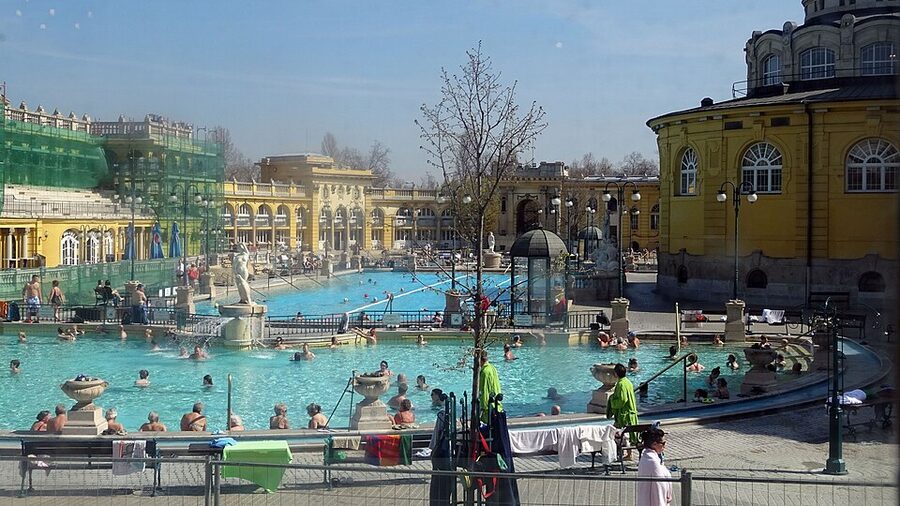
Széchenyi is the largest thermal bath in Europe. Eighteen pools, ten saunas, three vast outdoor basins, and roughly a thousand bathers on a busy Saturday. It’s the one you’ve seen in every Budapest postcard: men playing chess on floating boards in waist-deep water, steam rising off the surface in winter, the yellow Neo-Baroque facade behind it like a stage set.
This is the right pick if you want the scene as much as the soak. It’s also the right pick in winter, because the contrast of 38°C water and below-freezing air is the whole point. In high summer it’s just a public pool with extra grandeur.
Gellért: the Art Nouveau classic, on the Buda side
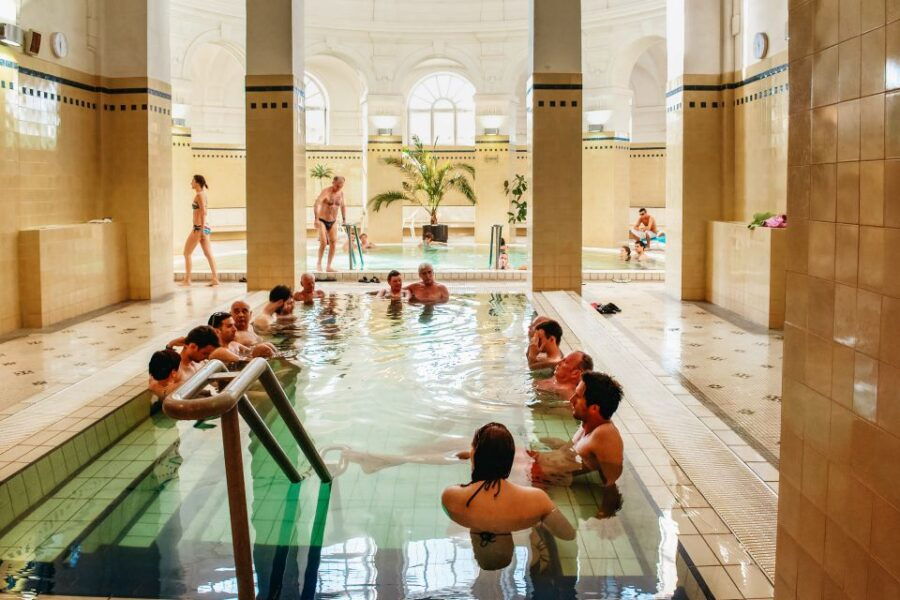
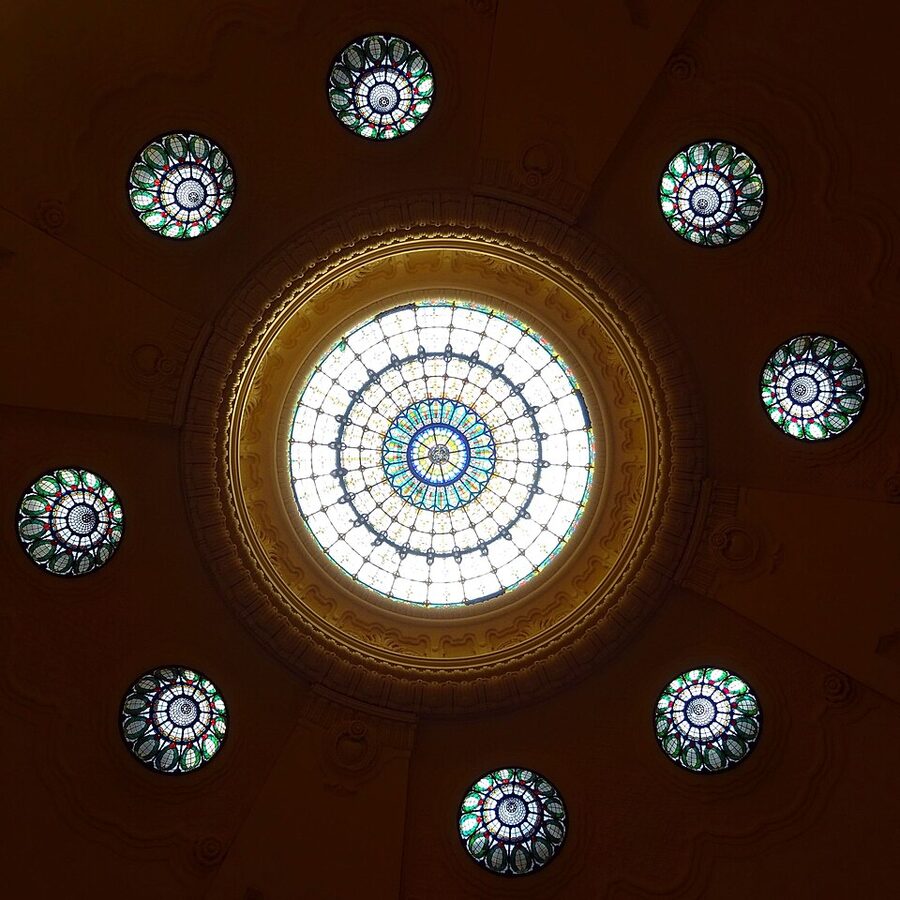
Gellért is the prettiest bath in Budapest, full stop. It sits inside the same 1918 building as the Hotel Gellért on the Buda side of the river. The indoor halls are stained glass, mosaics, statues, columns, and a vaulted glass ceiling that turns the pool below into something closer to a cathedral than a leisure centre.
The trade-off is size. Gellért has roughly half as many pools as Széchenyi and a much smaller outdoor section. The famous outdoor wave pool is also closed in winter, which catches some visitors out. If you turn up in February expecting waves you will be disappointed.
Mandala: the small spiritual-luxury option
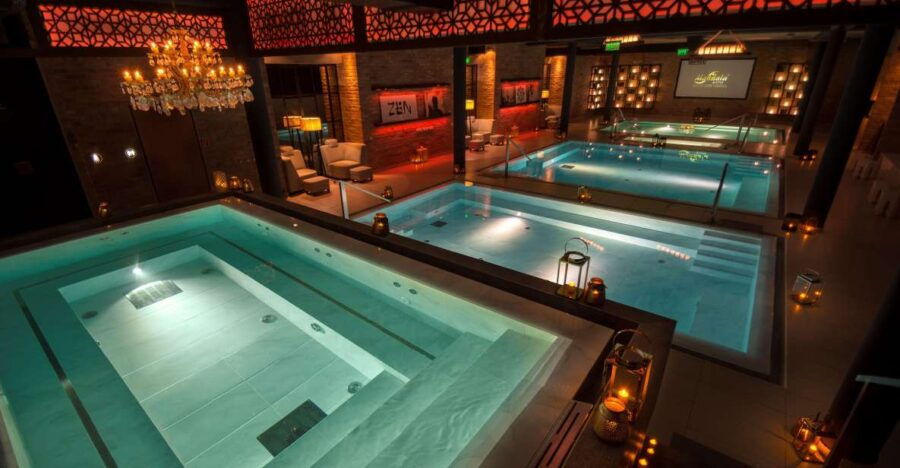
Mandala is not on the same map as the other two. It’s a small, modern wellness bath in the city centre, focused on a guided sauna programme called Aufguss. Six different saunas, herbal infusions, scheduled sessions led by a sauna master, dim lighting, no children, no shouting. Three hours instead of all day.
Pick Mandala if your idea of a good afternoon is silence, towels, and someone explaining the difference between a salt sauna and a Finnish sauna. Skip it if you wanted the chess players in the steam.
The Quick Picks, Read Properly
The “In a Hurry” links above will get you booked in two minutes. If you have ten, the rest of this section is the why behind each one.
1. Széchenyi Spa Full Day With Optional Pálinka Tour: $51
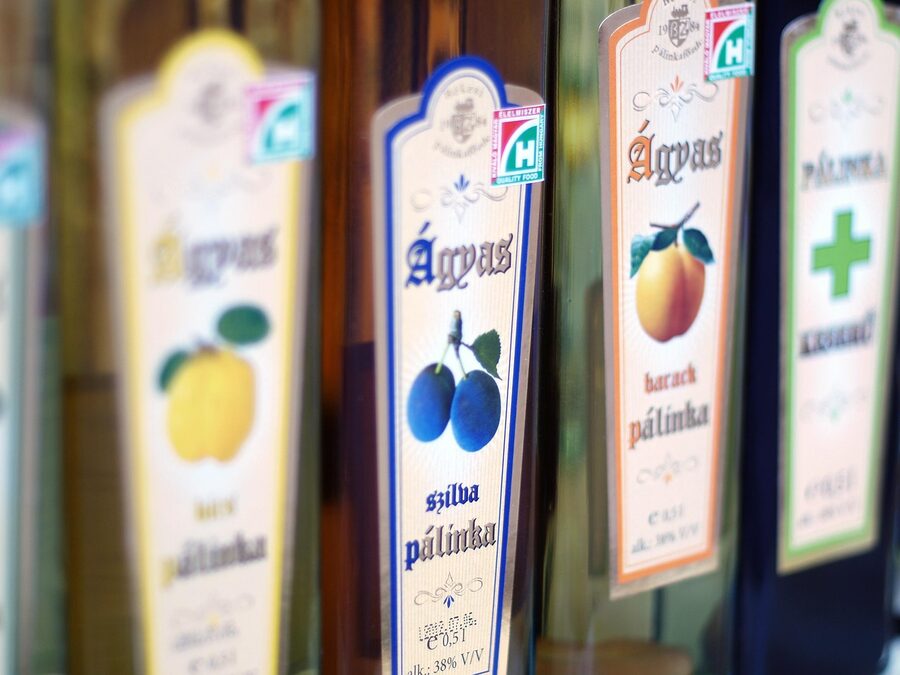
This is the most-booked Széchenyi product on GetYourGuide for a reason. Our full review walks through the cabin upgrade (worth it) and the pálinka tasting (genuinely good if you like spirits). The bath ticket itself gives you everything: indoor pools, outdoor pools, saunas, steam rooms, the whole afternoon.
2. Széchenyi Thermal Spa Full-Day Tickets (Viator): $59

This is the ticket-only version of the same Széchenyi day, sold by Viator instead of GetYourGuide. The price is a little higher and there’s no pálinka add-on, but the access and timings are identical. Our review has the rundown on the optional massage upgrade, which I’d skip in favour of just spending more time in the water.
3. Gellért Spa Full-Day Ticket: $48
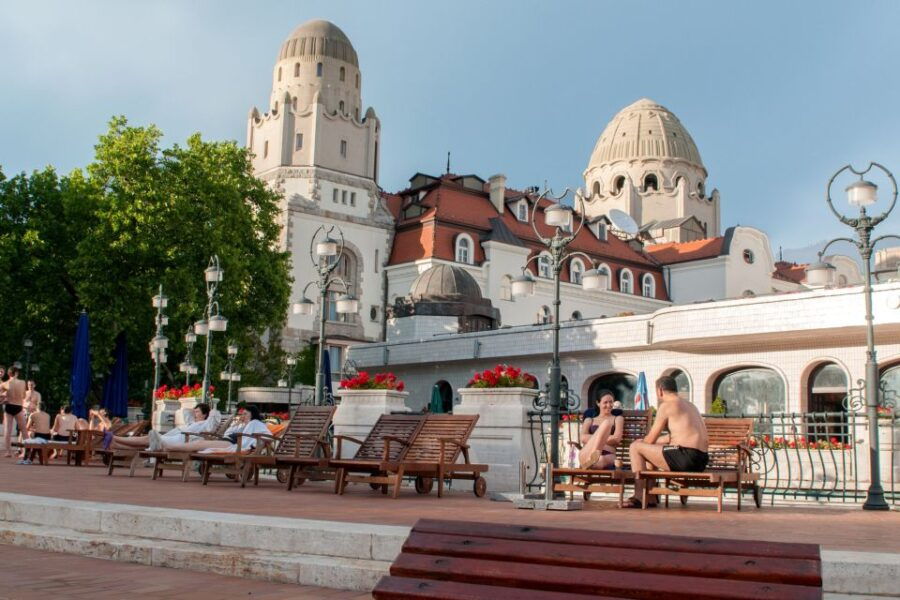
The Buda-side counterpart, and the one I’d pick if I only had time for one bath and the day was rainy or cold. Our review covers the locker-versus-cabin question (cabin, every time) and the indoor thermal halls, which are the real reason to come here. Don’t expect the wave pool to be open in winter.
How to Match the Bath to Your Day
The picks above all work. The question is which one fits the day you actually have. Here’s how I’d think about it.
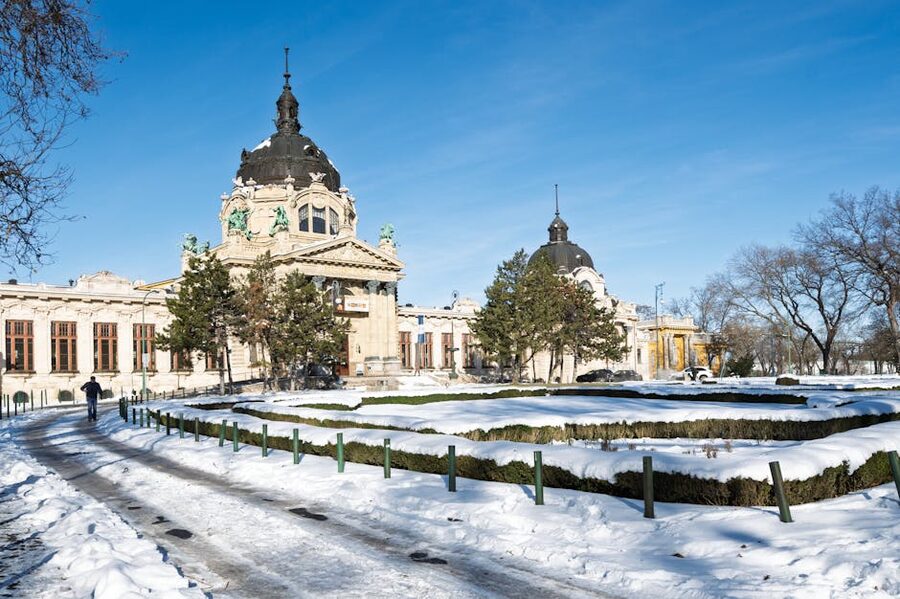
If it’s your first Budapest bath, pick Széchenyi. It’s the one your friends will ask about. The outdoor pools, the chess, the yellow building, the steam in the cold air: that’s the experience you came for. Go in winter if you possibly can.
If you’ve already done Széchenyi on a previous trip, pick Gellért. The indoor halls are something else entirely. You’re paying $48 to spend three hours under stained-glass skylights in a 1918 spa palace. It’s a different kind of beautiful.
If you want quiet and you’re a sauna person, pick Mandala. The Aufguss programme is real and good. It’s also a fraction of the cost and a fraction of the time. Three hours, not a full day.
If you’re between two of these and can’t decide, do one in the morning and one in the afternoon. Széchenyi opens at 7am, Gellért at 9am, and the city is built so they’re 25 minutes apart by metro. A double-bath day is a real thing locals do.
Booking the Right Ticket Type
Every Budapest bath sells two main ticket shapes: the full-day pass and the shorter window (usually three or four hours). Almost everyone should buy the full-day pass.
The reason is logistics. By the time you’ve queued, found the locker room, changed, walked to the pools, soaked for an hour, gone back to use the steam room, gotten hungry, eaten a langos at the kiosk, and decided you want one more dip in the hot pool, you have already used three hours. The shorter pass forces you to clock-watch. The full-day pass lets you treat the whole afternoon as the activity.
The price gap is also small. About $10 to $15 extra for unlimited time, and you get to use it as a base while you eat a meal, do a city walk, and come back.
Cabin vs locker
This is the upgrade everyone gets wrong. The default ticket gives you a locker. For roughly $5 more, you can switch to a private cabin: a small lockable room with a bench, hooks, and a mirror, where you can change in private and leave your stuff.
Get the cabin. The locker rooms are crowded and damp, the locks are temperamental, and the cabin gives you somewhere to retreat between pool sessions. It’s the single best upgrade at any of the three baths.
What’s included, what isn’t
Your ticket gets you the pools, saunas, and steam rooms. It does not get you a towel, a swimsuit, or flip-flops. You can rent or buy all three at the front desk, but they mark them up about three times what a Budapest supermarket charges.
Bring your own swimsuit, towel, and flip-flops if you have any. If you’re flying in light, the SPAR or Lidl near your hotel sells flip-flops for about $4 a pair.
Winter vs Summer
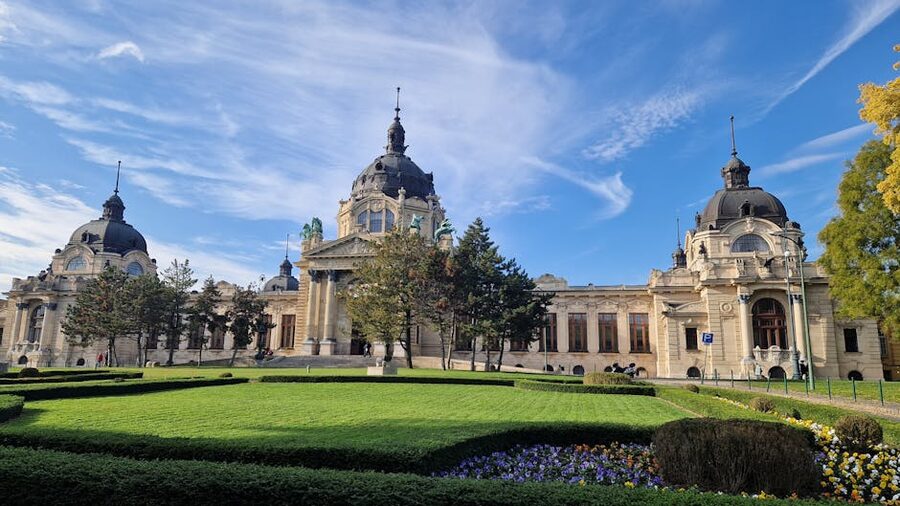
This question matters more than visitors realise.
Winter (November to March) is when Széchenyi is at its best. The outdoor pools are full, the steam is dramatic, and the contrast between hot water and cold air is the whole reason the bath was built. Gellért’s outdoor wave pool is closed in winter, which is the season’s only real downside.
Summer (June to August) flips it. Now Gellért’s outdoor wave pool is the headline attraction, and Széchenyi’s outdoor section becomes more of a sun-bathing scene. Both baths get hotter and busier. Hungarian schools are out from mid-June, so weekday afternoons fill up.
Shoulder seasons (April-May, September-October) are quietly the best of all worlds. Outdoor pools open at both, crowds thinner, prices the same.
Sparty: the Late-Night Spa Party
One Budapest bath product deserves its own paragraph. Sparty is a late-night party held inside Széchenyi roughly every Saturday from February through December. The pools stay open, DJs set up, lights and lasers light the building, and a few thousand mostly-twenty-something people drink and dance in 38°C water until 3am.
It’s $80 a ticket, which is roughly the cost of three regular bath visits. Our Sparty review goes through what to expect (lots of plastic cups, very crowded changing rooms, surprisingly long bar queues). It is genuinely fun if that’s the kind of night you want. It is genuinely awful if what you wanted was a soak. Don’t book it as your only Budapest bath. Book a regular daytime ticket on a different day, then do Sparty on top.
Getting There
Széchenyi: take Metro Line 1 (the yellow line) to the stop named after the bath. The line itself is the second-oldest underground in continental Europe, and the trains feel like a wood-panelled museum exhibit. It’s part of the trip.
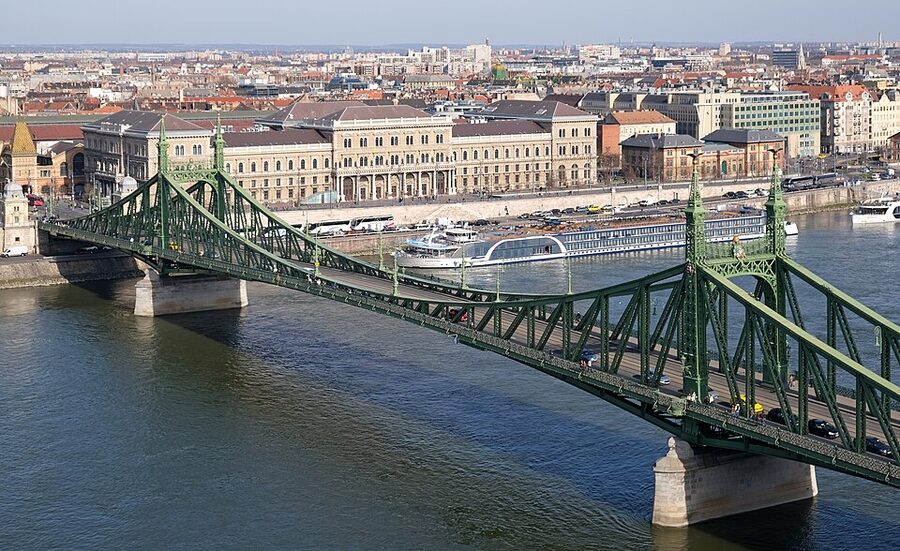
Gellért: tram 19 or 41 along the Buda side, or tram 47/49 across Liberty Bridge from Pest. The Gellért stop is at the foot of Gellért Hill and you can’t miss the building. Walking from the centre across the bridge is also pleasant; about 20 minutes from Vörösmarty Square.
Mandala: it’s in District V, walking distance from St Stephen’s Basilica. If you’re already doing the basilica that day, just walk.
Public transport is included on the Budapest Card, which also gives small discounts at some baths. If you’re doing two or three big-ticket attractions plus baths, the card pays for itself.
What to Bring
Short list. Be honest with yourself about what you’ll actually use.
- Swimsuit. Mandatory. A few pools enforce it more strictly than others.
- Towel. Bigger is better. The thin hotel towel will not cut it.
- Flip-flops. The walk from changing room to outdoor pool is wet stone and, in winter, briefly snowy. Flip-flops save you from cold feet and slippery tile.
- Swim cap. Required in some lap pools at Gellért. Buy a cheap one at the entrance if you want to use those pools.
- Waterproof phone pouch. Optional. The pools are not allowed phones in some areas, but having a pouch lets you keep one on you in the cabin without worrying about steam damage.
- A book. The terraces have loungers. A two-hour break with a book between hot pools and cold pools is the best part of the day.
Quick History (Read While Soaking)
The Romans bathed here first. They built the original baths in the 2nd century around the same hot springs we still use today, and you can see ruins of one of them at the Aquincum site north of the city.
The Ottomans took over in the 16th century and built the bath culture into the city for real. The Rudas and Király baths (smaller, older, cheaper) date to that period and still have the original Ottoman domes. They’re worth a visit if you’ve done the big two and want to see the older form.
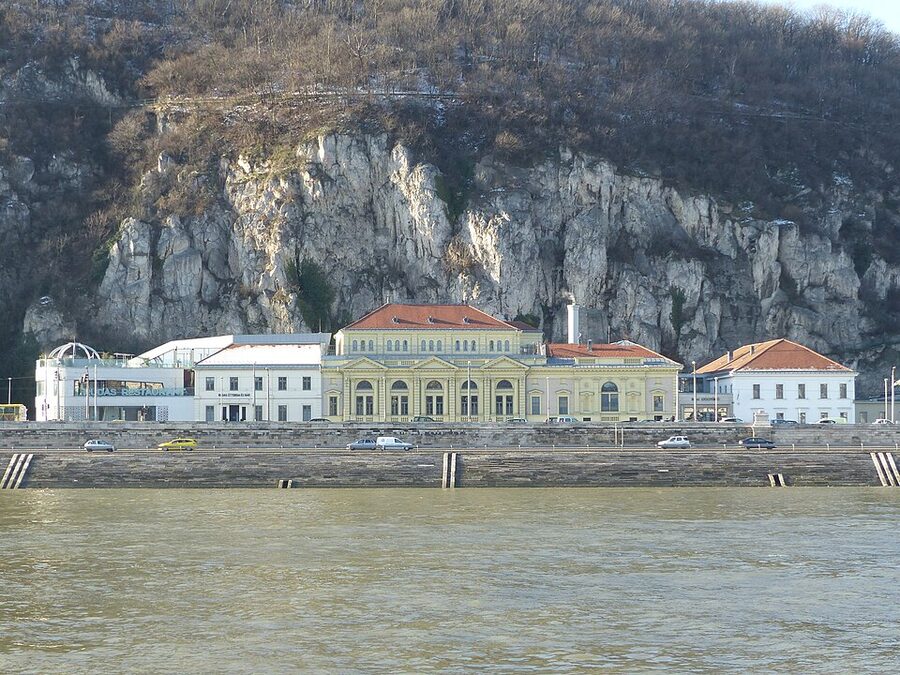
Széchenyi was built in 1913 and named after Count István Széchenyi, the same reformer the chain bridge is named after. Gellért was finished in 1918 in the Art Nouveau style, attached to a luxury hotel that was meant to be the showpiece of pre-war Budapest. Both buildings survived two world wars largely intact, which is most of why they look the way they do.
Where the Baths Fit in Your Budapest Trip
Most visitors do Budapest in three or four days. The bath is one afternoon of that. If you’re building the full itinerary, here’s how I’d slot it in.
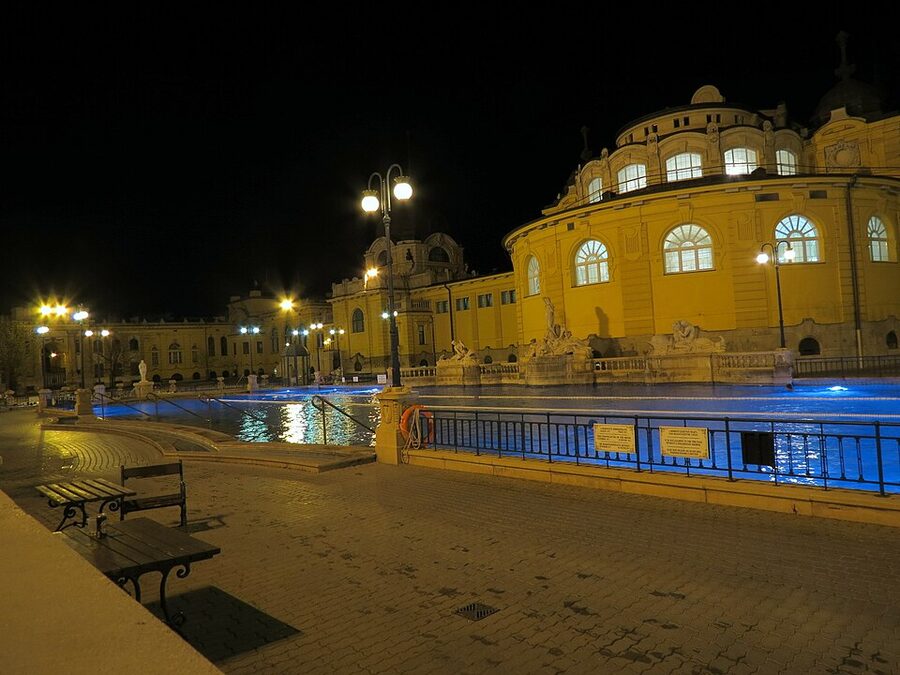
The bath pairs really well with a Danube cruise. Soak in the afternoon at Széchenyi, eat dinner around 8pm, then take a Budapest Danube cruise as your evening. Your body is already loose from the heat, the cool air on the river is welcome, and you’ll sleep like the dead afterward. If you want the cruise to feel like more of an event, the dinner cruise variant handles food and the river in one go.
The bath also pairs well with a long city walk earlier in the day. Most people who do the bath in the afternoon spend the morning either on Buda Castle hill or doing a guided walk through the city. The Buda Castle walking guide covers that side, and the hop-on hop-off bus is a good way to cover ground if your legs are already done from the previous day.
If you’re combining Budapest with another central-European city, the natural pairing is Prague. Prague has nothing equivalent to the thermal-spa experience, so doing baths in Budapest and a beer-and-history day in Prague gives the trip two distinct flavours. A Prague Old Town walking tour is a good first-day match for the Prague side, and the Prague Castle guide covers the equivalent landmark afternoon.
Common Mistakes
Showing up without pre-booking in winter. The walk-up queue at Széchenyi on a December Saturday can run 45 minutes. The pre-booked entry queue is roughly five.
Buying the short ticket. Almost no one finishes their bath day in three hours. Pay the small upgrade for the full day.
Doing Sparty as your one and only Budapest bath. You’re paying party prices and getting a worse soak. Do a regular daytime visit, then do Sparty on top if it appeals.
Wearing a watch or jewellery in. The thermal water has minerals that will tarnish silver and stain leather. Leave it in the cabin.
Drinking heavily before getting in. Alcohol plus 38°C water plus an hour in steam plus a Hungarian summer afternoon is a recipe for a faint. The bars inside both Széchenyi and Gellért are fine to use, but go easy.
If You’ve Already Done All Three
If Budapest baths are your repeat-visit thing, the smaller historic ones are where the city’s bath culture actually started. Rudas is the original 16th-century Ottoman bath; the central pool sits under a dome with a single oculus. Király is similar, smaller, less touristed. Lukács is the locals’ bath of choice and the one you’ll see least English in. None of them are sold as packaged tickets the same way Széchenyi and Gellért are; you walk up and pay at the door.
Beyond the baths, Budapest’s other big sit-down attraction is the St Stephen’s Basilica with its panoramic terrace, and the Parliament building tour, which both pair well with a thermal afternoon. The basilica terrace at sunset followed by a soak is one of my favourite Budapest sequences.
For a sister-city day, swap a Budapest bath for a Prague Pilsner experience if you’re chaining cities; the Czech equivalent of Hungarian thermal culture is, broadly, beer.
The Soak You Should Actually Book
If I had to pick one bath, on one trip, for one afternoon: Széchenyi in winter, full-day ticket with cabin upgrade, around 11am on a weekday. You’ll have the outdoor pools to yourself for the first hour, the steam will look the way the postcards promised, and you’ll have the rest of the afternoon to walk back through City Park feeling like the day was worth the flight.
Gellért is the answer if it’s summer or if you’ve already done Széchenyi. Mandala is the answer if you’re a sauna person and you want a calm afternoon. Sparty is the answer if you’re 23, on a hen weekend, and the bath is the venue, not the point.
Whichever you pick, book it the day before. Walk-ups work, but pre-booked tickets cut the queue, and the queue is the only bad part of any Budapest bath day.