
Here’s the thing nobody mentions about Rotterdam harbour boats. The Spido tour has been running since 1919. That makes it older than every other tourist attraction operating in the Netherlands today, audio tours at the Rijksmuseum included. People have been chugging out of the same Willemskade pier for over a century to look at this thing.
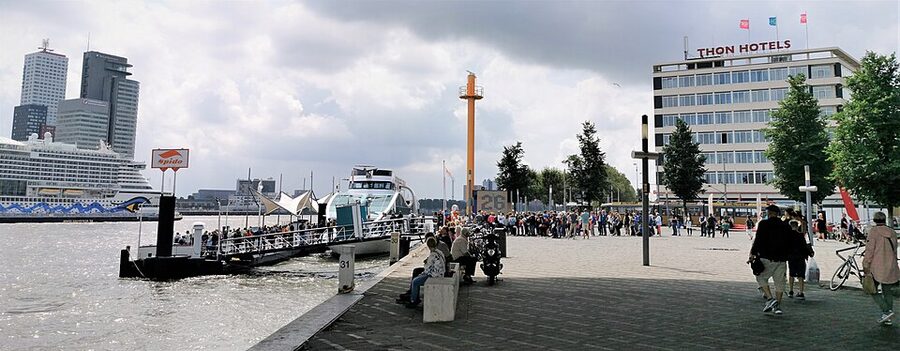
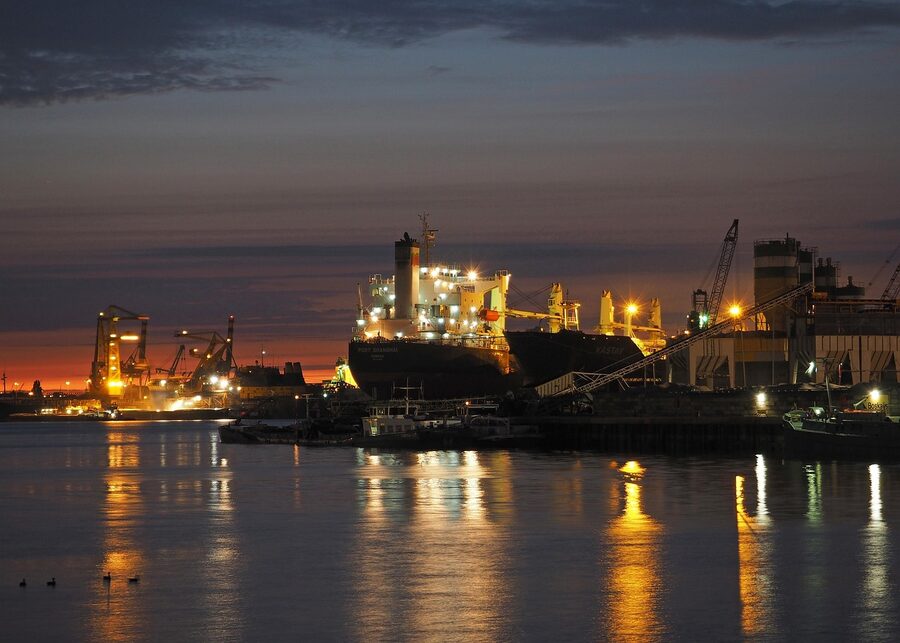
And it’s not a canal trip. I have to keep saying that to people who book it expecting Amsterdam. Rotterdam is a working industrial port, the biggest in Europe by tonnage, and the boat takes you through it. You’ll see container terminals, cruise ships, and the ghost outline of where the city used to be before May 1940. It’s a different beast.
- In a Hurry? Top Picks
- What You Actually See on the Boat
- Standard 75-Minute Spido Tour
- 1. Rotterdam Harbour Boat Tour: from
- The Pancake Cruise (yes, really)
- 2. Rotterdam Pancake Cruise: from
- Live Guide vs Audio: Which Cruise is Better?
- 3. Rotterdam Harbor Cruise with Live Guide: from
- Other Boat Variants Worth Knowing
- Historic Ship Cruise
- RIB Speedboat
- Walking Tour + Harbour Cruise Combo
- Why the Skyline Looks Like That
- Hotel New York and the Holland-America Line
- Container Terminals and Maasvlakte
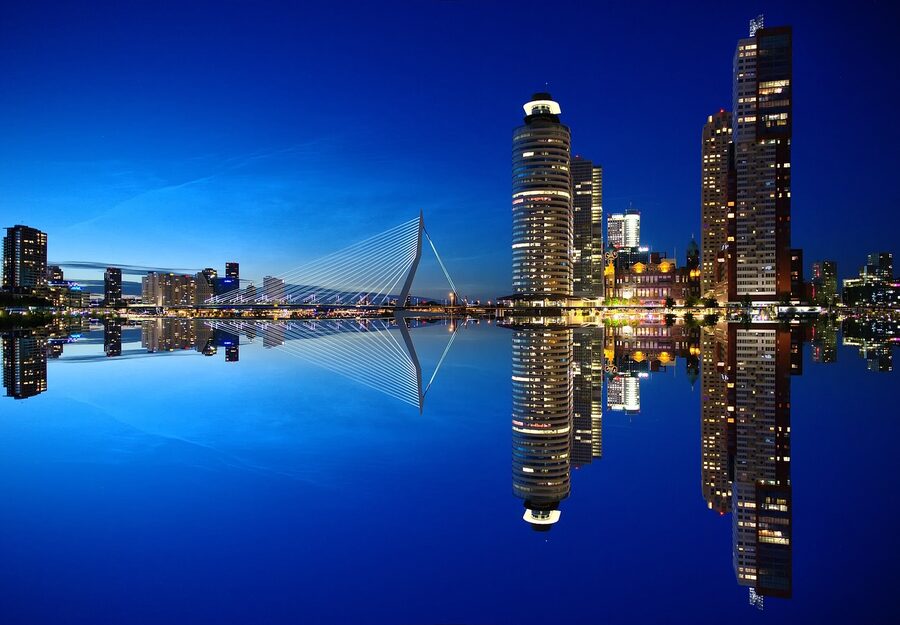
- The Erasmus Bridge (“De Zwaan”)
- Cube Houses and Other Things You Can See on Foot
- Practical Booking Notes
- What to Bring
- Day Trip from Amsterdam
- Different from Amsterdam: Why Both Are Worth Doing
- Delfshaven: The Bit That Survived
- Where to Eat Around the Pier
- Closing Thoughts
In a Hurry? Top Picks
Standard 75-minute Spido loop (~$22): the original, runs year-round, audio guide in eight languages. Book the Rotterdam Harbour Tour.
Pancake cruise (~$31): same 75 minutes, plus all-you-can-eat Dutch pannenkoeken on the upper deck. Book the Pancake Cruise.
Live-guide cruise (~$14): cheaper, smaller boat, real human commentary instead of audio. Book the Live-Guide Cruise.
What You Actually See on the Boat
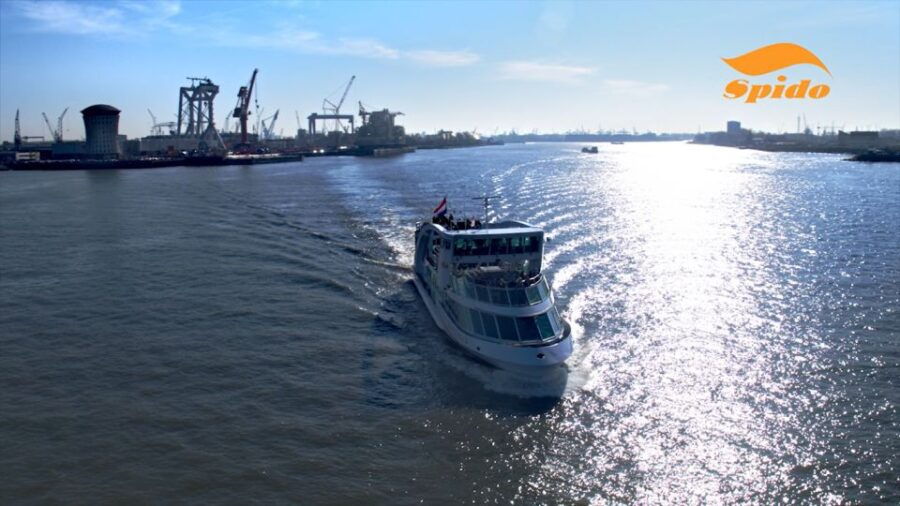
The standard loop is 75 minutes. You leave from Willemskade, just east of the Erasmus Bridge, and head west down the Nieuwe Maas towards the open sea. The full route doesn’t reach the actual container terminals at Maasvlakte (those are 40 km out), but you get a solid working slice of the Stadshavens, the inner industrial port.
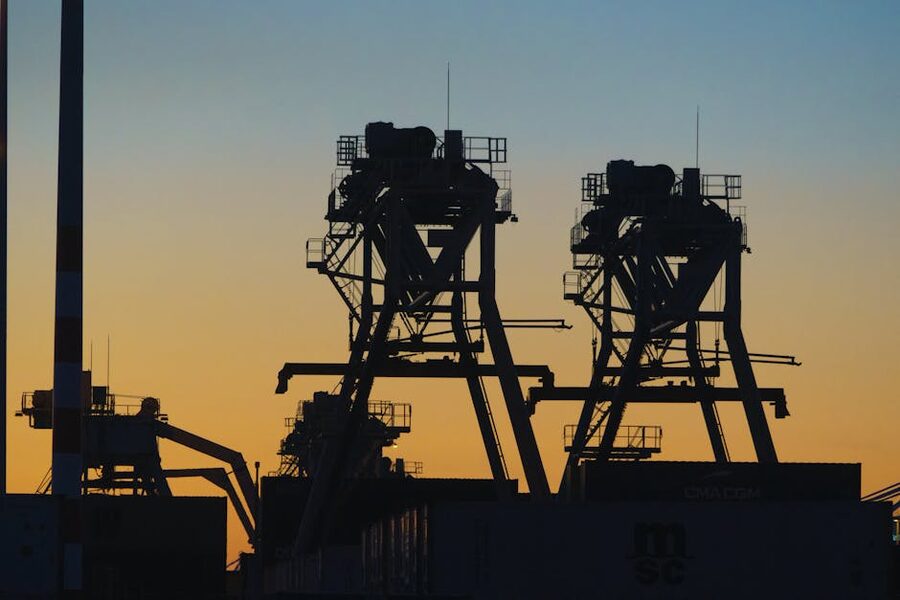
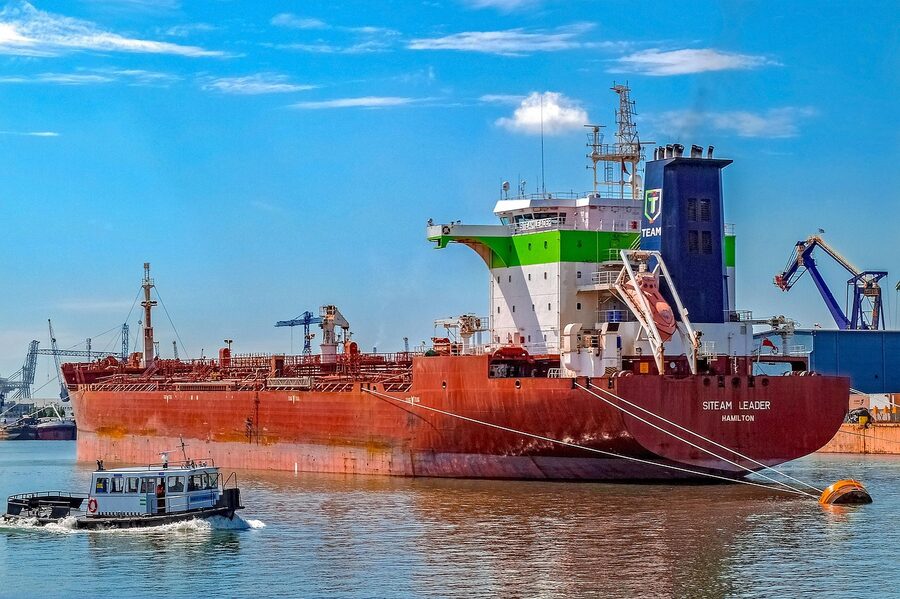
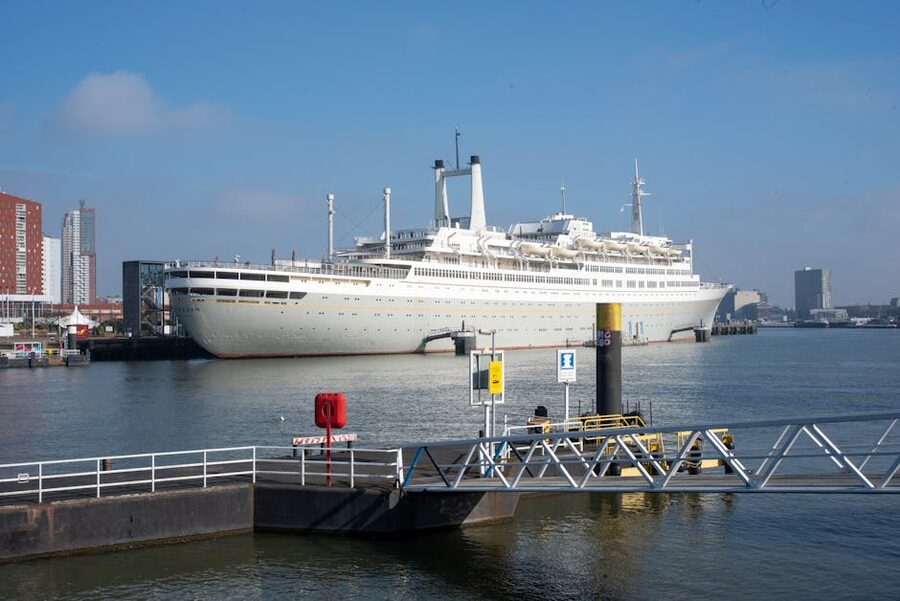
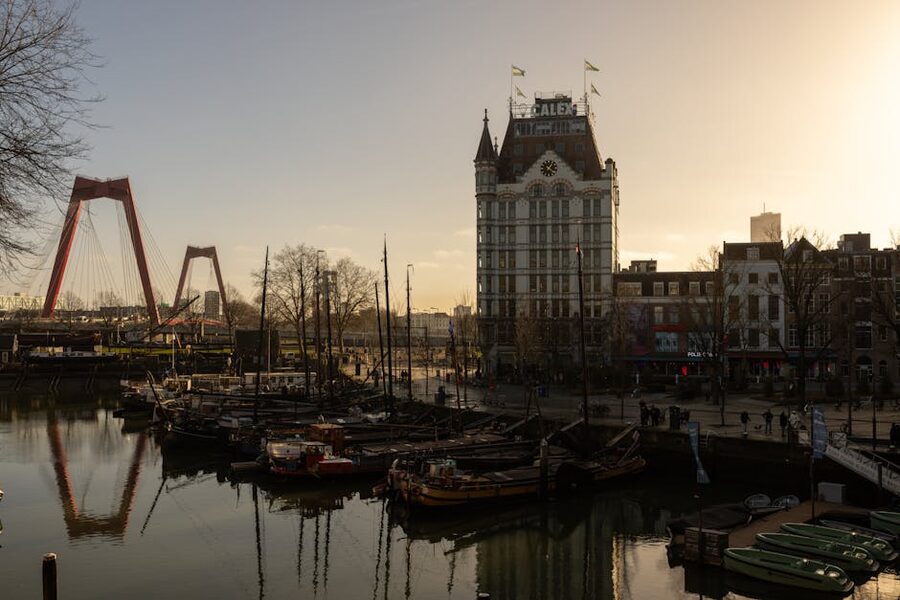
What you’ll pass, in roughly this order: the Erasmus Bridge, Hotel New York (former Holland-America Line headquarters, more on that below), the Wilhelminapier cruise terminal, the Sint-Jobshaven historic dock, the SS Rotterdam museum ship, and the Waalhaven, where dredgers and tugs work all day. You’ll also see floating cranes the size of office buildings. The boat doesn’t stop, so bring a camera.
Standard 75-Minute Spido Tour
This is the one to book if you only want one. The Spido fleet operates from Willemskade pier, runs four to six departures a day in summer, two or three in winter, and rarely cancels even when the weather turns. The boats are double-deckers with covered seating below and an open top deck. Bring a windbreaker for the top deck. It gets cold on the Maas even in July.
Audio guide is included, and it’s actually decent. Eight languages including Mandarin and Spanish. Headphone jack at every seat. The commentary leans heavily on port logistics, which sounds dull until the guide starts talking about how a single Maersk Triple-E moves enough cargo to fill 90 km of trucks back-to-back.
1. Rotterdam Harbour Boat Tour: from $22
The original and still the one most people book. Our full review of the Rotterdam Harbour Boat Tour covers what to expect on the boat itself; the audio commentary is what sells this one. It’s the most popular harbour tour booked online for Rotterdam, by a wide margin.
The Pancake Cruise (yes, really)
I was sceptical. Then I went. The pancake cruise runs the same 75-minute route as the standard tour, but the boat has an upstairs galley turning out Dutch pannenkoeken non-stop. They’re paper-thin, plate-sized, and you can eat as many as you want. Sweet ones come with stroopwafel syrup, savoury with cheese and bacon. There’s a salad bar too if you need pretending-to-be-healthy options.

One catch: kids dominate this cruise. If you want a quiet trip with audio commentary, book the standard tour. If you want something to do with two hungry teenagers on a rainy Saturday, this is the move.
2. Rotterdam Pancake Cruise: from $31

Solid value once you factor in the food. Read our Rotterdam Pancake Cruise review for the full lowdown on toppings and timing. Booking ahead is smart on weekends. They cap the boat at around 200 people and Saturdays sell out by Wednesday.
Live Guide vs Audio: Which Cruise is Better?
Spido’s audio guide is professional but it’s a recording. The live-guide cruise runs from a different pier (Veerhaven, ten minutes’ walk west of Willemskade) and uses a smaller open-top boat with a real person at the mic. The captain’s commentary is bilingual Dutch and English. They take questions. They go off-script when something interesting passes.
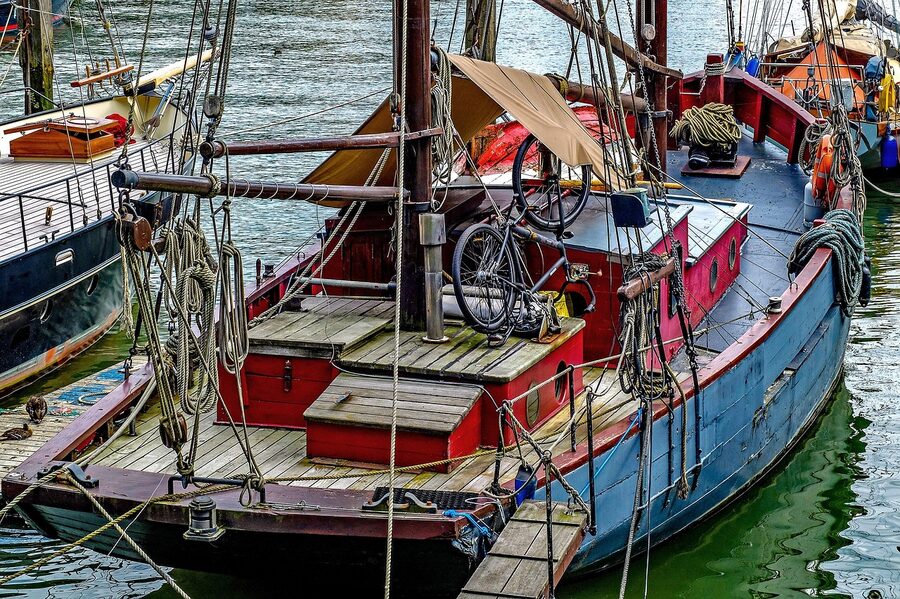
The trade-off is comfort. The smaller boat doesn’t have a covered cabin if it rains. They run rain-or-shine and don’t refund unless they cancel themselves. Bring a waterproof. The price is the lowest of any harbour cruise (around $14 with optional coffee or Dutch pea soup add-on for a few euros more), and that alone makes it worth considering.
3. Rotterdam Harbor Cruise with Live Guide: from $14
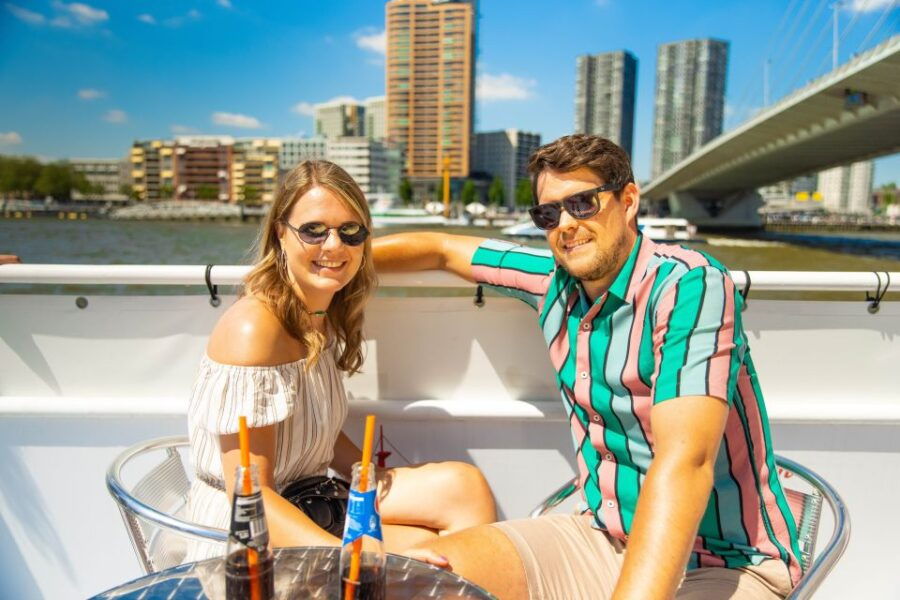
The cheapest harbour cruise in Rotterdam, full stop. Our live-guide cruise review goes into the coffee and pea-soup upgrades. Worth it if you want a real human pointing things out. Skip if you’d rather a fixed audio commentary you can pause.
Other Boat Variants Worth Knowing
Beyond the big three, a few smaller operators run niche cruises that suit specific moods.
Historic Ship Cruise
Some Spido competitors run their loop on a 1957 steam-tug or a wooden 1920s passenger boat. It’s the same harbour, but the boat itself becomes part of the experience. Slower, quirkier, more wood and brass. Two-hour route rather than 75 minutes. Better for adults who care about ships. The historic-ship cruise tends to run weekends only outside summer, so check before you fly in.
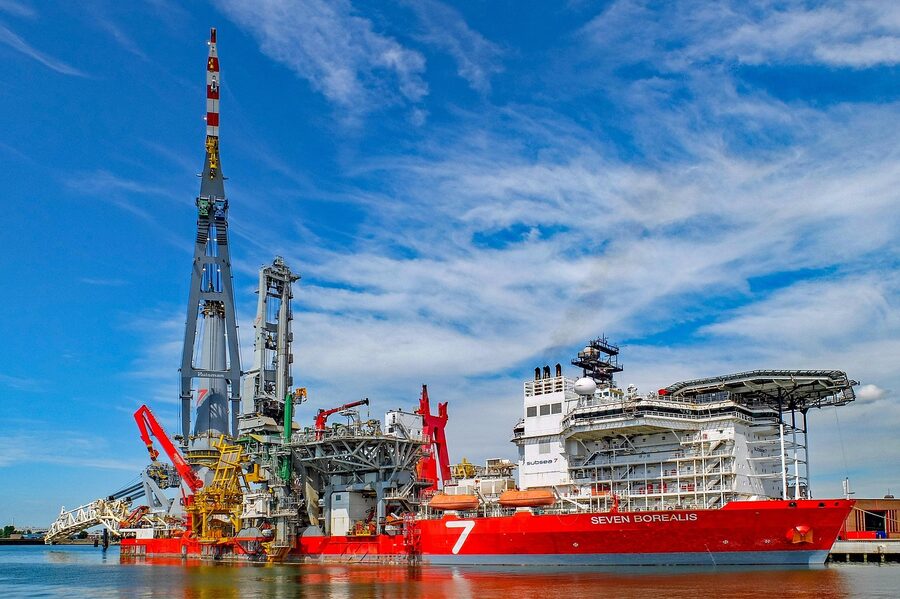
RIB Speedboat
This is the one teenagers ask for. A rigid-inflatable boat (like a coastguard zodiac) that does the harbour at 50+ km/h. You wear a foul-weather jacket they hand out, sit on saddle seats, and get spray in the face. Fun, loud, much shorter than the standard tour (about 45 minutes). The RIB doesn’t pretend to be educational, it’s a thrill ride. Our RIB speedboat review covers what to wear and what’s included.
Walking Tour + Harbour Cruise Combo
Half-day combo that pairs a guided walk through the Wilhelminapier and Kop van Zuid neighbourhoods with the boat trip itself. Good if you want context before you board. The walk covers the Hotel New York, the SS Rotterdam, and the bombing-line memorial. About four hours total. See our walking tour and harbour cruise write-up for what to expect on each leg.
Why the Skyline Looks Like That
This is the part most cruise commentaries gloss over. Rotterdam was 90% destroyed on 14 May 1940. The Luftwaffe dropped 97 tonnes of bombs on the city centre in fifteen minutes, killing about 900 civilians and flattening 25,000 homes. It was the act that broke Dutch resistance and led to the surrender the next day. The Germans then rebuilt the port for their own war use; the Allies bombed it again in 1943 and 1944 to deny them.
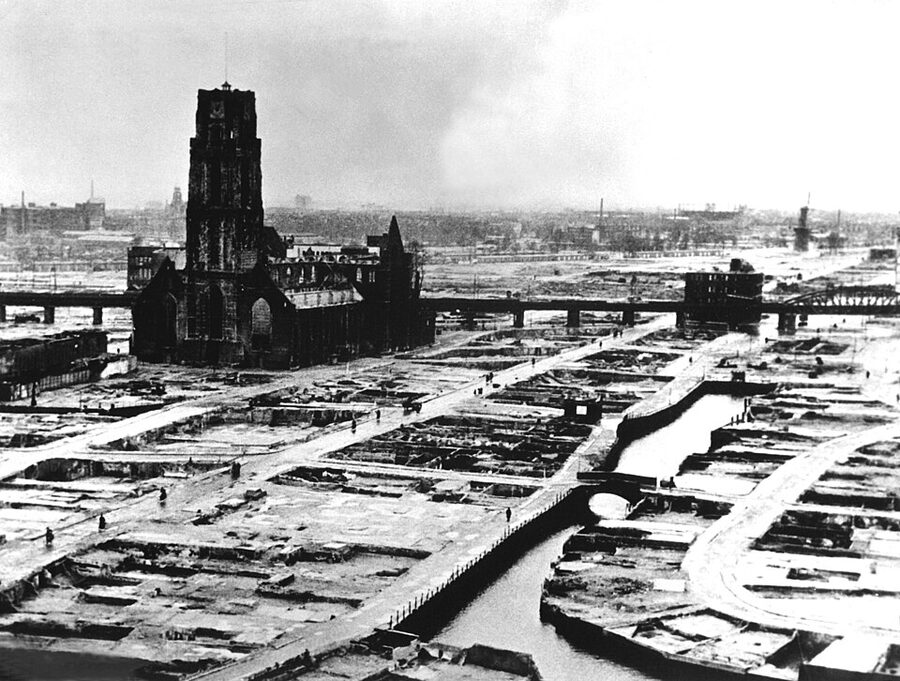
By the time the Dutch came back to rebuild, they decided not to fake the past. There’s no “old town” being recreated brick-by-brick like Warsaw or Frankfurt. Instead Rotterdam went modern. Aggressively modern. Every striking thing you see from the boat (the Erasmus Bridge in 1996, Cube Houses in 1984, Markthal in 2014, the Maastoren in 2009) exists because the alternative was a hole in the ground.
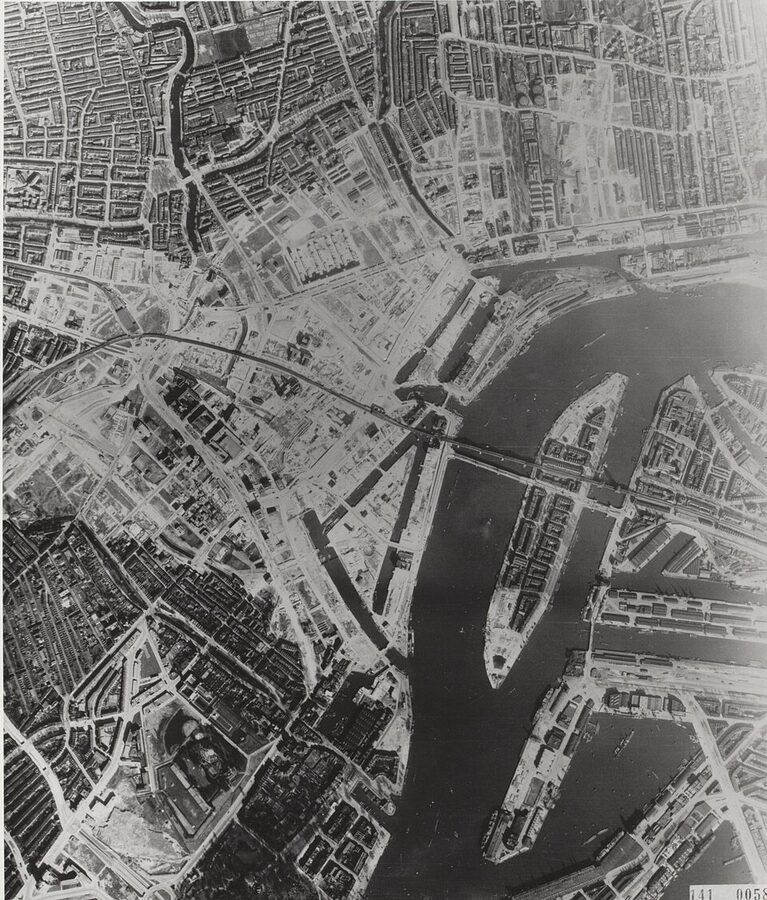
You can see the bombing line marked on pavement plaques throughout the city. It traces the edge of where the fire stopped. From the boat, the easiest mental map is: anything inside that line is post-1945 architecture. Anything outside (Delfshaven, parts of Kralingen) is older Rotterdam that survived because it was on the wrong side of the river or out past the harbour.
Hotel New York and the Holland-America Line
The most photographed building from any harbour cruise. The twin-towered red-brick block on the south bank was the Holland-America Line head office from 1901 until 1971. It’s where Dutch and German emigrants embarked on the steamer to New York and Hoboken. The records of who left, on which ship, in what year, are kept in the basement archive.
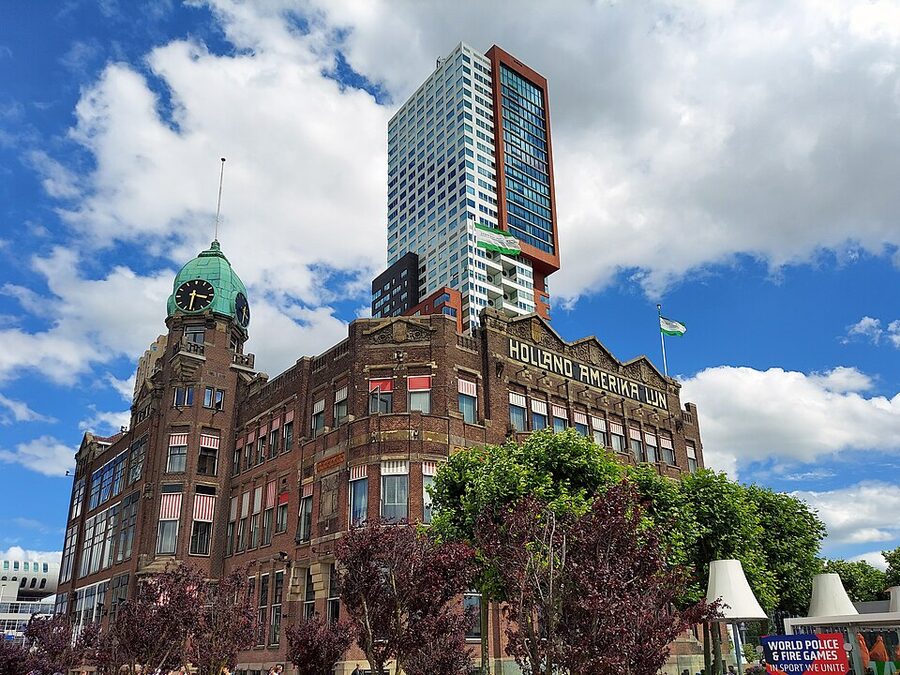
It’s a hotel now, but the lobby and ground-floor restaurant are open to anyone. Pop in for a coffee before or after the cruise. The staircases still have the original brass and the front desk uses the company’s old shipping office. From the harbour-side terrace you can see almost the whole route the boat takes.
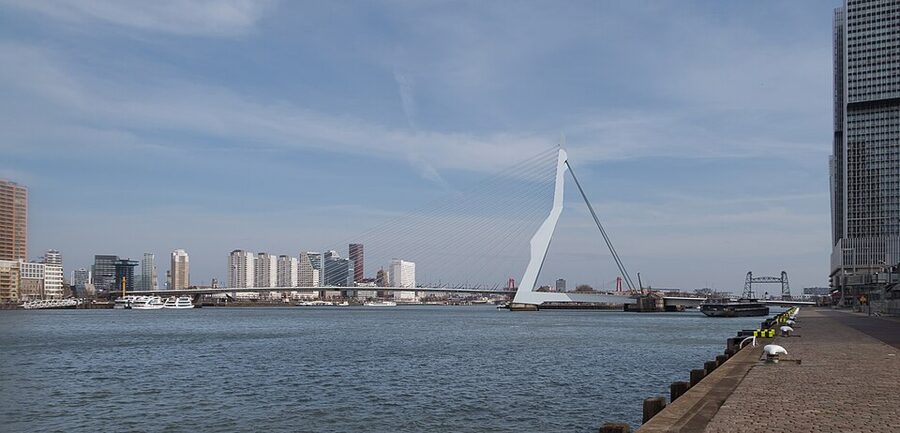
Container Terminals and Maasvlakte
The standard 75-minute boat doesn’t reach Maasvlakte. The actual giant container port is 40 km west of the city, near Hoek van Holland, and you’d need a 4-hour cruise to get there and back. What you do see on the standard route is the Waalhaven, Eemhaven, and parts of the Stadshavens, which is plenty of working port for one trip.
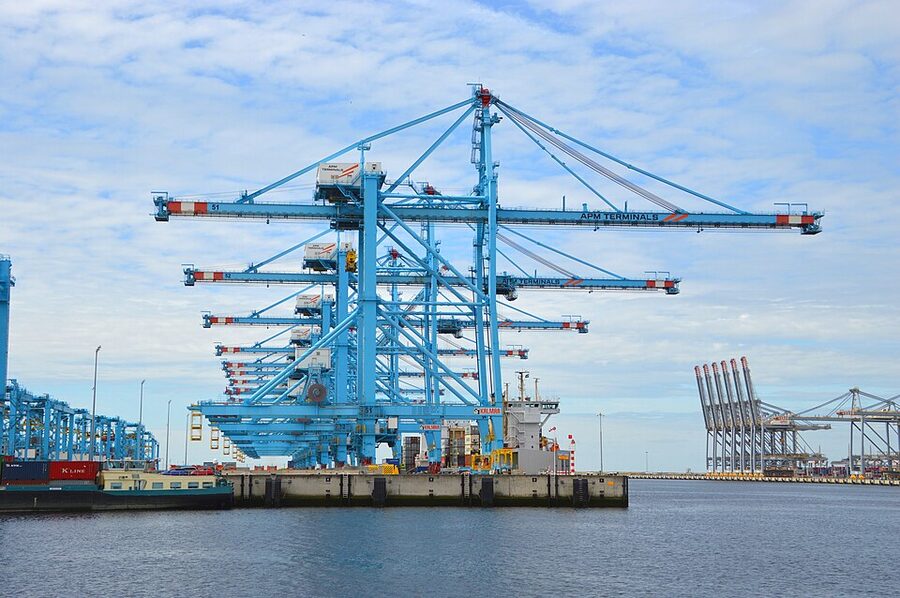
One thing to know about Maasvlakte 2: most of the cranes there are autonomous. They’re remote-controlled by operators sitting in offices several kilometres away. The audio commentary on the Spido loop talks about this when you pass the smaller Eemhaven cranes; the principle is the same, just at a fraction of the scale.
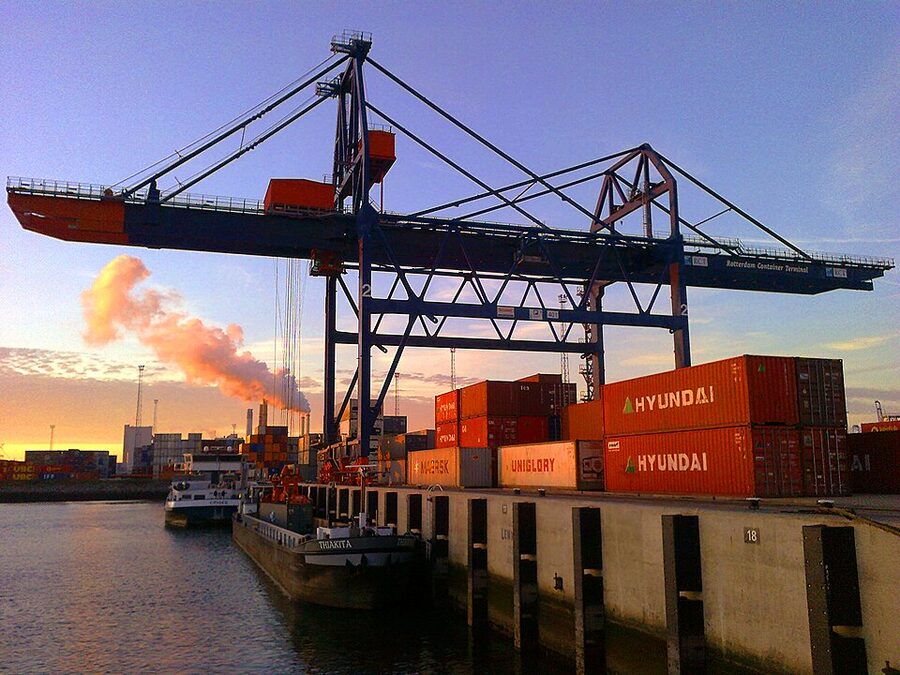
The Erasmus Bridge (“De Zwaan”)
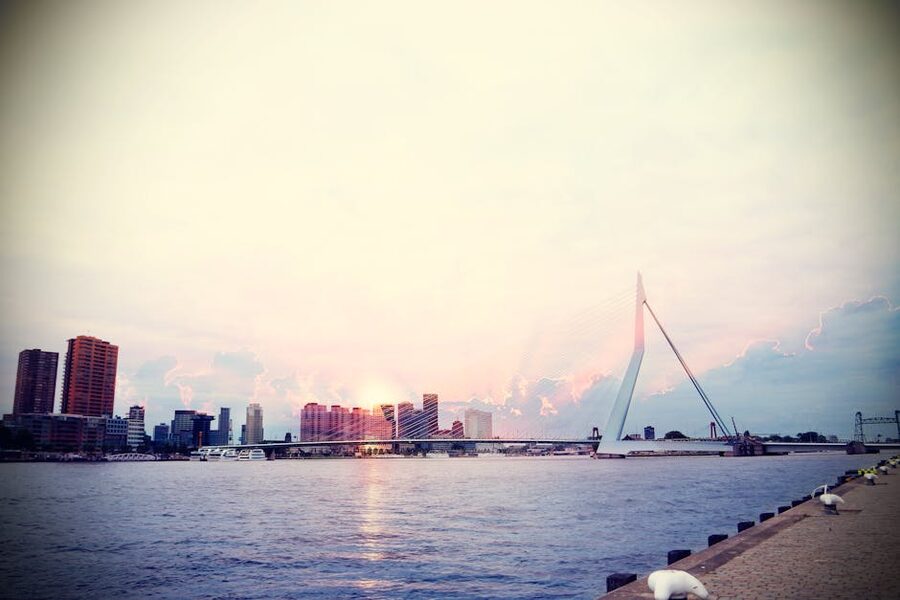
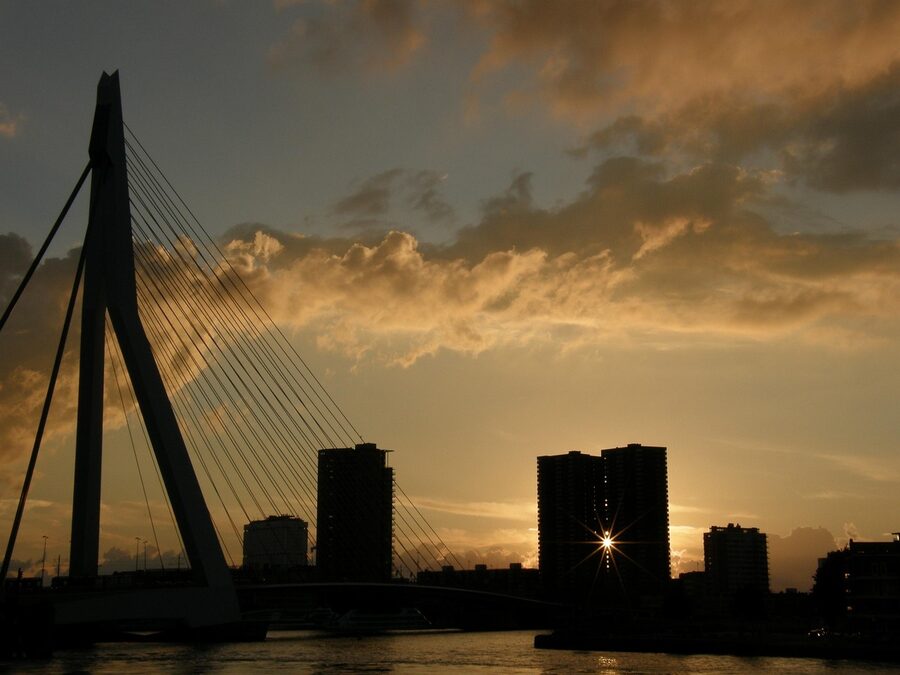
Locals call it The Swan. The slope of the cable mast is meant to look like a bird arching its neck. It opened in 1996, designed by Ben van Berkel of UNStudio, and it can lift its bascule section so the largest tugs and superyachts can pass underneath. The boat tour usually goes under the fixed span, not the lifting one, but if you’re lucky you’ll get a lift while you’re still queuing on the pier.
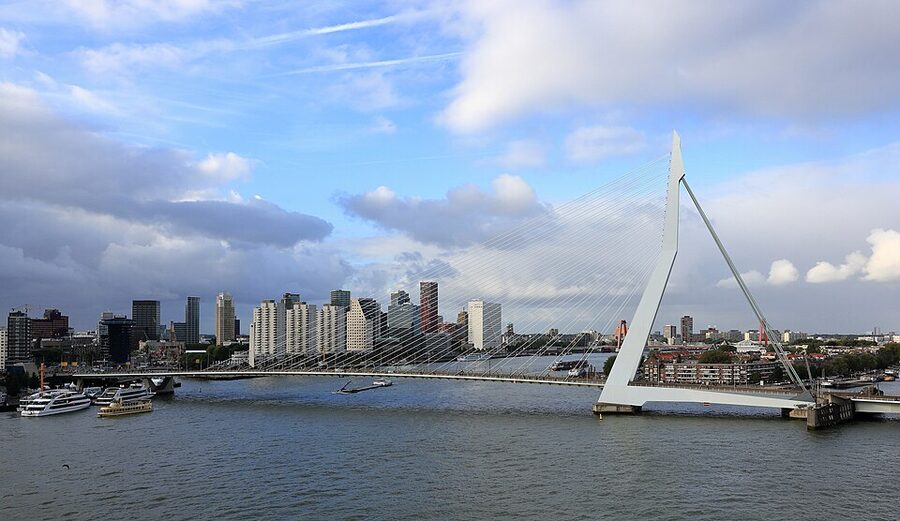
One bit of trivia the audio guide does mention: the bridge swayed badly in winds the year it opened. They had to retrofit hydraulic dampers in 1997 because pedestrians were getting seasick walking across. It’s stable now.
Cube Houses and Other Things You Can See on Foot
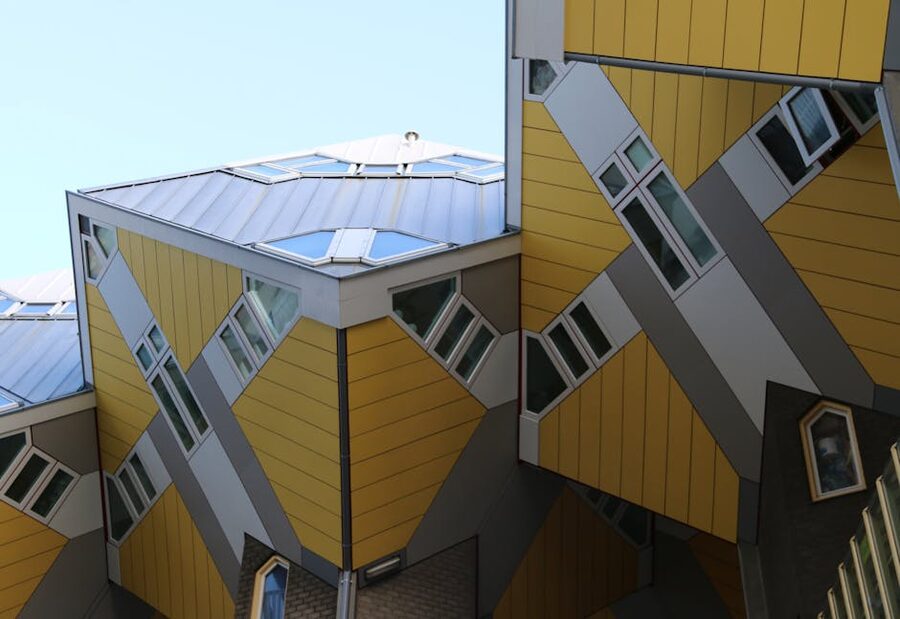
If you want to fill the rest of the day around the boat, the docks at Willemskade are a five-minute walk from three of Rotterdam’s three biggest landmarks. The Cube Houses (Kubuswoningen) by Piet Blom are tilted yellow boxes balanced on hex pillars. Built in 1984, one is open to visitors as the Show-Cube museum.
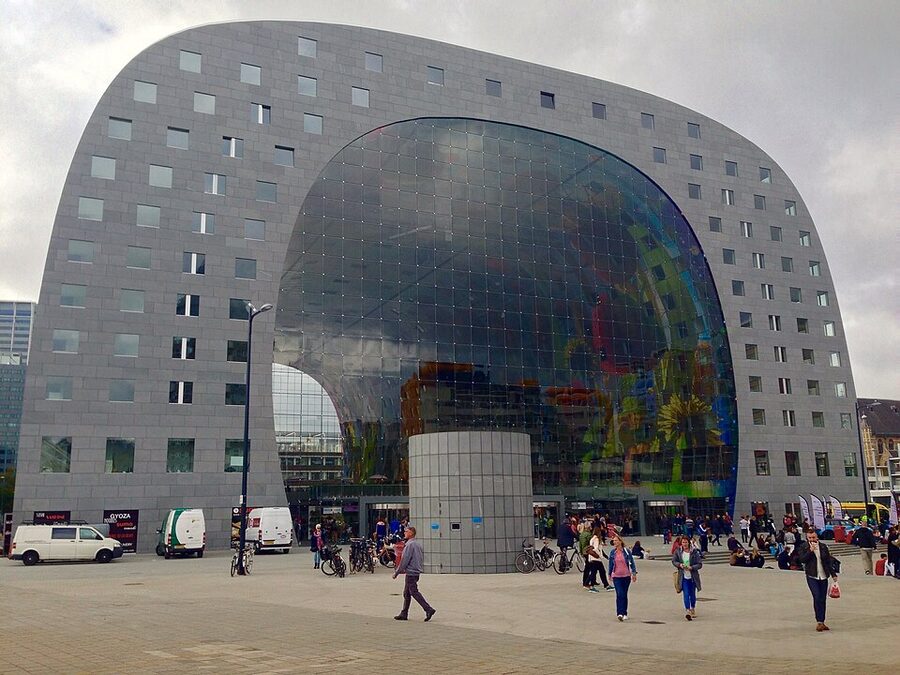
The Markthal across the road is a horseshoe-shaped market hall with apartments built into the curve. The vaulted ceiling has a 36,000 sq ft food-themed mural called Hoorn des Overvloeds. Best time to go is just before lunch on a weekday. Saturdays it’s wall-to-wall tourists.
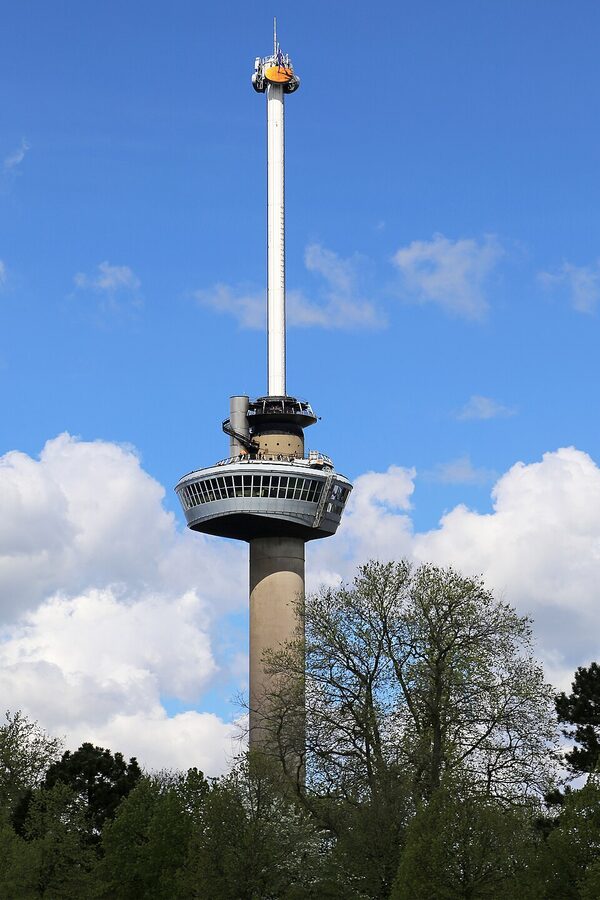
And the Euromast, ten minutes by tram from Willemskade, gives you the aerial view that no boat can. It’s the cheapest of the city’s tall things at around €13.50, and the platform is open until 10pm in summer.
Practical Booking Notes
Spido sells tickets at the pier and online. Online is cheaper, and on weekends in summer the pier office puts up a “sold out” sign by 11am. Book at least the day before for a Saturday slot. Weekday off-season you can usually walk on. Cancellation is up to 24 hours ahead, full refund. After that, no refund unless they cancel for weather.
The pier at Willemskade is a 10-minute walk from Rotterdam Centraal station, or one stop on tram 7 (get off at “Leuvehaven”). Don’t drive. Parking near the harbour costs €4 an hour and there are no large lots. If you’re staying at Hotel New York, the Watertaxi from Wilhelminapier to Willemskade is €5 each way and faster than walking around.
What to Bring
Layers. The boat moves at 12 knots and the wind off the Maas is colder than you think. A windbreaker even in July. Sunglasses for the upper deck (the water reflects everything). Cash isn’t needed; the bar takes card. The toilet on the lower deck is open the whole tour and there’s no queue.
Day Trip from Amsterdam
If you’re based in Amsterdam, the all-in day-trip combo gets you to Rotterdam, Delft and The Hague in one shot, with the harbour cruise included. It’s a long day (about 10 hours door-to-door), and you don’t get long enough in any one place. But it’s the easiest way to see all three cities in a single ticket. The Amsterdam-to-Rotterdam-Delft-Hague day trip is the option to book if you don’t want to manage train tickets yourself.
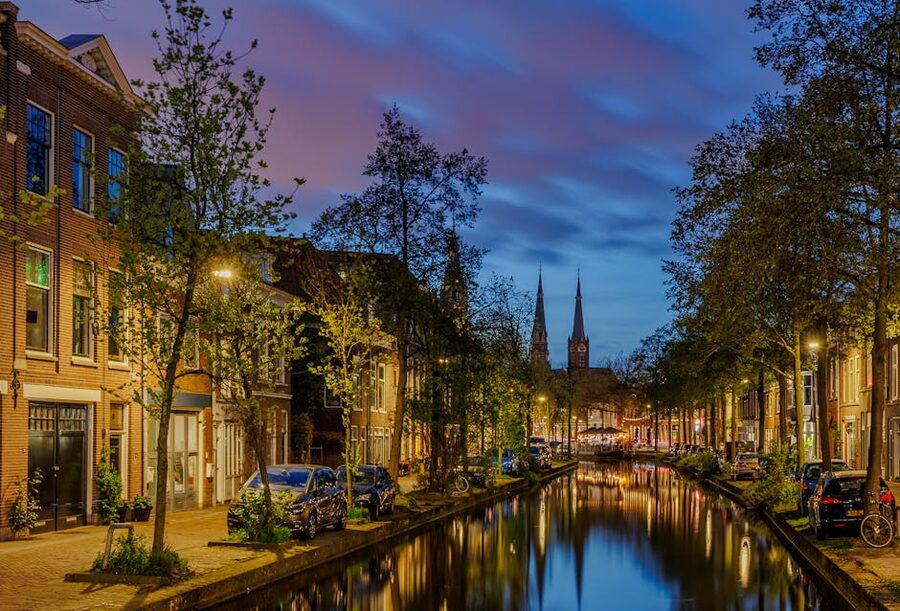
If you have the time, doing it yourself by train is cheaper and you get to set your own pace. The intercity from Amsterdam Centraal to Rotterdam takes 40 minutes (€16.50 off-peak), and you can be on a Spido boat by 11am.
Different from Amsterdam: Why Both Are Worth Doing
People sometimes ask whether to bother with the Rotterdam boat if they’ve already done an Amsterdam canal cruise. The honest answer: yes, because they’re not the same thing at all. Amsterdam is residential canals, gabled merchant houses, narrow boats with low ceilings, and a route that’s about 17th-century city planning. Rotterdam is industrial harbour, modern skyscrapers, big working tugs, and a route that’s about 20th-century logistics.
If you only have one day in the country, Amsterdam wins. If you’ve got two or three, do both, ideally on different days. The contrast is the point.
Delfshaven: The Bit That Survived
For one more thing to do that day, walk west from Willemskade to Delfshaven. About 35 minutes on foot, or two stops on tram 8. It’s the small medieval harbour neighbourhood that the 1940 bombing missed. The Pilgrim Fathers actually departed from here in 1620 (not from Plymouth, despite what the school books say) on the Speedwell, before transferring to the Mayflower at Southampton.
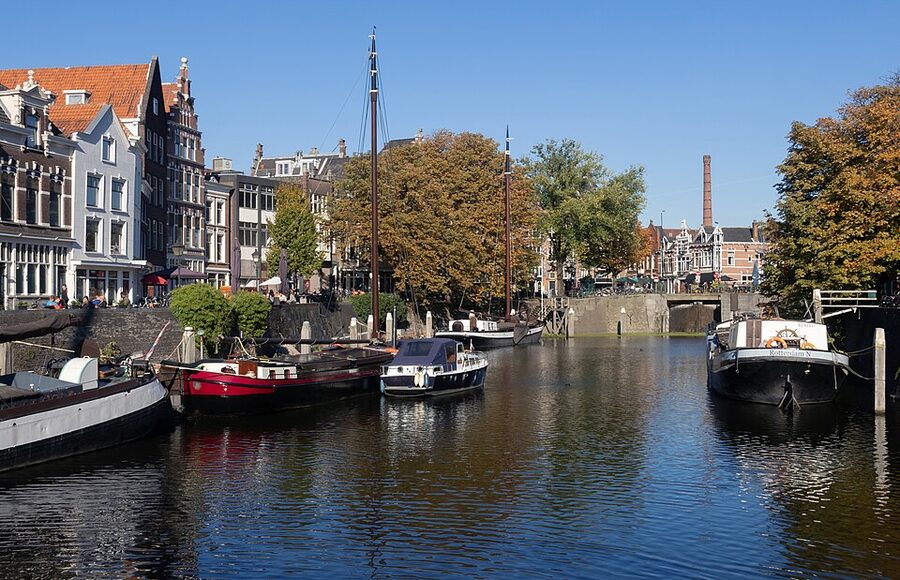
The Aelbrechtskolk has a handful of brown bars and the Pelgrimvaderskerk where the Pilgrims prayed before leaving. It’s a different city. Quiet, low, brick. Worth an hour after the boat trip if you want some context for why the rest of Rotterdam looks the way it does.
Where to Eat Around the Pier
Skip the Spido cafe at the pier. The food is fine but the prices are tourist tax. Walk five minutes east to Stoom Brouwerij Noordt for Dutch craft beer and bitterballen, or to Picknick on Mariniersweg for sandwiches under €10. If you want a proper meal after the boat, the Markthal stalls do everything from poké bowls to Surinamese roti for €10-15.
Closing Thoughts
The Spido tour isn’t a glamorous experience. It’s not a sightseeing cruise dressed up with champagne and ambient music. It’s a working boat that takes you through a working port, and most of what you’ll learn is technical (cargo throughput, autonomous cranes, bunker fuel). But that’s the point. After 75 minutes you understand why Rotterdam looks the way it does, why the city is shaped around the river, and why a place that lost 25,000 buildings in 1940 became Europe’s biggest port instead of a museum. Pair it with the Amsterdam canal cruise for the full picture, the London Thames cruise if you want a third European river city, the London Thames RIB if you preferred the speedboat option, or the Manchester canal cruise for an inland-industrial cousin to what Rotterdam does on a bigger scale.