
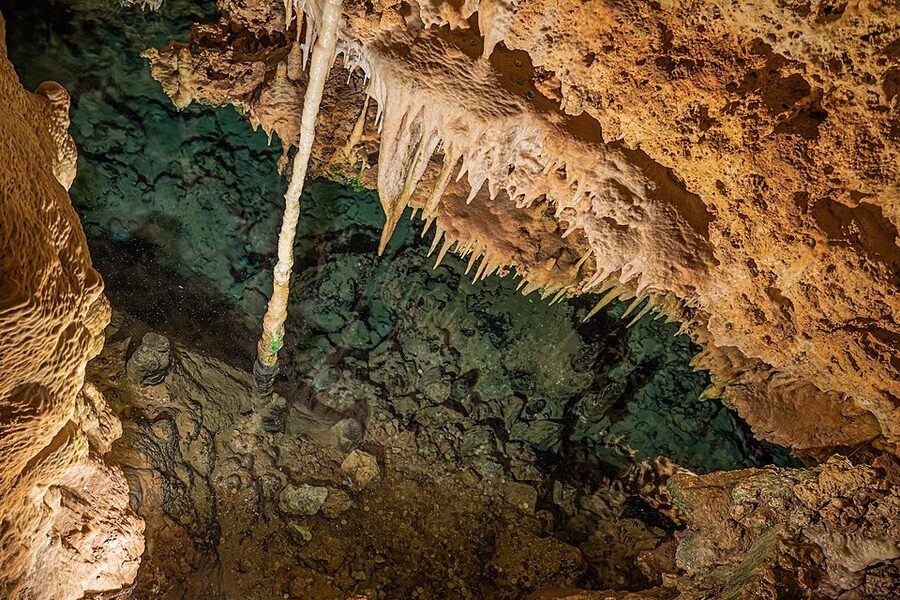
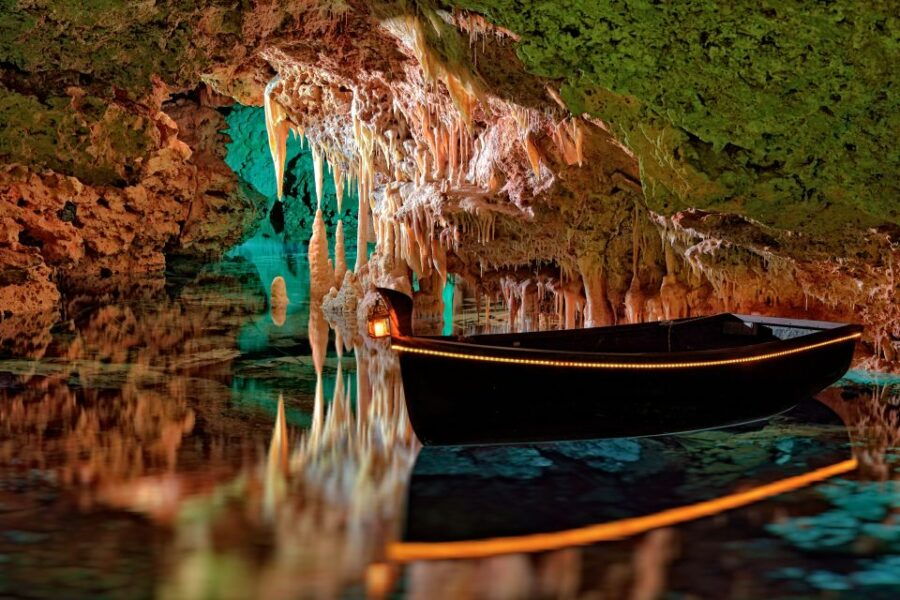
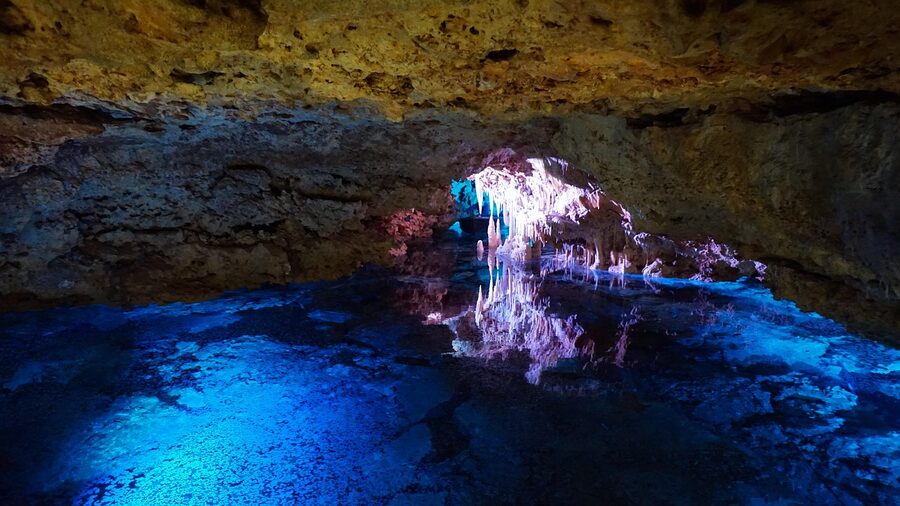
At the end of the walking route, the path drops into a wider chamber and you find yourself looking at a small underground lake. They call it the Mar de Venecia, the Sea of Venice, and the lighting on it is just dim enough that the limestone formations on the far side seem to float. Then a flat-bottomed boat slides out with a man in white standing on the prow, a violin starts up from somewhere across the water, and for about fifteen minutes you watch a candlelit classical concert drift past you in a cave 20 metres below the east coast of Mallorca.
That’s the Caves of Hams, and that’s the moment you came for. This guide covers the actual booking logic, what the visit looks like in practice, and how it stacks up against the bigger, more famous Drach Caves down the road.
Short on time? Three picks for Caves of Hams
- Caves of Hams entry ticket (around $21). The flagship. Skip-the-line entry, classic cave guided, boat-and-music show, blue cave audiovisual. Book entry ticket.
- Drach plus optional Hams day trip (around $62). Coach from Palma, Drach in the morning, Hams optional add-on. The double-cave day. Book Drach plus Hams.
- Dinosaurland and Hams combined ticket (around $29). The family option. Both attractions sit in the same Porto Cristo cluster. Book combined ticket.
- Short on time? Three picks for Caves of Hams
- What you actually see inside
- The boat-and-music show, plainly described
- How tickets actually work
- Combo logic: when to pair Hams with something else
- The tours I’d actually book
- 1. Porto Cristo: Caves of Hams Entry Ticket: from
- 2. Mallorca: Caves of Drach Day Trip & Optional Caves of Hams: from
- 3. Mallorca: Dinosaurland and Caves of Hams Combined Ticket: from
- Hams vs Drach: a real comparison
- What about doing both?
- The history almost nobody tells you
- Getting there from wherever you’re staying
- Where the cave fits in a Mallorca week
- What to pair with the cave on the same day
- Practical questions I keep getting asked
- Is it claustrophobic?
- Can I take photos?
- Is it suitable for kids?
- Is it accessible?
- How long should I plan for the visit?
- Best time of year to go
- Cruise-ship days
- The blue cave audiovisual show, briefly
- What it costs to do this properly
- Where Hams sits among Spain’s natural wonders
- The mistakes I see people make
- Booking checklist
- If you only have one cave day in Mallorca
- Beyond Mallorca: more Spain reads
What you actually see inside
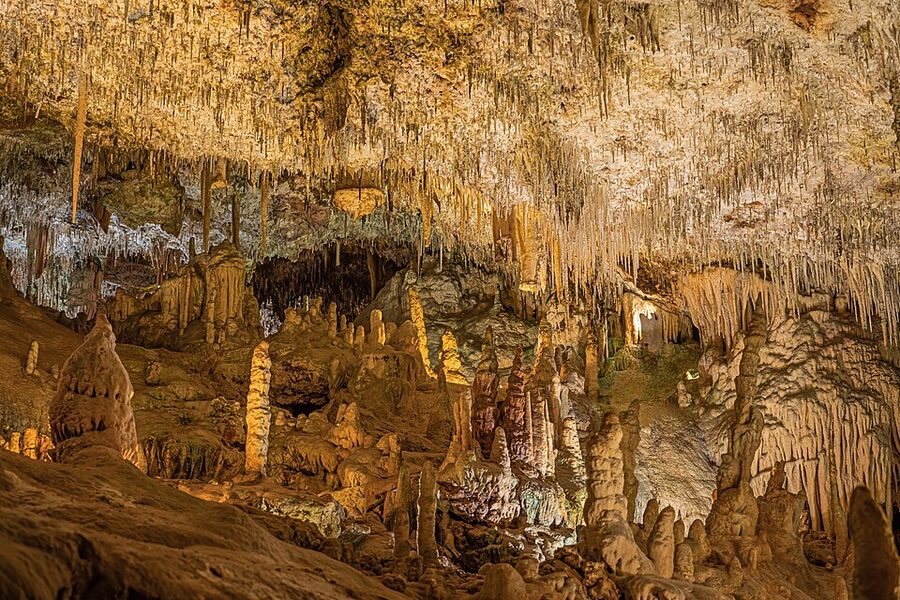
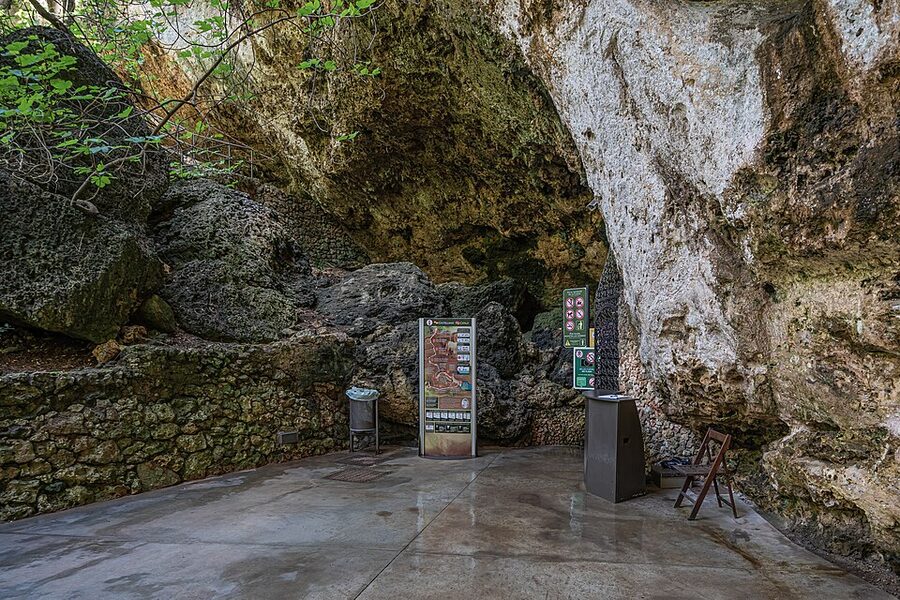
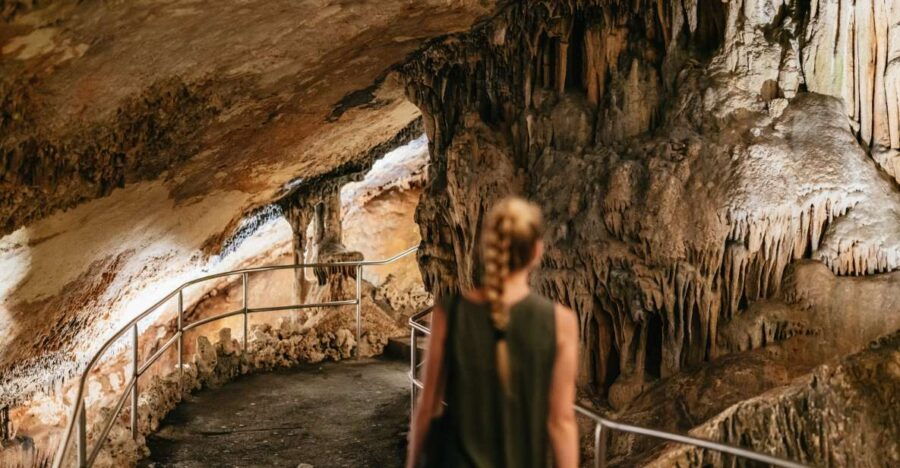
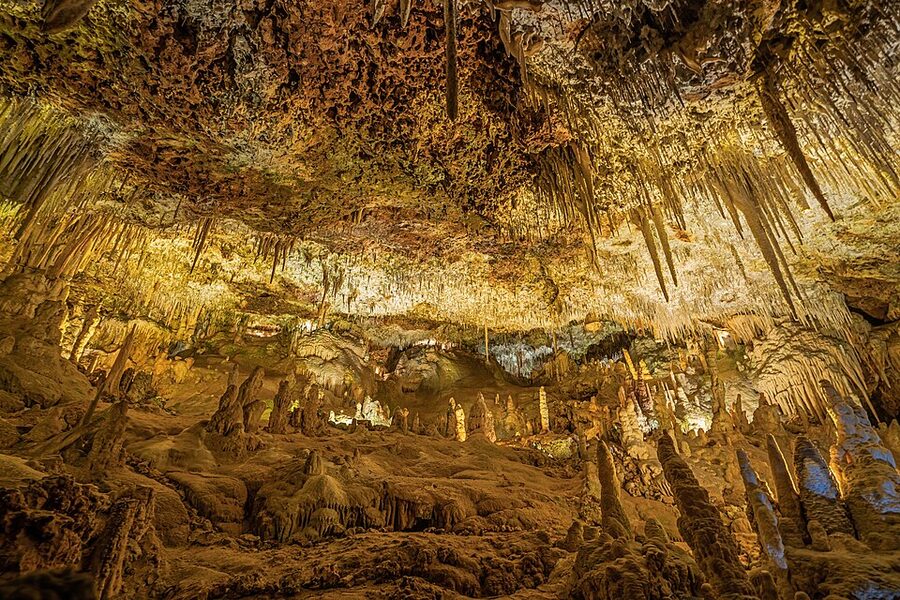
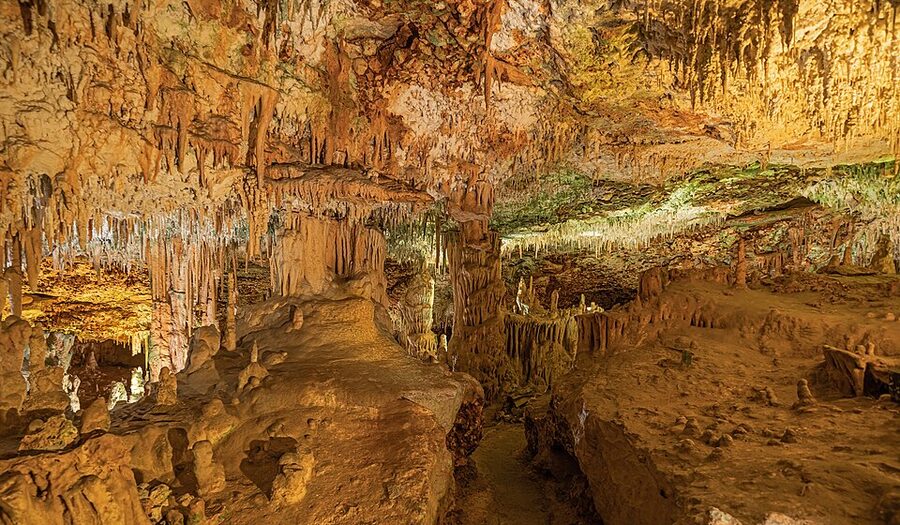
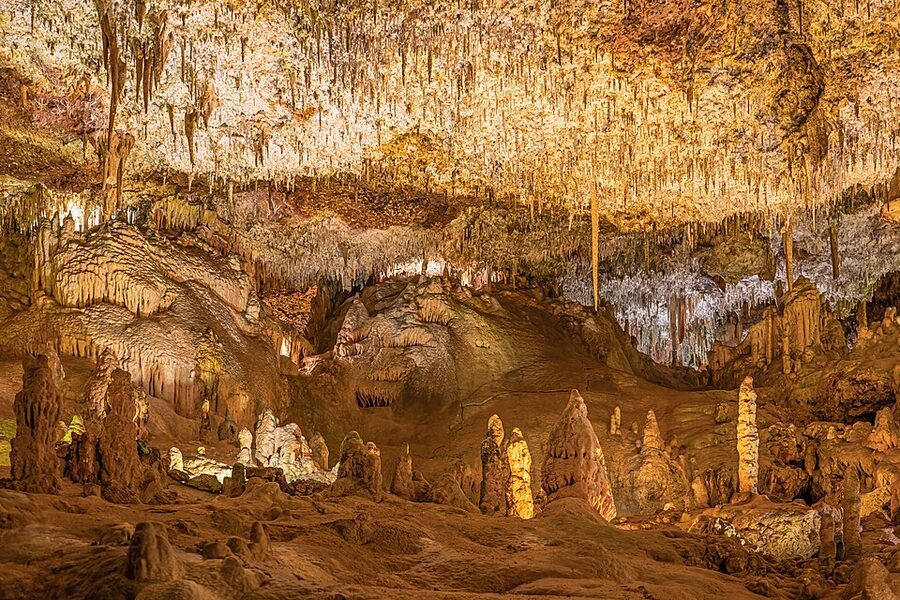
The Caves of Hams sit on the road between Manacor and Porto Cristo, about 10km in from the coast. From the ticket office you walk down a flight of stone steps into the first chamber and then follow a single one-way route through twelve linked galleries. The whole walking section runs roughly an hour. The lake show at the end adds another fifteen minutes.
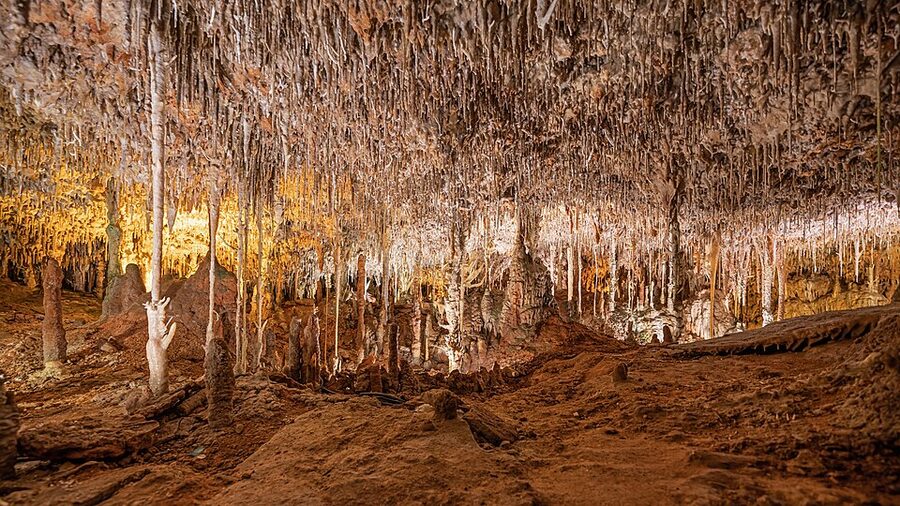
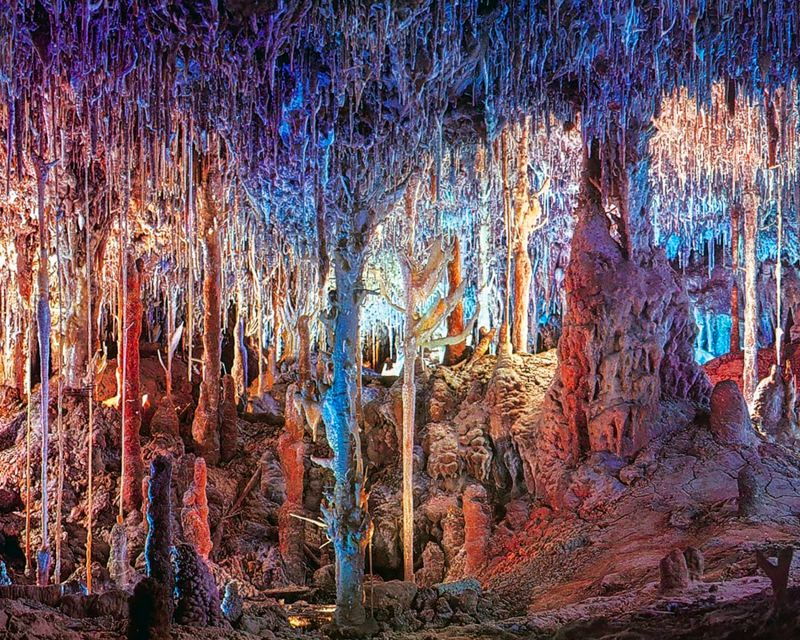
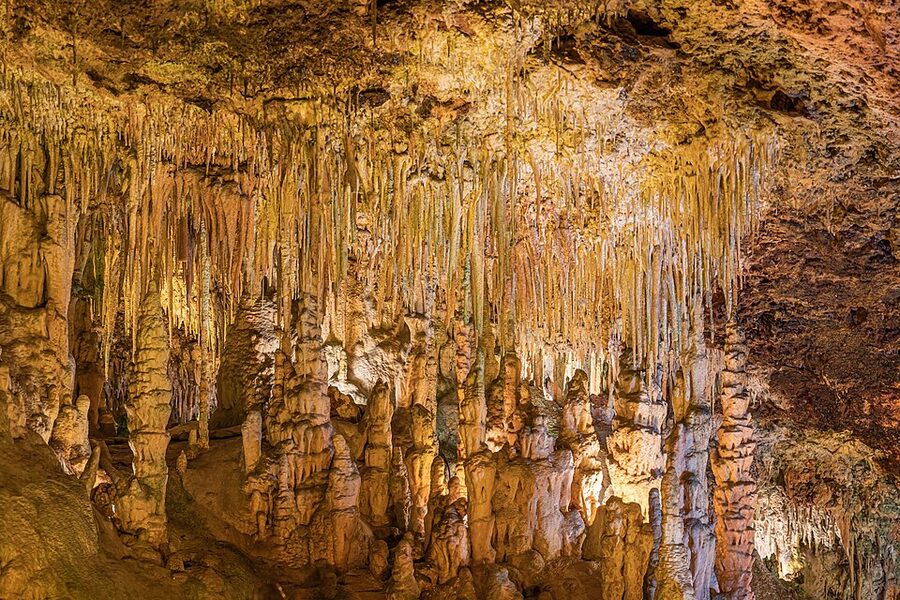
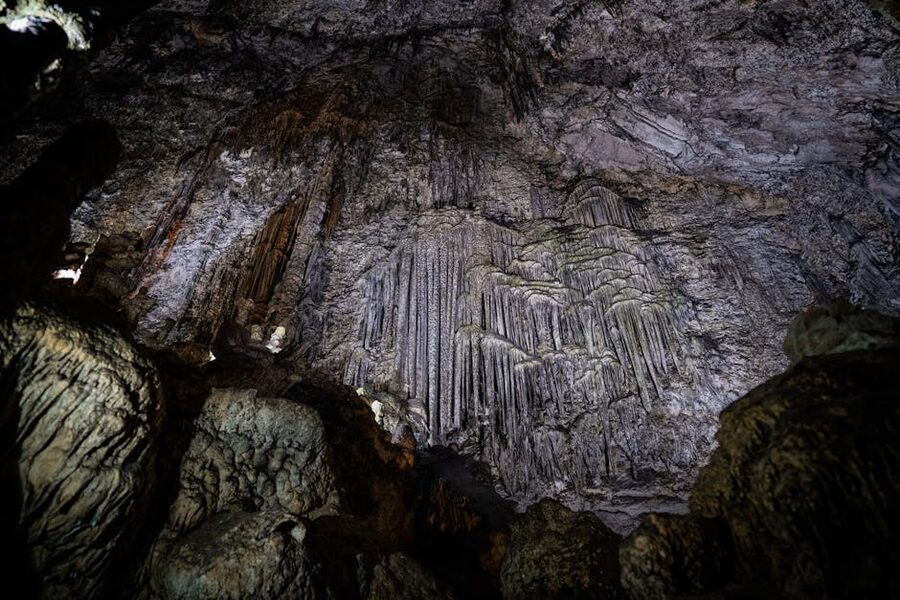
The route splits into three named sections. The Round Cave at the start is part botanical garden, with a sub-tropical microclimate and free-flying birds, and it surprises everyone the first time. The Blue Cave in the middle is where the LED lighting and audiovisual projection happen. The Classic Cave at the end is the one with the fish-hook stalactites that gave the place its name. Hams is the Mallorquin word for fish hooks, and once a guide points the shapes out you can’t unsee them.
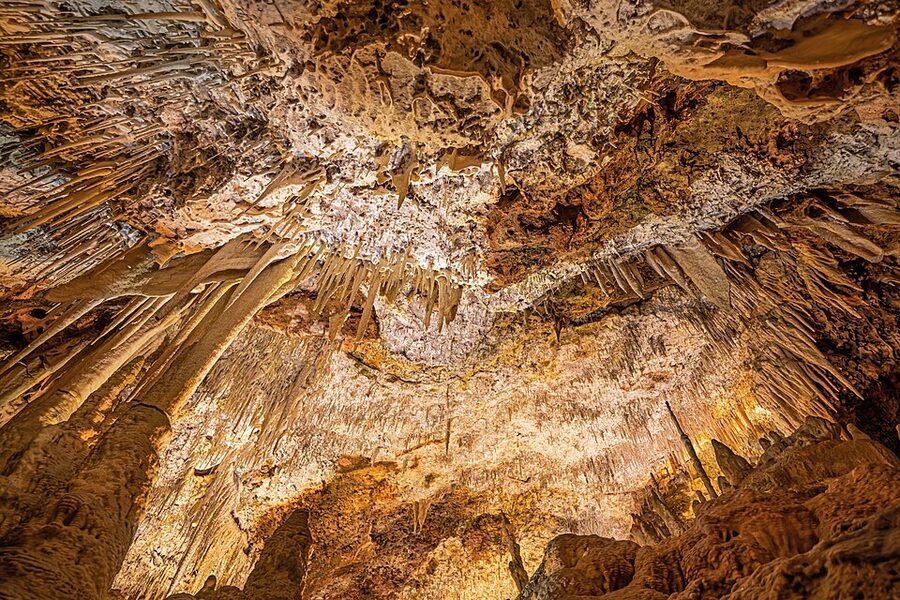
Most visitors do this route in 75 to 90 minutes. The walk is short but the lighting is dim and the path has small steps in places, so the pace is naturally slow. Wear shoes with grip. Wet limestone is exactly as slippery as you’d expect.
The boat-and-music show, plainly described
This is the bit that’s hard to explain without sounding either oversold or undersold. You sit on a stepped seating area cut into the rock, facing the lake. The lights drop. A flat-bottomed wooden boat appears from a side passage with a single rower and a costumed performer standing in front. A small group of musicians, sometimes live, sometimes piped through speakers in higher seasons, plays a short classical programme. The boat moves slowly across the lake while light shifts on the formations behind it.
It’s quieter and shorter than the same kind of show at the neighbouring Drach Caves. That’s the trade-off. Drach has the bigger lake, the bigger orchestra, and the bigger audience. Hams has the smaller, more intimate version. If you’re choosing between the two and you have any choice, I’d argue Hams is the better pick on the music side because you actually see and hear the musicians as a person rather than a distant silhouette across a 100-metre lake. More on the head-to-head below.
How tickets actually work
The official adult price at the door is 18.50 euros. Children 3 to 12 are 12.50 euros, under-3s free. Pre-booked online tickets through the resellers are usually a euro or two cheaper plus you skip the queue, which on cruise-ship Tuesdays and Thursdays is the difference between strolling in and standing in the sun for 30 minutes.
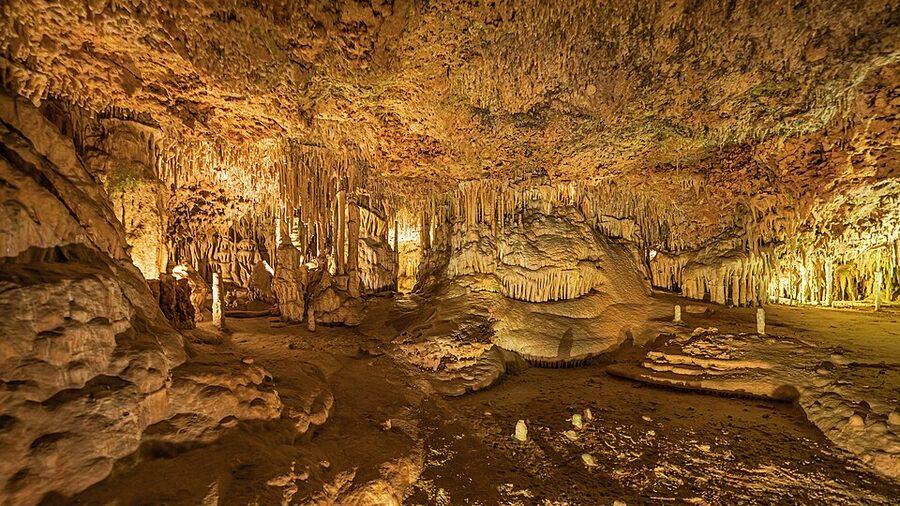
The standard ticket gets you all three sections of the cave, plus the Mar de Venecia show at the end. There are no upgrade tiers worth thinking about. You’re either in or you’re not. The flagship Caves of Hams entry ticket is the option most people end up choosing. It’s simple, you scan a QR at the gate, and the price difference from the door is small enough that the queue-skipping is the only reason you need.
Opening hours run roughly 10:30 to 16:30 daily. The last entry is around 16:00, and the timed groups go in at the top of the hour. Mid-July and August see longer hours, sometimes into early evening, but the timed-entry rule still applies. Off-season visitors should double-check the day before, because Sunday and shoulder-season closures do happen. The official site is the source of truth.
Combo logic: when to pair Hams with something else
Three combos make actual sense in practice.
The first is Drach with optional Hams. This is the day-trip format, usually leaving Palma by coach, hitting Drach in the morning, Hams in the early afternoon, and getting you back by 17:00. The Drach plus optional Hams day trip is the path of least resistance if you don’t have a car. It also covers the awkward fact that doing both caves yourself by bus is a logistical headache.
The second is Dinosaurland plus Hams. This is the family ticket. Dinosaurland is a small attraction up the road with life-size model dinosaurs in a fossil garden and a working palaeontology workshop for kids. The Dinosaurland and Caves of Hams combined ticket bundles both at a discount and turns a half-day into a full one. With kids under 10, it works. With kids over 12, Dinosaurland is going to feel young.
The third is the alternative cave concert format. The Drach entrance with the music concert and boat trip is the bigger-scale music experience and the right pick if you only have time for one cave and you want the full classical-orchestra version rather than the more intimate Hams equivalent.
The tours I’d actually book
Three options cover almost any reasonable visit to Hams. They go in this order of usefulness.
1. Porto Cristo: Caves of Hams Entry Ticket: from $21
This is the option for people who already have wheels, already know they want Hams specifically, and just need to be inside without queueing. Our full review of the entry ticket covers the timed-entry quirks and parking. Booking the 11:00 or 12:00 slot is sensible: light coming through the entrance is best mid-morning and the post-lunch crowds haven’t built yet.
2. Mallorca: Caves of Drach Day Trip & Optional Caves of Hams: from $62
The pickup is in central Palma, the coach handles the 70-minute drive, and you skip the parking lottery at both sites. Our review breaks down what the optional Hams add-on actually includes. Think hard about cave fatigue before you book: two cave systems in five hours is a lot of stalactites for one human, and most people I know preferred to do them on separate days when they could.
3. Mallorca: Dinosaurland and Caves of Hams Combined Ticket: from $29
If you’re travelling with kids 4 to 10, this combo turns a 90-minute cave visit into a proper half-day. Our review covers the order to do them in. Hit the cave first, while the kids are calm and the morning is cool, then the open-air dinosaur trail when energy levels are higher. Reverse it and you’ll have an over-stimulated five-year-old in a dim cave; not a great combination.
Hams vs Drach: a real comparison
Both caves sit in Porto Cristo, both have an underground lake, both have a music show, both were opened to the public in the early 1900s. After that, the differences pile up fast.
Drach is bigger. The walking route is roughly twice as long. The underground lake at the end, Lake Martel, is one of the largest in Europe. The classical concert at Drach is performed by a full chamber group on illuminated boats moving through a pitch-dark cathedral of a chamber. It’s the more famous show for a reason.
Hams is smaller and quieter. Twelve chambers, around an hour of walking, and a music show that’s about a quarter the scale of Drach’s. The Mar de Venecia is maybe 30 metres across at its widest. The boats are closer to you, the musicians are closer to you, and the whole thing feels less like a performance and more like something happening in front of you.
If you only have time for one, here’s where I land. Pick Drach if you’ve never been in a serious show cave before and you want the headline experience. Pick Hams if you’ve been in plenty of caves, you want better photos, and you don’t mind a smaller-scale finale. People who do both almost always say the same thing: the caves themselves are roughly equal, but the experience of them is genuinely different.
What about doing both?
Plenty of tour packages bundle the two. The reality on the ground: you arrive at Drach for a 10:00 entry, walk the route, sit through the concert, get out around 11:30, drive five minutes up the road to Hams, eat lunch in the cafe, walk the Hams route at 13:00, and the second concert lands around 14:15. By then you’ve been underground for nearly four hours of an eight-hour day. Most people I’ve asked who did both back-to-back wished they’d split them across two days.
If you do attempt the double, eat a real lunch between them. The cafe at Hams is fine for a sandwich and a coffee. Don’t try to push through on water alone; the air in both caves is humid and the temperature’s a flat 21 degrees, and that combination is more tiring than it sounds.
The history almost nobody tells you
The cave was discovered in 1905 by a Mallorcan named Pere Caldentey i Santandreu. He was looking for guano deposits, of all things, to use as fertiliser on the family farm. Once he realised what was actually below the surface he spent the next decade widening the access, lighting the chambers with carbide lamps, and turning it into one of the first commercial show caves in Spain.
The first paying visitors arrived in 1912. Electric lighting came in the 1930s. The classical music show, in some form, dates back to the 1950s. The cave has been continuously open to the public for more than a century now, which makes it one of the oldest tourist attractions on the island, predating most of what’s now Magaluf, all of Cala Millor, and almost everything you’d put on a normal Mallorca itinerary.
The Caldentey family still runs the place. That’s part of why it stays small in scale. Most caves in Spain are state-managed or operated by big regional concessions. Hams is family-owned, and you can feel that in the way the staff talk about the chambers and the way the maintenance never feels rushed. It’s also why you don’t get aggressive upselling at the gift shop. There isn’t much of one.
Getting there from wherever you’re staying
The cave is on the MA-4014 between Manacor and Porto Cristo, with its own large free car park. Entrance is about 200 metres from the parking spaces along a flat path. Wheelchair access into the cave itself is limited because of the steps, but the entrance, gift shop, and cafe are accessible.
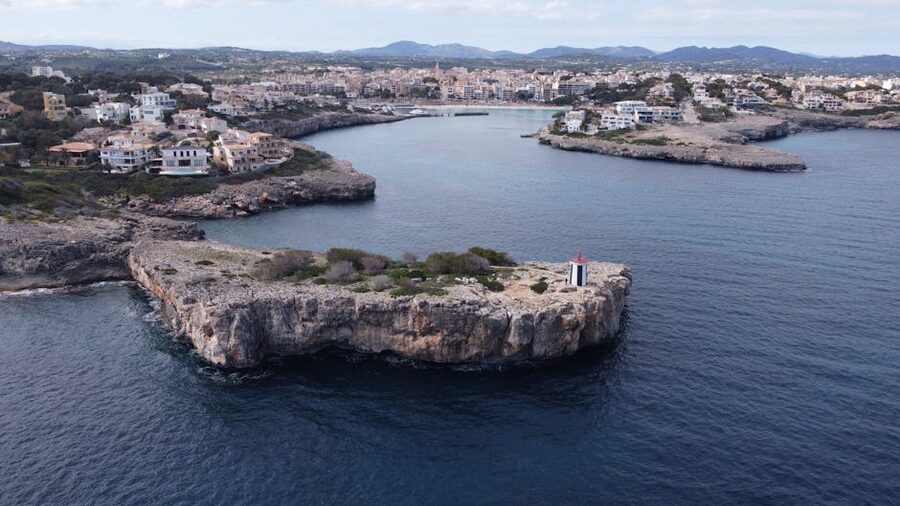
From Palma the drive is around 70 minutes via the Ma-15 motorway through Algaida and Vilafranca to Manacor, then 10km on minor roads. Allow longer in July and August; the road into Porto Cristo backs up by mid-morning. Parking on site is free and almost never full.
Without a car, the options narrow. The 401 bus runs from Cala Millor, Sa Coma, and S’Illot to a stop called Mestral, which is a 20-minute walk from the cave entrance. From Palma directly there’s no good public-transport option; you’d take the train to Manacor, then a taxi for the last 10km, and the round trip eats most of the day. This is why the organised Mallorca island tours work for car-free travellers, even though I’d normally argue for renting wheels on this island.
Where the cave fits in a Mallorca week
If you’re basing yourself in Palma and doing day trips, Hams pairs naturally with Porto Cristo town for an afternoon, and pairs poorly with anything more than 30km away in the same day. The east coast is its own region, and trying to combine Hams with the Tramuntana mountains in one day is a mistake. Save Tramuntana for a separate day.
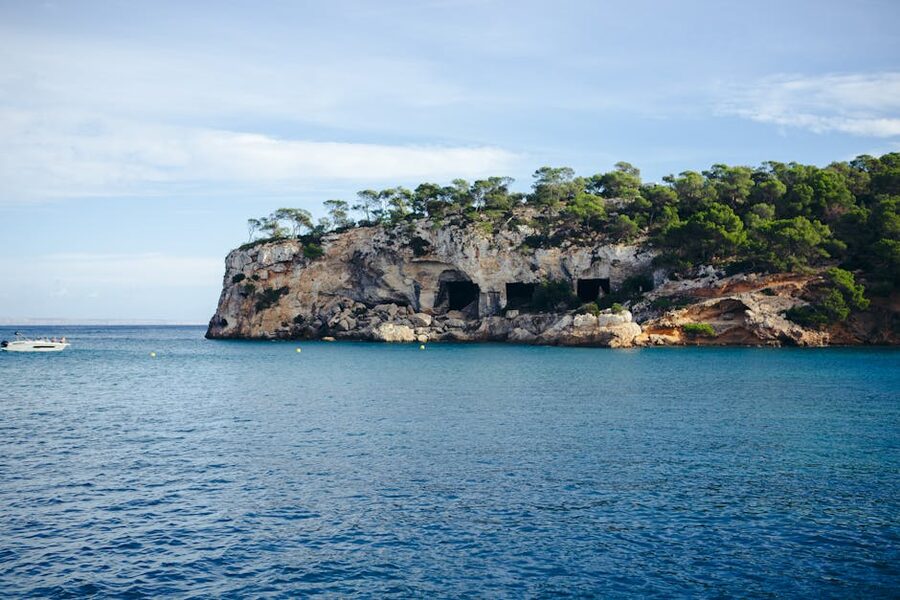
A typical week works well like this. Day one in Palma sightseeing, including the cathedral and the old town. Day two on a Palma catamaran cruise for the bay and a swim. Day three the east coast: Hams in the morning, Porto Cristo for lunch, beach in the afternoon. Day four a guided island tour if you want a Tramuntana taster without driving. Day five a Palma hop-on hop-off for the city neighbourhoods you missed on day one.
What to pair with the cave on the same day
Porto Cristo town is 10 minutes by car from the cave. The harbour has a string of seafood restaurants on the water, the small beach in the centre is fine for an hour, and the headland north of the harbour has cliff walks that turn into cliff drops if you’re not paying attention. It’s the obvious lunch stop.
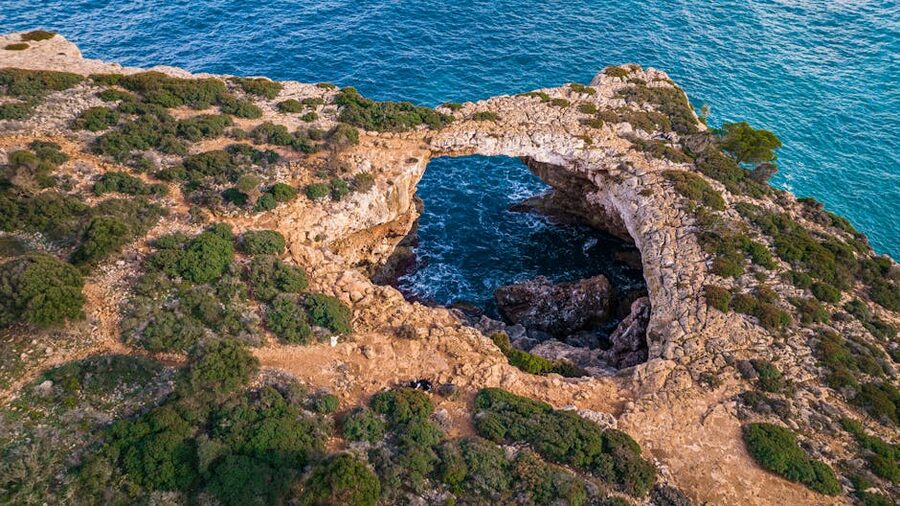
The other thing worth doing is a glass-bottom boat from Porto Cristo harbour. The east-coast glass-bottom boat trip takes you out along the cliffs you can’t see from the road. Combined with a morning cave visit, it makes a complete east-coast day without having to drive far.
For a longer half-day swap, Cala Millor is 15 minutes north and has a better sand beach than anything in Porto Cristo itself. If your group includes serious beach people, base the day there and treat Hams as the morning excursion before lunch.
Practical questions I keep getting asked
Is it claustrophobic?
Mostly no. The chambers are tall, often 8 to 12 metres high, and well-lit. The passages between them are the only narrow bits, and the longest is maybe 15 metres. If you’ve done any cave tour before, this is well within normal. If caves genuinely panic you, the Round Cave at the start is open enough to gauge your reaction; if you’re already uncomfortable there, the rest will be worse, and the staff will let you turn back.
Can I take photos?
Yes, no flash, and not during the music show. The staff actively police the no-flash rule because it ruins the experience for everyone else. Phone cameras handle the available light better than people expect; modern night-mode photos come out fine. If you have a real camera, set ISO 1600 or higher and brace against a railing. Tripods aren’t allowed.
Is it suitable for kids?
Yes, with a caveat. Kids 5 to 12 generally love it, especially the boat show. Under 5s can be a coin flip. The dim lighting and the slow pace of older visitors can frustrate a three-year-old. If you have a child this young and they handle museums well, you’ll probably be fine. If they don’t, save it for a few years.
Is it accessible?
Partially. The walking route has steps and uneven ground, so wheelchair access into the chambers themselves is not really feasible. The site management is clear about this, and they don’t sell discounted accessibility tickets because there’s no realistic way to do the route. The entrance, gift shop, and cafe are all accessible.
How long should I plan for the visit?
Two hours total from arrival to leaving the car park. That’s 15 minutes on either end for ticket office, gift shop, and cafe, plus 90 minutes inside. If you’re driving onward to a beach or to lunch, plan to leave by 13:00 if you went in at 11:00.
Best time of year to go
The cave temperature stays at 21 degrees year-round, so seasonality affects what you do around the cave more than the cave itself. Spring (April to early June) and autumn (September to October) are the right months for a Mallorca trip generally and pair well with Hams. The east coast is at its best in those months.
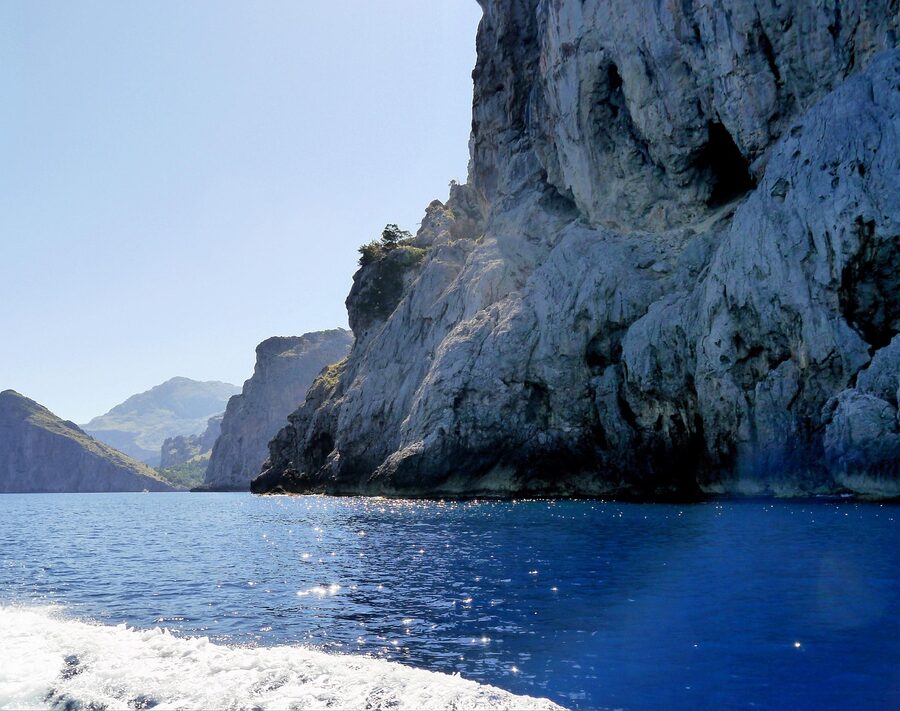
July and August work but the queues are longer, the road into Porto Cristo backs up, and the heat outside the cave is intense enough that the temperature shock when you walk back into the gardens is genuinely a thing. Pre-book if you’re coming in those months. Showing up at 11:00 on a Thursday in August without a ticket is a recipe for spending an hour in line.
December and January the cave stays open at reduced hours. Off-season has its own appeal: nearly empty chambers, the music show with maybe 15 people in it, and a cafe that knows it has time to make your coffee properly. The trade-off is that the rest of the east coast is half-shut, so the day around the cave needs more planning.
Cruise-ship days
Tuesdays and Thursdays are usually cruise days into Palma, and the cave fills with coach groups between 11:00 and 14:00. If you can shift your visit to a Wednesday or Friday, do. The exact schedule shifts year to year; the Palma cruise calendar is online and easy to check the week before.
The blue cave audiovisual show, briefly
Halfway through the route, you sit on stone benches in a chamber with a blue-tinted lighting scheme and watch a short audiovisual presentation projected onto the limestone. The content is a mix of geology, biodiversity, and Caldentey-family history. It runs around eight minutes.
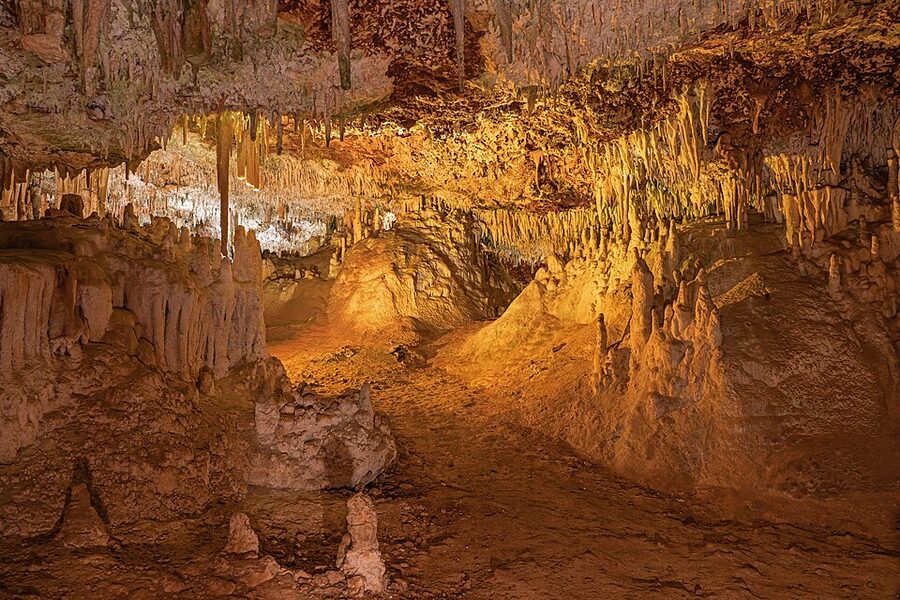
The audiovisual is the weakest part of the visit. The narration is fine, the visuals are fine, but it interrupts the rhythm of walking through the chambers. If you’re already tight on time or you came specifically for the cave itself, you can sometimes skip past it and rejoin the walking route. Ask a guide.
The lighting scheme in this chamber, on the other hand, is properly good. The blue-spectrum LEDs make the limestone look more like marine coral than rock. Spend a minute taking it in before the show starts.
What it costs to do this properly
Solo budget version: bus 401 from Cala Millor, walk from Mestral, door-price ticket at 18.50 euros, lunch at the cafe, bus back. Total under 35 euros plus the buses (around 5 euros each way). Doable but the walk in summer heat is an annoyance.
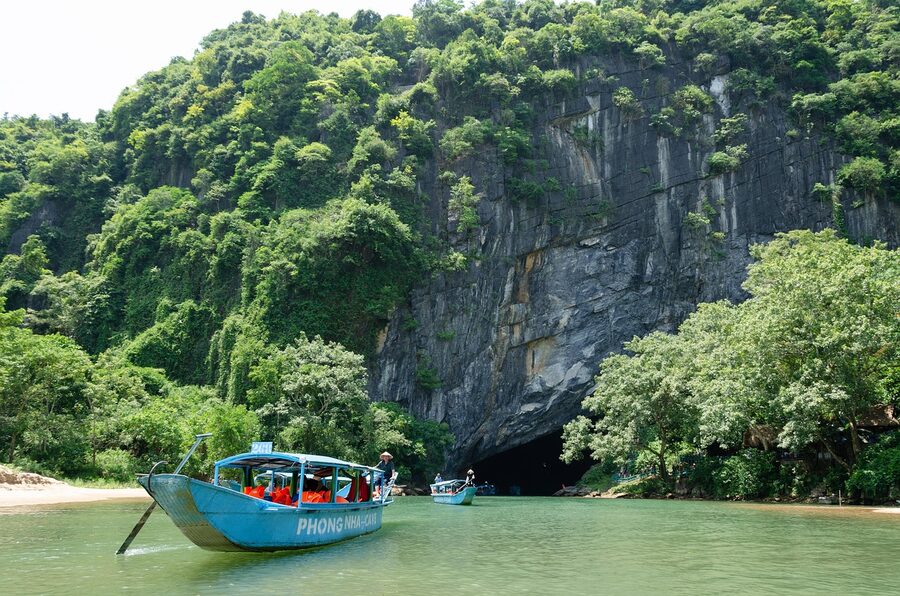
Average couple version: rental car for the day at 35 to 50 euros, two pre-booked tickets at 17 euros each, lunch in Porto Cristo at 30 euros for two, fuel maybe 10 euros. Total around 110 to 130 euros, half a day used well.
Family of four version: combined Dinosaurland and Hams tickets, lunch out, full day. Plan around 180 to 220 euros depending on car costs and how the kids order. If you’re staying near Cala Millor it’ll be 30 percent less because there’s no car needed.
Day-trip-from-Palma version: Drach plus Hams package at around 60 euros per person, no car needed, lunch and tips on top. Two adults from a Palma hotel can do the day for about 160 to 180 euros all in.
Travelling onward to mainland Spain afterwards? Valencia is a 50-minute hop by air, and the city’s Oceanogràfic aquarium in the City of Arts and Sciences is the natural pairing for anyone whose Mallorca highlight ended up being a marine-feeling underground lake. The Valencia hop-on hop-off bus covers the city basics in a half-day, and a Valencia sunset catamaran rounds out the evening if Mallorca already gave you a taste for that kind of thing.
Where Hams sits among Spain’s natural wonders
Spain’s natural-wonder ticket scene is bigger than it looks. The Caminito del Rey in Málaga province is the closest sibling to Hams in terms of timed-entry logistics, and if you’ve ever booked Caminito the Hams system will feel familiar. The Alhambra in Granada sits in the same conversation, with the same kind of advance booking pressure on weekends.
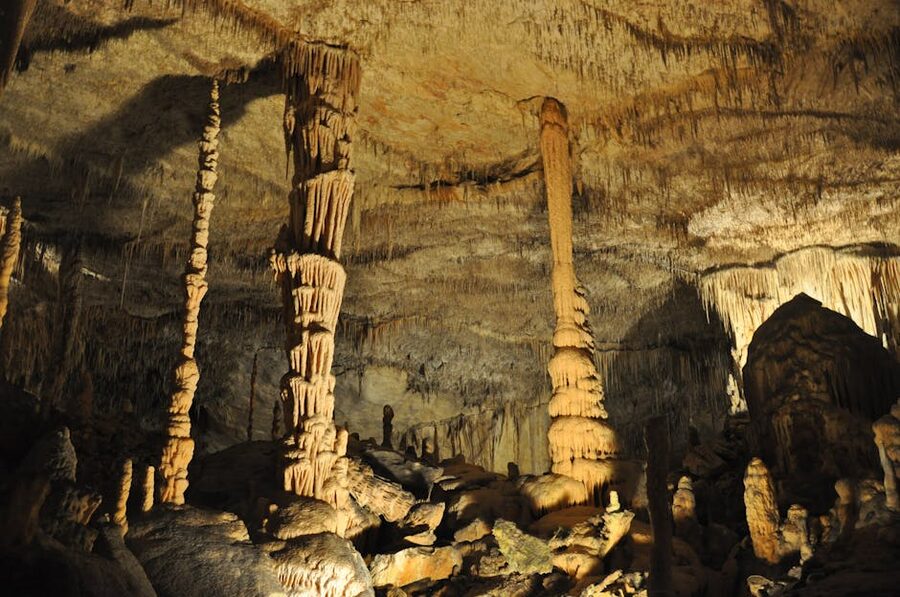
If you’re piecing together a Spain itinerary, Mallorca usually goes at the end of the trip, and Hams is the kind of thing that sticks in the memory longer than the bigger-name attractions on the mainland. Day trips from Barcelona to Montserrat get the same kind of “you’ll remember this in five years” reaction. Different scale, same energy.
The mistakes I see people make
Booking too late in summer. The 11:00 and 12:00 slots sell out days ahead in July and August. The early afternoon slots are the last to fill but they put you inside the cave during the hottest part of the day, which sounds appealing until you walk back out at 14:30 into 35-degree heat with no shade between you and the car.
Trying to do Hams and Drach back-to-back without lunch. The combined package usually includes a meal break, but if you DIY the day, do not skip it. Cave fatigue is real and it kicks in around 90 minutes underground.
Bringing the wrong shoes. Limestone gets damp, the walkway has small steps, and visitors regularly slip. Wear trainers or hiking sandals with proper grip. Flip-flops are a bad idea even in 35-degree summer heat because the cave will be 14 degrees cooler than the outside, and your feet will know.
Showing up without a ticket on a cruise day. I’ve covered this already; it bears repeating. The skip-the-line ticket is two euros more than the door price and the queue savings on a Tuesday in August are easily 45 minutes.
Skipping the gardens. Above the cave, the landscaped grounds have native pines, palms, and a small terrace overlooking the road towards Porto Cristo. Most visitors walk straight from the car park to the entrance and miss them. Five minutes wandering the paths above the cave is a nice debrief after the visit.
Booking checklist
Book the cave first. The slot is the inflexible part. Build the rest of the day around it.
For July and August, book at least three days out. For shoulder season, the day before is fine. For winter, you can usually walk up.
If you’re combining with Drach, buy them separately rather than through a third-party combo, unless the combo is one of the named tours above. Random reseller bundles sometimes use older time-slot data and you’ll arrive to find your slot doesn’t exist.
Save the QR code to your phone before you leave the hotel. The Wi-Fi at the cave is sketchy and the data signal in the parking lot drops out for half the carriers.
Bring 10 euros cash for the cafe. They take cards, but the line moves twice as fast for cash.
If you only have one cave day in Mallorca
Then make it Hams, because the music show is the part you’ll remember and the smaller scale lets you actually see and hear it. Or make it Drach, because it’s bigger and bolder and the lake at the end is unforgettable. There isn’t a wrong answer. There’s a difference, and once you’ve read this far you probably know which one suits you.
What I’d say to anyone planning a first Mallorca trip: don’t skip the caves entirely just because they sound like something the cruise crowd does. The cruise crowd is right about this one. The geology really is that good, the music show really does work, and the alternative on a cloudy afternoon is sitting in a beach bar wondering when the sun’s coming back.
Beyond Mallorca: more Spain reads
If you’re using Mallorca as a long-weekend extension to a wider Spain trip, Granada’s Alhambra pairs well for a UNESCO-heavy itinerary. The Málaga-province Caminito del Rey is the better pick if Hams woke up something in you about geology and timed-entry adventures. And for Catalonia-based travellers, the Barcelona day trip to Montserrat covers a different kind of natural wonder, the rock-cut sort.