The draw here is the contrast: Yongding’s enormous communal tulou are built like fortified villages, while Yunshuiyao slows the day down to an old stone path, banyan trees, and water. It is a long ride from Xiamen, but the two places show different sides of Fujian’s Hakka earthen architecture.
I like two things about this trip: door-to-door private transport saves you the bus connections, and the charter format lets you discuss timing and stops rather than follow a fixed group pace. Drivers are described as familiar with local roads, and some provide basic explanations along the way.
The trade-off is the distance. Mountain roads make the drive slow, and a full day leaves limited time at each stop. The driver speaks Mandarin, admission is extra, and you should not count on a detailed English-language guided tour.
- At a glance
- A full day from Xiamen, with a long ride at either end
- What private transport changes
- Chengqi and the Yongding earthen homes
- Heguilou, built over a swamp
- Yunshuiyao’s old road, banyans, and stream
- Huaiyuanlou and a close look at the details
- Drivers, explanations, and what to expect
- Cost, inclusions, and extra charges
- Who will get the most from this day
- Should you book it?
- FAQ
- Is this a private tour or a shared transfer?
- Where does pickup take place?
- What time should I leave Xiamen?
- What language does the driver speak?
- Are admission tickets included?
- Are meals included?
- What vehicles are available?
- What extra charges could apply?
- The Best Of Xiamen!
- More Private Tours in Xiamen
- More Tours in Xiamen
- More Tour Reviews in Xiamen
- Not for you? Here's more nearby things to do in Xiamen we have reviewed
At a glance
 1 / 4
 2 / 4
 3 / 4
 4 / 4
- Chengqi Building and the Yongding tulou cluster offer a look at large, circular Hakka homes, with other named buildings including Shize, Wuyun, and Qiaofu.
- Heguilou sits on swamp ground, supported by more than 200 pine piles beneath its foundation.
- Yunshuiyao’s old road and banyan trees provide a gentler change of pace, though heavy rain can turn the stream muddy.
- The private vehicle is the main convenience, with options from a five-seat car to a 19-seat minibus.
- Tickets, meals, and a separate tour guide are not included, so allow for extra costs and plan how you want to learn about the sites.

👉 See our pick of the 25 Best Tours In Xiamen
A full day from Xiamen, with a long ride at either end
This is a road trip as much as a sightseeing tour. The route runs from Xiamen into the mountainous countryside of western Fujian, where tulou settlements are spread across a broad area. The tour information warns that there is no direct highway access to the scenic area and that travel speed is limited by the terrain.
The timetable gives a 07:30 departure and a return around 19:00, with the return drive listed as about three hours. But it also places the first timed stop, Heguilou, at 12:30. That leaves a gap in the schedule, and the route descriptions do not match perfectly: one version names Chengqi, Shize, Wuyun, and Qiaofu before Heguilou, while the timed schedule lists Yunshuiyao and Huaiyuanlou before a general Yongding Tulou stop.
That does not mean the trip cannot be worthwhile. It does mean you should confirm the actual stop order and expected time at each site with the operator before departure. If one building matters most to you, say so early and ask whether the day’s timing can accommodate it.
You can also read our reviews of more private tours in Xiamen


What private transport changes
You can choose a pickup time, with 07:30 to 08:30 recommended to leave enough time for sightseeing. The stated pickup area includes Xiamen Island and hotels in Siming and Huli districts. A private car means you do not need to coordinate your day around a scheduled intercity bus, and you can discuss the pace and route with the driver.
That flexibility is useful on a long outing. You may want to spend more time at Chengqi Building, take a slower walk in Yunshuiyao, or pause for photos. Still, the route is not infinitely flexible: the sites are far from Xiamen, and the day has a return deadline. Agree on any changes with the driver, and keep the total driving time in mind.
There is a small but important wording conflict in the arrangements. The tour is described as private, with no carpooling or waiting for other parties, while the meeting details also refer to a shared transfer and a pickup that could be early or late. Confirm that your selected package is a private vehicle for your party, along with the pickup window and location. Keep your phone available, since the driver is expected to contact you through WeChat the evening before.
Chengqi and the Yongding earthen homes
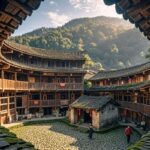
The Yongding portion centers on the tulou, large earthen residential buildings associated with Hakka communities. Their thick walls, central layouts, and timber interiors make them more than picturesque backdrops: they were built to house extended communities within a single structure.
Chengqi Building, known as the Tulou King, is the headline stop. The suggested route also names Shize Building, Wuyun Building, and Qiaofu Building. Each adds another view of this building tradition, but the available timetable gives only about an hour for the general Yongding Tulou stop. If you want to inspect interiors, take photographs, and hear explanations at several buildings, that hour may feel tight.
The tour details describe tulou construction as developing over centuries, with origins in the Song and Yuan dynasties and surviving examples said to be more than 1,300 years old. The most useful thing to look for is the shared, inward-facing plan: the buildings bring daily life into a protected central space. Give yourself time to notice the woodwork and the way the rooms relate to the courtyard, not just the outer wall.
One practical note: admission to Yongding Tulou is not included. You will also be exploring on your own unless you arrange a separate guide. The driver may provide some guidance, but a Mandarin-speaking driver is not the same thing as a dedicated historian or English-speaking guide.
Heguilou, built over a swamp
Heguilou is a good stop for anyone curious about how these buildings were engineered. Also called Shanjiao Lou, it was built during the Qing dynasty, with construction said to have cost 15,000 taels of silver. Its foundation rests on more than 200 pine piles and cushions set into swamp ground.
The building covers about 1,547 square meters and has remained stable for more than 200 years. The stop is listed as about 40 minutes and self-guided. That is enough to look around at a measured pace, but not a long visit if you want a full architectural explanation. The unusual foundation is the detail to keep in mind as you walk through.
Yunshuiyao’s old road, banyans, and stream
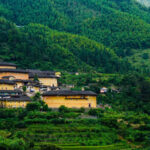
Yunshuiyao, formerly called Changjiao, brings a different mood to the day. Its appeal is the walk through an old village setting, with stone paths, century-old banyan trees, water, and earthen buildings. The route is associated with the film Yunshuiyao, a detail that may interest film fans but need not define the visit.
The schedule gives about an hour for the ancient road. That is a useful pause after the longer drive and building visits, but it is not enough for a leisurely wander if you stop often. The paths are stony, so comfortable walking shoes matter. The area is also exposed to the weather: after heavy rain, the stream can run muddy and yellow rather than clear. On hot days, crowds can make the visit less peaceful.
The scenery depends partly on conditions outside anyone’s control. Bring sun protection and rain gear, and carry a light layer for the mountain area, where temperatures can differ between day and night. If the stream is muddy, focus on the old road, trees, and buildings rather than expecting postcard-clear water.

Huaiyuanlou and a close look at the details
Huaiyuanlou is described as a well-preserved, double-ring round tulou, with careful architectural work. Its form is worth seeing from more than one angle: look at the building’s circular outline, then step inside if access allows and notice how the rings shape the interior.
The suggested visit is about 30 minutes. One small detail to watch for is a moss-covered flowerpot on the wall with a plant growing from it. It gives the building a lived-in, weathered quality that can be easy to miss if you rush straight to the obvious photo spots.
The stop is self-guided, and admission is extra. If you want context on how the structure was built or used, arrange a guide separately or read a little before the trip. The driver can help with practical orientation, but the service does not include a dedicated tour guide or audio guide.
Drivers, explanations, and what to expect
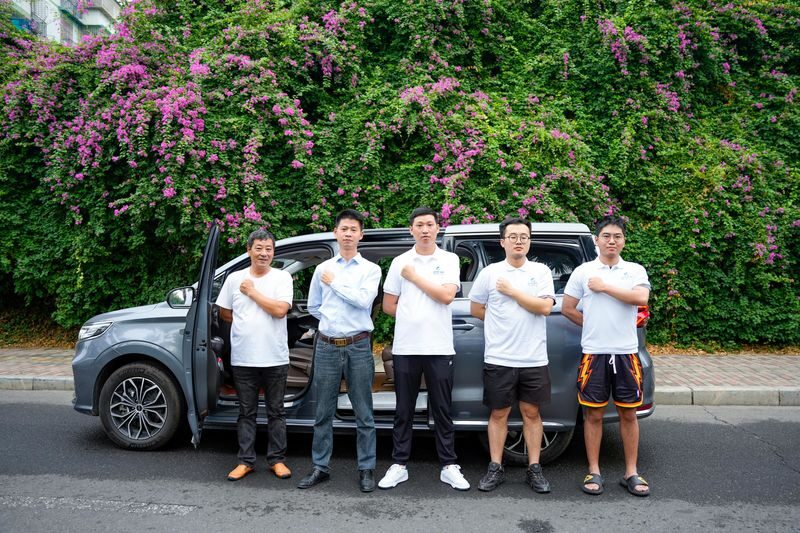
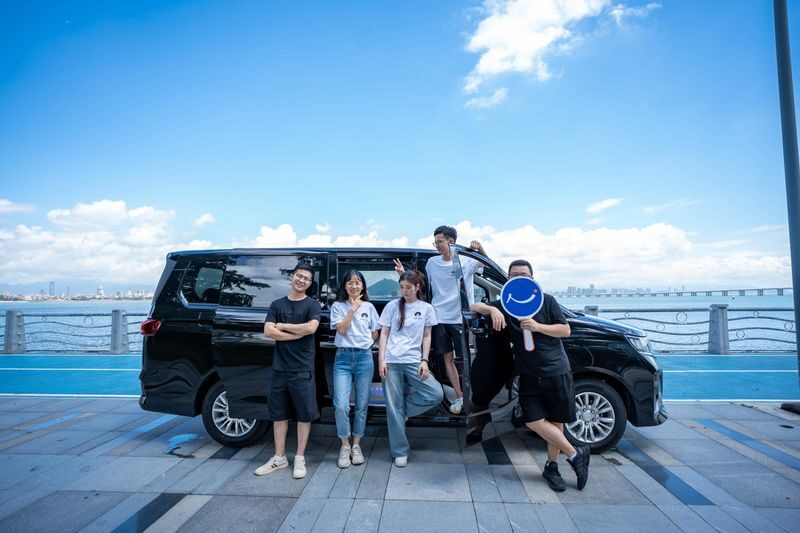
The vehicle is the strongest part of the logistics. The available choices are a five-seat economical car for one to four people, a five-seat comfort car for one to four, a seven-seat business vehicle for two to six, a nine-seat vehicle for four to eight, and a 19-seat minibus for nine to 18. The listed vehicles are within five years old and include air conditioning and charging interfaces.
A safe, pleasant driver matters on a long mountain-road day. Drivers are described as experienced and familiar with the area, and the feedback on service is especially positive about punctuality, friendliness, and professional driving. One driver was praised by name as Xiaohu, but you should not assume he will be assigned to your booking.
Treat the driver’s explanations as a helpful extra, not the main reason to book. One visitor who enjoys history found the explanations too brief. Since the driver speaks Mandarin and a separate guide is not included, prepare your own background notes if you want detailed architectural or historical interpretation.
Cost, inclusions, and extra charges
The advertised price information gives a starting price of $184.55, while the package option also shows US$160.49. These figures do not match, so check the live price for your date, vehicle, and party size before booking. The key value question is not simply the fare: it is whether sharing the cost of a private vehicle makes sense for your group, given the long drive and the convenience of pickup and drop-off.
Fuel, tolls, parking, round-trip transfers, and the driver’s service fee are listed as included. Admission to both the Nanjing Tulou Yunshuiyao Scenic Area and Yongding Tulou is not included, nor are meals, drinks, accommodation, personal expenses, or gratuities. A tour guide and audio guide are also excluded.
The extra-charge terms list overtime at CNY 50 per hour for five-seat vehicles and CNY 100 per hour for seven-seat or larger vehicles. Over-mileage is listed at CNY 5 per kilometer, with additional fees paid to the driver in cash. The information also both lists operator insurance as included and insurance as excluded. Ask what coverage applies to your booking rather than assuming the wording is consistent.
Who will get the most from this day
This trip suits you if tulou architecture is a priority and you want to see more than one area without arranging separate transport. It is especially practical for families or small groups who can share the private-car cost and would rather set their own departure time than follow a bus schedule.
It is less suited to anyone hoping for a relaxed day with long stops, a detailed guided tour, or guaranteed clear stream views. The drive is substantial, the schedule is compressed, and heat, crowds, and rain can change the feel of the day. If you prefer one place at a slower pace, consider a shorter or more focused outing instead.
Should you book it?
Book this tour if you want the convenience of private transport and care most about seeing the Yongding tulou and Yunshuiyao in one day. The buildings are the main event; the private car makes reaching them far easier.
Before paying, confirm the private-vehicle arrangement, actual stop sequence, pickup point, current price, admissions, guide options, and insurance coverage. Then go with comfortable shoes, a little patience for mountain roads, and realistic expectations about how much ground one day can cover.
Xiamen Yongding Tulou & Yunshuiyao Full-Day Private Car Tour
“The private transfer service was very punctual. The tour guide's explanations weren't very in-depth, which might have been due to luck. Personally,…”
FAQ
Is this a private tour or a shared transfer?
The package is described as a private day tour with one vehicle and no carpooling. However, the meeting information also mentions a shared transfer, so confirm that your booking is for a private vehicle before you go.
Where does pickup take place?
Pickup is described as being from a hotel or address in Xiamen, with details naming Xiamen Island and the Siming and Huli districts. The driver returns you to the morning pickup point unless you arrange another convenient drop-off.
What time should I leave Xiamen?
You can choose the departure time. A start between 07:30 and 08:30 is recommended to allow more sightseeing time.
What language does the driver speak?
The driver is Mandarin-speaking. A dedicated tour guide and an audio guide are not included.
Are admission tickets included?
No. Admission to the Nanjing Tulou Yunshuiyao Scenic Area and Yongding Tulou is listed as not included.
Are meals included?
No. Meals, beverages, accommodation, and personal expenses are not included.
What vehicles are available?
Options include economical and comfortable five-seat cars, a seven-seat business vehicle, a nine-seat vehicle, and a 19-seat tourist minibus. The stated capacities range from one to four people in a five-seat car to nine to 18 in the minibus.
What extra charges could apply?
The stated charges include overtime at CNY 50 per hour for five-seat vehicles or CNY 100 per hour for vehicles with seven or more seats. Over-mileage is listed at CNY 5 per kilometer, and additional fees are to be paid in cash.