Singapore’s insect stories have a knack for turning a tiny creature into a lesson about life. In this 90-minute workshop, you might hear how cicadas call louder as the weather gets hotter, why moths can be linked with ancestors, and what a mantis can teach about paying attention to your surroundings.
I like two things in particular: the mix of folklore and natural science, which makes the session more than a parade of bug facts, and the chance to examine specimens up close with magnifying lenses and UV light. You can also handle selected invertebrates, including live ones, and take home a postcard stamped with a custom bug design.
One thing to weigh: this is a friendly introduction, not an advanced entomology class. The Saturday and Sunday morning session runs from 9 to 10:30, and the content may feel basic if you already know your beetles from your mantises.
Key points
- Moths, cicadas, and mantises carry the stories: Explore insect lore, sayings, and lessons tied to daily life in Singapore.
- Look closely, not just from a distance: Use magnifiers and UV light to examine specimens and their distinctive features.
- Some insects can be handled: The collection includes mantises, beetles, roaches, isopods, caterpillars, jumping spiders, and stick insects.
- Fireflies have a place in local culture: The session connects selected species with Singapore’s cultural and ecological life.
- Preservation is part of the picture: Learn about insect pinning and taxidermy, alongside efforts to survey these small animals.
- Leave with a small souvenir: Your take-home item is a postcard with a customised bug stamp.
- Folklore gives the insects a second life
- Specimens turn a small subject into a close study
- Fireflies connect nature with Singapore
- Preservation and surveys explain what happens after observation
- A friendly introduction, best for curious beginners
- The 90-minute morning slot and Tagore Lane address
- Is the price worth it?
- Who should book Wings & Whispers?
- FAQ
- How long is the workshop?
- Where does the activity meet?
- Can children attend?
- Will I be able to handle insects?
- What is included in the price?
- Is the booking refundable?
- The Best Of Singapore!
- More Tours in Singapore
- More Tour Reviews in Singapore
- Not for you? Here's more nearby things to do in Singapore we have reviewed
Folklore gives the insects a second life
 1 / 5
 2 / 5
 3 / 5
 4 / 5
 5 / 5
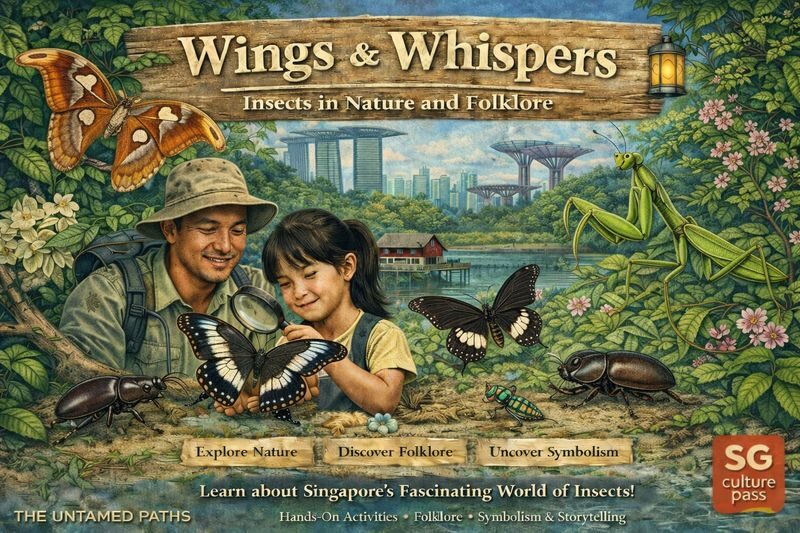
The appeal here is not simply seeing unusual insects. It is hearing how people have made sense of them, feared them, admired them, or folded them into everyday language. A moth may appear in a story about ancestors; a cicada’s call becomes a way to talk about heat; a mantis offers a reminder to watch what is happening around you.
That cultural frame gives the creatures more staying power than a list of names and body parts. You begin with a familiar idea, such as an insect’s sound or shape, then consider what that creature has meant to people in Singapore. The programme also touches on kampong life, giving the stories a connection to daily experience rather than treating folklore as a detached collection of curiosities.
I especially like that the examples are specific. The cicada detail links its louder calling with hotter conditions, while the mantis story draws on its alert, patient appearance. These are accessible points for children and adults alike, though the session keeps the explanations at an introductory level.
Folklore is not a substitute for ecology, and the workshop does not present it as one. Instead, the stories offer a useful entry point: you learn to notice an insect, then ask what it does in its environment and what people have made of it.
👉 See our pick of the 25 Best Guided Tours In Singapore
Specimens turn a small subject into a close study
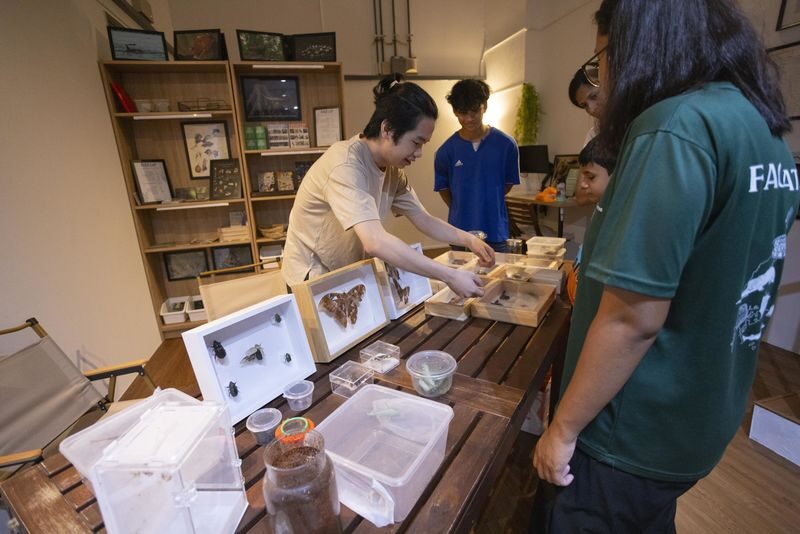
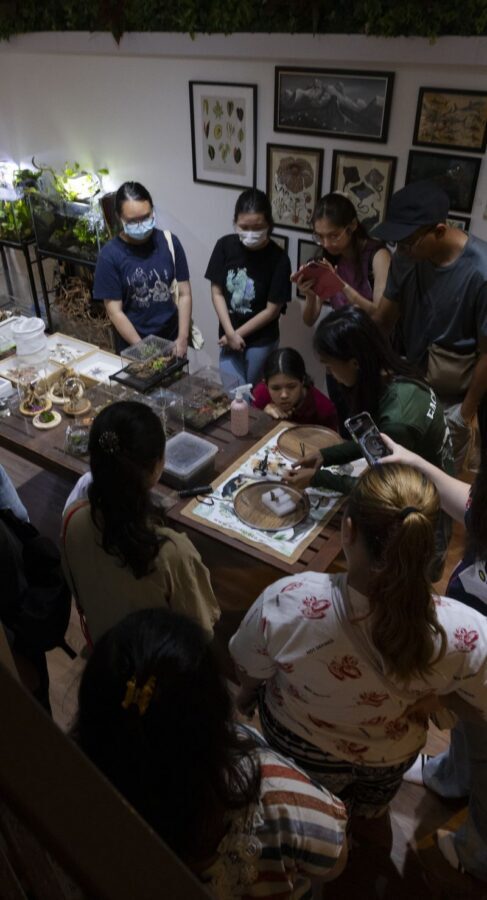
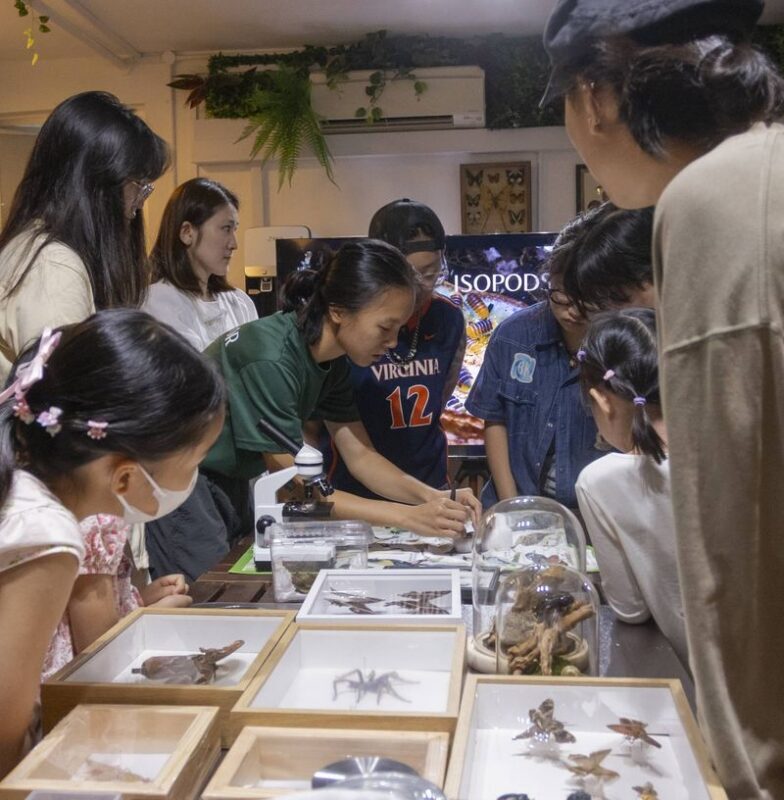
The specimens span a lively range: beetles, mantises, cockroaches, isopods, caterpillars, jumping spiders, and stick insects. Some are live and some are preserved, so you get different kinds of observation. A live specimen may reveal movement or posture; a preserved one lets you take a steadier look at its form.
Magnifying lenses help you focus on details that are easy to miss at ordinary viewing distance. UV light adds another way to examine the specimens. The session invites direct interaction, and handling selected invertebrates is part of the experience, rather than an optional extra that you only watch from the side.
The practical lesson is to follow the facilitator’s guidance. Not every specimen is necessarily handled, and the supplied information does not promise that each species will be present at every session. If you are keen to hold an insect, ask what is available on the day and let the guide set the pace. This is a good way to make the experience welcoming for someone who is curious but not yet sure how close they want to get.
The collection also helps explain why insects are worth studying even when they make some people squirm. Beetles, roaches, spiders, and caterpillars are not all alike, and seeing them side by side can replace a vague category of creepy-crawlies with a more precise sense of their differences.
You can also read our reviews of more tours and experiences in Singapore.


Fireflies connect nature with Singapore
Fireflies are among the species highlighted for their cultural significance in Singapore. Their inclusion adds a local focus to a workshop that might otherwise feel like a general introduction to insects. The point is not a field trip to see fireflies outdoors; this is a programme about specimens, stories, and the place of small creatures in local ecology.
Cicadas and Atlas moths also feature as examples of culturally significant species. The cicada’s call is easy to connect with hot weather, while the Atlas moth brings attention to the striking presence of a large moth. Together, these examples let the guide move between everyday observations, cultural associations, and the ecological importance of insects.
That blend is useful if you want a Singapore activity with a local angle but do not have time for a longer nature outing. You get context for how insects are perceived and discussed, as well as an introduction to why they matter in the natural world. The programme does not promise a detailed field survey or a specialist account of every species, so set your expectations accordingly.
Preservation and surveys explain what happens after observation
The later part of the session looks at survey efforts and preservation, including insect pinning and taxidermy. This makes a thoughtful ending: once you have examined the specimens and heard their stories, you can consider how people document and preserve them for study and appreciation.
It is worth distinguishing learning about preservation from doing it yourself. The programme includes an exploration of taxidermy and insect pinning, but it does not specify that participants will pin a specimen. If hands-on preservation is your main reason for booking, check with the organiser before you go.
The survey component adds another practical idea. Learning about insects is not just about identifying a striking moth or holding a mantis; it also involves recording what is present and building a clearer picture of small life around us. The session gives you an introduction to that work, rather than a full survey exercise.
A friendly introduction, best for curious beginners
The workshop is well suited to families, casual nature fans, and anyone who wants an unusual Singapore activity with a strong hands-on element. There is no stated age limit, and children aged 0 to 3 can attend free when accompanied by a paying adult. Infants and children still need to be included in the passenger headcount when booking.
You do not need prior knowledge to follow the session. The emphasis is on introducing several kinds of insects and the stories and beliefs associated with them. That makes it approachable for a first encounter with entomology, but less compelling if you already have a strong background in insects and want detailed taxonomy or specialist field methods.
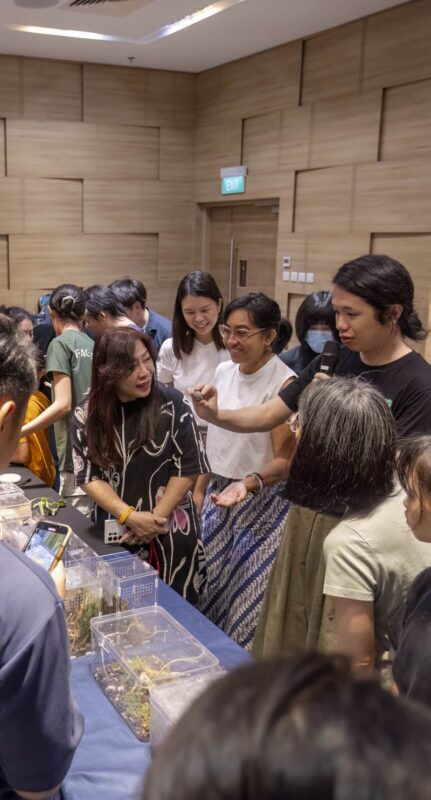
The facilitators can make a real difference in a short workshop. Zoey and Faith have led sessions, guiding participants through the specimens and making room for questions. The programme is also designed to let you interact directly with invertebrates, so it can work well for someone who learns better by looking and doing than by listening to a long talk.
One useful expectation to set: the workshop covers a broad selection of creatures and ideas in a limited time. You are likely to come away with several memorable examples and a clearer sense of local insect stories, not an exhaustive guide to Singapore’s insect life.
The 90-minute morning slot and Tagore Lane address
The session runs on Saturdays and Sundays from 9 to 10:30. That fixed morning window is convenient if you want to leave the rest of the day open, but it does mean you need to plan around a weekend start. The meeting point is Cyan Singapore (The Untamed Paths), at 81 Tagore Lane, #04-07B, Singapore 787502.
For public transport, the directions provided are to take a bus from SpringLeaf Station Exit 2, get off at Bef Tagore Dr. bus stop, then walk about 10 minutes to Tag.A. Transport is not included, so allow time for the final walk and check your route before setting out. The activity is wheelchair-accessible.
A minimum of two participants is required. If that number is not met, you can book an alternative date. Confirmation is normally sent within minutes, and you present the mobile voucher from the Klook app.



Is the price worth it?
The listed price starts at $68.90, while the package option is also shown at US$62.65. Since those figures use different currency labels, check the final amount and currency at checkout rather than treating them as a direct comparison.
For the price, you are paying for a guided session, a range of specimens, hands-on observation tools, local cultural context, and a small postcard to take home. That is a fair bundle if you are curious about insects and value the chance to handle selected specimens while hearing stories tied to Singapore. The value is less certain for an experienced insect enthusiast, since the content is introductory.
The short format helps keep the activity manageable, especially for families or anyone fitting it into a weekend itinerary. It also limits how far the guide can go into each subject. If you want an advanced workshop, ask about the provider’s other sessions; the Untamed Paths offers additional workshops, though the details of those activities are separate.
Cancellation terms are strict: the booking is non-refundable, including if unforeseen events or extreme weather prevent the planned activity from going ahead. Late arrivals and no-shows are not eligible for refunds or amendments. Contact the operator at +65 98560892 if you need to ask about rescheduling.
Who should book Wings & Whispers?
Book this if you want an easy, hands-on introduction to insects that connects natural history with local stories. It is especially appealing if you are travelling with a curious child, enjoy small-scale nature activities, or want to see creatures that rarely get much attention beyond a quick shudder.
Think twice if you expect a long field outing, a specialist-level entomology lesson, or a guaranteed chance to handle every species. The session is a compact workshop, and its strength is the combination of accessible explanations, selected live and preserved specimens, and Singapore-focused folklore.
I would choose it for the stories as much as the specimens. The cicadas, moths, mantises, and fireflies give you memorable hooks, while the magnifiers and direct interaction make the subject tangible. If that balance sounds right, the weekend morning slot offers an engaging way to look at Singapore’s smallest neighbours with fresh eyes.
Wings & Whispers: Insects in Singapore’s Nature and Folklore
“The facilitator are knowledgeable and explanation for each insects are clear. We get to hold the insects and feed it.”
FAQ
How long is the workshop?
The session runs from 9:00 to 10:30 on Saturdays and Sundays, for a scheduled duration of 90 minutes.
Where does the activity meet?
Meet at Cyan Singapore (The Untamed Paths), 81 Tagore Lane, #04-07B, Singapore 787502.
Can children attend?
Yes. There is no age limit. Children aged 0 to 3 attend free but must be accompanied by a paying adult, and infants and children must be included in the passenger headcount.
Will I be able to handle insects?
The programme includes direct interaction with invertebrates and handling selected specimens. It does not guarantee that every species will be available to handle.
What is included in the price?
The package includes a professional English-speaking guide and staff, insect specimens, magnifying lenses and UV light for observation, local cultural and ecological insights, and a customised bug-stamp postcard.
Is the booking refundable?
No. Cancellations and refunds are not offered, including when unforeseen events or extreme weather prevent the activity from following its planned schedule. Late arrivals and no-shows are also not eligible for refunds or amendments.