
Villa Savoye makes modern architecture easy to read: the house is raised on pilotis, its rooms follow an open plan, and its roof turns into a garden. I like that you can see Le Corbusier’s ideas in one compact building, and that a multilingual booklet helps you explore at your own pace.
The main consideration is the trip to Poissy, outside central Paris, plus the fact that guided tours are not guaranteed with your ticket. Allow about an hour inside, and give the journey its own time in your day.
- Key points to know before you go
- Why Villa Savoye matters beyond its clean white walls
- Seeing the five points in the building
- Moving through the rooms at your own pace
- Choosing a guided tour or the EUR 3 audio guide
- Getting to Poissy from Paris
- Ticket price, value, and who benefits most
- Opening hours and practical details
- Should you book Villa Savoye?
- FAQ
- How long should I plan to spend at Villa Savoye?
- What does the admission ticket include?
- Is a guided tour included?
- Is there an audio guide?
- How do I get to Villa Savoye by public transport?
- When is Villa Savoye open?
- Not for you? Here's more nearby things to do in Saint-Germain-en-Laye we have reviewed
Key points to know before you go
 1 / 3
 2 / 3
 3 / 3
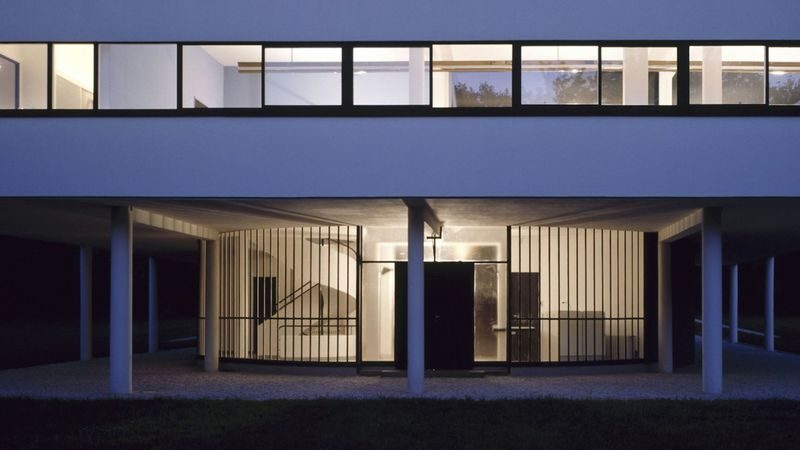
- Look for Le Corbusier’s five points: pilotis, a roof garden, open-plan interiors, horizontal windows, and a free-standing facade.
- Your ticket includes a booklet: Choose from French, English, Spanish, Portuguese, Italian, German, Japanese, Chinese, Korean, or Russian.
- Guided tours depend on the day: French tours are listed for weekends at 10:30 and 14:30; English tours are listed for Tuesday and Friday at 14:30.
- An audio guide costs extra: Rent one on-site for EUR 3 in French, English, Japanese, Spanish, or Russian.
- Plan for Poissy, not central Paris: Take an A or J train to Poissy station, then bus 3 toward La Coudraie to the Villa Savoye stop.
- Check the calendar before setting out: The villa is closed Mondays, and seasonal closing times differ.
Why Villa Savoye matters beyond its clean white walls
Built between 1928 and 1931 as a weekend retreat, Villa Savoye was a bold experiment in how a home could work. Le Corbusier treated the house less like a traditional structure resting on the ground and more like a carefully planned machine for living. That idea is visible in the building’s raised supports, broad windows, open spaces, and roof garden.
The five points of architecture are the useful lens for your visit. You do not need an architecture degree to follow them. As you move around the house, you can spot the supports beneath it, notice how the facade is freed from the structure, and see how horizontal windows bring light across the rooms.
The villa was declared a historic monument during Le Corbusier’s lifetime and is now part of a UNESCO World Heritage Site. That status gives the visit a wider frame: this is not simply an unusual house, but a building that helped shape how architects thought about modern homes and public buildings.
You can also read our reviews of more tours and experiences in Saint-Germain-en-Laye.

Seeing the five points in the building
Start by looking at the villa from outside. The pilotis lift the main living spaces above the ground, creating an appearance very different from a traditional house with thick walls bearing the full weight. The effect is spare and deliberate, and it sets up the central question of the visit: what happens when a home is designed around movement, light, and open space rather than familiar rooms and a conventional facade?
The free-standing facade is another idea to watch for. In a traditional building, the outer wall often carries much of the structure. Here, the design lets the facade work more freely, giving Le Corbusier room to shape the exterior around the interior plan. The horizontal windows reinforce that approach, creating long bands of glazing rather than a row of separate, upright openings.
Inside, the open-plan design changes how the rooms relate to one another. Instead of treating every space as a sealed box, Le Corbusier planned a more continuous sequence. You can use the booklet to connect what you see to the architect’s principles, then decide for yourself how well those ideas work as a home rather than as a design statement.
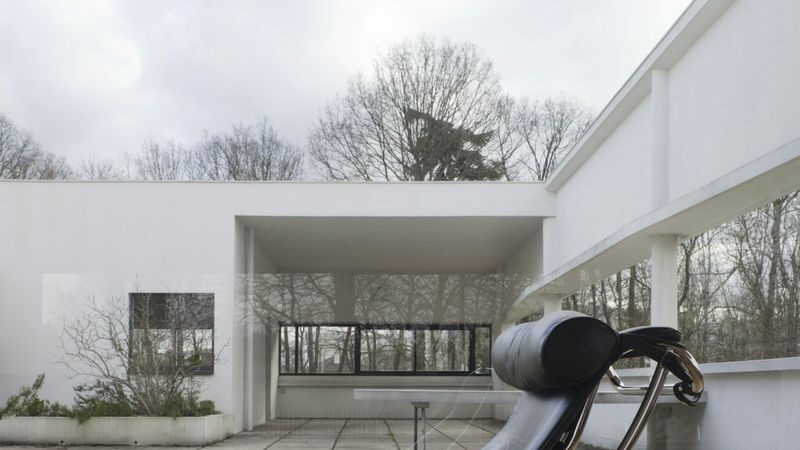
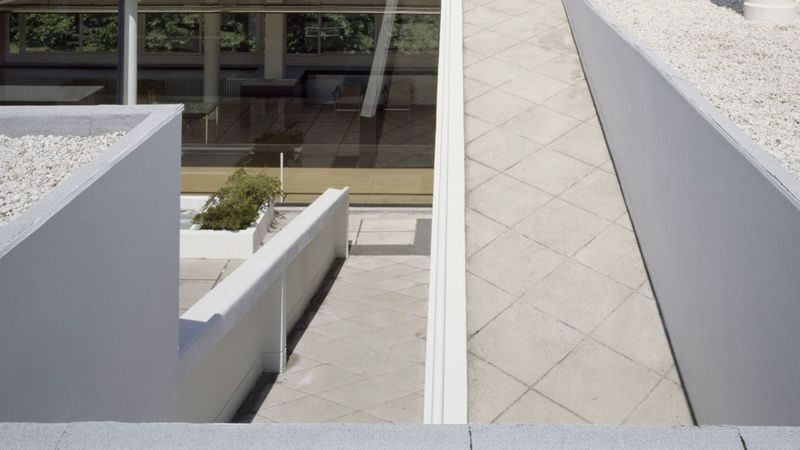
The roof garden completes the set. It is not just a decorative cap on the house. In Le Corbusier’s thinking, a roof garden made use of the roof as a functional part of the building. Taken together, the five points make the villa an unusually clear case study: one building, several ideas, and plenty to notice even on a short visit.
Moving through the rooms at your own pace
The admission ticket gives you access to the villa, and the supplied booklet is the main included aid for understanding what you are seeing. It comes in 10 languages, including English, French, Spanish, German, Japanese, and Chinese. If you prefer to set your own pace, this is a practical way to connect the design features to the building without depending on a scheduled group.
The visit is listed as about one hour. That should suit visitors who want a focused look at the architecture, but it is a short window if you like to linger over details, read everything carefully, and take your time moving between floors. If architecture is a central interest for you, consider leaving more room in your day rather than treating the hour as a strict limit.
There are 38 steps in the staircase, so keep that in mind when planning how you will move around the building. The activity is described as wheelchair-accessible, but the staircase detail makes it sensible to check with the venue about the route and areas available for your needs before travelling. Service animals with valid identification are allowed; other pets are not permitted inside.
Choosing a guided tour or the EUR 3 audio guide
A guided tour may be available on the day, but it is subject to staff availability. The schedule lists French-language tours on Saturday and Sunday at 10:30 and 14:30, and English-language tours on Tuesday and Friday at 14:30. Check at reception when you arrive rather than assuming a tour is included at a set time.
The ticket itself includes a booklet, not a personal tour guide or an audio guide. If a scheduled tour is not running, or you prefer to explore independently, the on-site audio guide costs EUR 3. It is available in French, English, Japanese, Spanish, and Russian. That small extra cost may be worthwhile if you want more explanation than the booklet offers while keeping control of your pace.
The choice comes down to how you like to learn. A group tour can give the building a clear narrative, if one is available in your language. The audio guide gives you flexibility, while the booklet is already part of the admission. If you are short on time, decide before arriving which format suits you, then check with reception for current tour availability.
Getting to Poissy from Paris
Villa Savoye is at 82 Rue de Villiers in Poissy, in the Yvelines department. The meeting point is the villa itself, so you need to arrange your own transport. Take an A or J train to Poissy station, then board bus 3 toward La Coudraie and get off at the Villa Savoye stop. Parking is available on-site.
A train-and-walk approach is also possible. One visitor found the walk from the station pleasant, but no walking time or route details are provided, so check a current map before choosing that option. The bus is the clearest stated route if you want a direct plan from the station.
Build in time for the trip rather than measuring the outing only by the hour inside. The visit is in Poissy, not at a central Paris museum, and the transport leg is part of the practical cost of seeing the villa. If you are already making a day trip to the area, the visit may fit neatly into that plan; if you are squeezing it between nearby city sights, check your connections first.
Ticket price, value, and who benefits most
Admission starts at $11.10 and includes entry to Villa Savoye and the multilingual booklet. For that price, you get access to a work of architecture with a strong, legible idea behind it, rather than a broad museum collection that could take half a day to cover. The value is best for people who are genuinely curious about buildings, design, or Le Corbusier’s influence.
The audio guide costs EUR 3 more, and guided tours may be available without being assured. Factor in the train or bus fare separately, since transport is not included. The ticket is therefore a modest admission purchase, but the full outing takes more planning and travel time than the headline price suggests.
Children aged 0 to 17 enter free. Free admission is also available to EU citizens and French residents aged 18 to 25, disabled visitors with a carer, holders of an Education Pass, and certified French jobseekers with proof no older than six months. Bring valid identification or the required proof if you are relying on one of these categories.
I would recommend Villa Savoye to architecture fans, design students, and visitors who want to see a major modernist building in person rather than only in photographs. It can also suit a Paris visitor looking for a focused excursion, provided you are happy to spend time getting to Poissy. If you mainly want a large collection, a long guided program, or an easy stop in the city center, this is probably not the best fit.
Opening hours and practical details
From May through August, the villa is open Tuesday to Sunday from 10:00 to 18:00. From September through April, it is open Tuesday to Sunday from 10:00 to 17:00. It is closed on Mondays, and last admission is 30 minutes before closing. Hours and closure dates can change, so verify them close to your visit.
The ticket is valid only on the selected date and, if applicable, selected time. You can enter directly with your voucher. Free cancellation is available with at least 24 hours’ notice, based on the destination’s local time.
The QR code should be ready to scan at the entrance. If you have trouble, show your voucher to staff rather than assuming the phone screen will be enough; an occasional scanning problem can disrupt entry. The reception staff may be able to help, and English was useful at the desk for one visitor.
Should you book Villa Savoye?
Book it if you want to understand modernist architecture through a real building, and if the journey to Poissy feels worthwhile to you. The combination of the five architectural points, the included multilingual booklet, and the option of a low-cost audio guide makes the visit accessible to both casual design fans and more serious students.
Before you commit, check the opening hours, confirm your transport plan, and decide whether you want to ask about a guided tour or rent the audio guide. The house is compact, but its ideas are not. Give it a little attention, and you will leave with a clearer sense of why one weekend home helped change the way people imagined modern buildings.
Villa Savoye ticket in Poissy
“if you're interested in architectures and staying in Paris, this is a must go place! I took a train and walk (I didn't take a bus) and that was a p…”
FAQ
How long should I plan to spend at Villa Savoye?
The visit is listed as about one hour. You may want extra time if you plan to read the booklet closely or listen to the audio guide.
What does the admission ticket include?
It includes admission to Villa Savoye and a booklet available in French, English, Spanish, Portuguese, Italian, German, Japanese, Chinese, Korean, or Russian.
Is a guided tour included?
A guided tour may be available, subject to staff availability. Check at reception on arrival. French tours are listed for Saturday and Sunday at 10:30 and 14:30, and English tours for Tuesday and Friday at 14:30.
Is there an audio guide?
Yes. An audio guide is available on-site for EUR 3 in French, English, Japanese, Spanish, and Russian. It is not included with admission.
How do I get to Villa Savoye by public transport?
Take an A or J train to Poissy station, then bus 3 toward La Coudraie and get off at the Villa Savoye stop.
When is Villa Savoye open?
It is open Tuesday to Sunday, 10:00 to 18:00 from May through August and 10:00 to 17:00 from September through April. It is closed Mondays, and last admission is 30 minutes before closing.