
The New Dai Show is built around a stage that changes dramatically: a giant lift platform, water effects, projections, and a folding dome turn the theatre into a setting for a Dai legend. Expect a fast-moving performance, not a quiet introduction to village life.
I like two things in particular: the show puts Dai and Hani dance alongside puppetry and acrobatics, and its story gives the spectacle a human thread. The elephant puppets in a separate tale about elephants longing for Banna add a softer note to all the lasers and water.
The trade-off is scale. With 13 chapters, several ethnic traditions, and a dramatic fantasy plot, the show offers a broad stage portrait rather than a detailed lesson in any one culture. If you want a small, intimate performance or clear cultural commentary, this may feel more like a big theatrical production.
- The useful details at a glance
- A theatre designed for large-scale effects
- The legend behind the lights and water
- Thirteen chapters of dance, puppetry, and acrobatics
- What the evening looks like, from arrival to the bonfire
- Is a ticket from .05 good value?
- Children, entry rules, and small practical cautions
- Should you book the New Dai Show?
- FAQ
- How long does the New Dai Show last?
- When should I arrive?
- How do I collect my ticket?
- Can children enter for free?
- Is there a party after the show?
- Can I cancel my ticket?
- More Tours in Xishuangbanna
- More Tour Reviews in Xishuangbanna
- Not for you? Here's more nearby things to do in Xishuangbanna we have reviewed
The useful details at a glance
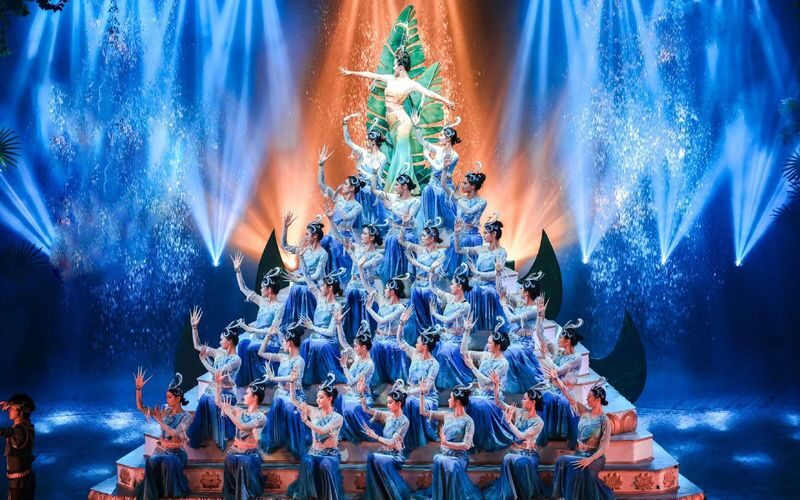 1 / 8
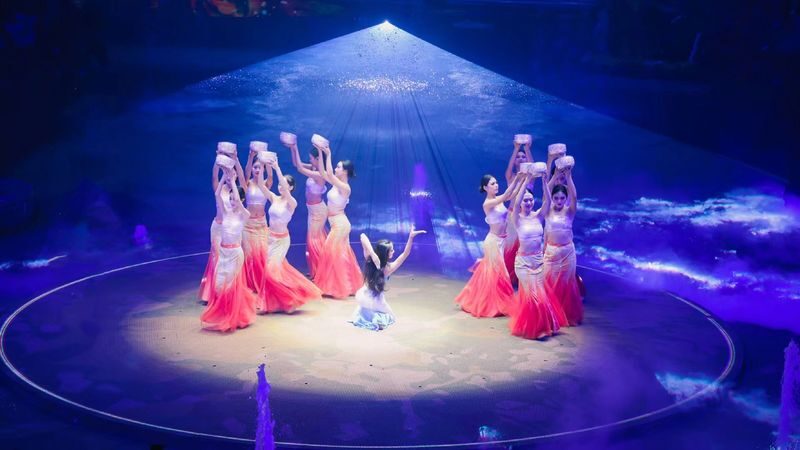 2 / 8
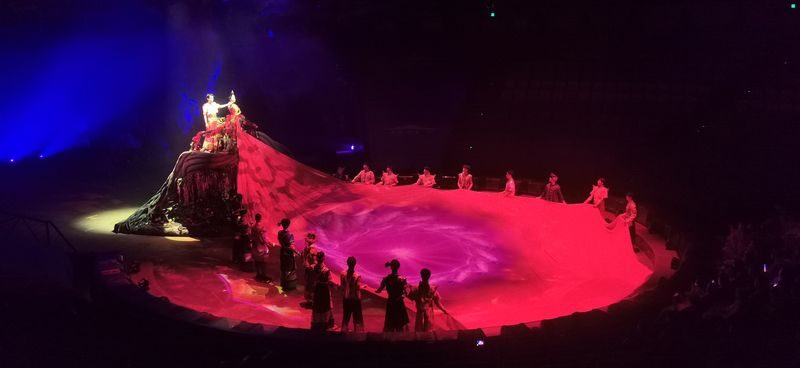 3 / 8
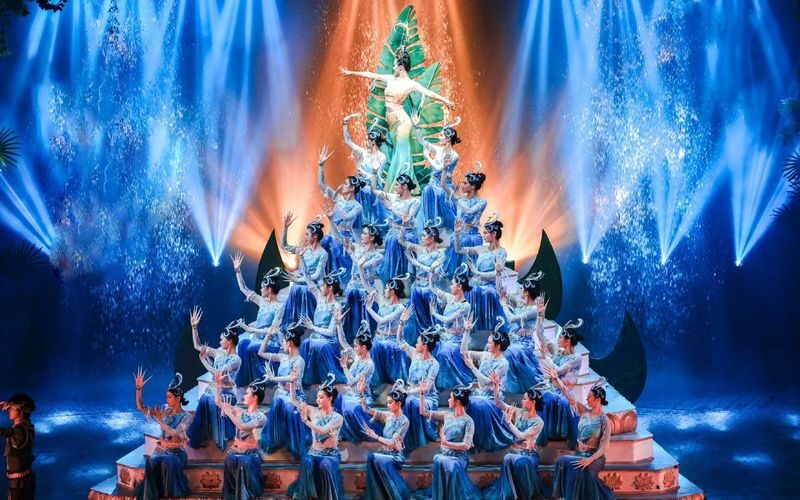 4 / 8
 5 / 8
 6 / 8
 7 / 8
 8 / 8
- A 70-minute main show: Performance is scheduled from 19:45 to 20:55, though the time may change on the day.
- A stage built for spectacle: A central lift platform, 140 water-effect devices, projections, and a 270-degree auditorium support the production.
- Dai legend at the centre: Princess Nan Mu Nuo Na and Prince Zhao Shu Tun’s story brings love, conflict, and a sorcerer’s threat into the show.
- More than one dance tradition: Dai, Hani, Yi, and other ethnic influences appear through costumes, dance, music, and festival scenes.
- A bonfire party follows: The outdoor dancing is scheduled for about 21:05, subject to on-site timing.
- Plan for ticket exchange: Bring the Klook QR code to the group ticket counter and arrive 30 to 60 minutes early.
A theatre designed for large-scale effects
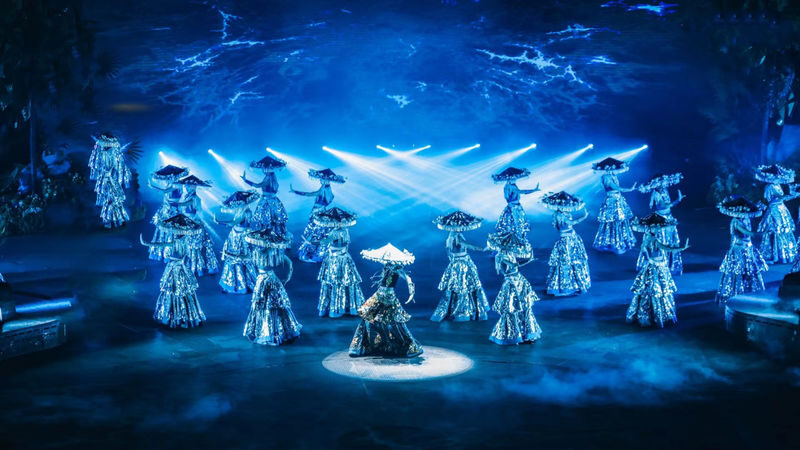
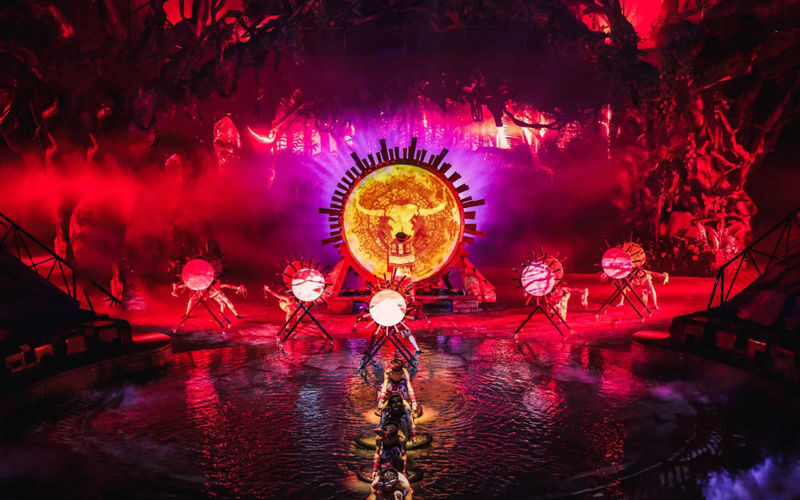
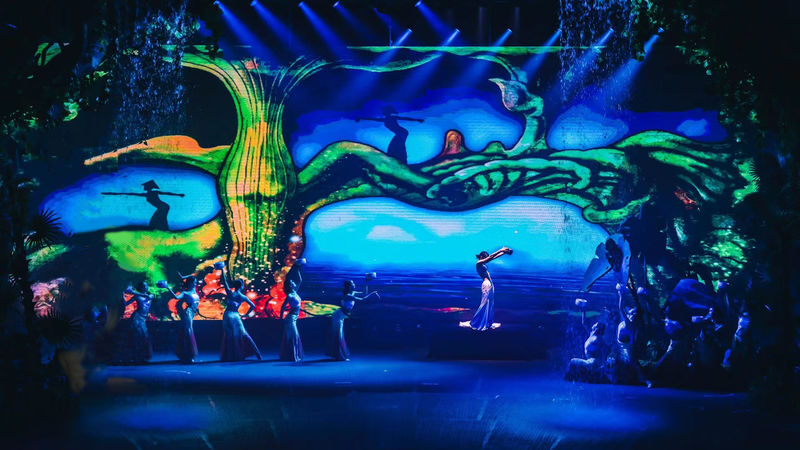
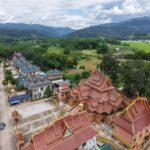
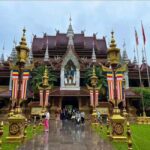
The venue is the Peacock Princess Grand Theatre at Sunac Tourism Resort in Jinghong. Its showpiece is a 6D land-and-water stage, with a central lift platform reported to measure 1,400 cubic meters and 140 three-dimensional water-effect devices. The platform can rise or fall to change the scene, while water effects suggest settings such as a flowing river or a still lake.
That machinery matters because the production does not rely on dance alone. Water, light, sound, and projection are part of the storytelling, shifting the stage between rainforest, battlefield, and peaceful scenes. The theatre’s double-layer folding dome and circular auditorium are designed to give seats a direct view of the stage, with a stated 270-degree viewing angle.
The scale is the show’s most obvious draw. The strongest praise for the experience focuses on the stage effects, and that is where I would set expectations: this is a polished spectacle meant to impress through movement, lighting, and scene changes. If you prefer subtle staging, the technical display may sometimes feel louder than the story.
You can also read our reviews of more tours and experiences in Xishuangbanna.


The legend behind the lights and water
The main narrative follows Peacock Princess Nan Mu Nuo Na and Prince Zhao Shu Tun, who meet and fall in love by Lang Si Na Lake. Their happiness is threatened by an evil sorcerer seeking powerful magic, and conflict between the kingdoms brings war and loss.
At the turning point, the princess offers her feather cloak to imprison the sorcerer and end his power. The story reaches for familiar themes, love, sacrifice, the cost of war, and the struggle between good and evil. Its value is not in historical detail, but in giving the dance and effects a plot to follow.
The performance also includes Xiangwang Banna, or Elephants Longing for Banna, a story inspired by the northward migration of Asian elephants. Puppet elephants carry its message of harmony. Their presence gives the production a gentler interlude and connects the stage fantasy to the region’s relationship with nature.
You do not need to know the legend in advance. Still, the rapid succession of chapters and theatrical images may make the plot harder to follow if you expect a detailed spoken explanation. Think of it as a visual story, with dance and stage action doing much of the work.
Thirteen chapters of dance, puppetry, and acrobatics
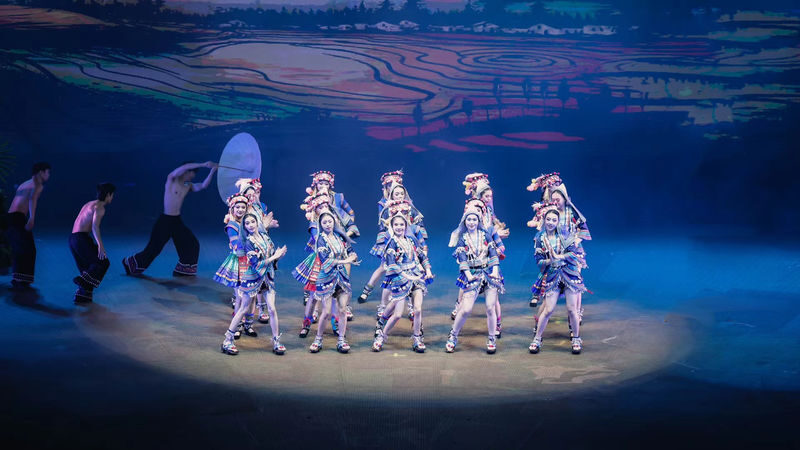
The show is arranged in 13 chapters and draws on the cultures of the Dai, Hani, Yi, and other groups. Dai dance is described through its graceful, bent-knee and curved-arm movements, while Hani dance includes more forceful steps and drum rhythms. Costumes, including the Dai tube skirt and Hani ceremonial dress, help distinguish the styles.
Scenes move between everyday work and festival celebrations, giving the production room to shift from quieter cultural images to full-stage energy. You will see dancers, acrobats, puppets, and laser displays sharing the same performance. Acrobatic passages bring physical risk and height; puppets add humour and character; lasers create bold patterns rather than a naturalistic setting.
This variety is a plus if you want an evening with changing visual textures. It is also a limit: the show has little time to explain the meaning of each dance or garment. I would treat it as an introduction to regional performance traditions, not a substitute for visiting local communities or learning about each group in depth.
Lighting and sound carry much of the atmosphere. The production uses surround sound, with effects such as bird calls, water, war drums, and laughter. Music and singing support the movement, while shifts in colour and brightness mark the changing scenes. The result aims for a rainforest-like mood, though the scale and technology keep the experience firmly theatrical.
What the evening looks like, from arrival to the bonfire
Reception is scheduled to begin around 19:10, and the performance is listed for 19:45 to 20:55. Ticket inspection begins about half an hour before the show, so arriving between 30 and 60 minutes ahead gives you time to exchange your voucher and find your way inside without rushing.
At the group ticket counter, show the QR code sent by Klook to collect paper tickets. You must provide accurate identity information for one adult when booking, or entry may not be possible. The voucher is valid only on the date and time selected, so check those details before setting out.
The main show lasts about 70 minutes, though the actual performance time can change. Afterward, an outdoor bonfire carnival is scheduled for roughly 21:05. The party includes Dai disco and dancing with performers, adding a more participatory finish after an evening spent watching from your seat. Confirm the day’s schedule on site, since both the show and party times are subject to change.
The theatre is listed as open daily from 16:00 to 21:30. For public transport, Jinghong bus 8 stops at Sunac Shopping Plaza, about a 438-metre walk from the theatre; bus 5 stops there too, with a walk of about 507 metres. Those are useful short walks, but allow extra time if you need to locate the correct entrance or ticket counter.
Is a ticket from $30.05 good value?
At a starting price of $30.05, you are paying for a full theatrical production, not simply a dance recital. The stage machinery, water effects, projections, surround sound, acrobatics, and post-show party all add to the evening. If you enjoy large-scale stagecraft, the ticket can make sense as an entertaining night out in Jinghong.
Value depends on what you want from the show. For a family or a first-time visitor curious about Dai performance traditions, the mix of dance, story, puppets, and effects offers plenty to watch in a compact format. For someone seeking detailed cultural interpretation, a small-scale performance, or a close look at village customs, the production may feel too fast and theatrical.
The listed ticket includes admission to the New Dai Show. Personal expenses and anything not included in the ticket are extra. No seat category details are provided here, so check the option you select when booking rather than assuming every ticket has the same location or benefits.




Children, entry rules, and small practical cautions
Children under 1.3 metres tall are admitted free without a seat, but they still need a child entry ticket collected at the counter. They must be with a ticketed adult, and each ticketed adult may bring only one free child. Children who are 1.3 metres or taller need an adult ticket.
Food, drinks, professional photo or video equipment, lighters, and other restricted items may not be allowed inside. Follow the theatre staff’s instructions and announcements. Pets are not permitted, and you cannot re-enter if you leave the venue during the event.
If plans change, the ticket is refundable when cancelled at least 24 hours before the activity date, using the destination’s local time. Confirm the terms for your specific booking before relying on that window.
Should you book the New Dai Show?
Book it if you want an evening of bold staging, ethnic dance, and a story that keeps the performance moving. The water effects and lift platform are the headline attractions, while the puppet elephants and bonfire dancing give the night a warmer, more playful finish.
Consider another activity if you want a quiet, closely explained cultural presentation. The New Dai Show favours scale and variety over detailed context. For the right mood, that is its strength: you get a lively introduction to Xishuangbanna’s performance traditions, wrapped in a high-tech theatre show.
Tickets for the performance of ‘New Dai Show’ at the Peacock Princess Grand Theatre in Xishuangbanna, Yunnan
“Super impressive! The stage effects were amazing.”
FAQ
How long does the New Dai Show last?
The performance lasts about 70 minutes. It is scheduled from 19:45 to 20:55, but the actual time may change on the day.
When should I arrive?
Arrive about 30 to 60 minutes before the performance. Ticket inspection is scheduled to begin half an hour before showtime, and you need to exchange your QR code for paper tickets.
How do I collect my ticket?
Show the Klook QR code at the group ticket counter to collect your paper ticket. Accurate identity information for one adult must be provided when placing the order.
Can children enter for free?
Children under 1.3 metres tall can enter free without a seat. They must be accompanied by a ticketed adult, with a limit of one free child per ticketed adult, and a child entry ticket must be collected at the counter. Children 1.3 metres or taller need an adult ticket.
Is there a party after the show?
An outdoor bonfire carnival with Dai disco and dancing with performers is scheduled for about 21:05. Its timing may change, so check the on-site announcement.
Can I cancel my ticket?
A full refund is available if you cancel at least 24 hours before the activity date, using local destination time. The voucher is valid only for the date and time selected.