The Alamo’s story takes shape inside the Ralston Family Collections Center, where more than 500 artifacts fill a modern gallery space behind the iconic church. The centerpiece for many history-minded visitors is a detailed Battle of the Alamo diorama narrated by musician and historian Phil Collins.
I like that the exhibit brings together objects from several collections, including Collins’s donations and the Spanish Colonial Collection of Donald and Louise Yena. I also like the scale: more than 10,000 square feet gives the artifacts room to breathe, with interactive displays to help place them in context.
One thing to keep in mind: this ticket covers the Alamo exhibit, not hotel transport, food, or other personal expenses. Check what else you want to see at the site before you book, and don’t assume this admission includes every Alamo area or activity.
- What to know before you go
- Inside the Ralston Family Collections Center
- The Battle of the Alamo diorama and Phil Collins narration
- Artifacts from three collections
- How long to allow, and how to pace the visit
- Price and what the ticket includes
- Location, entry, and practical rules
- Who will get the most from this visit
- Should you book the Alamo ticket?
- FAQ
- How long does the Alamo exhibit take?
- What does the ticket include?
- When is the exhibit open?
- Where do I go to enter?
- Is the exhibit accessible by wheelchair or stroller?
- What is the minimum age to participate?
- The Best Of San Antonio!
- More Tickets in San Antonio
- More Tours in San Antonio
- More Tour Reviews in San Antonio
- Not for you? Here's more nearby things to do in San Antonio we have reviewed
What to know before you go
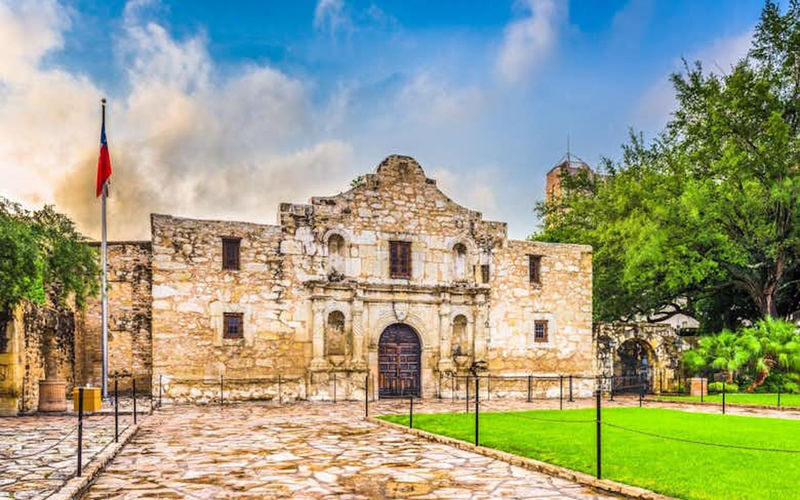
- A narrated battle diorama presents the Battle of the Alamo with personal narration by Phil Collins.
- More than 500 historical artifacts are displayed across 10,000-plus square feet, with many objects on public view for the first time.
- Several collections share the galleries, including Collins’s donations, the Donald and Louise Yena Spanish Colonial Collection, and the main Alamo Collection.
- Plan for one to two hours to explore the exhibit without rushing through its displays.
- The entrance is in the Alamo Gardens, behind the Alamo Church. Queue at the Ralston Family Collections Center.
- Admission starts at $14.95, and the ticket is valid only on the date selected when booking.

👉 See our pick of the 6 Best Guided Tours In San Antonio
Inside the Ralston Family Collections Center
The exhibit is housed in a purpose-built, modern space devoted to preserving and displaying the Alamo’s collections. That setting matters: instead of trying to take in artifacts while standing in the open plaza, you can spend time with them in a dedicated gallery environment.
The scale is substantial, with over 10,000 square feet of exhibition space and more than 500 historical objects. Many are being shown to the public for the first time, so this is not simply a small add-on room with a few familiar items. It gives you a more focused look at the material culture connected to the Alamo and its history.
The galleries draw on the main Alamo Collection, objects donated by Phil Collins, and items from Donald and Louise Yena’s Spanish Colonial Collection. That mix gives the exhibit several angles on the site’s past. You are not looking at a single narrow set of objects, but at collections assembled from different sources and presented together.
I would take time to read the displays rather than treating the center as a quick stop between the church and the rest of downtown. The objects are the point, and the newly built gallery space makes it easier to concentrate on them. Interactive exhibits add another way to engage with the material, particularly if you are visiting with children old enough to take an interest in the history.
The exhibit is described as a way to understand the Alamo’s legacy, but it is worth keeping your expectations specific. This is an exhibition ticket, not a guided tour of San Antonio or a package that includes meals and transportation. If you want a broader city experience, you will need to plan those pieces separately.
You can also read our reviews of more tours and experiences in San Antonio



The Battle of the Alamo diorama and Phil Collins narration
The detailed battle diorama is one of the exhibit’s most distinctive features. It gives you a visual way to follow the battle, while Phil Collins’s narration adds a personal voice to the presentation. Collins is known as a musician, but he is also a historian and donor of Alamo artifacts.
That combination makes the diorama a useful stop for visitors who want more than labels beside objects. The model offers a visual frame for the battle, while the narration provides an account to listen to as you look. One visitor described the narration as educational and cool, a concise endorsement of the feature’s appeal to people who enjoy both history and an unusual presentation.
I would make room for this display even if you have already read about the Alamo. A model can help you orient yourself to the events in a way that a written overview alone may not, and the personal narration gives the exhibit a distinct voice. The exact length of the presentation is not specified, so leave enough time to listen rather than assuming it will be a brief glance.
This is not a substitute for learning the full story of the Alamo, but it can help you approach the rest of the site with better context. If your interest is mainly in the battle itself, this is likely to be one of the most memorable parts of the ticket.
Artifacts from three collections
The exhibit brings together objects from the main Alamo Collection, Phil Collins’s donations, and the Donald and Louise Yena Spanish Colonial Collection. That range is a practical reason to visit: it lets you see different kinds of historical material in one place, rather than making you seek out separate collections around town.
The Spanish Colonial objects add an important dimension to a visit that might otherwise focus almost entirely on the famous battle. The Alamo’s story extends beyond one moment, and objects from this collection help broaden the frame. The display details provided do not identify individual objects, so it is best to arrive ready to follow the gallery labels rather than expecting a particular artifact.
Collins’s donations are another strong draw, especially if you are curious about how a well-known collector’s personal interest has contributed to the public presentation of the site. The exhibit also includes items that have not previously been on public display. That does not mean every object is rare or dramatic, but it does mean the galleries offer material you may not have encountered elsewhere.
I like the fact that the exhibit places these collections together instead of asking you to choose one theme. The trade-off is that a large number of objects can feel like a lot to absorb in a single visit. If you have limited time, focus on the displays that catch your eye, spend time with the diorama, and use the interactive elements to break up the reading.
How long to allow, and how to pace the visit
The suggested visit takes one to two hours. That is a sensible range for a substantial gallery exhibit, especially if you want time for the artifacts, interactive displays, and narrated diorama. A quick pass may be possible, but you would likely miss much of what makes the collection worth seeing.
If you have a tight schedule, set aside at least an hour and be selective about how long you spend at each display. If you have a strong interest in the Alamo or historical objects, plan closer to two hours. The exhibit is indoors, and one visitor specifically appreciated the air-conditioned building, a welcome detail during a hot San Antonio day.
The exhibit’s setting also makes it a useful counterpoint to time spent outside at the Alamo. You can move from the public site and its iconic church to a climate-controlled gallery where the focus is on objects and interpretation. The ticket information does not specify a required route through the space, so you can follow the displays at your own pace.
There is no guide name or live tour included in the ticket details. The Phil Collins narration belongs to the battle diorama, while the rest of the experience is built around gallery displays and interactive exhibits. If you prefer a guide to explain the whole site, you may want to look at a separate walking or city tour.
Price and what the ticket includes
Admission starts at US$14.95 for the entrance ticket to the Alamo exhibit. For a visit that can take up to two hours and includes access to a 10,000-square-foot gallery with more than 500 artifacts, that is a reasonable price for a focused museum-style experience.
The value depends on your interests. If you are curious about the Alamo, enjoy historic objects, or want a structured indoor stop during your time in central San Antonio, the ticket offers a clear purpose. If you are only looking for a quick look at the exterior of the church, this exhibit ticket may not be the right purchase for that aim.
The stated inclusion is admission to the Alamo exhibit. Hotel pickup and drop-off, food and beverages, and personal expenses are not included. The ticket details do not say that admission covers other areas or attractions, so check separately if you want to visit additional parts of the Alamo site.
There is a free-cancellation option with at least 48 hours’ notice before the activity date, based on local destination time. The voucher is valid only for the date selected, and you redeem it by presenting your mobile voucher. These terms matter if you are planning around a fixed itinerary: choose your date carefully and keep the voucher accessible on your phone.





Location, entry, and practical rules
The address is 300 Alamo Plaza, San Antonio, TX 78205. On arrival, queue in front of the Ralston Family Collections Center in the Alamo Gardens, behind the iconic Alamo Church. The entrance location is easy to miss if you expect the exhibit queue to be right at the church door, so look for the collections center.
Bus 100 stops at Third and Avenue E, about a three-minute walk away. No hotel transport is included. The activity is wheelchair- and stroller-accessible, which makes it a practical option for families and visitors who need step-free access.
The exhibit is open daily from 9 a.m. to 5 p.m., with last entry at 4 p.m. It is closed on December 25. Since the voucher is date-specific, plan your arrival with the closing time in mind. Arriving well before the last-entry cutoff gives you a better chance to use the full one-to-two-hour visit window.
Children must be at least six years old to participate. Children ages six to 12 need to be accompanied by a paying adult, and those age 13 or older are charged the adult rate. Outside food and drinks are not allowed inside, and smoking and drinking are prohibited. Pets are not permitted, except service animals with valid identification.
There is a long list of prohibited items, including weapons, glass bottles, alcohol, hazardous substances, projectiles, drones, bicycles, skateboards, and large or sharp objects. Photography is allowed, but commercial photography and video, as well as live broadcasting, are prohibited. Keep your bag simple and leave anything that might be treated as a restricted item elsewhere; it is easier than having to resolve a problem at the entrance.
Who will get the most from this visit
This exhibit suits people who want a closer look at the Alamo’s collections, not just a brief stop at its best-known building. History enthusiasts will appreciate the combination of artifacts, the battle diorama, and the Spanish Colonial material. The interactive displays also give families a way to engage with the subject beyond reading labels.
It is also a good option if you want an indoor activity in the center of San Antonio. The air-conditioned gallery is a practical break from outdoor sightseeing, and the one-to-two-hour duration fits neatly into a day that includes other downtown stops. Just remember that this ticket is for the exhibit alone.
If your priority is a guide-led explanation of the broader Alamo site or a full-day tour of the city, this may feel too narrow on its own. You can pair it with a separate walking tour or another San Antonio attraction, but those are not part of this admission. The main strength here is a focused look at objects and interpretation in one dedicated place.
Should you book the Alamo ticket?
Book it if you want to spend real time with the Alamo’s artifacts, hear Phil Collins narrate the battle diorama, and explore a large indoor exhibit at a modest starting price. The collection’s range and the number of objects on display make it more than a brief add-on, while the air-conditioned setting is a useful bonus in warm weather.
Skip it if you only want to see the exterior of the Alamo Church or need a guided tour and transportation included in one booking. For most visitors with even a passing interest in the site’s history, I would make room for the exhibit, but I would pair it with other plans rather than expecting this ticket to cover the entire Alamo experience.
The Alamo Ticket
“Excellent experience – thanks for sharing this part of history. Well maintained and interesting Alamo church and exhibit.”
FAQ
How long does the Alamo exhibit take?
Plan for one to two hours. The time you need depends on how long you spend with the artifacts, interactive exhibits, and narrated diorama.
What does the ticket include?
It includes admission to the Alamo exhibit at the Ralston Family Collections Center. Hotel pickup and drop-off, food and beverages, and personal expenses are not included.
When is the exhibit open?
It is open daily from 9 a.m. to 5 p.m., with last entry at 4 p.m. It is closed on December 25.
Where do I go to enter?
Go to the Ralston Family Collections Center in the Alamo Gardens, behind the Alamo Church, at 300 Alamo Plaza in San Antonio.
Is the exhibit accessible by wheelchair or stroller?
Yes. The activity is listed as wheelchair- and stroller-accessible.
What is the minimum age to participate?
Participants must be at least six years old. Children ages six to 12 must be accompanied by a paying adult, and children age 13 or older are charged the adult rate.