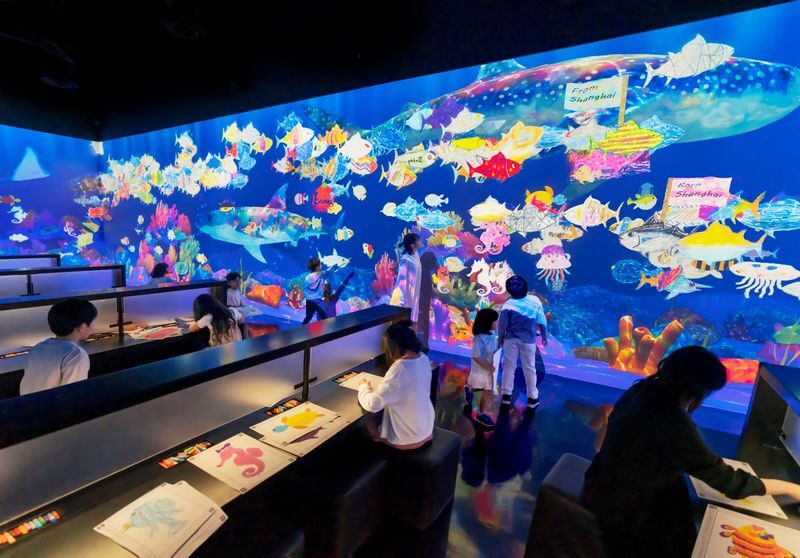
teamLab Future Park Okinawa turns a child’s drawing into part of a moving digital world. You can sketch a fish, send it swimming across a giant screen, then switch from watching to playing on slides, hopscotch, and interactive light displays. It is creative play, not a formal museum visit.
I like two things in particular: your artwork becomes part of the attraction, and the activities give adults and children a reason to play together rather than simply watch. The Sketch Factory adds a practical souvenir option, with drawings printed on items such as badges, towels, T-shirts, and tote bags.
The main caveat is scale. This Naha branch is smaller than teamLab’s Tokyo attractions, and some families may finish in about an hour. Wear enclosed, soft-soled shoes, plan your visit carefully, and treat the starting price of $12.65 as admission to a compact indoor activity rather than a full-day outing.
- What to know before you go
- A hands-on teamLab visit in central Naha
- Sketch Aquarium makes your drawing part of the show
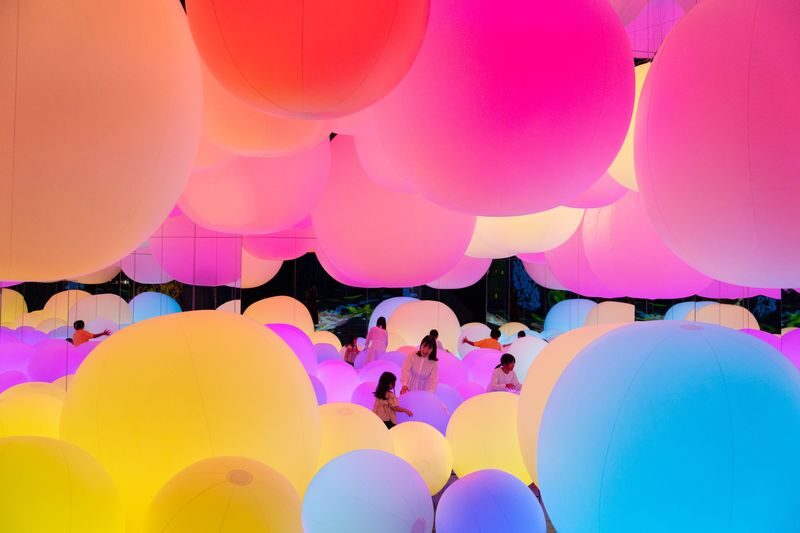
- Light Ball Orchestra turns movement into colour and sound
- Slides and hopscotch make it a play stop, too
- Sketch Factory turns a child’s picture into a souvenir
- How long to allow, and what the ticket buys
- Getting there and planning a smooth visit
- Who will enjoy Future Park most?
- Should you book teamLab Future Park Okinawa?
- FAQ
- Where is teamLab Future Park Okinawa?
- How do I get there by public transport?
- What are the opening hours?
- How long should I plan to stay?
- What does the admission ticket include?
- Can young children enter for free?
- What shoes should I wear?
- Can I leave and come back in?
- The Best Of Naha!
- More Tours in Naha
- More Tour Reviews in Naha
- Not for you? Here's more nearby things to do in Naha we have reviewed
What to know before you go
 1 / 8
 2 / 8
 3 / 8
 4 / 8
 5 / 8
 6 / 8
 7 / 8
 8 / 8
- Draw a fish for the digital aquarium: Sketch Aquarium: Connected World projects your drawing into a giant scene where it swims with the other fish.
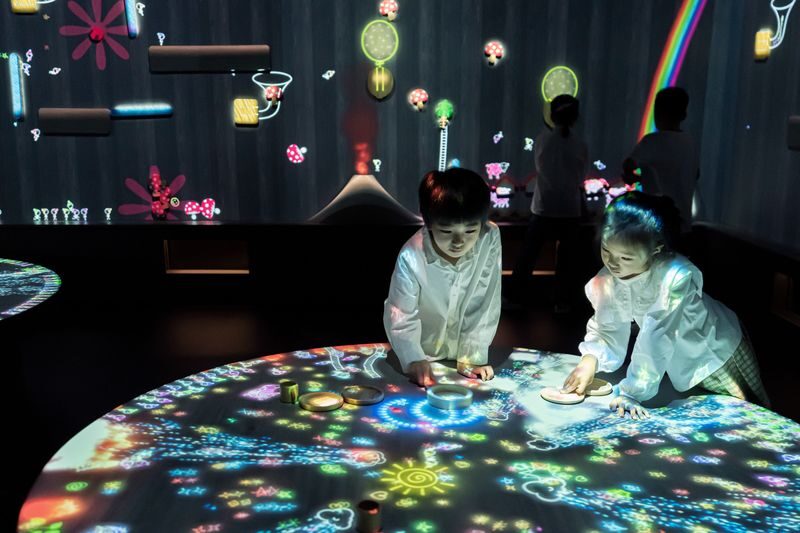
- Make light and sound respond to your movement: Roll the balls in Light Ball Orchestra and watch their colours and sounds change.
- Expect a compact visit: Many people allow 1 to 2 hours, though children who enjoy the play areas may want longer.
- Bring enclosed sneakers: High heels, hard-soled shoes, and open-toe or open-heel footwear are not allowed. Shoe rental costs JPY500, but sizes and quantities are limited.
- Find it beside Omoromachi Station: The venue is on the third floor of T Galleria Okinawa by DFS, next to the Yui-Rail station.
- Check your ticket before paying: Admission is valid only for the selected date, and the number and type of tickets cannot be changed after purchase.

👉 See our pick of the 18 Best Tours In Naha
A hands-on teamLab visit in central Naha
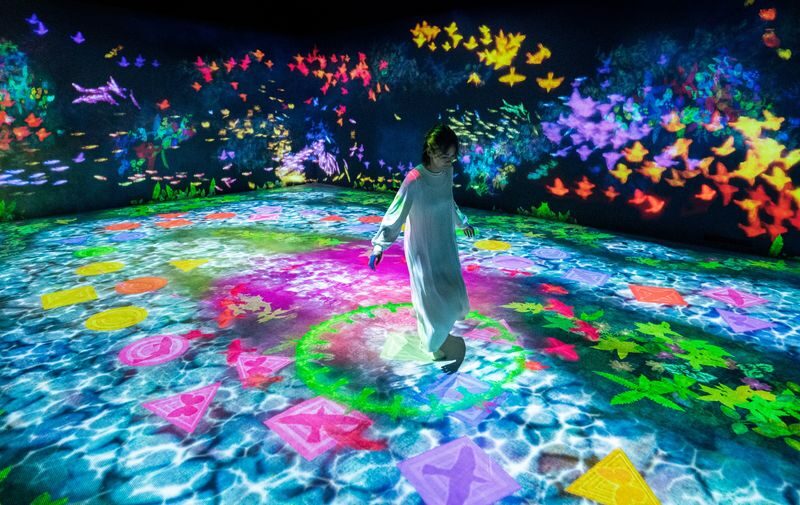
Future Park is built around co-creation: you do not just look at finished digital art, you help make it. A child’s drawing can become a moving element on a large display, while rolling balls, running, sliding, and hopping help shape the activity around them. The appeal is simple: the art asks you to take part.
That makes this branch a natural fit for families, especially those with younger children. Adults can join in, too, but the main draw is active play rather than a quiet gallery of large-scale installations. If you are travelling with children, expect to spend much of your time moving between artwork and play, not standing still to study it.
The venue is at 4-1 Omoromachi, inside T Galleria Okinawa by DFS. It is immediately next to Omoromachi Station on the Yui-Rail, about 19 minutes by train from Naha Airport. If you are driving, the stated journey from the airport is about 30 minutes, and the facility lists parking capacity for 180 vehicles. Check current parking arrangements before setting out, since the available details do not give a reliable rate.
You can also read our reviews of more tours and experiences in Naha.


Sketch Aquarium makes your drawing part of the show
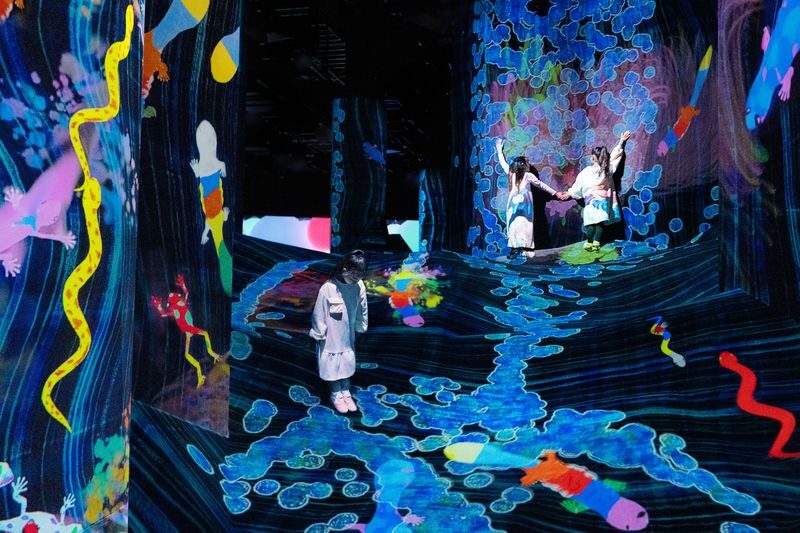
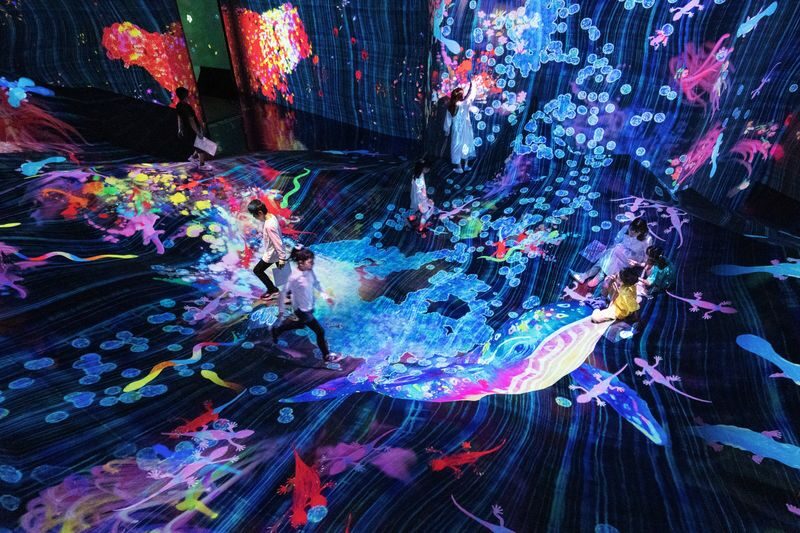
The most distinctive stop is Sketch Aquarium: Connected World. You draw a sea creature, then see it appear on a large digital aquarium display, swimming alongside drawings made by other people. The idea gives a child’s picture a second life: it is no longer just a page to carry home, but a small contribution to a shared scene.
This is also where the attraction’s educational aim feels most clear. Drawing, watching, and noticing how the pictures join together make a natural loop. Children can see that their own choices affect what appears on the screen, while adults can help younger ones understand the process or simply enjoy the unexpected combinations.
Do not expect a conventional aquarium with live animals. The point here is the act of drawing and seeing the result move across the screen. That distinction matters if you are choosing between this activity and a marine-life attraction such as a glass-bottom boat tour.
The drawing activity can take longer than a quick look, particularly if children want to make more than one picture or keep checking where their creation has gone. The attraction’s overall footprint is limited, but this hands-on feature can make the visit feel more personal than a short walk through a display.
Light Ball Orchestra turns movement into colour and sound
In Light Ball Orchestra, you roll balls and watch their colours and sounds change. It is a direct, easy-to-grasp interaction: push a ball, notice the effect, then try another. For younger children, the pleasure is immediate. For adults, the appeal is seeing how simple movement can alter the atmosphere of the room.
The light and sound displays add variety to the visit, so the experience is not all drawing. You can move from a quieter creative task to a more physical activity, then back to watching the room respond. The overall mood is more playful than rushed, though the number of installations is limited compared with the larger teamLab sites in Tokyo.
This is a good example of what the attraction does best. It gives children permission to touch, move, and experiment, while adults can take photographs or join the activity. If you prefer exhibits with extensive written interpretation or a long sequence of rooms, this may feel brief. If you want an indoor outing where the children can be active, it is a stronger match.
Slides and hopscotch make it a play stop, too
Slides and hopscotch bring the experience down from digital art to familiar physical play. That mix is useful for families: a child who tires of drawing can run, slide, and burn off energy, while an adult can still appreciate the surrounding light and imagery. The slide is a particular draw for young children, but it is worth remembering that this is an active venue, not a hands-off exhibition.
Watch the footwear rules closely. You must wear safe, enclosed shoes; high heels, hard soles, and open toes or heels are not permitted. Soft-soled shoes can be rented for JPY500 at the entrance hall, but the supply is limited by size and quantity. Bringing sneakers avoids both the fee and the risk that your size is unavailable.
The rules are more than a dress-code detail. Inclines and declines are part of the environment, and suitable shoes matter for safe movement. Pack accordingly before you leave your hotel, especially if your day’s outfit includes sandals.
Sketch Factory turns a child’s picture into a souvenir
At Sketch Factory, you can choose a drawing made during the visit and have it printed on a badge, towel, T-shirt, or tote bag. Ordering terminals let you select the design, type of item, and quantity, with the product made on the spot. This gives the artwork a useful second destination: from digital display to something you can take home.
For families, that can be a more meaningful keepsake than a generic gift-shop item. The child chooses the picture, sees it become part of the attraction, then can carry it away on a small product. Badges are a modest option; clothing or a bag may suit you if you want a more prominent reminder. The admission ticket does not include these personal purchases, so decide on a souvenir budget before reaching the terminal.
The Sketch Factory also adds a natural stopping point to the visit, but it can extend the time you spend inside. If you are on a tight schedule, set expectations with children beforehand: making a product is an optional extra, not part of the admission price.


How long to allow, and what the ticket buys
The advertised visit is 1 to 2 hours. A focused visit can be shorter, while children who want repeated turns on the slide or more time with the drawing activities may stay longer. Around 1.5 hours is a sensible starting plan, with extra time if you are buying a custom item or your family likes to repeat activities.
Admission starts at $12.65. That is easier to justify if you treat Future Park as a compact, weather-proof activity rather than a major all-day attraction. It can fill a useful gap on a rainy day, offer a break from Okinawa’s heat, or give children an active change of pace between sightseeing stops. It is also convenient to pair with shopping in the same complex.
Value depends on expectations. For a family with young children who will use the interactive displays and play areas, the ticket can buy a lively hour or two. If you are an adult seeking a large-scale digital-art exhibition, the small footprint may leave you wanting more. The lower price compared with bigger teamLab venues reflects that difference in scale.
The ticket covers admission to the attractions. Shoe rental, souvenirs, and other personal expenses are extra. Children aged 0 to 3 enter free, but they still count when working out the required adult supervision.
Getting there and planning a smooth visit
The Yui-Rail is the simplest option for many people. Omoromachi Station is right beside the venue, and the ride from Naha Airport takes about 19 minutes. If you are driving, the listed trip from the airport is around 30 minutes, with parking capacity for 180 vehicles. Confirm the current parking details before you go, since parking terms can vary.
Enter directly with your voucher. The ticket is valid only on the date selected, and you cannot change the number or type of tickets after purchase. It is also non-refundable, so be cautious about booking if your plans may shift, especially during typhoon season.
Large bags and pull carts are not allowed inside, so travel light. Lockers are available for personal bags, and a storage charge may apply for larger items. Re-entry is not allowed once you leave, so take a restroom break and collect anything you need before exiting.
Children under 13 must be with an adult aged 20 or older. There must be one accompanying adult for every three children, including children who enter free. This ratio is worth checking before booking if you are arriving as a larger family group.
Who will enjoy Future Park most?
I would put this high on the list for families with children who like drawing, movement, and bright visual effects. Children around preschool and primary-school age are likely to get the most from the blend of drawing, slides, hopscotch, and responsive displays. The attraction can also work for adults who are willing to join the play rather than expect a formal art visit.
It is a practical choice on a hot or rainy day, and the station-side location makes it easy to reach without a car. It can also fit neatly into a Naha shopping day, since it is inside a department-store complex. For cruise passengers or anyone with a short window in the city, the compact format may be an advantage, provided you leave enough time for the children to play.
Older children and adults who want a long, expansive teamLab experience may find the venue too small. There are fewer areas than at the Tokyo sites, and some people move through in about half an hour. That does not make it a poor choice, but it does mean you should book it for the interactive play, not for hours of exhibition space.
Should you book teamLab Future Park Okinawa?
Book it if you want an indoor, hands-on activity in Naha where children can draw, watch their artwork move, play, and make a personal souvenir. The strongest reasons to go are the digital aquarium and the freedom to move between creative and physical activities. Plan on 1 to 2 hours, wear enclosed sneakers, and keep the scale in mind.
Skip it if you are seeking a large teamLab venue or a full-day attraction. At the starting price, it can be good value for a family outing, but its worth depends on whether your group will use the interactive features. For young children and a convenient rainy-day plan, it makes a sensible addition to a Naha itinerary.
teamLab Future Park Okinawa
“I really love this place. It's so magical and colorful, and you can even make things yourself. Seeing my own work become part of the display was tr…”
FAQ
Where is teamLab Future Park Okinawa?
It is on the third floor of T Galleria Okinawa by DFS, at 4-1 Omoromachi, Naha, Okinawa 900-0006, Japan.
How do I get there by public transport?
The venue is next to Omoromachi Station on the Yui-Rail. The ride from Naha Airport takes about 19 minutes.
What are the opening hours?
The stated hours are Monday to Sunday, 10:00 to 20:00, with last admission at 19:00. Hours can change, so check the official website before visiting.
How long should I plan to stay?
The suggested duration is 1 to 2 hours. Your visit may take longer if children want to repeat activities or you order a custom souvenir.
What does the admission ticket include?
It includes admission to the attractions. Shoe rental, souvenirs, and other personal expenses are not included.
Can young children enter for free?
Yes. Children aged 0 to 3 are free. Children under 13 must be accompanied by an adult aged 20 or older, with one adult for every three children.
What shoes should I wear?
Wear enclosed shoes with soft soles. High heels, hard-soled shoes, and open-toe or open-heel shoes are not allowed. Shoe rental is available for JPY500, subject to size and supply.
Can I leave and come back in?
No. Re-entry is not allowed after you leave the venue.