Shuri’s story is bigger than its famous red castle. On this walking tour above Naha, you follow old stone lanes to royal tombs and sacred sites, learning how the Ryukyu Kingdom shaped Okinawa’s culture and daily life. The route also makes room for a proper local meal, not just a quick photo stop.
I like two things in particular: an English-speaking guide connects the places to local beliefs and everyday life, and the itinerary pairs major sights with quieter corners such as the Kinjo area’s sacred tree. Lunch at Sui-Dunchi and a small textile museum add useful cultural context.
The main consideration is the walking. The old stone path can be slippery in rain, and the tour’s pace or route may change with weather and traffic. Shurijo Castle has also been undergoing restoration after a fire, so the areas open to you may vary.
- What makes this Shuri walk worthwhile
- Shuri beyond the red palace
- From Shureimon Gate to Shurijo Castle
- Walking the Kinjo Stone-Paved Path
- Tamaudun, the royal mausoleum
- A sacred tree in the Kinjo area
- Sui-Dunchi lunch and the textile museum
- Is .39 good value?
- Timing, meeting point, and weather
- Who should book this Shuri tour?
- FAQ
- How long does the tour take?
- Where does the tour start?
- What is included in the price?
- Is the tour conducted in English?
- Does the tour include lunch?
- Is the walk affected by rain?
- The Best Of Naha!
- More Walking Tours in Naha
- More Tours in Naha
- More Tour Reviews in Naha
- Not for you? Here's more nearby things to do in Naha we have reviewed
What makes this Shuri walk worthwhile
 1 / 10
 2 / 10
 3 / 10
 4 / 10
 5 / 10
 6 / 10
 7 / 10
 8 / 10
 9 / 10
 10 / 10
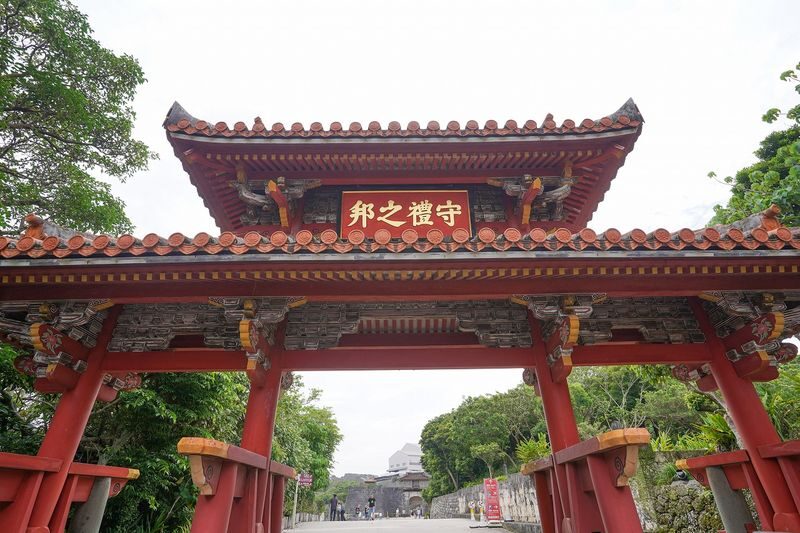
- Shureimon Gate sets the scene with an iconic entrance to Shurijo Castle and a natural starting point for the area’s royal past.
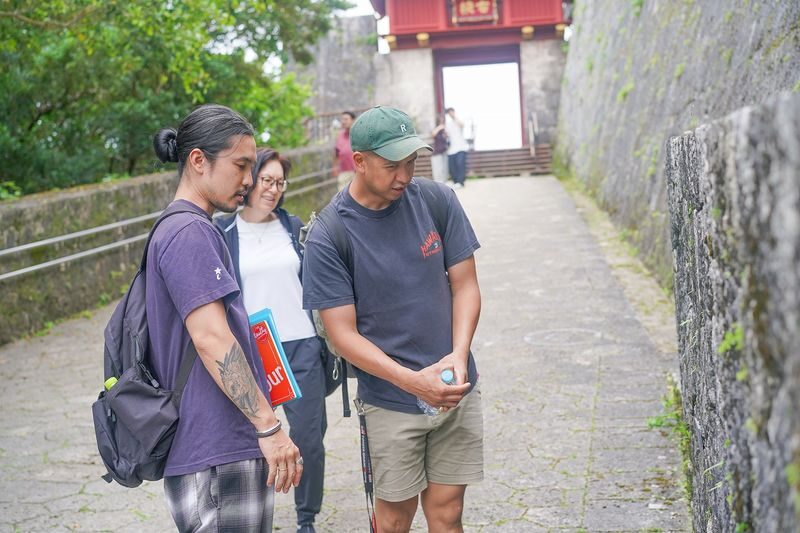
- Kinjo’s cobbled lane shows another side of Shuri, with old-town paths that lead away from the grand palace.
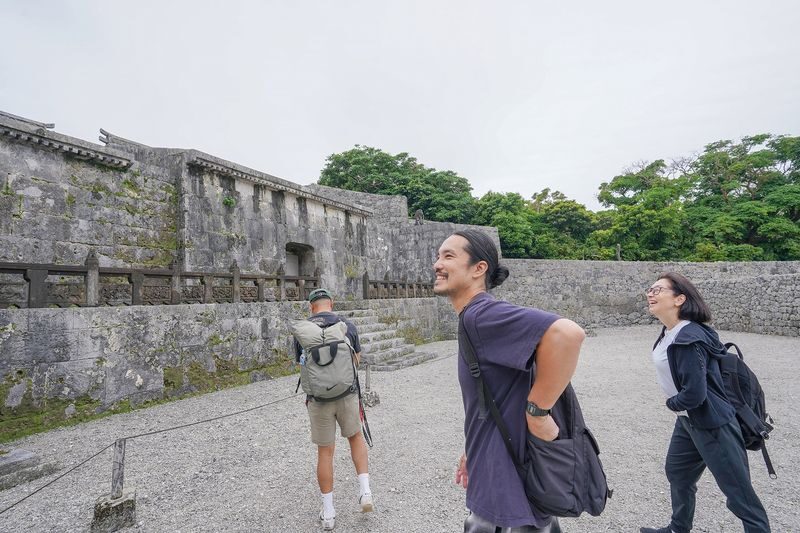
- Tamaudun brings the royal story into focus, with admission included to the Ryukyu Kingdom’s mausoleum.
- The Great Akagi Tree and its Utaki connect history with belief, at a sacred site known for a tree that survived World War II.
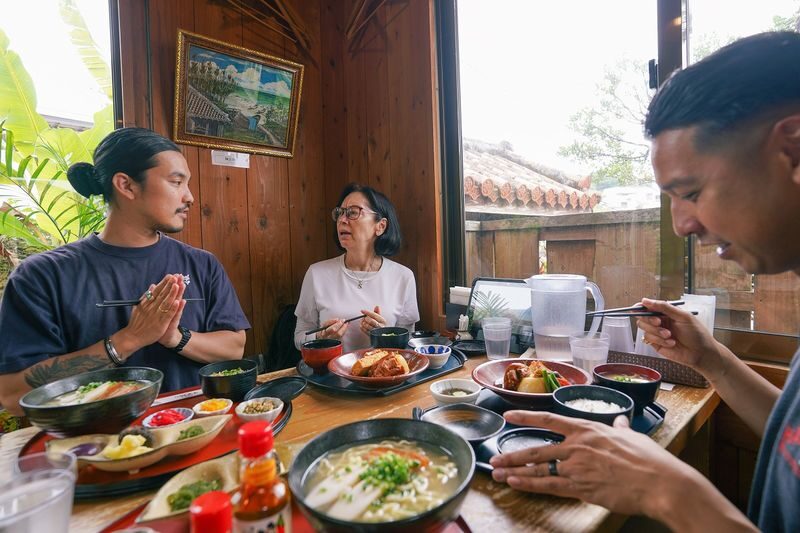
- Lunch is part of the experience, with Okinawan food at Sui-Dunchi, a restaurant designed around Ryukyu-period architecture and gardens.
- The four-hour format combines landmarks and local context, with an English-speaking guide, castle and mausoleum admission, lunch, and a museum visit included.

👉 See our pick of the 18 Best Tours In Naha
Shuri beyond the red palace
Shuri sits on a hill above Naha and was the center of the Ryukyu Kingdom, whose history reflects a blend of cultural influences. The castle gives you the grand, public face of that past. The lanes, sacred sites, tomb, and food help fill in what a palace visit alone can leave out.
That is the appeal of this tour: it treats Shuri as a lived-in historic district, not just a castle ticket. Your guide explains the connections between the sites as you walk, including local beliefs and daily life. If you want a quick castle visit and little else, this route may feel too long. If you want context and a broader sense of place, the mix is more rewarding.
The tour is led in English, and the guides named by participants include Maria, Sarah, and Sara. Their style has been described as personable, funny, and easygoing, with storytelling that makes the history easier to follow. Guide assignments can change, of course, but the format puts a local guide at the center of the experience rather than leaving you to piece the sites together on your own.
You can also read our reviews of more walking tours in Naha


From Shureimon Gate to Shurijo Castle
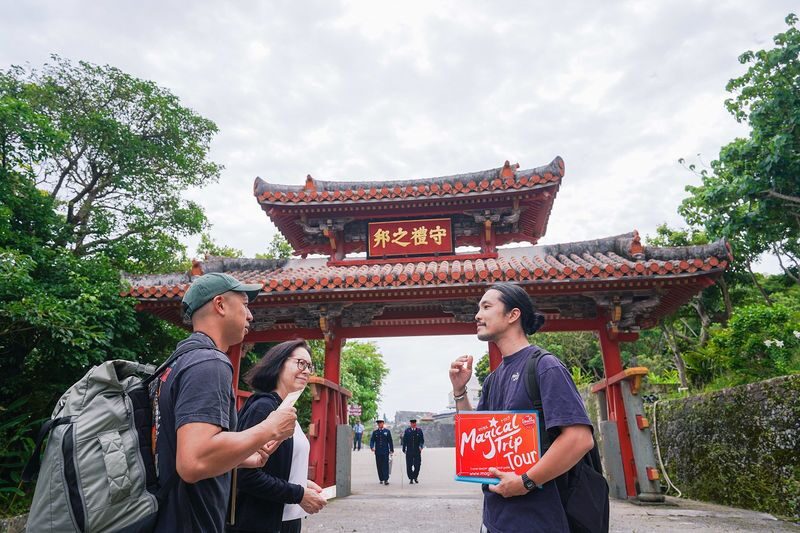
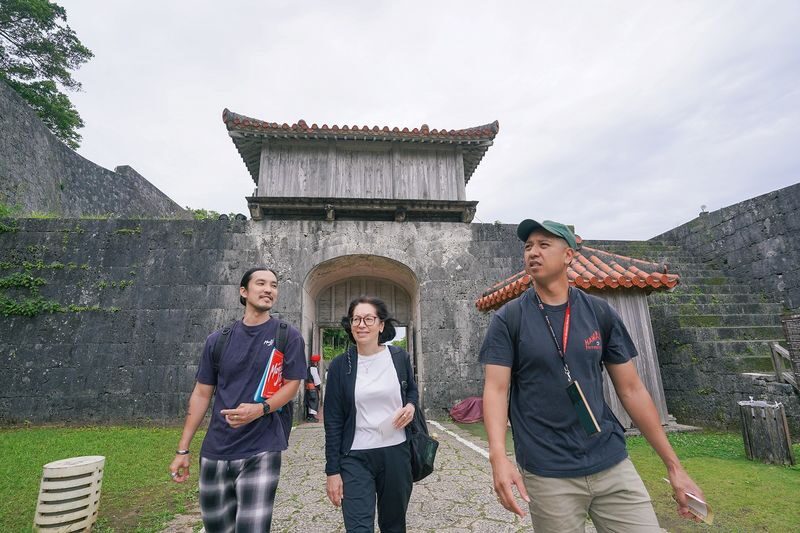
Shureimon Gate is the opening stop, with about 30 minutes of guided time. Its distinctive design makes it one of Shuri’s best-known landmarks and gives you a first look at the architectural character of the old kingdom. It is more than a quick photo pause: the guide can use the gate to introduce the royal capital and the route ahead.
Admission to Shurijo Castle is included. The palace was badly damaged during World War II, and a later fire led to another major restoration effort. Parts of the site have been open during restoration, but access can change as work progresses. One guide, Maria, explained the restoration process and showed the areas open to the public at the time. That kind of explanation is useful here, because it helps you understand both what you are seeing and what is still being rebuilt.
Keep expectations flexible if you have a picture in mind of a fully restored palace interior. The tour still offers a way to explore the castle grounds and learn about Okinawan and Ryukyu history, but the exact experience depends on which areas are accessible on your date.
Walking the Kinjo Stone-Paved Path
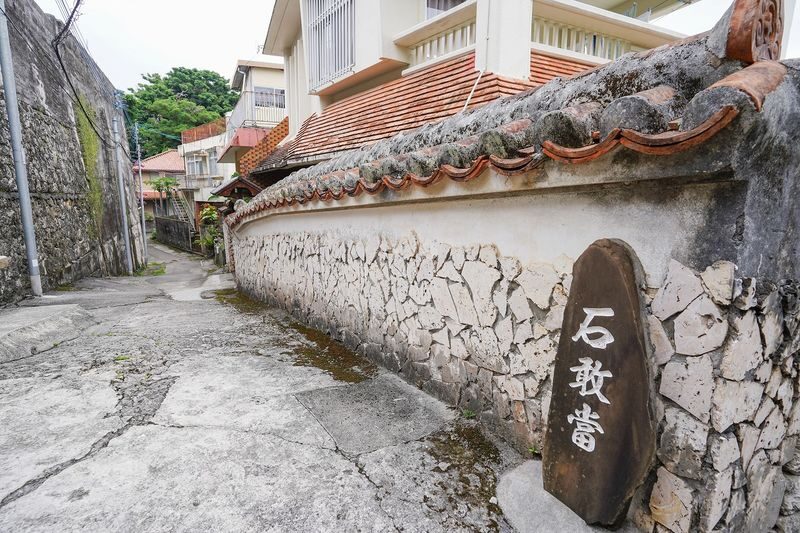
The tour then heads to the Shurikinjo Stone-Paved Path, with roughly 45 minutes for a guided walk. This old cobbled lane gives you a more intimate view of Shuri than the castle precinct does. Instead of focusing only on royal buildings, you get a sense of how the historic district fits into the surrounding town.
The stones make the path atmospheric, but they also call for care. In wet weather they can become slippery, and the route may involve uneven footing. Maria offered a taxi option during heavy rain, while the group chose to continue on foot. She also watched for spider webs and helped the group avoid slick spots. That is a good reminder to wear shoes you trust on uneven ground and to be ready for the guide to adjust the walk if conditions turn poor.
The route is described as gentle-paced, but it is still a walking tour with several stops and stretches outdoors. If you have concerns about walking, consider the cobbles and weather before booking. The tour does not provide detailed accessibility information, so ask the operator if you need specific arrangements.
Tamaudun, the royal mausoleum
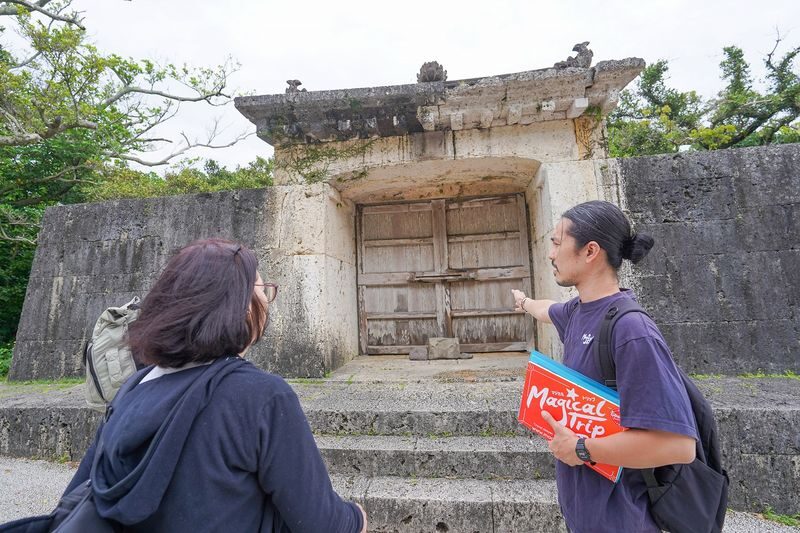
Tamaudun, the Ryukyu royal mausoleum, gets about 45 minutes. It adds an important dimension to a castle visit: the kingdom’s story is not only about rulers and diplomacy, but also about the ways royal families honored the dead. Admission is included, so you do not need to arrange a separate ticket for this stop.
A guide is especially useful here. A mausoleum can be easy to pass through without grasping its place in the wider history. With context, you can better understand why this royal tomb matters and how it fits alongside the castle and surrounding sacred sites.
The pace gives you time to look around, but this is a historic and solemn place, not a spectacle. Give the guide’s explanations your attention and follow any site rules. The stop’s value lies in what it adds to your understanding of Shuri’s royal past.
A sacred tree in the Kinjo area
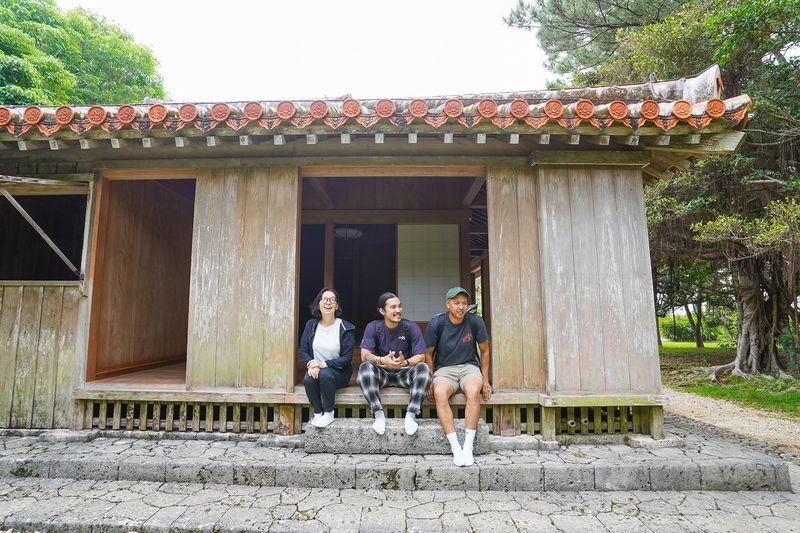
The Great Akagi Tree and nearby Utaki shrine are scheduled for about 30 minutes. An Utaki is a sacred site, and this stop brings local spiritual traditions into the walking route. It is a quieter contrast to the palace and mausoleum, and it helps explain how history and belief remain tied to particular places.
The tree is notable for having survived World War II, a fact that gives this stop a direct connection to Okinawa’s wartime past. The tour is called a peace walk, and this site offers a chance to reflect on that history without reducing the district to its destruction. The area also gives you a glimpse of the spiritual places woven into everyday surroundings.
This part of the tour may be especially appealing if you are interested in how local beliefs shape a community. If you are mainly looking for grand buildings, it may feel less dramatic than the castle. Its strength is its quieter, more personal scale.


Sui-Dunchi lunch and the textile museum
After the morning walk, the group spends about an hour at Sui-Dunchi for lunch. The restaurant serves Okinawan cuisine in a setting inspired by Ryukyu-period architecture and gardens. The meal is included in the price, and it gives the day a welcome pause after several hours on foot.
The restaurant is one of the tour’s practical advantages. A guide can take you to a place you might not have found on your own, and lunch becomes part of the cultural experience rather than a separate planning task. Okinawa soba is among the dishes highlighted for the experience, alongside other local food. The meal was singled out as a memorable part of the tour, though menus and exact dishes are not specified.
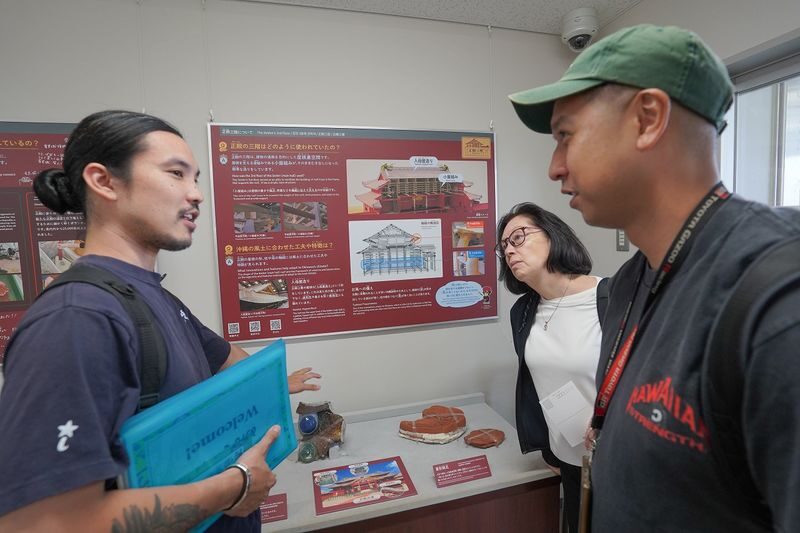
The final stop is Shuri Textile Museum suikara, next to the restaurant, with about 30 minutes to learn more about Okinawa’s history. The museum is small, so think of it as a focused complement to the walk rather than a large museum visit. After seeing the castle, tomb, sacred spots, and old lane, this stop gives you one more way to connect the day’s sights with local culture.
Is $69.39 good value?
At a starting price of US$69.39, the tour includes an English-speaking guide, admission to Shurijo Castle and Tamaudun, and lunch. You are paying for more than access to two historic sites: the route also covers the stone-paved lane, sacred tree and Utaki, and the textile museum. If you were planning to visit these places and eat lunch in Shuri anyway, having the route and explanations organized can make the price worthwhile.
Value depends on what you want from the day. A self-guided castle visit will likely be a better fit if you prefer to move quickly or focus on the palace alone. This tour makes more sense if you want the surrounding district explained, appreciate a local guide, and like having lunch included rather than choosing a restaurant on the fly.
The experience has received a 5.0 rating from five listed participants, with praise focused on the guides’ storytelling, friendly manner, and the meal. That is a small sample, so it is best read as an encouraging sign rather than a guarantee. MagicalTrip Inc., the provider, has 853 total reviews and a 92 percent good-review rate across its experiences.
Timing, meeting point, and weather
The standard plan takes about four hours, with a 10:00 departure and a 14:00 return option shown. The meeting point is in front of Shuri Textile Museum suikara, where the guide carries a red or orange Magical Trip sign. The museum is about a 10-minute walk from Shuri Station on the Yui Rail. Check your booking confirmation for the time selected and meeting details.
The route may change with traffic or weather. The tour operator may cancel in extreme weather or unforeseen circumstances, with rescheduling or a full refund offered in that situation. The voucher is valid only for the date and time booked. Children aged 0 to 3 can join free.
Bring shoes suitable for old stone paths, and check the forecast before setting out. Rain does not necessarily mean the walk cannot happen, but wet cobbles make steady footing important. If you need a particular language, note that the tour is described as English-speaking; other language options are not specified.
Who should book this Shuri tour?
I would choose this tour if you want to understand Shuri as more than a castle stop. The strongest fit is for history and culture-minded visitors who enjoy walking, want an English-speaking guide, and value a meal and several admissions bundled into one half-day. It is also a good option if you would rather hear how the sites connect than navigate them all alone.
I would think twice if you want a short, indoor visit, have difficulty with uneven paths, or need certainty about entering particular castle areas. Restoration work and weather can affect what you see and how the route unfolds. For a broader, thoughtful look at Shuri, though, the combination of royal sites, sacred places, old streets, and Okinawan lunch makes this a useful four hours in Naha.
Okinawa Shuri Castle Peace Walking Tour
“Our Guide Maria was really great. She's fluent in English and taught us a lot about the local history and culture. She was funny and easy going. Ev…”
FAQ
How long does the tour take?
The tour is planned for about four hours. A 10:00 departure and a 14:00 return option are provided, though the schedule may change with weather or traffic.
Where does the tour start?
Meet in front of Shuri Textile Museum suikara. The guide carries a red or orange sign marked Magical Trip, and the museum is about a 10-minute walk from Shuri Station on the Yui Rail.
What is included in the price?
The price includes an English-speaking guide, admission to Shurijo Castle and Tamaudun Mausoleum, and lunch. Personal expenses are not included.
Is the tour conducted in English?
Yes. An English-speaking guide is included. Other language options are not specified.
Does the tour include lunch?
Yes. Lunch is included at Sui-Dunchi, a restaurant serving Okinawan cuisine in a setting inspired by Ryukyu-period architecture and gardens.
Is the walk affected by rain?
The schedule may change depending on weather, and wet stone paths can be slippery. In extreme weather or unforeseen circumstances, the operator may cancel and offer a reschedule or full refund.