Tbilisi’s old town makes more sense on foot, where churches, bathhouse lanes and modern bridges sit within a short walk of one another. This four-hour route adds a cable car ride toward Mother of Georgia, so you get both street-level detail and a broad view over the city.
I like two things in particular: the cable car ride turns a city walk into a scenic outing, and the stop for traditional Georgian pie and lemonade brings a small taste of local food into the day. Guides such as Elle, Patti, Nini and Tato have led groups, and the experience is built around their stories as much as the landmarks.
One consideration: this is a packed route, and time at individual stops can be brief. The cable cars may also stop in windy weather, while some sights have been affected by renovation or closures. Dress for the weather and wear shoes you can walk in.
- At a glance: what makes this Tbilisi walk worthwhile
- Starting at Avlabari and tracing Tbilisi’s beginnings
- Rike Park and the cable car above the city
- Crossing the Bridge of Peace into the old quarter
- Churches, toast customs and a Georgian bakery bite
- Abanotubani and the walk to Leghvtakhevi Waterfall
- How the guide shapes the day
- Is the route comfortable, and what should you bring?
- Does the price make sense?
- Who should book this Tbilisi walking tour?
- FAQ
- Where does the tour meet?
- Where does the tour end?
- How long does the tour last?
- Is the cable car ride included?
- Are food and drinks included?
- What is the minimum age?
- Can I use a wheelchair or bring a stroller?
- The Best Of Tbilisi!
- More Walking Tours in Tbilisi
- More Tours in Tbilisi
- More Tour Reviews in Tbilisi
- Not for you? Here's more nearby things to do in Tbilisi we have reviewed
At a glance: what makes this Tbilisi walk worthwhile
 1 / 9
 2 / 9
 3 / 9
 4 / 9
 5 / 9
 6 / 9
 7 / 9
 8 / 9
 9 / 9
- A useful first-day orientation: The route links central Old Tbilisi sights, giving you a basic map of the city and its history.
- A cable car ride with a view: The lift toward Mother of Georgia offers a change of pace from the cobbled streets below.
- A proper local-food pause: Georgian pie and lemonade are included, though this is a snack rather than a full lunch.
- A good range of landmarks: See churches, the Bridge of Peace, the sulfur-bath district and Leghvtakhevi Waterfall in one outing.
- English-speaking guides with distinct styles: Names associated with the tour include Elle, George, Nini, Tato, Patti and Tamara.
- Plan around weather and access: Strong winds can stop the cable car, and the walk is not suitable for wheelchairs or strollers.

👉 See our pick of the 25 Best Tours In Tbilisi
Starting at Avlabari and tracing Tbilisi’s beginnings
Meet outside Avlabari Metro Station at 9:45 a.m. for the 10 a.m. departure. The meeting point is easy to identify: a representative waits by the entrance with an orange flag. Arrive on time, since the group sets off together and the tour covers several neighborhoods.
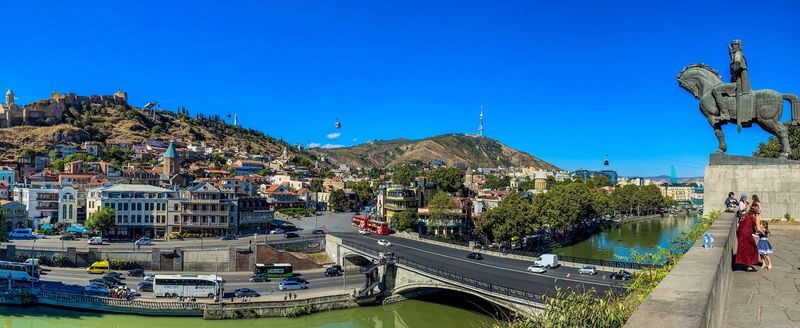
The first stops are Metekhi St. Virgin Church and the nearby monument to King Vakhtang Gorgasali. The route introduces the story of Tbilisi’s founding, traditionally linked to Vakhtang Gorgasali, and places the old city in context before you move on to its later layers.
Metekhi is associated with a castle whose origins may date to Vakhtang Gorgasali. The itinerary names both the church and castle, but the wording does not promise entry into either building. Treat this as a guided outdoor stop, and use the time to ask your guide about the site’s changing role and the city’s early history.
Europe Square follows, with a short stop of about five minutes. The guide connects the square to Georgia’s ties with the European Union. It is a quick introduction rather than a long political discussion, but it gives the walk a modern thread alongside its older religious and royal landmarks.
You can also read our reviews of more walking tours in Tbilisi
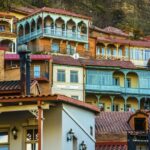

Rike Park and the cable car above the city
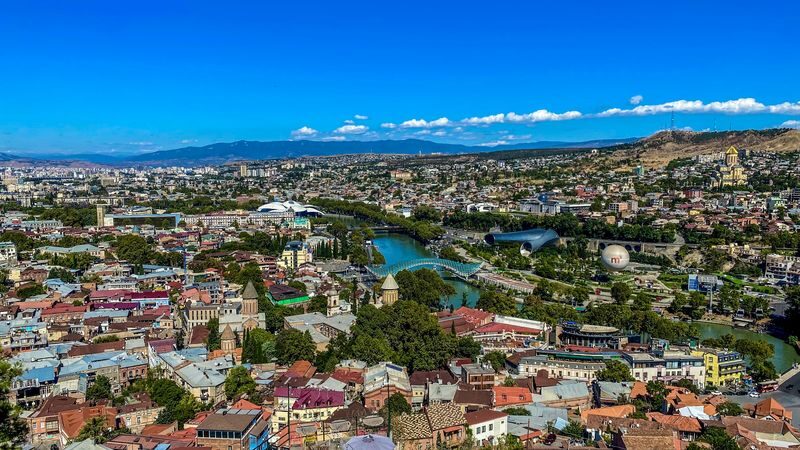
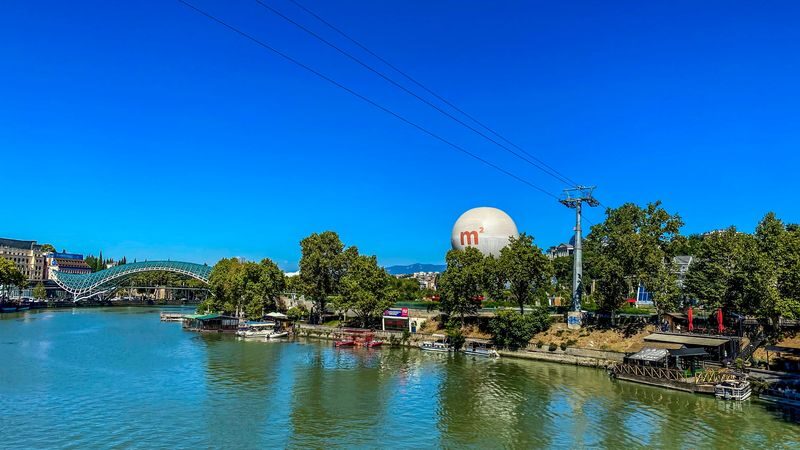
From Europe Square, the group continues through Rike Park, a green space beside the Mtkvari River with gardens, play areas and paths. It offers a breather between historical stops and a chance to see how the city uses its riverfront.
The cable car is one of the tour’s most appealing inclusions. It carries you above the city toward the Mother of Georgia area, where you can pause for panoramic views. For a first visit, that change in scale is valuable: the old lanes below become easier to place against the wider city.
At the top, the group stops by the Mother of Georgia statue. The figure is presented as a symbol of Georgian spirit, and the overlook is a natural place to take photos. The visit is short, so enjoy the view while you have it rather than expecting a long break.
The cable car is weather dependent. It may not run in windy conditions, and the tour’s schedule can change with weather or traffic. If the ride is a major reason for booking, keep in mind that it cannot be guaranteed in every condition.
Crossing the Bridge of Peace into the old quarter
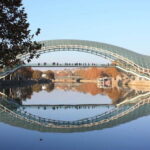
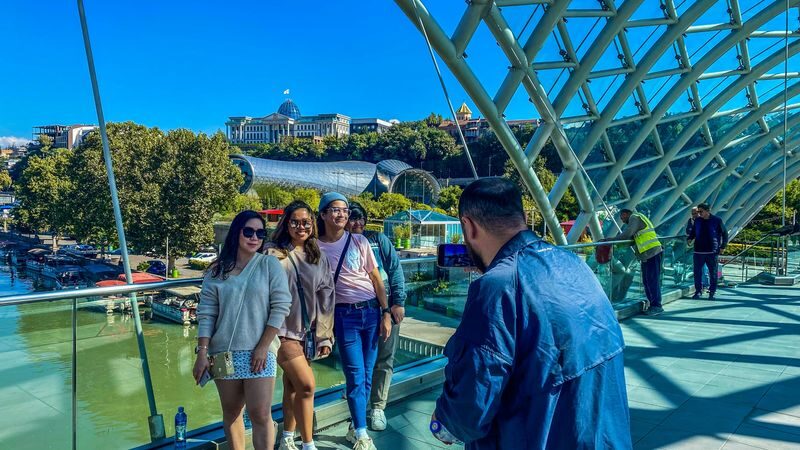
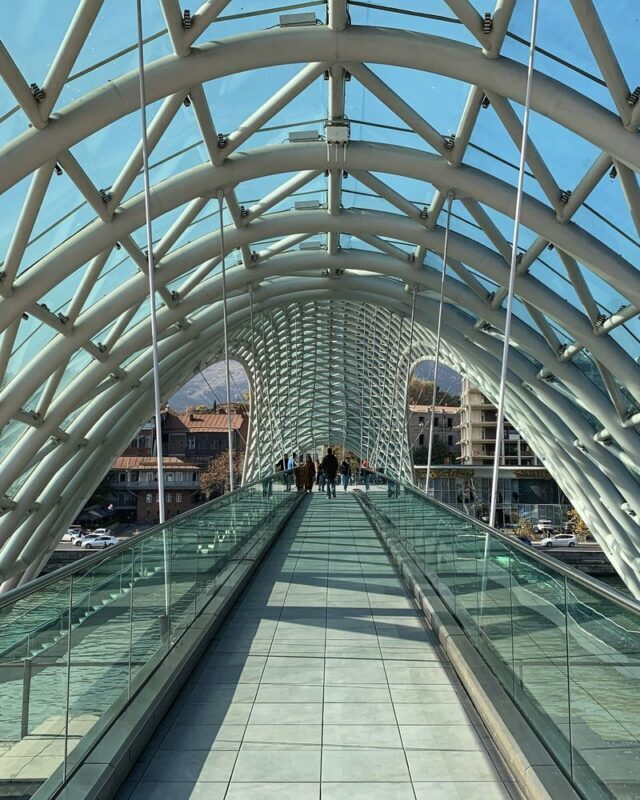
The Bridge of Peace links the riverside area with the old part of Tbilisi. Its modern design makes a sharp contrast with the churches and older lanes later in the walk. The guide uses it to talk about the city’s mix of old and new, while you cross between the two.
The route then passes the Patriarchate of Georgia, the headquarters of the Georgian Orthodox Church. This is an exterior stop focused on the institution and the building’s traditional Georgian style. As with the churches on the route, be respectful around religious sites and follow the guide’s directions.
Anchiskhati Basilica is one of the key historic stops. It is described as dating to the sixth century and is among Tbilisi’s oldest churches. The age and continuing religious role make it more than a photo stop: it helps explain why Orthodox Christianity is central to the city’s history and public life.
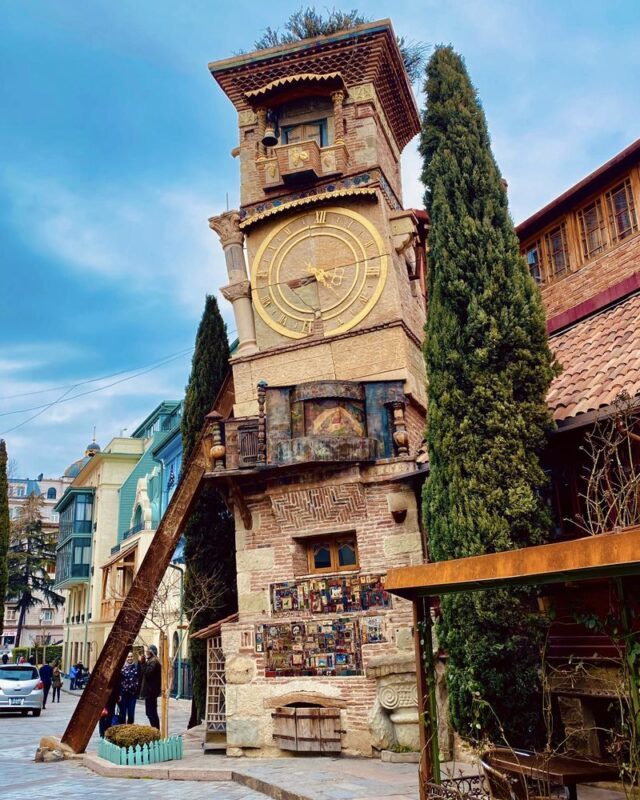
The Clock Tower, beside the Marionette Theater, brings a lighter note. Built by Rezo Gabriadze in 2010, it has a small angel that appears each hour to ring the bell with a tiny hammer. If your timing lines up, stay alert for the moment. The tower is easy to miss if you are focused on the next stop.
Churches, toast customs and a Georgian bakery bite
Sioni Cathedral adds another layer to the religious history of the old town. Its story reaches back to the sixth and seventh centuries, though the building was destroyed and rebuilt over time. That cycle of damage and restoration helps make the city’s history feel less like a neat timeline and more like a record of repeated upheaval.
Food comes next: traditional Georgian pie and lemonade are included. The tour does not promise a full meal, so have breakfast beforehand if you expect to need a substantial lunch. One version of the stop has included lobiani, a bean-filled Georgian bread, and sparkling lemonade. The exact pie or drink may vary, but the bakery pause is a welcome chance to sample something local rather than simply pass another landmark.
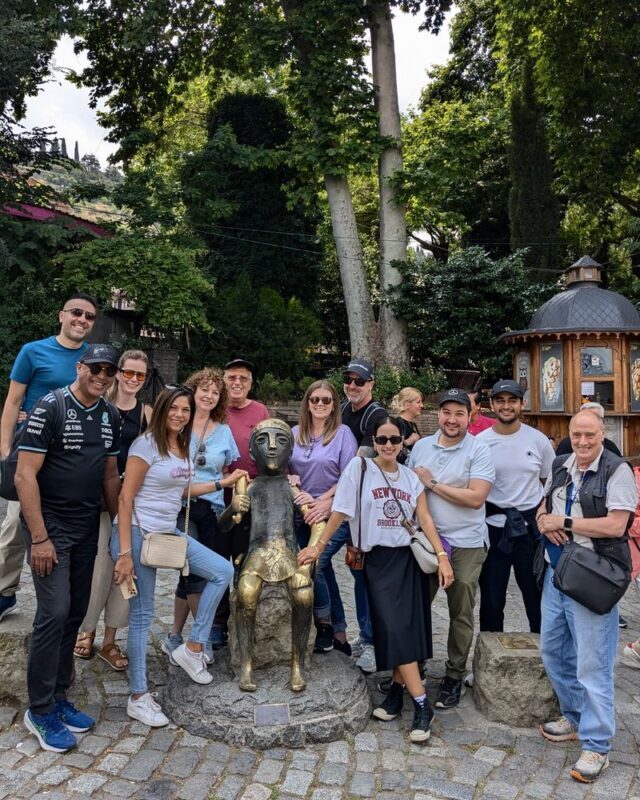
The Tamada, or toastmaster, statue introduces a Georgian social custom. A tamada leads the toasts at a gathering, and the guide explains the role and its place in celebrations. It is a small stop, but it offers a useful cultural detail that a walk focused only on buildings could easily miss.
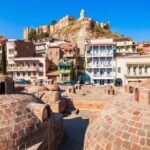
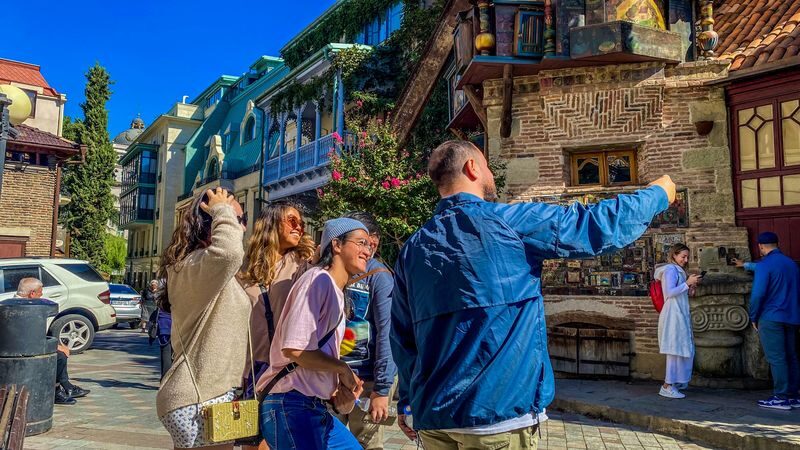
Jan Shardeni Street is a renovated lane in the old town, and the group passes through on the way toward Abanotubani. The street is a popular part of the route, but the tour is not designed as a shopping visit. If you want time to browse cafés or shops, return after the guided walk.
Abanotubani and the walk to Leghvtakhevi Waterfall
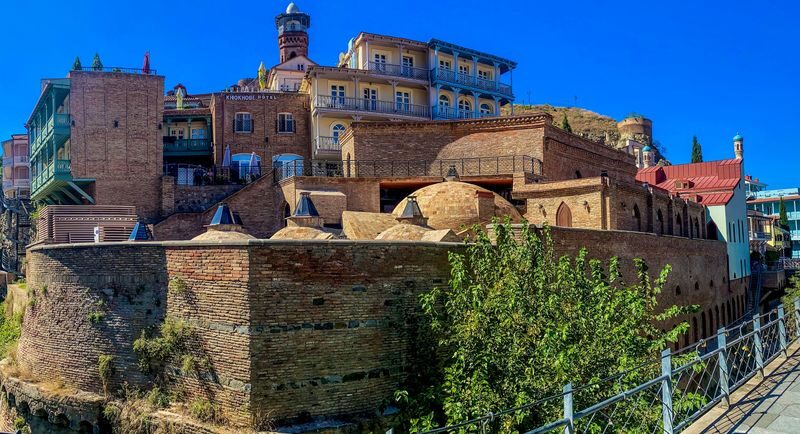
Abanotubani means bath district, and it is one of the oldest parts of Tbilisi. The sulfur baths are a defining feature of this neighborhood, and the route ends nearby. The guide introduces the district, but do not assume that a bath visit is included. Entry and spa sessions are not part of the stated package.
Leghvtakhevi Waterfall is the final scenic stop. The route follows the gorge and crosses the Bridge of Love, with the waterfall offering a quieter change from the streets and squares earlier in the day. It is a good place to take photos, though access can be affected by conditions or renovation work.
The tour ends at Meidan Bazar, near the bath district, rather than returning to Avlabari. This is handy if you want to stay in the old town for lunch or continue exploring. If you hope to book a sulfur-bath session afterward, arrange it in advance: bath rooms may require reservations, and the walking tour does not include one.
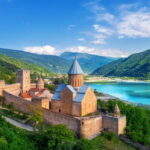



How the guide shapes the day
The strongest part of this experience is often the guide’s ability to make a sequence of landmarks feel connected. Guides named on this tour include Elle, George, Nini, Tato, Patti, Tamara, Lali, Misho and others. The guide you get depends on the date, but the format puts the guide at the center of the experience.
The tour is conducted in English, and the group size is listed as one to 15 participants. A small group can make it easier to ask questions and hear explanations. If several bookings create a larger party, groups may be split and led by different guides, so the pace and level of detail can vary.
Guides are frequently praised for warmth, clear explanations and an easy manner. Elle, for example, has been singled out for making the tour engaging for families, while Patti and Tato have been praised for storytelling and group connection. This is not a guarantee of a particular guide, but it gives you a sense of the tour’s strongest feature: human interpretation, not elaborate staging.
There is a trade-off. With so many stops in about four hours, some explanations and photo breaks may feel brief. One account of the walk ran shorter than expected, while another took closer to five hours. The stated schedule is 10 a.m. to 2 p.m., but the day can shift with traffic, weather and conditions at individual sights.
Is the route comfortable, and what should you bring?
This is a walking tour through old streets, with cobblestones and several hours on your feet. Comfortable shoes matter more than a polished outfit. The route is not wheelchair or stroller accessible, and the activity is not recommended for people with certain medical conditions, including high blood pressure or epilepsy.
The tour operates in all weather, so dress for the forecast. In hot weather, the walk can feel tiring, and in rain or cold you will want suitable layers. Bring water if you like having your own supply, even though food and a drink are included.
Children must be at least five years old, and those aged five or older pay the adult rate. The group format suits solo visitors, couples and families with older children who are comfortable walking and listening to guided explanations.
Does the price make sense?
The advertised starting price is around $21.85, while a package option is also shown from $19. Prices can vary, so check the amount for your date before booking. For a half-day outing, the value comes from the guide, cable car ride, food tasting and the number of central sights covered, not from any single stop.
The included pie and lemonade are a modest extra, not a substitute for lunch. Tips are not included, and neither are any spa sessions or other purchases. Even so, combining the cable car and a guided walk at this price can be an economical way to get your bearings, especially if you would otherwise arrange the route and ride separately.
The tour’s practical value is strongest at the start of a Tbilisi stay. You leave with a basic understanding of the city’s layout, a list of places to revisit and some context for its churches, monuments and bath district. It will not cover every important sight, and it is not a deep study of any one site.
Who should book this Tbilisi walking tour?
Book it if you are new to Tbilisi, want a guided introduction, and enjoy seeing a city on foot. The mix of churches, riverfront, old lanes, the cable car and a bakery stop gives you a broad first impression without requiring you to plan each leg yourself.
It is also a sensible choice for solo visitors who want a structured outing and a chance to meet other people. If you prefer slow museum visits, long breaks or time inside every building, this is not the best fit. The schedule moves through many stops, and the depth depends partly on the guide and pace of the group.
For a smoother day, arrive early, wear walking shoes, eat breakfast and reserve a bath session separately if that is part of your plan. Book this tour as an orientation, not as the final word on Tbilisi. Its best use is to help you recognize the city’s landmarks, then return to the places that deserve more time.
Tbilisi Walking Tour Including Cable Car Ride and Traditional Bakery
“Thanks to the office team for the smooth, well-organised coordination. Our guide Gio was excellent. He was very knowledgeable and brought the city'…”
FAQ
Where does the tour meet?
Meet at Avlabari Metro Station at 9:45 a.m. for the 10 a.m. departure. A representative waits in front of the entrance holding an orange flag.
Where does the tour end?
The tour ends at Meidan Bazar, near the old town’s sulfur-bath district. It does not return to Avlabari Metro Station.
How long does the tour last?
The scheduled time is 10 a.m. to 2 p.m., or about four hours. The schedule may change because of traffic or weather.
Is the cable car ride included?
Yes. A cable car ride is included, but the cable cars may not operate in windy weather.
Are food and drinks included?
Yes. Traditional Georgian pie and Georgian lemonade are included. Tips and gratuities are not included.
What is the minimum age?
Participants must be at least five years old. Children aged five and older are charged the same rate as adults.
Can I use a wheelchair or bring a stroller?
No. The activity is not wheelchair accessible and is not suitable for strollers.