Tangier to Marrakech by way of the Sahara is a big trip in a short time. You’ll start among Tangier’s historic quarters, see Chefchaouen’s blue-painted lanes and Roman ruins at Volubilis, then cross the mountains to Merzouga for a camel ride at sunset before continuing to Marrakech.
I like two things especially: the route gives you a broad look at Morocco’s changing regions, and the private transport makes a packed itinerary more manageable. The desert night also adds something different from another hotel stop, with a camel trek, sandboarding and Berber music included.
The trade-off is the pace. You cover a lot of ground, and some stops are self-guided, so this suits you if you value variety and can handle long drives more than if you want slow mornings and lots of time in each place.
- Tangier’s old quarter and coast: See the Kasbah, Grand Mosque, Cape Spartel and Hercules Caves before heading inland.
- Chefchaouen on foot: A local guide leads you through the blue-washed town in the Rif Mountains.
- Roman ruins and imperial cities: Explore Volubilis and Meknes, then spend two nights in Fes.
- A Sahara camp night: Ride a camel at sunset, try sandboarding and hear Berber drumming and music.
- A scenic route to Marrakech: Pass Todra and Dades Gorges, the Valley of Roses and Ait Ben Haddou.
- From Tangier’s Kasbah to Chefchaouen’s blue lanes
- Volubilis, Meknes and the road to Fes
- Fes medina: medersas, mosque entrance and souks
- Crossing the Middle Atlas to Merzouga
- Todra and Dades Gorges after the desert
- Valley of Roses and Ait Ben Haddou before Marrakech
- What the private format and price mean
- Is this the right six-day Morocco route for you?
- FAQ
- Where does the tour start and end?
- How long is the tour, and what time does it depart?
- Which nights are included?
- Are meals included?
- Which activities are included in the desert?
- Are local guides included at each stop?
From Tangier’s Kasbah to Chefchaouen’s blue lanes
The tour begins with pickup at your Tangier accommodation, airport or port. A 9:30 departure is offered, though the operator confirms your pickup time in advance. Your morning in Tangier is listed as self-guided, so plan to explore the Kasbah, Grand Mosque, Cape Spartel and Hercules Caves at your own pace rather than expect a local guide to lead this first visit.
That gives you some freedom, but it also means you should keep an eye on the clock. The route continues to Chefchaouen after lunch, and the schedule may change with traffic or weather. If there is one Tangier sight you care most about, ask about the available time before you set off.
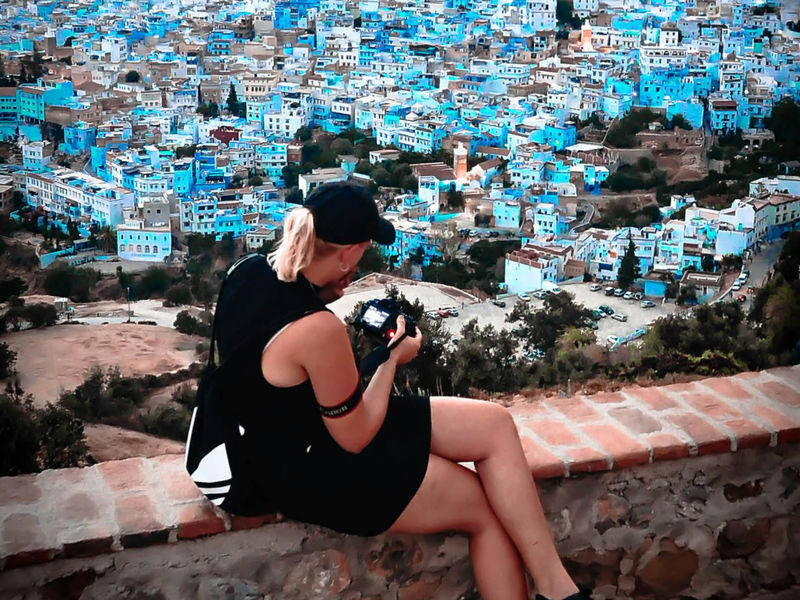
Chefchaouen is the first major change of scene. Its blue-washed lanes and Rif Mountain setting offer a gentler counterpoint to Tangier’s port-city feel. A local guide is included here, which can help you make sense of the town’s layout and history as you walk. You’ll overnight in a local hotel.
The stop is appealing, but it is not a long stay: you arrive after spending part of the day in Tangier and travel onward the next morning. If you want hours to browse, photograph side streets and linger over a meal, consider how much the six-day schedule can realistically allow.
Volubilis, Meknes and the road to Fes
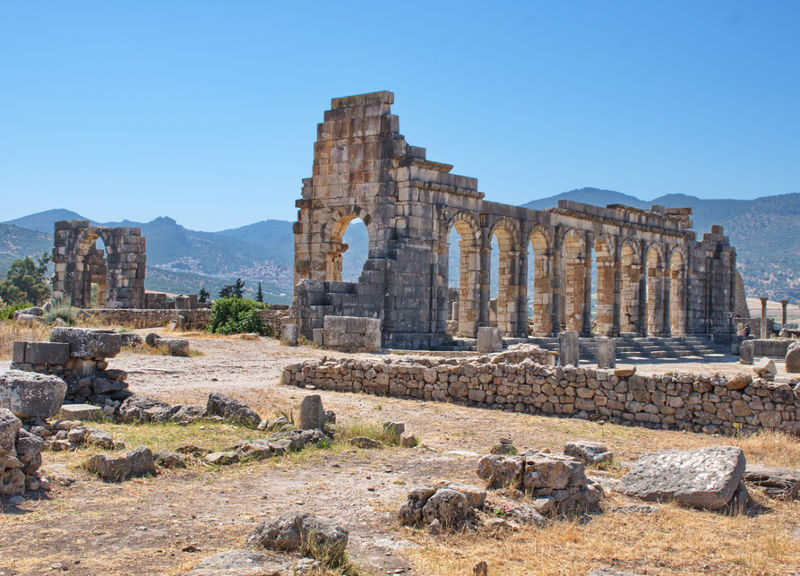
Day two pairs Roman remains with one of Morocco’s imperial cities. At Volubilis, you can walk among the remains of an ancient Roman settlement and see mosaics and other well-preserved features. The visit is self-guided, so bring your curiosity and comfortable shoes; the value here is having time to look closely rather than simply passing the ruins from the road.
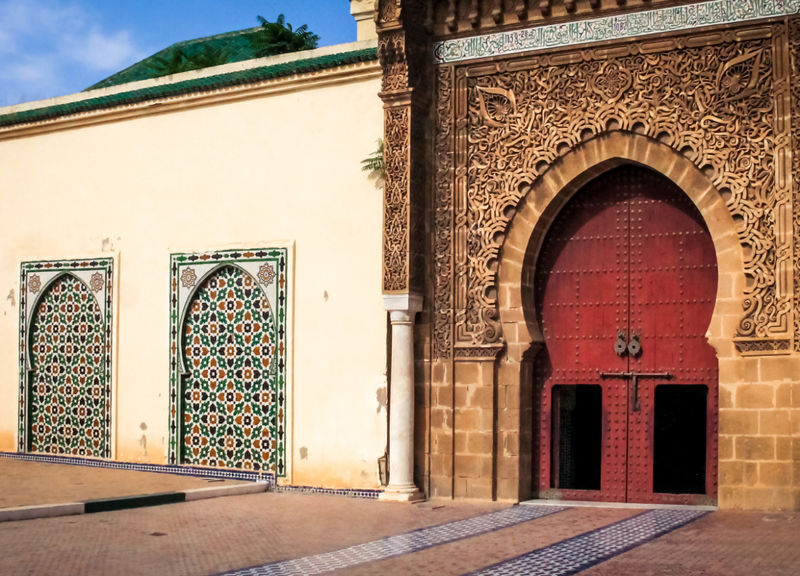
From Volubilis, the tour continues to Meknes. Stops include Bab El Mansour and the Mausoleum of Moulay Ismail, with time to explore the medina. This combination gives you a useful contrast: Roman-era remains outside town, then the grand gates and urban history of an imperial Moroccan center.
The day ends in Fes, where you check into a traditional riad. It is a busy sequence, and you should expect the stops to be shaped by the drive between them. The tour does not specify how long you’ll have at each site, so ask your driver if you want to prioritize a particular monument.
Fes medina: medersas, mosque entrance and souks
Day three is the tour’s full day in Fes, with a local guide. The planned sights include Fes El Bali, the medieval medina, Bou Inania and Attarine Medersas, the entrance to Qarawiyyin Mosque, Nejjarine Fountain and the souks. With a guide, the tight lanes and layered history are easier to follow than they would be if you were simply handed a map and sent off.
The mix matters. Medersas offer a look at historic religious education and architecture; the fountain and souks show how the medina works as a place of daily life, not just a collection of monuments. The Qarawiyyin stop is specified as an entrance visit, so don’t assume the tour includes access to every interior.
You return to the riad for the night. Two nights in Fes give you more time here than in most places on the route, though the tour still keeps you moving. If you enjoy guided walks and close-packed old streets, this may be one of the most rewarding days. If you prefer to explore independently, ask how much free time the guide leaves.
Crossing the Middle Atlas to Merzouga
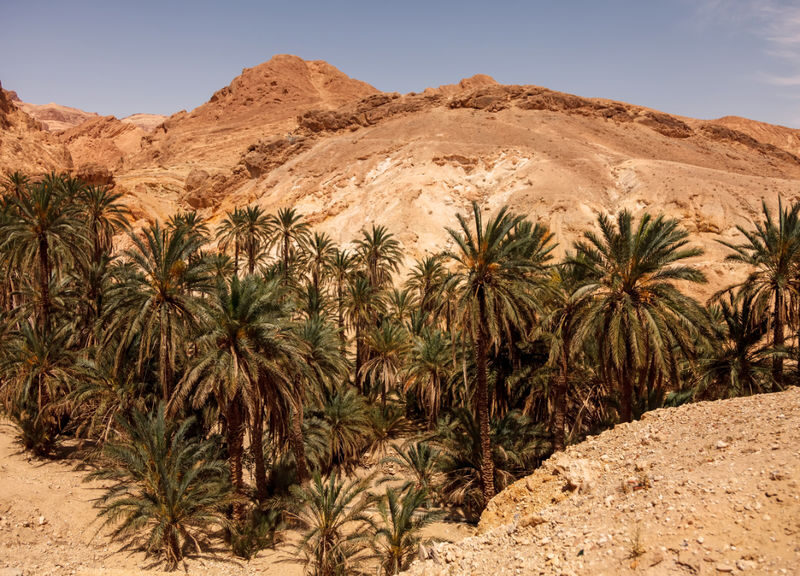
Day four is a long transition from Fes toward the Sahara. The route passes through Ifrane, Midelt and the Ziz Valley, with changing scenery along the way. Ifrane is associated in the itinerary with cedar forests; Midelt brings a mountain setting, while the Ziz Valley is noted for its palm groves.
The day’s appeal is the shift in terrain, not a long stay in any one town. You’ll spend substantial time in the vehicle, so pack water, sun protection and anything you need close at hand. The private van helps make the transfer more comfortable and flexible than a large group coach, but it cannot make a long road day short.
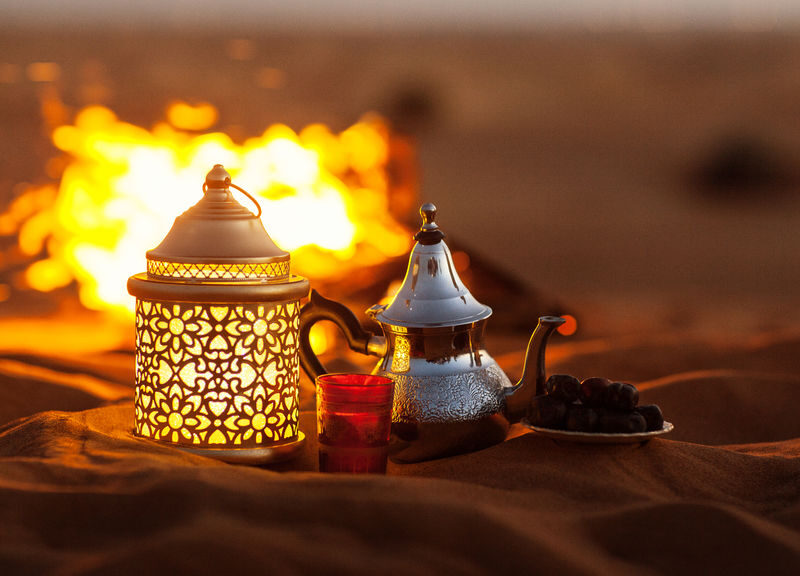
On reaching Merzouga, you head into the Sahara by camel for sunset. The tour includes sandboarding as well, followed by a night at a desert camp. Berber drumming and music are part of the evening, and the camp lists warm toilets and showers plus Wi-Fi. A 4WD transfer brings you from the camp to the meeting point with your driver at sunrise.
That overnight is a clear highlight for anyone who wants more than a roadside desert photo. You get time among the dunes and a proper camp stay, while the sunrise transfer keeps the next morning moving. The word luxury is used for the camp, but standards can mean different things; the practical details supplied are warm toilets, showers and Wi-Fi, not a full room-by-room description.
Todra and Dades Gorges after the desert
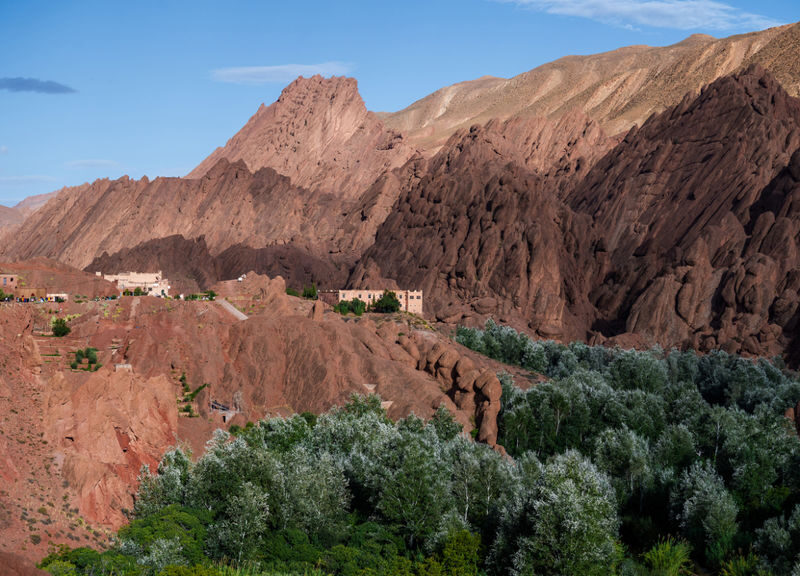
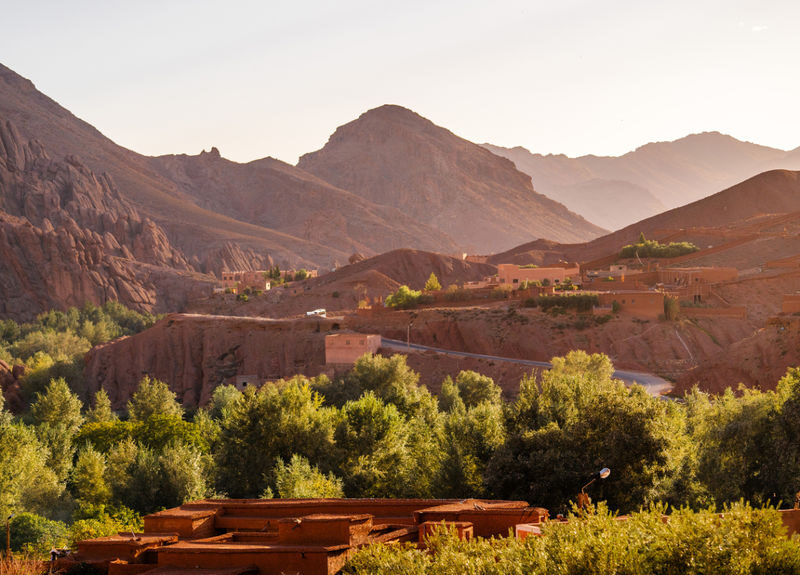
Day five takes you from Merzouga via Erfoud to Todra Gorges, then onward to Dades Gorges. Both visits are self-guided. At Todra, the draw is the steep rock walls; Dades offers another stretch of rugged scenery, with a night in a traditional guesthouse.
These stops break up the desert transfer and give you a chance to stretch your legs in striking natural settings. The details do not specify guided walks, hiking distances or time at either gorge, so treat them as scenic visits rather than a promise of a structured trek. If you have mobility or footwear concerns, ask the operator what walking is expected.
You’ll stay in a guesthouse rather than a city riad. That change of lodging fits the route’s focus on passing through different parts of Morocco, but it also means the night is part of a transit day, not a base for extended exploration.
Valley of Roses and Ait Ben Haddou before Marrakech
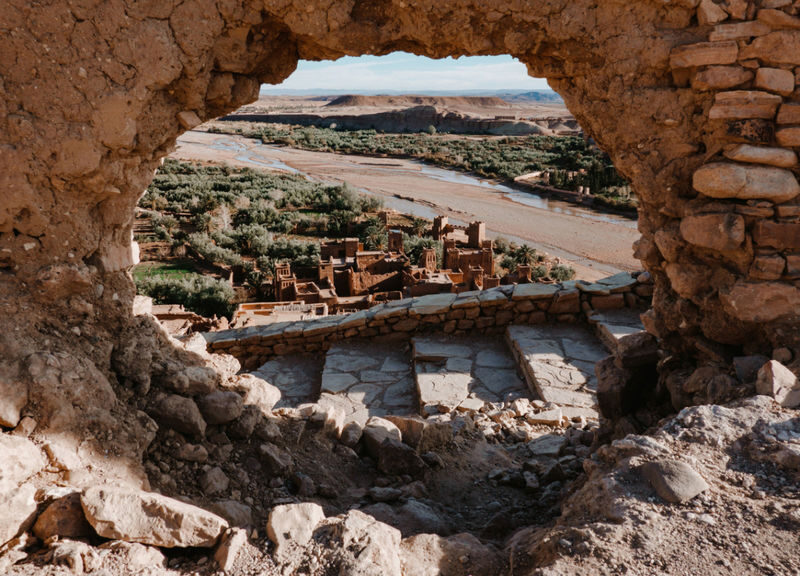
On the final day, the route leaves Dades and passes through the Valley of Roses before reaching Ait Ben Haddou. The kasbah is a UNESCO World Heritage site and one of the most recognizable stops on the drive to Marrakech. The itinerary includes a guided visit, but a local guide at Ait Ben Haddou is not included, so clarify who will lead the visit and what is covered.
This is a full day of road travel and sightseeing, ending in Marrakech. The listed return time is around 17:00, though the exact timing can vary with the departure time, traffic and weather. You finish at a hotel or personal address in Marrakech, making this a practical way to connect a Tangier arrival with a Marrakech stay without arranging each transfer yourself.
Ait Ben Haddou is a fitting final stop: it brings together architecture, history and the southern route’s dry, open scenery. Still, don’t count on a leisurely afternoon in Marrakech on arrival day. The tour’s priority is getting you there after a series of stops.
What the private format and price mean
The trip is private, with van options listed for groups of four or seven. That can be good value if you are traveling with family or friends: the transport and schedule are organized around your party rather than a larger shared group. The driver is a key part of the experience, since the route involves repeated long transfers and needs steady coordination.
Professional driver-guide language options listed include English, Spanish, Arabic and French. Local guides are included in Fes and Chefchaouen. Breakfast and dinner are included, along with five nights of accommodation: four nights in traditional hotels or riads and one in the Merzouga desert camp. Lunches, tips and personal expenses are extra.
The supplied prices are not consistent: one headline gives a starting price of $1,131.55, while a package option says US$855.65. The basis for the difference is not specified, so check the current price, group size and exact package at booking rather than assuming either figure is the final cost for your party. For a six-day private route with transport, five nights, some meals, local guides and desert activities, the value depends heavily on how many people share the van and what the live price includes.
A detailed five-star assessment describes the schedule as carefully planned and the driver as kind and reliable. Those are exactly the qualities that matter on this itinerary, though one account cannot guarantee the same experience on every departure. The operator has 17 total reviews and an 88 percent good-review rate, useful context but a modest sample.
Is this the right six-day Morocco route for you?
Book this tour if you want to connect Tangier and Marrakech while seeing several distinct parts of Morocco, and you are comfortable with a brisk pace. It suits first-time visitors who value included transport, a guided Fes walk, a guided Chefchaouen visit and a desert camp night more than long stretches of unscheduled free time.
Think twice if you want to spend several days in one city, choose every stop yourself or avoid lengthy drives. You’ll also need to budget for lunches and tips, and remember that several visits are self-guided. Bring a passport or ID, comfortable clothes, sunscreen, sunglasses, a hat and a camera.
For a small group, the private format can make an ambitious route feel manageable. Before booking, confirm the actual price, pickup time, language arrangement and what the Ait Ben Haddou visit includes. If those details suit you, this is a practical way to cross the country with the Sahara as the centerpiece.
Tangier to Marrakech 6-Day Private Desert & Cultural Experience
“Honestly, I was a little skeptical at first but this turned out to be my most memorable travel experience. The itinerary surgically planned and the…”
FAQ
Where does the tour start and end?
Pickup is available from your accommodation, the airport or the port in Tangier. The tour ends in Marrakech at a hotel or personal address.
How long is the tour, and what time does it depart?
The tour lasts six days. A 9:30 departure is offered, but the operator confirms your pickup time in advance.
Which nights are included?
The package includes five nights: four in traditional hotels or riads and one in a luxury camp in the Merzouga desert.
Are meals included?
Breakfast and dinner are included. Lunches and personal expenses are not included.
Which activities are included in the desert?
The package includes a sunset camel trek, sandboarding, Berber drumming and music, and a 4WD sunrise transfer from the camp to the meeting point with your driver.
Are local guides included at each stop?
Local guides are included in Chefchaouen and Fes. A local guide in Ait Ben Haddou is not included.