Angkor at sunrise is the draw here: you reach Angkor Wat before dawn, watch its lotus-shaped towers catch the morning light, then explore the temple before the day gets away from you. I like the mix of close-up temple time and cycling between sites, and I like that breakfast is cooked fresh by a private chef at a quiet picnic spot rather than squeezed into a stop at a busy café.
One point to weigh: this is an early start, and the full morning includes both temple visits and cycling. The exact group size, ticket arrangements, and price are not specified here, so confirm those details before booking. A past departure had guide Muen Tuy and patient tuk-tuk driver Mr. Kim Shen, but you should not assume they will lead every tour.
- Key points before you book
- Sunrise gives Angkor Wat a different feel
- Breakfast is a real pause, not just a refueling stop
- Cycling links the temples and changes the pace
- Bayon’s faces reward a slower look
- Ta Prohm brings the jungle into the story
- What the tuk-tuk service adds
- Is the tour good value?
- Who will enjoy this morning most?
- Should you book it?
- FAQ
- Where does the tour take place?
- What time does the tour start?
- Which temples are included?
- How do you travel to the temples?
- Is breakfast included?
- What is special about the breakfast stop?
- Who may guide the tour?
- When does the tour return to Siem Reap?
- Is the Angkor entry ticket included?
- The Best Of Siem Reap!
- More Private Tours in Siem Reap
- More Tours in Siem Reap
- More Tour Reviews in Siem Reap
- Not for you? Here's more nearby things to do in Siem Reap we have reviewed
Key points before you book
 1 / 2
 2 / 2
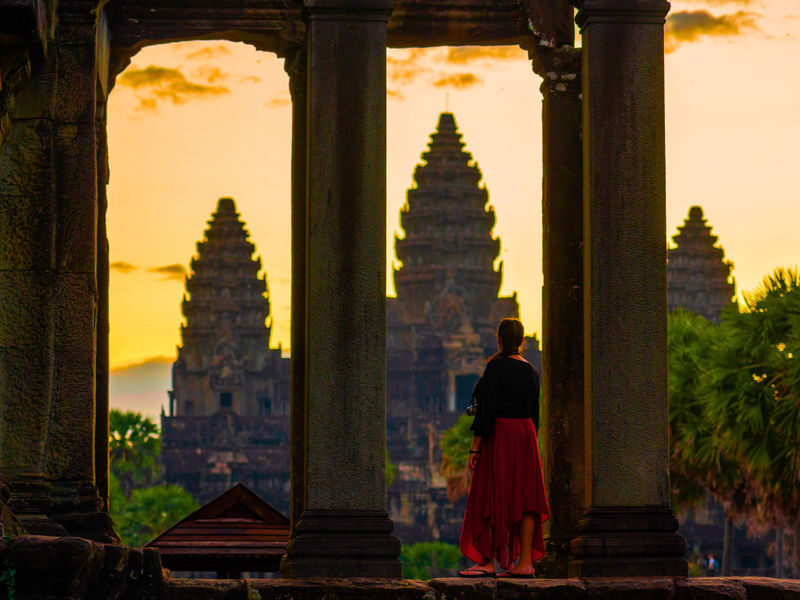
- Angkor Wat before dawn: The tour begins early enough to see sunrise over the temple’s distinctive towers.
- A private jungle breakfast: A chef prepares a fresh meal at a picnic site reserved for Discova guests.
- Three very different temples: Angkor Wat’s carvings, Bayon’s smiling faces, and Ta Prohm’s trees give the morning variety.
- Tuk tuk and bicycle travel: You ride from Siem Reap by traditional Cambodian tuk tuk, then cycle gentle park roads between temple stops.
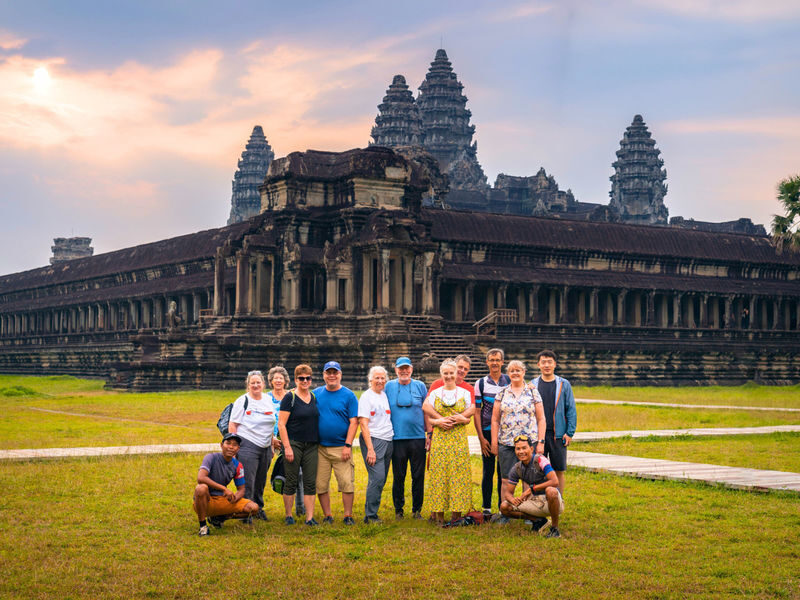
- A strong guide can make the history click: On one tour, Muen Tuy helped a guest learn about the temples, while driver Mr. Kim Shen kept the tuk-tuk ride patient and cold water close at hand.
- Plan for a morning, not a leisurely start: The tour begins before dawn and is expected to return to Siem Reap around midday.
👉 See our pick of the 25 Best Guided Tours In Siem Reap
Sunrise gives Angkor Wat a different feel
The day starts before dawn in Siem Reap, with a tuk-tuk ride toward Angkor Wat. That early departure is not a small scheduling detail. It is what makes the sunrise portion possible, and it means you will want to be ready for an early morning rather than hoping to ease into the day over breakfast at your hotel.
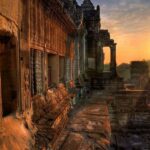
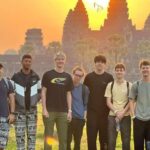
Angkor Wat’s lotus-shaped towers are the first big sight. Watching the light come up over them gives you a few quiet minutes to take in the scale of the temple before turning your attention to its halls and carved walls. The soft morning light also makes this a rewarding time to look closely at the stonework.
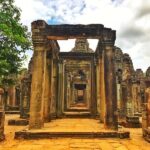
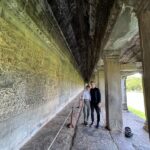
Inside, your guide leads you through corridors and past intricate bas-reliefs. The carvings are more than decoration: they give the temple a visual record of the Khmer Empire and a way to connect the building to the people and beliefs behind it. A guide matters here. Without context, it is easy to pass elaborate scenes without knowing what you are looking at; with an explanation, the walls become part of the visit rather than just a backdrop.
Angkor Wat is also a UNESCO World Heritage Site, but the label alone does not explain why it holds your attention. Its scale, towers, corridors, and carved surfaces offer several ways to read the place. You can admire the architecture from a distance, then slow down and notice the details as you move through the temple.
There is a trade-off to the sunrise start. You get the temple in early light, but you also need to be willing to give up a slow morning. If you prefer late starts or want to spend a long stretch at each site, this compact route may feel brisk. If you are happy to begin early and see several major temples in one outing, the timing makes good sense.
You can also read our reviews of more private tours in Siem Reap


Breakfast is a real pause, not just a refueling stop
After Angkor Wat, the tour takes you to a hidden picnic site prepared for Discova guests. A private chef cooks a fresh jungle breakfast there, giving you a chance to sit down in a natural setting before the next temples. The quiet meal is a useful change of pace after the early start and the first stretch of exploring.
This is one of the tour’s more distinctive touches. The morning is not only a sequence of monuments and transfers; it includes time to stop, eat, and reset. A prepared meal can be especially welcome when you have started before sunrise, and the private setting offers a calmer contrast to the grand temple spaces.
The exact breakfast menu is not specified, so do not book with a particular dish in mind. The useful promise is that a private chef prepares a fresh breakfast at the picnic site. If you have dietary needs, ask about them before booking rather than assuming the meal can be adjusted.
I also like the way the breakfast fits into the route. It breaks up the morning between Angkor Wat and the cycle to the next temples, instead of leaving you to figure out where to eat on your own. That convenience is part of the value, though the tour’s price is not provided here, so you will need to compare the cost with what is included when you check the booking details.
Cycling links the temples and changes the pace
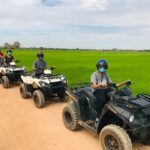
After breakfast, you cycle along gentle roads through the Angkor park to Bayon and Ta Prohm. That change from tuk tuk to bicycle makes the travel itself part of the day. You move through the park under your own power, rather than spending every transfer seated in a vehicle, and the route joins the temple visits into one continuous morning.
The roads are described as gentle, which suggests the cycling is intended as an accessible way to cover the connections, not a strenuous ride. Still, cycling is a meaningful part of the experience, so consider your comfort on a bike before booking. The details provided do not specify the distance, bicycle type, or whether you can opt out of a cycling segment. Ask the operator if any of those points could affect your decision.
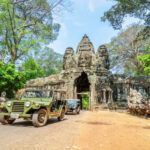
The combination of tuk tuk and cycling is also a practical distinction. The tuk tuk brings you from Siem Reap to the temples, while the bicycle is used on park roads between stops. A traditional Cambodian tuk tuk adds a local mode of transport to the morning, though the ride itself is not the main event. The temples are.
Bayon’s faces reward a slower look
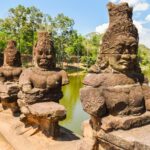
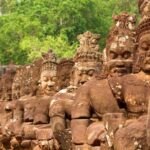
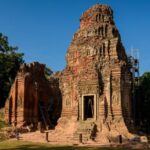
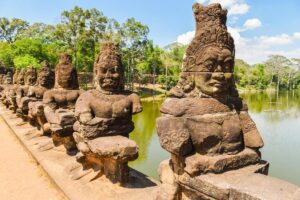
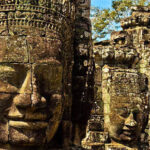
Bayon is known for its smiling faces, a striking contrast with Angkor Wat’s long corridors and bas-reliefs. The faces give the temple a strong visual identity, and they are easy to remember even after a morning filled with major sights. A guide can help you look beyond the first impression and place the temple within the wider story of the Khmer Empire.
A past visitor singled out guide Muen Tuy for explaining the history well and making the day educational. That is a good sign of what a guide can add at Bayon, where the faces are immediately engaging but the historical context is less obvious from appearance alone. Muen Tuy’s name is worth noting if you happen to see him listed, but guide assignments can vary.
Because this is a multi-stop tour, you should expect the visit to Bayon to fit into a larger morning rather than stand alone as a lengthy exploration. If Bayon is your main interest, or you prefer to spend hours at one temple, check how much time the tour allows at each stop. The supplied details do not give exact visit lengths.
Ta Prohm brings the jungle into the story
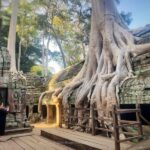
Ta Prohm offers a markedly different mood. It is known for its trees and jungle-covered setting, so the temple feels closely bound to its surroundings. After Angkor Wat’s carved corridors and Bayon’s faces, this stop adds a more enclosed, overgrown atmosphere to the route.
That variety is a strength of the tour. You see three famous sites, but they do not simply repeat the same visual experience. Angkor Wat draws you to its scale and carved walls; Bayon focuses attention on its smiling faces; Ta Prohm brings trees and stone into the same frame. For a first visit to Angkor, that range helps you understand why the temple complex is more than one iconic building.
The practical limit is the same as at Bayon: the tour visits several places in one morning. You may have to choose between taking time for photographs, listening to your guide, and looking around on your own. If you want a slow, detailed visit at Ta Prohm, check the planned time on site before booking.



What the tuk-tuk service adds
The tuk tuk is more than a transfer from point A to point B. It gives the morning a distinctly Cambodian mode of travel and takes you from Siem Reap toward the temple area before the cycling portion begins. A guest on one departure praised driver Mr. Kim Shen for being patient and noted that cold bottled water was available throughout the tour.
That water detail is worth keeping in mind. Staying hydrated is useful on a morning that combines temple walking and cycling, and having cold water ready removes one small task from your day. The information available does not specify how many bottles are provided, so bring any additional water you know you will need.
The driver and guide play different roles. The guide helps you understand what you are seeing, while the tuk-tuk driver manages the transport. On the departure with Muen Tuy and Mr. Kim Shen, both parts of the experience were appreciated. Those names add a human detail to the tour, but they are not a guarantee of who will be assigned to your date.
Is the tour good value?
There is no price provided here, so I cannot tell you whether this tour is cheaper or more expensive than another Angkor option. I can tell you what gives it value: early access to Angkor Wat, a guide for the temples, a private chef-prepared breakfast, tuk-tuk transport, cycling on park roads, and visits to Bayon and Ta Prohm in one morning.
Those elements make the tour a convenient way to see several headline temples without arranging each transfer and meal yourself. The breakfast is a particular plus if you value a planned pause in a peaceful setting. The guide’s explanations can also make the temple visits more rewarding than simply walking through on your own.
Before you decide, check what the listed price includes, especially the Angkor entry ticket. The information here does not say whether admission is included. Also confirm group size, bicycle arrangements, and how much time you will have at each temple. These details can affect value as much as the headline price.
The provider, Discova Southeast Asia, has a 98 percent good review rate across 131 total reviews. That is encouraging as a broad service indicator, but it is not the same as a large sample of feedback on this exact tour. The tour itself has a 5 out of 5 rating based on one review, which is too small a sample to treat as a firm measure of consistency.
Who will enjoy this morning most?
I would look closely at this tour if you are in Siem Reap for a short stay and want to see Angkor Wat, Bayon, and Ta Prohm in one outing. The mix of a guided visit, tuk tuk transport, cycling, and a cooked breakfast creates a more structured morning than arranging each piece independently.
It also suits you if you enjoy learning while you look. The positive account of Muen Tuy’s historical explanations points to the guide’s role as a real part of the experience, not just someone leading you from one building to another. The combination of history and time outdoors gives the morning several different gears.
It may be less suitable if you dislike very early starts, do not want to cycle, or prefer long, unhurried visits at each temple. The itinerary returns around midday, so it is a concentrated visit, not a full day devoted to one site. And since the precise cycling details and temple stop lengths are not stated, ask before booking if those details matter to you.
Should you book it?
Book this tour if sunrise at Angkor Wat is high on your list and you like the idea of combining three major temples with a private breakfast and some cycling. The strongest reasons are the variety of the route, the chance to see Angkor Wat in early light, and the practical help of a guide and driver.
Pause before booking if you want to sleep in, avoid bicycles, or spend a long time at each temple. Confirm ticket inclusion, group size, cycling arrangements, and the time allotted at Angkor Wat, Bayon, and Ta Prohm. If those details suit you, this is a thoughtful way to make a memorable morning of Angkor without turning it into a day of transport planning.
Siem Reap Angkor Wat, Bayon and Ta Prohm Temples Private Tour
“I had great time today touring Angkor Wat, Ta Phrom and The smiling faces f Banyon Temple with tour guide Muen Tuy he is well in tuned witb history…”
FAQ
Where does the tour take place?
The tour is based in Siem Reap, Cambodia, and visits Angkor Wat, Bayon, and Ta Prohm.
What time does the tour start?
It starts before dawn so you can reach Angkor Wat for sunrise. An exact departure time is not specified.
Which temples are included?
The tour visits Angkor Wat, Bayon, and Ta Prohm.
How do you travel to the temples?
The tour uses a traditional Cambodian tuk tuk for travel from Siem Reap. It also includes cycling on gentle park roads between temple stops.
Is breakfast included?
A private chef prepares a fresh jungle breakfast at a picnic site reserved for Discova guests.
What is special about the breakfast stop?
It is a hidden picnic site prepared for Discova guests, where a private chef cooks breakfast in a natural setting.
Who may guide the tour?
On one departure, the guide was Muen Tuy and the tuk-tuk driver was Mr. Kim Shen. The information provided does not confirm that they lead every departure.
When does the tour return to Siem Reap?
The tour is expected to return around midday.
Is the Angkor entry ticket included?
The ticket arrangement is not specified here. Confirm whether admission is included before booking.