
On Henley Street, Shakespeare’s Birthplace is a modest family home with a large cultural shadow. You move through rooms associated with the playwright’s early life, see a glove-making workshop linked to his father, and finish in a garden where costumed actors perform scenes from his plays.
I like two things here: the house makes Tudor family life feel close and domestic, and the short live performance gives Shakespeare’s words a welcome voice after the displays. The staff are available to explain objects and offer brief presentations, which can add useful context as you go.
The main caveat is scale. This is a small house and much of the interpretation comes through written text, so it may feel slight for the price, especially if you are making a long trip from London just for this stop.
- A family home, not a grand museum: The rooms are the focus, with a close look at the domestic setting associated with Shakespeare’s childhood.
- A glimpse of Tudor work: The glove-making workshop recalls the trade of Shakespeare’s father, John, and the world young William would have known.
- Staff add context: You can ask questions and hear short presentations in the rooms.
- The garden brings the plays to life: Costumed actors perform short scenes, a lively change from reading display text.
- Plan for a short visit: Allow 1 to 2 hours, and arrive 15 minutes before your timed entry.
- Check access needs in advance: The upper floor requires 17 stairs, and powered wheelchairs and mobility scooters cannot enter.
- What the Henley Street house can show you
- Entering through the Visitor Reception
- Moving room by room through Tudor family life
- The glove-making workshop and John Shakespeare
- Staff explanations and display objects
- A garden performance to end the visit
- How long to allow and how to pace it
- What the ticket costs and what value means here
- Access, children, and practical limits
- Who should book Shakespeare’s Birthplace?
- FAQ
- How long does a visit to Shakespeare’s Birthplace take?
- Where is Shakespeare’s Birthplace?
- What does the ticket include?
- Do I need to arrive at a specific time?
- Can I show my ticket on my phone?
- Are there performances during the visit?
- Is the house wheelchair-accessible?
- Can children visit?
- Can I bring an assistance dog?
- Is there somewhere to store luggage?
What the Henley Street house can show you
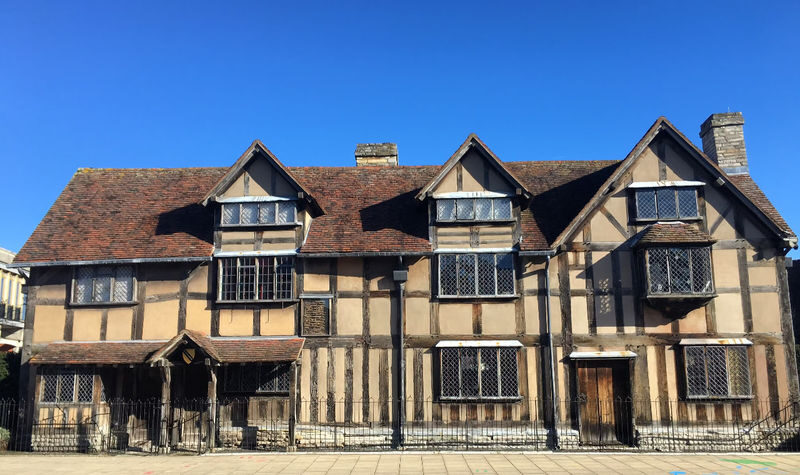
Shakespeare’s Birthplace is a historic home first, and a literary attraction second. The appeal lies in standing inside a place associated with the playwright’s early years and considering the everyday life that surrounded him. These rooms are not a stage set for a full biography. They offer a more contained visit, built around the house, its family stories, and the objects and interpretation placed within it.
That distinction matters when you decide whether to go. If you want a broad account of Shakespeare’s career, the house alone may not satisfy you. If you are curious about the family and domestic world behind the name, the rooms give that question a physical setting.
The visit also links William to his father, John, through a glove-making workshop. It is a practical detail that helps place the family in working life, rather than treating Shakespeare as a literary figure who appeared fully formed. The workshop is one of the more specific parts of the visit, though it is not a large-scale demonstration or a separate hands-on activity.
Entering through the Visitor Reception
The entrance is on Henley Street, but you should go through the Visitor Reception to the left of the house when you are facing it. Show your mobile voucher there and allow time for the required security check. The venue asks you to arrive 15 minutes before your selected time, so build that into your plan rather than aiming to reach the door at the exact minute.
Entry is tied to a one-hour time slot. You may access the venue at any time during that slot, up until 30 minutes before closing. Check the time printed on your voucher, and confirm the opening hours close to your visit because they can change without notice.
The ticket covers one general admission. Personal expenses and tips are not included, and there is no luggage storage, so bring only what you are comfortable carrying. The voucher is valid only on the date and, where applicable, time selected when booking. Late arrivals and no-shows are not refundable under the stated terms.
Moving room by room through Tudor family life
Inside, expect a series of rooms and explanatory displays rather than a large exhibition hall. The house is compact, so the experience depends on how closely you engage with the stories and details. Read the text at a steady pace, and use the staff when they are available. They can provide information and short presentations about items in the rooms, adding a spoken layer to displays that otherwise rely heavily on written interpretation.
The interpretation aims to make Tudor family customs understandable. This can be rewarding if you enjoy connecting an individual life to the ordinary routines of a household. It can also feel text-heavy if you prefer objects, interactive displays, or dramatic storytelling. The visual video material may not clarify its purpose for every visitor, so do not count on the screen content to carry the visit.
A useful approach is to focus on the house as a setting, not to expect proof of a personal connection in every room. The displays include objects from the Trust’s collections that speak to Shakespeare’s influence and family context, but the attraction does not promise that the objects were his possessions. If you arrive expecting belongings Shakespeare personally owned or handled, adjust that expectation. The value is in the place and its interpretation, not a room full of authenticated personal effects.
The glove-making workshop and John Shakespeare
The workshop offers a more concrete link to family life. John Shakespeare worked as a glove maker, and the space helps you picture the trade associated with him and the working environment young William may have seen. It gives the visit a useful point of focus beyond the playwright’s name and the familiar literary legacy.
Still, keep your expectations measured. This is a feature within a historic-house visit, not a full craft workshop where you make a glove or watch a long production process. Its importance is interpretive: it helps connect Shakespeare’s family to a trade and a town, and gives you a glimpse of the kind of work that supported a household.
Staff explanations and display objects
The staff are one of the visit’s practical strengths. They are available to answer questions and give short presentations about displays in the rooms. That human explanation can be especially helpful when an object or panel needs more context than its label provides.
There is no named guide attached to this ticket, and the information does not describe a scheduled guided tour. Think of staff explanations as a useful option during your self-paced visit, rather than a guaranteed, continuous narration. If you want more depth, ask questions as you go and take time with the family stories and Tudor customs.
The objects and text help connect the home to Shakespeare’s long cultural reach. The balance, however, leans toward interpretation rather than a large number of personal artifacts. That may suit you if you want to understand the setting and its meaning. It may disappoint you if your main goal is to see items Shakespeare used in daily life.
A garden performance to end the visit
The garden brings a welcome change of pace. Costumed actors perform short scenes from Shakespeare’s plays, turning the visit from a quiet sequence of rooms into something more immediate. The performance is brief, but it can make the language feel less like a page of text and more like something meant to be spoken aloud.
The garden itself is also a pleasant place to pause. It offers a calmer finish after the indoor displays, and the performance is among the most engaging parts for visitors who enjoy live theatre. Do not plan your whole visit around a long production, though: the performance is described as short, and no schedule or specific play is guaranteed here.
This contrast between house and garden is one of the attraction’s better features. Indoors, you get context and domestic history; outdoors, you hear the plays performed. It is a simple pairing, but it gives the visit a more varied rhythm than room labels alone.
How long to allow and how to pace it
The stated visit length is 1 to 2 hours. The lower end should work if you move efficiently through the rooms and catch a short performance. Give yourself closer to two hours if you read most displays, talk with staff, and spend time in the garden.
The timed slot is one hour, but it is an entry window, not a promise that you must finish the entire visit within 60 minutes. You can enter at any point in the selected slot, subject to the cutoff of 30 minutes before closing. Even so, arrive early and check the closing time in advance, since hours may change.
Because the house is small, this is an easy stop to fit into a day in Stratford-upon-Avon. It is less persuasive as the sole reason to travel from central London. One visitor specifically found the house too small to justify that journey on its own, and that is a sensible warning: pair the birthplace with other plans in Stratford rather than treating it as a full-day attraction.
What the ticket costs and what value means here
The listed starting prices are not consistent: the summary gives a price from $36.75, while the general-ticket package shows a starting price of US$33.39. Check the final price for your chosen date before booking, since the amount displayed can vary.
At either price, value depends on what you want from a historic site. You are paying for entry to a house associated with Shakespeare, interpretation of Tudor family life, the glove-making connection, staff explanations, and a garden performance. There is no transport, meal, or separate workshop included. For a Shakespeare enthusiast, or someone already exploring Stratford, that combination can make a worthwhile short visit.
For a visitor expecting a major museum, extensive personal objects, or a long guided tour, the cost may feel high for the scale. The honest calculation is not simply price against hours. Ask whether you value the chance to see the family home and connect it to Shakespeare’s early life. If the answer is yes, the visit has a clear purpose. If you mainly want a large collection of artifacts, you may leave wanting more.
Access, children, and practical limits
Children aged 1 and older may take part, and children aged 1 to 2 enter free. Children aged 0 to 15 must be accompanied by a paying adult, while those aged 16 and older pay the adult rate. The ticket information does not specify activities designed especially for children, though the live performance may offer a more engaging change of pace than reading panels.
The venue is not accessible for powered wheelchairs or mobility scooters. Manual wheelchairs are available to borrow on site, but the upper floor involves climbing 17 stairs, so access to that level is limited. The activity is listed as not wheelchair-accessible overall. Assistance dogs are welcome.
Who should book Shakespeare’s Birthplace?
I would book this if Shakespeare’s life interests you, you are already spending time in Stratford-upon-Avon, or you enjoy seeing how a famous figure’s story connects to a family home and local trade. The garden performance and staff presentations add warmth to a visit that might otherwise feel too dependent on text.
I would think twice if you are travelling a long way solely for this house, expect a large museum, or want to see many objects that belonged to Shakespeare personally. The house is small, and its strengths are context and atmosphere rather than scale. Book it as a focused stop in a Stratford day, not as a major standalone excursion.
Shakespeare’s Birthplace ticket in Stratford-upon-Avon
FAQ
How long does a visit to Shakespeare’s Birthplace take?
Allow about 1 to 2 hours. Your time will depend on how much you read, whether you speak with staff, and how long you spend in the garden.
Where is Shakespeare’s Birthplace?
It is at Henley Street, Stratford-upon-Avon, Warwickshire, England. Enter through the Visitor Reception on Henley Street, to the left of the house when you face it.
What does the ticket include?
The general ticket includes one entry. Personal expenses and tips are not included.
Do I need to arrive at a specific time?
Yes. The ticket uses a time slot, and you should arrive 15 minutes before the scheduled time. You may enter at any point during the one-hour slot, up until 30 minutes before closing.
Can I show my ticket on my phone?
Yes. Present your mobile voucher at the Visitor Entrance.
Are there performances during the visit?
Costumed actors perform short scenes from Shakespeare’s plays in the garden. No specific play or performance time is stated.
Is the house wheelchair-accessible?
The venue is listed as not wheelchair-accessible. Powered wheelchairs and mobility scooters cannot enter, manual wheelchairs are available to borrow, and the upper floor requires climbing 17 stairs.
Can children visit?
Yes. Participants must be aged 1 or older. Children aged 1 to 2 enter free, children aged 0 to 15 must be with a paying adult, and children aged 16 or older pay the adult rate.
Can I bring an assistance dog?
Yes. Assistance dogs are welcome.
Is there somewhere to store luggage?
No. Luggage storage is not available, so plan to arrive without bags that you cannot carry.