Bojagi turns a square of cloth into a gift wrapping, carrier, or keepsake, using knots instead of tape and paper. I like that this Seoul workshop teaches a useful, reusable craft, not just a souvenir-making exercise, and that the small group gives you time for step-by-step help from instructor Minjung, also called MJ.
You’ll choose two bojagi cloths and a norigae charm, then practice wrapping techniques you can use again at home. One consideration: this is a class in wrapping with fabric, not sewing or making cloth. It’s also a scheduled, 90-minute session, with a firm late-arrival rule, so plan your trip to the studio carefully.
- What makes this bojagi class worth your time
- A craft that gives gift wrapping a second life
- From welcome tea to your finished wrap
- Why a group of six makes a difference
- Choosing fabric, charm, and something to wrap
- A calm studio in the Hongdae and Yeonnam area
- What the price includes, and what it doesn’t
- Who will enjoy this workshop most
- Should you book the bojagi workshop?
- FAQ
- How long is the bojagi workshop?
- Where is Studio Bojagi?
- What is included in the package?
- Do I need craft experience?
- Can I bring an item to wrap?
- What is the minimum age?
- How early should I arrive?
- Can I bring a friend who isn’t taking the class?
- The Best Of Seoul!
- More Tours in Seoul
- More Tour Reviews in Seoul
- Not for you? Here's more nearby things to do in Seoul we have reviewed
What makes this bojagi class worth your time
 1 / 7
 2 / 7
 3 / 7
 4 / 7
 5 / 7
 6 / 7
 7 / 7
- Practice four wrapping methods: Learn several ways to knot and shape the cloth around a gift.
- Keep the materials: Your package includes two bojagi cloths, one norigae charm, and two gift boxes.
- Get hands-on guidance: The group is limited to six, and the instructor demonstrates each step.
- Start with Korean context: The session begins with tea and an introduction to bojagi’s history and philosophy.
- Learn in Yeonnam-dong: Studio Bojagi is near Hongik University Station and the Gyeongui Line Forest Park.
- Bring a small gift to wrap: A box-shaped item is best, with length, width, and height adding up to less than 35 centimeters.
👉 See our pick of the 25 Best Guided Tours In Seoul
A craft that gives gift wrapping a second life
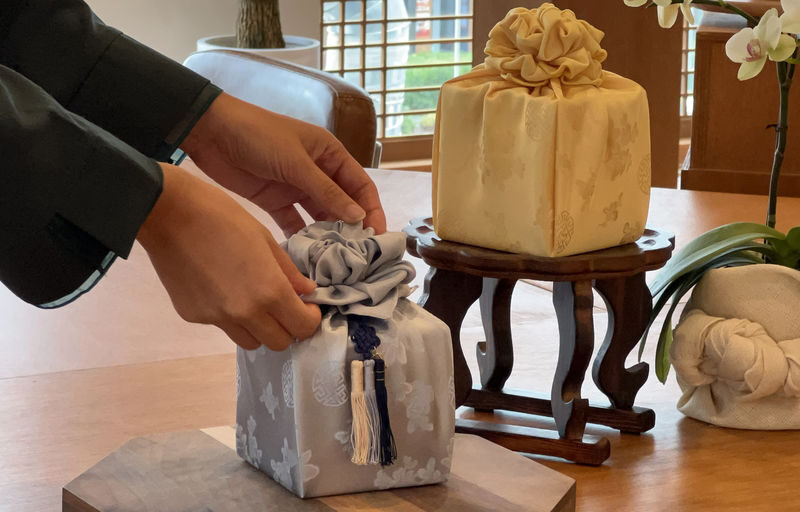
Bojagi is the Korean tradition of wrapping with fabric. Rather than using paper that gets discarded, you fold and knot a cloth around an object. It can be an elegant way to present a gift, but the technique is practical too: the cloth can be used again.
That sustainability is part of the appeal. You aren’t simply making a decorative item to pack in your suitcase. You learn a method you can bring home and use for birthdays, holidays, or any occasion when a neatly wrapped gift matters. The cloth itself becomes part of the present.
The workshop focuses on fabric wrapping, not on weaving, dyeing, or sewing. If you want to make a textile from scratch, this is the wrong class. If you’re curious about how a few folds and a continuous cord can turn fabric into a balanced, attractive wrap, it’s a good fit.
The knotting also carries a bit of philosophy. The class introduces the meaning behind Korean knots and the idea that a single continuous cord can create a symmetrical design. That context helps you see the finished wrap as more than a clever trick with cloth.
You can also read our reviews of more tours and experiences in Seoul.



From welcome tea to your finished wrap
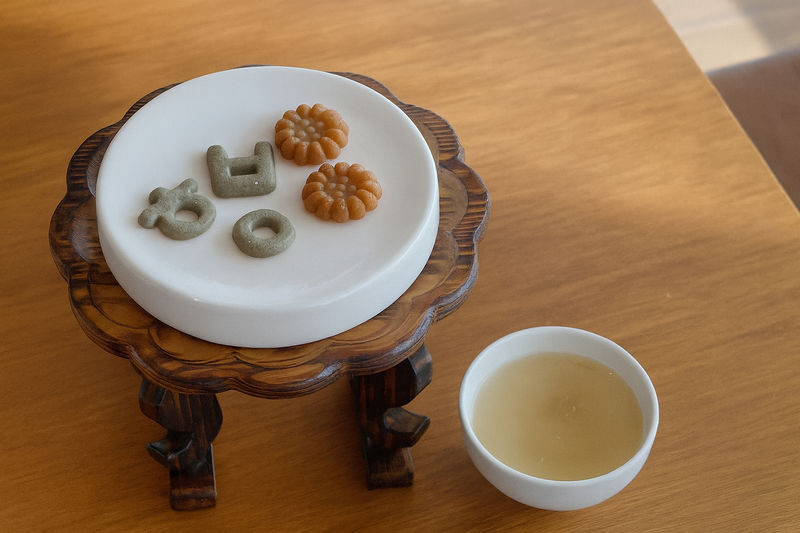
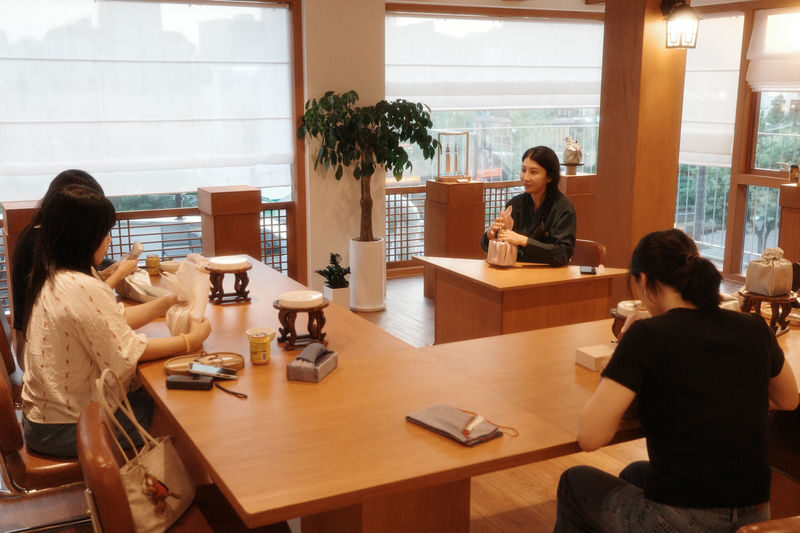
The session is described as a 90-minute experience. It begins with a welcome tea and a short introduction to bojagi’s history and philosophy. Refreshments are included, and the studio’s calm setting makes this a welcome change of pace from a day spent moving between shops and sights.
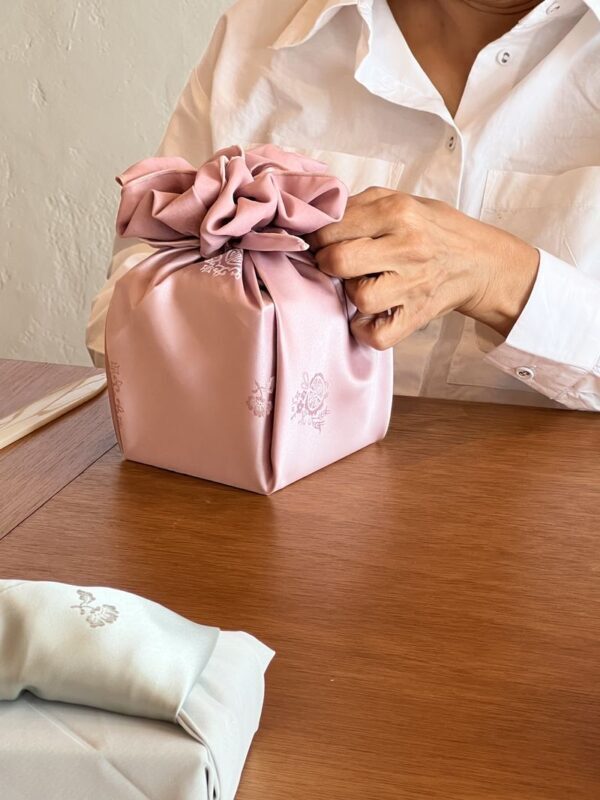
Next, MJ demonstrates the wrapping and knotting techniques. You’ll follow along, working with the fabric and adjusting the folds as you go. The class is suitable for beginners, and the small group size, capped at six, means you can ask for help rather than trying to copy a demonstration from across a crowded room.
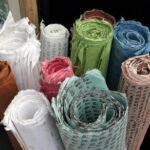
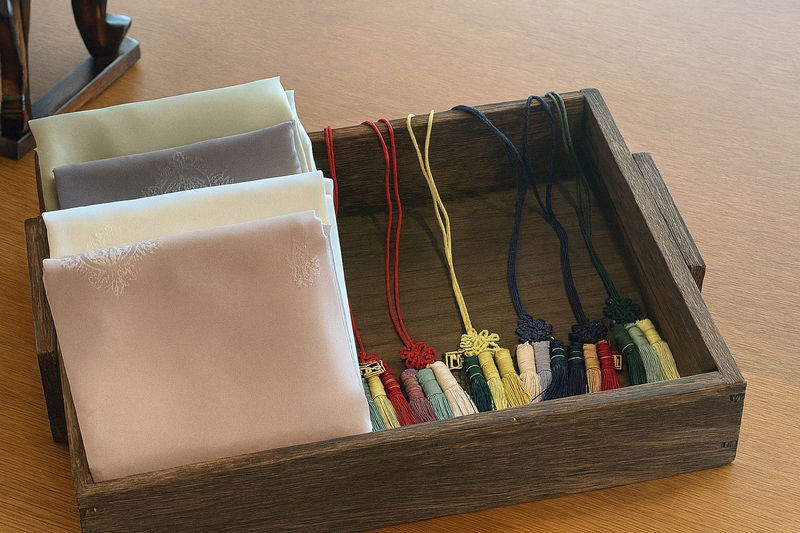
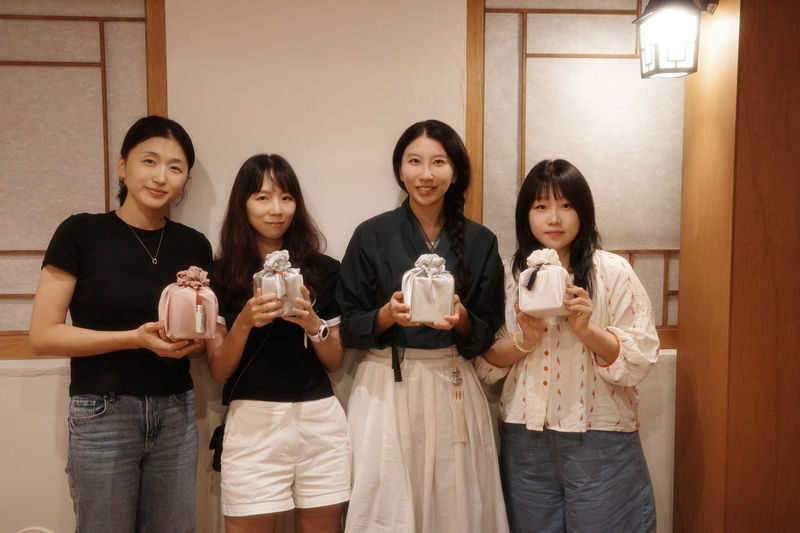
You’ll then choose two bojagi cloths and a norigae charm from the studio’s collection. A norigae is a decorative charm that adds a finishing touch to the wrap. The cloths are yours to take home, along with two gift boxes, so you can keep your finished work protected or use the boxes for gifts.
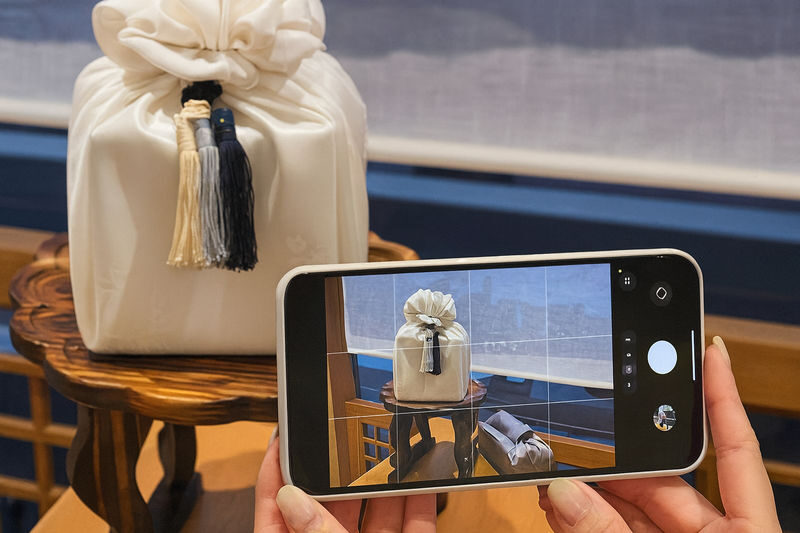
The class ends with your completed piece and a photo session. Don’t expect every knot to look identical to the instructor’s. The point is to learn the method and make something with your own hands. A slightly individual finish is part of the charm, not a reason to start over.
Some descriptions place the session at 90 minutes, while accounts of the class have run closer to two hours. I’d plan your day with a little breathing room rather than scheduling another activity right on the heels of your booking.
Why a group of six makes a difference
A craft lesson works best when the instructor can see what you’re doing. With no more than six participants, MJ can offer individual guidance and point out where a fold or knot needs adjustment. The instructor is a Level 1 bojagi expert certified by Yonsei University, and the class is intended for all skill levels.
The small format also suits the subject. Bojagi is about careful handling, proportion, and the way the fabric settles around an object. A rushed lesson would teach you how to copy a shape, but patient instruction helps you understand how to make the wrap sit neatly.
English-speaking and Korean-speaking staff are listed. If you have detailed questions and need English instruction throughout, it’s sensible to confirm the language arrangement when booking. The instructor’s calm, patient teaching style is a recurring theme, but language needs can vary from person to person.
Choosing fabric, charm, and something to wrap
Part of the pleasure comes from choosing your own materials. You receive two cloths and select a norigae charm, so the result feels personal rather than preassembled. The studio also sells bojagi items, which gives you a chance to see other fabrics and designs, though any additional purchases are personal expenses.
You may bring a small item from home to practice wrapping. A box-shaped gift is recommended, and the total of its length, width, and height should be under 35 centimeters, or about 14 inches. A wine-bottle-sized object or smaller is suggested, but a box is the best choice for following the class.
You don’t need to bring a gift to take part. All tools and workshop materials are provided. Still, bringing a small box can make the lesson more directly useful: you’ll see how the technique works on an object you might actually give to someone.
One practical tip from the class experience is to pull the fabric more firmly than you might expect when tightening the folds or tying a knot. A secure knot helps the wrap hold its shape. The instructor can help you adjust it, so don’t be shy about asking for a second look.
A calm studio in the Hongdae and Yeonnam area
Studio Bojagi is at 3F, 6 Donggyo-ro 30-gil, Mapo-gu, Seoul. From Hongik University Station Exit 3, walk along Gyeongui Line Forest Park, then turn right at the 7-Eleven alley. The studio is on the third floor of the first building on your right. Taker Table is on the first floor and Honki is on the second.
The location makes it easy to combine the workshop with time around Hongdae or Yeonnam-dong. After class, you can explore the neighborhood’s cafés and artisan shops. I’d treat the workshop as a planned pause in the day rather than a quick stop between appointments: arriving ten minutes early is required, and a late arrival of more than 15 minutes may mean you can’t join.
The studio is for booked participants only. Friends, family members, and pets can’t wait inside during the class, so make sure anyone accompanying you has another plan for that time. Outside food and drinks aren’t allowed, and anyone who appears intoxicated may be refused service without a refund.





What the price includes, and what it doesn’t
The price information gives two starting figures: US$60.25 for the Bojagi Wrapping Experience package and US$66.29 in the activity summary. Check the current amount for your chosen date and the final checkout total before booking.
The value depends on what you want from a Seoul activity. You’re paying for a guided lesson, all tools and materials, refreshments, and items to take home: two bojagi cloths, one norigae charm, and two gift boxes. The cloths are not just class supplies; they’re part of the finished experience and can be reused for future gifts.
That makes the price easier to justify if you value instruction and a practical skill, rather than simply wanting a low-cost souvenir. The small group and expert guidance are also part of the value. If all you want is a fabric wrap to bring home, you may find it more economical to buy one without taking a class.
Other personal expenses aren’t included. The studio may have additional cloths and charms for sale, but you don’t need to buy anything extra to complete the workshop.
Who will enjoy this workshop most
I’d recommend the class to anyone who enjoys making things by hand, wants a thoughtful cultural activity, or is looking for a quieter way to spend part of a Seoul day. It also suits people who care about reducing disposable gift wrap and would like a technique they can keep using after the trip.
It can work well as a shared activity for a parent and teenage child, or for friends who like crafts. Participants must be at least 13 years old, and everyone in the studio needs a reservation. Because the group is small, it can feel personal even if you arrive without a companion.
This is less suited to someone who wants a fast, drop-in activity or a finished item without doing the work. You’ll be folding, tying, and adjusting the fabric yourself. You don’t need prior craft experience, but you do need to arrive on time and be willing to practice.
Should you book the bojagi workshop?
Book it if you want to learn a Korean craft with practical use beyond your trip. The class combines cultural context, patient instruction, and materials you take home, all in a small Yeonnam-dong studio. The most useful souvenir may be the skill itself: a way to wrap gifts with fabric instead of paper.
Skip it if you’re mainly looking for a quick shopping stop or expect to make the fabric from scratch. For the best experience, arrive ten minutes early, bring a small box-shaped gift if you have one, and leave some time afterward to explore the neighborhood.
Seoul Artisan Experience: Craft Your Own Bojagi Gift
“This class was very interesting and interactive; we learned about the history of Bojagi, which was unexpected but entertaining; the instructor was…”
FAQ
How long is the bojagi workshop?
The session is described as 90 minutes. Plan for some flexibility, since the class may take longer.
Where is Studio Bojagi?
It is on the third floor at 6 Donggyo-ro 30-gil, Mapo-gu, Seoul. From Hongik University Station Exit 3, follow Gyeongui Line Forest Park and turn right at the 7-Eleven alley. The studio is in the first building on your right.
What is included in the package?
The package includes the workshop, tools and materials, refreshments, two bojagi cloths, one norigae charm, and two gift boxes. English-speaking and Korean-speaking staff are listed.
Do I need craft experience?
No prior experience is specified as necessary. The workshop is described as suitable for all skill levels, with step-by-step instruction.
Can I bring an item to wrap?
Yes. A small, box-shaped item is recommended. Its length, width, and height should add up to less than 35 centimeters, or about 14 inches.
What is the minimum age?
Participants must be at least 13 years old.
How early should I arrive?
Arrive 10 minutes before the scheduled start. Late arrivals of more than 15 minutes may not be allowed to join, and refunds aren’t issued in that case.
Can I bring a friend who isn’t taking the class?
No. The studio is open only to participants with reservations, and accompanying people, including friends, family members, and pets, cannot come inside.