A tatami tea room behind the lattice doors of a Naramachi townhouse is a fine place to slow down. In this private, small-group session, you learn the manners and meaning of the tea ceremony, then whisk your own matcha instead of simply watching someone else do it.
I like two things in particular: you get hands-on practice, and the chasen lesson connects the ceremony to Takayama, a Nara-area town known for making about 95 percent of Japan’s handmade tea whisks. The host can also point you toward local shops and lanes after the session.
One consideration: the experience is brief, and its schedule is described as both about an hour and 1 hour 15 minutes. If you have a tight plan for the rest of the day, check the time shown for your chosen departure before booking.
- What makes this tea experience special
- Entering a Naramachi machiya
- Learning the gestures before the tea
- Wagashi, matcha and the first bowl
- The chasen and its Nara connection
- Time, price and what you get
- Getting more from the hour in Naramachi
- Is the Kurabi salon tea ceremony right for you?
- FAQ
- Where does the tea ceremony take place?
- How long is the experience?
- How many people can join the private package?
- What will I do during the session?
- Is the experience offered in English?
- What are the available departure times?
- Can I cancel or change my booking?
- The Best Of Nara!
- More Private Tours in Nara
- More Tours in Nara
- More Tour Reviews in Nara
- Not for you? Here's more nearby things to do in Nara we have reviewed
What makes this tea experience special
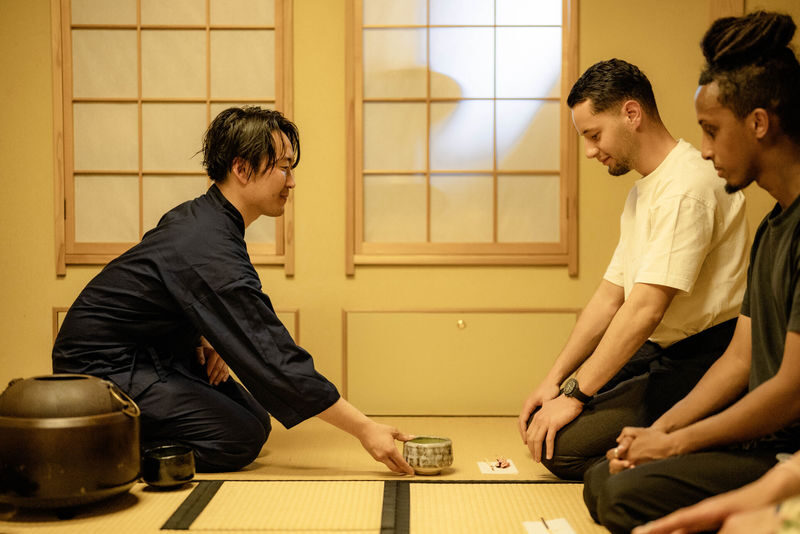
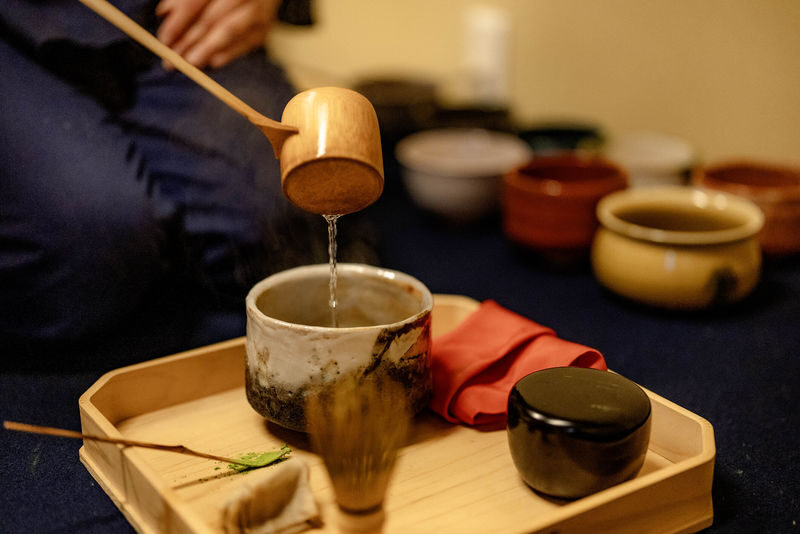
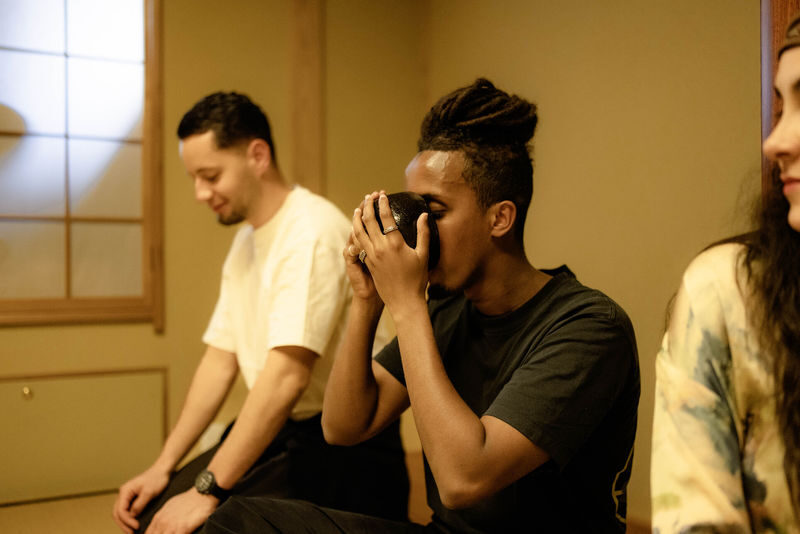
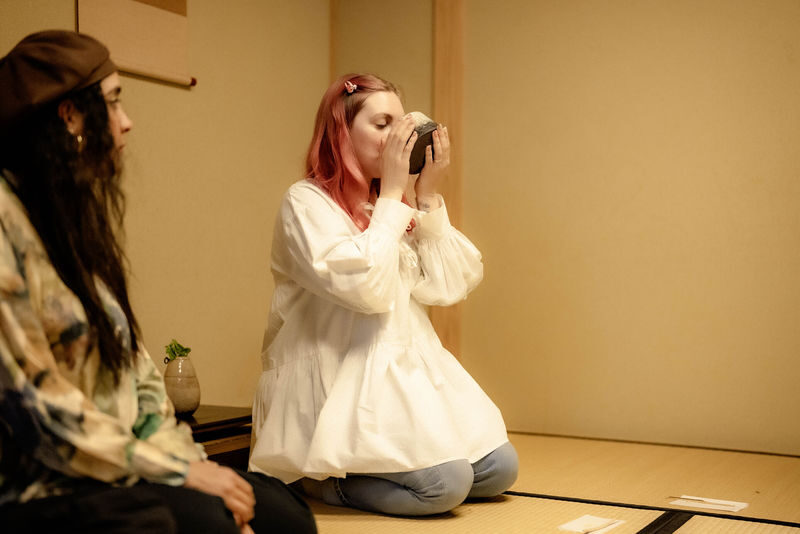
- A traditional machiya setting: Take off your shoes and enter a tatami room lit through shoji screens.
- Your turn with the whisk: Learn the steps, practise with hot water, then prepare your own bowl of matcha.
- A sweet with the tea: A seasonal wagashi is presented as something to appreciate with your eyes before you taste it.
- Local craft, not just ceremony: Learn how a chasen is made, with Takayama’s tea-whisk makers just a short way from Nara.
- A truly small group: The private package allows up to five people, leaving room to ask questions as you go.
- Useful Nara tips: Your Nara-born host can suggest shops and lanes to explore after the class.

👉 See our pick of the 5 Best Historical Tours In Nara
Entering a Naramachi machiya
Kurabi salon is at 39 Gangoji-cho, in Naramachi, Nara’s old-town district. The experience takes place in a machiya, a traditional wooden townhouse, with a tatami room reached through lattice doors and shoji. The setting is part of the lesson: this is not a large hall built for a crowd, but a domestic space where the ceremony feels close at hand.
Expect a host in kimono to lead you into the room. That first transition, from the street into a quiet interior, helps explain the care given to the ceremony’s surroundings. The room, bowls, utensils and small gestures all matter. You do not need to know the rules before you arrive. The point is to learn them at a comfortable pace.
The package is private for a group of up to five. That limit is useful if you want to ask questions without interrupting a larger class, or if you are sharing the experience with family or friends. It also means the session is not a broad survey of Japanese tea culture. It is a focused introduction, with time for you to try the central task yourself.
You can also read our reviews of more private tours in Nara



Learning the gestures before the tea
The session begins with a cup of hojicha and an explanation of basic etiquette. You will learn how to bow and how to handle the utensils before getting to work with matcha. These small steps may seem formal at first, but they give you a practical frame for the ceremony: the actions have an order, and each one shows care for the person sharing the tea.
The host explains the thinking behind the etiquette as well as the procedure. That context is what keeps the class from becoming a sequence of motions to copy. You can ask questions as they occur to you, which is especially helpful if you have never attended a tea ceremony and are unsure what is important to notice.
Tea culture also offers a window into omotenashi, the Japanese idea of attentive hospitality. Here, that theme comes through in the preparation and presentation, not in a long lecture. The host guides you through the details, while the small format gives you space to take them in.
Wagashi, matcha and the first bowl
A seasonal wagashi sweet is served as part of the experience. Its appearance is part of the pleasure: you are encouraged to look at it before tasting it. The ingredients and menu can change with the season and availability, so you should not expect a particular sweet on a particular date.
Next, the host prepares a bowl of matcha for you. Take a moment to notice its scent, colour and finish. This is a useful demonstration because you see the finished result before trying to make it yourself. It also lets you focus on tasting and on how the bowl is presented, rather than trying to follow every movement at once.
The first taste is followed by hands-on practice. You choose a bowl, warm your hands with hot water, and learn to whisk the tea yourself. The class introduces the process in stages: explanation first, practice with hot water, then matcha. That progression makes the session approachable even if you have never held a tea whisk.
The aim is not to turn you into a tea master in an hour. It is to leave you with a clear sense of how the preparation works, and why the movements are deliberate. One participant praised instructor Mike’s explanations and skill, but the host may vary, so don’t book expecting a particular person.
The chasen and its Nara connection
One of the most distinctive parts of the class is the explanation of the chasen, the bamboo whisk used to prepare matcha. Roughly 95 percent of Japan’s handmade tea whisks come from Takayama in Nara Prefecture, a short distance from the room. Seeing how the tool is made gives the ceremony a local connection that is easy to miss if you think of matcha as just a drink.
The whisk is not an anonymous accessory. Its shape and fine bamboo tines are made for a specific task, and the host shows you how the tool fits into the preparation. This craft discussion helps explain why the whisk deserves care, and gives you something concrete to look for if you encounter tea tools elsewhere in Japan.
The class is described as including a look at how a chasen is made. There has also been an occasion when a participant met one of the few artisans who make them, but you should treat that as a possible extra, not a guaranteed part of every session. The more dependable value is learning about the craft and using the whisk yourself.
Time, price and what you get
The private experience starts at US$45.40 for a package of up to five people. Check the booking price and terms for your party before you reserve, since the listed starting price does not by itself explain how the final cost applies to every group size. For a small party, the private format can make the price worthwhile: you get a guided lesson, refreshments, a seasonal sweet, access to the tea room and your own matcha-making practice.
The session is listed as one hour, while the detailed schedule describes 1 hour 15 minutes. Plan around the time shown for your selected departure, and leave a little breathing room afterward if you have a train, meal or timed visit. The available start times are 10:30, 12:30, 14:30 and 16:30, with corresponding return times that vary by departure and session length.
The price buys more than a cup of tea, but it is still a short activity. If you want a long, formal ceremony or an extensive history lesson, this may feel compact. If you want a clear introduction, a chance to practise, and a local craft connection without giving up half a day, the format makes sense.
English and Japanese-speaking guidance is included. The available information does not specify the language for each departure, so confirm your preferred language when booking if it matters to you. There is no age limit, though the experience involves following instructions and handling tea utensils.


Getting more from the hour in Naramachi
Before you leave, ask your Nara-born host what to see next. The host can point out shops and lanes that do not always appear in guidebooks, as well as places for tastings or tea purchases. That local advice is a practical bonus, especially if this is your first time exploring Naramachi.
You might also use the class to sharpen your eye for details during the rest of your Nara visit. Notice the care given to bowls, seasonal sweets and small acts of welcome. The ceremony is not just about preparing matcha. It is also about how the host and guest share a quiet moment, and how attention to simple things can shape an experience.
This works well as a pause between more active sightseeing. It does not require a full day, and the indoor setting offers a change of pace from walking around town. Just keep your expectations in line with the format: the session is a guided introduction, not a deep technical course in tea ceremony or bamboo craft.
Is the Kurabi salon tea ceremony right for you?
Book this if you want to understand the basics of matcha preparation, enjoy a traditional townhouse setting, and take part rather than watch from the edge. It is especially well suited to curious first-timers, small groups, and anyone interested in how local craft connects to everyday culture.
Think twice if you are looking for a long ceremony, a guaranteed meeting with a particular tea-whisk artisan, or a fixed menu. The host, seasonal sweet and exact session length may vary. For most visitors with an hour or so to spare, though, the blend of etiquette, tasting, hands-on practice and Takayama craft makes this a thoughtful way to spend time in Naramachi.
Private tea ceremony experience at a Nara townhouse
“Really enjoyed the class and learning how to make matcha the traditional way. Mike our instructor was very knowledgeable. we were impressed with hi…”
FAQ
Where does the tea ceremony take place?
It takes place at Kurabi salon, 39 Gangoji-cho, Nara City, in the Naramachi area. The setting is a traditional machiya with a tatami tea room.
How long is the experience?
It is described as one hour, while the detailed schedule gives a duration of 1 hour 15 minutes. Check the duration shown for your chosen departure when planning the rest of your day.
How many people can join the private package?
The private package is for a maximum of five people.
What will I do during the session?
You learn basic tea ceremony etiquette and how to handle the utensils, taste hojicha and seasonal wagashi, watch the host prepare matcha, and then whisk your own bowl. You also learn about how a chasen is made.
Is the experience offered in English?
An English- or Japanese-speaking guide is included. The language available for a particular departure is not specified, so confirm your preference when booking.
What are the available departure times?
The listed departure times are 10:30, 12:30, 14:30 and 16:30. Return times depend on the selected departure and session duration.
Can I cancel or change my booking?
A full refund is available if you cancel at least 24 hours before the activity date, using destination local time. Changes are allowed until 24 hours before the activity starts, with some booking types excluded.