Pompeii is not just a collection of old stones. Volcanic ash buried the Roman city in 79 AD, preserving streets, homes, shops, and public buildings in startling detail. This half-day trip from Naples puts a guide beside you to help turn those remains into a picture of everyday life.
I like two things here: round-trip transport and Pompeii entry are included, so you do not need to arrange the journey or buy a separate ticket. I also like that the walk takes in varied sights, from the Forum and thermal baths to the Lupanare and the House of Faun.
One thing to weigh: the visit inside the ruins lasts about two hours, which is enough for a guided overview but not a leisurely exploration of a vast site. Group size and guide language can also affect how personal and easy to follow the tour feels.
- Key points to know before booking
- From Naples port to the Pompeii entrance
- Two hours through a city stopped in time
- How much guidance do you get?
- Choosing a group size and departure time
- Is the price good value?
- What to bring and who this suits
- Should you book this Pompeii trip?
- FAQ
- How long does the tour last?
- Where does the tour depart from?
- Is round-trip transportation included?
- Is Pompeii entry included in the price?
- What languages are available?
- Do I get a live guide inside the ruins?
- How large are the groups?
- Is the tour suitable for a wheelchair or stroller?
- What should I bring?
- The Best Of Pompei!
- More Guided Tours in Pompei
- More Tours in Pompei
- More Tour Reviews in Pompei
- Not for you? Here's more nearby things to do in Pompei we have reviewed
Key points to know before booking
 1 / 8
 2 / 8
 3 / 8
 4 / 8
 5 / 8
 6 / 8
 7 / 8
 8 / 8
- A short ride from Naples: The bus trip is scheduled for about 30 minutes each way, though traffic can change the timing.
- Two hours among the ruins: The guide selects highlights across key areas, with the route adjusted for crowds and site access.
- More than a bus ticket: The price includes Pompeii entry, transport, and a guide or audio guide inside the site.
- Three group sizes: Choose a group of up to 40, 18, or 8 people, with higher prices for smaller groups.
- A cameo workshop stop: Before entering Pompeii, you stop at a traditional workshop where artisans carve shells by hand.
- Bring walking shoes: The site is not stroller- or wheelchair-accessible, and the tour operates in all weather.

👉 See our pick of the 5 Best Historical Tours In Pompei
From Naples port to the Pompeii entrance
This is a practical way to reach Pompeii if you are staying in Naples or visiting by cruise ship. The tour offers pickups at Molo Beverello, near Bar Picnic, and at Starhotels Terminus by Piazza Garibaldi. The listed morning departure times are 08:00 and 08:30, with the return drop-off at your original pickup point.
Arrive 15 minutes early. The operator requires a minimum of two participants, and late arrivals or no-shows are not refunded. If you are coming from a cruise ship, share the ship’s name with the provider. If you have not received a confirmed pickup time, contact the operator to arrange it.
The bus ride is listed as about 30 minutes. That makes the transfer brief compared with the time you will spend walking through the ruins, though road conditions and weather can affect the schedule. On board, expect live commentary in English, Spanish, or Italian. The tour may be bilingual, so check the language arrangement if following every detail in one language matters to you.
Before entering Pompeii, there is a short stop at a cameo workshop. Cameos are hand-carved from shell, and watching an artisan work gives you a small window into a local craft. It is a pleasant contrast to the ancient city, but it is still a stop on a tight half-day schedule, not a long workshop visit.
You can also read our reviews of more guided tours in Pompei


Two hours through a city stopped in time
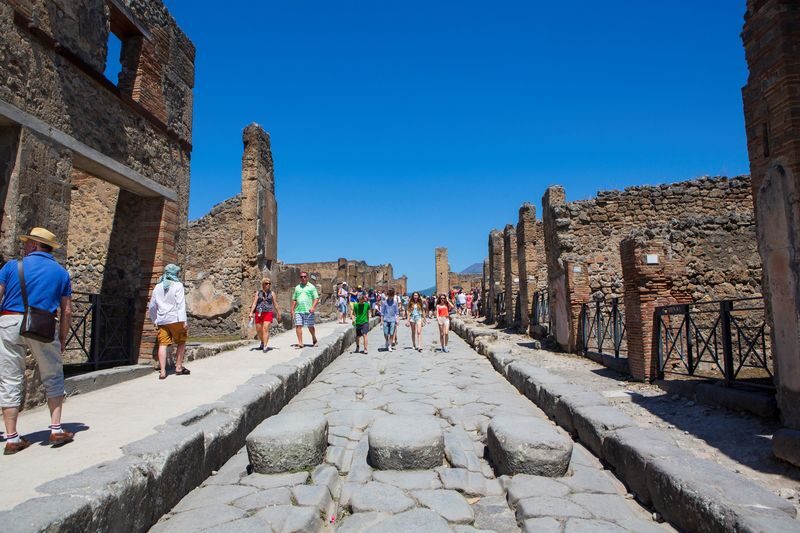
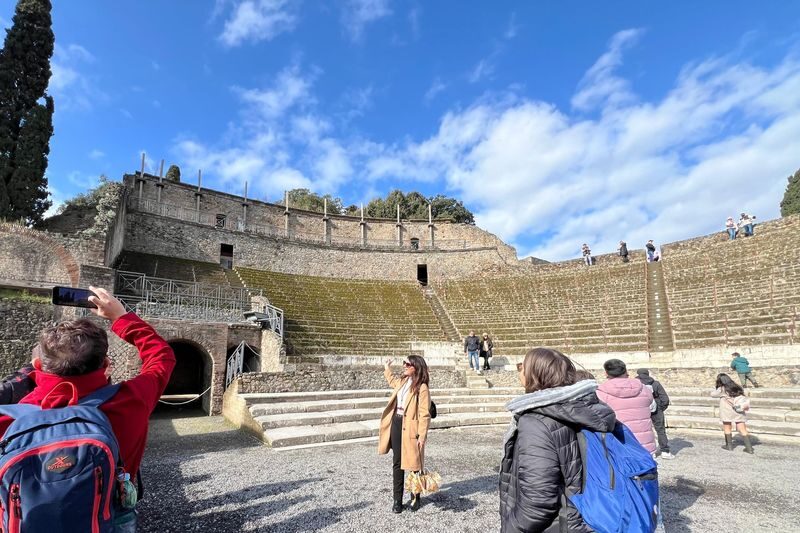
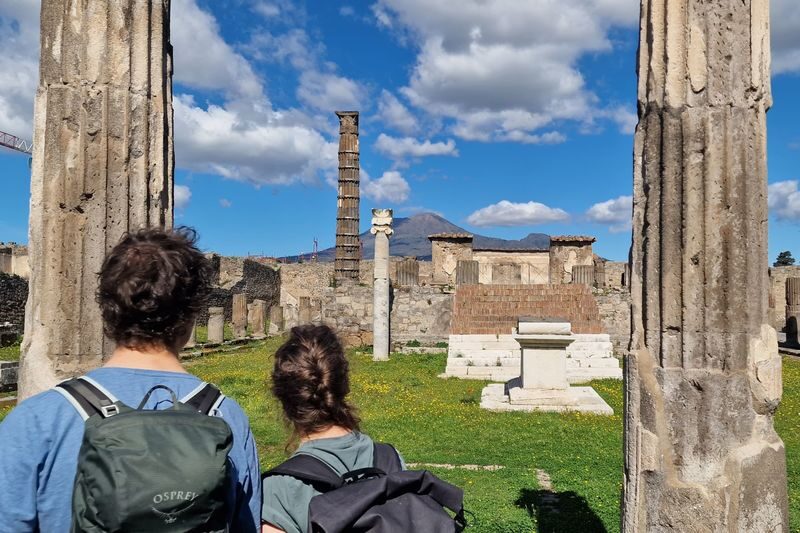
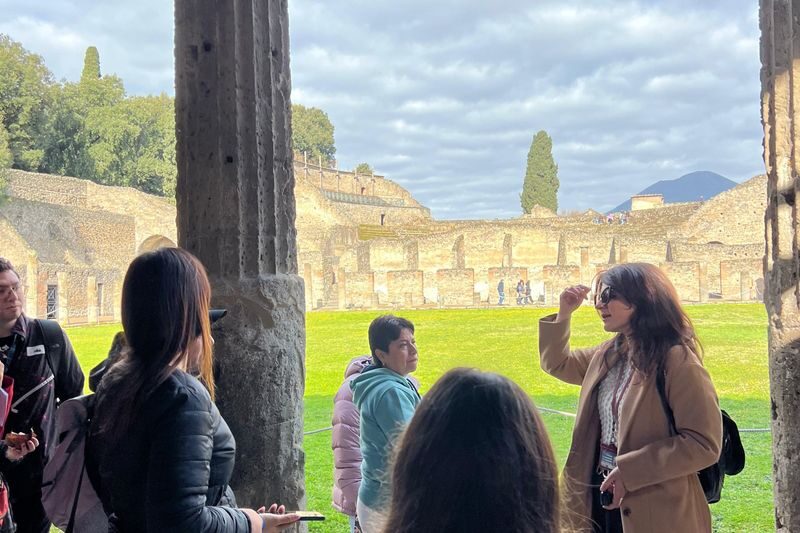
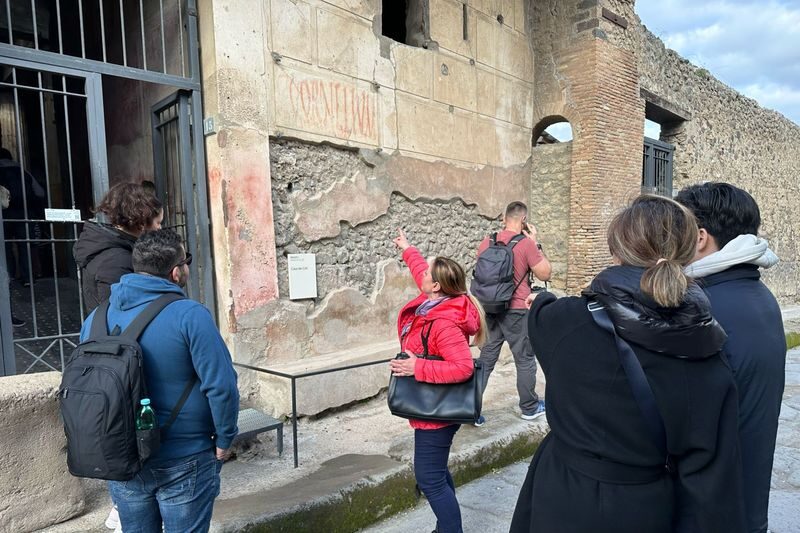
At Pompeii, you get a guided walk of around two hours. The route is adjusted to crowd levels and which areas are open, but the tour aims to cover highlights from different parts of the city, including temples, villas, and market spaces. That variety helps you see Pompeii as a lived-in town, rather than a string of famous photo spots.
The Forum is a useful starting point for understanding the city’s public life. It was the center of civic and commercial activity, and its open space helps you grasp the scale of the settlement. Nearby temples and public buildings point to the religious and political roles that shaped Roman daily life.
The Basilica is another important stop. It was a public building used for business and legal matters, not a church in the modern sense. Seeing it in the context of the Forum helps make the city’s civic layout easier to read.
The thermal baths show how much Roman life depended on shared public spaces. These were places to wash and bathe, but also to meet and spend time. The guide can help you distinguish the functions of the rooms and explain how a visit to the baths fit into an ordinary day.
At the Macellum, Pompeii’s market building, you get a glimpse of the practical business of feeding a city. It is one of the tour’s photo stops, and a good place to imagine the daily trade that once filled these streets. The House of Faun offers a different perspective, with a look at the scale and style of a wealthy private home.
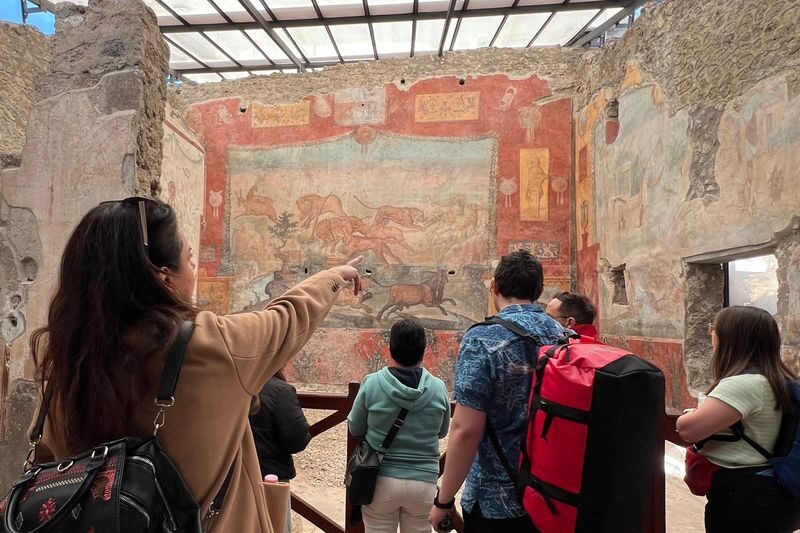
The Lupanare, Pompeii’s best-known brothel, is a more intimate and often surprising stop. Its small rooms and wall decorations can make the past feel unusually close. The guide’s context matters here: without it, the building may seem like a curiosity; with it, you can better understand what it reveals about Roman social life.
The plaster casts of people caught in the eruption are among the most affecting sights. They preserve the outlines of victims in their final moments, making the disaster feel personal rather than abstract. The experience can be sobering, and it is worth taking a moment to look rather than treating the casts as just another camera stop.
Pompeii covers a large area, and two hours means you will not see everything. The guide’s job is to make a sensible selection, balancing major landmarks with enough explanation to help the pieces fit together. If you want to explore side streets or spend longer in particular houses, an independent visit or a longer tour may suit you better.
How much guidance do you get?
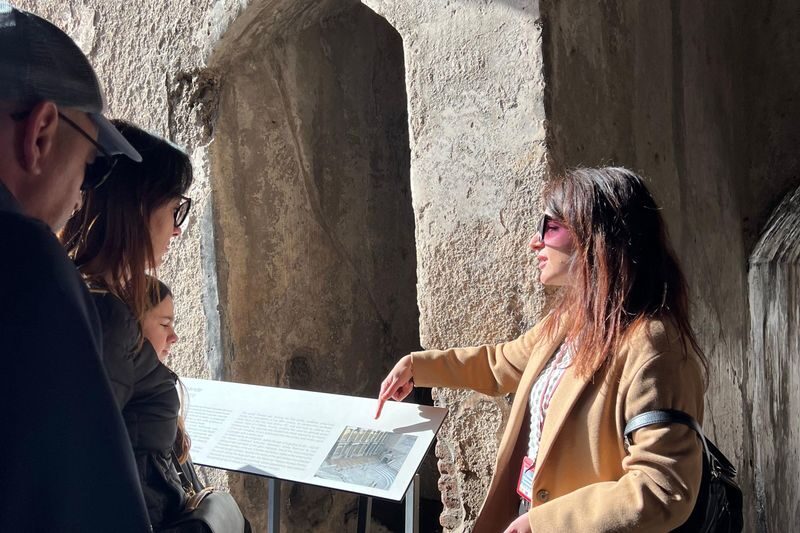
The arrangement inside the ruins depends on group size. Groups of six or more are assigned an archaeological guide, while groups of one to five receive an audio guide. That distinction is worth checking when you book: a small group does not necessarily mean a live guide walking with you through the site.
The experience of a live tour also depends on how clearly you can hear and understand the guide. Recent tour leaders and Pompeii guides have included Antonella, Jasmine, Patrizia, Antonio, Giuseppe, and Liz. Names and assignments can change, of course, but feedback about guides and drivers has often been positive. One visitor singled out Antonella for being cheerful and punctual, while Jasmine and Patrizia were praised for their clear explanations and considerate approach.
There has also been a less successful experience with a Pompeii guide whose strong accent made the English difficult for some people to follow. That is a fair reminder: a guide can know the site well, but clear delivery matters just as much. If you choose a group option, ask which language is scheduled and whether the tour may be bilingual.
The transfer guide and the guide inside Pompeii may be different people. The bus leader handles the journey and commentary, while a local guide may take over inside the ruins. This arrangement can work well, but it means you should not assume one person will lead the entire outing.
Choosing a group size and departure time
The regular group holds up to 40 people and has the lowest listed package price, from $78.65. Small groups are capped at 18 and start at $95.49, while semi-private groups of up to 8 start at $117.95. These are listed package prices; the overall experience page gives a starting figure of $72.39, so check the price shown for your chosen date and time before booking.
A larger group is the budget choice and can still give you a solid overview, especially if you are comfortable following a guide among other people. The trade-off is less intimacy and possibly more difficulty hearing or asking questions. Paying more for a group of up to 8 can make the walk feel more personal, but it does not change the two-hour visit or guarantee a particular guide.
Departures are offered at 08:00, 10:30, and 13:15, depending on group type. An early start gets you to Pompeii in the morning and back to Naples around 11:30 to 12:30, according to the schedule. One visitor who took an afternoon tour advised choosing morning because the later visit was hotter. The tour runs in all weather, so bring sun protection or rain gear as the day calls for.
Is the price good value?
The price includes more than transport. You get round-trip bus travel from Naples, Pompeii’s entrance fee, live commentary on board, and a guided tour inside the ruins or an audio guide, depending on group size. That bundle makes the tour useful if you want the main arrangements handled without coordinating separate transport and tickets.
The included entry fee matters. Pompeii’s ticket price can change, and a visitor noted seeing an entrance price of 22 euros at the site. That figure may not remain current, but it underlines why an included ticket is useful: you do not have to budget for a separate admission charge at the gate.
The tour is not the cheapest way to see Pompeii if you are happy to arrange everything yourself and explore independently. You are paying for the ride, entry, and a guided route, which can be worthwhile when your time in Naples is limited or you want help making sense of the site. Meals, drinks, personal expenses, tips, and optional activities are not included.
You can also read our reviews of more tours and experiences in Pompei






What to bring and who this suits
Wear comfortable walking shoes and dress for the weather. The tour involves walking through an archaeological site, and the surface and route are not suitable for strollers or wheelchairs. Infants and children must be included in the passenger count, even when they travel free.
Children aged 0 to 3 are free, but those aged 0 to 17 must be with a paying adult. Children aged 13 and older are charged the adult rate. Bring a passport or ID card, and remember that the voucher is valid only for the date and time booked.
I would choose this trip if I had a half-day in Naples and wanted a straightforward way to see Pompeii’s headline sights with context. It is especially useful for a first visit, a cruise stop, or anyone who would rather not work out transport and admission alone. If Pompeii is a major focus of your trip and you want time to wander at your own pace, two guided hours may feel short.
Should you book this Pompeii trip?
Book it if you value a simple transfer, included admission, and a guided introduction to the Forum, baths, market, homes, and other main sights. If you can, compare the group-size options and choose a departure time that suits your heat tolerance and Naples plans.
Skip it if you want a full day at the site or need step-free access. Pompeii is worth seeing, but the best fit depends on how much time you want to give it. For a compact first look from Naples, this tour covers the essentials without making you arrange the moving parts yourself.
Pompeii Guided Day Trip with Fast Entry from Naples
“The tour guide and driver were very friendly and helpful.”
FAQ
How long does the tour last?
The guided walk inside Pompeii lasts about two hours. The half-day schedule includes the bus ride and is expected to return to Naples between 11:30 and 12:30 for the morning tour.
Where does the tour depart from?
Pickup points include Molo Beverello near Bar Picnic at 08:00 and Starhotels Terminus at Piazza Garibaldi 91 at 08:30. Arrive 15 minutes before your departure time.
Is round-trip transportation included?
Yes. The tour includes round-trip transportation from Naples, with drop-off at the original pickup location.
Is Pompeii entry included in the price?
Yes. The Pompeii entrance fee is included.
What languages are available?
The listed guide languages are English, Spanish, and Italian. The tour may be bilingual.
Do I get a live guide inside the ruins?
Groups of six or more receive an archaeological guide. Groups of one to five receive an audio guide inside Pompeii.
How large are the groups?
Options include regular groups of up to 40 people, small groups of up to 18, and semi-private groups of up to 8.
Is the tour suitable for a wheelchair or stroller?
No. The activity is not wheelchair- or stroller-accessible.
What should I bring?
Bring walking shoes and dress for the weather. You should also bring your passport or ID card.