Dunhuang’s desert edge holds two very different kinds of wonder: caves painted by hand centuries ago, and wind-carved stone forms that look more like another planet than the Silk Road. This full-day outing links the Western Thousand Buddha Caves and Yangguan with Yumen Pass, Han Great Wall remains and Yadan Geopark, giving you a broad look at the region in one go.
I like that the route joins art and frontier history rather than treating the desert as a backdrop, and that shared transport can make remote sites manageable without arranging a private car. The small-group option is capped at 15, with a smaller eight-person package also offered.
The trade-off is the distance and the uncertain timetable: one schedule has a 22:30 return, while the general group information says the tour usually ends around 18:00. Confirm the actual day plan, what language your guide speaks and which entrance fees your package covers before you pay.
- A close look at Dunhuang grotto art: The Western Thousand Buddha Caves include 22 surviving caves, sculptures and more than 800 square meters of murals.
- Two Silk Road passes, not just one: Yangguan and Yumen Pass served separate routes through the Hexi region.
- A glimpse of Han frontier defenses: The route includes remains of the Han Great Wall near Yumen Pass.
- Yadan’s four northern-route stops: The park shuttle visits Golden Lion Welcoming Guests, Pyramids, Peacocks and West Sea Fleet.
- Tickets can change the real cost: The group-of-15 option excludes admissions; the smaller package is listed with tickets.
- A very long day on the road: The schedule includes several distant stops, and the published return times do not agree.
- Dunhuang’s westward route in one demanding day
- Western Thousand Buddha Caves: murals away from the main crowds
- Yangguan: the southern Silk Road gateway
- Yumen Pass and the Han Great Wall remains
- Yadan Geopark: four stops among wind-carved forms
- The real price: compare the package, then add the gates
- Shared transport, group size and the long return
- Who should book this Dunhuang day trip?
- FAQ
- How long is the tour?
- Which places are included in the route?
- Are entrance tickets included?
- What transport is included?
- Is the tour available in English?
- Is pick-up available outside central Dunhuang?
- What does the Yadan visit involve?
- More Tours in Jiuquan
- More Tour Reviews in Jiuquan
- Not for you? Here's more nearby things to do in Jiuquan we have reviewed
Dunhuang’s westward route in one demanding day
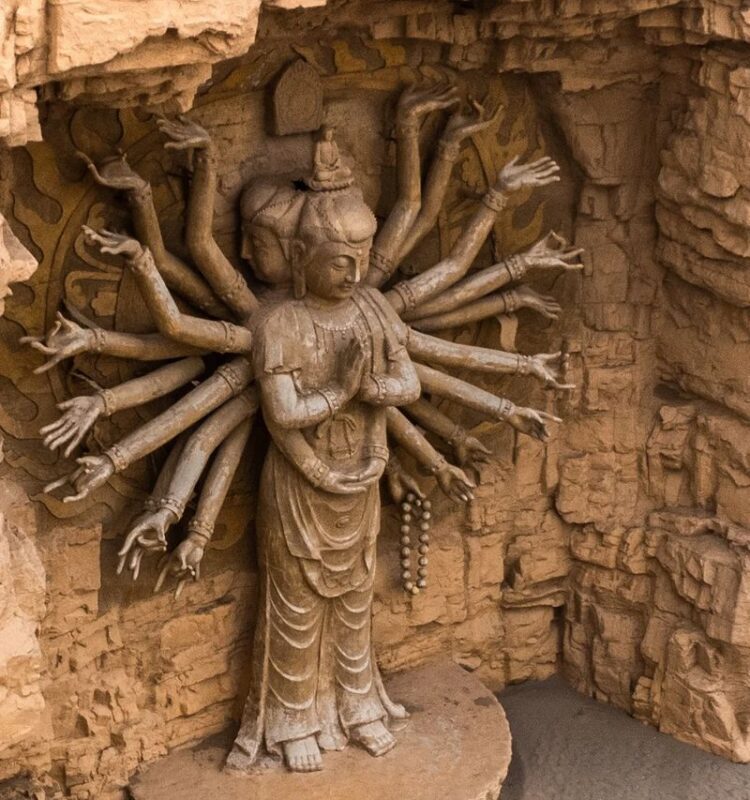
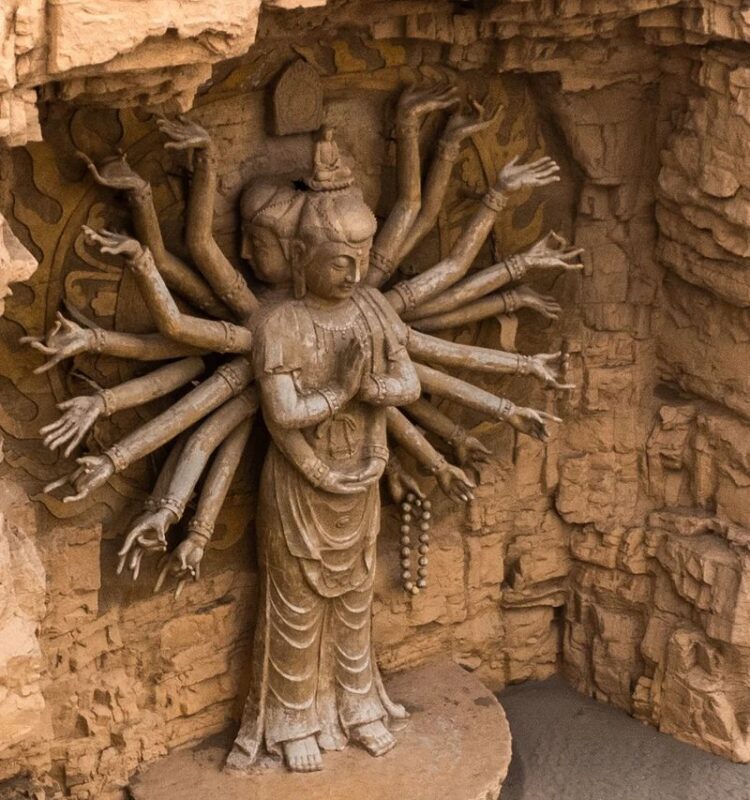
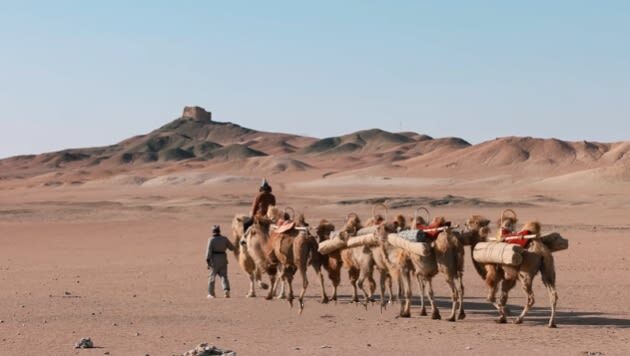
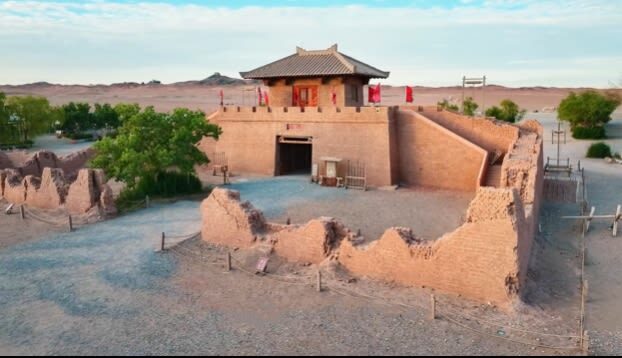
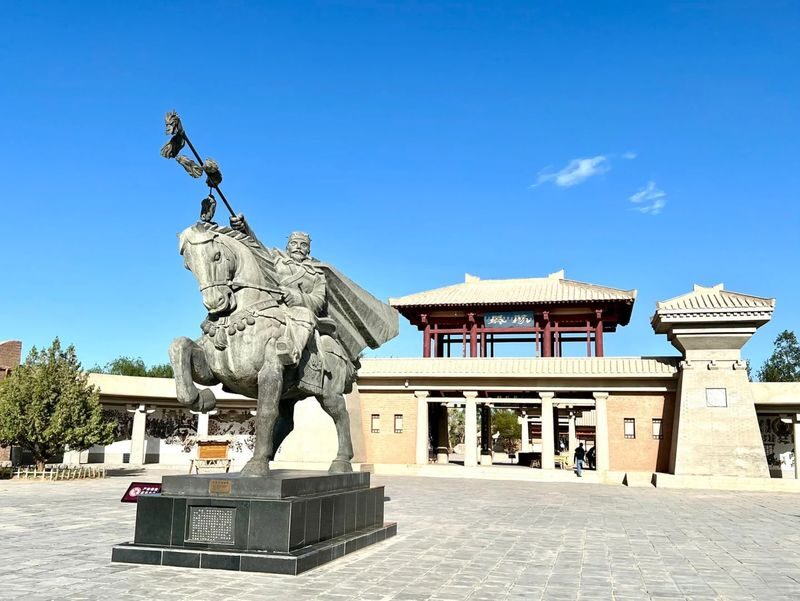
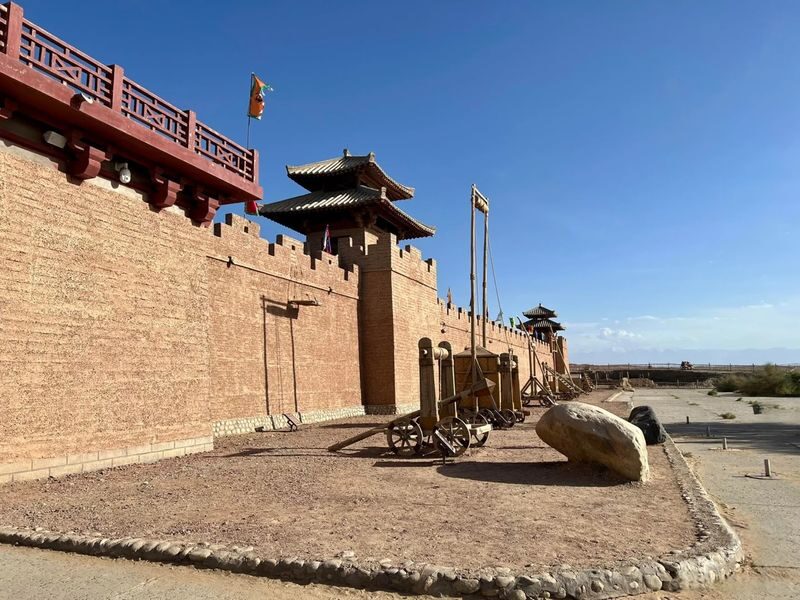
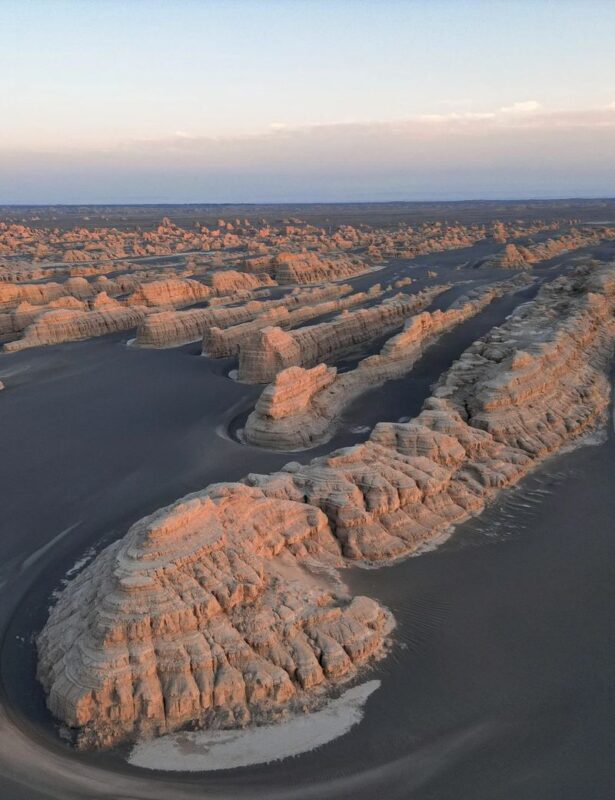
This tour covers a wide stretch of country northwest and west of Dunhuang. It begins with Buddhist art, moves through the old Silk Road passes and border defenses, then ends among the wind-eroded formations of Yadan Geological Park. You get cultural and natural sights in one outing, but the reward comes with a lot of time in the vehicle.
That trade-off matters. A small group of up to 15 shares round-trip transport, and the vehicle type is selected according to group size. The service includes a professional Chinese driver. The package information also describes guided visits, and Chinese or English group options are advertised, but it does not clearly spell out the guide arrangement for every package. Confirm the language you need when booking.
The schedule begins at 07:00 in Dunhuang and lists a return at 22:30. Yet the general group-tour information says departures are around 07:00 and tours usually end around 18:00. That is a large difference, not a minor timing adjustment. Ask the operator which itinerary applies to your date, especially if you have an evening train, flight or other plans.
Western Thousand Buddha Caves: murals away from the main crowds
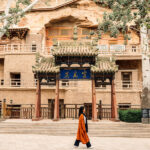
The first major stop is the Western Thousand Buddha Caves, described as the sister caves of the Mogao Grottoes and part of Dunhuang’s wider grotto-art tradition. There are 22 surviving caves, built across several periods from the Northern Wei to the Song dynasty, with 34 colored sculptures and more than 800 square meters of murals.
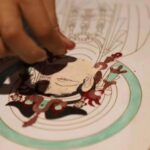
That scale gives you a useful sense of the site’s artistic value without pretending it is Mogao itself. The cave paintings include Buddhist figures and flying apsaras, among other subjects. Their restrained, graceful style offers a different way to meet Dunhuang’s religious art than simply seeing the better-known name on a map.
A guided visit is listed here, which should help you make sense of what you are looking at rather than pass through the caves without context. The actual time allotted is not specified, so I would not book this expecting a long, unhurried study of every detail. Still, for anyone interested in Buddhist art, it is a strong opening stop and adds a quieter counterpart to the grander Silk Road sites later in the day.
The caves are near the Danghe Reservoir, within Dunhuang City’s wider area. The admission fee is listed as CNY 30 per person for packages that do not include tickets. Check whether your chosen option covers it.
You can also read our reviews of more tours and experiences in Jiuquan.

Yangguan: the southern Silk Road gateway
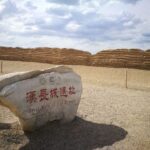
The midday stop is Yangguan Scenic Area, a key pass on the southern Silk Road route. The name means the pass south of Yumen Pass. It was established during the reign of Emperor Wu of Han, in 111 BC, and formed one of the two major passes associated with the Hexi corridor.
The stop is more than a photo break. It helps explain how Dunhuang connected China with regions farther west, and why control of a narrow passage through the desert mattered. The experience described here includes a guided visit and a view over the open desert. You can connect the place to the enduring poem about departing friends beyond Yangguan, without needing the site to supply a polished, staged story.
The tour timing lists Yangguan at 12:30, after the caves. That leaves a long stretch of the day still ahead, so keep lunch plans practical and ask what time is set aside for food. No meal is listed as included. Yangguan admission is CNY 70 per person if your package excludes tickets.
Yumen Pass and the Han Great Wall remains
Yumen Pass, or Jade Gate Pass, was a Han dynasty gateway to the Western Regions and a strategic point on the northern Silk Road route. The surviving pass is described as a square structure with intact walls and west and north gates. That physical shape helps make the history tangible: this was a fortified threshold, not merely a name in a poem or on a route map.
The itinerary places Yumen Pass at 16:00, followed by the Han Great Wall ruins. The wall remains bring the frontier story into sharper focus. They offer a reminder that trade and exchange relied on military infrastructure, watchpoints and the difficult work of defending a long border. The tour information does not provide a precise walking distance or time at either site, so expect a guided stop rather than a full archaeological exploration.
Yumen Pass admission is listed at CNY 90 per person when not included. Keep in mind that the day’s schedule is subject to traffic and weather. This is a remote route, and the listed times are estimates, not a promise that each stop will happen to the minute.
Yadan Geopark: four stops among wind-carved forms
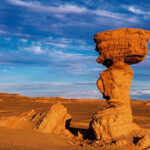
The final major destination is Dunhuang Yadan National Geological Park, often called Devil City. The park’s formations were shaped by wind erosion, producing varied ridges and rock forms that can seem almost theatrical against the open desert. The tour describes the setting as Mars-like; the comparison is easy to understand once you see the unusual shapes and spare surroundings.
After visiting the Geoscience Museum in the tourist hall, you take a park shuttle with a guide. The shuttle stops at four northern-route sights: Golden Lion Welcoming Guests, Pyramids, Peacocks and West Sea Fleet. Those names give you a sense of how people read animal shapes, buildings and fleets into the stone. The park is spread out, so the shuttle is central to the visit rather than an optional extra.
The listed time for Yadan is 19:40, which makes the conflicting return information especially important. If the tour really reaches the park in the evening, you may be seeing the formations late in the day; the exact light and available time will depend on the actual schedule and conditions. Do not assume you will have a long independent walk. The stated plan uses the scenic shuttle and guided stops.
Yadan admission is CNY 120 per person for packages that exclude tickets. The tour notes that the park shuttle is used to explore the area, but does not separately break out a shuttle fee. Ask whether all required park transport is covered in your selected option.
The real price: compare the package, then add the gates
The headline starting prices vary across the available package details. The group of 15, excluding tickets, is listed from US$41.95, while another summary gives a starting price of US$48.25. The eight-person small-group option with admission is listed from US$166.29. These are different packages, so compare what each includes rather than choosing by the first price you see.
For the group-of-15 option, the four named admissions total CNY 310 per person: CNY 30 for the Western Thousand Buddha Caves, CNY 70 for Yangguan, CNY 90 for Yumen Pass and CNY 120 for Yadan. That is a meaningful addition to the base fare. The smaller package is described as including admission, which can make a higher upfront price easier to assess, though you should still confirm the exact inclusions for your date.
What you are paying for in the transport-only package is the long-distance logistics. The stops are spread across a large area, and the tour bundles them into one route with shared round-trip transport. That can be good value if you want all five main sights and do not want to arrange separate rides. It is less compelling if you prefer to linger, travel at your own pace or visit only one or two locations.

Shared transport, group size and the long return
A cap of 15 people keeps this smaller than a large coach tour, but it is still a shared outing. The vehicle depends on the number of people booked, so the exact arrangement is not guaranteed. A separate option limits the group to eight and includes tickets, at a substantially higher listed starting price.
The reviews available for this experience are few, so they are not enough to promise a consistent standard on every departure. Still, the points worth prioritizing are practical: a steady driver makes a long day more comfortable, and a driver who is alert to passengers’ needs can be especially helpful if you are travelling alone. A recent account described the driving as stable and the assistance as proactive; another praised an experienced, reliable driver. These are useful qualities to look for, not guarantees.
Pick-up and drop-off are offered within Dunhuang city, but service is not available outside the designated area without additional cost. The operator confirms the meeting time in advance, and you should arrive ten minutes early. If you are outside the city center, ask where you must meet and whether a surcharge applies.
Who should book this Dunhuang day trip?
I would consider this tour if you have limited time in Dunhuang, want to see both Silk Road history and unusual geology, and are comfortable spending much of the day moving between sites. The caves, two passes, wall remains and Yadan stops fit together as a broad introduction to the region’s art, trade routes and frontier life.
It is also a practical choice if you are travelling solo or do not want to arrange transport to the remote western sites yourself. Shared rides reduce the planning burden, while the group size is capped at 15. If you value more space or included tickets, compare the eight-person option against the group-of-15 fare plus admissions.
I would hesitate if you dislike long road days, need a firm return time, or want to spend hours at each stop. The schedule’s 18:00 versus 22:30 discrepancy needs resolving before you book. Confirm the package language, whether tickets and park transport are included, and the final departure and return times. If those details suit you, this is a compact way to connect Dunhuang’s caves, Silk Road gates and stark Yadan formations in one ambitious day.
One-day tour of Dunhuang West Thousand Buddha Caves + Yumen Pass + Yadan Geological Park (Chinese/English group tour optional)
“The itinerary was well-organized, and the tour guide was helpful and inquisitive, proactively assisting fellow travelers. The long drives were made…”
FAQ
How long is the tour?
The departure is around 07:00. The schedule lists a 22:30 return, while the general group information says the tour usually ends around 18:00. Confirm the actual timing with the operator before booking.
Which places are included in the route?
The route includes the Western Thousand Buddha Caves, Yangguan Scenic Area, Yumen Pass, Han Great Wall ruins and Yadan National Geological Park.
Are entrance tickets included?
It depends on the package. The group-of-15 option is listed as excluding tickets, while the eight-person option is listed with admission. For the ticket-excluded package, the four stated admissions total CNY 310 per person.
What transport is included?
Round-trip transport from Dunhuang is included, with a professional Chinese driver. The vehicle type depends on the number of people in the group.
Is the tour available in English?
Chinese and English group options are advertised, but the package details do not specify the guide language for every option. Confirm your preferred language when booking.
Is pick-up available outside central Dunhuang?
Free pick-up and drop-off are offered within Dunhuang city’s designated area. Service outside that area may cost extra, and the fee is confirmed after the order.
What does the Yadan visit involve?
You visit the Geoscience Museum in the tourist hall, then use the park shuttle to see four northern-route stops: Golden Lion Welcoming Guests, Pyramids, Peacocks and West Sea Fleet.


