The Musée du Quai Branly puts works from four continents under one roof, from ceremonial objects and masks to musical instruments, paintings, and tapestries. Its range is the main event: the displays make it possible to compare how cultures across Africa, Asia, Oceania, and the Americas express identity, belief, and daily life.
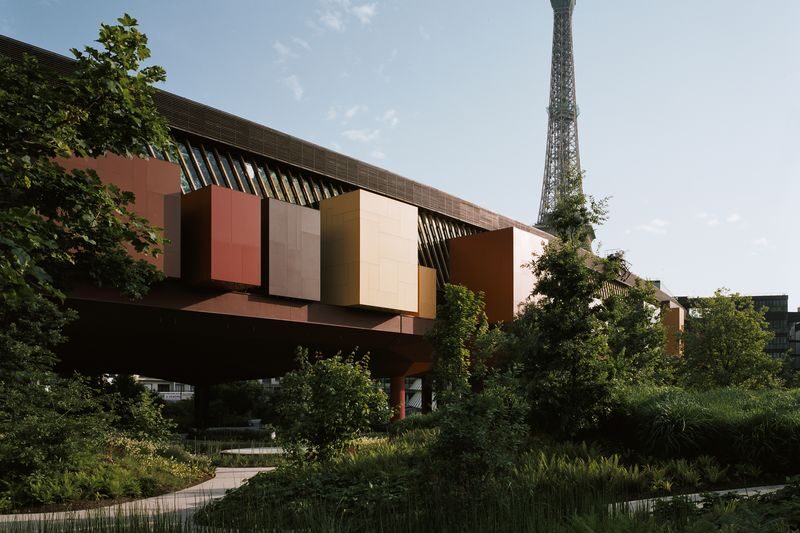
I like two things here: the vast cross-cultural collection, which gives you plenty to look at beyond the usual Paris art circuit, and Jean Nouvel’s unconventional building, with its vertical garden, colorful blocks, and tower-like exterior details. Both make the museum worth noticing inside and out.
One consideration: this is a large collection, and general admission does not include a guide. You may want to allow the full two to three hours, and to choose a few areas or objects to focus on rather than trying to take in every display at once.
- Key points before you go
- A Paris museum with a different point of view
- Start with the building and garden
- Four regions, many ways to look
- Temporary exhibitions add a reason to return
- Is the admission price good value?
- Timing, transport, and a few useful rules
- Who will get the most from this visit?
- Should you book the Musée du Quai Branly?
- FAQ
- How long should I plan for the museum?
- What does general admission include?
- Is a guide included with general admission?
- When is the museum open?
- Where is the museum?
- How can I get there by public transport?
- Can children visit for free?
- Is the museum wheelchair-accessible, and can I bring luggage?
- The Best Of Paris!
- More Tours in Paris
- More Tour Reviews in Paris
- Not for you? Here's more nearby things to do in Paris we have reviewed
Key points before you go
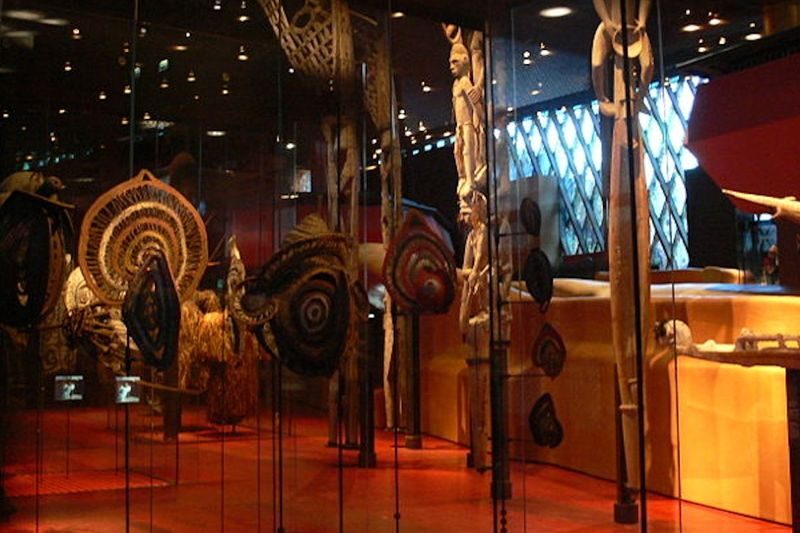
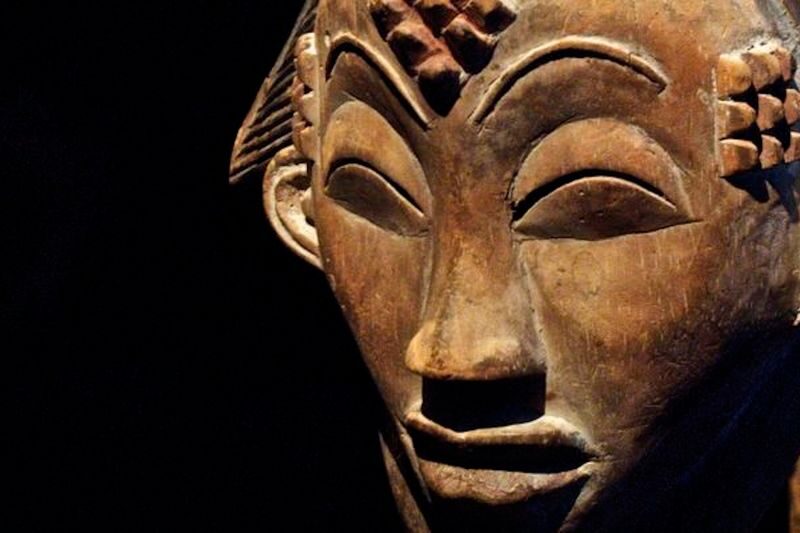
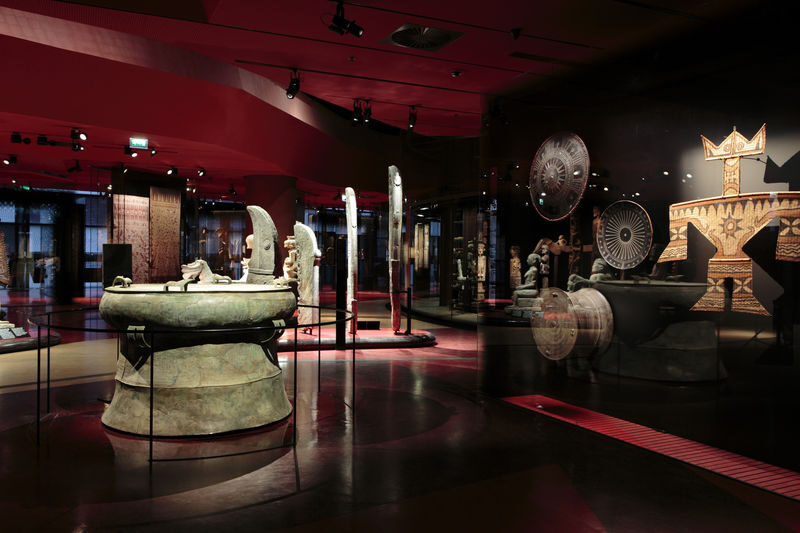
- Four regions, one museum: Permanent displays represent Africa, Asia, Oceania, and the Americas.
- Thousands of works: Expect masks, instruments, weapons, ceremonial objects, paintings, tapestries, and more.
- Architecture is part of the visit: Jean Nouvel’s design includes a vertical garden, colorful blocks, and radiator-like towers.
- Admission covers exhibitions: Your ticket includes both the permanent collection and temporary exhibitions.
- Plan for two to three hours: A shorter visit is possible, but the range of objects rewards a steady pace.
- Check the calendar: The museum is closed Mondays and stays open later on Thursdays.

👉 See our pick of the 25 Best Shopping Tours In Paris
A Paris museum with a different point of view
Paris is full of museums built around familiar European art movements and famous names. The Musée du Quai Branly – Jacques Chirac offers a different way to spend a museum afternoon: its displays bring cultural works from Africa, Asia, Oceania, and the Americas into a shared setting.
That scope is the clearest reason to visit. Rather than focusing on one country or period, the museum presents objects from societies across a wide geographic span, from Vancouver to Vanuatu and Uluru to Uganda. You can see how varied forms of cultural expression are, while also noticing the different purposes objects can serve: a mask, weapon, musical instrument, or ceremonial artifact is not simply a thing to admire. It can carry meaning tied to a community’s beliefs, traditions, or daily life.
The collection includes more than 3,500 pieces, with a large display of around 3,500 works described across the museum’s regions. The exact route and display can vary, especially in the temporary exhibitions, but the permanent collection gives you the broad framework. You are not signing up for a guided tour or a tightly timed itinerary. This is an independent museum visit, so you can set your own pace.
That freedom is useful if your interests are specific. You can spend longer with a region or type of object that catches your eye, and move on when you have had enough. The trade-off is that, without a guide, you will need to make your own choices about where to focus.
You can also read our reviews of more tours and experiences in Paris.



Start with the building and garden
The museum’s architecture deserves a look before you settle into the galleries. Designed by Jean Nouvel, the building has a distinct presence near the Eiffel Tower. Its exterior includes colorful blocks, radiator-like towers, and a vertical garden, details that make the museum feel unlike a conventional gallery building.
I like that the architecture signals a different kind of museum visit. The building is not just a plain container for objects; its forms and garden give you something to notice before and after the displays. If you are passing through the area, it is worth pausing outside rather than walking straight to the entrance.
Inside, the design is described as barrier-free, creating a continuous cultural setting rather than a sequence of sharply separated spaces. That can help the visit feel connected across regions, though a large collection can also make it harder to decide where to begin. If you prefer a clear route, take a moment to check the museum’s layout and exhibition information when you arrive.
The museum is situated beneath the Eiffel Tower, so it fits neatly into a day in this part of Paris. The setting is convenient if you are already visiting nearby, but the museum deserves more than a quick detour if you want to understand its broad collection. Give it at least enough time to see a few areas at a thoughtful pace.
Four regions, many ways to look
The permanent collection is organized around works from Oceania, Asia, Africa, and the Americas. That structure gives you a simple starting point: choose a region, then look at how different objects within it reflect cultural practices and ideas.
The range matters more than any single object type. Masks may draw your attention first, but musical instruments, weapons, ceremonial pieces, paintings, and tapestries add other ways to understand the cultures represented. Seeing these forms together can make the collection feel expansive, and it helps explain why a visit can occupy two or three hours without relying on a single headline attraction.
The museum’s strength is breadth. You can move between works from places far apart and begin to compare the choices people have made in materials, form, and use. That does not mean the displays will answer every question. If you want extensive background on a particular object or culture, a general-admission visit may leave you wanting more explanation, especially if you do not use an audio guide.
A practical approach is to resist the urge to see everything. Pick a region or theme that interests you, then give yourself room to pause when an object catches your attention. The collection is vast enough that a focused visit can feel more satisfying than racing through every gallery.
Temporary exhibitions add a reason to return
Admission includes both the permanent collection and temporary exhibitions. These changing displays are a useful part of the offer: they bring fresh material into a museum whose permanent collection already covers a wide range of cultures.
The content changes over time, so check what is showing on your chosen date before you go. A temporary exhibition may become the main reason for your visit, or it may be an extra stop after you have explored the permanent displays. Either way, the combination makes this ticket more than access to one fixed set of rooms.
If you have only two hours, decide in advance whether the temporary exhibition is a priority. If you have closer to three, you can give both parts of the museum more breathing room. The museum’s scale means that time spent on one exhibition will naturally reduce the time available elsewhere.
Is the admission price good value?
Admission starts at $17.25, with access to the permanent collection and temporary exhibitions included. For a museum with thousands of works and a visit that typically takes two to three hours, that can be good value if you enjoy looking closely and want more than a quick walk through a few rooms.
The ticket is less compelling if you plan to spend only a short time inside or mainly want a guided explanation. General admission is not presented as a guided tour, and a guide’s services are not included in the standard package. An audio guide may be available if selected; if you have chosen one, collect it at the designated audio-guide area in the reception hall.
Some visitors can enter free or at a reduced rate. Admission is free for children aged 0 to 18, disabled visitors, and Pass Education holders with valid identification. Reduced tickets are available onsite for European Union citizens under 26 with valid ID. If you qualify for one of these options, compare it with the paid ticket before booking.
The ticket is valid only on the selected date, and at the selected time if a time is specified. It can be booked for the same day, with instant confirmation, and cancellation at least 24 hours before the activity date gives you a full refund. Those terms offer some flexibility, but they do not make the ticket an open-date pass, so choose your visit day with care.


Timing, transport, and a few useful rules
The museum is open Tuesday, Wednesday, Friday, Saturday, and Sunday from 10:30 a.m. to 7 p.m. On Thursdays it stays open until 10 p.m. The last admission is one hour before closing, and the museum is closed Mondays. The Thursday hours can be handy if you want a later museum visit, but check the schedule for your date before setting out.
The address is 37 Quai Jacques Chirac, in Paris’s 7th arrondissement. For public transport, take RER C to Champ de Mars – Tour Eiffel. Metro options include line 9 to Iéna or Alma Marceau, line 6 to Bir-Hakeim, or line 8 to École Militaire.
You can present your mobile voucher and enter directly. Big bags and suitcases are not allowed, so travel light and avoid arriving with luggage you cannot bring inside. Pets are not allowed, except service animals with valid identification. The museum is wheelchair-accessible.
Who will get the most from this visit?
This museum suits you if you enjoy objects that open a window onto different cultures, or if you want a change of pace from Paris’s better-known painting collections. It is also a strong choice for a return visit to Paris: the permanent collection provides a broad base, while changing exhibitions give you a reason to check what is new.
Families may find the range of object types useful, since masks, instruments, and ceremonial objects give children plenty to notice. Children aged 0 to 18 enter free, which makes the ticket price easier to manage for a family. Still, the collection is large, so it helps to plan a shorter route and take breaks rather than expect young children to cover every display.
If you prefer a guided narrative, this may not be the best fit unless you add an audio guide where available. The independent format puts the pace in your hands, but it also asks you to supply some of the context. For a self-directed visit, that is a fair trade: you can follow your own interests and avoid being hurried along.
Should you book the Musée du Quai Branly?
Book if you want a substantial museum visit built around works from Africa, Asia, Oceania, and the Americas, and if you have at least two hours to give it. The broad collection, temporary exhibitions, and Jean Nouvel’s distinctive building make it a worthwhile choice near the Eiffel Tower, especially for anyone seeking a different angle on Paris’s museum scene.
Think twice if you only have time for a quick stop, need a guided tour included, or are carrying large bags. For most curious, independent museum-goers, the admission is a sensible way to spend part of an afternoon. Check the temporary exhibition schedule, choose your date carefully, and leave enough time to explore without turning the galleries into a race.
Musee du Quai Branly – Jacques Chirac Admission in Paris
“museums collection was really vast and it was interesting to see how the different cultures lived in the different continents”
FAQ
How long should I plan for the museum?
Plan on about two to three hours. You can spend less time inside, but the collection is broad and includes both permanent and temporary exhibitions.
What does general admission include?
It includes admission to the Musée du Quai Branly – Jacques Chirac, its permanent collection, and its temporary exhibitions.
Is a guide included with general admission?
No guide is listed as part of general admission. If you selected an audio guide, collect it at the designated audio-guide area in the museum’s reception hall.
When is the museum open?
It is open Tuesday, Wednesday, Friday, Saturday, and Sunday from 10:30 a.m. to 7 p.m., and Thursday from 10:30 a.m. to 10 p.m. It is closed Monday, and last admission is one hour before closing.
Where is the museum?
The museum is at 37 Quai Jacques Chirac, 75007 Paris, France.
How can I get there by public transport?
Take RER C to Champ de Mars – Tour Eiffel. Metro options are line 9 to Iéna or Alma Marceau, line 6 to Bir-Hakeim, or line 8 to École Militaire.
Can children visit for free?
Yes. Admission is free for children aged 0 to 18. Disabled visitors and Pass Education holders with valid ID also enter free.
Is the museum wheelchair-accessible, and can I bring luggage?
The activity is wheelchair-accessible. Big bags and suitcases are not allowed inside.