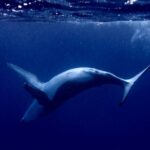
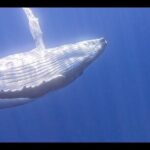
A humpback whale surfacing beside your boat is quite a sight. On this four-hour trip off Moorea, the crew watches for whales and, when conditions and animal behavior allow, guides you into the water for a respectful encounter. Humpbacks are usually in French Polynesian waters from mid-July to mid-November, but wildlife does not keep a booking calendar.
I like two things in particular: the six-person limit, which keeps the group small, and the guides’ focus on whale behavior and safe, respectful swimming. The boat can also bring you past Moorea’s striking coast, with chances to spot spinner dolphins, pilot whales, and turtles.
The main drawback is that this is a wildlife trip, not a guaranteed swim. You may spend much of the four hours searching from the boat, and the $295 price is a significant outlay for an encounter nature may not deliver on cue.
- Key points before you book
- Looking for whales off Moorea
- A four-hour outing with a small crew
- What happens before you enter the water
- More than humpbacks: dolphins, pilot whales, and turtles
- What 5 buys you
- Who will enjoy this trip most
- Practical packing and rules
- Should you book the Moorea whale trip?
- FAQ
- When are humpback whales usually in the waters around Moorea?
- How long is the boat trip?
- How many people are in the group?
- Which languages do the guides speak?
- Is swimming with whales guaranteed?
- What wildlife might I see besides humpback whales?
- What is included in the price?
- What should I bring?
- Can I cancel for a refund?
- The Best Of Moorea!
- More Boat Tours & Cruises in Moorea
- More Tours in Moorea
- More Tour Reviews in Moorea
- Not for you? Here's more nearby things to do in Moorea we have reviewed
Key points before you book
- Humpback season is usually mid-July to mid-November. Dates vary, so check your travel dates before you plan around a whale encounter.
- The group is limited to six people. That gives you more room than a crowded boat, though it does not make the whales more predictable.
- Swimming is conditional. Guides brief you on safety and respect for the animals before anyone enters the water.
- The trip lasts four hours. Hotel pickup and drop-off, snorkeling gear, and drinks are included.
- Other marine life may appear. Spinner dolphins and pilot whales are possible, and one visitor specifically asked to see turtles.
- Be ready for a boat-focused outing. Whale location and behavior can shape the day, and sometimes there is more searching than swimming.
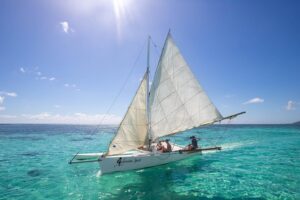
👉 See our pick of the 10 Best Sailing Experiences In Moorea
Looking for whales off Moorea
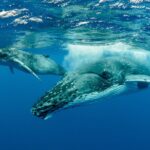
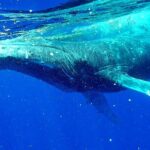
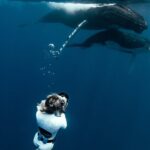
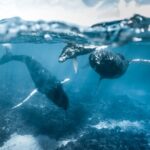
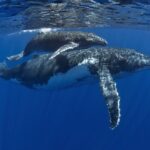
This trip is built around a simple but compelling possibility: seeing humpback whales in their natural habitat, then entering the water if the situation is right. French Polynesia is one of the rare places where swimming with humpbacks is permitted, but that permission comes with an important responsibility. The animals set the terms, and the guide’s safety briefing is part of the experience, not a formality to hurry through.
Humpbacks are usually present from mid-July to mid-November. Their arrival dates vary, so a trip early or late in that window may not offer the same odds as one taken during the heart of the season. Even in whale season, no crew can promise a sighting or a swim. You are paying for a guided search and the chance to meet wild animals, not a scheduled performance.
That uncertainty is worth accepting if you value the search as well as the possible encounter. Watching the water, scanning for signs of whales, and seeing the coast from a boat are part of the outing. If your main goal is a guaranteed swim, this is not the right kind of activity. If you can enjoy a day shaped by wildlife, the unpredictability is part of the bargain.
You can also read our reviews of more boat tours in Moorea
A four-hour outing with a small crew
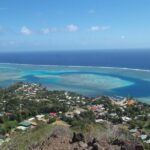
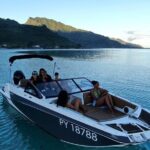
The tour lasts four hours and includes hotel pickup and drop-off, so you do not need to arrange separate transport to the departure point. The group is capped at six participants. That is a useful limit on a boat where everyone will want a clear view and may need to listen closely to the guide’s instructions.
The guides speak French and English. They share facts and local legends about the area, and explain whale migration and behavior as you watch. The practical value is clear: understanding why the crew is waiting, changing course, or choosing not to approach can make the search feel purposeful rather than like a long ride with crossed fingers.
The exact order of the outing will depend on where the whales are and what they are doing. The crew searches from the boat, observes the animals, and decides whether an in-water approach is appropriate. You should be prepared for time on the water before any chance to swim. One person summed up the trade-off neatly: the outing was more boating than swimming, while recognizing that whale encounters depend on luck.
What happens before you enter the water
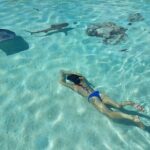
If the crew finds whales and conditions allow, the guides brief you on safety and respectful behavior before you get in. That matters. These are large wild animals, not a photo prop, and a good encounter depends on giving them space and following the crew’s instructions.
The goal is to observe whales in their natural setting, including their interactions with one another, rather than to touch or chase them. Touching marine life and animals is not allowed. The rules also prohibit feeding animals, fishing, and bringing drones, among other restrictions. Treat these limits as part of responsible wildlife watching, not as obstacles to having fun.
Bring swimwear and a towel, and apply sunscreen before the trip. Sunscreen and towels are not included, even though snorkeling gear and drinks are. The supplied information also asks you to bring snorkeling gear, while the included items say gear is provided. To avoid relying on that ambiguity, check with the operator before departure if you need to know whether you should bring your own.
There is no guarantee that you will get into the water. The guide’s decision will depend on the encounter, and a whale that moves on or behaves in a way that makes swimming unsuitable may mean you stay aboard. That can be disappointing if you have pictured a long swim, but it is the right way to put the animals first.
More than humpbacks: dolphins, pilot whales, and turtles
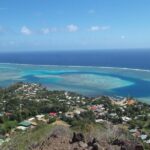
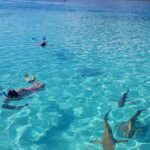
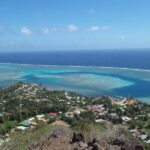
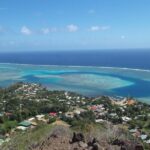
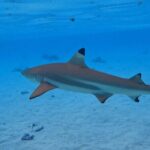
Humpbacks are the main attraction, but the waters around Moorea may offer other wildlife sightings. Spinner dolphins and pilot whales are among the possibilities, and turtles may also appear. One repeat customer recalled a particularly memorable day when a whale stayed with the group for a long time, followed by a visit to a blue lagoon and a stop to see turtles at their request.
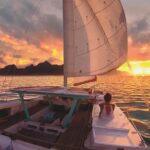
That is a vivid example, not a promised itinerary. The tour details do not guarantee a lagoon stop or a turtle sighting, and wildlife can be patchy. Still, it helps explain why the day can be rewarding even when the whale encounter is brief: the surrounding sea life and Moorea’s coast give the crew other things to look for.
Bring a camera if you want pictures of the coastline and the boat outing. For whale encounters, keep your expectations sensible. A close, safe look is more important than getting a perfect shot, and the best moments may happen quickly. Follow the guide’s directions rather than trying to manage a camera and the water at the same time.
More Great Tours NearbyWhat $295 buys you
At $295 per person, this is a premium half-day outing. The price includes four hours on the water, hotel transfers, snorkeling gear, drinks, a bilingual guide, and a group of no more than six. If you value the small group and guided wildlife search, those inclusions make the cost easier to assess than a simple boat ride.
The price is harder to justify if your measure of value is minutes spent swimming. The whale may be distant, the search may take time, or the crew may decide that entering the water is not appropriate. There is also no promise of seeing dolphins, pilot whales, or turtles. In short, you are paying for access to a carefully guided chance, not certainty.
For a trip that delivers a close whale encounter, the price may feel worthwhile for a long time afterward. A repeat visitor described a whale staying with the group, and another called the day a lasting memory for the family. Those are exceptional outcomes, but they show what is possible when luck and animal behavior line up.
Cancellation is free up to 24 hours in advance for a full refund. That gives you some flexibility if plans change, though it does not remove the weather and wildlife uncertainties once the trip is underway.
You can also read our reviews of more whale watching tours in Moorea
Who will enjoy this trip most
This is best for confident swimmers who are comfortable on a boat, can follow instructions, and are happy to let wildlife dictate the schedule. It can suit people who want a guided whale search rather than a standard sightseeing cruise, and who value responsible conduct around animals as much as the chance to swim.
It is not suitable for non-swimmers, people with mobility impairments, wheelchair users, people with back problems, or those with epilepsy. The activity is also not recommended for people prone to seasickness, people with certain pre-existing medical conditions or recent surgeries, or those with a low level of fitness. People over 280 pounds (127 kilograms) are also listed as unsuitable. If any of these points may apply to you, check with the operator before booking.
The boat may be a poor match if you dislike motion or feel uneasy when plans are uncertain. Four hours can feel long when the crew is searching and the sea is moving. If seasickness is a concern, think carefully before committing; the trip details specifically flag motion sickness as a reason to avoid it.
Children are not specifically listed as unsuitable by age, but unaccompanied minors are not allowed. A family with older children may find the wildlife encounter memorable, provided each person can swim, manage the boat setting, and follow the guide’s instructions. Do not assume the trip is appropriate for young children based on the whale appeal alone.
Practical packing and rules
Wear swimwear and bring a towel and sunscreen. Drinks and snorkeling gear are included, but the activity notes also list snorkeling gear among the things to bring, so confirm the arrangement if you have equipment you prefer to use. Large bags and oversize luggage are not allowed, so pack light.
A long list of items and behaviors is prohibited. In practical terms, leave pets, alcohol and drugs, smoking or vaping materials, drones, fishing gear, surfboards, bikes, and bulky mobility equipment behind. You must not touch or feed animals, litter, or use a flashlight around marine life. Assistance dogs are the exception to the pet restriction.
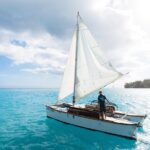
The boat trip can be a special way to see Moorea from the water, but it is not a general sightseeing cruise with a fixed series of stops. The crew’s priorities are finding whales and deciding whether a respectful in-water encounter is possible. Go for the animals and the chance to learn about them, not for a tightly scripted route.
Should you book the Moorea whale trip?
Book it if humpbacks are a major reason for your visit, you can travel during the usual season, and you are comfortable with the possibility of spending more time on the boat than in the water. The six-person cap, bilingual guidance, transfers, and focus on respectful wildlife encounters are real advantages.
Skip it if you need a guaranteed swim, are prone to seasickness, or would feel that $295 was wasted without a close whale encounter. Before booking, check that your dates fall within the usual mid-July to mid-November season and confirm the snorkeling gear question with the operator. If you can accept the uncertainty, this is a rare chance to watch Moorea’s marine life on its own terms.
Moorea: Whale Swimming Boat Trip
FAQ
When are humpback whales usually in the waters around Moorea?
Humpbacks are typically present from mid-July to mid-November, though the dates can vary.
How long is the boat trip?
The trip lasts four hours.
How many people are in the group?
The group is limited to six participants.
Which languages do the guides speak?
The live guides speak French and English.
Is swimming with whales guaranteed?
No. The opportunity depends on whale presence and behavior, and the guides decide whether an in-water approach is appropriate.
What wildlife might I see besides humpback whales?
Spinner dolphins and pilot whales are possible, and turtles may also be seen.
What is included in the price?
Hotel pickup and drop-off, snorkeling gear, and drinks are included.
What should I bring?
Bring swimwear, a towel, and sunscreen. The activity information also lists snorkeling gear as something to bring, although it is listed as included, so check with the operator if you are unsure.
Can I cancel for a refund?
You can cancel up to 24 hours in advance for a full refund.
You can check availability for your dates here: