Malacca’s past is easiest to grasp on foot, where Dutch Square, St Paul’s Hill and the old town’s places of worship sit within a compact historic centre. This four-hour walk connects those landmarks to the city’s Portuguese, Dutch, British and modern Malaysian chapters.
I like two things here: the route brings colonial landmarks and living religious sites into one morning, and the guides often add local anecdotes that give meaning to details you might otherwise pass by. Guides named in recent tours include Oliver, KC, Mr Low and Bernard Teng.
The trade-off is physical: expect several hours on your feet, stairs and tropical heat, with no wheelchair access. The stops are rewarding, but this is not a gentle stroll for everyone.
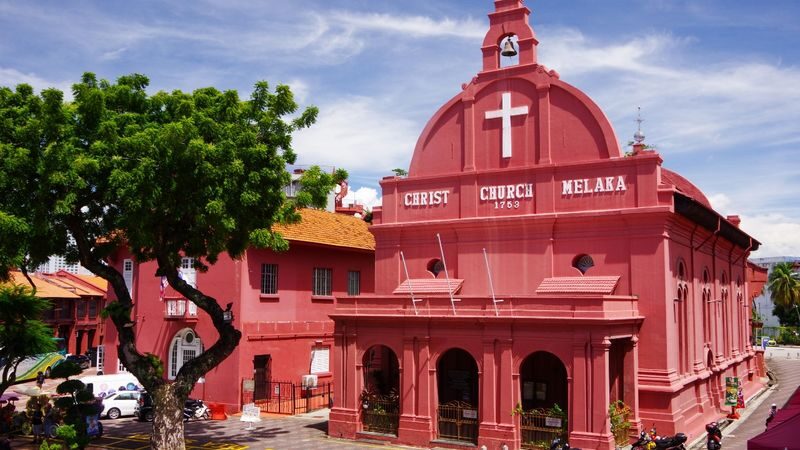
- Red Square sets the scene: Start at Dutch Square, the tour’s meeting point and a natural introduction to Malacca’s historic centre.
- St Paul’s Hill adds a change of pace: The climb and 30-minute guided visit bring you to a landmark above the old town.
- A Famosa and Independence Memorial connect eras: The route links Portuguese-era remains with Malaysia’s road to independence.
- Three religious traditions feature on the route: Visit a Hindu temple and a mosque, with the old town offering a view of Malacca’s multicultural life.
- Four hours means a substantial walk: Proper shoes, water, sun protection and rain cover are sensible choices.
- Guides are central to the value: Recent tours have featured guides such as Oliver, KC and Mr Low, whose storytelling and local context are a recurring strength.
- A four-hour walk through Malacca’s past
- Red Square: start with Malacca’s most familiar face
- St Paul’s Hill: history with a climb
- Puerta de Santiago: a surviving piece of A Famosa
- Independence Memorial: the modern chapter
- Old Town’s Hindu temple and mosque
- What the guide adds to the walk
- Price and what the fee covers
- Heat, stairs and what to bring
- Where the walk leaves you
- Should you book this Malacca walking tour?
- FAQ
- How long is the Malacca walking tour?
- Where does the tour start?
- Where does the tour end?
- What is included in the price?
- Is the tour suitable for children?
- Is the tour wheelchair-accessible?
- What should I bring?
- What happens if the group has fewer than three participants?
- More Tours in Malacca
- More Tour Reviews in Malacca
- Not for you? Here's more nearby things to do in Malacca we have reviewed
A four-hour walk through Malacca’s past
 1 / 9
 2 / 9
 3 / 9
 4 / 9
 5 / 9
 6 / 9
 7 / 9
 8 / 9
 9 / 9
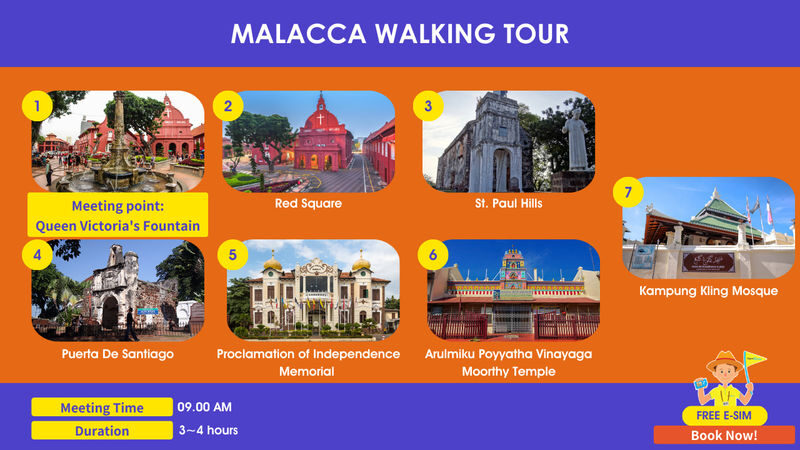
This is a guided walk through central Malacca, beginning at 9:00 am at Dutch Square, also known as Red Square, and running until about 1:00 pm. It covers a succession of historic sites rather than relying on one major attraction, so the value comes from the connections a guide draws between them.
Malacca’s location and history made it a meeting point for different cultures and colonial powers. On the walk, you move from Dutch-era architecture to a hilltop church, Portuguese fort remains, an independence memorial and religious sites that help show how varied the city’s cultural life is.
That range is useful if you have only a short time in town. Instead of seeing the main square, taking a few photos and leaving with a jumble of names, you get a guided account of how the landmarks fit together. The tour is described as English-language, though some guides also speak other languages. If that matters to you, check directly before booking.
Red Square: start with Malacca’s most familiar face
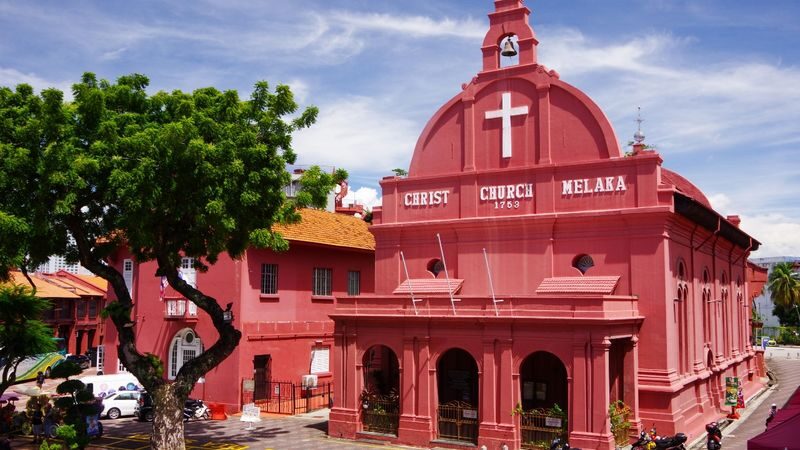
The meeting point is Dutch Square, the red-painted central square often called Red Square. You have an hour here with a guide, which gives the opening stop room to do more than serve as a photo break. It is a practical place to begin because several of the tour’s main historic sites lie within walking distance.
A guide can help you read the square as part of the city’s colonial story rather than as a collection of old buildings. The guided walk is especially useful if you like to know why a place matters before moving on. Several guides on recent departures, including Oliver and Mr Low, have been singled out for explaining the history in detail and making the stories engaging.
The first hour also sets the pace for the rest of the morning. Take a moment to check your footwear, water and sun protection before the group moves on. There is no need to treat this as a race: the route includes stairs and several stops, and the heat can make a brisk pace feel longer than it looks on a map.
You can also read our reviews of more tours and experiences in Malacca.

St Paul’s Hill: history with a climb
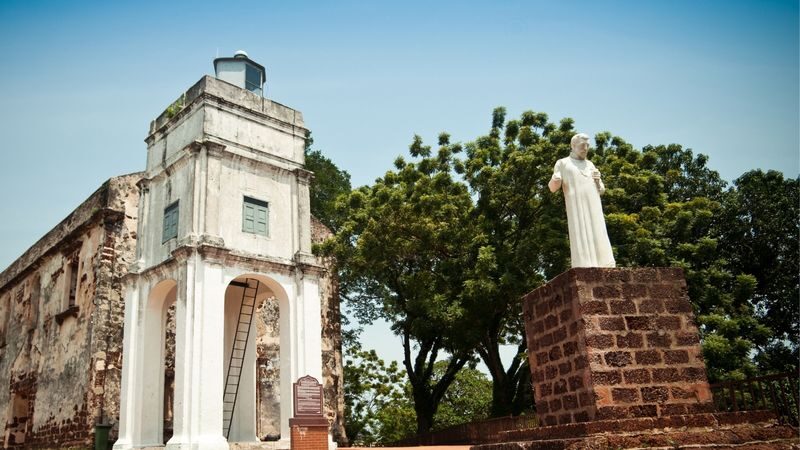
The tour allows 30 minutes for St Paul’s Hill. The uphill walk and stairs are part of the experience, not a small footnote. The climb may be manageable for many people, but it can be tiring in the midday sun, particularly if you are not used to walking in warm weather.
At the top, St Paul’s Church offers a historic setting and a view across the surrounding old town. A guide can help place the church in Malacca’s changing eras and explain why the hill has been an important landmark. This is one of the stops where interpretation matters: an empty ruin can look like just another old wall until someone gives it a human story.
Allow yourself to listen and look around rather than focusing only on photographs. The schedule is guided and fairly full, so you may not have unlimited time at each location. If stairs or steep paths are a problem for you, consider that carefully before booking.
Puerta de Santiago: a surviving piece of A Famosa
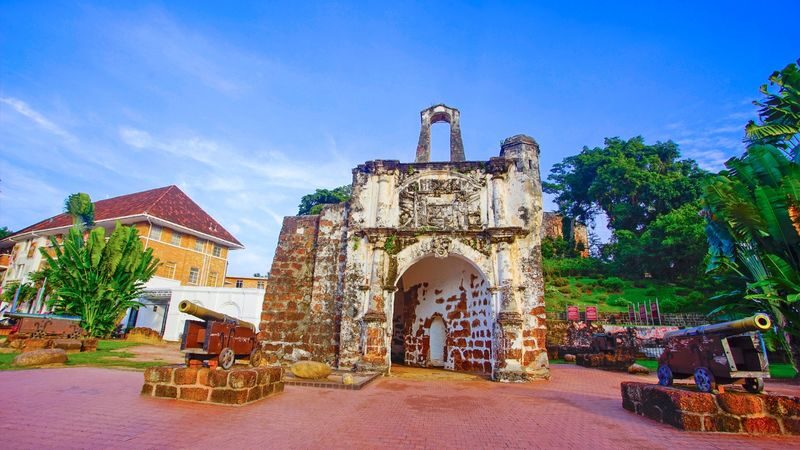
Next comes Puerta de Santiago, scheduled for 20 minutes. It is associated with A Famosa, the Portuguese fort built during the colonial period. The short stop works best as a focused history lesson: the surviving gate is modest, but it points to a much larger fort and the strategic role Malacca played.
This is a good place to ask how the Portuguese, Dutch and British periods relate to one another. The tour’s strongest feature is its ability to connect separate monuments into a timeline, rather than leaving you with a string of names and dates. Guides such as Oliver and Mr Low have been praised for adding context and answering questions patiently.
Because the stop is brief, do not expect an extended visit to a large complex. You are here to understand the remains and their place in the city’s story, then continue on foot.
Independence Memorial: the modern chapter
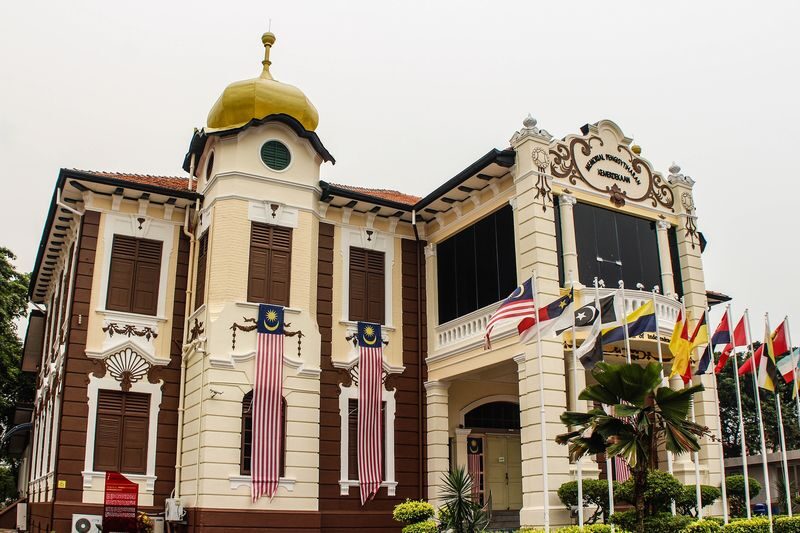
The Proclamation of Independence Memorial gets 20 minutes. After the older colonial landmarks, this stop brings the story closer to modern Malaysia and its path to independence. That shift is valuable: Malacca is not simply a preserved colonial town, and the tour’s sequence gives you a chance to see its history as a continuing story.
A good guide can help make the memorial more than a pause between older buildings. Recent tour accounts describe guides explaining the past alongside present-day Malaysian culture and urban development. That mix helps you understand how the city’s identity has changed, rather than treating its history as something that ended with colonial rule.
The schedule gives you a concise introduction, not an exhaustive museum visit. If modern Malaysian history is a particular interest, use the stop to ask questions while the guide is there.
Old Town’s Hindu temple and mosque
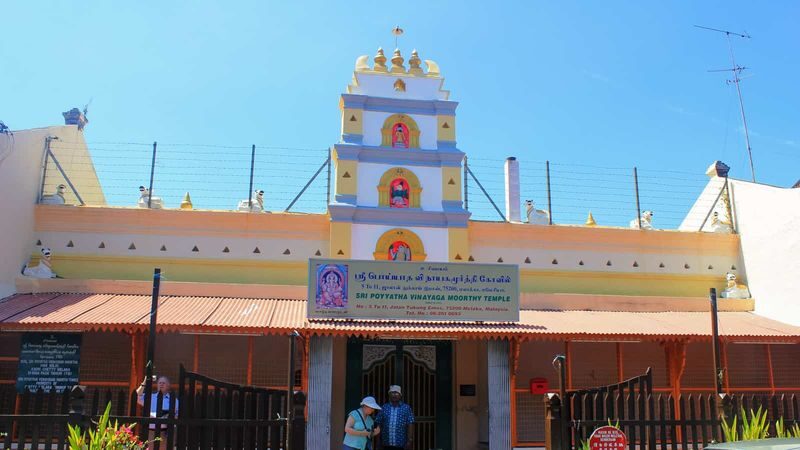
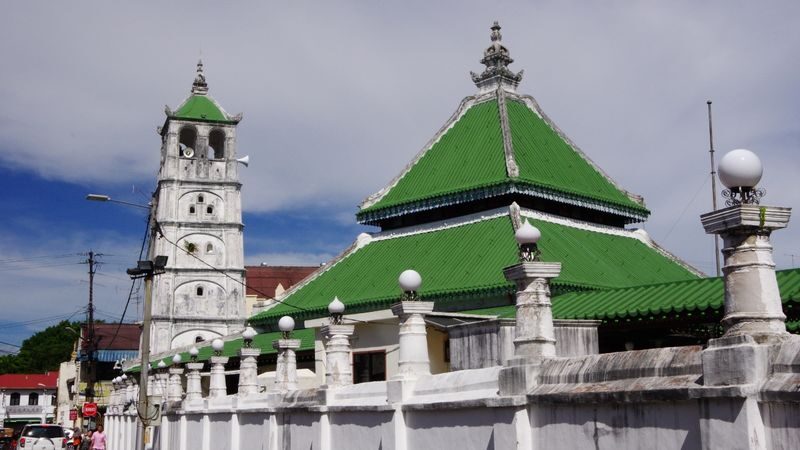
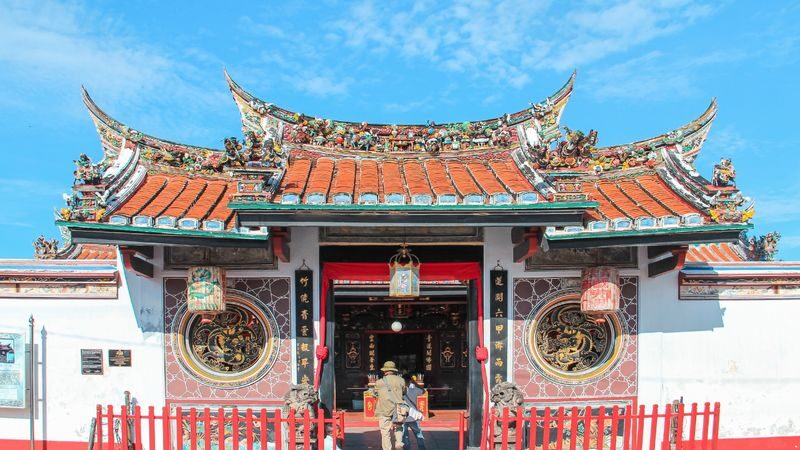
The final two scheduled visits bring the tour into a different part of Malacca’s cultural life. Arulmiku Poyyatha Vinayaga Moorthy Temple has a 30-minute guided stop, followed by 20 minutes at Kampung Kling Mosque. Together, they offer a chance to see how different religious traditions sit within the old town.
The temple is a Hindu place of worship, while Kampung Kling is a mosque. The route’s pairing makes the idea of Malacca as a multicultural city concrete: you are not just hearing about diversity in general terms, but visiting distinct religious sites in the same historic centre. Be respectful at both, follow the guide’s instructions and dress appropriately.
The broader walking route is also described as showing the old town’s harmonious, multicultural way of life. Guides may share local stories and details beyond the listed landmarks. One guide, for example, was praised for explaining how buildings, streets and even trees fit into the city’s past. That kind of local observation is where a guided walk can add value beyond a self-guided map.
Batu Seremban, a traditional Malaysian game, is named among the experience highlights. It is not assigned a specific place or time in the scheduled route, so I would not book expecting a guaranteed demonstration. If trying the game is important to you, ask the operator whether it is part of your departure.
What the guide adds to the walk
The guide is the key to this experience. A four-hour route with multiple historical stops can feel like a list of buildings without a good storyteller. Here, the named guides in recent tours include Oliver, KC, Mr Low, Bernard Teng and Olivia. Visitors have described guides who explain history patiently, answer questions and add personal anecdotes or local context.
Oliver has been praised for connecting Malacca’s Portuguese, Dutch, British and modern Malaysian eras through storytelling. KC is often noted for an enthusiastic, friendly style, while Mr Low has been described as patient and thorough. Bernard Teng has been singled out for taking care of families and children. These are individual guides, so the person leading your departure may differ.
Small groups can make it easier to hear explanations and ask questions. One recent group had five people, though the group size is not guaranteed. Private tours are also offered if you want a more personal pace or flexibility. One private-tour account described the guide adjusting the route and adding a lunch and local-shopping stop, but that should be treated as an example, not a standard inclusion.
Price and what the fee covers
The experience summary lists prices from US$28.35, while the package choices show the English join tour from US$35.20 and the private tour from US$114.85. Prices can vary, so check the amount shown for your date and chosen package before paying.
The group option is the better-value choice if you want a guide’s explanations without paying for a private outing. You are getting a four-hour walking route through several important sites, with an English-speaking guide. The fee does not include admission to attractions, meals, drinks, tips or personal expenses, so budget separately for any entry charges and refreshments.
A private tour costs substantially more, but may suit you if you value direct access to the guide, have specific interests or want a more flexible pace. The tour’s value depends less on the number of buildings you see than on how much you want historical context. If you are happy to read signs and explore independently, a guided tour may not be necessary. If you want the story behind the sites, the fee buys useful structure and interpretation.
Heat, stairs and what to bring
This walk involves considerable walking and stairs, and the activity is not wheelchair-accessible. It is not recommended for people with high blood pressure, asthma or other serious medical conditions. If you have a health concern, check with a medical professional before booking.
Come prepared for sun and sudden rain. Bring water, sunscreen, sunglasses, a hat or cap, and a raincoat or poncho. Cash is also listed as useful. Wear comfortable shoes with good support, as the route covers multiple sites and includes a hill. The tour runs from morning into early afternoon, and the hottest part of the day can make a long walk harder, especially for children.
Children aged 0 to 11 can join free, but all children aged 0 to 17 must be with a paying adult. Free entry does not mean an easy outing: consider your child’s stamina and comfort with stairs. The operator may reschedule or refund if fewer than three people have booked, and late arrivals or no-shows are not refundable. The tour is set for a particular date and time, so arrive at Red Square before the 9:00 am departure.
Where the walk leaves you
The scheduled return time is 1:00 pm, with the stated end point at Jonker Street on Jalan Hang Jebat. That is a handy finish for continuing your own exploration of the old town. The meeting point is Red Square, so do not assume you will return to where you began.
The schedule can change with weather or traffic conditions. Since this is a walking tour, weather chiefly affects comfort and timing. Bring rain protection even if the morning looks clear, and keep your plans after 1:00 pm flexible enough to allow for a change.
Should you book this Malacca walking tour?
Book it if you want a substantial introduction to Malacca’s history and culture, prefer a guide to explain what you are seeing, and can manage four hours of walking with stairs. It is especially useful early in a visit: the route can give you the context to appreciate the city’s historic centre when you explore again on your own.
Choose the join tour for a lower-cost guided experience, or consider the private option if personal attention and a more adaptable pace matter more than price. Skip it if heat, stairs or a long walk would make the morning uncomfortable. And if Batu Seremban is a deciding factor, confirm whether it will be included before you book, since it is named as a highlight but not placed in the timed route.
Malacca Walking Tour: A Myriad of Memories & Marvels
“Although the initial communication wasn't smooth, the tour guide later explained the itinerary in great detail, answering all our questions. This a…”
FAQ
How long is the Malacca walking tour?
The tour runs from 9:00 am to 1:00 pm, for about four hours. The schedule may change depending on traffic and weather.
Where does the tour start?
Meet at Dutch Square, also called Red Square, in Malacca. Late arrivals and no-shows are not eligible for a refund.
Where does the tour end?
The stated end point is Jonker Street on Jalan Hang Jebat, Malacca. It does not return to Red Square.
What is included in the price?
An English-speaking guide and guided tours at the attractions are included. Admission fees, meals, drinks, tips and other personal expenses are not included.
Is the tour suitable for children?
Children aged 0 to 11 can join free, and children aged 0 to 17 must be accompanied by a paying adult. The walk involves considerable walking and stairs, so consider a child’s stamina, especially in the heat.
Is the tour wheelchair-accessible?
No. The activity is not wheelchair-accessible and includes a considerable amount of walking and stairs.
What should I bring?
Bring water, sunscreen, sunglasses, a cap or hat, a raincoat or poncho, and cash. Comfortable walking shoes are a practical choice for the long route and stairs.
What happens if the group has fewer than three participants?
If the minimum of three participants is not met, the activity will be rescheduled. You will be offered a new time or a refund.