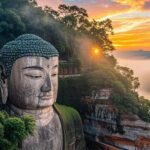
The Leshan Giant Buddha is not a statue you simply glance at and pass by. Carved into a cliff above the meeting of the Min, Qingyi, and Dadu rivers, it rises about 70 meters, a calm, monumental figure that makes the surrounding rock feel like part of the artwork. I like the chance to see it from both the cliff path and, with a separate boat ticket, from the river.
I also like that the site includes Lingyun Temple, whose courtyards and incense offer a quieter counterpoint to the grand scale of the Buddha. The trade-off is physical: the route involves many steep stairs, and the narrow path down toward the Buddha’s feet can move slowly in crowds.
Key points to know
- The Buddha is about 70 meters tall: This Tang Dynasty Maitreya was carved over 90 years by three generations of craftsmen.
- The basic ticket is admission only: A boat ride, sightseeing bus, and guided day tours are separate package options.
- The footpath is steep and can bottleneck: Allow time for stairs and queues, especially if you want to reach the Buddha’s feet.
- Lingyun Temple adds a quieter stop: Its triple-courtyard layout, greenery, and active prayer spaces give the visit a more personal scale.
- A boat gives you a full-statue view: It is an alternative to the climb, or a useful second perspective, but it has its own pier and queue.
- Plan for roughly 2.5 to 3.5 hours: That estimate excludes peak-season waiting, and a longer visit may be needed for additional scenic-area stops.
- Key points to know
- Meeting the Buddha at the river confluence
- What the basic admission ticket covers
- Walking the cliff route to the Buddha’s feet
- Lingyun Temple and the quieter side of the visit
- The boat ride: easier on the legs, different in character
- Timing, crowds, and getting around the site
- Price, ticket rules, and what to verify
- Who will get the most from this visit
- Should you book the Leshan Giant Buddha ticket?
- FAQ
- How tall is the Leshan Giant Buddha?
- What is included in the basic Leshan Giant Buddha ticket?
- Can I see the Buddha by boat instead of walking?
- How long should I allow for a visit?
- Is the route to the Buddha’s feet open?
- What are the opening hours?
- What identification do I need to enter?
- More Tours in Leshan
- More Tour Reviews in Leshan
- Not for you? Here's more nearby things to do in Leshan we have reviewed
Meeting the Buddha at the river confluence
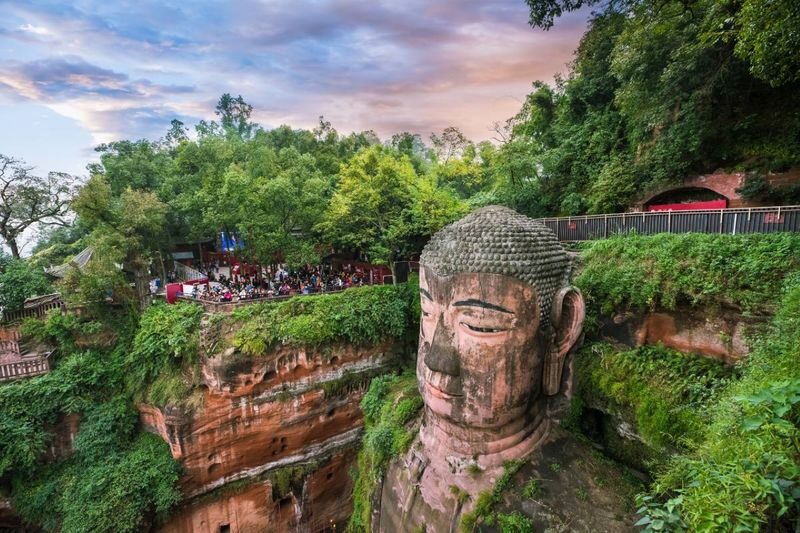
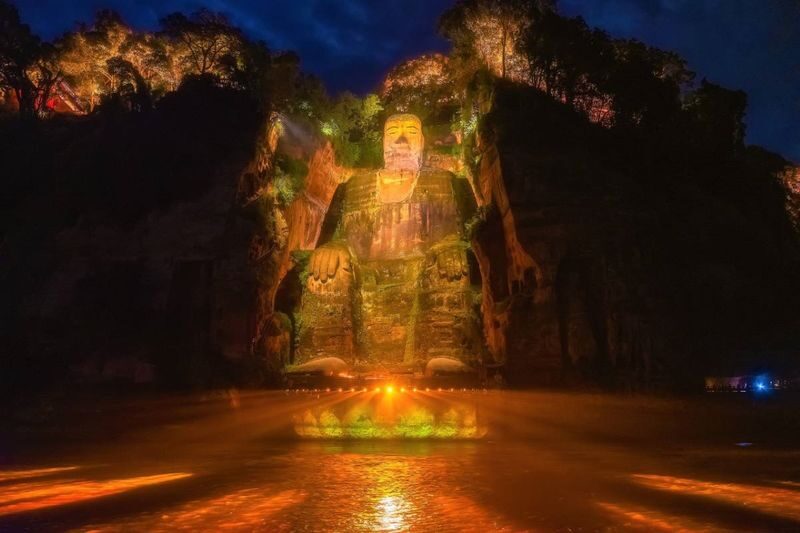
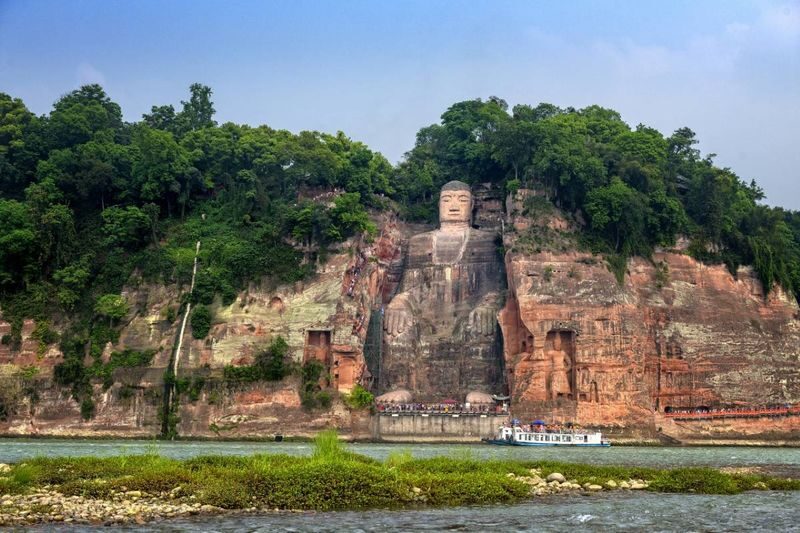
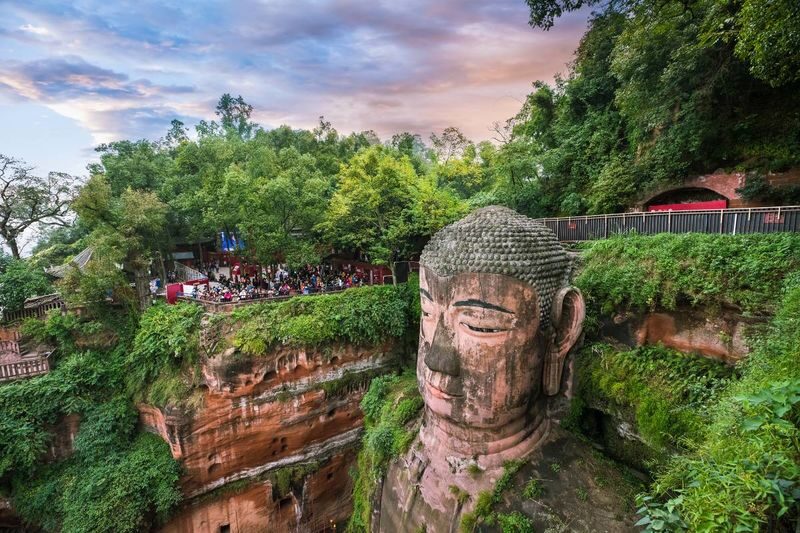
Leshan’s great attraction is its scale, but its location is part of the story. The Buddha sits on Qixia Peak on Lingyun Mountain, above the confluence of the Min, Qingyi, and Dadu rivers. From the cliff route, you meet the statue as part of a larger mountain and temple site, not as an isolated monument in a plaza.
The seated figure represents Maitreya, the Buddha associated with the future. It was carved during the Tang Dynasty and took about 90 years to complete, with three generations of craftsmen contributing to the work. Even without modern machinery, they shaped a figure roughly 70 meters high into the cliff face. That achievement is easier to grasp when you stand near it and look up.
The site is recognized by UNESCO as a World Cultural and Natural Heritage Site. The distinction makes sense here: the carved Buddha, mountain setting, rivers, and temples belong together. Give yourself time to notice how the statue fits the rock, rather than treating the visit as a quick photo stop.
You can also read our reviews of more tours and experiences in Leshan.

What the basic admission ticket covers
The standard package is a daytime admission ticket to the Leshan Giant Buddha scenic area. It does not include every experience in the area. Boat tickets, sightseeing-bus rides, and guided excursions appear as separate options, so check the exact package name before paying.
That distinction matters because the options can look similar when you are booking quickly. A ticket called Leshan Giant Buddha tickets is not the same as a Leshan Giant Buddha Boat Ticket, and admission should not be assumed to cover a boat ride or other attractions. The Oriental Buddha Park, which contains thousands of additional Buddha statues, also requires a separate ticket.
The advertised starting price is $3.29, but the cost depends on the selected package and current pricing. Some ticket categories may be cheaper at the venue, while online booking can be convenient when you want to secure a date in advance. Compare the exact package and any eligibility rules before deciding that one channel is automatically the better value.
Walking the cliff route to the Buddha’s feet
The on-foot route gives you the closest encounter with the statue. You move through the scenic area and eventually descend toward the Buddha’s feet, where the scale is especially striking. From below, the statue’s toes and legs become landmarks in their own right, and the cliff face rises around you.
The approach is also the more demanding choice. Expect plenty of walking and steep stairs, with a slow descent possible when the path is crowded. One visitor waited about 30 minutes to walk down, and narrow sections can turn into a stop-and-go procession. Start early if you want a better chance of moving at your own pace, and do not schedule a tight connection immediately afterward.
The Nine-Bend Plank Road is currently closed for maintenance, according to the activity information. Visitors can use the Lingyun Plank Road to reach the Buddha’s foot area instead. Its capacity is limited, so queues are possible. Check the route status close to your visit, since maintenance and crowd conditions can affect the plan.
This route is best if you are comfortable with stairs and want to feel the monument at close range. If you have reduced mobility, a child who tires easily, or an older companion who struggles with steps, consider the boat option instead. The scenic area is not a flat stroll.
Lingyun Temple and the quieter side of the visit
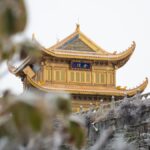
Lingyun Temple offers a change of pace from the cliff path. Its layout includes three courtyards, the Grand Hall, and the Sutra Collection Building. The temple remains an active place of worship, with incense and people coming to pray, so it is worth entering with a respectful, unhurried manner.
The grounds are notably green, with trees and potted plants around the buildings. After the open river views and steep stairways, this can be a welcome pause. You get a sense of the Buddhist culture around the monument, rather than seeing the Buddha only as an engineering feat.
Allow enough time for the temple and other sections of the scenic area, but keep the ticket boundaries in mind. The basic admission does not mean every nearby attraction is included. If you are aiming to see additional sites, check their entry costs and opening times before building them into your day.
The boat ride: easier on the legs, different in character
A boat ticket gives you the broad view that is difficult to get from the footpath. From the river, you can take in the seated Buddha as a whole, set against the cliff and riverbank. The cruise is commonly described as about 30 minutes, though the actual ride may feel shorter; it is enough time for photographs and a clear view, not a long river outing.
This is a good choice if you want to avoid the stair climb, are travelling with children or older family members, or are short on time. It also pairs well with the walk if you want to see the Buddha from above and then from the water. The two views are genuinely different, rather than duplicate versions of the same stop.
The boat has its own practical demands. You may need to collect a physical ticket, queue for boarding in batches, and use a shuttle or walk between the ticket centre and pier. Pier names and directions can be confusing, and the pickup location may vary with water levels. Follow the current instructions for your specific boat ticket, and leave extra time for the transfer and queue.
The boat is not automatically the easiest door-to-door option. Heat, humidity, walking to the pier, and waiting can make the process tiring even though you avoid the mountain stairs. If you choose this package, arrive with time to spare and keep your booking details and valid identification handy.


Timing, crowds, and getting around the site
The scenic area’s stated daytime hours are 7:30 a.m. to 6:30 p.m. from April 1 through October 7, and 8 a.m. to 5:30 p.m. from October 8 through March 31. Evening hours are also listed for those seasons, 7:30 p.m. to 10:30 p.m. in the warmer period and 7 p.m. to 10 p.m. in winter. The included ticket is described as daytime admission, so do not assume it provides evening entry.
A typical visit takes about 2.5 to 3.5 hours, not counting peak-season queues. That is a useful baseline for the main Buddha and temple visit, but the full scenic area can take longer if you add the boat, bus, or other stops. One visitor allowed seven to eight hours for a much fuller visit. If you have limited time, decide in advance whether the foot route, boat, or both matter most.
Arriving early is sensible. It gives you a better chance of reaching the narrow descent before the heaviest crowds and helps you avoid the worst midday heat. The stairs are not a place to rush, so wear comfortable shoes and build in pauses.
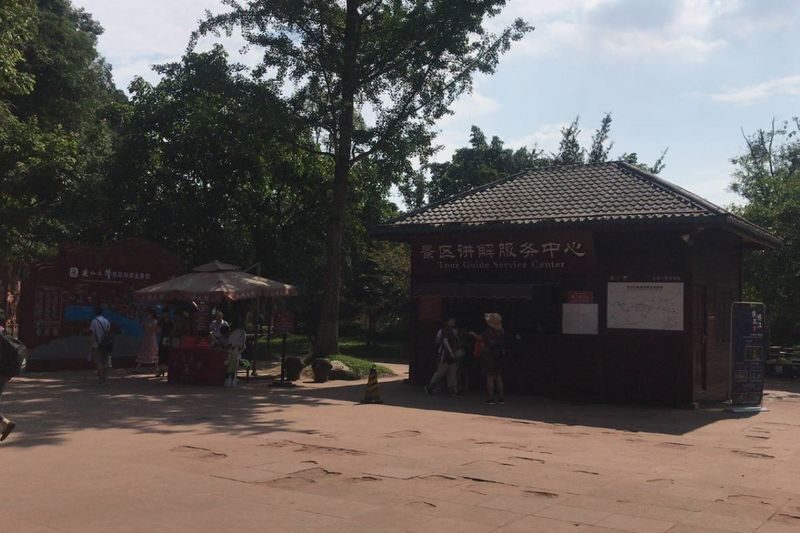
The site has North and South Gate entrances, and taxis may leave you at different gates, including an east-side drop-off. Check which entrance you are approaching before getting out, then ask staff at the gate if you are unsure where to present your ticket. The listed meeting address is 2345 Lingyun Road, while another address in the ticket information gives 2435 Middle Lingyun Road. That mismatch is a good reason to confirm the destination with your driver rather than relying on a number alone.
Price, ticket rules, and what to verify
The admission offer starts at $3.29, but package choices change what you get. A basic ticket covers entry; a boat ticket or sightseeing-bus option is separate. Some visitors have found that buying directly at the venue costs less, while others value being able to book close to departure and have a ticket ready. Compare the current price with the exact experience you want.
For standard entry, the instructions say to present your original valid ID at the designated lane at either the North or South Gate. Manual verification allows entry without exchanging the voucher for a paper ticket. Boat-ticket procedures can differ, and some boat bookings require collection of a physical ticket, so read the directions for that package carefully.
Age categories need particular attention. The information lists adults as ages 12 through 59 and students as children aged 12 and under, which overlaps at age 12. Since tickets must match the traveller’s age and ID details, confirm the correct category before booking rather than guessing. Each valid ID is limited to one purchase for a given date.
The voucher is valid only for the selected date, and cancellation terms are conditional. A refund requested more than 24 hours before travel is listed as free; within 24 hours, a 30% fee applies. Same-day cancellations and expired unused tickets incur a 100% fee, and tickets are non-refundable once you have entered the park. These terms make date and package checks worthwhile before checkout.
Who will get the most from this visit
I would choose the foot route if you want the close-up view, enjoy temples and historic sites, and are ready for a serious stair workout. The monument rewards patience: the walk is not just a way to reach a viewpoint, it is part of understanding the statue’s scale and setting.
The boat is a sensible alternative for anyone who wants the broadest view without the climb. Families with young children and older visitors may find it more manageable, but should still allow time for the pier transfer and queue. If you have the time and energy, combining the walk and boat gives you the most complete set of perspectives.
This is less suitable if you have limited mobility, dislike stairs, or need a tightly timed visit. The path can be slow, the route is not fully predictable, and the Nine-Bend Plank Road closure may affect how you get to the feet. Pets are not allowed, and the area prohibits smoking and all fire-related activity because it is a forest-fire prevention zone.
Should you book the Leshan Giant Buddha ticket?
Book it if you want to see one of China’s great cliff-carved monuments and can give the visit enough time. The strongest plan is to arrive early, walk the scenic area if stairs suit you, and add the boat only if you want the river view or need a less strenuous alternative. Before paying, check whether your package is admission-only, boat-only, or a combination, then confirm the entrance and ticket instructions for that exact option.
Skip the climb if steep stairs are a concern, and do not count on a quick visit during busy periods. Leshan is worth the effort, but it is better approached with flexible timing, comfortable shoes, and a clear idea of what your ticket includes.
Leshan Giant Buddha
“good organization and unforgettable views”
FAQ
How tall is the Leshan Giant Buddha?
The seated Maitreya Buddha is about 70 meters tall. It was carved during the Tang Dynasty over a period of about 90 years by three generations of craftsmen.
What is included in the basic Leshan Giant Buddha ticket?
The basic package includes one daytime admission ticket to the scenic area. Boat rides, sightseeing-bus rides, personal expenses, and other attractions are not included unless specified by the selected package.
Can I see the Buddha by boat instead of walking?
Yes. A separate boat-ticket option is available and provides a view of the full statue from the river. The boat ride is commonly described as about 30 minutes, and it has its own boarding and ticket instructions.
How long should I allow for a visit?
Plan for about 2.5 to 3.5 hours for a standard visit, excluding peak-season queues. A longer visit may be needed if you add the boat, sightseeing bus, or other scenic-area attractions.
Is the route to the Buddha’s feet open?
The Nine-Bend Plank Road is currently closed for maintenance. The Lingyun Plank Road can be used to reach the Buddha’s foot area, but capacity is limited and queues may form.
What are the opening hours?
Daytime hours are 7:30 a.m. to 6:30 p.m. from April 1 through October 7, and 8 a.m. to 5:30 p.m. from October 8 through March 31. Evening hours are also listed, but the included ticket is specified as daytime admission.
What identification do I need to enter?
Bring your original valid ID. The entry instructions say to present it at the designated lane at the North or South Gate for manual verification.