The big draw is the change of pace across three days: you look up at the 71-meter Leshan Giant Buddha, climb into Mount Emei’s high country, then spend time with pandas near Chengdu. You can finish at either Dujiangyan’s ancient irrigation works or the archaeological wonders of Sanxingdui.
I like that the tour combines major sights with two nights of hotel accommodation and several included meals, so you are not arranging every transfer and meal yourself. I also like the choice between two very different Day 3 outings, which lets you lean toward engineering and gardens or ancient bronze art.
The trade-off is a fast schedule, with significant walking and extra Emei transport costs. At the Golden Summit, allow for an uphill walk of about 45 minutes, and bring a warm layer: it can be cold and windy up high.
- A 71-meter Buddha sets the scale on Day 1: You visit Leshan before heading to Mount Emei.
- Golden Summit means altitude, walking and extra fees: The scenic bus and cable car are not included in the tour price.
- Emei’s temples and monkey area fill Day 2: Rain or group decisions can affect how much of the mid-mountain route you complete.
- Pandas come early on Day 3: The base visit is scheduled for 8:00, with about two and a half hours on site.
- Choose your final-day focus: Route A visits Dujiangyan; Route B visits Sanxingdui.
- The starting price needs context: Mandatory Emei transport and equipment fees add to the advertised cost.
- Leshan’s Giant Buddha begins a packed first day
- Golden Summit rewards the climb, but budget for it
- Day 2 links Baoguo Temple with Emei’s middle slopes
- Pandas fill the early hours on Day 3
- Dujiangyan or Sanxingdui: pick your kind of history
- What the price covers, and what it does not
- Who should book this three-day route?
- FAQ
- What is included in the tour price?
- Are the Emei cableways and sightseeing bus included?
- What is the difference between Route A and Route B?
- How many nights are spent in hotels?
- How large is the tour group?
- What should I bring for the Golden Summit?
- More Tours in Leshan
- More Tour Reviews in Leshan
- Not for you? Here's more nearby things to do in Leshan we have reviewed
Leshan’s Giant Buddha begins a packed first day
 1 / 7
 2 / 7
 3 / 7
 4 / 7
 5 / 7
 6 / 7
 7 / 7
The tour starts with pickup within Chengdu’s Third Ring Road, followed by the drive to Leshan. The scheduled departure is 7:30, but pickup time and location can vary. Staff contact you the evening before, so keep your phone available and allow for an early collection if your hotel is farther from the pickup area.
At the Leshan Giant Buddha Scenic Area, a guide leads the visit. The main attraction is a 71-meter-high Maitreya Buddha carved into the cliff, known as the largest existing cliff-carved statue in China. The scale is the point: from below, you can take in the full figure and the steep rock around it. The schedule allows time for a guided visit, but crowds and the route you take through the area can shape how long you spend at any one viewpoint.
Lunch is a local Xiba tofu meal before the transfer to Mount Emei. After reaching Huangwan Town, you switch to a scenic-area bus for the ride to Leidongping, then continue toward the Golden Summit. That change of vehicle is part of the mountain logistics, not a scenic extra: private tour buses cannot simply carry the group all the way to the summit area.
Golden Summit rewards the climb, but budget for it
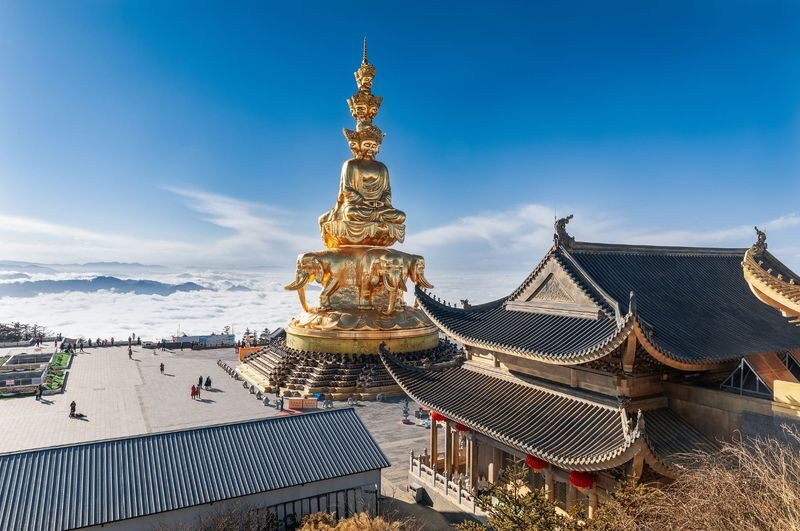
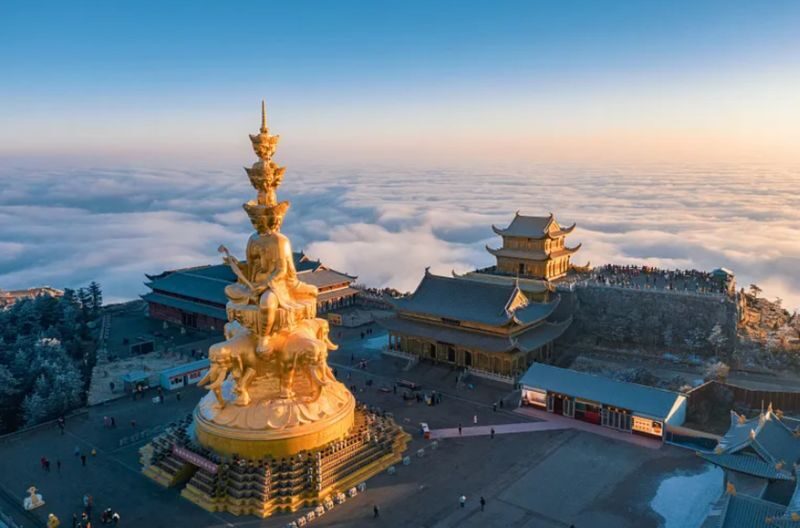
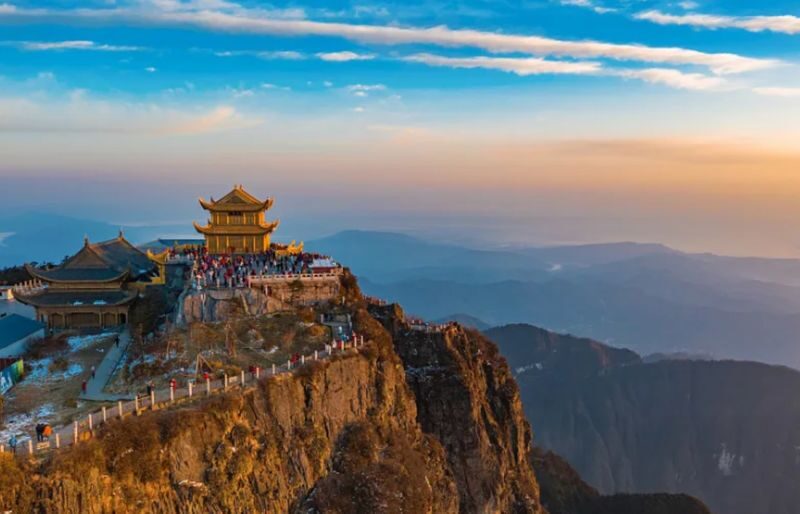
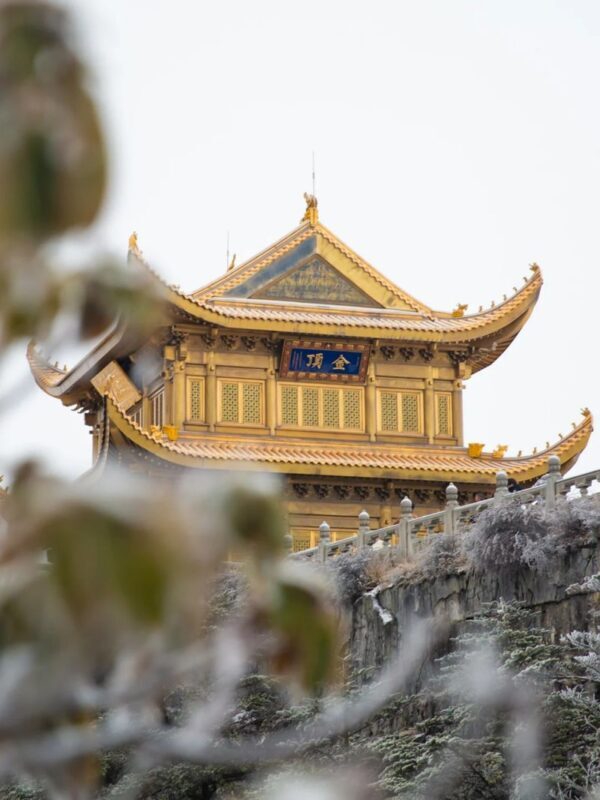
The Golden Summit is the high point of Day 1, both literally and in the tour’s schedule. Its Samantabhadra statue, described as a gold figure with ten faces, crowns the mountain’s main peak. In clear conditions, the summit’s height and exposed position make the visit feel quite different from the lower temple grounds.
Plan on walking uphill. One person on the tour needed about 45 minutes to reach the Golden Summit, so do not treat the stop as a quick stroll from the bus. The route can feel demanding, particularly if you are not used to climbing at altitude. A warm jacket is a sensible choice even when Chengdu feels mild; wind and cold are possible above.
The tour includes first-entry tickets, but not all the transport needed to see Emei. The listed mandatory charges are ¥90 for the sightseeing bus, ¥120 for the Golden Summit round-trip cableway, ¥65 uphill and ¥45 downhill for the Wannian Temple cableway, ¥10 for its entrance ticket, and ¥20 each for Emei and Leshan audio guides. That is ¥370 per person if you use all the listed services. The Golden Summit cable car and scenic bus are described as extra costs, so confirm which charges apply to your chosen route and plans before booking.
Dinner follows the mountain visit, then you stay in an Emei hotel. Named examples include Boyin Hotel, Manya Hotel and Yu Feng Lavande Hotel, or an equivalent property, with the exact assignment subject to availability. These are reference hotels, not a guaranteed choice of a particular property.
You can also read our reviews of more tours and experiences in Leshan.


Day 2 links Baoguo Temple with Emei’s middle slopes
After breakfast, the group visits Baoguo Temple, the largest temple on Mount Emei. It is a useful first stop for understanding the mountain’s Buddhist role before heading higher. The tour describes it as less commercial than many major temple sites, though the atmosphere will naturally depend on the time and number of people there.
A bus transfer takes you toward the mid-mountain area. The planned visit includes Wannian Temple, associated with Samantabhadra, and White Dragon Cave, followed by Qingyin Pavilion, Qingyin Lake, the Heilongjiang Plank Road, One-Line Sky and the Natural Ecological Monkey Zone. This is the day’s most varied stretch: temple architecture gives way to water, narrow paths and forest scenery, with the chance to see Emei’s macaques.
The route is not guaranteed to unfold exactly as written. Rain affected one group’s plans, and most of the group chose not to visit Wannian Temple, while one person went ahead. That is a useful warning: weather and group choices can shorten a day that looks generous on paper. If Wannian Temple matters most to you, ask the guide how the group will handle the cableway and timings, and be prepared to decide whether you want to continue independently within the tour’s rules.
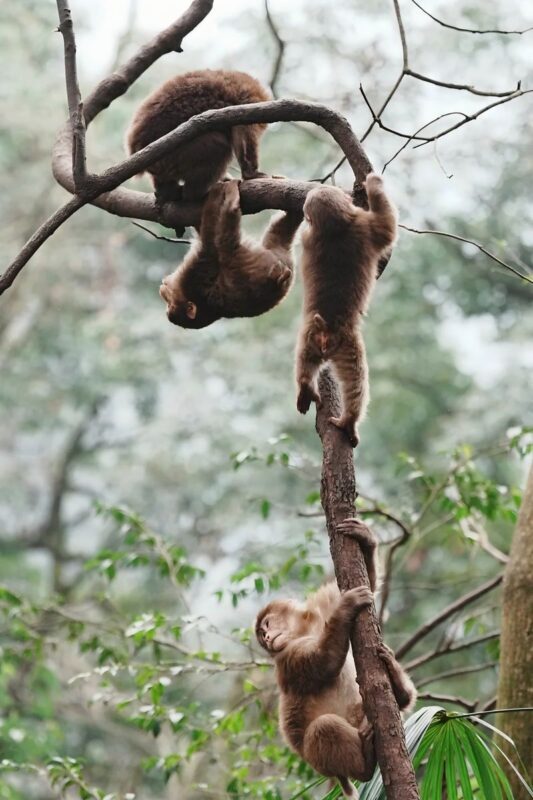
The monkey area is a memorable possibility, not a promise of close contact. Emei is known for its macaques, and the mountain supports many plant and animal species. Keep your attention on the guide’s instructions and the marked route; the tour offers a chance to see wildlife in its habitat, not a controlled animal encounter.
Lunch is included around the mid-mountain area. Dinner is on your own, so keep some room in your budget for an evening meal. You return to Chengdu for the second hotel night, with several four-diamond reference properties named, including Delin Hotel and Jinke International Hotel, or an equivalent.
Pandas fill the early hours on Day 3
The final morning starts early. The group meets at Exit B of Qianfeng Road Station on Chengdu Metro Line 3 at about 6:20, then travels by subway before reaching the Chengdu Research Base of Giant Panda Breeding around 8:00. This differs from the first day’s Chengdu pickup arrangement, so check the departure instructions for your specific date rather than assuming a hotel pickup.
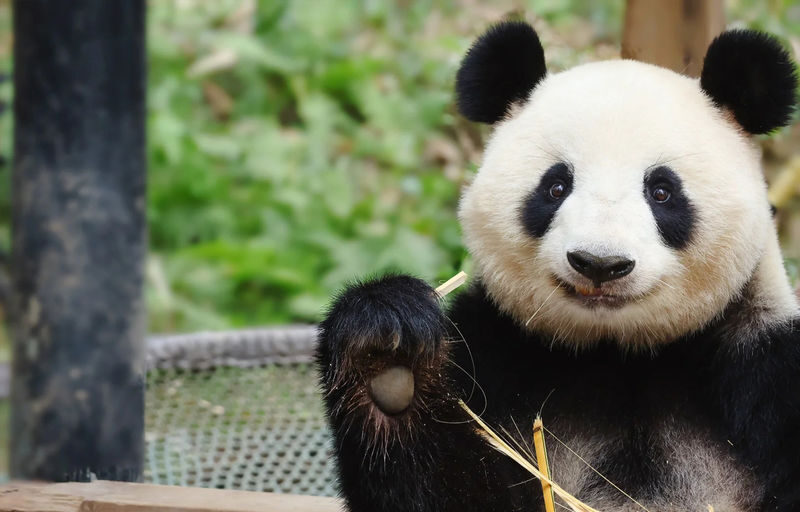
The visit lasts about two and a half hours and includes a guided tour. The base is a research and breeding institution, as well as a public attraction. You may see pandas eating bamboo or moving around their enclosures, and the listed areas include the Giant Panda Hall, Lesser Panda Hall, butterfly displays, the wild-living area and the delivery room. What is open and visible can vary, and newborn cubs are not guaranteed.
An early visit gives you a practical shot at seeing the animals during the morning portion of the day, but the time on site is limited. If pandas are your main reason for booking, be ready to follow the group pace and keep your attention on the areas the guide prioritizes. A group lunch follows before the afternoon excursion.
Dujiangyan or Sanxingdui: pick your kind of history
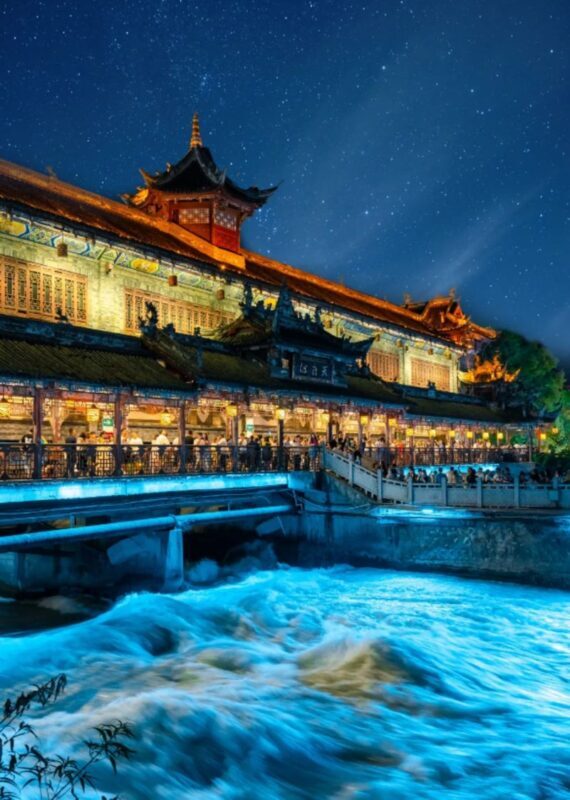
Route A continues to Dujiangyan, a water-control system dating to the Warring States period. Rather than relying on a dam, its design uses features including the Yuzui water-dividing dike, Feishayan flood overflow and Baopingkou water inlet to direct river flow. The system still plays an important role in the region, which makes the visit more than a look at old stonework: you can see how an ancient project shaped the Chengdu Plain and continues to matter.
The visit also includes sites such as Fulong Temple and Qingxi Garden, along with historic trees and other local points of interest. A shadow-puppet performance about Li Bing’s water control is listed as an optional extra at ¥50 per person. Other optional costs include a Dujiangyan sightseeing vehicle at ¥20 and an escalator at Yulei Pavilion for ¥40. These are separate from the ¥80 scenic-area ticket, which is included in the tour.
Route B swaps Dujiangyan for Sanxingdui. The museum displays striking bronze, gold and jade objects from the ancient Shu civilization, including masks, a standing figure and a sacred tree. If you like archaeological collections and unusual art, this is the more focused cultural choice. The two routes do not cover both sites, so choose according to what interests you more rather than expecting to squeeze in both.
The tour returns to Chengdu in the late afternoon. The stated return is around 17:30 from the Dujiangyan scenic-area entrance, with dismissal around 18:30 on Qintai Road. Traffic and weather can alter the schedule, so avoid planning a tight onward connection that evening.
What the price covers, and what it does not
The tour price covers two hotel nights, first-entry tickets for Mount Emei, Leshan and the Grand Buddha Monastery, the Dujiangyan ticket on Route A, the Panda Base ticket, two breakfasts and four standard meals. It also includes group transport, a licensed Chinese-speaking guide during the itinerary, and accident insurance arranged on your behalf. The group is around 30 to 35 people, so expect a shared coach experience rather than a private guide.
The advertised costs are not fully consistent across the tour details: the headline price is from $241.39, while the listed route options begin at $209.89 for Route A and $217.39 for Route B. Prices can depend on package and date, so check the amount shown when you select your option. More importantly, budget for Emei’s mandatory transport and cableways on top of the tour fare. Single-room arrangements also cost extra, and the default room is twin-share for two adults.
The included meals help, but not every meal is covered. Dinner on Day 2 is on your own, and children’s rates do not include hotel breakfast, tickets or a bed. A complimentary Sichuan Opera face-changing hot-pot dinner show is also listed, but it can be cancelled if circumstances prevent it, with no refund or replacement.


Who should book this three-day route?
This tour suits you if you want to combine Sichuan’s best-known sights without arranging separate intercity transport and hotels. It makes particular sense for a first visit, for anyone keen on pandas and Buddhist sites, or for a short Chengdu stay where three busy days can cover several different sides of the region.
It is less suitable if you want a slow mountain visit, dislike group schedules, or need to keep extra spending to a minimum. The Emei climbs and transfers take effort, and a rainy day can change the temple plan. The group size also means you will have less freedom to linger than on a private trip. One guide named in a tour account was Wei, but the provider does not promise a particular guide.
Book it if you value variety and are comfortable with early starts, walking and extra mountain fees. If your priority is unhurried time on Emei, consider a longer stay; if you want a compact sampler of Leshan, Emei and Chengdu’s pandas, this three-day plan gives you a practical route and a clear choice for the final day.
3-Day Tour of Mount Emei, Leshan & Panda Base in Sichuan
“Overall it was a good trip. Need to climb about 45 minutes to the Golden Summit. Please wear jacket because it can be windy and cold in the high al…”
FAQ
What is included in the tour price?
The package includes two hotel nights, first-entry tickets for Mount Emei and Leshan, the Panda Base ticket, and the Dujiangyan ticket on Route A. It also includes two breakfasts, four standard meals, group transport, a Chinese-speaking guide during the itinerary and travel accident insurance arranged on your behalf.
Are the Emei cableways and sightseeing bus included?
No. The listed mandatory charges include ¥90 for the Emei sightseeing bus, ¥120 for the Golden Summit round-trip cableway, and ¥65 uphill plus ¥45 downhill for the Wannian Temple cableway. The tour also lists entrance and audio-guide charges.
What is the difference between Route A and Route B?
Both routes visit Leshan, Mount Emei and the Chengdu Panda Base. Route A visits Dujiangyan on Day 3, while Route B visits Sanxingdui instead.
How many nights are spent in hotels?
The tour includes two nights: one in the Mount Emei area and one in Chengdu. Specific hotels depend on availability.
How large is the tour group?
The group is approximately 30 to 35 people.
What should I bring for the Golden Summit?
Bring a warm jacket. The summit can be windy and cold, and the uphill walk may take about 45 minutes.