Le Thoronet Abbey is a lesson in how much a building can say with very little decoration. Its 12th-century church, cloister, and monastic rooms were shaped by Cistercian ideals of restraint, and their plain stone surfaces make light, proportion, and sound the main attractions.
I love the carved openings in the cloister, where light turns simple stonework into something delicate, and the church’s resonant acoustics, which give the spare interior real presence. One practical consideration: the guided tour has limited spots, and its schedule and language can vary, so check with the abbey before setting out.
- At a glance
- Why Le Thoronet’s plain stone makes an impression
- Start with the church and its sound
- Slow down in the cloister
- What the dormitory and shared rooms add
- Leave time for the exterior and garden
- How long to allow, and what the ticket is worth
- Opening hours and getting there
- Who will enjoy this visit most
- Should you book Le Thoronet Abbey?
- FAQ
- How long does a visit to Le Thoronet Abbey take?
- Is a guided tour included with admission?
- Can I use an audio guide?
- What are the opening hours?
- When is the abbey closed?
- Is admission free for any visitors?
- How do I get to the abbey by bus?
- Is Le Thoronet Abbey wheelchair-accessible?
At a glance
 1 / 7
 2 / 7
 3 / 7
 4 / 7
 5 / 7
 6 / 7
 7 / 7
- Austere Romanesque design: The abbey’s simplicity is the point, with stone, light, and proportion doing the work.
- A 45-minute guided tour: A spot is included when available, but the tour has limited capacity.
- Church, cloister, and communal rooms: The visit offers a look at spaces tied to prayer and daily monastic life.
- Bring a charged phone and saved ticket: WiFi is unavailable onsite and mobile coverage is poor.
- Plan around seasonal hours: From October to March, the abbey closes for lunch; last admission is 45 minutes before closing.
Why Le Thoronet’s plain stone makes an impression
Many famous churches compete for attention with painted ceilings, gold, and elaborate decoration. Le Thoronet takes the opposite route. Its Romanesque forms are simple and solid, and that restraint helps you notice how the building’s proportions and carefully joined stone shape the experience.
The abbey was built in the 12th century for Cistercian monks, whose religious life placed a high value on discipline and simplicity. You can see that spirit in the spaces themselves. There is little to distract you from the purpose of each room, and the effect is less about spectacle than quiet concentration.
That makes Le Thoronet a useful stop if you are curious about medieval life beyond kings, battles, and grand cathedrals. The church, cloister, dormitory, and shared spaces help you picture the rhythms of a community organized around prayer and communal living. The stonework also gives you a close look at a different kind of craftsmanship: massive blocks joined into structures that can feel both sturdy and finely made.
Le Corbusier is associated with the abbey as a point of reference, which adds another layer for anyone interested in architecture. The connection is not a separate attraction or a modern installation. It is a reminder that this restrained medieval design has continued to catch the attention of architects long after its original religious purpose.
Start with the church and its sound
The church is one of the most compelling parts of a visit, not because it is crowded with decoration, but because it is so spare. The simplicity makes the room’s shape and acoustics easier to notice. Sound carries in a way that suits a place built around prayer and silence, and even a brief pause can help you appreciate how the architecture affects what you hear.
A plain pulpit is another detail worth seeking out. Its design is modest, but its role in the church gives it weight. The combination of a simple interior and strong acoustics helps explain why the abbey can feel powerful without relying on the visual drama of a richly ornamented cathedral.
Take time to look at the stone as well as the room as a whole. The building can seem rough and monumental from one angle, then reveal finer details when you look closely. That contrast is part of its appeal: the abbey is not polished into a smooth showpiece, yet its construction has a measured delicacy.
Slow down in the cloister
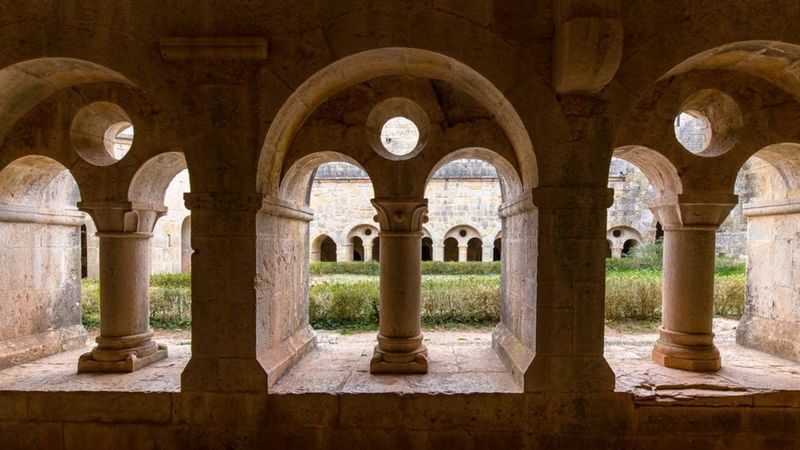
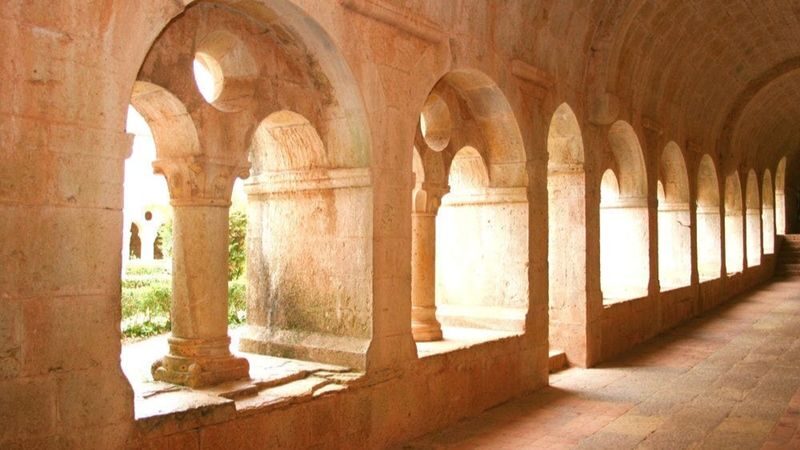
The cloister is a good place to pause and let your eyes adjust to the abbey’s quieter style. Its carved openings filter the light, creating a softer, more intricate effect than the solid stone walls might suggest. If you are moving quickly from room to room, this is where I would slow down.
The cloister also helps make the monastic plan easier to understand. It connects the community’s spaces and gives you a sense of how daily life could revolve around a shared center. You are not just looking at an attractive courtyard; you are seeing part of the practical structure of life within the abbey.
The effect changes with the light, so it is worth looking at the carvings from more than one position. You may find that a simple opening or shadow catches your attention more than a large architectural feature. That is the pleasure of Le Thoronet: the details reward patience rather than a quick checklist.
What the dormitory and shared rooms add
The dormitory and communal spaces put the church and cloister into a wider context. They help show that a monastery was not only a place for worship. It was also a working community with spaces organized around shared routines and a disciplined way of life.
The visit is not a staged re-creation of medieval monastic life, and you should not expect actors or elaborate exhibits. Instead, the rooms and their layout give you clues. The building itself is the main source of information, which is why a guided tour can be useful if you want help linking the spaces to the Cistercian way of life.
Admission includes a 45-minute guided tour when a spot is available, but places are limited. Call the venue beforehand to confirm the schedule and the tour language. If you miss the guided visit or prefer to explore at your own pace, audio guides can be purchased at the entrance in English, French, German, and Italian. They are not included in the ticket price.
Leave time for the exterior and garden
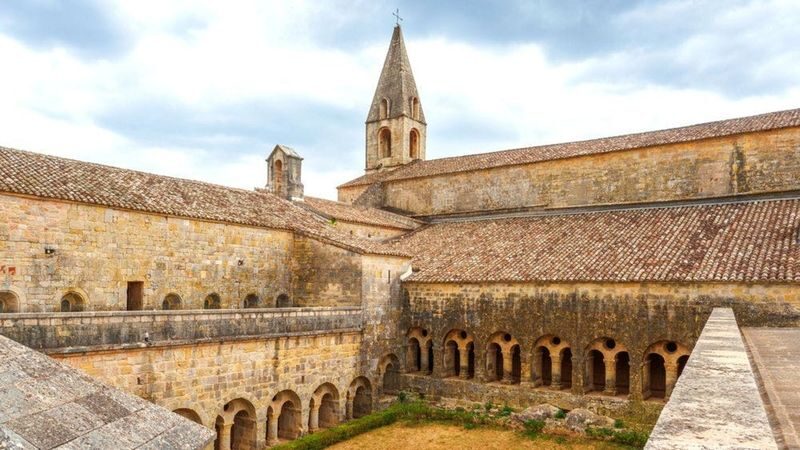
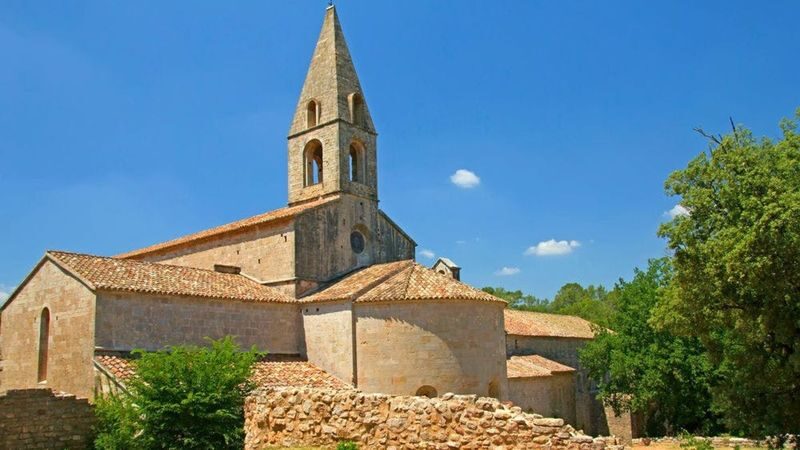
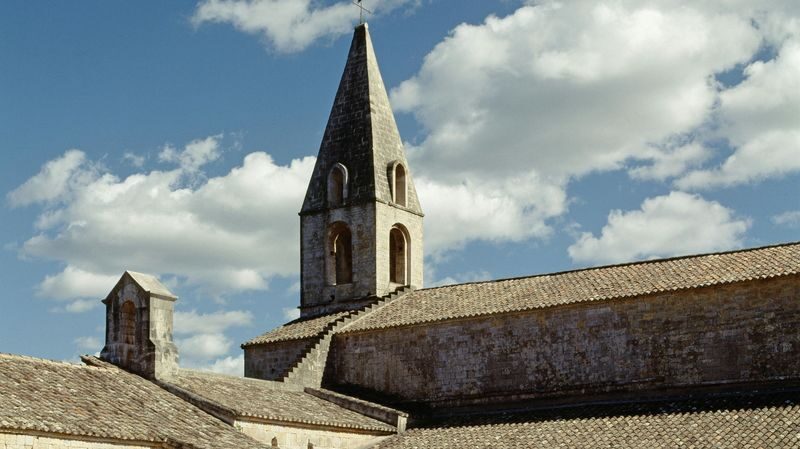
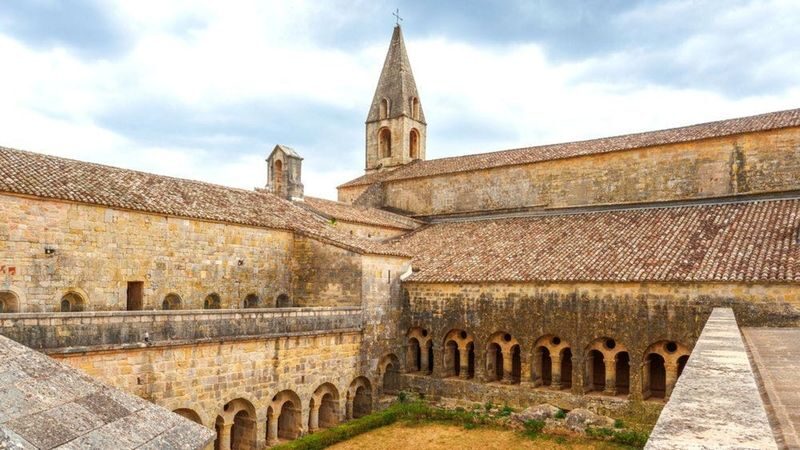
Do not treat the interior as the whole visit. The exterior, garden, and views from the rooftop offer a different way to take in the abbey’s scale and setting. The contrast matters: inside, you notice the rooms and their quiet proportions; outside, you can step back and see how the structure sits as a whole.
The exterior is also a good place to appreciate the building’s use of stone. Up close, the blocks can look massive and plain. From farther away, their arrangement gives the abbey a sense of order and balance. If you have time, look back at the church after seeing the other spaces. Its simplicity may read differently once you have walked through the cloister and communal rooms.
The rooftop is mentioned as one of the places to take in the site, but the precise access arrangements are not specified. Follow the abbey’s instructions onsite rather than assuming every area is open at all times.
How long to allow, and what the ticket is worth
Plan on roughly one to two hours. That gives you time for the 45-minute tour, a closer look at the church and cloister, and a little unhurried time outside. If you are especially interested in architecture or medieval religious life, you may want to use the full window rather than treating the abbey as a short photo stop.
The ticket starts at $11.09. For that price, you are paying for admission to a significant Romanesque site and, when a place is available, a guided tour. That is fair value if you want to understand the building rather than simply walk through it. An audio guide is an extra purchase, so include that in your budget if you would rather explore independently and want recorded commentary.
Free admission applies to several groups: children and young people aged 0 to 18, EU citizens and French residents aged 18 to 25, disabled visitors with one carer, jobseekers with proof dated within six months, and ICOM members. Entry is also free on the first Sunday of each month from November through March. If you qualify, check the current conditions before buying a ticket.
Online booking offers instant confirmation and a mobile voucher, and the ticket is valid only for the date selected, and the time if one is specified. Onsite ticket purchases are also common, but booking ahead can be convenient. Download the mobile ticket before you arrive: there is no WiFi at the abbey, and mobile coverage is poor.
Opening hours and getting there
The abbey is at 83340 Le Thoronet, in the area listed as Brignoles, Provence. Bus lines 8539 or 3542 serve the route; get off at Place Louis Rainaud, then walk about four minutes to the abbey. Check the bus schedule before you travel, since the information here gives the route and stop but not the frequency or service times.
From April through September, opening hours are 10:00 to 18:30 daily. From October through March, the abbey is open 10:00 to 13:00 and 14:00 to 17:00, so plan around the midday closure. Last admission is 45 minutes before closing. The abbey closes on January 1, May 1, November 1, November 11, and December 25.
Large items over 55 by 35 by 20 centimeters are not allowed, and animals are not permitted. The site is not wheelchair-accessible, a key point to consider when planning your visit.
Who will enjoy this visit most
I would put Le Thoronet high on the list for anyone who enjoys architecture, quiet historic places, or the everyday structure of medieval religious life. It is especially rewarding if you like looking closely at materials and light, rather than needing each room to be filled with displays or decoration.
It may be less satisfying if you want a highly interactive attraction or a long, detailed museum experience. The abbey’s appeal is focused: stone buildings, a church with notable acoustics, carved cloister details, and a sense of monastic discipline. The tour can add useful context, but it is short and has limited availability.
Families can visit, and admission is free for ages 0 to 18. Still, the experience depends on taking time to look and listen, so it is best suited to children who can enjoy a calm historic site. Check access needs carefully, since the abbey is not wheelchair-accessible.
Should you book Le Thoronet Abbey?
Book if you want to see a major Cistercian monument and are drawn to architecture that uses restraint rather than ornament. The cloister’s filtered light, the simple pulpit, and the church’s acoustics give the visit specific points of interest, while the dormitory and shared spaces help connect the buildings to monastic routine.
Before you go, confirm the guided tour’s language and timing, and check the seasonal opening hours. Save your voucher offline, leave room for the exterior and garden, and allow up to two hours if you want more than a quick circuit. If those details suit your plans, Le Thoronet offers a thoughtful, good-value stop in Provence.
Le Thoronet Abbey ticket
“This is one of the three Cistercian sister abbeys in Southern France and a prime example of Romanesque architecture. It's also the abbey that Le Co…”
FAQ
How long does a visit to Le Thoronet Abbey take?
Plan on one to two hours. The included guided tour lasts 45 minutes when a spot is available, with additional time for the church, cloister, communal spaces, and exterior.
Is a guided tour included with admission?
Admission includes a 45-minute guided tour, but spots are limited. Call the venue beforehand to confirm the tour schedule and language.
Can I use an audio guide?
Audio guides are available to purchase at the entrance in English, French, German, and Italian. They are not included with admission.
What are the opening hours?
From April through September, the abbey is open daily from 10:00 to 18:30. From October through March, it is open 10:00 to 13:00 and 14:00 to 17:00. Last admission is 45 minutes before closing.
When is the abbey closed?
Le Thoronet Abbey is closed on January 1, May 1, November 1, November 11, and December 25.
Is admission free for any visitors?
Yes. Admission is free for visitors aged 0 to 18, EU citizens and French residents aged 18 to 25, disabled visitors with one carer, jobseekers with proof dated within six months, and ICOM members. Entry is also free on the first Sunday of the month from November through March.
How do I get to the abbey by bus?
Take bus line 8539 or 3542 and get off at Place Louis Rainaud. The abbey is about a four-minute walk from the stop.
Is Le Thoronet Abbey wheelchair-accessible?
No. The abbey is not wheelchair-accessible.