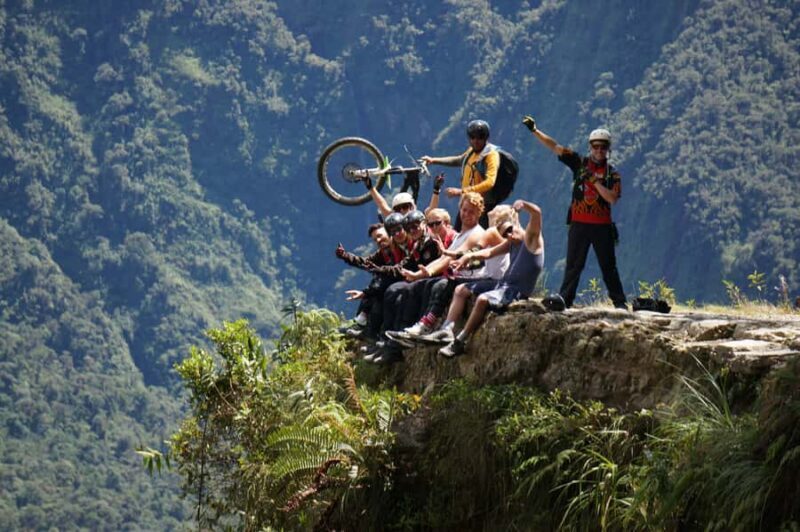
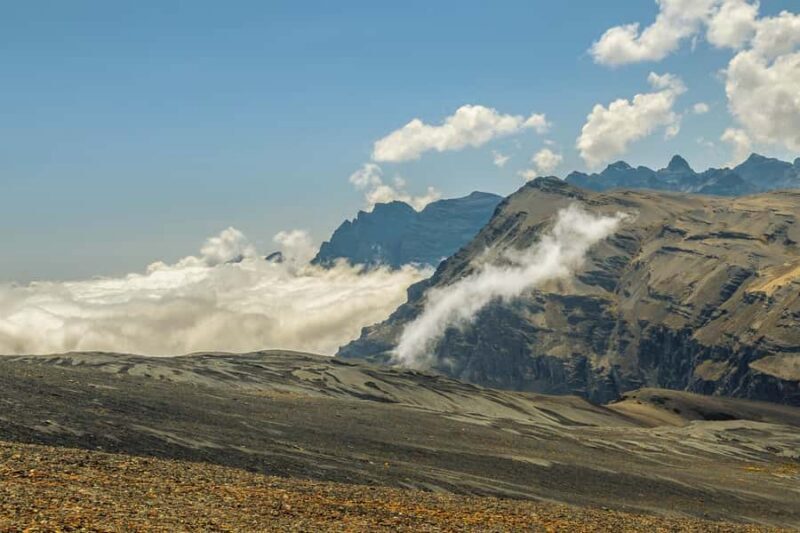
Death Road is less a single trail than a dramatic change of worlds: you start among snow-covered peaks at 4,700 meters and finish in the warm Yungas, thousands of meters below. I like that the ride gives you time to take in the scenery, with planned stops for rests, photos, snacks, and bike checks.
I also like the practical safety setup: a mechanic, a vehicle following the group, and guides who explain the next section before you ride it. The main consideration is that this is still a demanding downhill ride on a road with steep drops. Good equipment and careful guidance help, but they do not remove the risk.
- At a glance
- From La Paz to the high pass
- The paved descent sets the pace
- Death Road’s narrow dirt track
- A warm finish at La Senda Verde
- Is 5 good value?
- Who should ride, and what should you bring?
- Should you book this Death Road tour?
- FAQ
- How long is the Death Road ride?
- What is included in the 5 price?
- Is the zipline included?
- Is there an extra road tax?
- Do I need mountain biking experience?
- Can I stop riding partway through?
- What languages do the guides speak?
- What should I bring?
- Is the tour suitable for everyone?
- The Best Of La Paz!
- More Cycling Tours in La Paz
- More Tours in La Paz
- More Tour Reviews in La Paz
- Not for you? Here's more nearby things to do in La Paz we have reviewed
At a glance
 1 / 8
 2 / 8
 3 / 8
 4 / 8
 5 / 8
 6 / 8
 7 / 8
 8 / 8
- The route changes dramatically: Ride 64 kilometers from high, cold La Cumbre to the warmer Yungas.
- The bikes are built for the descent: Full-suspension mountain bikes have hydraulic disc brakes and are checked during the ride.
- Support stays close: Each group has a guide, mechanic, and private safety vehicle. You can get on the bus during the tour.
- The day includes more than biking: Breakfast, snacks, water, lunch, and entry to La Senda Verde Animal Refuge are included.
- It is a full-day commitment: The ride ends near Yolosa, followed by a drive back to La Paz. One rider reported getting back around 8:30 p.m.
- Small groups help with pacing: Groups are limited to 14, and you are expected to ride at a speed that feels comfortable to you.
👉 See our pick of the 14 Best Whale Watching Experiences In La Paz
From La Paz to the high pass
The day begins outside Café del Mundo in La Paz, where breakfast is included. The choices listed cover meat, eggs, ham and cheese, vegetarian, and vegan meals, a useful start before a day in the saddle. From there, transport takes you up to La Cumbre, at about 4,700 meters.
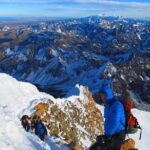
At that altitude, the air is thin and the start can feel cold and exposed. Pack warm clothing you can manage during the ride, plus sunglasses and sunscreen. The high pass is also where the scenery first opens up: snow-covered Andean peaks, grazing llamas and alpacas, and small settlements along the route.
Before riding, the guides give instructions and explain what lies ahead. This matters because the day is not one continuous downhill run. You move through changing road surfaces and conditions, with stops for advice, rest, photos, snacks, and checks of the bikes.
The group is small, with a maximum of 14 participants, and the operating setup includes one guide, one mechanic, and a private vehicle. That combination means you have help close by without needing to carry every spare layer or bottle yourself. Unlimited water is included, and two snacks are provided during the ride.
You can also read our reviews of more cycling tours in La Paz
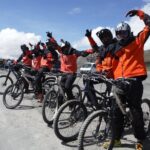
The paved descent sets the pace
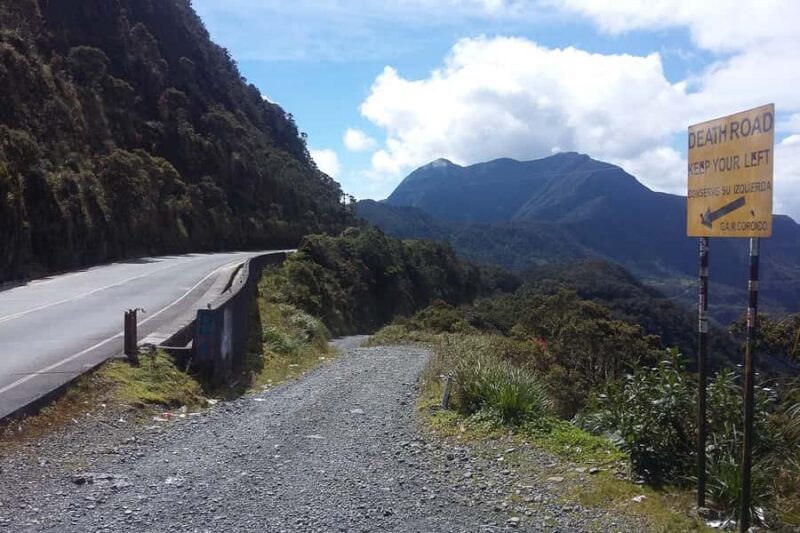
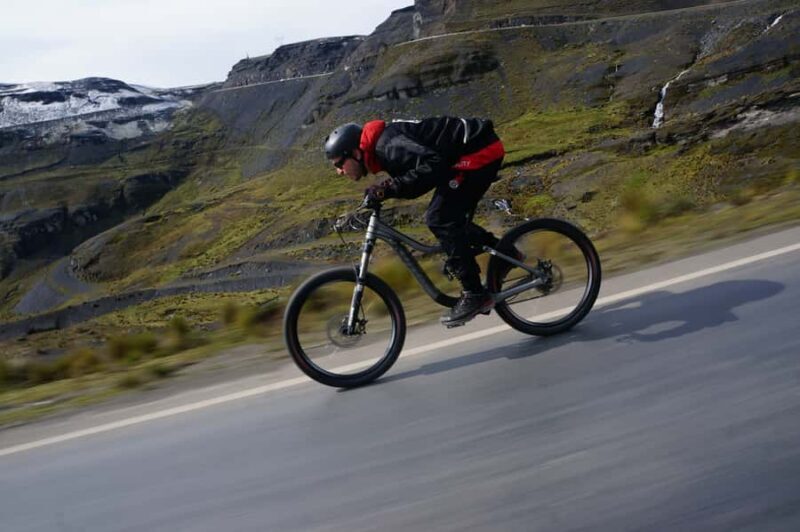
The first part follows a twisting asphalt road through mountain scenery. It is a chance to get used to the bike and the altitude before the rougher section begins. The route passes cliff faces and dramatic drops, with llamas, alpacas, and villages adding a human scale to the high country.
This section is not just a warm-up to rush through. The scheduled stops let you take pictures, rest your hands, and hear what to expect next. Guides check the bikes while you pause, and the support vehicle follows the group. If you need a break, want to change clothes, or decide that riding is no longer right for you, you can get on the bus.
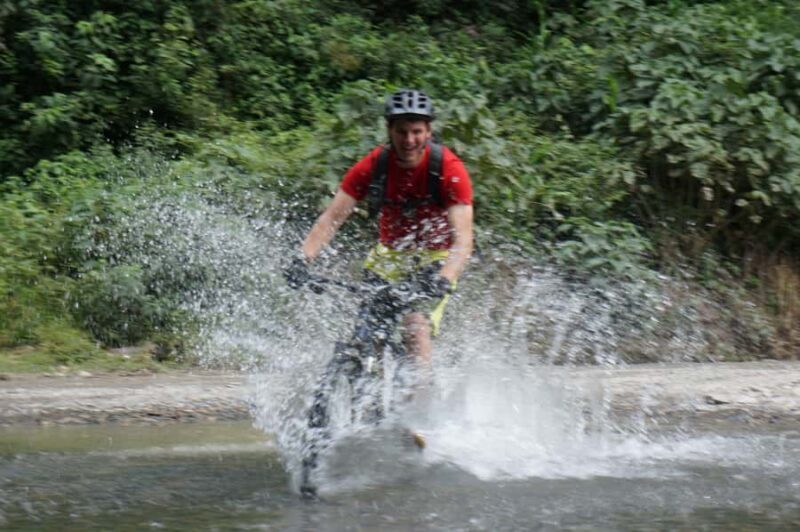
Riders are encouraged to choose their own pace. That is important here: the route is not a race to the bottom, and speed does not make the scenery any better. If you are nervous, tell the guide and take the sections slowly. If you have more confidence, you can still ride briskly where conditions allow, while keeping within the instructions you receive.
The route includes a brief undulating stretch before the most challenging part. It offers a natural pause between the faster paved descent and the narrow dirt road. Use it to drink, check your gloves and clothing, and make sure you are ready for the change in surface.
Death Road’s narrow dirt track
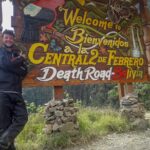
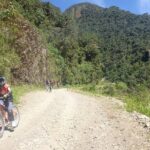
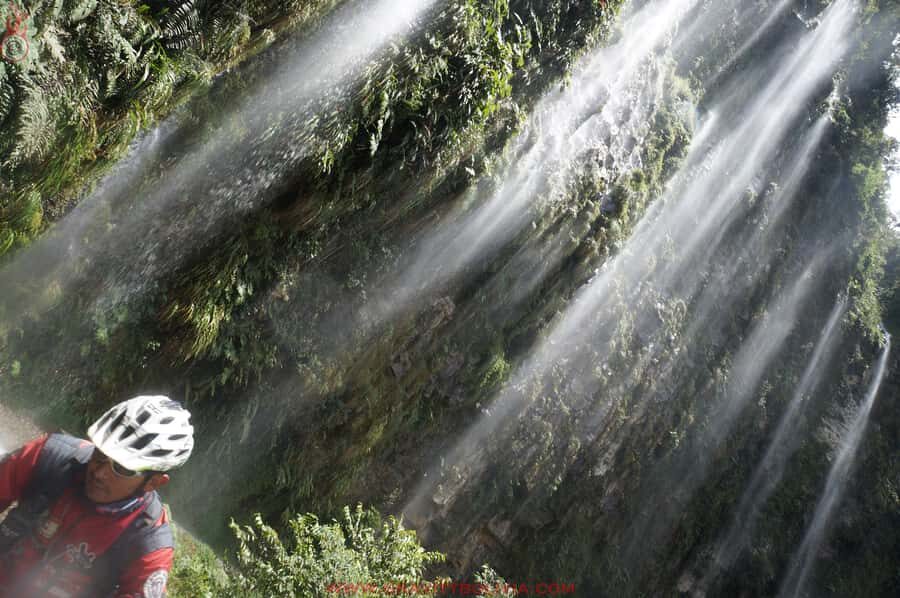
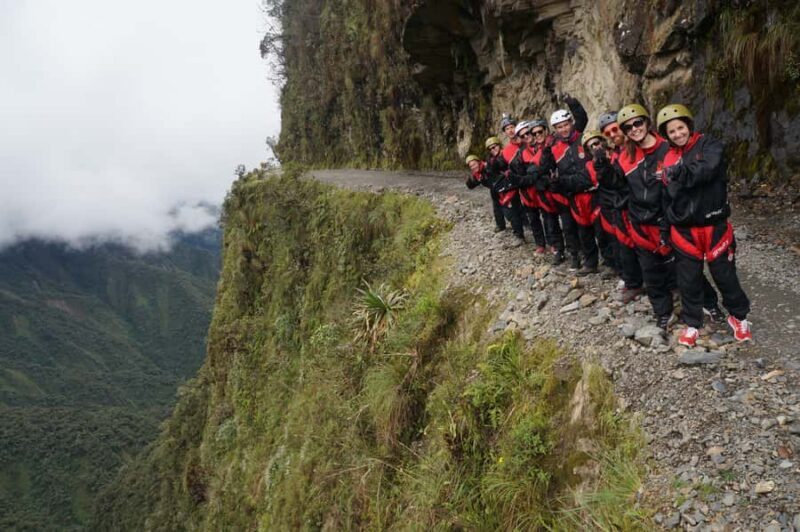
The infamous section is cut into the mountainside and descends about 2,000 meters in altitude. The road is narrow and rough, and conditions can include mist, low cloud, and dust. Near the bottom, the air gets hotter and the road dustier, so a change of clothes is more than a nice extra.
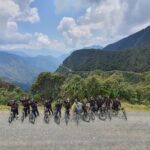
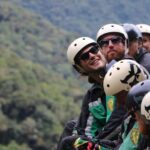
The bikes are full-suspension downhill models with hydraulic disc brakes, and helmets, gloves, elbow pads, and knee pads are included. You can choose a standard or full-face helmet. The equipment matters on a rough route, but your attention matters more: follow the guide’s instructions, leave room, and do not ride faster than your control allows.
The support bus follows the group, and the guide can put you on it if they judge that continuing would put you or other riders at risk. That is a sensible rule on a route where one rider’s mistake can affect the group. It also means you should treat the guide’s decision as part of the safety plan, not as a challenge to negotiate.
Gravity’s guides have long experience on this road, and riders have particularly praised the briefings, patience, and steady checks along the way. Guides named in feedback include Kenny, Noel, Damian, Abel, and Ruben, though who leads your particular departure will vary. The tour also includes a mechanic, who checks the bikes at stops. One rider described a bike slipping off the cliff and a calm recovery effort, a reminder that this is real terrain, not a theme-park track. The careful preparation is reassuring, but it is not a reason to take unnecessary risks.
A warm finish at La Senda Verde
After the descent, you arrive in Yolosa, around 3,500 meters below the starting point. The temperature and vegetation have changed sharply by then, and you may be hot, dusty, and ready to stop pedaling. The tour continues to La Senda Verde Animal Refuge, where lunch and entry are included.
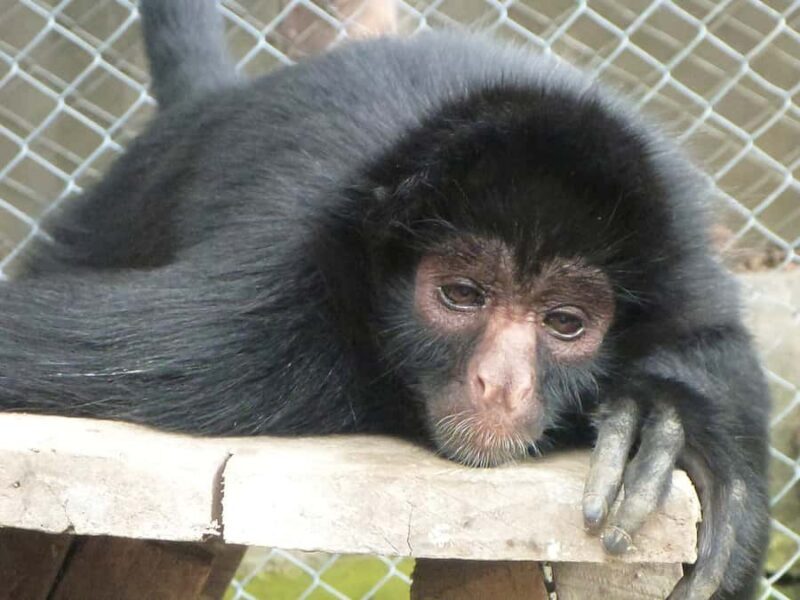
The refuge cares for animals rescued from the illegal wildlife trade. You may see native animals including monkeys, an Andean spectacled bear, capybaras, and birds. It is a welcome change of pace after the ride, and your visit supports the refuge’s rescue work.
A box lunch is included, though the meal is served at the refuge, and riders have described it as a buffet. Breakfast and lunch make the $145 price easier to assess: this is not simply transport and bike hire, but a full day with food, water, equipment, guides, a mechanic, a support vehicle, and refuge entry. The tour also includes a buff to keep, plus photos from the day uploaded and shared.
The day does not end at the refuge. You still need to drive back to La Paz, and that return trip can make the outing long. One rider reported arriving back around 8:30 p.m. Another wished they had known the return journey would take about three hours. Keep your evening flexible, and do not schedule an important dinner or onward departure too tightly.
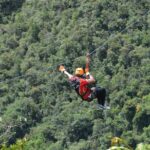
Some riders have also mentioned hot showers and towels at the refuge, but these are not listed among the tour’s included items. Bring a change of clothes either way. The zipline is an optional extra available to buy on the day, and a road tax of 50 bolivianos is not included, so bring cash.
More Great Tours NearbyIs $145 good value?
At $145 per person, this tour costs more than a bare-bones ride, and the price is worth comparing with what is actually included. You get transport from La Paz, a downhill bike and protective equipment, breakfast, snacks, water, lunch, photos, refuge entry, and a dedicated guide, mechanic, and safety vehicle. If you are weighing cheaper options, pay close attention to bike condition, safety equipment, group support, and how often the bikes are checked.
The care between sections is a key part of the value. Stops are used for more than photographs: guides explain what comes next, and the mechanic checks the bikes while you rest. Several riders praised the equipment and the team’s attention to safety, while one noted that another group nearby had recurring bike trouble. That is not a guarantee that every ride will be flawless, but it shows why a well-maintained bike and mechanic matter on this route.
The photos are another useful inclusion. A guide takes pictures and videos during the day, so you can focus on riding instead of trying to handle a camera on rough ground. The tour shares hundreds of photos afterward. That is a practical bonus, particularly if you want a record of the day without adding another task to an already busy ride.
The overall rating is 4.9 from 386 reviews, with strong praise for the guides, bikes, safety practices, and the sanctuary finish. Treat the score as a helpful signal, not a promise that every rider will find the route easy. Weather can be harsh: riders have described rain, snow, and cloud hiding some views. The ride can still be rewarding in poor visibility, but do not book solely for a guaranteed clear panorama.
Who should ride, and what should you bring?
You do not need to be an expert mountain biker, and the tour information says coaching and support are provided for less experienced riders. Still, you must be able to ride a bike and be comfortable making decisions on a steep, changing road. If you have never ridden off-road, be honest with the guides about your experience and use the bus if they advise it.
This is best for an adventurous rider who wants a physically active day, can handle a long outing, and values close support. It is not suitable for pregnant women, people with mobility impairments, wheelchair users, people who cannot ride a bike, or anyone under 120 centimeters tall.
Bring your passport or ID, warm and weather-appropriate clothing, sunglasses, sunscreen, insect repellent, hiking shoes, a daypack, cash, and a change of clothes. Layering helps you adjust from the cold start to the warmer finish. The tour provides protective riding gear, but your own practical clothing still matters.
You can cancel up to 24 hours in advance for a full refund, and the reserve-now, pay-later option lets you hold a place without paying immediately. Tours run in English and Spanish. Confirm the available start time when booking, and leave room in your schedule for the long return to La Paz.
Should you book this Death Road tour?
Book it if you want the classic high-to-low descent with a well-equipped team, clear safety procedures, and a meaningful stop at an animal refuge. The cost is easier to justify if you value good bikes, repeated checks, food, photos, and a vehicle following the group. If you are uneasy about steep drops, poor visibility, or a full day on the road, choose another activity. And if you do ride, make the goal a controlled descent, not a fast one.
La Paz: Mountain Bike Down the World’s Most Dangerous Road
FAQ
How long is the Death Road ride?
The route covers about 64 kilometers, descending from La Cumbre at roughly 4,700 meters to the Yungas. The day also includes transport, stops, lunch, the refuge visit, and the return drive to La Paz.
What is included in the $145 price?
The price includes transport from La Paz, a full-suspension downhill bike, helmet, cold or wet weather jacket and pants, elbow and knee pads, gloves, breakfast, two snacks, unlimited water, a box lunch, refuge entry, a buff, photos, guides, a mechanic, and a private safety vehicle.
Is the zipline included?
No. The zipline is an optional extra that you can purchase on the day.
Is there an extra road tax?
Yes. A road tax of 50 bolivianos is not included, so bring cash.
Do I need mountain biking experience?
You need to be able to ride a bike, but the tour information says less experienced riders can receive coaching and support. Guides can set the pace, and the bus follows the group.
Can I stop riding partway through?
Yes. The bus follows the group, and you can get on it at any point during the tour. The guide can also ask you to take the bus if they believe continuing is unsafe for you or the group.
What languages do the guides speak?
The tour is available in English and Spanish.
What should I bring?
Bring your passport or ID, warm and weather-appropriate clothing, sunglasses, a change of clothes, hiking shoes, sunscreen, insect repellent, cash, and a daypack.
Is the tour suitable for everyone?
No. It is not suitable for pregnant women, people with mobility impairments, wheelchair users, people who cannot ride a bike, or people under 120 centimeters tall.
You can check availability for your dates here: