Kyoto’s big three make a memorable day out: Kinkaku-ji’s gold pavilion, Kiyomizu-dera’s hillside stage and Fushimi Inari’s long rows of red torii gates. This shared bus tour links them without asking you to plan the transfers yourself, a real help when Kyoto’s sights sit far apart.
I like the mix of guided and independent time: you get help at Kinkaku-ji and Fushimi Inari, then three hours to set your own pace around Kiyomizu and the old streets. I also like that you can board in either Osaka or Kyoto. The trade-off is a full schedule, with temple entry fees and lunch on your tab.
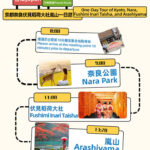
- Kinkaku-ji first: A guided visit to the gold-leaf pavilion and its pond begins at about 10:30. Admission costs extra.
- Three hours around Kiyomizu: Explore the temple and nearby historic streets independently, with a suggested route through Sannenzaka, Ninenzaka, Gion and Yasaka Shrine.
- Fushimi Inari’s torii gates: A guided visit gives you about 70 minutes at the famous shrine and its mountain paths.
- Two boarding cities: Start in Osaka at 08:40 or Kyoto at 09:50. Return times vary, with an Osaka arrival listed for about 18:30.
- Plan for extra costs: Adult admission to Kinkaku-ji and Kiyomizu-dera totals 900 yen, before meals and personal spending.
- Keep expectations focused: Chiikawa merchandise, the Botanical Garden light event and a lantern-lit Yasaka visit appear in the general description, but not as timed stops in the schedule.
- Three Kyoto icons, one long day
- Kinkaku-ji: a quick look at Kyoto’s gold pavilion
- Kiyomizu-dera: three hours to shape your own visit
- Fushimi Inari: walk beneath the red gates
- Osaka or Kyoto: choose your starting point carefully
- What the price covers, and what it does not
- Is this Kyoto day tour a good fit?
- FAQ
- Which places are included in the timed itinerary?
- Where can I board the tour?
- Are temple admission fees included?
- Is lunch included?
- What languages are available for the guided tour?
- What time does the tour return?
- Can I bring luggage or a young child?
- The Best Of Kyoto!
- More Tours in Kyoto
- More Tour Reviews in Kyoto
- Not for you? Here's more nearby things to do in Kyoto we have reviewed
Three Kyoto icons, one long day
This tour covers a lot of ground: the Golden Pavilion in northern Kyoto, Kiyomizu-dera and its old-town lanes in the east, then Fushimi Inari in the south. A shared vehicle saves you the work of stitching those visits together by train, bus and foot. It also means you follow a fixed schedule rather than lingering wherever the day catches your interest.
The listed group size can reach 49 people, and the vehicle may be a van, minibus or coach depending on how many people book. That flexibility is practical for the operator, but you cannot choose the vehicle or count on a small group. Seats are assigned on a first-come basis, and special seating requests are not guaranteed.
A Chinese-guided package is listed from $63.09, with Chinese, Japanese and English-speaking guide options described. Check the specific package you select before booking, since the price and language attached to the package can differ. One available review gives a five-star rating and thanks a guide named David, but that single comment is not a promise that David will lead your departure.
👉 See our pick of the 25 Best Workshops And Classes In Kyoto
Kinkaku-ji: a quick look at Kyoto’s gold pavilion
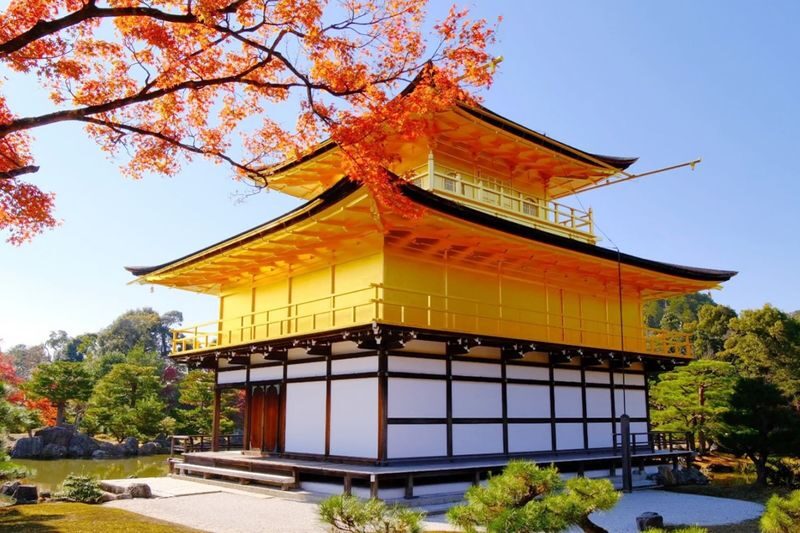
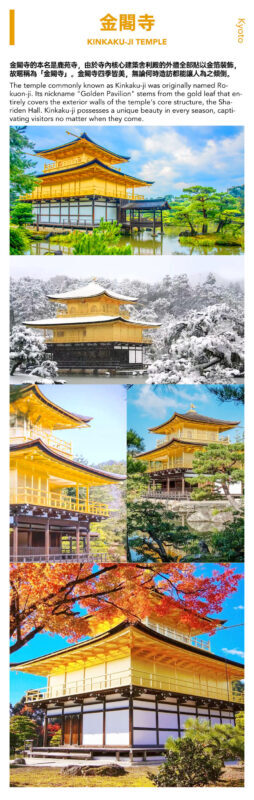
The first scheduled stop is Kinkaku-ji, also called Rokuon-ji. Its gold-leaf-covered reliquary hall rises beside Kyoko-chi Pond, where the pavilion’s reflection is the main event. The setting is designed for a walk and a view rather than a long indoor visit, and the light changes the appearance of the gold through the seasons.
You have about an hour here, including a guided visit. That is enough for a focused look, but not an invitation to wander without watching the clock. The temple charges an additional 500 yen for adults and 300 yen for elementary and junior-high students. The tour price does not include that ticket.
The schedule places Kinkaku-ji at around 10:30, not at sunset. The general description refers to golden-hour light, but you should plan around the timed visit rather than expect an evening stop. Autumn foliage and winter snow are noted as especially appealing, though no season can be guaranteed on your date.
You can also read our reviews of more tours and experiences in Kyoto.
Kiyomizu-dera: three hours to shape your own visit
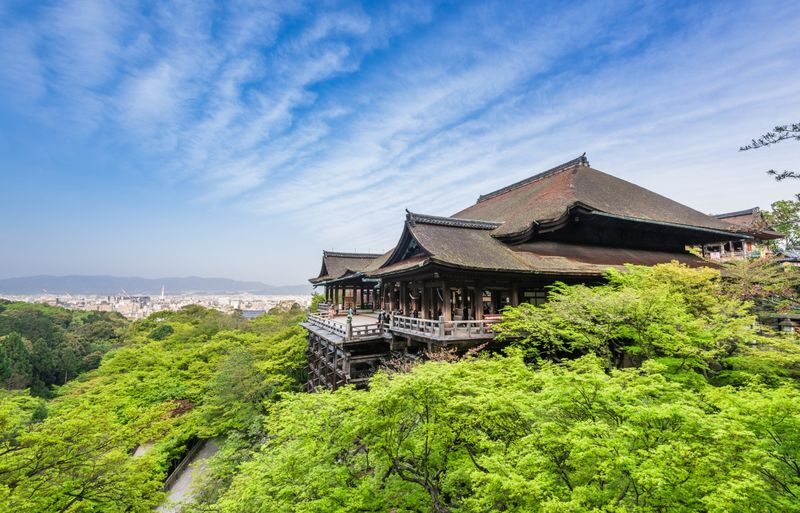
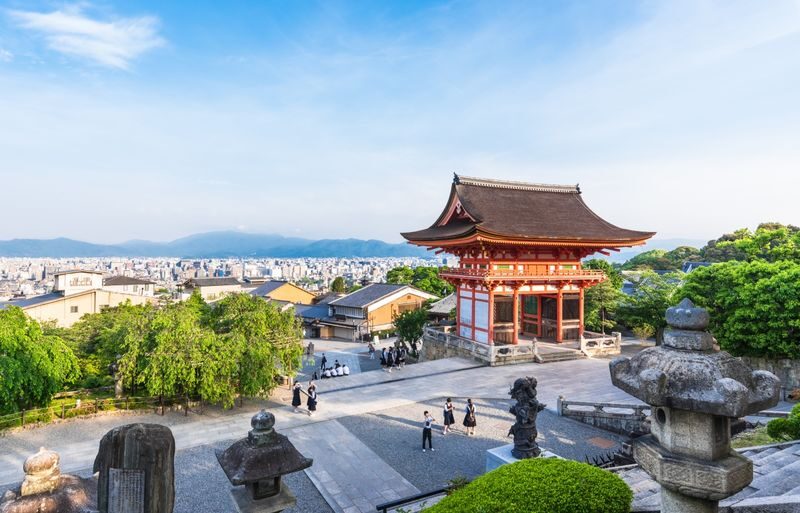
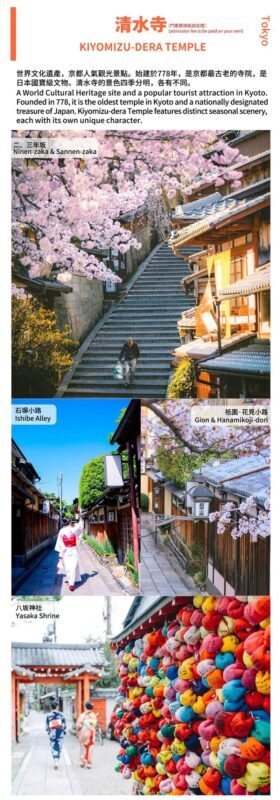
At about 12:20, you get three hours for Kiyomizu-dera and the surrounding district. This is the most independent part of the day. The temple’s famous wooden stage projects from the hillside, offering broad views over Kyoto; its construction uses no nails. In spring, cherry blossoms may frame the view, while autumn brings changing leaves.
Admission is self-funded: 400 yen for adults and 200 yen for primary- and secondary-school students. The long visit window gives you room to see the temple and explore nearby lanes, but it does not mean a guide will lead you through every stop. The suggested walk runs from Kiyomizu-dera through Sannenzaka and Ninenzaka, then Ishibei-koji Alley, Gion’s Hanamikoji Street and Yasaka Shrine.
That route is attractive because it links a major temple with Kyoto’s old street scenery instead of sending you straight back to the bus. It is also easy to lose track of time among the lanes, shops and photo stops. Keep an eye on the meeting time and allow for the walk back.
Yasaka Shrine is part of the suggested route, not a separately timed, guided stop in the schedule. Its lantern-lit atmosphere is associated with evening, but the tour’s Kiyomizu block falls in the afternoon. Do not book this day expecting a dedicated nighttime shrine visit.
Fushimi Inari: walk beneath the red gates
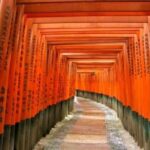
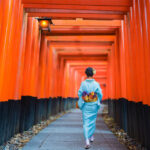
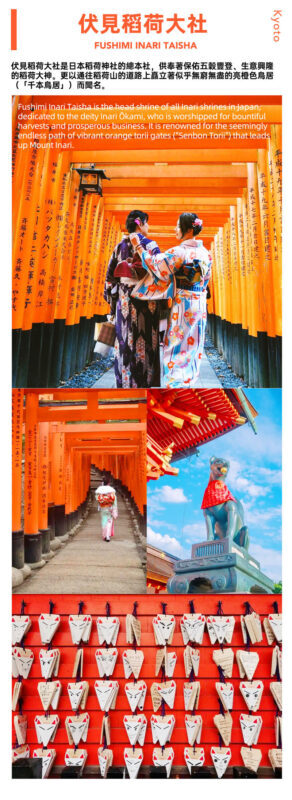
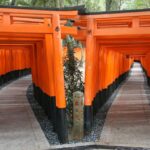
The last main stop begins around 15:40 at Fushimi Inari-taisha. The shrine is the head shrine for Inari worship in Japan, associated with harvests and business prosperity. Its thousands of vermilion torii gates form the striking corridors that climb the mountain and make this one of Kyoto’s most recognizable sights.
You have about 70 minutes, with a guide. That is enough to see the shrine and walk into the torii-lined paths, but it is not enough to hike the entire mountain at a leisurely pace. The gates are both a visual spectacle and offerings connected with prayers and devotion. If you want a long climb, this schedule will feel brief; if you mainly want to see the famous paths, it is a useful introduction.
The general experience description also mentions a Chiikawa-themed shop near the shrine approach, with special goods and sweets. It is not listed as a timed itinerary stop, so treat it as a possible nearby browse only if your guide and schedule allow. The same caution applies to the Kyoto Botanical Garden and its light-and-shadow event: it appears in the general description but not in the timed route. The itinerary itself lists Kinkaku-ji, Kiyomizu-dera and Fushimi Inari.
Osaka or Kyoto: choose your starting point carefully
The Osaka meeting point is at 08:40 by Exit 2 of Kintetsu Nipponbashi Station, near Daikoku Drug Store. The Kyoto boarding point is scheduled for 09:50 at the sightseeing bus loading area by Kyoto Station’s Hachijo Exit. Arrive at least 10 minutes early. This is a shared departure, and the vehicle cannot wait for late arrivals; missed departures are not refundable.
The return plan lists Kyoto Station around 17:10 and the Shinsaibashi-Dotonbori area around 18:30. These are estimates, not firm appointment times. Traffic, weather and conditions at the sights can change the order or shorten a stop. Avoid booking a flight, show or other tight commitment for that evening.
The operator sends a pre-trip email between 20:00 and 21:00 Japan time on the night before departure. It includes guide and driver details, a meeting-point map and important notes. Check your inbox and spam folder, and use the latest message if more than one arrives.
What the price covers, and what it does not
At a starting price of $63.09, the main value is the transport between distant sights and the chance to cover three major Kyoto destinations in one day. Toll, parking and fuel costs are included, along with the round-trip transfer from your selected meeting point. If you are staying in Osaka, that transport can make the day simpler than arranging each leg yourself.
It is not an all-inclusive day. Adult temple admission adds 900 yen in total: 500 yen at Kinkaku-ji and 400 yen at Kiyomizu-dera. Meals, drinks and personal purchases are also extra. There is no included lunch, so use the self-guided Kiyomizu break to find food or bring something with you. The tour notes dining options at the attractions but does not specify a restaurant or meal stop.
Children aged 3 and over pay the adult rate. Children aged 0 to 2 can join free if they do not need their own seat; child seats are not available. The activity is not wheelchair-accessible and is not recommended for people with limited mobility or pregnant women. The schedule involves walking at temple and shrine grounds, including a hillside setting at Kiyomizu and a mountain approach at Fushimi Inari.
One standard-sized piece of luggage per person is allowed, but you need to note it when booking. The vehicle type depends on group size, and unannounced luggage may create a space problem. You cannot leave the group partway through and resume the tour later.

Is this Kyoto day tour a good fit?
I would consider this tour if you have only one day for Kyoto’s headline sights, want transport handled, and are comfortable keeping to a group timetable. It is particularly useful if you are based in Osaka and want a single round trip rather than planning a chain of connections yourself. The mix of guided shrine visits and independent time near Kiyomizu gives you some freedom without making the whole day a solo logistics exercise.
I would skip it if you prefer slow visits, want to hike all of Fushimi Inari, or need a full guided explanation at Kiyomizu-dera. The schedule is best understood as an efficient sampler, not a deep visit to every site. Book for the three timed landmarks, not for the Botanical Garden event, Chiikawa shop or an evening at Yasaka Shrine, since those are not scheduled stops.
Kyoto Kiyomizu-dera Temple, Kinkaku-ji Temple, and Fushimi Inari-taisha Shrine One-Day Tour
“Thank you David, I had such a wonderful time! The trip to Kyoto was truly fantastic.”
FAQ
Which places are included in the timed itinerary?
The schedule includes Kinkaku-ji, Kiyomizu-dera and Fushimi Inari-taisha. It gives about one hour at Kinkaku-ji, three hours for the Kiyomizu area and about 70 minutes at Fushimi Inari.
Where can I board the tour?
You can board in Osaka at 08:40 near Exit 2 of Kintetsu Nipponbashi Station, or in Kyoto at 09:50 at the sightseeing bus loading area by Kyoto Station’s Hachijo Exit.
Are temple admission fees included?
No. Adult admission costs 500 yen at Kinkaku-ji and 400 yen at Kiyomizu-dera. The listed student rates are 300 yen and 200 yen, respectively.
Is lunch included?
No. You need to arrange lunch yourself. The tour information notes that dining places are available at the attractions, or you can bring food.
What languages are available for the guided tour?
Chinese, Japanese and English-speaking guide options are listed. The package shown from $63.09 is the Chinese-guided option, so check the language of the package you select.
What time does the tour return?
The schedule lists a return to Kyoto Station around 17:10 and arrival in the Shinsaibashi-Dotonbori area around 18:30. Traffic and weather can affect the timing.
Can I bring luggage or a young child?
Each person may bring one standard-sized piece of luggage, but you should note it when booking. Children aged 0 to 2 can join free if they do not occupy a separate seat; children aged 3 and over pay the adult rate. Child seats are not available.