The big draw here is a reserved seat for the Gion Matsuri procession, one of Japan’s major summer festivals. On July 17 or 24, you can watch the Yamaboko floats pass without having to claim a place in the street crowd hours ahead.
I like two things in particular: the English commentary comes through personal earphones, and the morning includes a guided visit to Kyoto Imperial Palace. The bus transfer from Kyoto Station also saves you some hot-weather navigation. The catch is that reserved seats may be exposed to the sun, and the seat location is assigned rather than chosen.
- What to know before you book
- Start at Kyoto Station, then head for the palace
- Kyoto Imperial Palace: a quieter opening to the day
- Reserved seats for the Yamaboko procession
- The tour ends at the festival, not back at the station
- What the price covers, and what it does not
- The guide and practical comfort details
- Who will get the most from this tour
- Should you book the half-day plan?
- FAQ
- Which dates does the tour run?
- Where and when do I meet the group?
- What is included in the half-day plan?
- Can I choose my seat in the viewing area?
- Does the half-day plan include a Lake Biwa cruise?
- Can I stay at the festival after the tour?
- The Best Of Kyoto!
- More Guided Tours in Kyoto
- More Tours in Kyoto
- More Tour Reviews in Kyoto
- Not for you? Here's more nearby things to do in Kyoto we have reviewed
What to know before you book
 1 / 6
 2 / 6
 3 / 6
 4 / 6
 5 / 6
 6 / 6
- Two July dates: The tour is offered for the Gion Matsuri procession on July 17 and 24.
- Assigned viewing seats: Your ticket covers a seat in the reserved viewing area, but you cannot select a specific place.
- A palace visit first: You get 45 minutes at Kyoto Imperial Palace with an English-speaking guide. If it is closed, the group visits Heian Shrine instead.
- A short festival viewing: The guided procession stop lasts about 60 minutes. The tour then ends at the festival, where you can stay on your own.
- No lunch in the half-day plan: The price starts at $100.89, and lunch is not included. This half-day option does not list a Lake Biwa cruise.
👉 See our pick of the 25 Best Workshops And Classes In Kyoto
Start at Kyoto Station, then head for the palace
The bus leaves at 8:15 from the tourist bus parking area at Kyoto Station’s Hachijo Exit. The meeting point is in front of the Kyoto AVANTI Building, and you are asked to arrive by 8:00. Treat that time as firm. Late arrivals and no-shows are not refunded, and it is a poor morning to test your luck with station directions.
Once aboard, you get an air-conditioned ride rather than having to work out public transport in peak summer heat. The tour includes bottled water, an English guide, and bus transfers. The air-conditioning is useful, but it does not make the outdoor portions cool, so dress for a hot July morning.
The schedule can shift because of traffic, weather, or procession conditions. The operator may change the order of visits or shorten a stop, and arrival times can move. That flexibility matters on a festival day, when road closures and crowds can make a tidy timetable more of a suggestion than a promise.
You can also read our reviews of more guided tours in Kyoto
Kyoto Imperial Palace: a quieter opening to the day
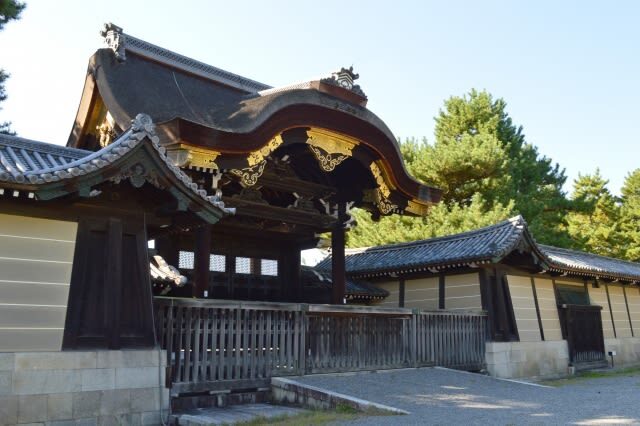
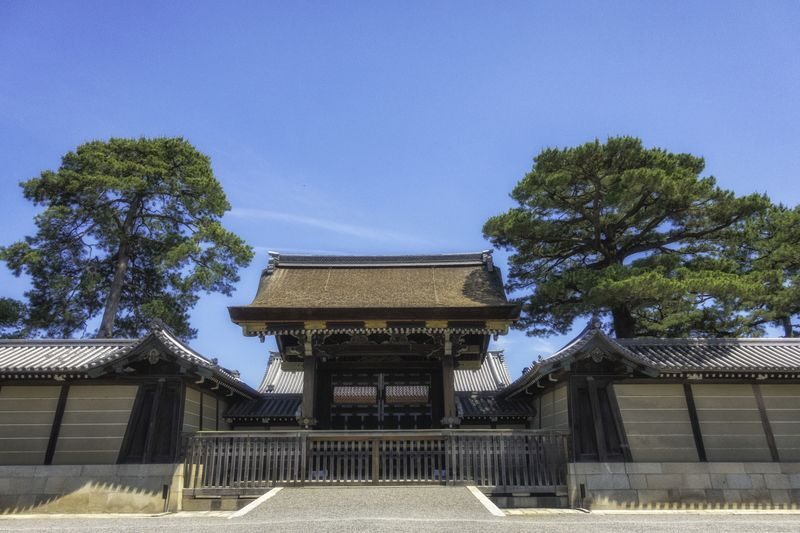
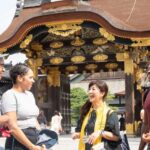
The first stop is Kyoto Imperial Palace, the former home of Japan’s Imperial Family. You have about 45 minutes for a guided visit to the palace grounds. It gives the morning a calmer start before the festival’s crowds and noise, and provides a look at an important part of Kyoto’s imperial past.
Keep expectations in scale: this is a short visit, not a leisurely palace tour. The guide leads the group, and the limited time means you will get an introduction rather than a deep exploration. If you want to spend longer around the palace, this half-day format is not designed for that.
The palace may be closed on the date of your tour. In that case, the group visits Heian Shrine instead. That substitution keeps a cultural stop in the morning, but it does mean the exact experience depends on the day.
Reserved seats for the Yamaboko procession
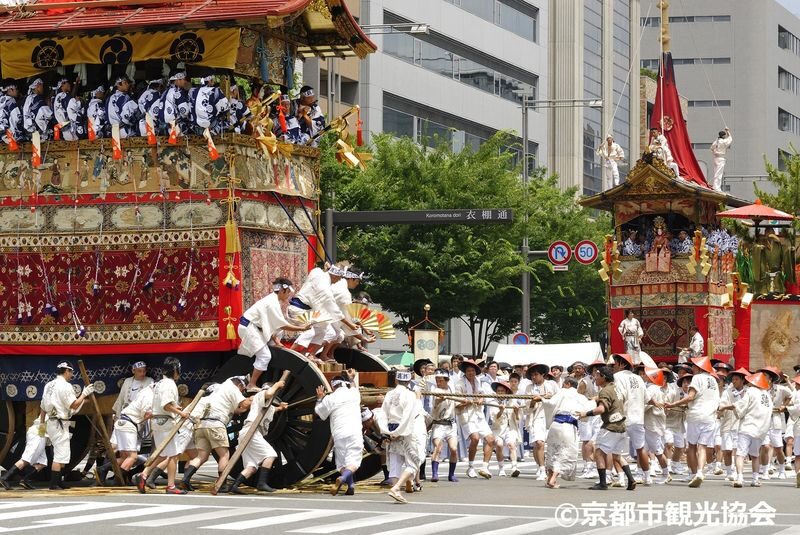
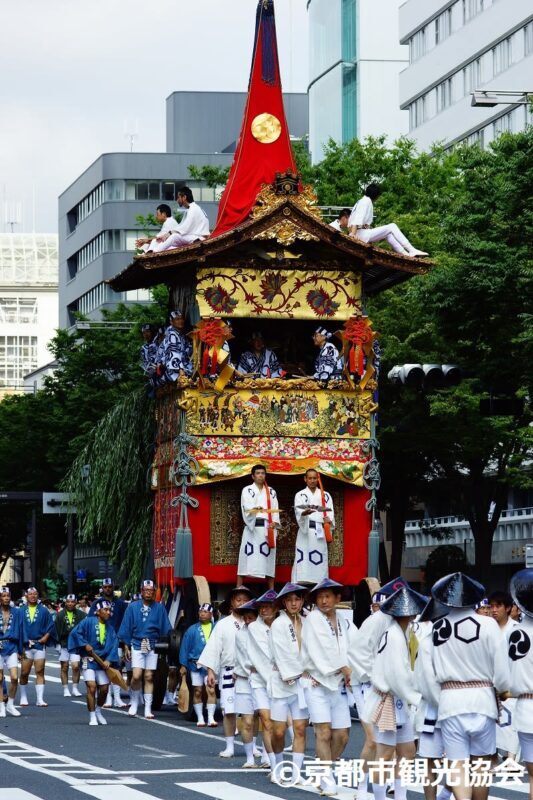
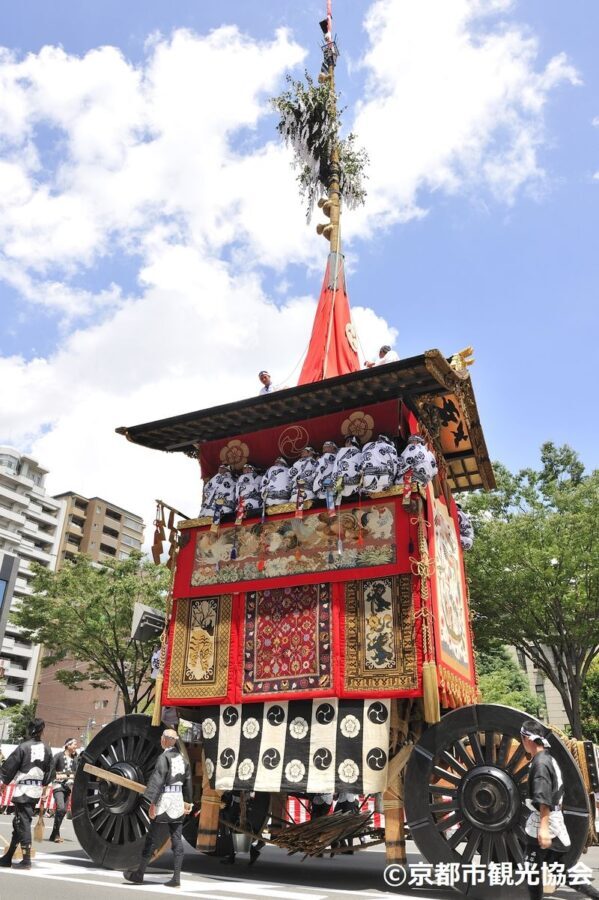
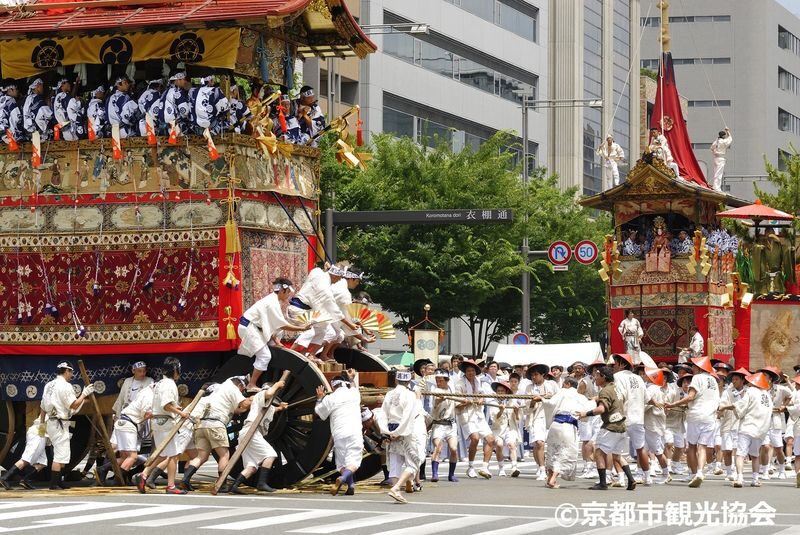
The Gion Matsuri procession is the main event. This tour covers a 60-minute guided viewing of the procession, with tickets for a reserved viewing area. The Yamaboko floats are the star of the show: large, elaborate festival structures that make the procession worth seeing in person.
A reserved seat solves one problem: you do not have to compete for a spot among the street crowds. The English guide also uses personal earphone guides, so you can hear explanations about the floats despite the noise around you. That combination is useful if you want context as well as a clear view.
There is a trade-off. You cannot choose your particular seat, and a reserved place does not guarantee shade. A past participant found the July sun on the seating area uncomfortable and preferred the shaded sidewalk. That is a real consideration, not a minor footnote: Kyoto in July can be punishing, and the procession viewing is outdoors.
Pack a hat and sunscreen, and bring water if you want more than the bottle supplied. Umbrellas are prohibited at the Gion Matsuri, so do not rely on one for sun protection. The tour’s seat ticket is best thought of as a way to secure a place and reduce crowd stress, not as a promise of a cool or especially flexible viewing position.
The tour ends at the festival, not back at the station
The half-day tour is scheduled to finish at about 11:40, at the Gion Matsuri venue. You are welcome to stay and watch more of the procession at your own pace, but the guided portion ends there. Plan your next stop from the festival area rather than expecting a bus ride back to Kyoto Station.
This finish can be a plus if you want to keep exploring Kyoto after the tour. It also puts the planning back in your hands. If you have a timed reservation or another activity later in the day, leave room for the procession to run slowly. Festival timing can change, and the schedule may be adjusted or shortened.
One past participant on a full-day version found the parade moving slowly enough to disrupt later plans. That is a useful warning for anyone with a tight afternoon schedule. The half-day plan avoids committing you to a longer day, but it cannot make the procession itself run on time.
What the price covers, and what it does not
At a starting price of $100.89, this is not simply a bus ride to a street festival. You are paying for the reserved viewing ticket, a guided palace visit, English commentary through earphones, and air-conditioned transfers from Kyoto Station. For a first-time visitor who would rather not manage the festival logistics alone, those pieces can make the cost worthwhile.
The value depends heavily on how much you care about having a planned viewing place. If you are happy to find your own spot and are comfortable navigating a busy festival, you may prefer to attend independently. If the idea of securing a seat and hearing explanations appeals, the package offers a more structured way to see the procession.
Lunch is not included, and the half-day plan does not list a Lake Biwa cruise. The experience title refers to a festival and Lake Biwa lunch cruise bus tour, while the supplied Half Day Plan covers the palace and procession only. Do not book this option expecting a boat ride or lunch. A past participant described a Biwa boat ride on a full-day plan, but that is a different package and is not part of the half-day details here.
The experience has a 4.7 rating, but that score comes from only three ratings, so treat it as a small sample rather than a guarantee. The tour is operated by H.I.S. Co., Ltd, which reports a 91 percent good-review rate across its wider operation. That broader figure is useful context, but it does not tell you exactly how your festival day will go.

The guide and practical comfort details
The guide’s name is not specified, so you cannot request a particular person. The tour does include an English guide, and feedback about H.I.S. guides has praised their attentiveness, including reminders to keep track of belongings and care with the group. That kind of help matters on a day when crowds and heat can make it easy to leave something behind.
Earphone guides are provided for the tour. Handle them carefully and return them afterward. If you lose or damage the equipment, you may be charged up to 18,000 yen, so keep track of it, particularly when moving between the bus and the viewing area.
The bus has seat belts, and wearing one while the vehicle is moving is required by law. Children aged zero to two can join free if they do not need a separate seat. If a child needs their own place, check the booking conditions before you reserve.
Who will get the most from this tour
I’d consider this tour if you are visiting Kyoto specifically for Gion Matsuri and want a reserved place, an English explanation, and an organized start from the station. It suits first-time festival visitors, people who value a guide’s context, and anyone who would rather avoid figuring out transport and a viewing location on their own.
It is less appealing if shade is essential, you want to choose exactly where you sit, or you prefer to explore at your own pace from the start. In that case, the reserved area may feel restrictive, especially if your assigned seat is in direct sun. You should also look elsewhere if the Lake Biwa cruise is the part that interests you: it is not included in this half-day option.
Should you book the half-day plan?
Book it if the reserved seat and English commentary are worth the price to you, and you can cope with a hot, outdoor hour. The palace visit and bus transfer add useful structure, while the tour’s on-site finish leaves the rest of the day open.
Skip it if you are counting on shade, a return to Kyoto Station, lunch, or a Lake Biwa cruise. For the best fit, choose the date that matches your plans, arrive at the meeting point by 8:00, and keep your afternoon schedule flexible. The festival is the reason to go; the seat, guide, and bus are the practical support around it.
Kyoto Gion Festival Guided Tour with Reserved Seats July 17, 24
“I really liked this tour except for the reserved seats for the Gion Festival. Sounds nice on paper, but in July and with no shade, it was horrible….”
FAQ
Which dates does the tour run?
The tour is offered for the Gion Matsuri procession on July 17 and July 24. Your voucher is valid only for the date and time specified on your booking.
Where and when do I meet the group?
Meet in front of the Kyoto AVANTI Building by 8:00. The bus departs at 8:15 from the tourist bus parking area at Kyoto Station’s Hachijo Exit.
What is included in the half-day plan?
The package includes an air-conditioned bus, a ticket for a reserved Gion Matsuri viewing seat, bottled water, and an English guide. Lunch is not included.
Can I choose my seat in the viewing area?
No. You receive an assigned seat in the reserved viewing area, and specific seats cannot be selected.
Does the half-day plan include a Lake Biwa cruise?
No Lake Biwa cruise is listed in the half-day plan. Its stated stops are Kyoto Imperial Palace, or Heian Shrine if the palace is closed, and the Gion Matsuri procession.
Can I stay at the festival after the tour?
Yes. The guided viewing lasts about 60 minutes, and the tour ends at the festival venue. You may stay and watch on your own afterward.