A visit to Auschwitz-Birkenau makes more sense when you first see where Krakow’s Jewish community was confined and displaced. This tour starts in Podgórze, at Ghetto Heroes Square, then follows that history south to the memorial site. It gives you a connected account of persecution, deportation and survival, rather than treating the camps as an isolated stop.
I like two things in particular: the former Ghetto walk gives essential context, and the included round-trip transport takes the strain out of arranging a full day beyond Krakow. The tour team also helps you understand the day’s schedule and entry process before you reach the museum.
The trade-off is time. The full outing lasts about 8 to 9.5 hours, and Auschwitz I and Birkenau cover a lot of ground. Some booking options include an official Museum guide inside the camps; others do not, so check that detail before paying.
- Key points to know before you book
- Why begin at Krakow’s former Ghetto
- Ghetto Heroes Square and Eagle Pharmacy
- The coach journey to Oświęcim
- Auschwitz I: exhibitions and former prisoner blocks
- Birkenau: railway, barracks and the scale of the camp
- Timing, group arrangements and the price
- Practical details that can save you trouble
- Who should choose this tour
- FAQ
- How long does the tour take?
- Where does the tour start?
- Is Eagle Pharmacy always open during the tour?
- Is an official Museum guide included at Auschwitz?
- What identification do I need?
- Can I bring a large bag?
- Is lunch included?
- How much walking should I expect?
- Is the tour suitable for children or wheelchair users?
- The Best Of Krakow!
- More Guided Tours in Krakow
- More Tours in Krakow
- More Tour Reviews in Krakow
- Not for you? Here's more nearby things to do in Krakow we have reviewed
Key points to know before you book
- Start with Podgórze: Visit Ghetto Heroes Square, a section of the former Ghetto wall and, when open, Eagle Pharmacy.
- Expect a full day: The route includes walking in Krakow, coach transfers of about 1.5 hours each way, and several hours at the memorial.
- Check your Auschwitz option: Some versions include an official Museum guide; the small-group experience may be unguided inside.
- Bring matching ID: Your full name and birth date must match your passport or ID card, which you must bring.
- Pack light and dress for walking: Only very small bags are allowed at Auschwitz, and the route includes stairs, gravel and outdoor areas.
- Budget for your own food: Meals are not included, and a formal lunch stop is not guaranteed.
👉 See our pick of the 6 Best Shopping Tours In Krakow
Why begin at Krakow’s former Ghetto
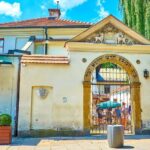
The tour meets at Rynek Podgórski 33, near St. Joseph’s Church, in the Podgórze district. This is not the Old Town’s postcard center. It is a place to start tracing the wartime story of Krakow’s Jewish population, before travelling to the camp complex at Oświęcim.
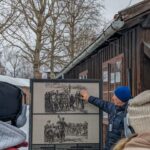
A licensed local guide leads the walk through former Ghetto sites. The route includes Ghetto Heroes Square, the remains of the Ghetto wall and Apteka pod Orłem, known in English as Eagle Pharmacy. The pharmacy is included only when it is open. If it is closed, your guide explains its significance from outside, so treat entry as a possibility, not a promise.
The Ghetto visit is more than a preface. It helps you follow the sequence from restrictions and forced isolation to deportation and mass murder. Guides on this route have included Christopher, Klaudia, Krzysztof and Ewa, though assignments can change. The Krakow guide may also differ from the person accompanying the transfer or the official Museum guide.
You may spend close to two hours on the walking portion, depending on the schedule. That is useful time for questions and context, but it can feel long if you are eager to reach Auschwitz. A few people have also found that a lengthy Ghetto visit leaves less time at the camps. Keep that balance in mind: this is a linked history tour, not simply a ride to the memorial.
You can also read our reviews of more guided tours in Krakow
Ghetto Heroes Square and Eagle Pharmacy
Ghetto Heroes Square is one of the most striking stops on the walk. Its empty chairs make a quiet memorial, and the square’s position in the former Ghetto gives your guide a place to explain how the district was shaped by wartime confinement. You are not just hearing a timeline; you are standing in the area where that history unfolded.
The nearby Ghetto wall fragments offer another kind of evidence. They are modest remains, not a complete preserved boundary, but they help make the forced separation tangible. Your guide can point out the wall area and explain how the Ghetto fit into the surrounding neighborhood.
Eagle Pharmacy adds a human story to the route. If it is open, you can enter; if it is not, the guide provides an explanation outdoors. Do not plan your day around a guaranteed interior visit. The point of this section is the guided account of the former Ghetto and its sites, not a fixed museum stop at every address.
The coach journey to Oświęcim
After the walk, you travel from Krakow to Auschwitz-Birkenau by organized transfer. The listed journey is about 1.5 hours each way, though traffic, weather and the day’s schedule can affect timing. Transport is included, and the tour leader or driver helps coordinate the group and the entry process.
Several people have found the vehicle comfortable and the transfer well managed. In some cases, the group has travelled by minibus, especially with a small party. The exact vehicle and group size are not guaranteed, but private and small-group options are offered.
The journey is also a chance to prepare. The tour team may explain the entry procedure, security rules and what you will see at each camp. Some guides continue giving historical context on the way. Use this time to drink water and check your belongings, but do not assume there will be a full meal stop. Food and drinks are not included, and schedules vary.
Auschwitz I: exhibitions and former prisoner blocks
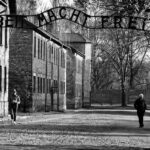
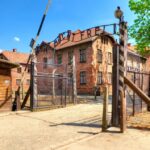
At Auschwitz I, you enter the preserved camp area and pass through the main entrance gate bearing the words Arbeit Macht Frei. The visit continues through former prisoner blocks and historical exhibitions, where documents and personal belongings show the lives of people imprisoned and murdered there.
If you book an option with an official Auschwitz-Birkenau Museum guide, the Museum educator leads the visit inside. Audio headsets are provided according to Museum arrangements. The Museum sets the route, pace, breaks and access to buildings, so the operator cannot promise that every room will be open or that you can linger wherever you wish.
There is an important booking detail here. The activity’s options are not all the same: some include a guided visit of Auschwitz I and Birkenau, while the small-group experience with Ghetto and transfers may be unguided inside the camps. A tour leader can help with coordination, but that is not the same as a Museum guide explaining the exhibitions. Read the exact option name and inclusions before booking.
The site is emotionally demanding, and the material is difficult. A guide can provide context, but you should not expect the visit to feel easy or light. The value lies in seeing the preserved buildings and evidence, and in listening carefully to the stories connected to them.
More Great Tours NearbyBirkenau: railway, barracks and the scale of the camp
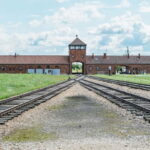
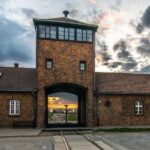
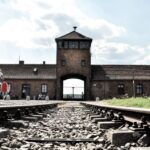
The tour continues to Auschwitz II-Birkenau. Here, the railway tracks and unloading area, long rows of barracks and remains of gas chambers and crematoria show the scale and function of the camp. The open grounds make this part of the visit physically different from the block exhibitions at Auschwitz I.
Birkenau is broad and exposed. Expect to walk outdoors, often over gravel, and to spend time standing. There may be stairs and uneven surfaces along the day’s route. Comfortable walking shoes and weather-appropriate clothing are practical, not optional extras. In wet months, bring a waterproof coat; in warm weather, carry water and prepare for sun.
Time is the main constraint. The camp complex is large, and the Museum controls the route and pace. Some groups have felt the visit was enough to see the main sites but too short to explore at a slower pace. If you want to study each exhibit in depth or spend extended time at specific places, a tightly scheduled day trip may frustrate you.

Timing, group arrangements and the $44 price
At $44 per person, the tour offers a lot of ground for the price: a guided introduction to the former Ghetto, reserved Auschwitz-Birkenau entry, round-trip transport and, depending on the option, an official Museum-guided visit. Booking the transfer and entry together also saves you from coordinating transport and admission separately.
The price is especially appealing if you want both the Krakow context and the camp visit in one day. But it is not an all-inclusive day out. You pay for your own food and drinks, hotel pickup is not included unless your selected option clearly says so, and large luggage storage is not provided.
The advertised duration is 8 to 9.5 hours. Starting times can shift because of Museum availability, security, traffic or weather. That makes this a poor day to schedule a tight evening commitment. The start time is approximate, and the tour guide may change between Krakow and Auschwitz.
Languages offered are English and Polish. Private and small-group options are available, but do not assume every option has the same format inside the camps. The details matter most here: confirm the language and whether an official Museum educator is included.
Practical details that can save you trouble
Each participant must provide a full name and date of birth exactly as shown on their passport or ID card, then bring that same identification. Incorrect or missing details may lead to denied entry without a refund. Check the spelling when you book, especially if your name includes multiple given names or unusual characters.
Auschwitz permits only very small bags, no larger than 30 by 20 by 10 centimeters. Leave suitcases and large backpacks elsewhere; storage for large luggage is not included. Pets, weapons and sharp objects, baby strollers, short skirts, alcohol and drugs are not allowed.
The route involves substantial walking and standing, stairs, gravel and outdoor sections. This experience is not suitable for wheelchair users, and visits are not recommended for children under 14. Bring water and a snack for the transfer, since there may be no formal lunch break. The exact stops and breaks depend on the day’s schedule.
The Museum sets access and movement inside the camps. That can mean a brisk pace, limited breaks or changes to the route. Your tour team can help with coordination, but it cannot override Museum rules.
Who should choose this tour
Choose this tour if you want a guided account of Krakow’s former Ghetto as well as a visit to Auschwitz-Birkenau, and you value having transport and entry arrangements handled for you. The walk in Podgórze is particularly worthwhile if you want to understand how the persecution of Krakow’s Jewish community connects to the camps.
It also suits you if you have one day available and are comfortable with a long, serious outing. Guides such as Christopher, Klaudia, Krzysztof and Ewa have led the Krakow portion, and Matteo has been among the tour team members helping with transport and group coordination. Names and assignments are not guaranteed, but the tour depends heavily on clear guiding and careful organization.
Consider another arrangement if you want a slow, unhurried visit to every exhibition, need step-free access, are travelling with a child under 14, or cannot manage several hours on foot. If you book, choose the option with the Museum guide if guided interpretation inside Auschwitz is important to you. For a connected, practical day from Podgórze to Birkenau, this is good value, provided you are prepared for the pace and emotional weight.
Krakow to Auschwitz Birkenau Guided Tour with Ghetto Visit
FAQ
How long does the tour take?
The full experience lasts about 8 to 9.5 hours. The schedule can change because of Museum availability, security, traffic or weather.
Where does the tour start?
The meeting point is Rynek Podgórski 33 in Krakow, near St. Joseph’s Church and the former Ghetto area.
Is Eagle Pharmacy always open during the tour?
No. Entry is included only when the pharmacy is open. If it is closed, the guide explains the site from outside.
Is an official Museum guide included at Auschwitz?
It depends on the option you book. Some options include an official Museum guide for Auschwitz I and Birkenau. The small-group experience with Ghetto and transfers may be unguided inside the camps.
What identification do I need?
Bring the passport or ID card whose details you supplied when booking. Your full name and date of birth must match the document exactly.
Can I bring a large bag?
No. Only very small bags are allowed at Auschwitz, up to 30 by 20 by 10 centimeters. Large luggage storage is not included.
Is lunch included?
No. Food and drinks are not included, and there may not be a formal lunch stop. Bring water and a snack for the transfer.
How much walking should I expect?
Expect several hours of walking and standing, with stairs, gravel and outdoor areas. Dress for the weather and wear comfortable walking shoes.
Is the tour suitable for children or wheelchair users?
Visits are not recommended for children under 14, and the tour is not suitable for wheelchair users.
You can check availability for your dates here: