Aruba’s story is written in contrasting places: volcanic-looking boulders inland, gold-mining ruins on the coast, a small chapel in open countryside, and a lighthouse with wide island views. This 3.5-hour bus tour links those sights with the Aloe Vera factory and museum, giving you a useful first look at Aruba beyond the beach. I like that it pairs natural landmarks with island history, and that hotel or cruise pickup makes the route simple to manage.
The trade-off is time. With several stops packed into half a day, you may have only 15 to 30 minutes at some places, and one visitor found the Casibari stop especially brief. The tour costs $49 per person, so it offers good value if you want a guided overview, but less appeal if you prefer to linger or explore at your own pace.
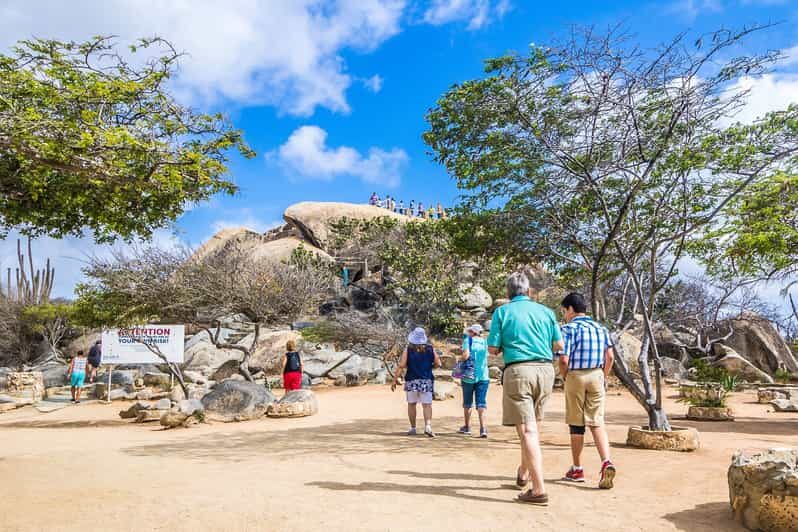
- Casibari Rock Formation: Follow paths and steps among the boulders, with a climb to views across the island.
- Aloe Vera factory and museum: See how a plant introduced in 1840 became central to Aruba’s economy.
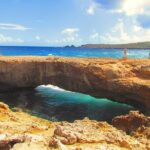
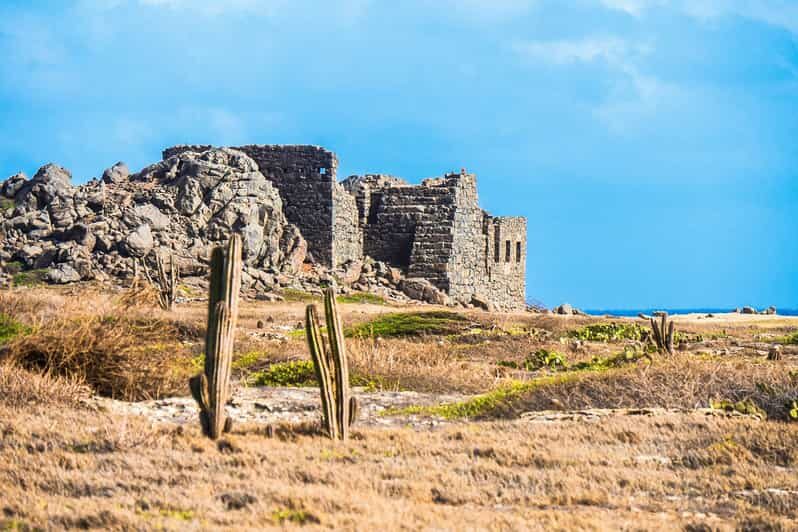
- Bushiribana gold ruins: Stop on the rugged north coast to see the remains and hear about Aruba’s gold-mining past.
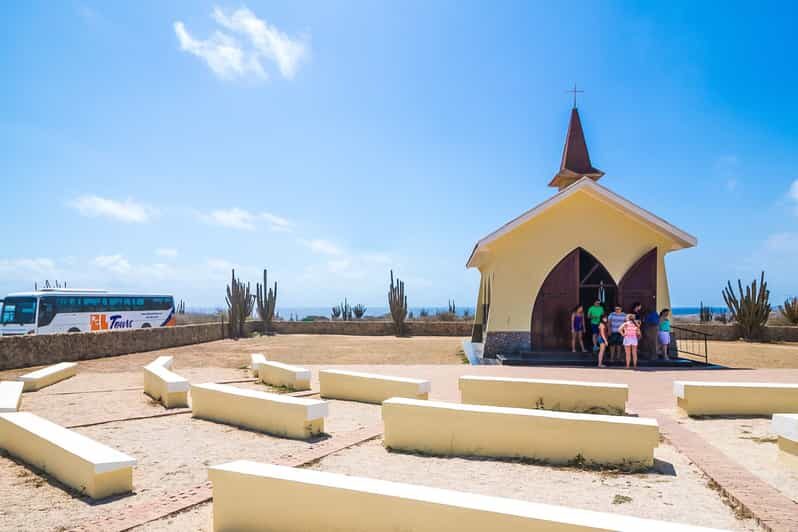
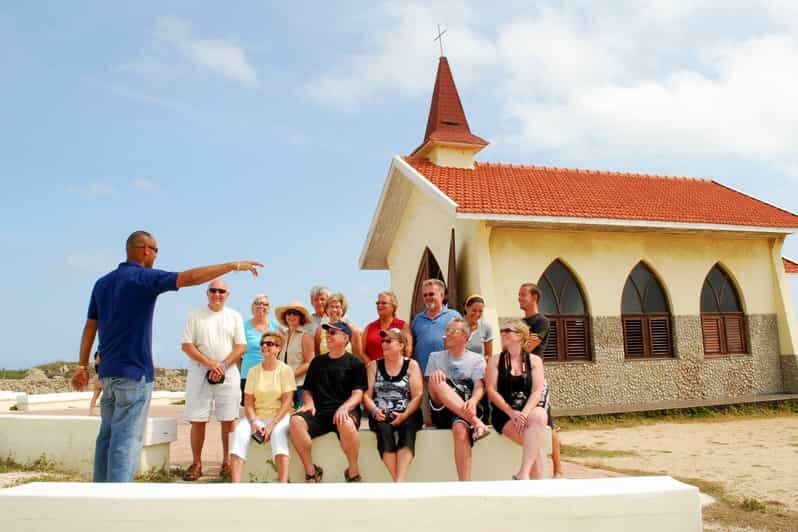
- Alto Vista Chapel: Visit the site of Aruba’s first Catholic church, built by a Spanish missionary in 1750.
- California Lighthouse: Take in one of the island’s scenic viewpoints.
- Air-conditioned bus and pickup: Cover several far-flung sights without arranging your own transport.
- A half-day route through Aruba’s varied past
- The Aloe Vera factory and museum tell an economic story
- Casibari’s boulders reward a short climb
- Bushiribana brings Aruba’s gold-mining past to the coast
- Alto Vista Chapel offers a quieter pause
- California Lighthouse closes the scenic circuit
- Guides add the stories that make the stops matter
- What buys you, and who will get the most from it
- Practical details before you reserve
- Should you book the Aruba highlights tour?
- FAQ
- How long is the tour?
- What sights does the tour visit?
- Which languages are available?
- Is pickup included?
- What should I bring?
- Is the tour suitable for wheelchair users?
- The Best Of Oranjestad!
- More Guided Tours in Oranjestad
- More Tours in Oranjestad
- More Tour Reviews in Oranjestad
- Not for you? Here's more nearby things to do in Oranjestad we have reviewed
A half-day route through Aruba’s varied past
 1 / 8
 2 / 8
 3 / 8
 4 / 8
 5 / 8
 6 / 8
 7 / 8
 8 / 8
This is an overview tour, not a deep exploration of any one site. You travel by air-conditioned bus between landmarks, while your guide supplies the context that makes the stops more than a string of photo opportunities. Guides speak English, Dutch, or Spanish, and the route is designed to fit Aruba’s natural and historic highlights into about 3.5 hours.
That short format is useful if you are on a cruise, have limited time, or want to get your bearings before spending the rest of your stay at the beach. A small group of around 10 people was reported on one departure, though group size can vary. The bus ride itself is part of the experience: guides such as Peter, Ricardo, Anthony, Enrico, and Johan have led tours, with many praised for answering questions, sharing island stories, and keeping the mood relaxed.
Do not read the tour’s 3-hour title as a firm promise of a three-hour return. The stated duration is 3.5 hours, and some outings have taken closer to four. The time can feel quick because the stops are frequent. If you need to be back at a cruise ship by a specific time, confirm the pickup and return details before booking and leave a sensible buffer.
You can check availability for your dates here:
👉 See our pick of the 3 Best Guided Tours In Oranjestad
The Aloe Vera factory and museum tell an economic story
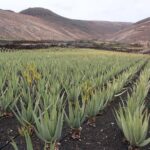
Aloe is more than a souvenir-shop ingredient here. First introduced to Aruba in 1840, the plant became an important crop, and at one point the island was the world’s largest aloe exporter. Almost two-thirds of Aruba was covered with aloe plants, making the factory and museum a useful stop for understanding how the island’s economy changed over time.
You visit the factory and museum, then have a chance to see or buy aloe products. One visitor who expected little from the stop was surprised by it and left with several purchases. That is a good reason to keep an open mind, though shopping is not compulsory and the tour’s value does not depend on buying anything.
The stop also adds welcome variety to a route heavy on outdoor viewpoints and historic sites. If you are curious about local industry, it gives you a more grounded story than scenery alone. Keep a little room in your bag if you are likely to shop, but treat the factory visit as an informative stop first.
You can also read our reviews of more guided tours in Oranjestad


Casibari’s boulders reward a short climb
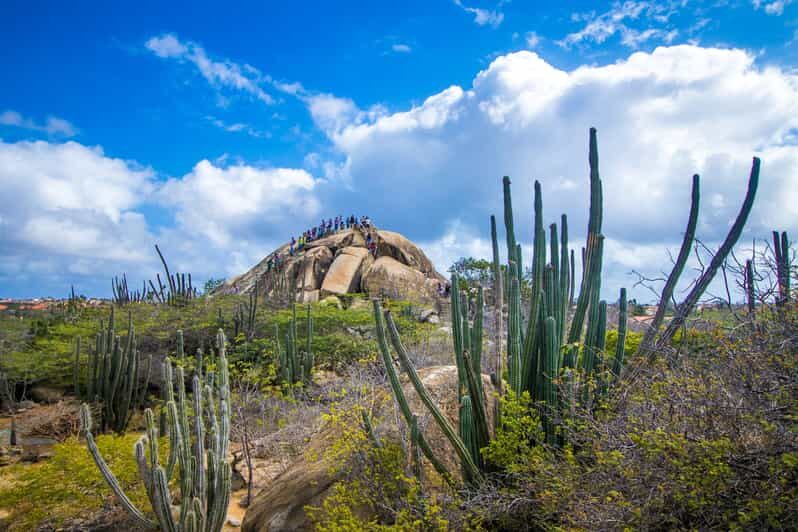
Casibari Rock Formation is one of Aruba’s striking natural features. The government-built trails and steps lead through the boulders and up toward views over the island. It is a good chance to stretch your legs after riding in the bus, and the elevated outlook makes this stop one of the tour’s best photo opportunities.
The climb is short, but the terrain matters. You will walk on paths that can be uneven and inclined, so wear sneakers or other sensible walking shoes. The activity is described as easy, but easy does not mean perfectly level or suitable for every mobility need.
Time here is the main question. Stops on the tour may run 15 to 30 minutes, and one visitor felt 15 minutes at Casibari was too short to explore properly. If you like to climb, pause for views, and take photos without watching the clock, this may feel hurried. If you are content with a quick look and a few pictures, the stop works well as part of a broader circuit.
Bushiribana brings Aruba’s gold-mining past to the coast
At Bushiribana, the remains of an old gold mine sit along Aruba’s rugged north coast. The stop combines a look at the ruins with coastal views and a short account of the island’s gold-mining history. It is a different kind of history from the chapel and aloe factory: here, the setting helps explain why people came to this rough stretch of shoreline.
The exact time you spend at the ruins can vary. Some guides may add a brief stop, and a guide once included Bushiribana as an extra stop for the group. That flexibility is a plus, but do not assume every departure will have extra time or an identical route.
Bring your camera, but take care on uneven ground. The tour requires walking on pavement and packed dirt, and some paths have inclines. The stop is most rewarding if you enjoy seeing historic remains in their setting, rather than expecting a restored museum or a long guided walk.
Alto Vista Chapel offers a quieter pause
Alto Vista Chapel sits in the countryside on the site of Aruba’s first Catholic church, built in 1750 by a Spanish missionary. Its appeal is less about grand architecture than about place and atmosphere. After the busier rock formations and coastal stops, the chapel offers a quieter moment to take in the island’s religious history and open surroundings.
This is a good stop for slowing down, even if only briefly. A guide can explain the chapel’s place in Aruba’s past, while you take a look around and enjoy the calm setting. The tour is not described as a long visit, so plan on a pause rather than an extended stay.
If you are especially interested in religious history or want time for reflection, you may wish you had more time here. If you value seeing a range of places in one outing, its contrast with the natural and industrial stops is precisely the point.
More Great Tours NearbyCalifornia Lighthouse closes the scenic circuit
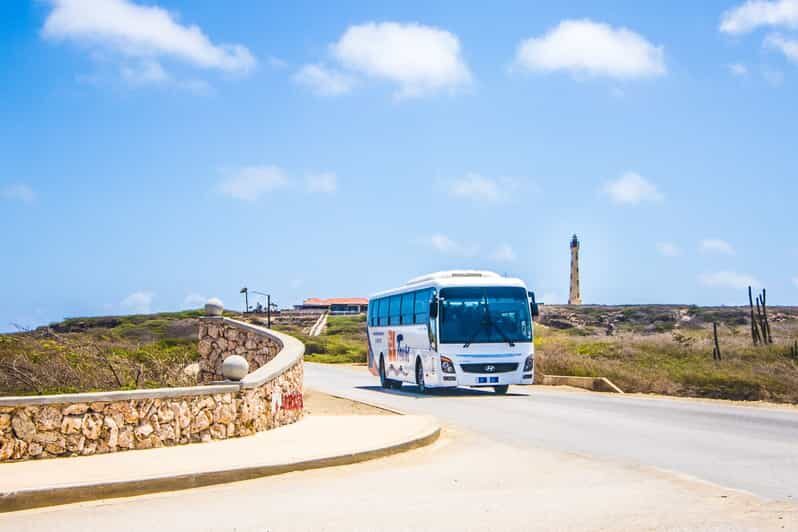
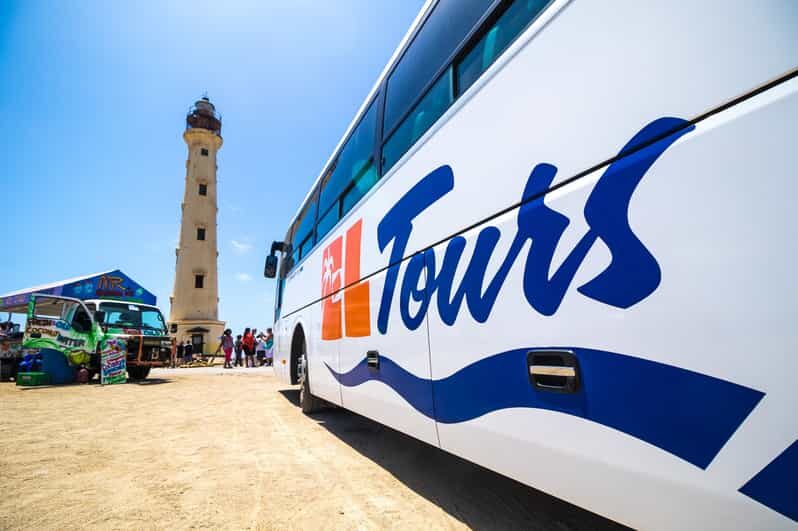
The California Lighthouse area is known for broad views and is a fitting final landmark on a tour that has crossed several parts of the island. It gives you a chance to look out over Aruba and take photos before returning by bus. The lighthouse stop is about the setting and the view, rather than a detailed visit inside the structure.
The tour description does not specify how long the stop lasts or whether every departure has precisely the same order. In general, expect a photo stop and an introduction from your guide, not a long visit. The view is a strong finish, but if you want to linger, this compact group route may not give you the time.
One account also describes an hour at a beach at the end of a departure, with Arashi Beach mentioned as a possible swim. However, a beach stop is not part of the core list of sights, so do not count on swimming or bring a swimsuit as if it were guaranteed. Check the current route details if beach time is important to you.
You can also read our reviews of more tours and experiences in Oranjestad
Guides add the stories that make the stops matter
The guide can make or break a fast-moving island tour. The strongest part of this experience is often the running commentary: guides explain Aruba’s history, point out photo spots, answer questions, and share stories about local life. Peter is a name that appears often, while Ricardo, Anthony, Enrico, Johan, and others have also led departures. You cannot choose a particular guide, but the tour is built around live commentary rather than a prerecorded narration.
Good guiding also helps make the short stops feel worthwhile. A friendly guide can explain what you are looking at before you step off the bus, then give you room to take pictures or ask questions. Several accounts describe guides who were patient and did not rush the group, while others found the tour moved quickly because there were so many stops. Both can be true: the overall pace is brisk, but the guide may still give each stop its allotted time.
Refreshments are included. In practice, expect water rather than a full snack service, so bring anything else you may want during the outing. Sunglasses and sunscreen are sensible, especially at exposed outdoor stops.
What $49 buys you, and who will get the most from it
At $49 per person, the main value is transport, pickup, and several guided stops in one outing. You do not need to arrange separate rides to the rock formation, ruins, chapel, factory, and lighthouse, and you get context along the way. For a cruise visitor or anyone with only a few hours, that convenience can be worth more than trying to piece together the same route independently.
The price also feels reasonable if you want a broad introduction rather than an in-depth tour of each landmark. It is less compelling if your priority is spending a long time at Casibari, making a focused visit to the aloe museum, or choosing exactly how long to stay at each stop. The tour’s value comes from seeing several sides of Aruba in one go, not from extended time at any single attraction.
This outing suits first-time visitors, families who want a manageable overview, and cruise passengers looking to see more than the port area. One family with children found the number of stops adequate and the tour engaging without becoming tiring. It can also work well as an orientation ride early in a stay, helping you decide which places you might want to revisit independently.
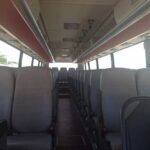
The bus is air-conditioned, a practical comfort in Aruba’s heat. Still, one visitor found the vehicle less comfortable than hoped. You are in and out often, which limits the time spent sitting, but comfort can vary by vehicle and personal preference.
Practical details before you reserve
Wear comfortable clothes and walking shoes, and bring sunglasses and sunscreen. You should be able to walk on pavement and uneven packed dirt, including paths with some inclines. The tour is classed as easy, but it is not suitable for people with mobility impairments or wheelchair users who cannot manage short walks and steps into the vehicle.
A collapsible wheelchair may be stored, but the participant must be able to walk short distances and climb some steps to board. Non-folding wheelchairs are not allowed. If you have mobility concerns, contact the operator before booking rather than relying on the easy activity rating.
Pickup is included from a hotel or cruise ship, with details depending on availability. The tour can be booked with payment deferred, and cancellation up to 24 hours in advance qualifies for a full refund. Check the available start times and pickup instructions when selecting your date.
Should you book the Aruba highlights tour?
Book it if you want a practical, guided introduction to Aruba’s natural sights and history in half a day. The combination of Casibari, the gold ruins, Alto Vista Chapel, the aloe factory, and the lighthouse gives you a useful cross-section of the island, while the air-conditioned bus and pickup keep the logistics straightforward. At $49, it is a fair deal for that range of stops and live commentary.
Skip it if you want an unhurried visit at each site, need step-free access, or are booking mainly for a guaranteed beach swim. The route is brisk, and time at individual stops can feel short. For a first look at Aruba, though, it is a sensible choice, especially if you value local stories as much as the photographs.
3-Hour Aruba Highlights Guided Tour
FAQ
How long is the tour?
The stated duration is 3.5 hours. Some departures have taken closer to four hours, so allow extra time if you have a fixed return schedule.
What sights does the tour visit?
The described stops include the Aloe Vera factory and museum, Casibari Rock Formation, Bushiribana gold mine ruins, Alto Vista Chapel, and California Lighthouse.
Which languages are available?
Live guides are available in English, Dutch, and Spanish.
Is pickup included?
Yes. Hotel or cruise ship pickup is included. Check the available details for your location and departure.
What should I bring?
Wear comfortable clothes and sensible walking shoes or sneakers. Sunglasses and sunscreen are recommended. Refreshments are included, and one account describes these as water.
Is the tour suitable for wheelchair users?
The tour is not suitable for wheelchair users or people with mobility impairments. A collapsible wheelchair can be stored, but the participant must be able to walk short distances and climb some steps into the vehicle.
You can check availability for your dates here: