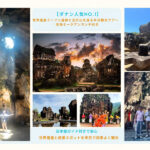
My Son Sanctuary is a remarkable cluster of Cham Hindu temple towers, partly ruined but still full of detail and atmosphere. Built between the 4th and 14th centuries, the complex offers a rare look at Champa architecture and beliefs, in a quiet, green setting far from the coast.
I like two things about this ticket: it includes the museum and a short electric shuttle ride to the ruins, and you can see a Champa arts performance and a traditional weaving demonstration during your visit. At a starting price of $6.19, it can be a practical way to pay by card and have your entry arranged before you arrive.
The main drawback is the climate. Paths offer limited shade, and even a short walk can feel long in the heat, so aim for an early visit, bring water, and use sun protection. This is an admission ticket, not a guided day tour, so arrange your own transport to the site.
Key points
- More than 70 Cham temples and towers spread across an archaeological complex of about 2 kilometers.
- Admission covers the museum, where you can see Cham sculptures, objects connected with daily life, and other artifacts.
- A shuttle carries you from the entrance toward the ruins, saving some walking at the start of the visit.
- Champa arts shows run at set times, with additional performances at Group G subject to weather.
- The Klook voucher must be exchanged for a physical ticket at the ticket counter, even if you buy it on the day.
- Allow two to three hours, and start early if you want a more comfortable walk in cooler conditions.
- Key points
- Cham towers in a quiet valley
- Start at the museum, then see the ruins
- Take your time among the temple groups
- Champa dance, drums, and weaving
- What the ticket costs, and what it is worth
- Pick a cooler hour, not just a convenient one
- A smooth exchange, with one step to remember
- Who should book the My Son ticket?
- FAQ
- How long should I allow for My Son Sanctuary?
- What is included with the admission ticket?
- Do I need to exchange my Klook voucher?
- What are the sanctuary’s opening hours?
- When are the Champa arts performances?
- Do children need a ticket?
- Is transport to My Son Sanctuary included?
- More Tours in Duy Xuyen
- More Tour Reviews in Duy Xuyen
- Not for you? Here's more nearby things to do in Duy Xuyen we have reviewed
Cham towers in a quiet valley
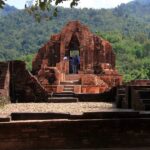
My Son Sanctuary lies in Duy Phú commune, in Quang Nam province, roughly 2 kilometers of temple towers and archaeological remains. The complex dates from the 4th to the 14th centuries, when the Champa Kingdom ruled this region. Its Hindu religious architecture reflects cultural influences from India, but the site is distinctly Cham in its history and artistic traditions.
The towers are not all intact. Many are partly ruined, which is part of what makes the visit feel like a place of archaeological discovery rather than a polished monument. You can look closely at the surviving brick structures, decorative forms, and sculpture, while keeping in mind that this is a broad historic site, not one single temple you can see in a few minutes.
The setting also matters. My Son is away from the urban centers, surrounded by nature and a calmer atmosphere than the coast. That quiet is a welcome change, though the distance means you need to plan how you will get there. The ticket covers entry and the transfer from the ticket area to the sightseeing zone, but it does not include transport to My Son from Hoi An, Da Nang, or elsewhere.
You can also read our reviews of more tours and experiences in Duy Xuyen.
Start at the museum, then see the ruins
If you want the site to make more sense, begin with the My Son Museum. It is included with admission and displays artifacts that help explain the development of Champa culture. Among the objects described for the visit are figures of female dancers and genies, worship animals, and items connected with communal daily life.
The museum is a useful first stop because the ruins can be hard to read without context. A sculpture or architectural detail gains meaning when you know it relates to Cham religious practice or artistic traditions. You can also use the museum as a cooler, more sheltered start before heading outside.
After the museum, the included round-trip transfer takes you from the ticket counter area toward the sightseeing grounds. The ride is short, around five minutes according to one visitor’s account, but it saves a stretch of walking before you begin exploring the temple groups. You will still need to walk around the ruins, so comfortable shoes matter. The site is not a zero-effort visit, particularly in hot or humid weather.
Take your time among the temple groups
The sanctuary contains more than 70 temples and towers, built across several centuries. Their different features reflect changing stages of Champa architecture, so you are seeing an evolving religious center, not a uniform set of buildings made at one moment.
Give yourself time to look beyond the broad outlines of the towers. Surviving carvings, sculptures, and decorative details are the reason to slow down. The structures are partly ruined, and the experience is more about reading what remains than expecting every building to be complete. If you are interested in history or architecture, an audio guide or a separate guide can help connect the fragments.
A two-to-three-hour visit is a sensible allowance for the museum, shuttle, performance, and a walk around the main ruins. Some people find the complex manageable in about two hours, but children may tire sooner, especially around lunchtime when the heat is high. You can rest along the way, and there are visitor rest areas with large fans, but shade on the paths is limited.
The site has a public performance stage and additional shows at Group G. The schedule lists public-stage performances at 9:15 a.m., 10:45 a.m., 2 p.m., and 3:30 p.m. Group G shows are listed at 10 a.m. and 2:45 p.m., but they depend on the weather. Check the timing when you arrive so you can fit a show into your walk instead of doubling back.
Champa dance, drums, and weaving
The included Champa arts performance adds a living cultural element to a visit that might otherwise focus only on stone and brick. The listed show features Cham folk dance and music, with instruments including Ginang and Baranung drums and Saranai trumpets. The Apsara dance is one of the performance styles associated with the site.
You may also see a demonstration of traditional hand-weaving, described as a process used by the ancient Champa people. This offers a practical connection to craft traditions, rather than leaving the visit entirely in the realm of ruins and museum cases. Handmade items may be available for purchase, so you can browse if you are interested, but shopping is optional and not part of the ticket’s core value.
The experience description also refers to The My Son Sanctuary Legendary Night, an outdoor production featuring more than 200 artists and stage and lighting effects. However, the daily show schedule provided for this ticket lists daytime Champa arts performances, not a separate evening show time. Treat the daytime performance as the included offering, and confirm locally if you are specifically hoping to attend a night production.
What the ticket costs, and what it is worth
The advertised price starts at $6.19. That is a low entry point for a visit that includes admission, museum access, the shuttle between the ticket counter and sightseeing area, a Champa performance, and a weaving demonstration. The price also includes the payment processing fee, which makes the displayed online amount easier to compare with what you will actually pay through the platform.
The main value may be convenience rather than a large discount. You can pay online by card, receive a QR voucher, and exchange it for a physical ticket at the counter. This is useful if you are short on local cash or have trouble paying at the ticket office. It does not let you skip the redemption counter queue, though, and on-site admission may sometimes cost a little less. Compare the current prices before booking if saving every dong matters more than card payment or advance purchase.
There is also an admission ticket plus audio guide option. The guide is delivered through an app on your own phone, rather than as a separate audio device. You may need to scan a QR code and have staff authorize the app at the counter, so make sure your phone is charged and can download it. The audio guide can provide context without hiring a live guide, but reports of app setup problems mean it is wise not to make the whole visit depend on it.
Children aged 15 and older pay the adult rate. Children from 0 to 14 do not need a standard adult ticket according to the stated eligibility rules, but a surcharge of 30,000 VND is payable at the ticket counter. Check this detail carefully when booking, particularly if you are buying for a family.
Pick a cooler hour, not just a convenient one
My Son Sanctuary is open daily from 6 a.m. to 5 p.m., with last admission one hour before closing. An early start is the best plan if you want cooler temperatures and time to see the museum, ruins, and a performance. The site can be hot and humid, even after rain, and there is limited shade along the paths.
Afternoon can also work, especially if you have your own car and want to avoid the hottest part of the morning, but it is not guaranteed to be cooler. Cloud cover can help, and weekday visits may feel quieter, but the weather changes. Bring sun protection and water, and consider your group’s walking pace before setting a tight schedule.
The sanctuary is in Duy Phú, Duy Xuyên District, Quang Nam. This ticket does not include a ride from Da Nang or Hoi An, so you need to arrange that part separately. Options include a private car, a shared shuttle, or a day tour that combines transport and a guide. If you book a tour instead, check whether its inclusions duplicate anything you would otherwise pay for here.
A smooth exchange, with one step to remember
The redemption process is simple but has two stages. Show your Klook voucher at the My Son Sanctuary ticket counter and exchange it for a physical ticket. Then use that ticket at the entrance. Buying in advance does not remove the need to visit the counter, so leave a little time for the exchange.
Same-day purchase is available, with instant confirmation, but the voucher is valid only for the date selected, and for the selected time if one applies. Changes are allowed up to 24 hours before the activity starts, subject to the stated exclusions. Free cancellation is available with at least 24 hours’ notice, based on local destination time.
The physical ticket and shuttle arrangement are worth understanding before you arrive. After exchanging your voucher, follow the entry process and take the included transfer toward the ruins. The shuttle is helpful, but it does not replace the walk around the grounds. Wear shoes you can comfortably walk in, and avoid assuming the site is a quick stop just because the map looks compact.
Who should book the My Son ticket?
This is a good fit if you are staying in central Vietnam and want to see a major Cham heritage site without paying for a full guided excursion. It suits visitors who enjoy architecture, archaeology, or cultural performances, and who are comfortable arranging their own ride to the sanctuary. The museum, shuttle, and scheduled dance show make the basic ticket more useful than entry alone.
It is less suited to anyone expecting a live guide, door-to-door transport, or an entirely shaded visit. If historical context is important to you, choose the audio guide package or book a separate guided tour. If you prefer to keep costs down and are happy to read up beforehand, the standard ticket leaves you free to explore at your own pace.
I would book it if the date and price work for you, especially if card payment is convenient or you are visiting at short notice. Just plan the transport, arrive early if possible, and keep your expectations focused on a substantial archaeological site with beautiful remains, not a fully restored temple complex. For most people with an interest in central Vietnam’s history, two or three hours here is time well spent.
Klook Exclusive: My Son Sanctuary Ticket
“A famous historical World Heritage site with cheap admission, but the weather is too hot, so make sure to take sun protection measures.”
FAQ
How long should I allow for My Son Sanctuary?
Allow about two to three hours to see the museum, visit the temple area, and fit in a performance. The walking and weather can affect how quickly you move through the site.
What is included with the admission ticket?
The ticket includes admission to My Son Sanctuary and My Son Museum, a round-trip transfer from the ticket counter to the sightseeing area, a Champa arts performance, and a hand-weaving experience.
Do I need to exchange my Klook voucher?
Yes. Present your voucher at the My Son Sanctuary ticket counter and exchange it for a physical ticket before entering.
What are the sanctuary’s opening hours?
My Son Sanctuary is open Monday through Sunday from 6 a.m. to 5 p.m. Last admission is one hour before closing.
When are the Champa arts performances?
Public-stage performances are scheduled daily at 9:15 a.m., 10:45 a.m., 2 p.m., and 3:30 p.m. Group G shows are scheduled at 10 a.m. and 2:45 p.m., but depend on the weather.
Do children need a ticket?
Children aged 15 and older are charged the adult rate. Children aged 0 to 14 pay a surcharge of 30,000 VND at the ticket counter.
Is transport to My Son Sanctuary included?
No. The ticket includes a round-trip transfer from the ticket counter to the sightseeing area, but not transport to the sanctuary from Da Nang, Hoi An, or another starting point.