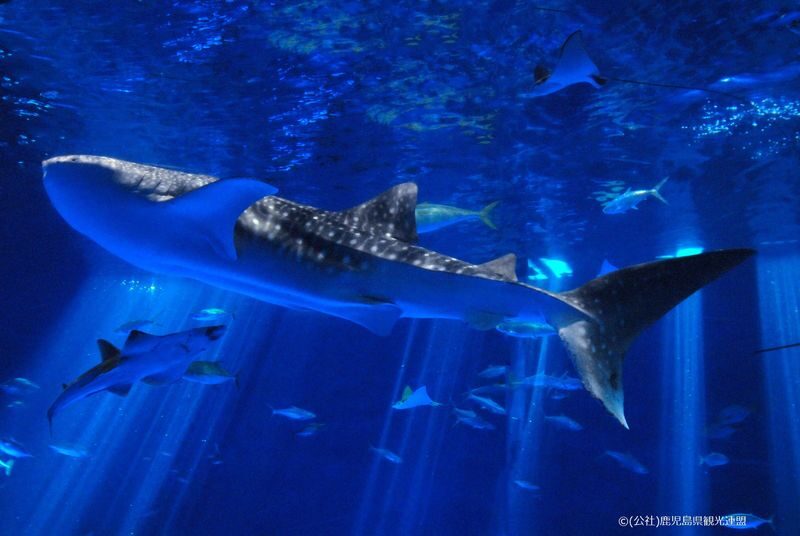
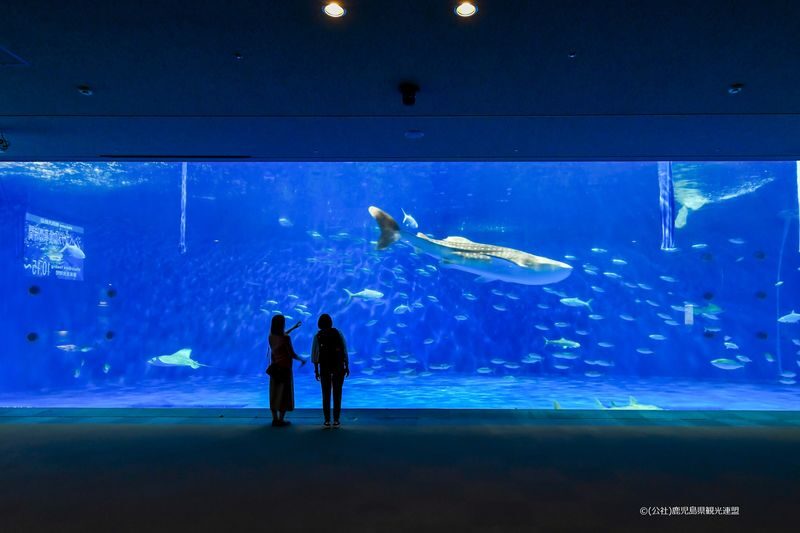
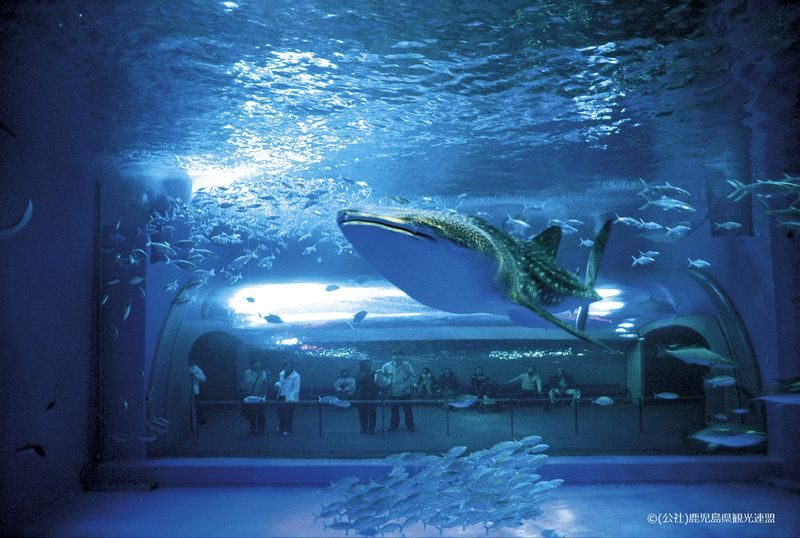
A whale shark gliding through the Kuroshio Tank gives Kagoshima City Aquarium its big moment. You can watch smaller fish move alongside larger ones, then see local marine life and, if the timing works, a dolphin show. I like the scale of that central tank and the aquarium’s focus on waters around Kagoshima.
I also like that this is an easy indoor stop when rain or heat spoils an outdoor plan, and that a mobile voucher can save time at a busy ticket counter. The trade-off is size: this is a compact city aquarium, not a full-day attraction, and the exhibits beyond the headline tank and dolphin show may feel modest if you have visited larger aquariums.
- Key points before you go
- Start with the Kuroshio Tank
- Make time for the dolphin show
- Explore seven floors at an easy pace
- Add a view of Sakurajima to the visit
- Plan the trip from central Kagoshima
- Is the ticket worth the price?
- Who should book Kagoshima City Aquarium?
- FAQ
- How long should I allow for Kagoshima City Aquarium?
- What are the aquarium’s opening hours?
- When does the aquarium close in December?
- How do I get to the aquarium by tram?
- What is included in the ticket?
- How do I use the mobile voucher?
- How long is the voucher valid?
- Can children enter for free?
- The Best Of Kagoshima!
- More Tickets in Kagoshima
- More Tours in Kagoshima
- More Tour Reviews in Kagoshima
- Not for you? Here's more nearby things to do in Kagoshima we have reviewed
Key points before you go
 1 / 8
 2 / 8
 3 / 8
 4 / 8
 5 / 8
 6 / 8
 7 / 8
 8 / 8
- The Kuroshio Tank is the main event: Look for the whale shark and schools of fish moving through the large central display.
- Dolphins are a major draw: Check the show schedule when you arrive so you can plan your route around it.
- Seven floors keep the visit manageable: Most people can see the aquarium in one to three hours.
- It works well as a weather backup: The exhibits and dolphin viewing make this a useful sheltered stop in rainy or very hot weather.
- The mobile voucher is flexible: It is valid for 90 days from booking confirmation, but only until 17:00 on its final day.
- Getting there takes a little planning: The nearest tram option listed is Shiyakusho-Mae, followed by about a 10-minute walk.

👉 See our pick of the 3 Best Workshops And Classes In Kagoshima
Start with the Kuroshio Tank
Kagoshima City Aquarium is built around the marine life of the region, and the Kuroshio Tank makes that focus easy to grasp. Its name refers to the Kuroshio Current, a major current that carries warm water past southern Japan. In the aquarium, the effect is visual rather than abstract: large fish and smaller schooling fish share one expansive display.
The whale shark is the sight many people come looking for. It is the tank’s most imposing resident, but don’t let its size hurry you past everything else. Pause and watch how the smaller fish move around the bigger animals. The tank can hold your attention for a while, especially if you find a spot with a clear view and let the scene unfold.
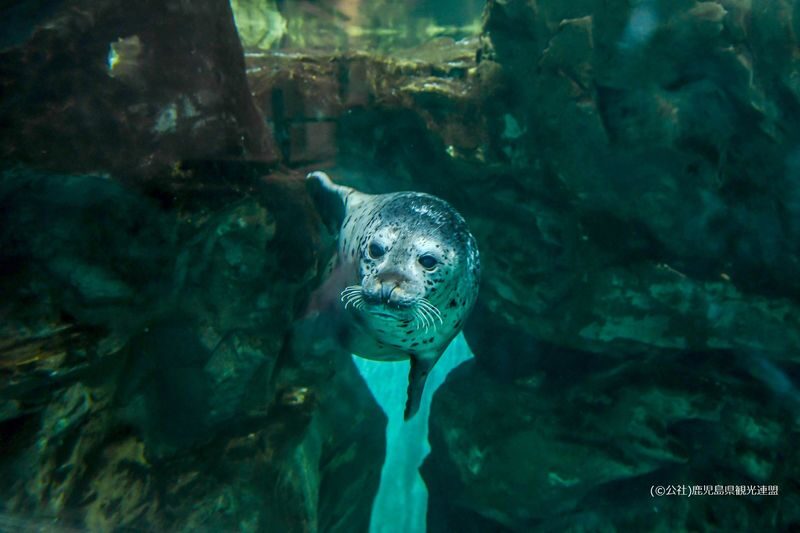
The aquarium also features bonito and other marine species. The collection is not meant to rival Japan’s biggest aquariums for sheer scale. Its appeal is more local and focused: you get a look at sea life connected to Kagoshima and the surrounding waters, all in a city attraction that doesn’t require a whole day.
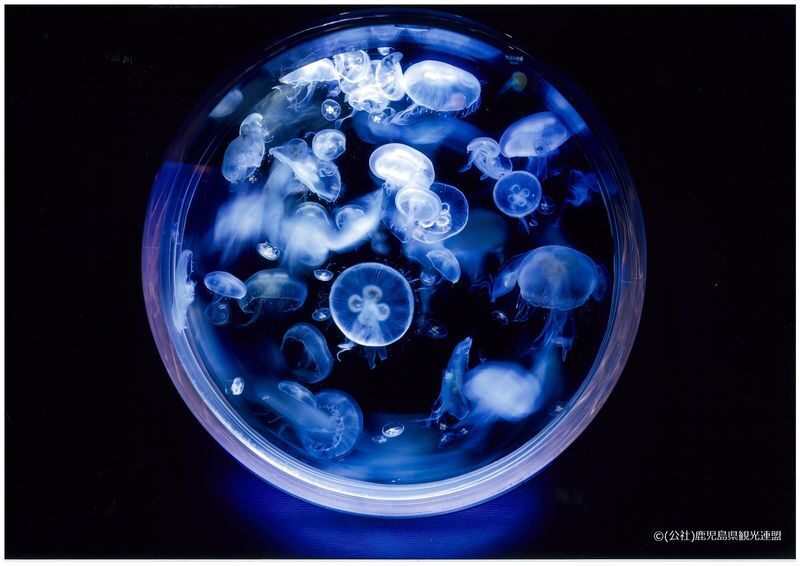
Some displays recreate different underwater settings, and the aquarium includes coral life. If you enjoy looking closely at how habitats are arranged, take your time with the smaller exhibits too. The main tank is the natural highlight, but the supporting displays give the visit more variety than a single big fish tank would.
You can also read our reviews of more tours and experiences in Kagoshima

Make time for the dolphin show
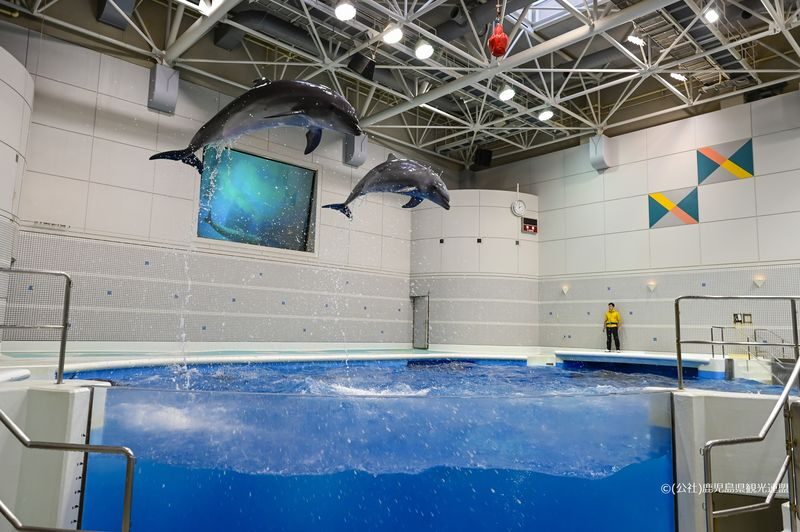
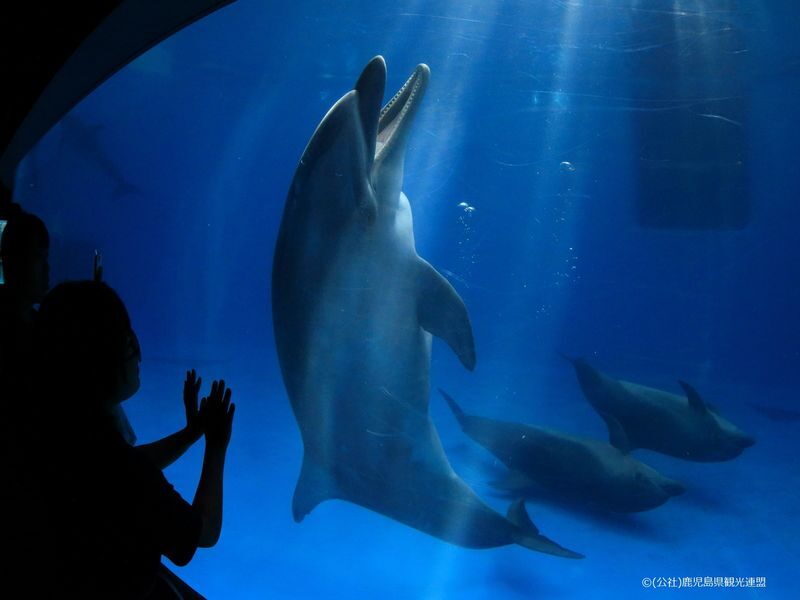
The dolphin show is the other key reason to come. It is often described as a lively, well-practised performance, and some presentations include Kagoshima themes. The show is a particularly good fit for families, though adults who enjoy marine animals may find it a worthwhile stop too.
The dolphin pool is described as small, so set your expectations accordingly. You are not coming for a huge arena production. The attraction is being close to the action and seeing the dolphins perform in a compact setting. The show is also indoors, which can be a welcome detail in poor weather or during hot spells. The exact format and viewing arrangements can vary, so use the aquarium’s current information rather than assuming every performance is the same.
Check the show schedule as soon as you enter. It is easy to get caught up in the exhibits and discover too late that you missed a performance. If the show is a priority, plan your visit around its timing, then return to displays you skipped. Re-entry is permitted on the same day after you complete a simple application form, which can help if you want to leave and come back.
There may also be animal presentations such as whale shark feeding or an electric eel feeding demonstration. These can add a special moment to the visit, but don’t build your day around a specific presentation unless you confirm that it is scheduled. The aquarium’s daily program matters more than a fixed route through the floors.
Explore seven floors at an easy pace
The aquarium has seven floors of marine life exhibits, but it is still a relatively compact attraction. That makes it simple to fit into a broader day in Kagoshima. Plan for one to three hours, depending on how long you spend at the large tank, whether you watch a show, and how carefully you read the displays.
The Kuroshio Tank is a natural first stop, and it is positioned near the escalators. From there, move through the other exhibits at a pace that suits your group. You don’t need to treat the visit as a race from floor to floor. With children, the large tank and dolphin show may be enough to anchor the outing; aquarium fans may want more time to take in the smaller habitats.
Families will appreciate the manageable scale, especially with young children who may tire in a much larger facility. Children aged six and under enter free, while children aged 16 and older pay the adult rate. If you are bringing a stroller, plan for some waiting at elevators: escalators are used between floors, and one parent with a baby found a carrier easier than managing the stroller on the visit. That is a practical consideration, not a reason to rule out the aquarium.
The exhibits also give you a solid rainy-day option. You can spend time indoors among the tanks instead of trying to rescue an outdoor itinerary in bad weather. Just remember that outside food and drinks are not allowed, and there is no place to store luggage or large bags. Leave bulky items at your accommodation or in your vehicle.
Add a view of Sakurajima to the visit
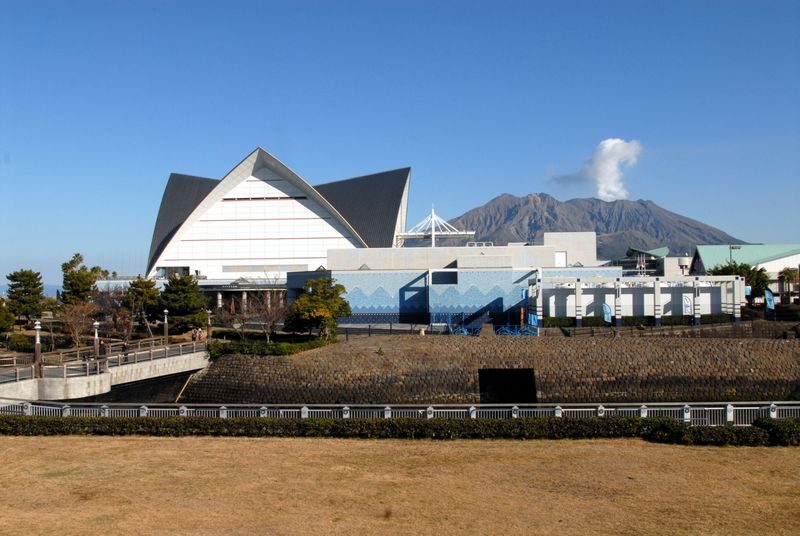
The aquarium sits by Kagoshima’s waterfront, and a rest area offers a view of Sakurajima. The volcano is an arresting sight across the bay, so take a moment to look outside rather than spending the whole visit facing tanks. The view adds a sense of place to what might otherwise be a familiar aquarium outing.
The location also makes the aquarium a natural companion to a Sakurajima day. It is next to the ferry dock serving the island, so you can consider combining the two if the timing of your plans works. Keep the aquarium’s one-to-three-hour visit window in mind, and check ferry plans separately before setting a tight schedule.
For a fuller Kagoshima itinerary, you could pair the aquarium with a garden visit, a Sakurajima sightseeing tour, or another city activity. The aquarium is best treated as one part of the day rather than the only reason to cross town, unless you are travelling with children or have a strong interest in marine life.
Plan the trip from central Kagoshima
The aquarium address is 3-1 Honkoshinmachi, Kagoshima City, Kagoshima, 892-0814. By tram, take Kagoshima Shiden No. 2 to Shiyakusho-Mae and walk about 10 minutes. It is not right beside Kagoshima-Chuo Station, so allow for the onward trip rather than assuming you can step off the train and be at the entrance.
You can also drive. The stated journey is about 20 minutes from either Satsuma-Yoshida IC or Kagoshima-Kita IC. If you are relying on public transport, check your route and connection before setting out. A few extra minutes in the plan can make the visit much more relaxed, especially if you are aiming for a particular dolphin show.
The aquarium is open daily from 09:30 to 18:00, with last entry at 17:00. It closes for four days from the first Monday in December. The published closure dates for 2026 are December 7 through 10, so check the current calendar if your visit falls near that period.
You can also read our reviews of more city tours in Kagoshima


Is the ticket worth the price?
Admission starts at $12.65, with one aquarium admission ticket included. The price is reasonable if you want a pleasant indoor activity, a chance to see the whale shark, and time for the dolphin show. For a family, free entry for children aged six and under helps keep the total down; children aged 16 and older pay the adult rate.
The best value comes when you make time for the aquarium’s strongest features rather than treating it as a quick pass through a few tanks. Stay at the Kuroshio Tank, catch the dolphin show if one is running, and enjoy the local marine-life displays. If you have already visited much larger aquariums, you may find the variety and facilities less impressive. In that case, the question is whether the whale shark, local focus and convenient indoor setting fit your Kagoshima plans.
Buying in advance can be useful on a busy day. The mobile voucher is valid for 90 days from confirmation and expires at 17:00 on the final day. Have it ready on your phone and follow staff instructions for redemption. Some visits involve a quick QR-code scan or an exchange at the ticket counter, and advance purchase can help you avoid waiting to buy at the door.
The ticket covers admission only. Personal expenses are not included. Flash photography is prohibited, pets are not allowed except service animals with valid identification, and bottles, firecrackers, lasers and other disruptive or dangerous items are barred. If you redeem the voucher, you can no longer request a refund; before redemption, cancellation is free.
Who should book Kagoshima City Aquarium?
I’d book this aquarium if you are travelling with children, want a sheltered activity, or are especially interested in the Kuroshio Tank and dolphin show. It also makes sense as a stop before or after a Sakurajima outing, thanks to its waterfront location beside the ferry dock.
I’d be more selective if you have already seen several of Japan’s largest aquariums and have limited time in Kagoshima. This one is smaller, and you can likely complete the visit in about two hours. But if its headline attractions appeal to you, the compact size is an advantage: you can enjoy the best parts without surrendering an entire day.
Kagoshima City Aquarium Ticket in Kyushu
“It's a bit of a walk from Kagoshima-Chuo Station. There's a bus, so you might want to use that. There are various fish exhibits, but the main attra…”
FAQ
How long should I allow for Kagoshima City Aquarium?
Plan for one to three hours. Your visit may take longer if you watch the dolphin show and spend extra time at the large Kuroshio Tank.
What are the aquarium’s opening hours?
It is open daily from 09:30 to 18:00. Last entry is at 17:00.
When does the aquarium close in December?
It closes for four days from the first Monday in December. The listed 2026 closure dates are December 7, 8, 9 and 10.
How do I get to the aquarium by tram?
Take Kagoshima Shiden No. 2 to Shiyakusho-Mae station, then walk about 10 minutes.
What is included in the ticket?
The ticket includes admission to Kagoshima City Aquarium. Other personal expenses are not included.
How do I use the mobile voucher?
Present your mobile voucher at the aquarium. Have the QR code ready and follow staff instructions for scanning or ticket exchange.
How long is the voucher valid?
It is valid for 90 days from the booking confirmation date and expires at 17:00 on the last day.
Can children enter for free?
Children aged zero to six can enter free of charge. Children aged 16 and older are charged the adult rate.


