Jeju’s food makes more sense when you get your hands into it. At TOTOatelier, you head to the garden to pick seasonal ingredients, then bring them inside to make a dish at your own cooking station. It is a practical way to turn local produce into a meal or dessert you made yourself, not just something you ate at a restaurant.
I like the garden-to-table format, which gives the class a real connection to Jeju’s crops, and the tablet video instructions, which let you work at your own pace and reduce language barriers. A photographer also takes pictures as you cook, so you can focus on the recipe instead of documenting every step yourself.
The trade-off is that this is a self-cooking activity, not a long, hands-on lesson with a chef explaining every technique. The studio is also outside Jeju’s city center, so plan your transport, and be ready for the pace to feel brisk if classes are busy.
What to know before you book
- Pick ingredients in a Jeju garden: Seasonal crops may include carrots, tangerines, and herbs. The harvest changes through the year.
- Follow a private tablet recipe: Each cooking station has the tools and ingredients you need, with a video to guide your steps.
- Choose a sweet or savory dish: Options include tangerine tart, carrot pound cake, macarons, buckwheat noodles with tteokgalbi, and a pork-and-shrimp burger.
- Get help when you need it: English-speaking staff are included, though the amount of guidance can vary when the studio is busy.
- Take home a dish and photos: You can taste or pack your finished creation, and a photographer captures moments during the activity.
- Allow for the Aewol location: The studio is at 112-4 Goseongbuk-gil, Aewol-eup. A car is handy, and a parking area is reported at the front.

👉 See our pick of the 4 Best 3 Day Tours In Jeju
- What to know before you book
- From Jeju’s garden to your cooking table
- Tablet instructions keep the cooking approachable
- Pick a recipe that fits your appetite
- A photographer adds a useful keepsake
- The Aewol setting takes some planning
- Who will get the most from TOTOatelier
- Should you book it?
- FAQ
- Where is TOTOatelier?
- How do I get to the studio?
- What are the available class times?
- What can I make?
- Is English support available?
- What is included in the activity?
- The Best Of Jeju!
- More Tours in Jeju
- More Tour Reviews in Jeju
- Not for you? Here's more nearby things to do in Jeju we have reviewed
From Jeju’s garden to your cooking table
 1 / 7
 2 / 7
 3 / 7
 4 / 7
 5 / 7
 6 / 7
 7 / 7
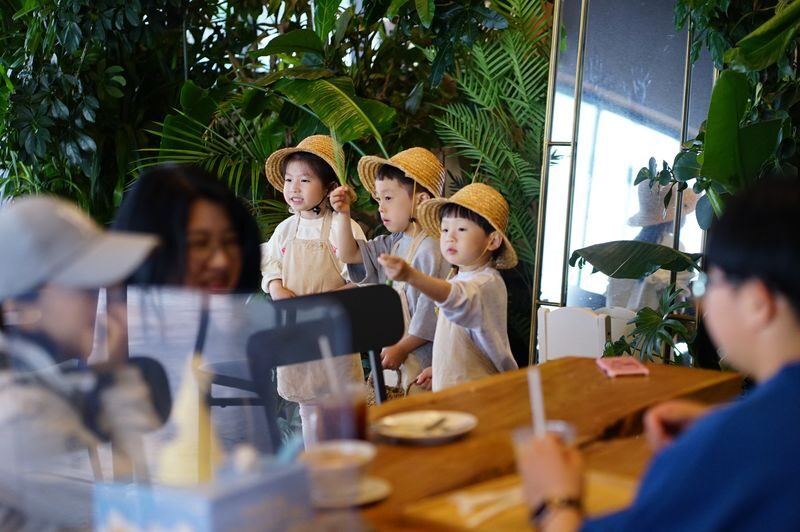
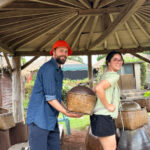
The experience begins with an introduction, then a Jeju native farmer teacher guides you toward the vegetable garden. Depending on the season and the recipe, you may pick carrots, tangerines, or other crops. That small act of harvesting is what makes this class more than a standard baking workshop: you see where at least some of your ingredients come from before you use them.
The garden setting is part of the appeal. TOTOatelier sits on a large property, described as about 2,000 pyeong, with views that take in both the sea and Hallasan. The garden visit also gives you a chance to take photos among the crops, rather than spending the whole activity indoors.
Keep expectations grounded, though. The harvest is seasonal, and the crop you pick depends on the time of year and the class you choose. Tangerines, for instance, may be small or out of peak season at certain times. The gardening portion may also involve less English guidance than the indoor cooking, so if you are unsure what to pick or how much to gather, ask a staff member before moving on.
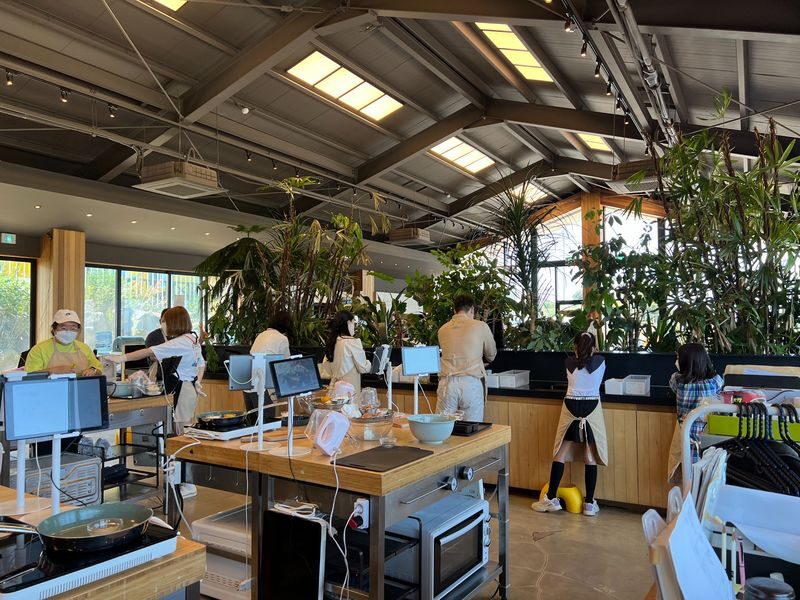
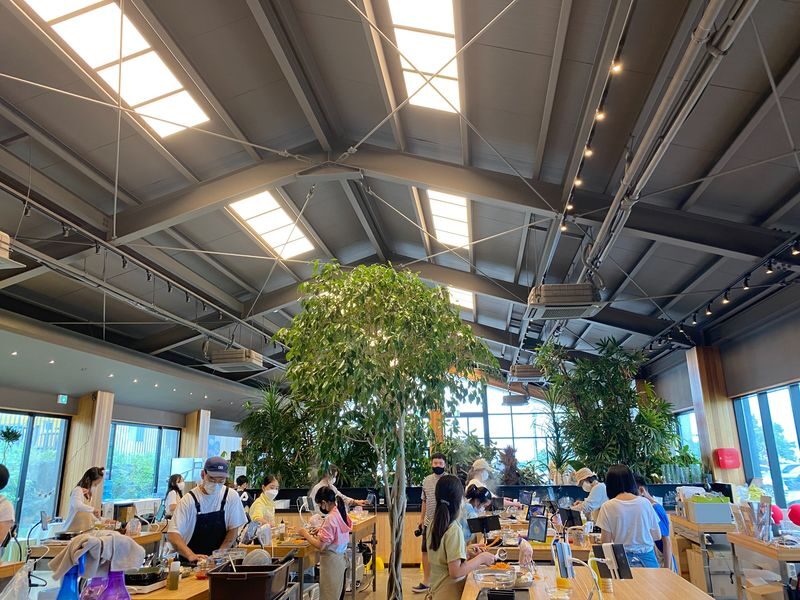
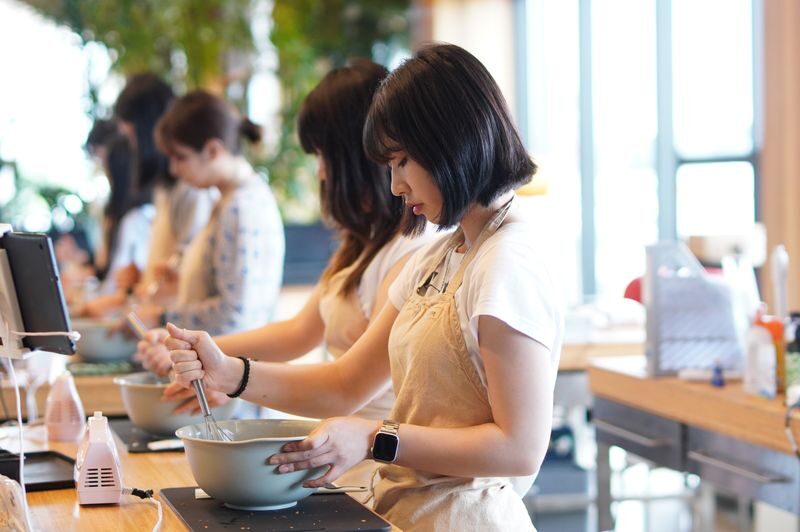
After harvesting, you return to the studio and wash what you have picked. The activity then shifts from farm visit to cooking class, with each person moving to an individual table. The ingredients, utensils, and equipment are prepared for you, so you do not need to bring kitchen gear or shop for supplies.
You can also read our reviews of more tours and experiences in Jeju.


Tablet instructions keep the cooking approachable
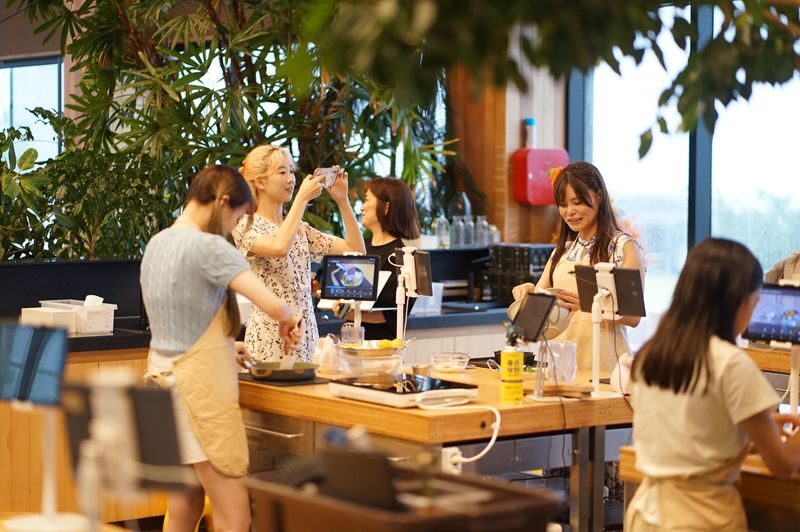
The heart of the class is a recipe video on a tablet at your own station. You watch the cooking expert demonstrate each step, then prepare your ingredients and follow along. This format makes the activity workable for visitors who do not speak Korean, and the staff can step in if you get stuck.
I see the tablet approach as a useful middle ground. You are doing the actual work rather than watching a chef prepare everything, but you are not expected to know how to bake or cook already. Several dishes involve multiple steps, and even people who feel clumsy in the kitchen can make progress with the video and a little help.
It is worth knowing what the format is not. This is not necessarily a slow, technique-focused class where an instructor talks through the reasons behind every step. The emphasis is on completing your chosen dish, with staff circulating to assist. If you want detailed instruction about ingredients or cooking methods, the screen-led format may feel light on explanation.
The pace can also depend on how busy the studio is. Some people find the process relaxed and easy to follow; others have felt hurried, especially when the next class is due or many families are in the room. If you want more time to absorb each step, arrive ready to focus and ask for help early rather than waiting until you are behind.
Pick a recipe that fits your appetite
TOTOatelier offers several one-person cooking options, with both sweets and savory food. Current listed choices include:
- Jeju carrot pound cake, from US$32.79
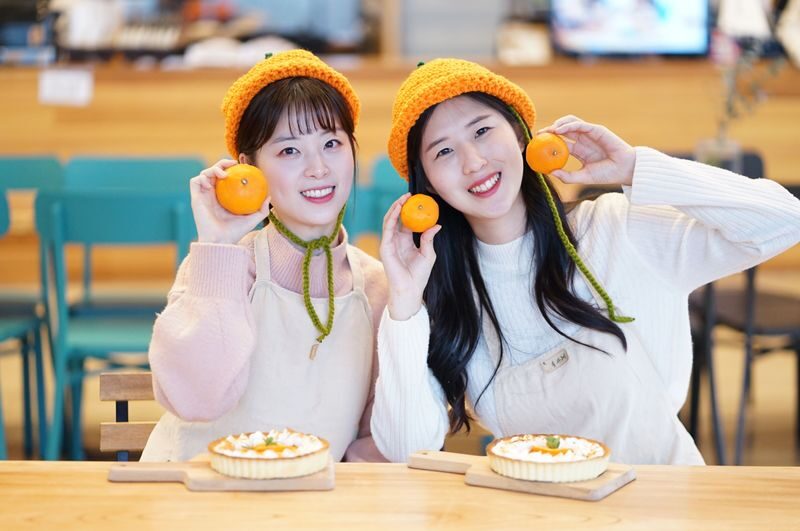
- Jeju tangerine whole-wheat tart, from US$36.55
- Jeju tangerine macarons, from US$38.39
- Jeju buckwheat noodles with pork grilled rib patties, or tteokgalbi, from US$33.75
- Jeju cheese-fall pork and shrimp burger, from US$36.55
The activity’s general starting price is advertised from US$36.05, while the listed price for the carrot cake is lower. Prices vary by package, so check the option and date you intend to book rather than relying on a single headline figure.
A dessert is a natural choice if you want a take-home treat and a recipe with a strong local ingredient. The tangerine tart and macarons make use of Jeju citrus, while the carrot cake gives you a different seasonal crop. The savory options may suit you better if you want a proper meal rather than a baking project. Do not choose only by the dish’s name: consider whether you would rather eat your creation soon after class or pack it for later.
The result can be a satisfying souvenir, but the finished taste is not guaranteed to match everyone’s preference. One person may love the tart, while another may find it less appealing. The more reliable reason to book is the process: picking ingredients, making something from scratch, and leaving with your own finished dish.
A photographer adds a useful keepsake
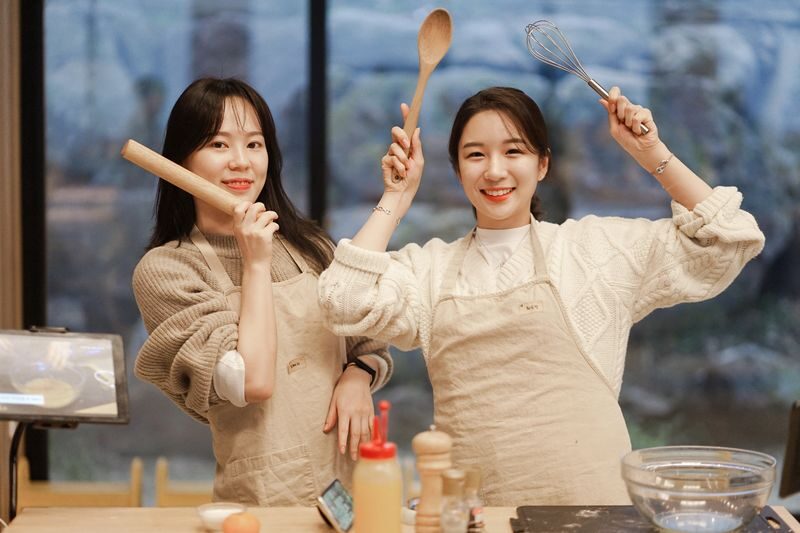
A dedicated photographer takes pictures while you harvest and cook. That is a thoughtful extra, especially if you are doing the activity as a couple, family, or small group and would otherwise take turns trying to document each other. You can stay involved in the recipe while someone else captures the floury hands and garden moments.
The photos are delivered by the person in charge, and some participants have received them within a few hours. Treat that timing as a helpful possibility, not a promise. The main value is that photography is part of the experience rather than an added task you have to manage.
When your cooking is complete, you can taste it or pack it up to take with you. If you are making a dessert, packaging makes it easier to save for later, though you should consider how long you will be on the road before choosing to carry it around Jeju. Staff can help pack your finished creation.
The Aewol setting takes some planning
The studio is in Aewol-eup, at 112-4 Goseongbuk-gil, Jeju-si. It is not in downtown Jeju, and the rural location is one of the main practical drawbacks. A car gives you the most flexibility, and a parking area is available at the front. A taxi or ride-hailing service may also work; allow time for the trip and confirm how you will get back before you set out.
The setting rewards the extra travel if you want an activity that feels tied to Jeju’s countryside. The property is large, and the garden, sea, and Hallasan views give you more than a kitchen table to remember. But do not book it as a quick city-center stop between nearby attractions. You will need to build the journey into your day.
The activity runs Tuesday through Sunday, with listed start times at 10:00, 11:00, 13:30, 14:30, 15:30, and 16:30. It is closed on Mondays. The activity is described as usable in different weather, and most of the cooking takes place inside; the garden harvest is the outdoor part. Participants must be at least 11 years old, and the same price applies to all ages.


Who will get the most from TOTOatelier
This suits you if you want to do something hands-on in Jeju, enjoy food activities, or like the idea of making a local ingredient into something you can eat. It works for solo visitors as well as couples, families with older children, and small groups. You do not need to be a confident cook, since the video and staff support are there to keep the process moving.
It is a particularly good fit if you value the memory as much as the lesson. You get the garden visit, the act of cooking, the finished dish, and photos of the process. That makes the price easier to justify than a simple demonstration, especially if you would otherwise spend the same amount on a meal or a paid activity with little to take away.
It may not suit you if your main goal is to master baking techniques or spend a long time discussing Jeju cuisine. The tablet is central, and the staff’s role is to help you complete the recipe rather than lead a detailed cooking lecture. You may also prefer a different activity if you dislike structured sessions or have limited time for travel to Aewol.
Should you book it?
Book TOTOatelier if you want a relaxed, practical activity that links Jeju produce with a dish you make yourself. The garden harvest and the photographer are the details that give it character, while the tablet recipe makes it accessible even if you are not a cook. Choose your dish with care, check the package price, and plan transport to Aewol.
Skip it if you want a deep cooking lesson, need to stay near downtown Jeju, or would be frustrated by a brisk class pace. For everyone else, it offers a pleasant change from sightseeing: you come away with a recipe experience, a finished creation, and photographs that show how it came together.
Jeju Self Cooking Activities by TOTOatelier
“It was my first time trying this, and the store staff helped me out. They were very nice, and it was easy to get the hang of it.”
FAQ
Where is TOTOatelier?
It is at 112-4 Goseongbuk-gil, Aewol-eup, Jeju-si, Jeju-do, South Korea. The meeting point is listed as Jeju Baking & Cooking Theme parks Classes.
How do I get to the studio?
Transport is not included. The studio is outside downtown Jeju, and driving is recommended; a parking area is available at the front. A taxi is another option.
What are the available class times?
Classes are listed Tuesday through Sunday at 10:00, 11:00, 13:30, 14:30, 15:30, and 16:30. The studio is closed on Monday.
What can I make?
Options include Jeju carrot pound cake, tangerine whole-wheat tart, tangerine macarons, buckwheat noodles with tteokgalbi, and a pork-and-shrimp burger. Seasonal ingredients vary.
Is English support available?
English-speaking staff are included, and the cooking process uses a tablet video. If you need help during the garden portion or with a cooking step, ask staff directly.
What is included in the activity?
Admission to the cooking class and English-speaking staff are included. Transport and personal expenses are not.