Japan’s big cities and quieter island towns share the stage on this 11-day trip from Tokyo to Kyoto. You’ll ride the bullet train, see Hiroshima’s Peace Memorial sites, cross to Shikoku by ferry, and sleep at Mount Koya, where a monk may lead an Ajikan meditation.
I like two things in particular: the route reaches well beyond the usual Tokyo-Kyoto circuit, and the guided visits take care of complicated transport between far-flung stops. One trade-off is the pace. Expect early starts, long coach days, and limited time at some sights.
- The trip in brief
- A quick-moving route from Tokyo to Kyoto
- Tokyo’s temples, crossings and high views
- Kyoto’s shrines, then Nara and Osaka
- Himeji Castle, Okayama Garden and Kurashiki
- Hiroshima and Miyajima, a powerful pairing
- Across the water to Matsuyama and Shikoku
- Kobe and a night at Mount Koya
- Guides, hotels and meals: the useful details
- Is the ,697 starting price good value?
- Should you book this Japan tour?
- FAQ
- What is included in the tour price?
- Where does the tour start and end?
- Is the Tokyo to Kyoto bullet train included?
- How large can the group be?
- How physically demanding is the tour?
- What is the Mount Koya accommodation like?
- Are meals included?
- Are the flights included?
- The Best Of Tokyo!
- More Tours in Tokyo
- More Tour Reviews in Tokyo
- Not for you? Here's more nearby things to do in Tokyo we have reviewed
The trip in brief
- Tokyo to Kyoto by bullet train: Cover nearly 500 kilometers in just over two hours, then visit Fushimi Inari, the Imperial Palace and Kinkakuji.
- A varied route through western Japan: See Nara, Osaka, Himeji, Kurashiki, Hiroshima, Miyajima, Matsuyama, Takamatsu, Naruto and Kobe.
- Ferries and sea crossings: Travel from Hiroshima to Shikoku by ferry, and take another ferry to Miyajima.
- A night at Mount Koya: Visit Okuno Mausoleum and Kongobuji Temple, eat a vegetarian dinner and try Ajikan meditation. Rooms are simple, with shared bathrooms.
- Four included lunches and three dinners: Other meals are generally yours to arrange, so budget for them.
- A busy group schedule: Group size ranges from 2 to 72. Some departures combine English and Spanish explanations, and guides can change during the trip.

👉 See our pick of the 25 Best Guided Tours In Tokyo
A quick-moving route from Tokyo to Kyoto
This is a guided overview of Japan, not a slow stay in any one place. In 11 days, the route links celebrated temples and castles with gardens, island crossings and a mountain monastery. I see the biggest value in the logistics: you don’t have to plan each transfer or work out how to connect the many stops on your own.
That convenience comes with a full schedule. The route moves often, and several days combine multiple destinations. One recent participant estimated about 15,500 steps a day, despite the tour’s low-intensity rating. That’s a useful reality check: you don’t need to be a hiker, but you should be comfortable walking for much of the day and climbing stairs.
The tour starts in Tokyo and ends in Kyoto. Your arrival transfer is by shared shuttle, and flights to and from Japan are not included. The listed starting price is from $3,697, based on the cheapest room. For that fare, you get accommodation, breakfast, a guide, major transport between destinations, a number of admissions and selected meals. The price is easier to judge if you value having those moving parts organized; it doesn’t cover every meal, your flights or all optional sightseeing.
You can also read our reviews of more tours and experiences in Tokyo.



Tokyo’s temples, crossings and high views
Your first day is for arrival, customs and the shared shuttle to the hotel. There’s no formal sightseeing, which gives you a little space to recover before the group gets moving. In the afternoon, you’ll receive information about the trip.
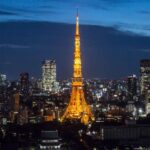
The next day packs Tokyo into a guided tour of about seven hours. At Zojoji Temple, look for the small Jizo figures in knitted hats and bibs, with Tokyo Tower rising behind the grounds. Shibuya Crossing is viewed from the bus, so treat it as a brief look rather than time to explore the neighborhood on foot.
Meiji Shrine brings a quieter stretch before Tokyo Skytree, where admission to the Tembo Deck at 350 meters is included. The view gives you a sense of the city’s scale, weather permitting. If conditions limit access, an alternative viewpoint is offered.
In Asakusa, you’ll walk along Nakamise Street, lined with food stalls and souvenir shops. The bus passes Akihabara and Ginza on the return, but these are not listed as walking visits. In the evening, you’ll take the subway with your guide to Shinjuku, walk through the district and have dinner at a local restaurant. The subway tickets and dinner are included.
Kyoto’s shrines, then Nara and Osaka
The bullet train from Tokyo to Kyoto is one of the trip’s practical pleasures. The journey takes just over two hours to cover nearly 500 kilometers, replacing a long road transfer with a fast, comfortable rail connection.
The guided Kyoto visit includes Fushimi Inari Shrine, the Imperial Palace and Kinkakuji, the Golden Pavilion. You’ll also have time in Gion, the traditional district associated with geisha culture. It’s a broad introduction to a city that rewards longer stays, so consider using the free time later in the trip to return to a place that caught your interest.
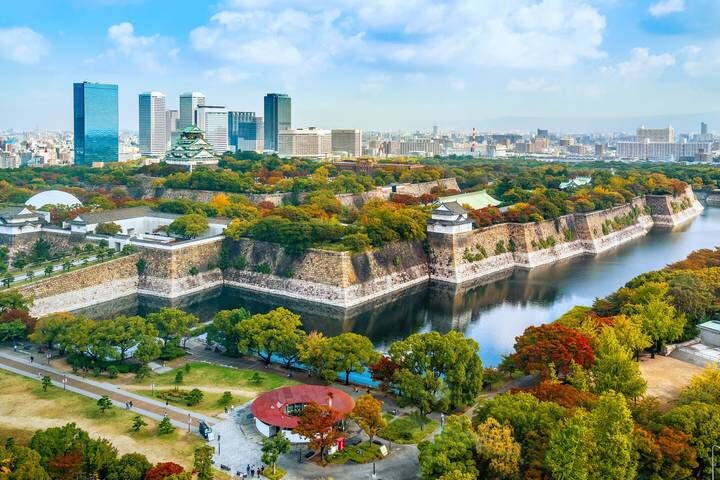
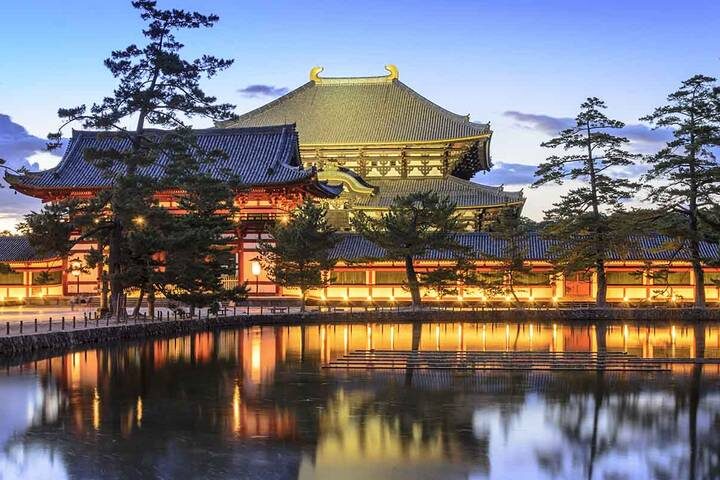
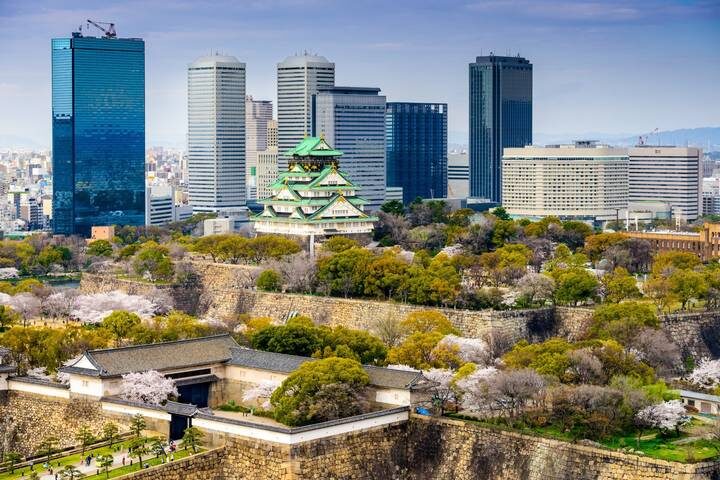
The following day takes you to Nara and Todaiji Temple, home to the Great Buddha. Nara Park’s freely roaming deer are an entertaining contrast to the temple’s solemn scale. Afterward, the tour continues to Osaka for a panoramic look at Dotonbori, free time for lunch and a visit to Osaka Castle.
The schedule also mentions the Umeda neighborhood and Umeda Sky Building, but visiting the building is listed as optional. Check what your guide has planned rather than assuming you’ll go up. Osaka’s food scene is a good reason to use your free meal time well, although you’ll be choosing and paying for lunch yourself on this day.
Himeji Castle, Okayama Garden and Kurashiki
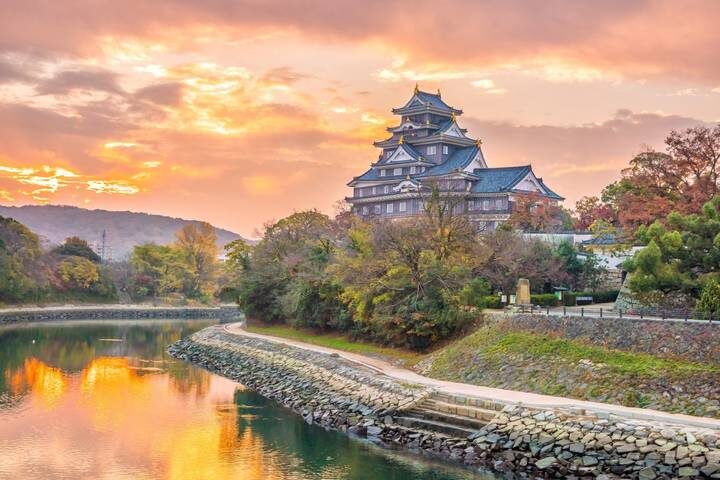
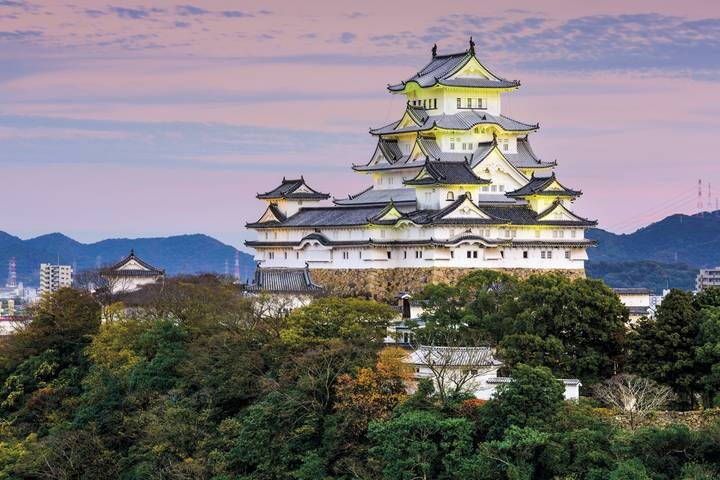
At Himeji, the tour includes admission to the castle complex, a worthwhile stop for anyone interested in Japanese castle design. You’ll also have lunch at a local restaurant. The route continues to Okayama and Korakuen, a large garden of ponds, waterfalls and teahouses.
A pedestrian bridge connects the garden area to Okayama Castle. The walk across is included, but the castle interior is not. The castle was rebuilt after wartime damage, so it offers a different experience from Himeji’s older complex. You’ll have some free time in Okayama, though on certain dates the overnight stay may instead be in Fukuyama or Kurashiki.
The next day starts with time to stroll through Kurashiki’s preserved historic center. It’s a welcome change of scale after the previous day’s large sights. The stop is described as a leisurely walk, not a lengthy guided tour, so enjoy the streets at your own pace while keeping the departure time in mind.
Hiroshima and Miyajima, a powerful pairing
Hiroshima’s Peace Memorial Park, Atomic Bomb Dome and Peace Memorial Museum form one of the trip’s most important visits. Admission to the museum is included. Give this stop the attention it deserves: the museum provides context that makes the memorial sites more than a quick photo opportunity.
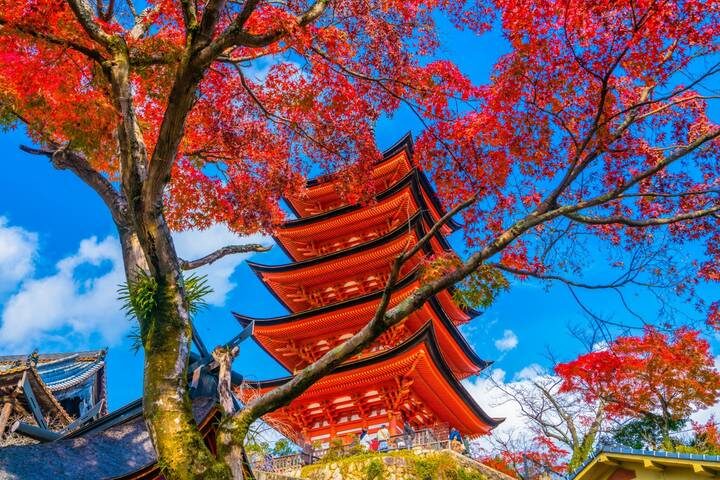
The order of Hiroshima’s visits can change, and the day also includes the ferry to Miyajima, officially Itsukushima. The island’s Great Torii Gate is famous for appearing to rise from the water, though what you see depends on conditions and timing. You’ll have free time to visit Itsukushima Shrine, explore and find lunch before returning to Hiroshima.
The day combines serious reflection with a scenic island visit, but it is a lot to fit in. If you prefer a longer museum visit or more time on Miyajima, this schedule may feel tight. Dinner is included back in Hiroshima.




Across the water to Matsuyama and Shikoku
A two-and-a-half-hour ferry carries you from Hiroshima to Shikoku, giving you a clear sense of how much of Japan is shaped by its islands and sea routes. In Matsuyama, you’ll take a cable car to the castle, visit Ishiteji Temple and have lunch at a local restaurant.
The day ends at Dogo Onsen, a 19th-century bathhouse that remains in use. Admission is included, but the tour details do not spell out the bathing arrangements. If you plan to bathe, ask your guide what to expect and bring what you need.
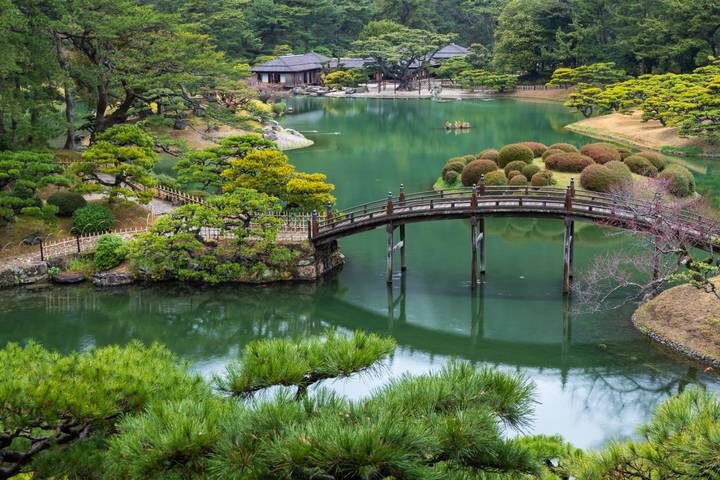
The following day is one of the longest on the road. At Kotohira, reaching the Shinto shrine on Mount Zosu involves climbing 785 steps. Then it’s on to Ritsurin Garden in Takamatsu, followed by lunch and a stop at Naruto, where you can walk on a glass floor above the sea and watch for whirlpools from 45 meters up.
The route then crosses bridges linking islands before reaching Kobe. It’s a striking stretch of travel, but the itinerary makes clear that this is a day with several stops and substantial coach time. Wear shoes you can manage on steps and garden paths, and keep water handy.
Kobe and a night at Mount Koya
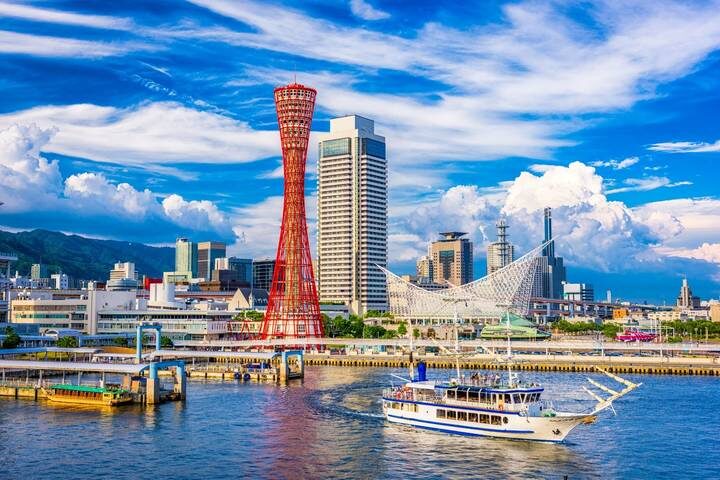
In Kobe, you’ll visit the Earthquake Memorial Museum, which tells the story of the 1995 earthquake and the city’s rebuilding. On some dates, this visit may be replaced by a Sake Museum visit or a trip up Kobe Tower, so the exact stop can vary.
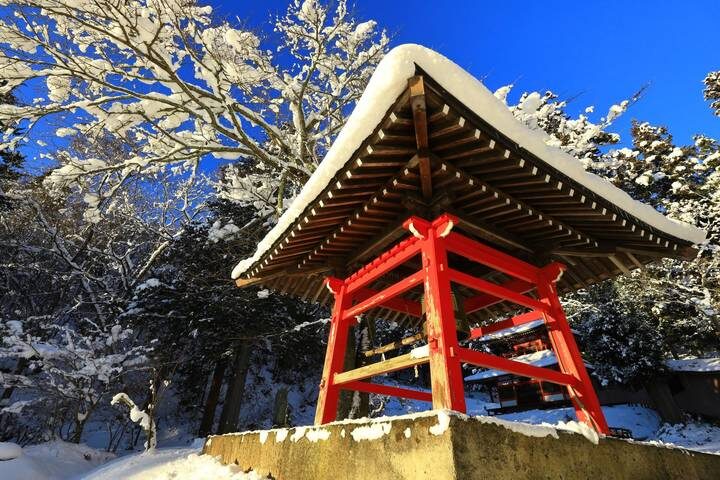
The tour then heads to Mount Koya, a major center of Shingon Buddhism with around 120 temples and monasteries. You’ll visit Okuno Mausoleum, a forested cemetery with more than 200,000 graves, and Kongobuji Temple, originally built in 1593. The setting and overnight stay offer a different kind of encounter from the city hotels.
The monastery is the trip’s most distinctive night, and also its least hotel-like. Rooms are traditional and simple, with tatami mats and shared bathrooms, not private facilities. Dinner is vegetarian, breakfast is traditional Japanese, and Ajikan meditation with monks is planned, though it may not be available on peak dates. You may also attend a religious ceremony before breakfast.
Go in for the experience, not the comforts. One past participant found the room cold and the meal too small, and advised bringing shampoo. Accommodation capacity is limited, so some departures may stay at a nearby hotel instead. If a warm room, private bathroom and generous dinner matter more to you than a monastery stay, this night deserves careful thought.
Guides, hotels and meals: the useful details
Guides are a strong part of the trip when the communication works well. Names mentioned by past participants include Ken, Nadia, Kiku, Pablo, Xavier and Alvarez. Several were praised for clear explanations, humor and practical help. The guide may change during the tour, and some departures use bilingual English and Spanish explanations, either with two leaders or one guide speaking both languages.
That language arrangement is worth confirming before you book if you want an English-only group. Some past participants felt English explanations were occasionally missed or shortened when most of the group spoke Spanish. Others found the bilingual format inclusive and easy to follow. The tour is advertised in English, but the group can be international and the size may reach 72.
Hotels are generally four-star properties with private bathrooms, selected for value and access to public transport rather than luxury. Names listed include Shinagawa Prince, New Miyako, Ana Crowne Plaza Okayama, Hilton Hiroshima and Kobe Meriken Park Oriental. The precise hotel can vary, and some accommodation listings overlap across cities. Read your final travel documents for the confirmed properties.
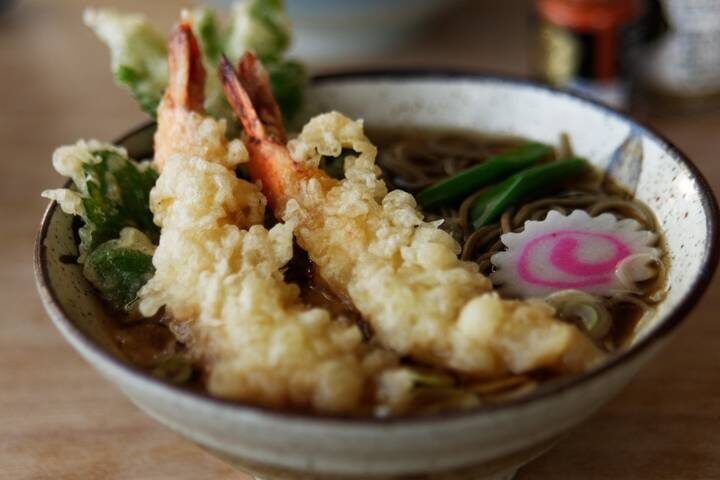
Food is the tour’s softer category, with a 4.2 rating compared with 4.6 for itinerary, transport, guide and accommodation. Four lunches and three dinners are listed as included, along with hotel breakfasts. Vegetarian requests have been accommodated, though meal choices in Tokyo may be more limited. Tell the operator about dietary needs in advance, and plan to buy other meals yourself.
Is the $3,697 starting price good value?
The fare includes a lot of the expensive connective tissue: the Tokyo-to-Kyoto bullet train, ferries, coach transfers, selected admissions, hotels, a guide and several meals. You also get access to places that are less straightforward to link on your own, especially the Shikoku segment and Mount Koya.
But this is not an all-meals-included holiday, and flights are separate. You’ll need spending money for meals not listed as included, plus any optional stops such as the interior of Okayama Castle or Umeda Sky Building. The starting price is based on the cheapest room, so check what room arrangement and departure date apply to your booking.
The operator’s overall rating is 4.1, while this tour’s rating is 4.7 from 14 ratings. Those figures suggest a well-liked trip, but the smaller tour sample is worth keeping in mind. The strongest praise centers on organization, hotel locations, guides and the range of sights. The most consistent cautions are pace, bilingual guiding and the basic monastery stay.
Should you book this Japan tour?
Book it if you want a guided first visit that covers Tokyo, Kyoto, Hiroshima and a generous sweep of western Japan without having to organize every train, ferry and hotel yourself. It suits curious, reasonably active visitors who enjoy seeing a lot in a short time and can be flexible when daily timing or visit order changes.
Think twice if you want slow mornings, long museum visits, private time at each stop or an English-only group guaranteed. Also decide whether Mount Koya’s simple rooms and shared bathrooms sound like part of the adventure or a source of stress. If the route appeals more than the hotel comforts, this tour gives you a memorable cross-section of Japan in 11 busy days.
Japan’s Landscapes end Kyoto 11-Day Tour by Europamundo
“Guides ok, but gave an insight of Japan from a Spanish perspective rather than Japanese perspective and didn't use Japanese words at all. Mount Koy…”
FAQ
What is included in the tour price?
The tour includes accommodation, breakfast, an English-speaking guide, basic travel insurance, an arrival transfer, transport between destinations, listed admissions and selected meals. Flights and many other meals are not included.
Where does the tour start and end?
It starts in Tokyo and ends in Kyoto. The arrival transfer is a shared shuttle from the Tokyo airport to the hotel.
Is the Tokyo to Kyoto bullet train included?
Yes. The high-speed train from Tokyo to Kyoto is included, and the journey takes just over two hours.
How large can the group be?
The stated group size ranges from 2 to 72 people. Some departures may use bilingual English and Spanish guiding.
How physically demanding is the tour?
It is rated low intensity, but expect considerable walking. The Kotohira shrine climb involves 785 steps, and one participant reported averaging about 15,500 steps a day.
What is the Mount Koya accommodation like?
You stay in a Buddhist monastery when space allows. Rooms are simple, with tatami mats and shared bathrooms rather than private bathrooms. A nearby hotel may be used when monastery capacity is limited.
Are meals included?
Four lunches and three dinners are listed, as well as hotel breakfasts. Vegetarian meals can be requested, but the tour notes that choices in Tokyo may be limited.
Are the flights included?
No. Flights before and after the tour are not included in the tour price.