Hiroshima Soccer Museum ties the city’s football story to a larger one: how soccer became part of Hiroshima’s recovery after the atomic bombing. That gives this small museum more to say than a club display alone, while keeping the subject close to everyday life in the city.
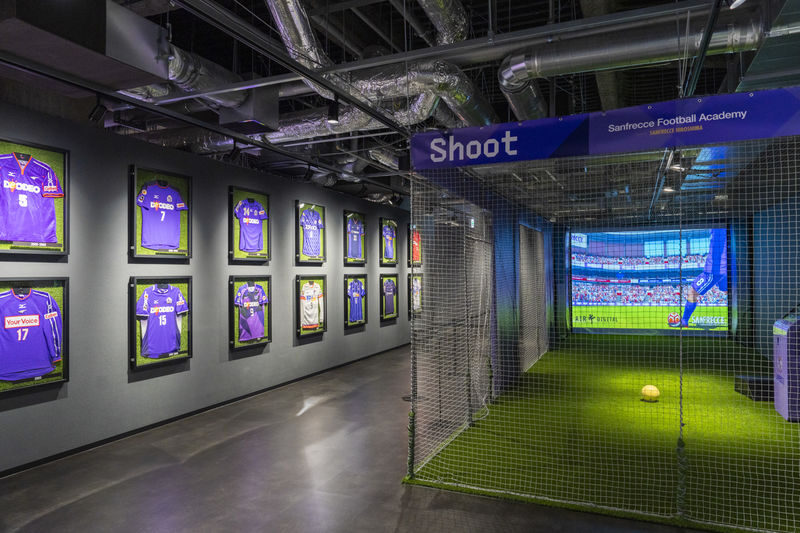
I like two things in particular: the interactive shooting, dribbling, and passing games make the visit active, and the historical displays include detailed English explanations. The exhibits also cover Sanfrecce Hiroshima, with a timeline of the club’s uniforms.
The main consideration is scale. The museum is not large, so it may not fill half a day, and the displays will mean more to you if you have some interest in soccer or Hiroshima’s history. Treat it as a focused stop of about 1 to 2 hours, not a major museum outing.
- Key points before you go
- A soccer story rooted in Hiroshima
- What the museum visit is like
- Try shooting, dribbling, and passing
- Allow time for the Sanfrecce shop
- How long to stay and when to arrive
- Getting to Edion Peace Wing Hiroshima
- Is the admission price good value?
- Who will enjoy this stop most?
- FAQ
- Where is Hiroshima Soccer Museum?
- How long should I plan for the visit?
- What are the museum’s opening hours?
- How much does admission cost?
- What does the admission ticket include?
- Are children admitted free?
- How do I get there by public transport?
- Can I re-enter after leaving the museum?
- How do I use my ticket?
- Can I cancel or change my booking?
- The Best Of Hiroshima!
- More Museum Experiences in Hiroshima
- More Tours in Hiroshima
- More Tour Reviews in Hiroshima
- Not for you? Here's more nearby things to do in Hiroshima we have reviewed
Key points before you go
 1 / 7
 2 / 7
 3 / 7
 4 / 7
 5 / 7
 6 / 7
 7 / 7
- The story connects soccer with Hiroshima’s recovery after the atomic bombing, alongside the history of football in the city.
- You can try soccer skills yourself, including shooting, dribbling, and passing in game-style activities.
- The museum is compact, so a 1 to 2 hour visit is a sensible estimate.
- English explanations are available on the historical and activity displays, according to an on-site account.
- The club shop follows the museum, with Sanfrecce Hiroshima goods, individual items, and random or gacha-style merchandise.
- Admission starts at $3.15, making this a modest-cost activity if the themes appeal to you.
👉 See our pick of the 3 Best Workshops And Classes In Hiroshima
A soccer story rooted in Hiroshima
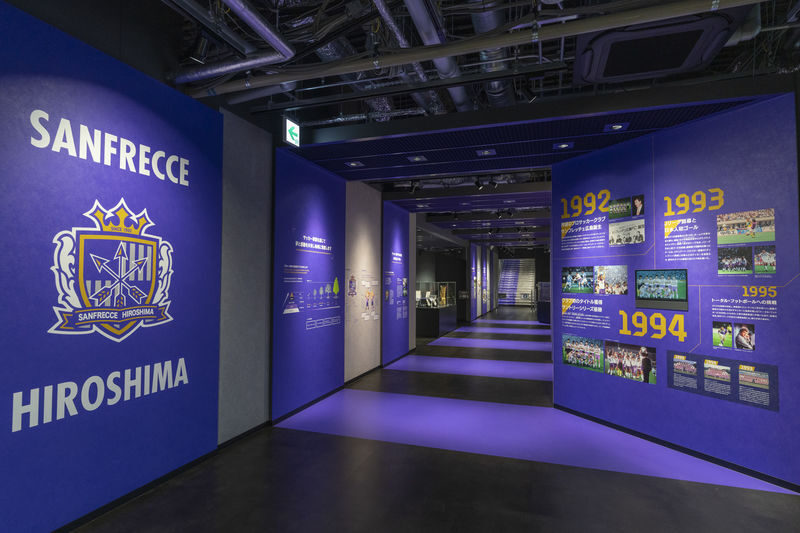
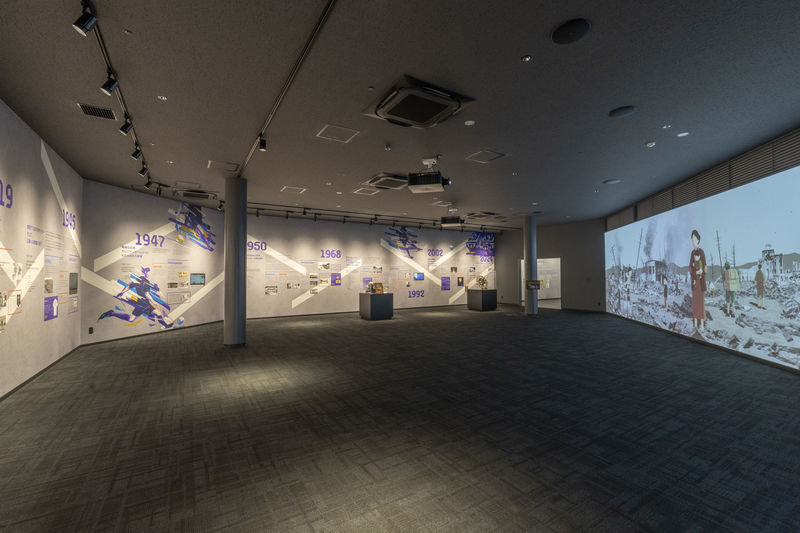
The museum’s subject is football, but its point of view is distinctly local. It traces the development of soccer in Hiroshima and explains the connection between the sport and the city’s recovery after the atomic bombing. That context gives the exhibits a human scale: you are not only following teams and uniforms, but also considering how a shared pastime can matter to a recovering community.
The experience also looks ahead. Sanfrecce Hiroshima, the city’s professional club, is part of the museum’s story, and the stated aim includes developing people who will help shape the club’s future. You can expect the space to speak to more than match-day supporters, though the club’s history and memorabilia will naturally hold the most appeal for fans.
This is a good stop if you want to understand one strand of Hiroshima life beyond the better-known history sites. It does not replace those sites, and the museum is not described as a broad account of the city’s postwar years. Instead, it approaches recovery through soccer, a narrow subject that can make a large history feel more personal.
You can also read our reviews of more museum experiences in Hiroshima


What the museum visit is like
The museum is inside Edion Peace Wing Hiroshima, at 15-2-1 Motomachi in Naka Ward. The visit is self-guided based on the available details, so you can move through the displays at your own pace rather than follow a fixed tour schedule. Admission covers the attractions, including the museum experience.
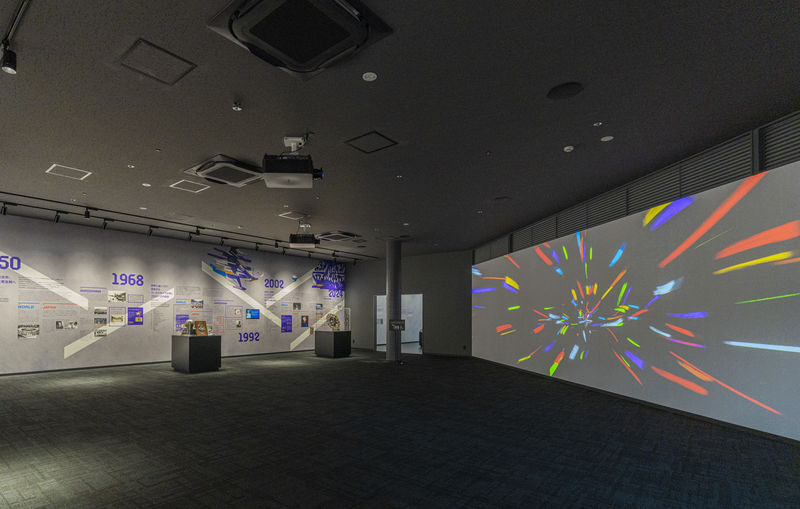
Start with the sections on Hiroshima soccer and the city’s relationship with the sport. The displays introduce the local story and the club’s place in it. A timeline of Sanfrecce Hiroshima uniforms offers a visual way to follow changes over time, especially if you recognize the team’s colors or have a favorite player.
The exhibits are not extensive in size. One visitor described the museum itself as small, which is useful to know when setting expectations. A compact space can be a plus if you are fitting the visit between other Hiroshima plans, but it also means this is unlikely to satisfy someone seeking hours of dense football archives or a large-scale sports attraction.
The historical information and explanations beside the activity area are available in English, according to an account from a visit. That makes the museum more accessible if you do not read Japanese, though the information does not promise that every sign or service is offered in English. Staff have also used a translation tool to check precautions and confirm a reservation, a practical reminder that a translation app can help with quick questions.
Try shooting, dribbling, and passing
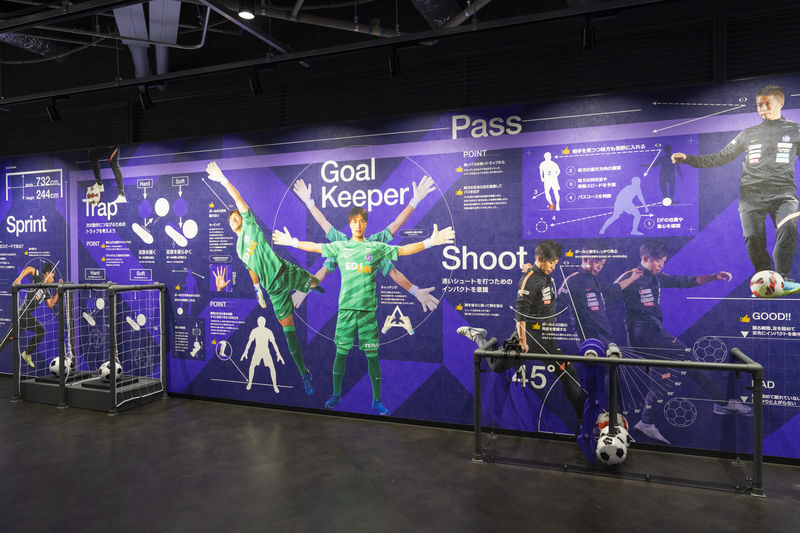
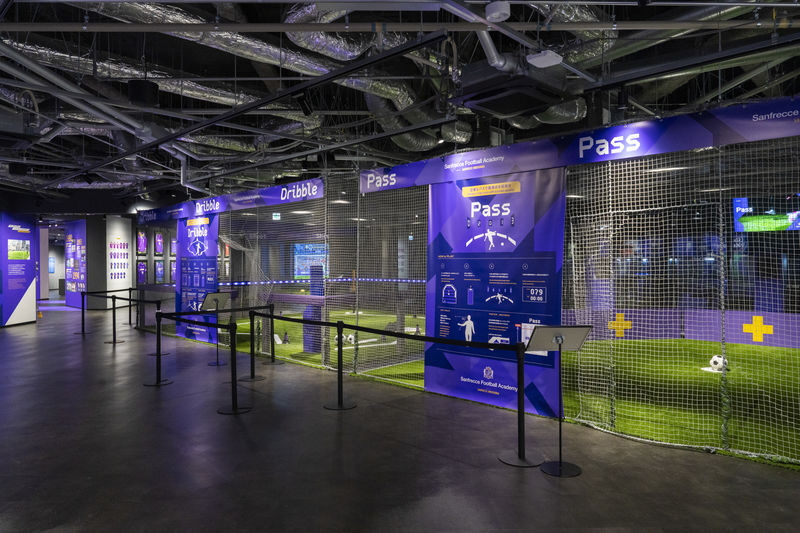
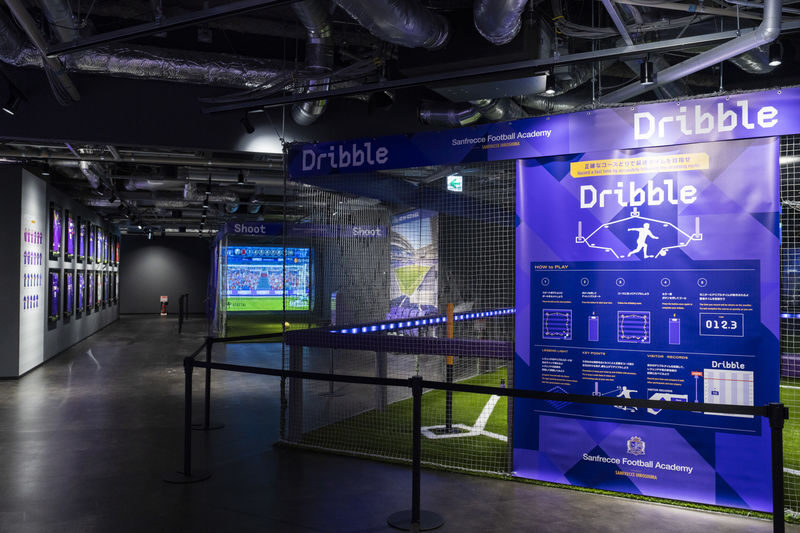
The hands-on zone gives the visit a change of pace. Instead of looking at displays throughout, you can take part in soccer-themed activities involving shooting, dribbling, and passing. They are presented in a game format, so you can test a few skills rather than simply read about them.
These activities are a useful reason to bring children or companions who are less drawn to historical displays. They also give fans a chance to move around and engage with soccer directly. The available details do not specify the exact setup, scoring system, equipment, or whether there are age or height restrictions, so it is best not to arrive expecting a particular challenge or level of play.
The active section is part of the museum, not a separate match or training session. You are visiting an exhibition space with interactive content, not booking time on a full-size pitch. That distinction matters if you are comparing it with a stadium tour or a more intensive sports experience.
Allow time for the Sanfrecce shop
The museum connects to a Sanfrecce Hiroshima club-goods shop. For supporters, this is a natural final stop, and it may be the most personal part of the visit if you follow a particular player. The selection includes individual goods as well as random merchandise and gacha-style items.
If you prefer to choose exactly what you buy, look for individual items rather than treating the random goods as the main attraction. The range can change by season, and a particular player’s merchandise may not be available in the format or quantity you hope for. The shop is worth allowing a little extra time for, but it is not included as a guaranteed collection of specific products.
The connection between museum and shop makes the visit feel like a compact club experience: learn about the local game, try a few skills, then see what team goods are on offer. You do not need to be a dedicated fan to visit, but supporters will have an obvious reason to linger.
How long to stay and when to arrive
Set aside 1 to 2 hours. If you read each historical explanation and try the activity zone, you will need more time than someone who mainly wants a quick look at the displays. Add a little extra if you plan to browse the club shop.
The museum is open daily from 10:00 to 18:00, with last admission at 17:30. Hours and closure dates can change, so check current information before setting out. Arriving close to last admission leaves little room for a relaxed visit, especially if you want to try the activities and browse the shop.
The crowd level around the stadium can vary. On Coming-of-Age Day, the stadium area was reported to be very busy while the museum itself was quiet. That is a useful example, not a promise: a major event may make the surrounding complex crowded even if the museum does not feel packed.



Getting to Edion Peace Wing Hiroshima
The address is 15-2-1 Motomachi, Naka Ward, Hiroshima City, Hiroshima 730-0011. From Hiroshima Bus Center, the museum is about a 10-minute walk. From Shin-Hakushima Station, allow about 15 minutes on foot.
If you are driving, the stated route is approximately 20 minutes from Hiroshima IC on the Sanyo Expressway. No parking details are provided, so check separately if you plan to arrive by car rather than assume parking is included or available at the venue.
The museum’s location makes it possible to pair the visit with other plans in central Hiroshima, but the best combination depends on your schedule. Keep the museum’s modest scale in mind: it can work well as a short cultural stop, particularly if you already have a reason to be at the stadium.
Is the admission price good value?
Admission starts at $3.15 for the ticket option described. At that price, the museum can be an easy addition to a day in Hiroshima if you are interested in soccer, club culture, or the way sport fits into the city’s history. The combination of displays, interactive activities, and access to the club shop gives you more to do than a brief look at a single exhibit.
Value depends on what you want from a museum. If your priority is a large collection or a long, highly detailed historical visit, the compact size may leave you wanting more. If you enjoy a focused local story and a chance to try soccer activities, the modest admission cost is easier to justify.
Children aged 0 to 5 enter free. The activity is listed as suitable for booking the next day, with instant confirmation, but the voucher is valid only for the date selected. You enter directly with the voucher, and re-entry is not allowed after leaving the venue. Free cancellation is available with at least 24 hours’ notice, using destination local time. Changes are generally allowed until 24 hours before the activity, with exceptions for certain pass, presale, freebie, or voucher situations.
Who will enjoy this stop most?
I would put this museum on the list for Sanfrecce supporters, football fans, and anyone curious about the role soccer has played in Hiroshima. It is also a practical choice for families or mixed-interest groups: one person can follow the club’s story while another spends time in the activity zone.
You do not need deep knowledge of Japanese soccer to get something from the visit. The English explanations help, and the link between the sport and recovery gives the displays a local purpose beyond club facts. Still, if soccer holds little interest for you and your time in Hiroshima is tight, you may prefer to prioritize sites that speak more directly to your own interests.
The strongest reason to go is the combination of local history and hands-on play. The strongest reason to skip it is the small scale. Make the call based on whether a focused hour or two with soccer themes sounds like a welcome change of pace in your Hiroshima itinerary.
HIROSHIMA SOCCER MUSEUM
“As a fan of player Kim Ju-sung, I planned a visit to Edion Peace Wing Hiroshima. During that, I found out about this museum and decided to go. It w…”
FAQ
Where is Hiroshima Soccer Museum?
It is at Edion Peace Wing Hiroshima, 15-2-1 Motomachi, Naka Ward, Hiroshima City, Hiroshima 730-0011, Japan.
How long should I plan for the visit?
Plan for about 1 to 2 hours.
What are the museum’s opening hours?
It is listed as open daily from 10:00 to 18:00. Last admission is at 17:30. Hours and closure dates may change, so check the latest information before visiting.
How much does admission cost?
Admission starts at $3.15. The stated package is an admission ticket.
What does the admission ticket include?
The package includes admission to the attractions.
Are children admitted free?
Children aged 0 to 5 enter free.
How do I get there by public transport?
It is about a 10-minute walk from Hiroshima Bus Center and about a 15-minute walk from Shin-Hakushima Station.
Can I re-enter after leaving the museum?
No. Re-entry is not allowed after you leave the venue.
How do I use my ticket?
Enter the venue directly with your voucher. It is valid only on the date selected, and on the specified time if a time applies.
Can I cancel or change my booking?
You can cancel for a full refund if you do so at least 24 hours before the activity date, using destination local time. Changes are generally allowed until 24 hours before the activity starts, but exceptions apply to some bookings, including certain pass, presale, freebie, and voucher situations.