Higo inlay began as decoration for the sword guards samurai kept on view, even when their swords were sheathed. At Higo Inlay Kosuke, you can hear how that craft took root in Kumamoto, then try it yourself under the guidance of fourth-generation craftsman Mr. Osumi.
I like two things in particular: you get a hands-on introduction rather than only a demonstration, and you can choose a design tied to Kumamoto, including Kumamoto Castle or the local mascot Kumamon. The chance to see the workshop and ask questions also gives the craft a human scale.
The main consideration is language. The standard session is conducted in Japanese, and an English and Japanese guide option costs more. The finished strap also needs a craftsman’s final touches, so it is mailed to you after about two to three weeks, with shipping charged separately.
- A craft with samurai roots: Higo inlay decorated visible sword guards, known as tsuba.
- A fourth-generation craft tradition: Mr. Osumi carries on the family’s Higo inlay technique.
- Four designs to choose from: Pick a round floral pattern, Kuyou crest, Kumamoto Castle or Kumamon.
- A compact, hands-on session: The hour includes a short introduction, about 40 minutes making an accessory and time for a workshop visit and questions.
- A personal memento, finished later: A craftsman completes the final touches, then mails your strap in roughly two to three weeks for an added fee.
- Why Higo inlay once adorned samurai sword guards
- What happens during the one-hour workshop
- Choosing a pattern you’ll want to keep
- Language, guide choices and who will enjoy it
- Getting to Higo Inlay Kosuke
- Is the price worth it?
- Should you book this Kumamoto craft session?
- FAQ
- How long does the Higo inlay experience take?
- Where does the workshop take place?
- How do I get to Higo Inlay Kosuke?
- What designs can I choose?
- Is the session conducted in English?
- How much does the experience cost?
- Can I take my finished strap home right after the workshop?
- What is the minimum age?
- What time can I book?
- What should I bring to the workshop?
- The Best Of Kumamoto!
- More Tours in Kumamoto
- More Tour Reviews in Kumamoto
- Not for you? Here's more nearby things to do in Kumamoto we have reviewed
Why Higo inlay once adorned samurai sword guards
 1 / 7
 2 / 7
 3 / 7
 4 / 7
 5 / 7
 6 / 7
 7 / 7
A sword guard, or tsuba, is the piece between the blade and the handle. Unlike the sword itself, it stayed visible when the weapon was put away. For samurai with an eye for style, it offered a place to show personal taste as well as status.
Kumamoto’s Higo inlay grew from this appetite for finely made sword fittings. Hosokawa, a military commander with a strong interest in art, brought sword-guard craftsmen from around Japan to the region. Their work helped develop a local style that came to be regarded as the essence of Higo, the former name for the area now known as Kumamoto.
That background makes this workshop more than a quick craft activity. You are making a modern strap, not a sword fitting, but the design draws on an art form that once had a place in samurai life. I find that connection especially useful if you want a Kumamoto activity that explains something local rather than offering a generic souvenir project.

👉 See our pick of the 9 Best Tours In Kumamoto
What happens during the one-hour workshop
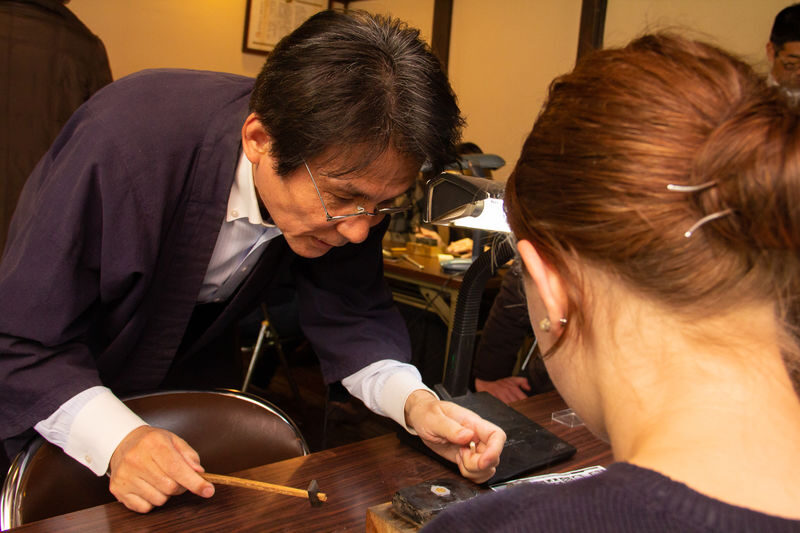
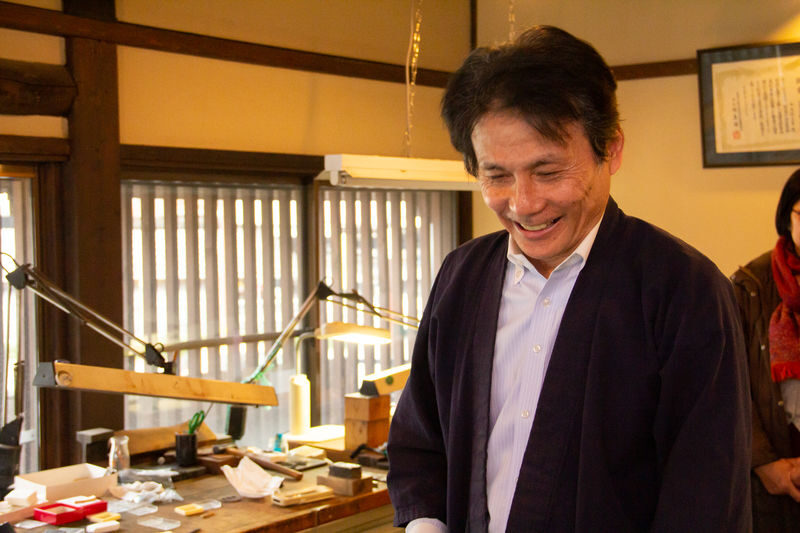
The session takes place at Higo Inlay Kosuke, where Mr. Osumi continues the family’s craft as a fourth-generation maker. The hour is divided into three parts, so you get context, time to work and a chance to look around.
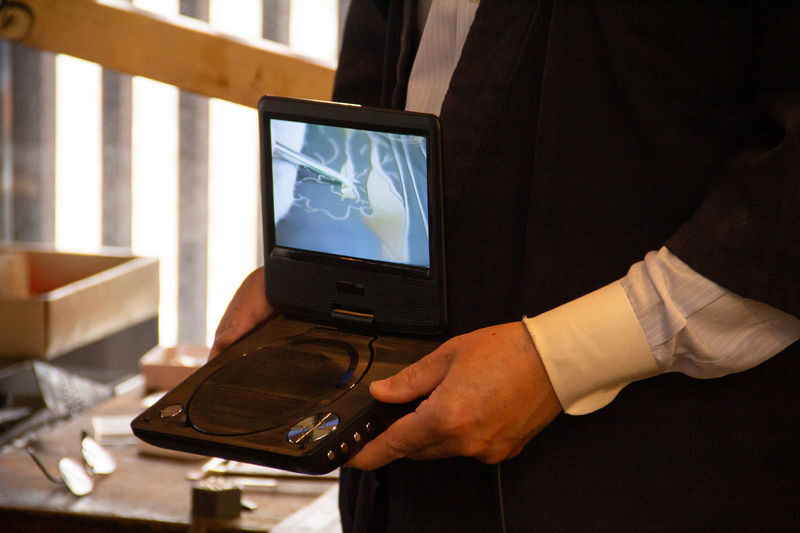
The first 10 minutes are for an explanation of Higo inlay and a video showing the process. This short introduction gives you a reason to notice the design and technique before you begin. It also helps connect today’s strap-making activity with the decorative work once used on sword fittings.
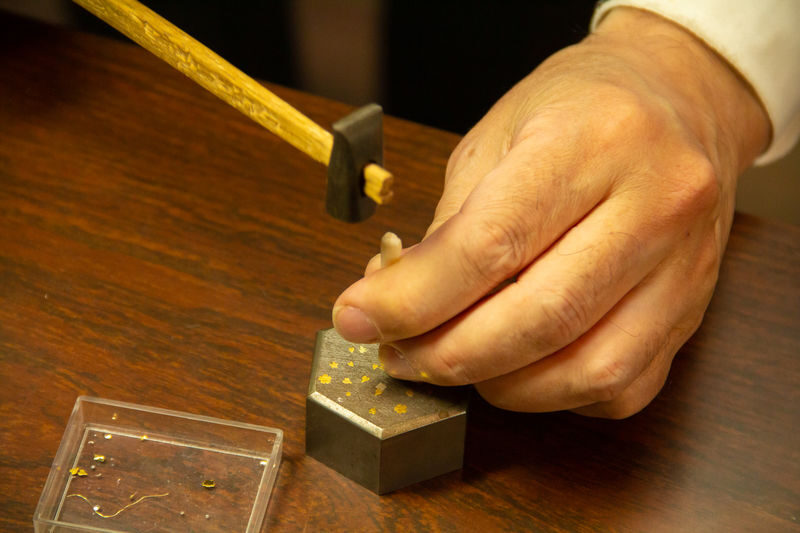
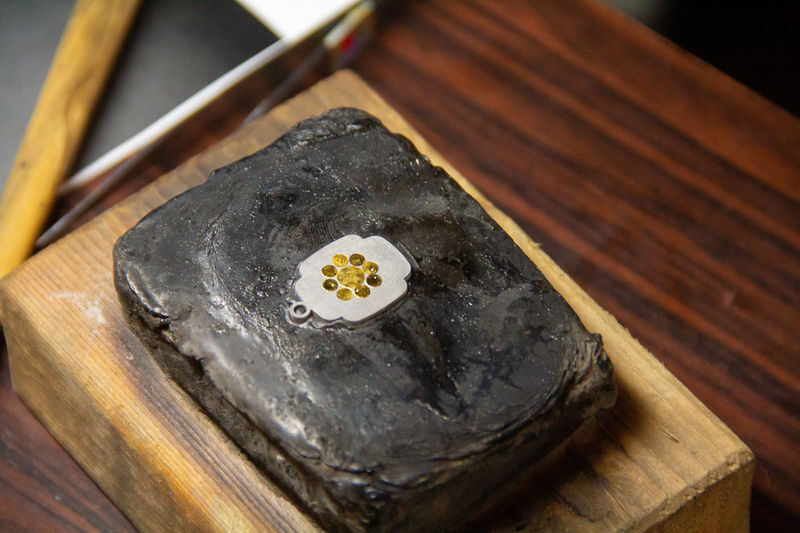
The main 40 minutes are for making your Higo inlay accessory. You choose one of four patterns at checkout: a round floral pattern, the Kuyou crest, Kumamoto Castle or Kumamon. The short session is designed to let you try the craft without needing to commit half a day. A past participant described trying a few techniques while making a strap, so expect an active workshop rather than simply watching a demonstration.
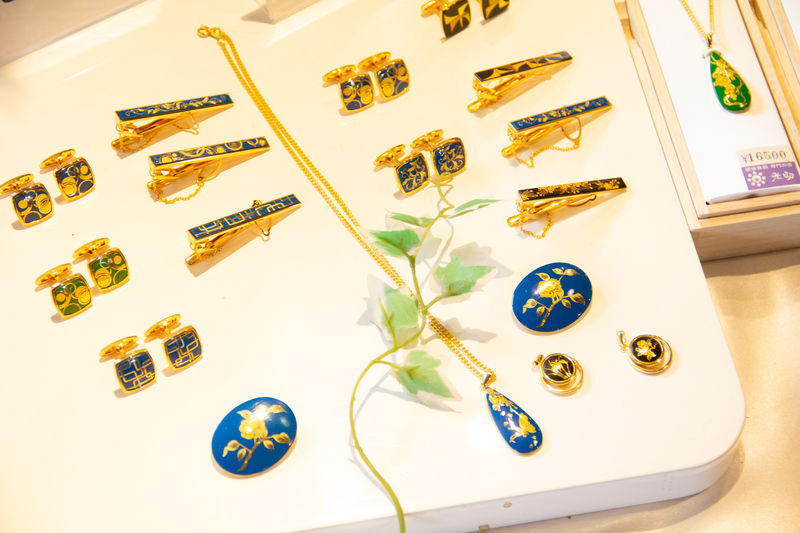
The final 10 minutes include a workshop tour and time for questions. This is a good chance to ask about the family’s work and the process you have just tried. One especially appealing detail is that the workshop has included pieces made by the craftsman to mark a 150th anniversary, giving you a chance to see work beyond the small item you make.
The hour is tightly planned. If you want a long, unhurried class with time to master a technique, this is not that. If you want a brief introduction and a chance to make something of your own while learning why the art matters in Kumamoto, the schedule makes sense.
You can also read our reviews of more tours and experiences in Kumamoto.



Choosing a pattern you’ll want to keep
The four options give you a choice between a traditional-looking motif and designs with a clear Kumamoto connection. The round floral pattern and Kuyou crest may appeal if you prefer a more formal emblem. Kumamoto Castle makes the strap a reminder of the city, while Kumamon gives it a playful local touch.
You need to select your design during checkout, so take a moment to decide before booking. The choice is part of the experience, but there is no information indicating you can change it once you arrive.
The finished piece is not ready to take home at the end of the hour. A craftsman completes the final touches, which take about two to three weeks, then mails the strap to you for an additional shipping fee. That arrangement allows the workshop to include a professional finish, but it is less convenient if you are leaving Japan soon or prefer to carry your souvenir home yourself. Confirm that delivery timing and cost work for you before booking.
Language, guide choices and who will enjoy it
The standard package costs from US$46.35 and includes a Japanese-speaking guide and the one-hour strap-making activity. The workshop itself is conducted in Japanese, so you should be comfortable with a Japanese-language session if you choose this option.
An English and Japanese-speaking guide package is also offered, from US$83.25. That is a substantial jump in price, but it may be worth considering if you want clearer explanations of the craft and its history. The listed package price is a starting rate, so check the price shown for your chosen date and option before you confirm.
I’d recommend the session to craft-minded visitors, families with children aged seven and up, and anyone who wants a short activity with a strong local link. It can also fit neatly into a day in Kumamoto: the workshop is just a two-minute walk from Urusanmachi tram stop, and the session itself takes one hour.
It may be a less suitable pick if you need a fully English-led activity but do not want to pay for the higher-priced option. It is also not ideal if you need the finished item immediately. The best fit is someone who enjoys trying a traditional craft, values the story behind the object and is happy to wait for the final strap to arrive.
Getting to Higo Inlay Kosuke
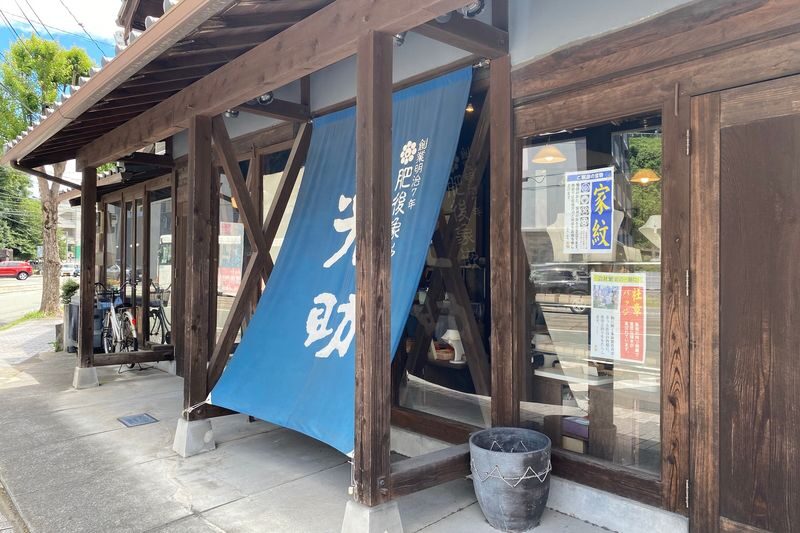
The workshop address is 3 Chome-2-1 Shinmachi, Chuo Ward, Kumamoto. From Urusanmachi Station on the Kumamoto City Tram, it is a two-minute walk. You select a start time when booking, with departures offered hourly from 9:00 a.m. to 3:00 p.m.
Arrive 10 minutes before your selected time. The session is tied to that booking time, and late arrivals or no-shows are not refundable. Your voucher is mobile and valid only for the date and time specified, so keep it handy and check your confirmation before setting out.
The activity is for ages seven and up. Confirmation should arrive within 48 hours of booking; if it does not, contact customer support. Cancellation charges increase as the date approaches: 40 percent within seven days, 60 percent within three days and 100 percent within one day. Late arrivals and no-shows are not refundable.
Is the price worth it?
At the starting price of US$46.35, you are paying for more than a strap. The hour includes a craft explanation, a video, hands-on making, a workshop visit and a chance to ask questions. The experience also connects the design to Kumamoto’s history, which gives the finished object a story you can take home with it.
The extra cost of the English and Japanese option is worth weighing against how much language support matters to you. If you can follow a Japanese-language workshop, the standard package offers a lower-cost route into the craft. If not, the higher price may be the difference between simply following along and understanding the details behind the work.
Remember to add shipping to your budget. The final piece is mailed after the craftsman completes it, so the advertised starting price is not the full cost if you want the strap delivered. Still, the workshop offers a personal item made in a local craft setting, not a ready-made souvenir picked up from a shelf. For someone who values that distinction, the price can be reasonable.


Should you book this Kumamoto craft session?
Book it if you want a short, hands-on activity with a clear connection to Kumamoto and you like the idea of making a small item in a traditional workshop. The mix of history, practical work and a look around the shop makes the hour feel purposeful, while the four designs let you choose a motif that suits your taste.
Think twice if you need an English-led session but the higher-priced guide option does not fit your budget, or if you cannot receive a mailed item a few weeks later. Otherwise, this is a thoughtful way to spend an hour in the city, especially if Kumamoto Castle, local crafts or Japanese metalwork already interest you.
Higo Inlay Strap Making Experience in Kumamoto
“This was such an inyerestimg experience and it was really great to get to make something of our own.”
FAQ
How long does the Higo inlay experience take?
The activity lasts one hour. It includes a 10-minute introduction and video, about 40 minutes making an accessory, and a 10-minute workshop visit and question session.
Where does the workshop take place?
It takes place at Higo Inlay Kosuke, 3 Chome-2-1 Shinmachi, Chuo Ward, Kumamoto 860-0004, Japan.
How do I get to Higo Inlay Kosuke?
The workshop is a two-minute walk from Urusanmachi Station on the Kumamoto City Tram.
What designs can I choose?
You can choose a round floral pattern, a Kuyou crest, Kumamoto Castle or Kumamon. Select one at checkout.
Is the session conducted in English?
The standard plan is conducted in Japanese. An English and Japanese-speaking guide option is available at a higher price.
How much does the experience cost?
The Japanese-speaking guide package starts from US$46.35. The English and Japanese-speaking guide package starts from US$83.25.
Can I take my finished strap home right after the workshop?
No. A craftsman completes the final touches, which take about two to three weeks. The finished item is mailed for an additional fee.
What is the minimum age?
The activity is for participants aged seven and up.
What time can I book?
Start times are offered hourly from 9:00 a.m. to 3:00 p.m. Choose a time when booking and arrive 10 minutes early.
What should I bring to the workshop?
Present your mobile voucher at the activity. The voucher is valid only on the specified date and time.