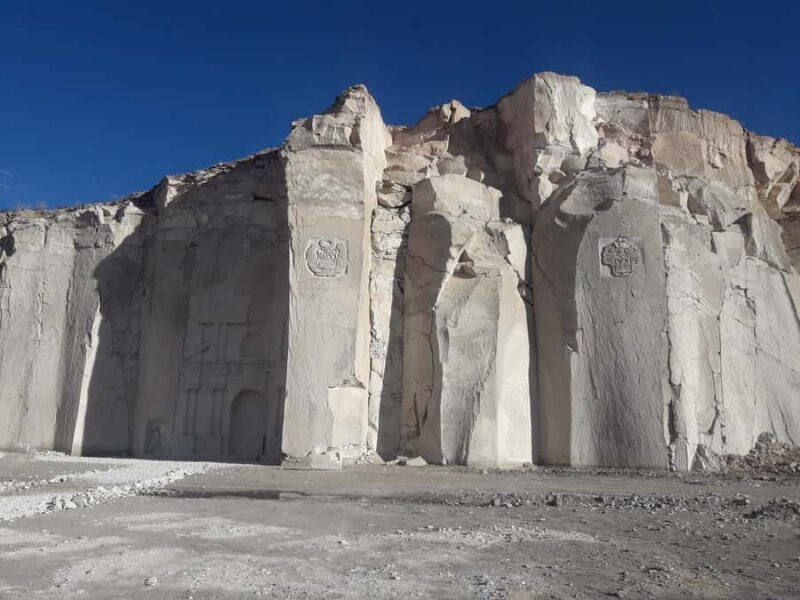
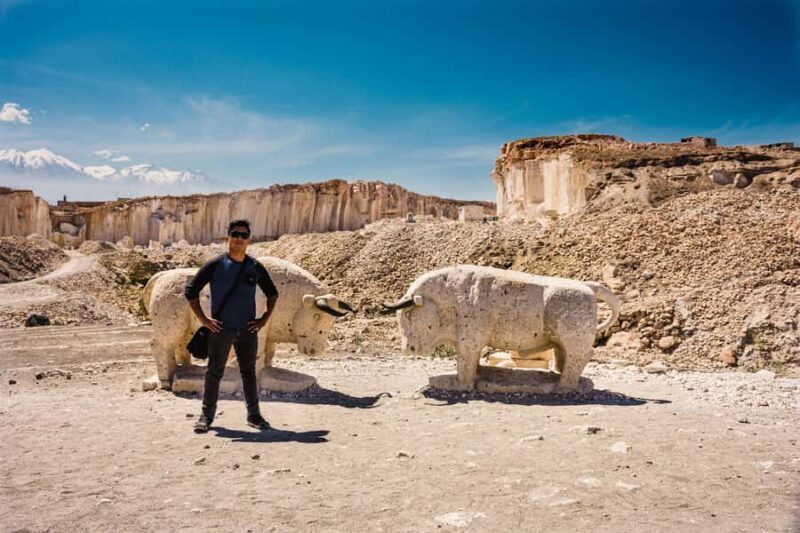
The most memorable part of this half-day trip is the contrast between a working stone quarry and the quiet, narrow passage of Culebrillas Canyon. At Añashuayco, you see the tall walls left by sillar extraction and a large carving of the Church of the Company of Jesus; at the canyon, a short walk leads to ancient Wari petroglyphs.
I like two things in particular: you see how local stonemasons work with sillar, rather than only admiring the finished buildings in town, and the canyon adds a peaceful change of pace, with walls rising 15 to 20 meters. The volcano and Chilina Valley viewpoint gives the route a broader sense of place, too.
One consideration: this is a guided group outing, not a long hike or an in-depth quarry visit. You may have limited time at the most popular photo spots, and the canyon walk calls for steady footing. Bring cash for the 18-sol entry fee, plus sun protection and insect repellent.
- At a glance
- Sillar, the stone behind Arequipa
- The journey out and the volcano viewpoint
- Añashuayco Quarry: a working place, not just a photo stop
- Culebrillas Canyon: the walk that changes the pace
- The guide, group, and pace
- What covers, and what it does not
- Should you book the Sillar Route Trek?
- FAQ
- How long is the tour?
- What is included in the price?
- Is the tour available in English?
- How much walking is involved?
- What will I see at Añashuayco Quarry?
- What are the petroglyphs at Culebrillas?
- Is there an afternoon departure?
- What should I bring?
- The Best Of Arequipa!
- More Hiking & Trekking Tours in Arequipa
- More Tours in Arequipa
- More Tour Reviews in Arequipa
- Not for you? Here's more nearby things to do in Arequipa we have reviewed
At a glance
 1 / 8
 2 / 8
 3 / 8
 4 / 8
 5 / 8
 6 / 8
 7 / 8
 8 / 8
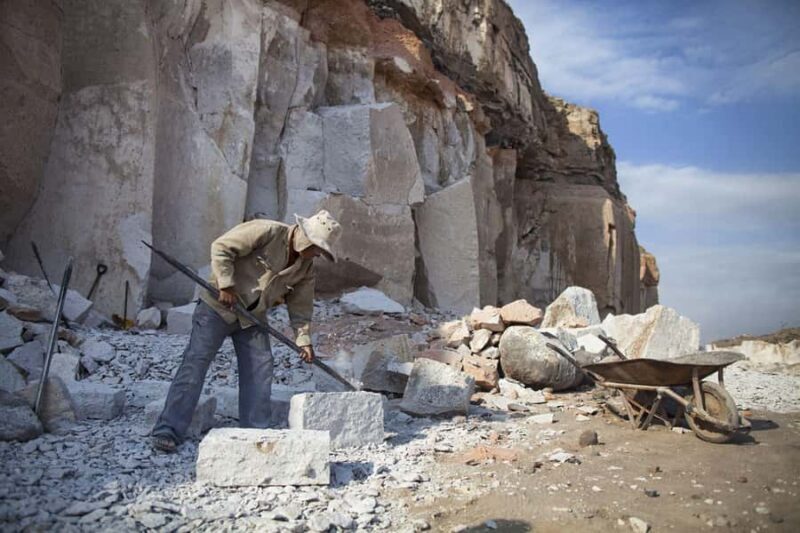
- The quarry is still at work: Añashuayco is an operating sillar quarry, and you may see stonemasons at work.
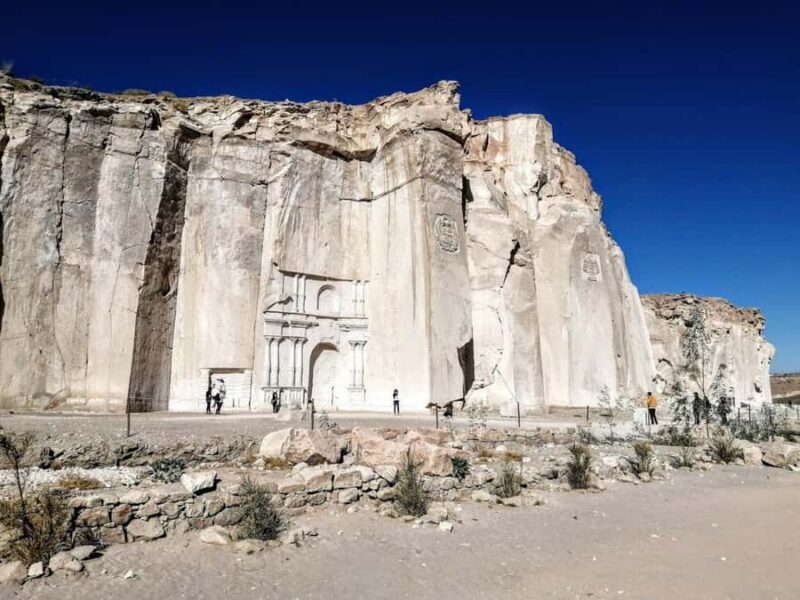
- A monumental stone carving: Look for the large depiction of the Church of the Company of Jesus, made by local stonemasons.
- A short canyon walk: Culebrillas takes about 20 to 25 minutes on foot, with tall walls and Wari petroglyphs.
- Volcano views round out the route: A viewpoint looks toward the volcanoes and Chilina Valley, though the stop order can vary.
- A low-cost half day: The tour costs $12 per person, with 18 soles in entry fees paid separately.
- Plan for sun and uneven ground: Wear closed shoes and bring sunscreen, a hat, and insect repellent.

👉 See our pick of the 6 Best Shopping Tours In Arequipa
Sillar, the stone behind Arequipa
Sillar is more than a souvenir-worthy rock. The route introduces the stone through the place it is quarried and the work that shapes it, giving you a useful connection between Arequipa’s building tradition and the land beyond the city.
At Añashuayco, the quarry walls are made of ignimbrite, a volcanic rock exposed through extraction. Their height and scale make the site feel less like a tidy display and more like a working place. The quarry remains in operation, and stonemasons begin work early, so the amount of activity you see may depend on the time of day.
Your guide explains how sillar is produced and how it has been used. Some tours also include a visit with a stonemason, who can describe the day-to-day work and let you try cutting a block. Treat that hands-on part as a possibility, not a guarantee: the exact experience can vary.
The quarry’s large church carving is an easy focal point, and it helps you see the stone as material as well as monument. Still, the site may not hold everyone’s attention for long. If you are most interested in geology or traditional craft, listen closely to the explanation and ask questions. If you mainly want a quiet natural setting, you may find the canyon more rewarding.
You can also read our reviews of more hiking tours in Arequipa
The journey out and the volcano viewpoint
The meeting point is the tour office at C. Álvarez Thomas 115, where staff check names and give instructions before departure. The route uses a van, and the drive out to the quarry takes about an hour in the schedule. The experience lasts around four hours overall, though the stated morning timing runs from 9:15 a.m. to a return around 1:30 p.m. Allow a little flexibility.
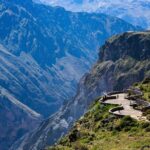
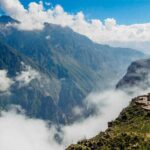
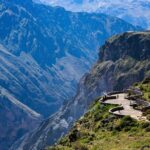
The viewpoint is a useful first or final stop, depending on the route and season. From here, you can see the volcanoes and the Chilina Valley; another traditional viewpoint may sometimes take its place. The stop is geared to views and photographs, with a short guided visit rather than a walk.
Some people who already visit Arequipa’s viewpoints may consider this stop less essential than the quarry and canyon. That is fair. Its value is context: the volcanoes and valley help place the stone route in its wider setting, and the light can be especially appealing on an afternoon departure. The tour also runs at 2:00 p.m., and some afternoon departures have enjoyed sunset light on the rocks. The return can take longer when city traffic is heavy.
Añashuayco Quarry: a working place, not just a photo stop
The drive from the viewpoint area to Añashuayco is about 45 minutes, according to the route description. You get around 45 minutes at the quarry, including the guided explanation and free time. That is enough to see the main features and take photographs, but it is not a slow, detailed workshop visit.
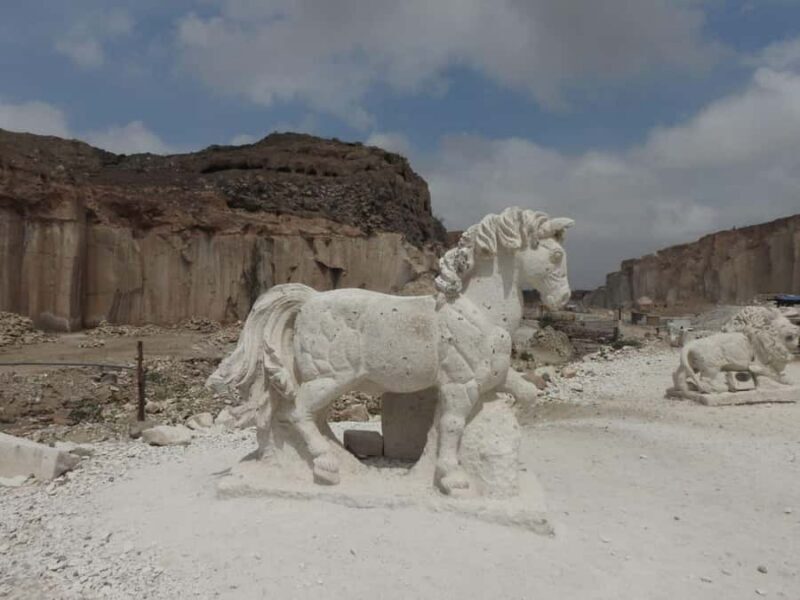
The quarry’s scale is the first thing to notice. Extraction has left steep, high walls that reveal the stone beneath the surface. Your guide can explain the process, the blocks’ uses, and the role of stonemasons. A carved church facade offers a striking example of what skilled hands can make from the same material being taken from the quarry.
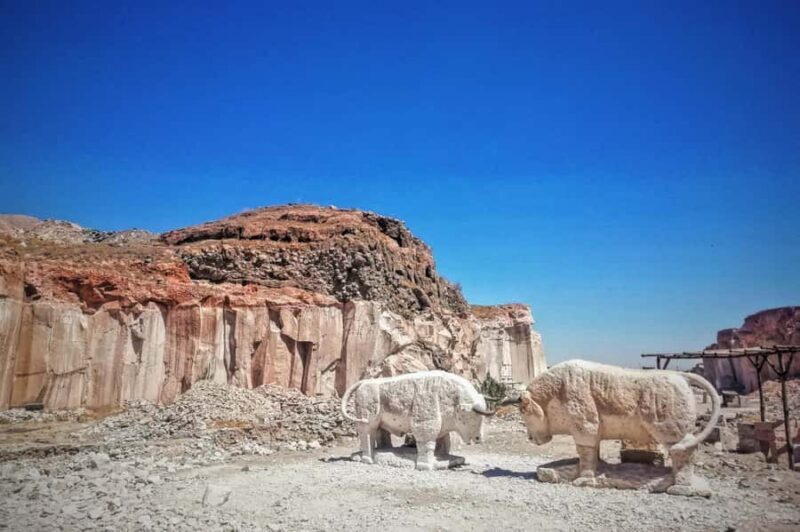
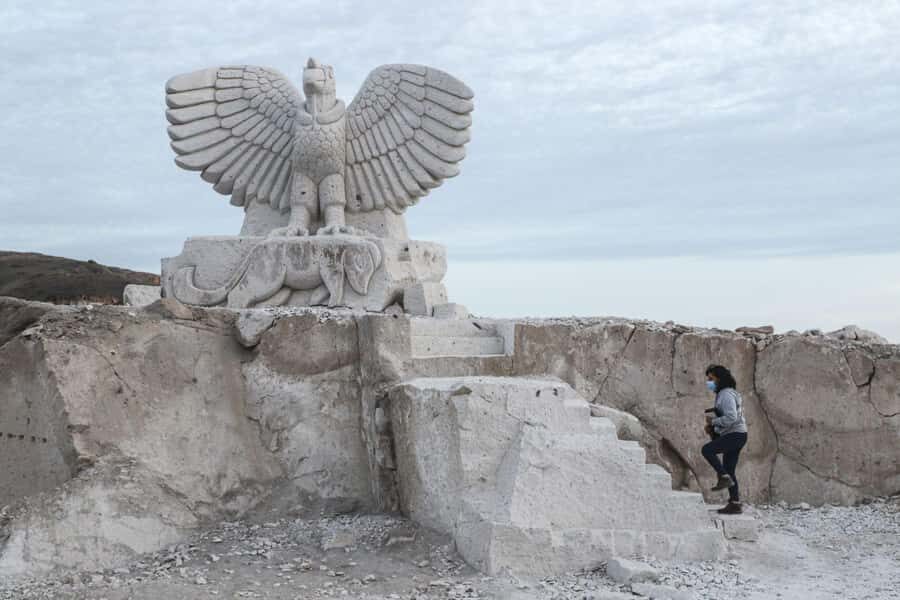
There are also modern sculptures and photo opportunities. Their appeal is personal: some people enjoy posing beside them, while others prefer the working quarry and stone history. If the stop feels more like a photo area than a craft demonstration, focus on the quarry walls and ask your guide about the stonecutting process.
Timing is the main trade-off here. When several groups gather around popular spots, taking turns for pictures can eat into free time. If you want your own photos, be ready to move efficiently, then take a moment away from the busiest point to look at the quarry as a whole.
Culebrillas Canyon: the walk that changes the pace
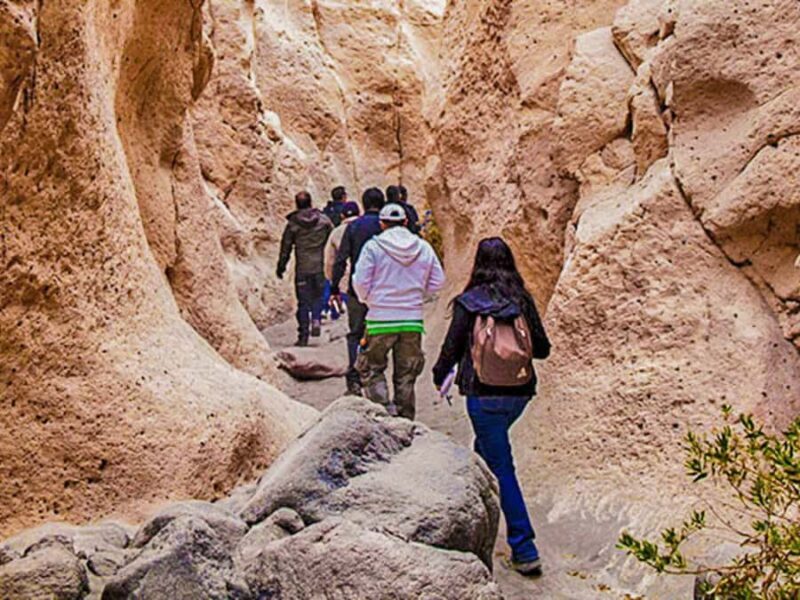
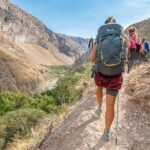
From Añashuayco, the van continues to Quebrada de Culebrillas. The drive is listed at about 20 to 30 minutes, and the walk itself takes roughly 20 to 25 minutes. It is short, but it is the most physically demanding part of the outing, with uneven ground and a narrow route through the canyon.
Culebrillas was formed by flowing water. Its walls begin modestly and grow taller as you walk inward, reaching around 15 to 20 meters. The enclosed passage feels very different from the open quarry, and it is often the part that gives the tour its strongest sense of being outdoors rather than moving between stops.
Near the end, you can see petroglyphs attributed to the Wari culture and described as more than a thousand years old. The carvings reward a closer look, though you should not expect a large archaeological site or a long guided walk. The route is compact, and the canyon’s shape is as much a part of the experience as the rock markings.
You should be comfortable walking on uneven ground. One participant with walking difficulties found the mini canyon challenging, so this may not suit anyone who needs a smooth, level path. Closed shoes are a sensible choice. Insect repellent, sunscreen, and a hat are also practical, particularly on a bright afternoon.
At the canyon’s end, you may see apachetas, small piles of stones placed one on top of another. They are described as expressions of gratitude toward nature and as symbols associated with good luck. The custom adds a cultural note to the walk, but please treat the piles respectfully and leave them undisturbed.
More Great Tours NearbyThe guide, group, and pace
The tour is offered in English and Spanish. Guides named in accounts of the experience include Mike, Jose, Julia, Alexandra, Alexa, and Roni, but who leads your departure will depend on the day. English ability and the balance between languages can vary. Some guides explain each stop in both languages, while others may speak mostly in Spanish unless asked. If you need an English explanation, say so early.
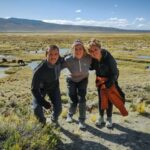
The group travels together by van, with scheduled time at each stop. Some departures have included around 25 people, so expect a group outing rather than private attention. Guides have been praised for explaining the stonework, local culture, and practical details, and for helping English speakers keep up when most of the group is Spanish-speaking.
The route order can change. One guide began with the canyon to avoid the larger crowds, then visited the quarry. That can make a real difference in how peaceful the canyon feels, though you cannot count on a particular sequence. The published route also includes a volcano viewpoint; confirm the day’s plan with your guide if a specific stop matters most to you.

What $12 covers, and what it does not
At $12 per person, this is a modestly priced way to reach several sites outside Arequipa without arranging transport yourself. The fare includes transportation and a guide, and it combines local stonework, a short canyon walk, petroglyphs, and volcano views in about half a day. You are paying for a compact introduction, not a specialist archaeology or quarry tour.
Entry costs are separate: allow 18 soles in total for the places visited. Bring cash in soles, especially if you might want to buy something during the outing. There is no cash machine during the tour, so arrive with enough local currency rather than relying on a card or a large bill.
The main value lies in seeing several different sides of the area in one trip. You get an explanation of sillar’s production and use, a look at the quarry itself, and time on foot in a canyon. If your priority is a long hike, extended time with stonemasons, or an uncrowded photo session, this short group tour may feel rushed. If you have a free morning or afternoon and want a low-cost outing beyond the city center, it makes good use of the time.
Should you book the Sillar Route Trek?
Book this tour if you want a practical introduction to Arequipa’s sillar tradition and a short walk in a striking canyon without organizing transport yourself. It suits curious first-time visitors, anyone with a spare half day, and people who like mixing cultural context with a little outdoor walking.
Think twice if uneven paths are difficult for you, if you want to spend a long time at each stop, or if you dislike group photo stops. Bring 18 soles in cash, closed shoes, sunscreen, a hat, and insect repellent. For the best chance of softer light, consider the 2:00 p.m. departure, while remembering that afternoon traffic may slow the return.
From Arequipa: Sillar Route Trek
FAQ
How long is the tour?
The experience is described as four hours. The morning schedule begins at 9:15 a.m. and gives a planned return around 1:30 p.m., so allow some flexibility.
What is included in the $12 price?
Transportation and a guide are included. Entry fees are not included and cost 18 soles in total.
Is the tour available in English?
Yes. Guides are available in English and Spanish. If you need the English explanation, tell your guide, as the balance between languages can vary.
How much walking is involved?
The main walk is through Culebrillas Canyon and takes about 20 to 25 minutes. The ground is uneven, so closed shoes are recommended.
What will I see at Añashuayco Quarry?
You will see a working sillar quarry, tall ignimbrite walls, and a large carving of the Church of the Company of Jesus. A stonemason visit or chance to try cutting a block may be offered.
What are the petroglyphs at Culebrillas?
They are carvings attributed to the Wari culture and described as more than a thousand years old. They are seen at the end of the canyon walk.
Is there an afternoon departure?
Yes. A 2:00 p.m. departure is offered. Afternoon light can be attractive, but traffic may make the return to the city slower.
What should I bring?
Bring 18 soles in cash for entry, closed shoes for the canyon, and sun protection. Insect repellent is also a useful precaution.
You can check availability for your dates here: