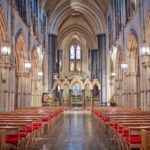
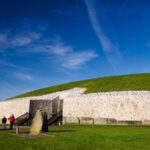
Glasnevin Cemetery is more than a resting place for Ireland’s famous: it is a way to follow the country’s struggle for independence through the people who shaped it. In two hours, a guide connects graves, monuments and personal stories to events such as the 1916 Easter Rising, giving the grounds the feel of an outdoor history lesson rather than a solemn roll call.
I like two things in particular: the guides’ mix of historical detail and humor, and the chance to visit Daniel O’Connell’s crypt before taking in Dublin from the tower. The cemetery itself is also a lovely change of pace from city streets, with Victorian garden-style grounds and ornate stonework.
One consideration: this is an outdoor tour, so weather matters, and you’ll spend time standing while the guide talks. The tower climb involves 198 steps, and the crypt is not wheelchair accessible. Check whether tower access is included in your chosen ticket, since it may be sold separately.
- At a glance
- Why Glasnevin belongs on a Dublin itinerary
- How the two-hour walk brings history to life
- Daniel O’Connell’s crypt and the independence story
- The cemetery’s quieter stories and striking details
- Visitor centre, exhibitions and the tower climb
- What buys, and who will value it most
- Getting there and making the visit comfortable
- Should you book the Glasnevin Cemetery tour?
- FAQ
- How long is the Glasnevin Cemetery tour?
- What language is the tour in?
- How much does the tour cost?
- Is the O’Connell Tower climb included?
- How many steps are there to the top of O’Connell Tower?
- Is Glasnevin Cemetery accessible by wheelchair?
- How do I get to Glasnevin Cemetery from central Dublin?
- What should I wear?
- Can I cancel my booking?
- The Best Of Dublin!
- More Guided Tours in Dublin
- More Tours in Dublin
- More Tour Reviews in Dublin
- Not for you? Here's more nearby things to do in Dublin we have reviewed
At a glance
 1 / 8
 2 / 8
 3 / 8
 4 / 8
 5 / 8
 6 / 8
 7 / 8
 8 / 8
- Follow Ireland’s independence story through the lives and graves of figures including Daniel O’Connell and Michael Collins.
- Hear history told with personality. Guides named Luke, Shane, Gráinne, Pat, Cillian and others are praised for clear storytelling, humor and command of detail.
- Visit O’Connell’s crypt and hear about major events in 20th-century Irish history.
- Climb 198 steps to the top of O’Connell Tower for 360-degree views of Dublin. Confirm whether your ticket includes the climb.
- Allow two hours, then consider staying for the indoor exhibitions or a break at the on-site café.
- Expect outdoor conditions and some standing. Wear closed-toe shoes and dress for the weather.

👉 See our pick of the 5 Best Shopping Tours In Dublin
Why Glasnevin belongs on a Dublin itinerary
Founded in 1832, Glasnevin is Ireland’s National Cemetery, a place of national memory as well as a beautifully kept burial ground. Its Victorian garden design makes it a calmer, greener setting than a conventional city attraction, but the reason to come is not simply the scenery. The cemetery holds the stories of roughly 1.5 to 1.6 million people, among them figures whose choices helped shape modern Ireland.
That scale can be hard to grasp on your own. A guided route gives you a way in: names on headstones become people, and individual lives connect to larger events. You’ll hear about revolutionaries, public figures, cultural figures and others whose stories illuminate the country’s past. The focus is strongly on Irish history and independence, but the tour also includes lesser-known stories and details that give the grounds a human scale.
I’d choose the guided tour if you want more than a peaceful stroll among monuments. The cemetery is open and spacious, and you can certainly appreciate its Celtic crosses and ornate crypts without a guide. But context changes what you see. A short stop at a grave can explain why a person matters, what was happening in Ireland at the time, and how a personal story fits into a much larger history.
You can also read our reviews of more guided tours in Dublin



How the two-hour walk brings history to life
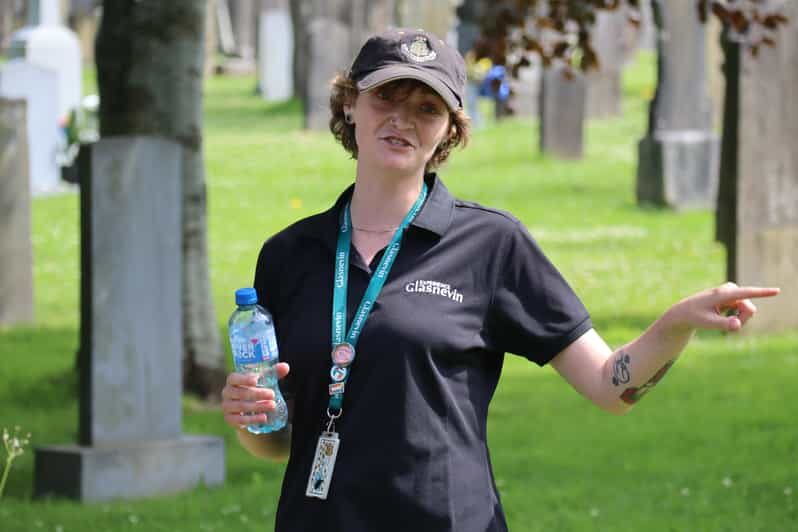
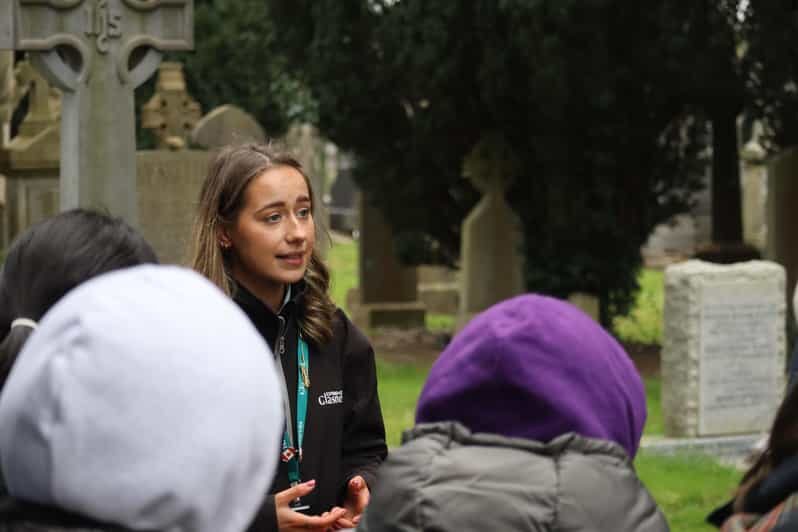
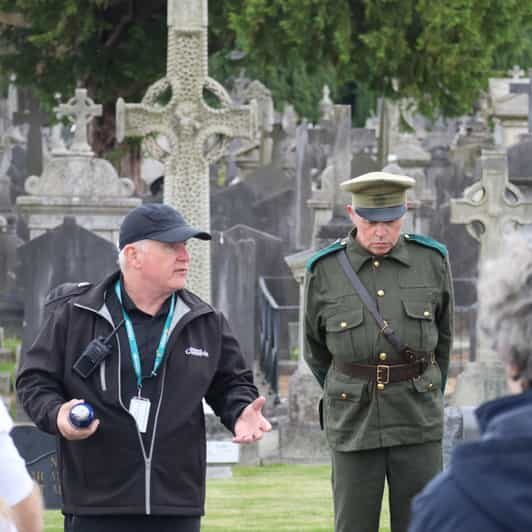
The tour is led in English and lasts about two hours. You move through outdoor sections of the cemetery, stopping at graves and memorials while the guide links people and places to key moments in Irish history. The route is not simply a list of famous names. Strong guides build a narrative, using dates and events alongside anecdotes and a little humor to keep the past accessible.
That approach is one of the experience’s biggest strengths. Luke, Shane, Gráinne, Pat, Cillian, Ultan and other guides are singled out for their energy, storytelling and command of Irish history. The style can vary by guide, but the best descriptions point to a balance: serious about the subject, lively in delivery, and able to add human details without making light of the dead.
You’ll cover a lot of historical ground without the walk being described as strenuous. One useful caveat: you may stand in place for stretches while the guide speaks. If standing is difficult for you, consider asking the cemetery staff about the route and seating before you set out. A visitor specifically wished for benches near the main talk stops, so don’t assume there will be a seat at every pause.
The tour has also been praised for holding attention in large groups. Still, group size can affect how easily you hear and follow the story, particularly if the guide speaks quickly or you’re not used to Irish accents. If you have trouble hearing, try to stay near the guide and ask for clarification when needed. English is the only stated tour language.
Daniel O’Connell’s crypt and the independence story
Daniel O’Connell, known as the Liberator, is one of the cemetery’s most important figures, and his crypt is a memorable stop. The tour includes the opportunity to enter it, although the crypt is the one part of the experience that is not wheelchair accessible. It offers a close look at a distinctive part of the cemetery’s memorial architecture as well as a chance to hear about O’Connell’s place in Irish public life.
From there, the tour’s broader history helps put later events into perspective. The cemetery has connections to landmark moments including the 1916 Easter Rising, which helped lead to Ireland’s independence. The route also addresses 20th-century Irish history and figures such as Michael Collins, the revolutionary. Rather than treating these names as isolated icons, a good guide explains the human decisions and historical pressures behind them.
The tour’s main thread is Irish independence, so that is where you should expect the most emphasis. If you’re hoping for equal attention to every strand of Irish history, including the experience of Irish soldiers who served in the British army during the First World War, you may want to ask in advance whether that subject is covered. The tour has prompted interest in a broader account of those lives and how returning soldiers were treated. That is a thoughtful question to raise, especially if you want a wide-ranging view of Ireland’s past.
The cemetery’s quieter stories and striking details
Glasnevin is not only about national leaders. Its roughly 1.5 to 1.6 million burials represent a vast range of lives, and guides can bring in other notable people as they move through the grounds. Some of the most enjoyable moments may come from an unexpected story or an unusual detail, rather than a familiar name.
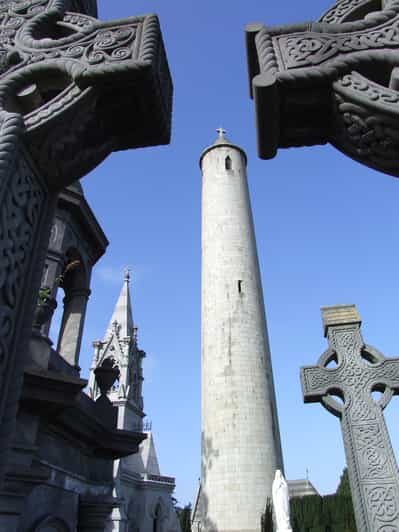
The setting rewards a slower pace. Look at the range of Celtic crosses, crypts and memorials as you walk, and notice how the cemetery’s design leaves room for reflection. It’s a functioning place of remembrance, not a museum set, so keep your voice low and follow the cemetery’s rules. Smoking, drones, pets other than assistance dogs, food, flash photography, tripods, video and audio recording are not allowed.
The contrast between the quiet grounds and the weight of the stories is part of the appeal. You may hear a funny anecdote one moment and encounter a moving account of sacrifice the next. Guides are praised for handling that balance with care. The humor helps the history feel approachable, while the setting gives the stories room to land.
More Great Tours NearbyVisitor centre, exhibitions and the tower climb
The visitor centre’s indoor exhibitions offer a different way to encounter Glasnevin. They focus on extraordinary lives and include famous, historical and cultural figures. If the weather turns, or you want more context after the walk, the exhibitions are a useful complement to the outdoor tour. They also give you time to explore at your own pace rather than following a guide’s timetable.
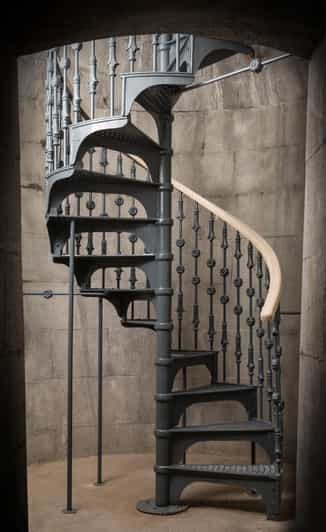
O’Connell Tower is the big finish for many people. The climb is 198 steps, and the reward is a 360-degree view over Dublin. It’s a worthwhile add-on if you enjoy city views and are comfortable with a stair climb, but it is not essential to the history tour itself. Information about the ticket is not entirely consistent: the experience lists the tower climb among its highlights, while some accounts describe it as an extra paid add-on after the cemetery tour. Confirm what your ticket covers before booking or paying at the site.
The tower is Ireland’s tallest round tower, making the climb a distinctive way to see the city after spending time among its history. If stairs are not for you, you can still get a full cemetery experience from the guided walk and exhibitions. The outdoor route is described as accessible, with a wheelchair available to rent, but the O’Connell crypt is not accessible.
You can also read our reviews of more historical tours in Dublin




What $19 buys, and who will value it most
At $19 per person, this is a good-value way to add context to a place you could otherwise explore on your own. The price gets you a two-hour guided history tour, with an expert guide connecting sites and stories across the cemetery. The visitor centre and indoor exhibitions add another layer, while the tower climb can make the outing more substantial if it is included in your ticket or you choose to pay for it separately.
The value rests mostly on the guide. The cemetery is free of the usual indoor museum feel, but its significance can be easy to miss without explanation. A lively guide turns names and dates into an account of real people and national change. If you already know a good deal about Irish history, you may still pick up extra details, but the tour’s main benefit is its guided narrative rather than access to a single monument.
I’d recommend it to anyone curious about Irish history, especially if you’re interested in the independence movement and the people behind it. It’s also a strong choice if you want an outdoor activity with more substance than a standard city walk. History-minded families may find the storytelling engaging, though unaccompanied minors are not permitted. If you prefer a quiet visit without a set pace, you can explore the grounds independently instead.
Getting there and making the visit comfortable
Glasnevin is about 20 minutes from Dublin city by public transport on the F spine DublinBus route. There is also a car park on site. Check current transport details before setting out, and leave enough time to arrive before your scheduled start.
Wear comfortable, closed-toe shoes and clothes suited to the weather. This is an outdoor experience, and Irish weather can make a pleasant walk feel quite different from a wet, windy one. Bring no food into the cemetery, and leave professional cameras, tripods and recording equipment at home. A café on site serves tea, coffee, lunch and cakes, so you can make time for a break before or after the tour.
The tour is offered with free cancellation up to 24 hours in advance, and a reserve-now, pay-later option is available. Those terms are useful if your Dublin plans are still taking shape. Check the exact start time and tower access when choosing your ticket.
Should you book the Glasnevin Cemetery tour?
Book it if you want Irish history explained through the people who lived it, and if you enjoy a guide who can combine facts with a good story. The cemetery’s setting, O’Connell’s crypt and the optional tower view give the two-hour visit a satisfying range. At $19, it offers especially good value for anyone who would otherwise walk through the grounds without knowing the stories behind the names.
Think twice if you dislike outdoor tours, standing for stretches or listening in a large group. And if the tower climb is important to you, confirm that it is part of your ticket. For most history-curious visitors to Dublin, Glasnevin is a worthwhile stop: quiet, moving and full of people whose lives help explain the country around you.
Experience Glasnevin Cemetery Guided Irish History Tour
FAQ
How long is the Glasnevin Cemetery tour?
The guided tour lasts two hours. Check availability for the specific starting times.
What language is the tour in?
The live guided tour is in English.
How much does the tour cost?
The stated price is $19 per person. Check your selected ticket for details about tower access.
Is the O’Connell Tower climb included?
The tower climb is listed as a highlight, but it may be sold as a separate add-on. Confirm what your chosen ticket includes before booking.
How many steps are there to the top of O’Connell Tower?
There are 198 steps. The top offers 360-degree views of Dublin.
Is Glasnevin Cemetery accessible by wheelchair?
The outdoor tour is described as fully accessible, except for the Crypt of O’Connell. A wheelchair is available to rent.
How do I get to Glasnevin Cemetery from central Dublin?
It is about 20 minutes from Dublin city by public transport, using the F spine DublinBus route. There is also a car park on site.
What should I wear?
Wear comfortable clothes and comfortable, closed-toe shoes. The tour is outdoors, so dress for the weather.
Can I cancel my booking?
You can cancel up to 24 hours in advance for a full refund. A reserve-now, pay-later option is also available.
You can check availability for your dates here: