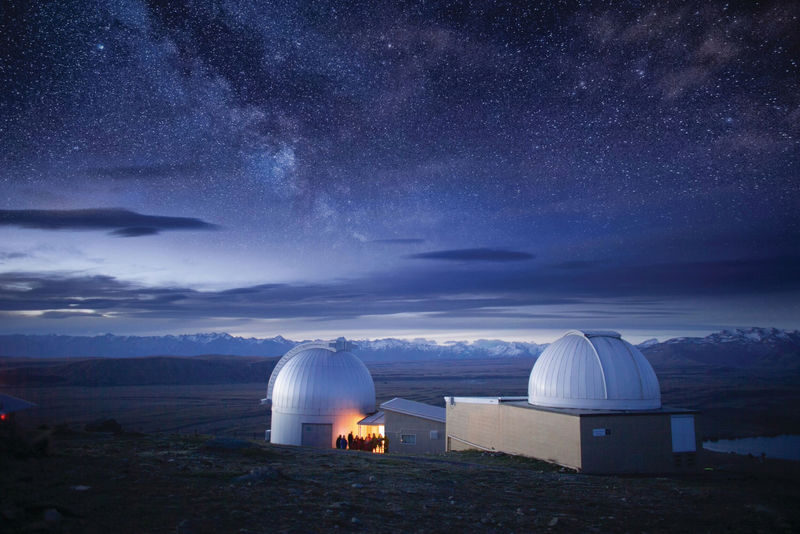
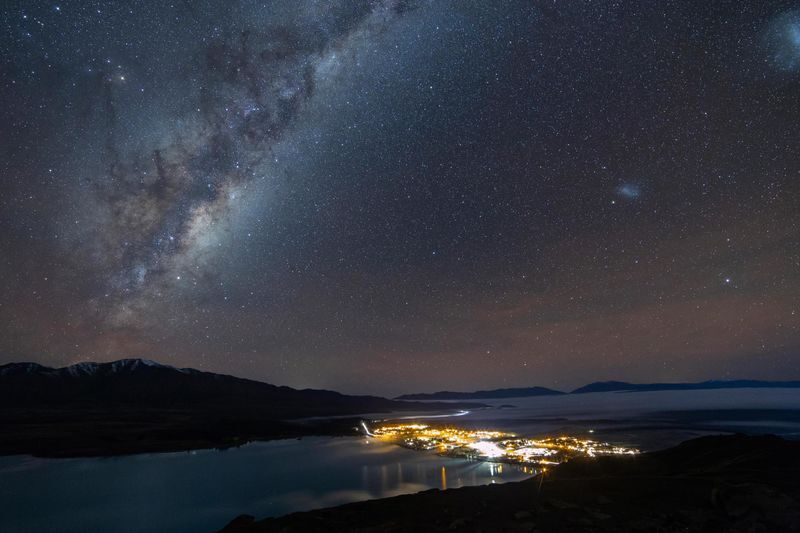
At 1,029 metres above Lake Tekapo, Mt John puts you under one of the world’s darkest protected skies, with a broad view of the Southern Hemisphere’s stars. On a clear night, you might spot the Milky Way, planets, clusters or distant galaxies through the naked eye and observatory telescopes.
I like two things especially: the summit access gives this outing a setting that is hard to match from town, and the guides make the sky easier to read rather than simply pointing at bright dots. The chance to look through a telescope of up to 16 inches in aperture adds a real observatory feel.
The main drawback is the weather. Cloud can thin out the show or cancel the summit visit, and a bright moon can wash out faint stars even when skies are clear. It is a memorable night when conditions cooperate, but no telescope can negotiate with a cloud.
- What makes this Mt John tour worth considering
- Setting out from Lake Tekapo
- Starting with the naked eye
- Telescopes and the observatory dome
- What the sky may show you
- The weather gamble, and what happens next
- Staying warm and comfortable on the summit
- Is the price fair?
- Who will enjoy the experience most
- FAQ
- How long does the Mt John Summit Experience last?
- Where do I meet the tour?
- What languages are available?
- Can children join the tour?
- What happens if the weather is cloudy?
- Is warm clothing provided?
- The Best Of Lake Tekapo!
- More Tours in Lake Tekapo
- More Tour Reviews in Lake Tekapo
- Not for you? Here's more nearby things to do in Lake Tekapo we have reviewed
What makes this Mt John tour worth considering
 1 / 9
 2 / 9
 3 / 9
 4 / 9
 5 / 9
 6 / 9
 7 / 9
 8 / 9
 9 / 9
- A high-altitude viewing spot: The summit sits 1,029 metres above Lake Tekapo, with 360-degree views across the Aoraki Mackenzie International Dark Sky Reserve.
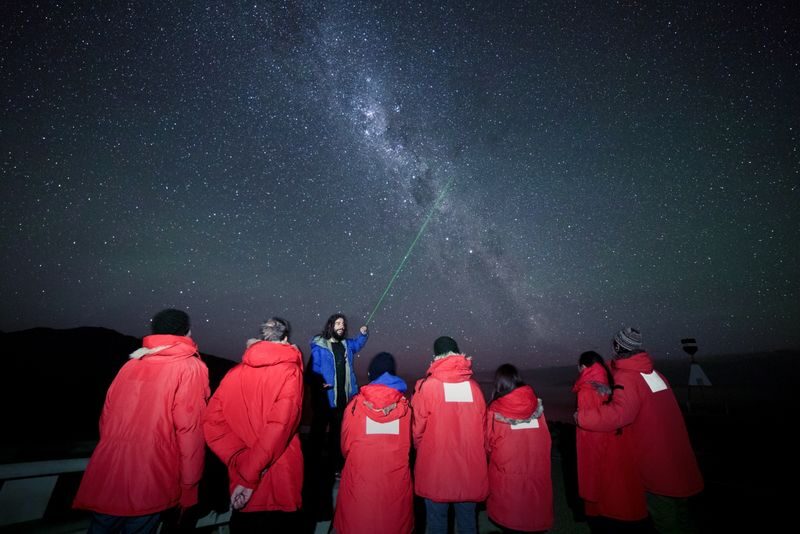
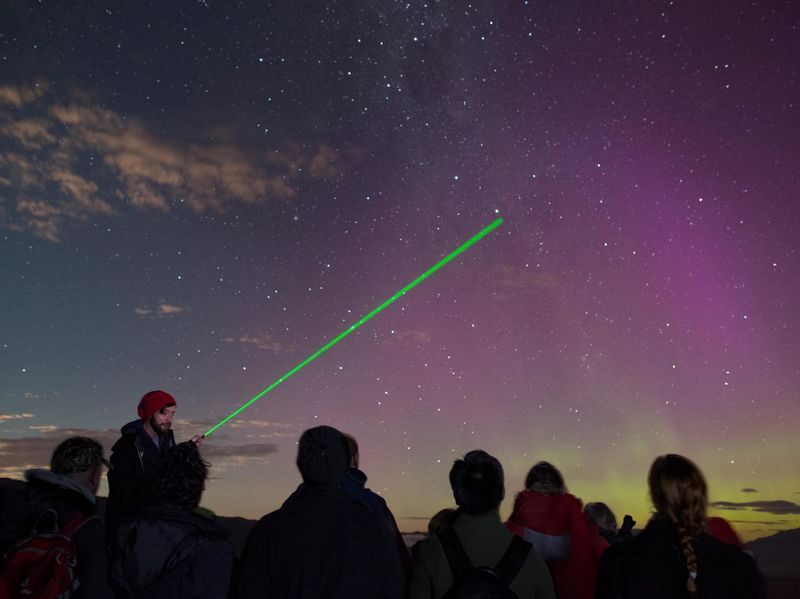
- A guided route into the southern sky: Guides use lasers to help you identify stars and constellations before moving to telescope viewing.
- Access to serious optics: You may use powerful optical telescopes, including one up to 16 inches in aperture and a private observatory dome.
- A shuttle to the summit: Return transport is included, so you do not have to drive the mountain road after dark.
- Cold-weather gear is supplied: You can borrow an extreme-cold-weather jacket, though you should still wear warm layers of your own.
- Weather plans can change: Cloud may lead to an alternative activity, a later time, rescheduling or a refund, depending on conditions and the option offered.

👉 See our pick of the 3 Best Tours In Lake Tekapo
Setting out from Lake Tekapo
The tour begins at the Dark Sky Project office at Rehua, on Motuariki Lane in Lake Tekapo. Check in at least 20 minutes before departure. The meeting point is in town, and driving or taking a taxi there is recommended.
Departure times shift with sunset, so check the exact time for your date rather than relying on a fixed clock schedule. The guided tour lasts about 1 hour and 45 minutes, with return shuttle transport included. The drive up to Mt John takes roughly 15 minutes, according to tour participants, giving you a quick transition from the lakeside town to the dark summit.
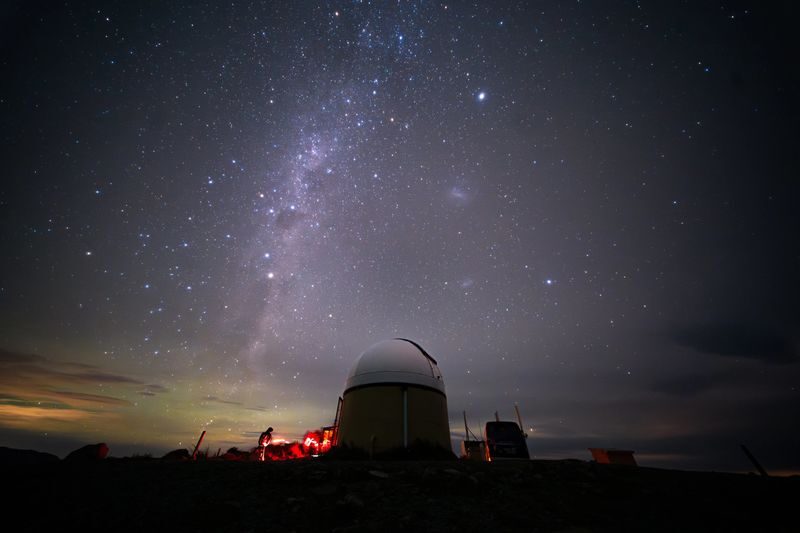
The mountain is home to the University of Canterbury’s research centre. The point of the outing is not a daytime tour of research facilities, but a chance to stargaze from the summit and use the observatory setting. That distinction helps set expectations: this is a guided outdoor night-sky visit, not a long technical tour of the university’s work.
You can also read our reviews of more tours and experiences in Lake Tekapo.


Starting with the naked eye
Once you arrive, the guide begins with the sky itself. You will look up without a telescope while the guide uses a laser to point out stars and explain how to find your bearings. It is a useful first step, especially if the southern sky is unfamiliar or you have never tried to locate a constellation on your own.
Guides explain both science and stories connected to the stars. This is where the outing works well for beginners: instead of leaving you to guess what you are looking at, the guide helps you connect individual points of light and understand the larger patterns. Some guides also bring in practical ways to find directions, such as identifying true south.
Specific guides named in participant accounts include Tonic, Onn, Annd and Tony. The quality that matters most is clear explanation, and the tour is offered in English, Mandarin and Japanese. Choose a language you can follow comfortably. The operator requires you to understand the tour language well enough to follow safety instructions, not just astronomy terms.
Telescopes and the observatory dome
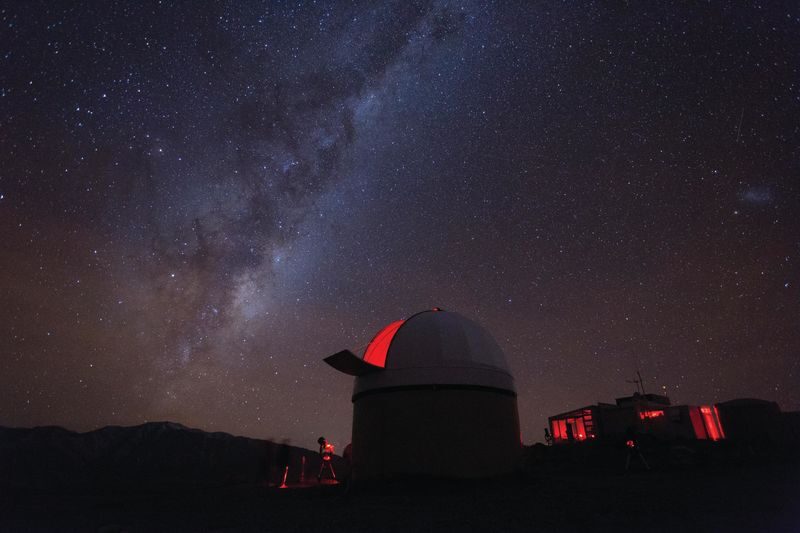
After the naked-eye introduction, you move on to telescopes. The equipment can reach 16 inches in aperture, and the tour includes access to a private observatory dome. Through the optics, you may see objects that are difficult or impossible to make out clearly with the naked eye, such as planets, star clusters and distant galaxies.
What appears in the telescope changes with the date and conditions. Saturn, Jupiter, Sirius and the Jewel Box star cluster have all been seen on different nights, but no particular object is guaranteed. The moon can also become a subject in its own right. When it is bright, it may be impressive through a telescope while making faint stars and the Milky Way harder to see.
Expect some standing and looking upward for extended stretches. One participant noted that this became tiring, and the path after stepping off the bus was rocky and not especially easy to walk. Take your time, follow the guide, and keep the LED flashlight provided for the walk. The setting is deliberately dark, so watch your footing and avoid using bright phone lights that could spoil your night vision and other people’s view.
What the sky may show you
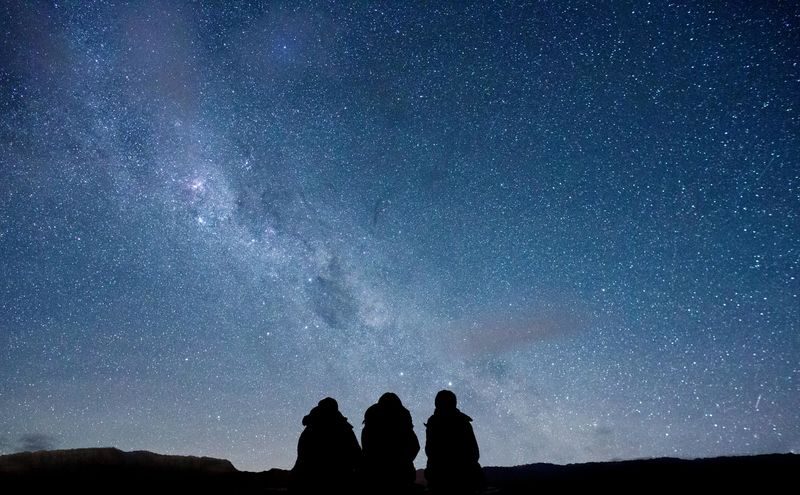
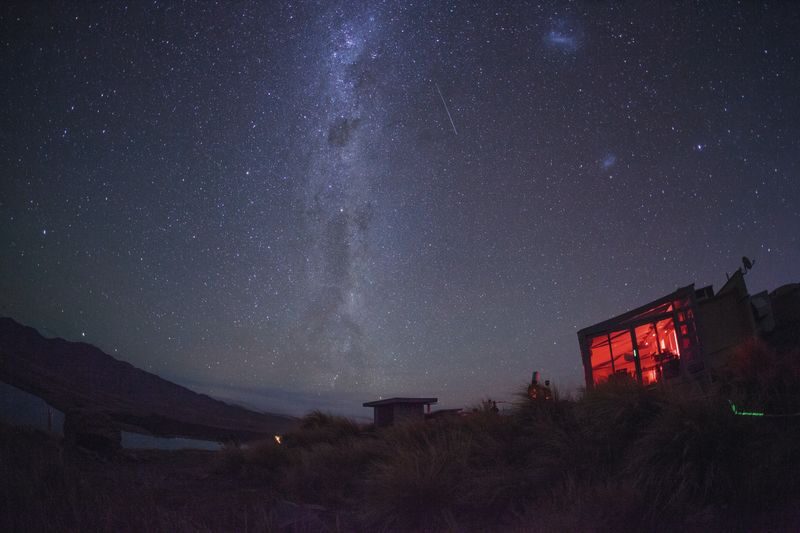
On a clear, moonless night, the Milky Way can be visible as a pale band across the sky. It may not look like the saturated, high-contrast versions in photographs. That is not a letdown so much as a reminder that your eyes see the real sky, not a long-exposure image. The sight can still be striking, especially if you are used to city skies.
The tour’s location in the Aoraki Mackenzie International Dark Sky Reserve matters because the reserve works to protect dark conditions. You are not just looking upward from a scenic hill. You are visiting a place where limiting light pollution helps preserve the night sky, and guides can explain why local residents and townships play a part in maintaining that standard.
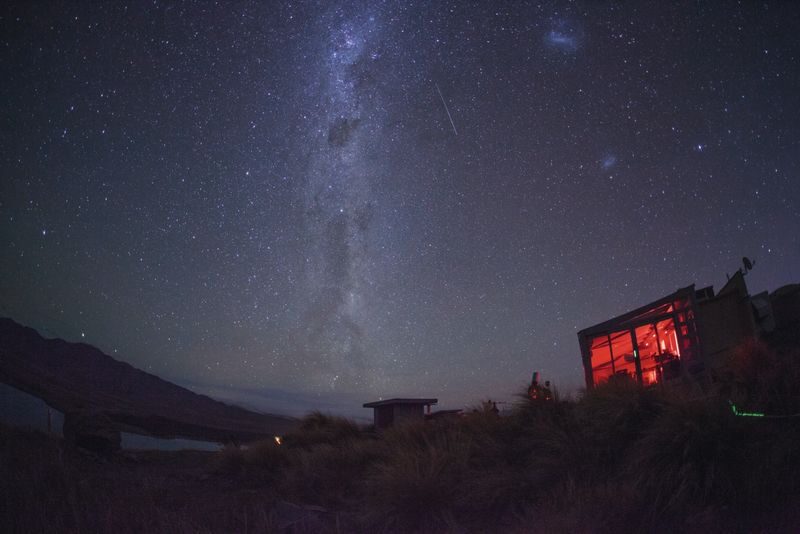
Every night is different. Depending on the sky, season and lunar light, you might see the Southern Cross, star clusters, planets, the Milky Way or more distant objects. Rare sightings such as an aurora or a bright meteor are possible, but they are unpredictable and should be treated as luck, not as part of the promised programme.
The weather gamble, and what happens next
Cloud cover is the biggest uncertainty. A partly cloudy sky may still allow some viewing, while heavy cloud or fog can make the summit outing impractical. In some cases, the operator may offer a different activity or a later time slot. With full cloud cover, alternative options are offered; depending on the conditions, you may be able to reschedule or request a full refund.
The alternative may be less satisfying if your main reason for booking is a view of the stars. Indoor or crater experiences have been offered when weather disrupts summit viewing, and some people have found those options worthwhile, while others would rather take a refund. If the sky is doubtful, ask what alternative is available before deciding to continue.
The moon is a separate factor. A clear sky around a full moon can still produce a good outing, especially for viewing the moon or brighter stars, but it can reduce the contrast of the Milky Way and fainter objects. If seeing the Milky Way is your top priority, check the moon phase when planning your date. No phase can guarantee clear weather, but it helps you judge the likely conditions.


Staying warm and comfortable on the summit
Mt John can feel much colder and windier than Lake Tekapo below. A thick jacket is available to borrow at no extra charge, and the tour supplies an LED flashlight. These are helpful provisions, but they are not a reason to arrive in light clothing.
Wear warm layers and consider bringing a hat, gloves and scarf. You may spend time standing still while listening to explanations or waiting for a telescope, which can feel colder than walking. A borrowed coat can help, but your own layers make it easier to stay comfortable throughout the visit.
The summit path is dark and can be uneven. Wear shoes you are comfortable walking in, and take care when moving between viewing spots. Children must be at least 10 years old, and adult supervision is required for every two children taking part. This is a better fit for older children who can stay alert, follow instructions and manage a late-night outdoor activity.
Is the price fair?
The listed price starts at $149.50, while the package options are also shown from US$135.95. Prices and currencies can vary by booking channel, so check the total and currency at checkout. Meals, drinks, personal expenses and insurance are not included.
For that price, the value comes from the summit location, return transport, guide, telescope access and the jacket loan. You are paying for more than a short look through a telescope: the guide helps you understand what is above you, and the shuttle removes the need to navigate the mountain road at night. If the sky is clear, the combination can make the tour a highlight of a Tekapo stay.
The value is less certain when cloud or a bright moon limits what you can see. Some people may still enjoy the astronomy explanations and alternative programme, while others will feel that the cost is hard to justify without a strong view of the stars. Before booking, decide which matters more to you: learning about the sky and visiting the summit, or seeing a particular spectacle such as the Milky Way. The second depends on conditions the operator cannot control.
Who will enjoy the experience most
This tour suits first-time stargazers, curious families with older children, and anyone who wants a guided introduction to the southern sky. It also works well if you have limited time in Tekapo and prefer organised transport and telescope access over trying to stargaze on your own.
If you already know a fair amount about astronomy, you may find the explanations introductory rather than technical. The format is built to help a broad audience identify stars and understand what they are seeing. You can ask questions, but the tour is not described as an advanced astronomy course.
Book it if the idea of learning the sky from a dark mountain appeals to you, and you can accept that clouds, moonlight and changing conditions will shape the result. If seeing the Milky Way is the only reason you are going, give yourself more than one night in Tekapo if your schedule allows. That gives you another chance to see the sky if your chosen evening turns cloudy.
Dark Sky Project Summit Stargazing Experience at Mt John Observatory
“It was an extremely wonderful experience . Had so much fun learning bout the southern stars and the view was just phenomenal!”
FAQ
How long does the Mt John Summit Experience last?
The guided tour lasts 1 hour and 45 minutes. Return shuttle service to Mt John is included.
Where do I meet the tour?
Meet at the Dark Sky Project office at Rehua, Motuariki Lane, Lake Tekapo. Check in at least 20 minutes before your tour time.
What languages are available?
The Summit Experience is offered in English, Mandarin and Japanese. You must be able to understand the language of your tour well enough to follow instructions.
Can children join the tour?
Children must be at least 10 years old. Adult supervision is required for every two children taking part.
What happens if the weather is cloudy?
If there is full cloud cover, alternative options are offered. Depending on the conditions, you may be able to reschedule or request a full refund.
Is warm clothing provided?
Yes. A free extreme-cold-weather jacket and an LED flashlight are included. Warm layers of your own are still a good idea for the cold, windy summit.