The Chapelle Expiatoire marks a striking turn in French history: built where Louis XVI and Marie-Antoinette were buried after their executions, it became a royal memorial in the heart of Paris. Inside, marble sculptures, a crypt altar, and the king’s final letter offer a quiet encounter with a turbulent past.
I like two things here: the solemn calm behind a busy central Paris street, and the way the chapel’s sculptures and inscriptions connect a grand building to individual lives. The visit is also compact, so it can fit between other sights without taking over your day.
One consideration: this is a small memorial, not a sprawling museum, and there is no tour guide included. If you want a long visit or a lively, narrated account of the Revolution, you may want to pair it with another attraction.
- What to Know Before You Go
- A Quiet Memorial in the Middle of Paris
- The Chapel Hall and Its Marble Figures
- The Crypt and the Marked Burial Place
- A Small Visit With a Strong Sense of Place
- Is the Direct-Entry Ticket Worth It?
- Getting There and Planning the Visit
- Who Should Book the Chapelle Expiatoire?
- FAQ
- How long does a visit to the Chapelle Expiatoire take?
- Where is the Chapelle Expiatoire?
- What does the ticket include?
- Is a tour guide included?
- How do I enter with the ticket?
- When is the last admission?
- Which days is the chapel open?
- Who can enter for free?
- Is there free admission on certain dates?
- Can I bring luggage or food inside?
- The Best Of Paris!
- More Tickets in Paris
- More Tours in Paris
- More Tour Reviews in Paris
- Not for you? Here's more nearby things to do in Paris we have reviewed
What to Know Before You Go
 1 / 8
 2 / 8
 3 / 8
 4 / 8
 5 / 8
 6 / 8
 7 / 8
 8 / 8
- The chapel stands on a burial site: Louis XVI and Marie-Antoinette were buried here in 1793, after their executions.
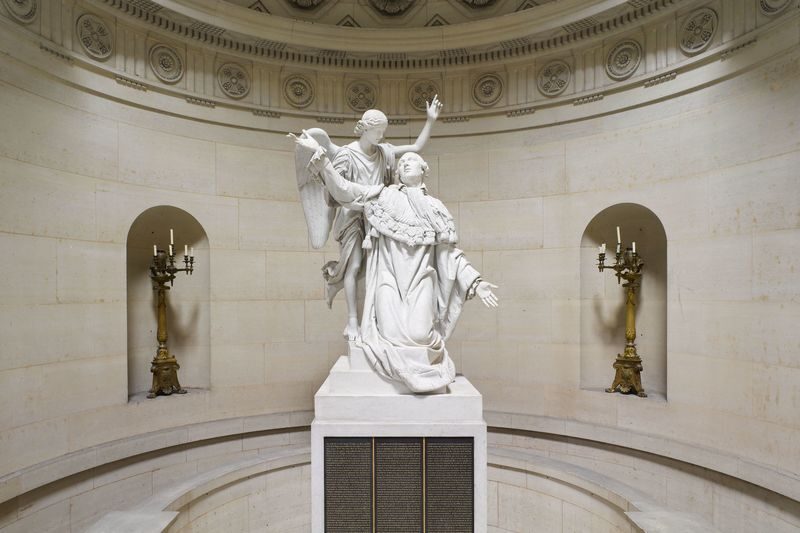
- Two marble sculptures set the tone: One shows an angel pointing the king toward the sky; the other depicts Marie-Antoinette kneeling.
- The crypt holds a key memorial: A black marble altar marks the place where the monarchs’ remains were found.
- The visit is short and quiet: The grounds are small, and many people can see the main spaces in about an hour.
- Your ticket includes a pamphlet, not a guide: Printed information is available in seven languages.
- Check free-entry rules before paying: Admission is free for children under 18 and eligible EU nationals or residents aged 18 to 25.

👉 See our pick of the 25 Best Shopping Tours In Paris
A Quiet Memorial in the Middle of Paris
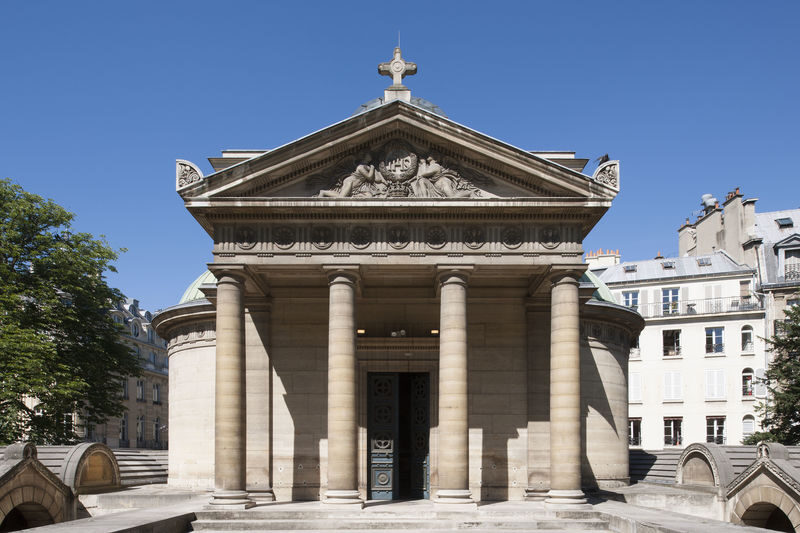
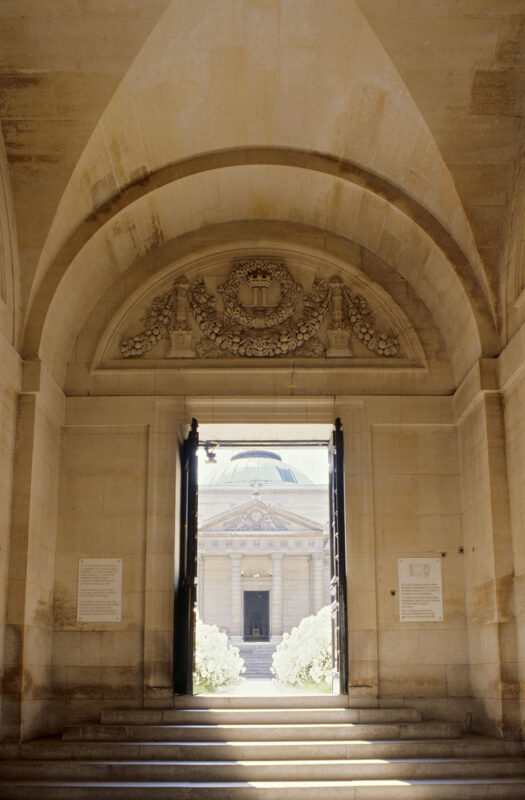
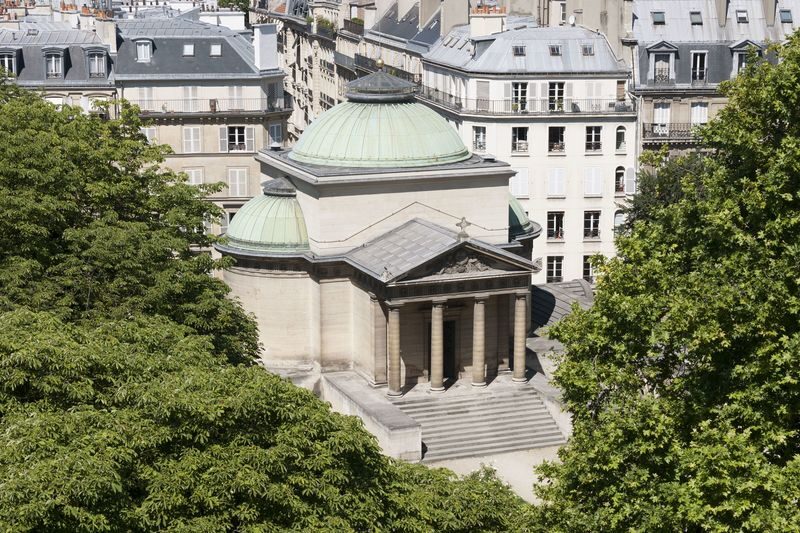
The Chapelle Expiatoire sits at 29 Rue Pasquier in the 8th arrondissement, in a part of Paris known for busy streets and major transit links. Step inside, though, and the mood shifts. The chapel is a peaceful memorial, with a restrained setting that encourages you to pause rather than rush from room to room.
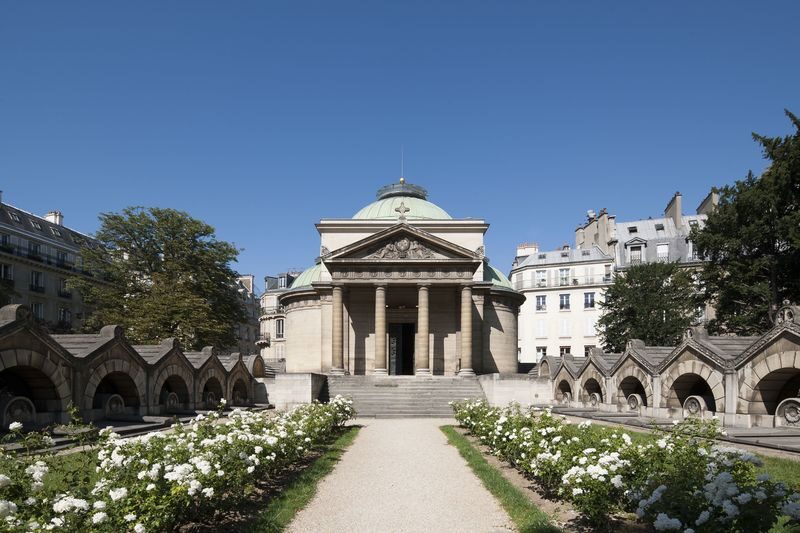
Louis XVIII ordered the chapel built to commemorate Louis XVI and Marie-Antoinette. The site had been their burial place in 1793, after they were guillotined at Place de la Revolution. That history gives the building a particular weight: this is not simply a handsome neoclassical chapel, but a memorial erected by a later king at the place where the two monarchs’ remains had been laid.
The designer, Pierre Fontaine, also worked on the Arc de Triomphe du Carrousel. Here, his neoclassical style serves a more intimate purpose. The building’s formal lines and solemn sculptures frame a story of political upheaval, royal loss, and remembrance.
A visit takes about an hour, though the grounds are small enough that you can move through them more quickly. I’d avoid treating the short duration as a drawback. The chapel’s appeal is its focused scale: it offers a thoughtful pause without demanding half a day.
You can also read our reviews of more tours and experiences in Paris



The Chapel Hall and Its Marble Figures
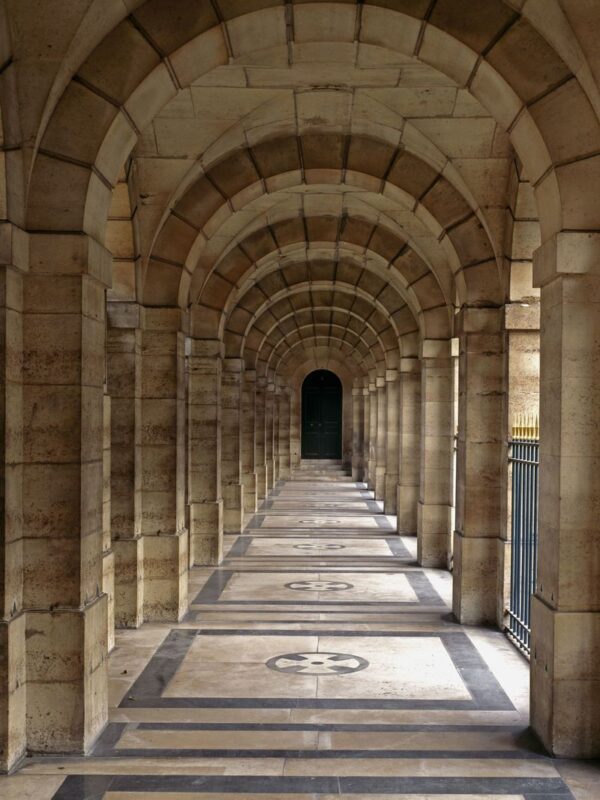
Inside, look first at the arched arcades in the chapel hall. They commemorate Swiss Guards killed at the Tuileries Palace in 1792, adding another human cost of the period to a site most often associated with the king and queen.
The two marble sculptures are the central visual points. One represents Louis XVI, with an angel showing him the sky. The other shows Marie-Antoinette kneeling. They are formal, solemn memorials, not lifelike scenes of the executions. Their purpose is remembrance, and the contrast between the figures and the chapel’s measured architecture gives them room to command your attention.
At the pedestal of Marie-Antoinette’s statue, you can read Louis XVI’s last letter to his sister Elisabeth. It is a small detail with a large emotional effect: after the imposing architecture and royal imagery, the letter brings the story down to a personal scale. Give yourself a moment to read it rather than passing straight on to the crypt.
The information pamphlet can help you understand what you are seeing, especially if you do not have much background on the French Revolution. It is available in French, English, Spanish, Italian, German, Dutch, and Russian. There is no tour guide included, so the pamphlet is the main interpretation provided with admission.
The Crypt and the Marked Burial Place
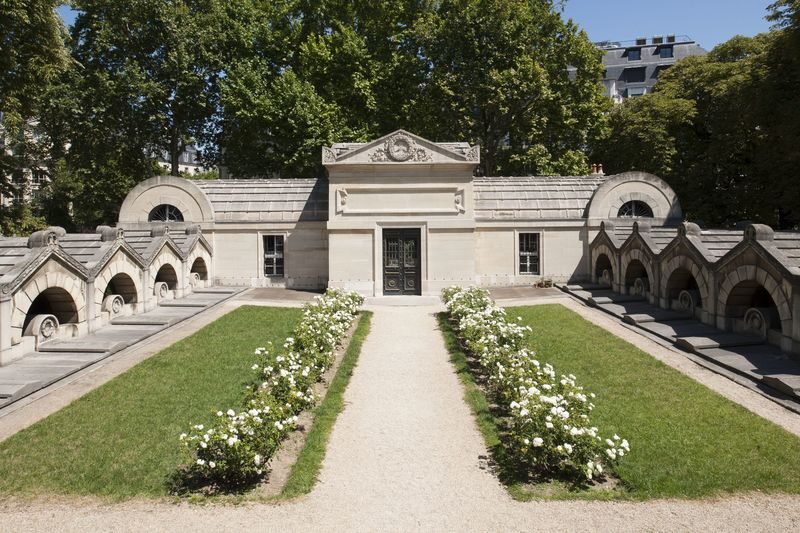
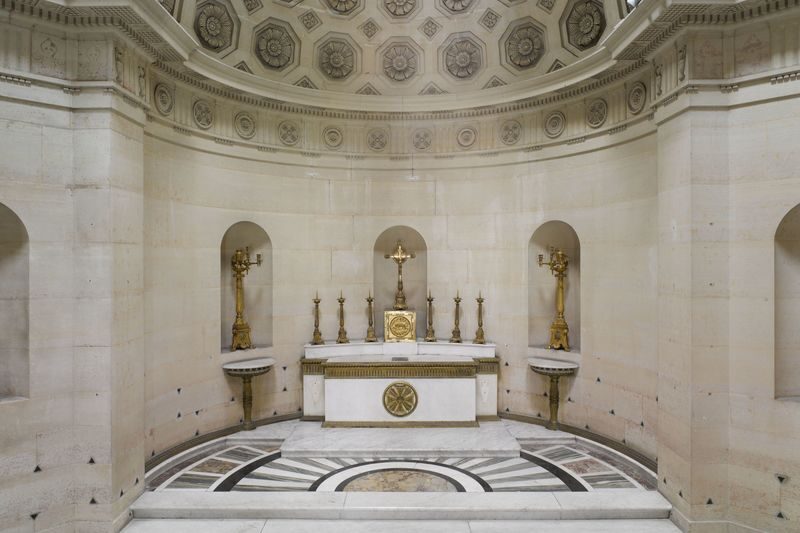
The visit continues into the crypt, where a black marble altar bears an inscription marking the place where the monarchs’ remains were found. This is the most direct link between the chapel and its original purpose as a memorial at their burial site.
The crypt is not a large exhibition space, and the experience is more about standing in a place of remembrance than browsing displays. If you are looking for extensive objects or a detailed account of the Revolution, this is not a substitute for a larger museum. Instead, the chapel gives you a specific place to connect with the history: the site, the memorials, and the people they honor.
That focus is part of the value. A short visit here can add context to a Paris itinerary built around grand monuments and palace rooms. You are not only seeing a royal memorial; you are seeing how a later monarch chose to commemorate the royal couple at the location associated with their burial.
A Small Visit With a Strong Sense of Place
The grounds are small, and you can get around quickly. That makes the chapel easy to add to a day when time is tight, but it also means you should set your expectations. You will not spend hours exploring galleries, and the attraction does not come with a guided tour.
The reward is its quiet atmosphere. In an energetic part of the city, the chapel offers a pause that feels quite different from the surrounding streets. If you are interested in French history, architecture, or the legacy of the Revolution, that change of pace is a good reason to stop.
The chapel suits visitors who enjoy reading inscriptions and looking closely at memorial art. It may be less satisfying if you need a guide to explain every historical detail, or if you prefer attractions with a long route and many exhibits. A pamphlet provides a useful starting point, but you set your own pace and decide how much time to spend with each feature.
Is the Direct-Entry Ticket Worth It?
The ticket covers admission to the Chapelle Expiatoire and allows you to enter with your mobile voucher. There is no stated ticket price here, so I would judge value by what the visit includes and whether you qualify for free admission.
If you are paying for entry, the value is in access to a distinctive historic site, the chapel hall, its sculptures, and the crypt. The experience is brief, but it offers a memorable setting and a clear connection to a major chapter of French history. The ticket does not include a guide or other personal expenses, so do not expect a hosted experience.
The booking option may be convenient if you want to secure entry in advance and use the voucher at the door. A ticket does not remove the need to check opening days and hours, and it should not be mistaken for a guided visit. The booking conditions also vary depending on whether you issue the voucher in advance, so check those terms before confirming.
Before paying, check whether you can enter for free. Admission is free for children aged 0 to 17, and for EU nationals or residents aged 18 to 25 with valid photo identification. A Paris Museum Pass can be presented directly at the monument without an online reservation. Entry is also free for everyone on the first Sunday of each month from November through March, and during European Heritage Days on the third weekend of September.





Getting There and Planning the Visit
The address is 29 Rue Pasquier, 75008 Paris. Several metro stations are about five minutes away: Saint-Lazare on lines 3, 12, 13, and 14; Saint-Augustin on lines 3 and 13; Havre-Caumartin on lines 3 and 9; and Madeleine on lines 8, 12, and 14.
From Saint-Lazare, use the Cour de Rome exit and walk along Rue Pasquier. If you are coming from Place de la Concorde, the suggested route goes along Rue Royale, through Place de la Madeleine, and then along Boulevard Malesherbes.
Opening hours change by season. From October 1, 2026, through March 31, 2027, the chapel is open Wednesday to Saturday from 10:00 a.m. to 12:30 p.m. and 1:30 to 5:00 p.m. From April 1 through September 30, 2027, it is open Tuesday to Saturday from 10:00 a.m. to 12:30 p.m. and 1:30 to 6:30 p.m. It is closed Mondays and Sundays during these listed periods. Last entry is 30 minutes before closing.
The chapel is closed on January 1, May 1, and December 25. It closes early at 4:00 p.m. on December 24 and December 31. Hours and closure dates can change, so check the latest schedule before you set out.
There is no luggage storage at the venue, and you cannot re-enter after leaving. Outside food and drinks are not allowed inside, and pets are not permitted except service animals with valid identification. The venue states that visitors must wear a face covering indoors, and face coverings are not provided, so check the current requirements before your visit.
Who Should Book the Chapelle Expiatoire?
I’d recommend this stop to anyone curious about the French Revolution, royal history, or neoclassical architecture who wants a compact visit with a reflective mood. It is also a good choice if you are already nearby and want a quieter counterpoint to busier central Paris attractions.
Families can make a short visit, and children under 18 enter free with valid proof of age. The attraction is most rewarding when you take time to read the pamphlet, look closely at the sculptures, and pause at the crypt altar. If you prefer a guide or a larger museum with extensive displays, consider pairing the chapel with another historic site rather than expecting it to carry an entire day.
Book it if you want a focused, peaceful encounter with a meaningful Paris history site. Skip it if you are short on time and would rather spend your visit at a larger attraction, or if you need a guided explanation to make a historic site engaging.
Chapelle Expiatoire Ticket in Paris
“The grounds themselves are small, so you can get around quickly. The location itself is quite busy, but inside the building there is a quiet and so…”
FAQ
How long does a visit to the Chapelle Expiatoire take?
The listed duration is one hour. The grounds are small, so you can see the main spaces more quickly if you are short on time.
Where is the Chapelle Expiatoire?
It is at 29 Rue Pasquier, 75008 Paris, France.
What does the ticket include?
It includes admission to the Chapelle Expiatoire and an information pamphlet. The pamphlet is available in French, English, Spanish, Italian, German, Dutch, and Russian.
Is a tour guide included?
No. A tour guide is not included.
How do I enter with the ticket?
Present your mobile voucher and enter the venue directly with it.
When is the last admission?
Last entry is 30 minutes before closing. The listed last-entry time is 4:30 p.m. during the October to March schedule and 6:00 p.m. during the April to September schedule.
Which days is the chapel open?
From October 1, 2026, through March 31, 2027, it is open Wednesday to Saturday. From April 1 through September 30, 2027, it is open Tuesday to Saturday. It is closed on Mondays and Sundays during those periods.
Who can enter for free?
Children aged 0 to 17 enter free. EU nationals or residents aged 18 to 25 also enter free with valid photo identification.
Is there free admission on certain dates?
Yes. Entry is free for everyone on the first Sunday of each month from November through March, and during European Heritage Days on the third weekend of September.
Can I bring luggage or food inside?
There is no luggage storage facility. Outside food and drinks are not allowed inside the venue.